

Blancpain automatic movements need between 650 and 800 turns per day (TPD) at bidirectional rotation — and getting that number wrong is one of the fastest ways to strain a mainspring that can cost thousands to service. This guide covers every major Blancpain caliber family, the exact winder settings each one needs, and what to look for in a winder built to handle a watch at this price point.
TL;DR: For most Blancpain automatic watches in 2026, set your winder to 650–800 TPD, bidirectional rotation. The Fifty Fathoms (Cal. 1315) runs well at 800 TPD bidirectional. The Villeret Ultra-Slim (Cal. 1150) is happy at 650–700 TPD bidirectional. The Blancpain x Swatch Fifty Fathoms Scuba Frosted uses a lower-spec ETA base — 650 TPD bidirectional covers it cleanly. A winder with per-slot TPD and direction control is the only appropriate match for these calibers.
Why Blancpain Settings Are Not Generic
Blancpain builds most of its movements in-house at Le Brassus. The mainspring geometry, rotor weight, and power reserve window vary considerably across caliber families — the Fifty Fathoms 1315 carries a 5-day reserve, while the Villeret 6654 tourbillon requires closer to the 650 TPD floor to avoid overwinding stress. A “set it and forget it” approach at 1,800 TPD — common on budget winders — applies roughly 2.7× the energy the movement actually needs. In 2026, a Blancpain service interval typically runs $800–$2,500 depending on complexity. Correct winder settings are not a preference; they are maintenance.
Who This Guide Is For
You own one or more Blancpain automatic pieces — Fifty Fathoms, Villeret, Le Brassus, or the Métiers d’Art line — and you want them running accurately without daily manual winding. You may be adding a Blancpain to an existing winder setup or choosing a first winder specifically around this brand. Either way, you need per-slot programmability, not a shared-motor box that spins everything at one fixed rate.
What to Look For in a Watch Winder for Blancpain
Adjustable TPD per Slot
Blancpain’s caliber range spans roughly 650–800 TPD optimal input. A winder that only offers fixed presets (often 650, 900, 1,800 TPD) may never land cleanly in that window. You need a winder where each slot sets its own TPD independently — critical if a Fifty Fathoms sits next to a Villeret with a different reserve architecture.
Bidirectional Rotation
Every current Blancpain in-house caliber winds bidirectionally. A unidirectional winder wastes half of each rotation cycle, meaning the winder has to spin more aggressively to compensate — which pushes effective stress on the rotor bearing higher than necessary. Set direction to “both” (CW+CCW) and leave it there.
Rest Cycles Built In
A winder that runs 24/7 without pause is categorically wrong for any watch with a power reserve above 72 hours. The Fifty Fathoms 1315’s 5-day (120-hour) reserve means the movement will be fully wound well before a continuous-spin cycle completes. Quality winders program automatic rest intervals — typically 8–12 hours of winding followed by 18–24 hours of rest — so the mainspring never sits coiled at maximum tension for extended periods.
Motor Noise Below 30 dB
Blancpain collectors typically display their watches in a study, bedroom, or safe room. A winder motor running above 35 dB is audible at night in a quiet room. Japanese Mabuchi-class motors and Swiss-grade DC motors consistently test below 28–30 dB. This is a spec worth confirming before purchase, not assuming.
Case Diameter Clearance
The Fifty Fathoms measures 45 mm, and the Fifty Fathoms Bathyscaphe runs 43.6 mm. Many winder holders are sized for a 40–42 mm standard. Confirm the winder’s holder accommodates at least 46 mm lug-to-lug clearance — or ships with an adjustable inner cup — before ordering.
Blancpain Caliber Settings Reference (2026)
| Model / Caliber | Recommended TPD | Direction | Power Reserve |
|---|---|---|---|
| Fifty Fathoms — Cal. 1315 | 800 TPD | Bidirectional | 5 days (120 h) |
| Fifty Fathoms Bathyscaphe — Cal. 1315 | 800 TPD | Bidirectional | 5 days (120 h) |
| Villeret Ultra-Slim — Cal. 1150 | 650–700 TPD | Bidirectional | 72 h |
| Villeret Date & Day — Cal. 6950 | 700–800 TPD | Bidirectional | 72 h |
| Le Brassus Tourbillon — Cal. 225 | 650 TPD | Bidirectional | 8 days |
| Métiers d’Art (ETA base) | 650 TPD | Bidirectional | 40–42 h |
| Fifty Fathoms x Swatch (ETA 2824 base) | 650 TPD | Bidirectional | 38 h |
When in doubt, start at the lower end. You can increase TPD by 50 increments and observe timekeeping over 7 days. A watch running fast by more than +6 seconds/day on the winder is likely overpowered.
Top Winder Picks for Blancpain Owners
The Practical Multi-Watch Choice
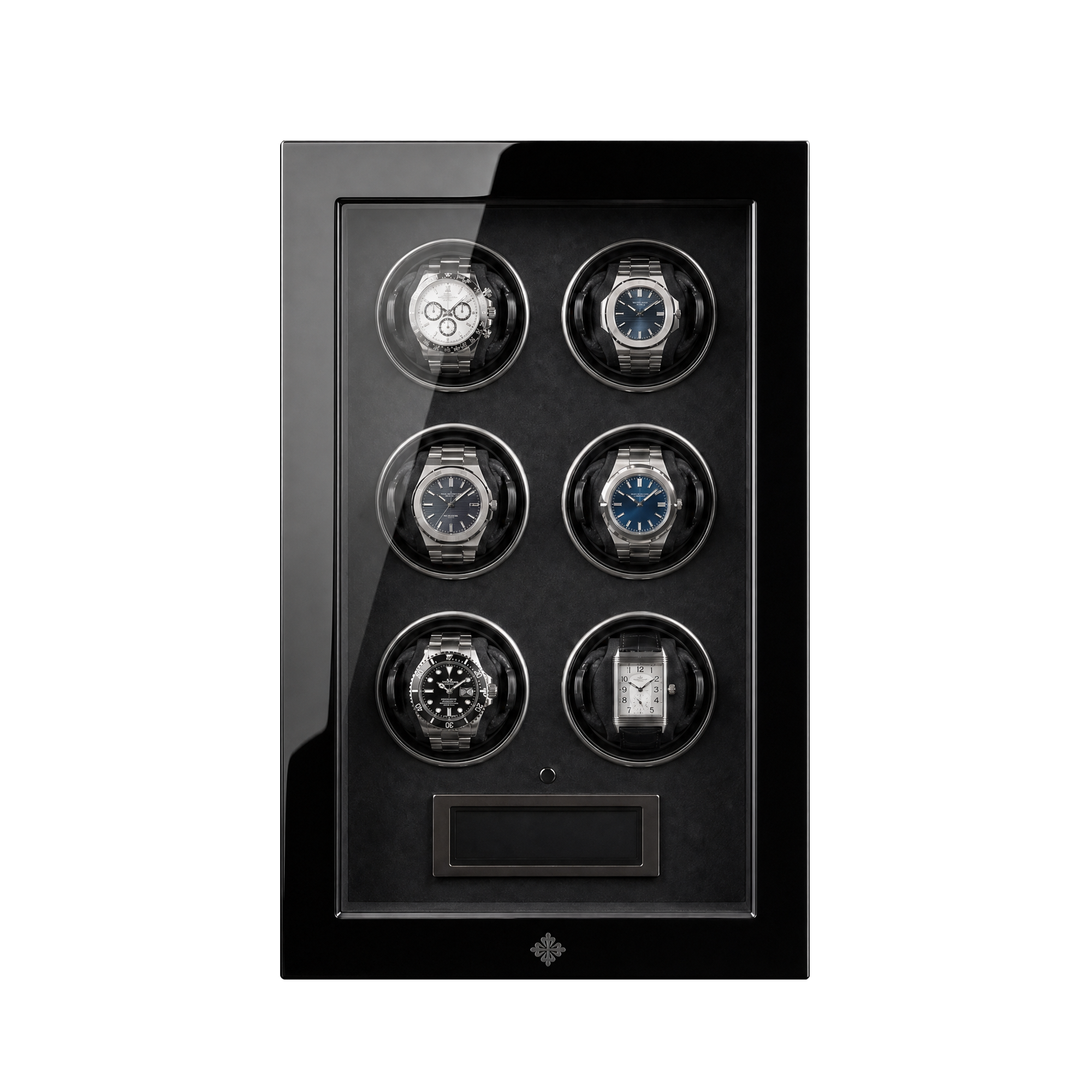
Impresario Series 6 — handles up to 6 watches with individual TPD and direction settings per slot. If you rotate between a Fifty Fathoms and a Villeret, each slot runs its own program. The holder adjusts for watches up to 55 mm, clearing every current Blancpain case. Verdict: Buy for collections of 2–6 pieces.
Impresario Series 6 watch winder
The Compact Single-Watch Option
Impresario Series 2 — two independent motors, two programmable slots, quiet enough for nightstand placement. If your Blancpain collection starts and ends at one or two pieces, the footprint is manageable and the TPD range covers 650–1,950 TPD. Verdict: Buy for a focused one- or two-watch setup.
The Large-Collection Setup
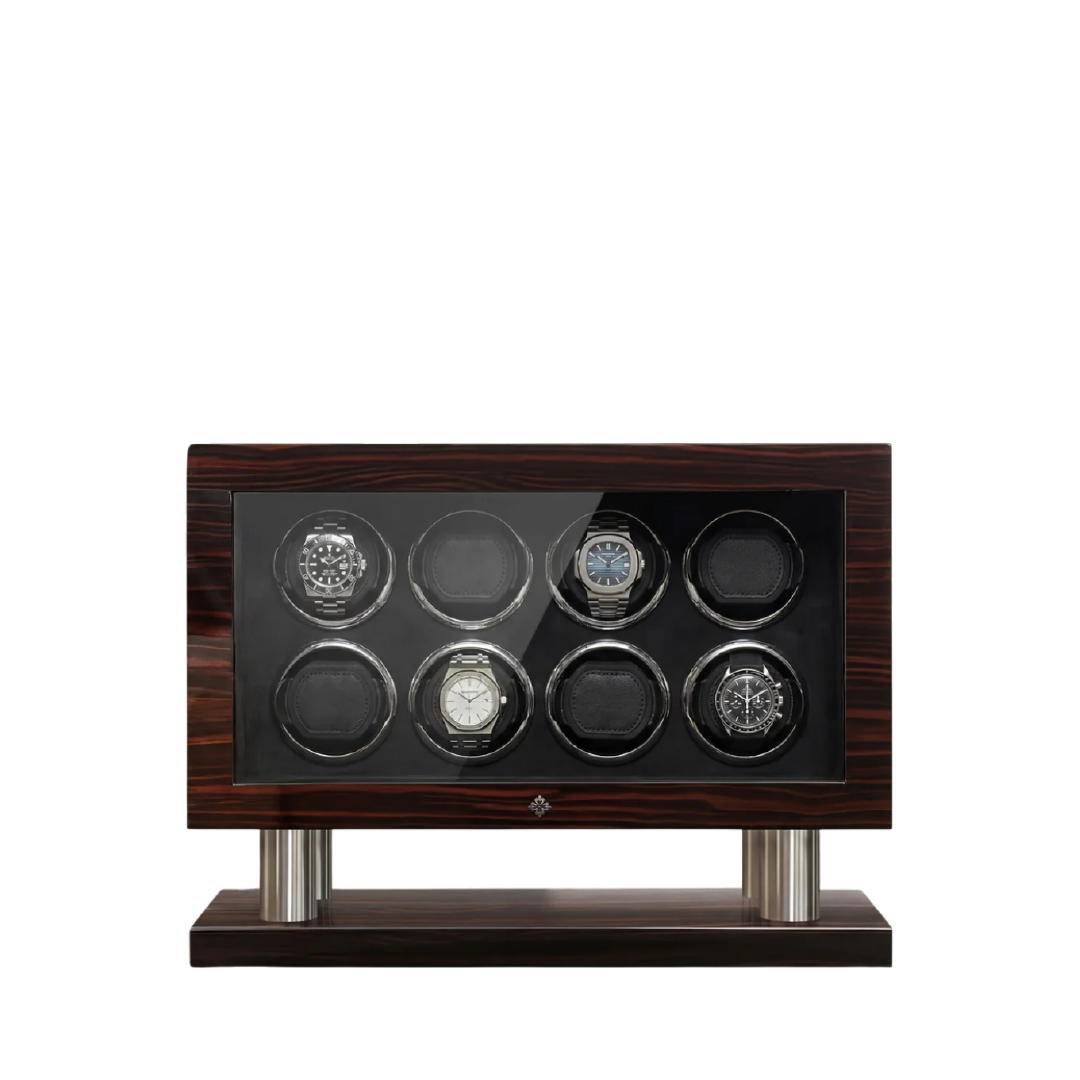
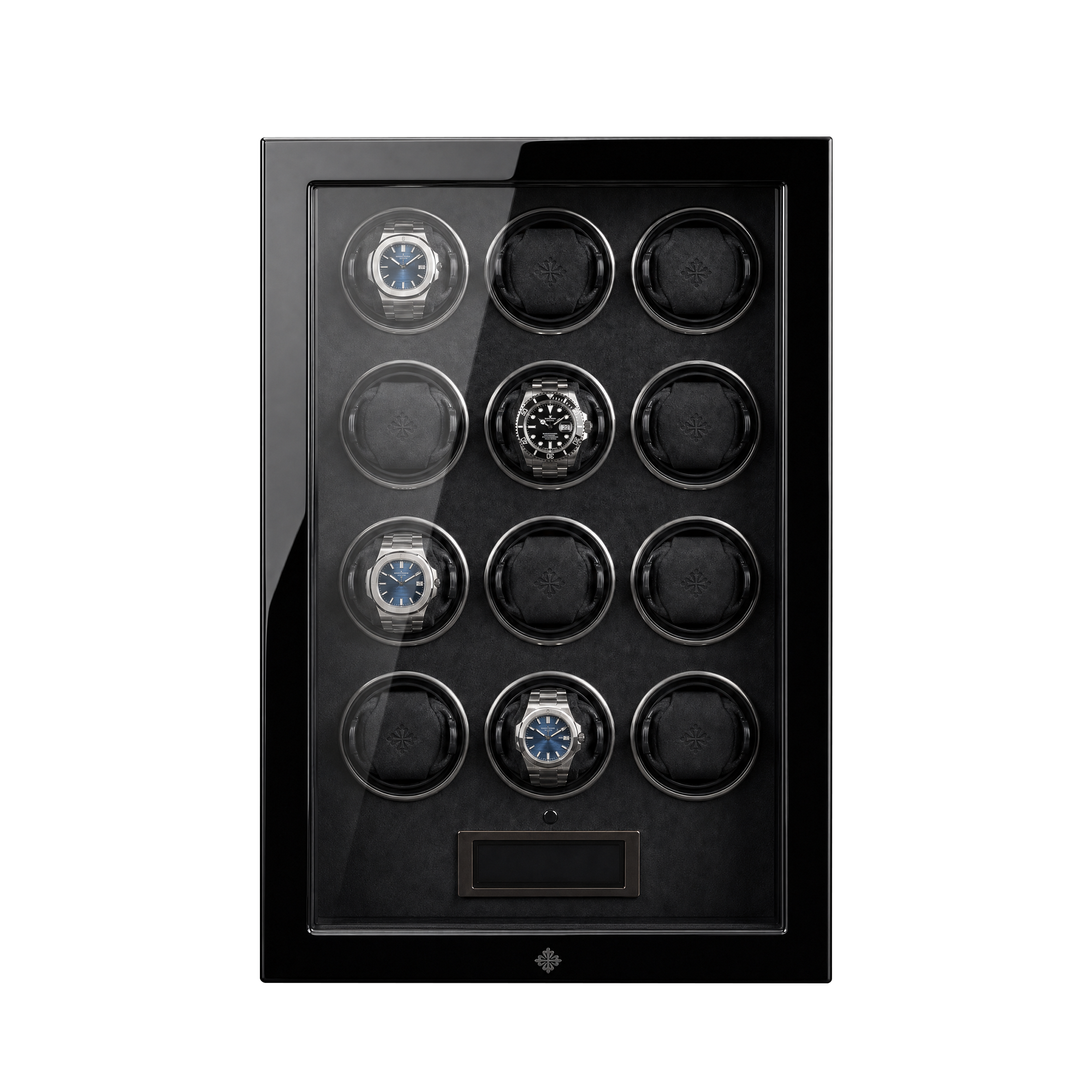
Impresario Series 12 — twelve independently programmed slots. Relevant if you hold multiple Blancpain references alongside other luxury automatics. Per-slot programming means each caliber gets its own settings without compromise. Verdict: Consider if your collection already exceeds 6 pieces or is actively growing.
Impresario Series 12 watch winder
What to Avoid
- Fixed-TPD winders with only high presets. A winder locked at 1,800 or 2,400 TPD runs a Blancpain Villeret at roughly 2.5–3.5× the recommended input. That is not a conservative overage — it is sustained mainspring stress.
- Unidirectional-only winders. Even if the listed TPD falls in range, unidirectional rotation on a bidirectional caliber roughly halves winding efficiency, which pushes the actual motor cycle longer to compensate.
- Shared-motor “gang” systems. Budget winders that run multiple slots off a single motor cannot be programmed independently. One Blancpain 1315 and one ETA-based watch on the same motor will both run at the same rate — and one of them will always be wrong.
What to Avoid — Buyer Red Flags in 2026
When evaluating any winder for a Blancpain, skip any product that does not disclose its exact TPD range and step size in the spec sheet. Legitimate winders list this. If a product page says “suitable for all automatic watches” without a number, that is not a specification — it is a marketing placeholder, and it tells you nothing about whether your Cal. 1315 will be treated correctly.
FAQ
What TPD does a Blancpain Fifty Fathoms need?
The Cal. 1315 inside the Fifty Fathoms runs optimally at 800 TPD, bidirectional. Its 5-day power reserve means a lower TPD setting (650–700) will still keep it wound if worn occasionally, but 800 TPD bidirectional is the cleanest sustained setting.
Can I use a clockwise-only winder for a Blancpain?
No. All current Blancpain in-house calibers are bidirectional winders. A CW-only setting wastes the counterclockwise rotor motion and requires the motor to work harder to deliver the same effective TPD, adding unnecessary wear to the rotor bearing over time.
What happens if my winder TPD is too high for a Blancpain?
The mainspring sits at maximum tension for extended periods. Over months and years, this contributes to lubricant degradation and increased wear on the barrel and click spring — accelerating the service interval. Blancpain service costs range from roughly $800 for simpler calibers to over $2,500 for tourbillons in 2026.
Does the Blancpain Villeret need the same settings as the Fifty Fathoms?
No. The Villeret Ultra-Slim (Cal. 1150) is best set to 650–700 TPD bidirectional. The Fifty Fathoms (Cal. 1315) runs at 800 TPD. They share the same direction requirement but differ on TPD due to different mainspring geometry and power reserve targets.
How do I know if my Blancpain is being overwound in the winder?
Check timekeeping daily for 7 days with the watch on the winder continuously. If it runs more than +6 seconds/day fast relative to its rated accuracy, reduce TPD by 50 increments and recheck. A correctly wound Blancpain in-house caliber should stay within its COSC-adjacent tolerance of roughly +/-4 seconds/day.
Is a rest cycle necessary for Blancpain watches in a winder?
Yes for the Cal. 1315 (5-day reserve) and Cal. 225 (8-day reserve). These movements will be fully wound long before a 24-hour spin cycle ends. Program a rest interval of at least 18–24 hours after every 8–12 hours of winding.
Do Blancpain quartz models need a winder?
No. Winders only apply to automatic (self-winding) movements. Blancpain’s Aqua Lung quartz and any battery-powered variant do not benefit from winder use.
What winder size fits the Fifty Fathoms case?
The Fifty Fathoms runs 45 mm in diameter. Look for a winder holder with a maximum case clearance of at least 46 mm, or an adjustable inner cup. Most standard holders are sized for 40–42 mm and will not seat a Fifty Fathoms correctly without modification or the right holder variant.
One Last Thing
Blancpain’s Cal. 1315 was engineered specifically to reduce rotor friction — it uses a ball-bearing mounted rotor that transfers winding energy more efficiently than most competitors. The practical implication: 800 TPD in a quality winder delivers more effective winding energy to the mainspring than 800 TPD would on a caliber with a plain-bearing rotor. If you have been running your Fifty Fathoms at 1,000+ TPD “to be safe,” you can almost certainly drop to 800 TPD and the watch will stay fully wound with less mechanical input.
Related Guides
Protect Your Watch Collection
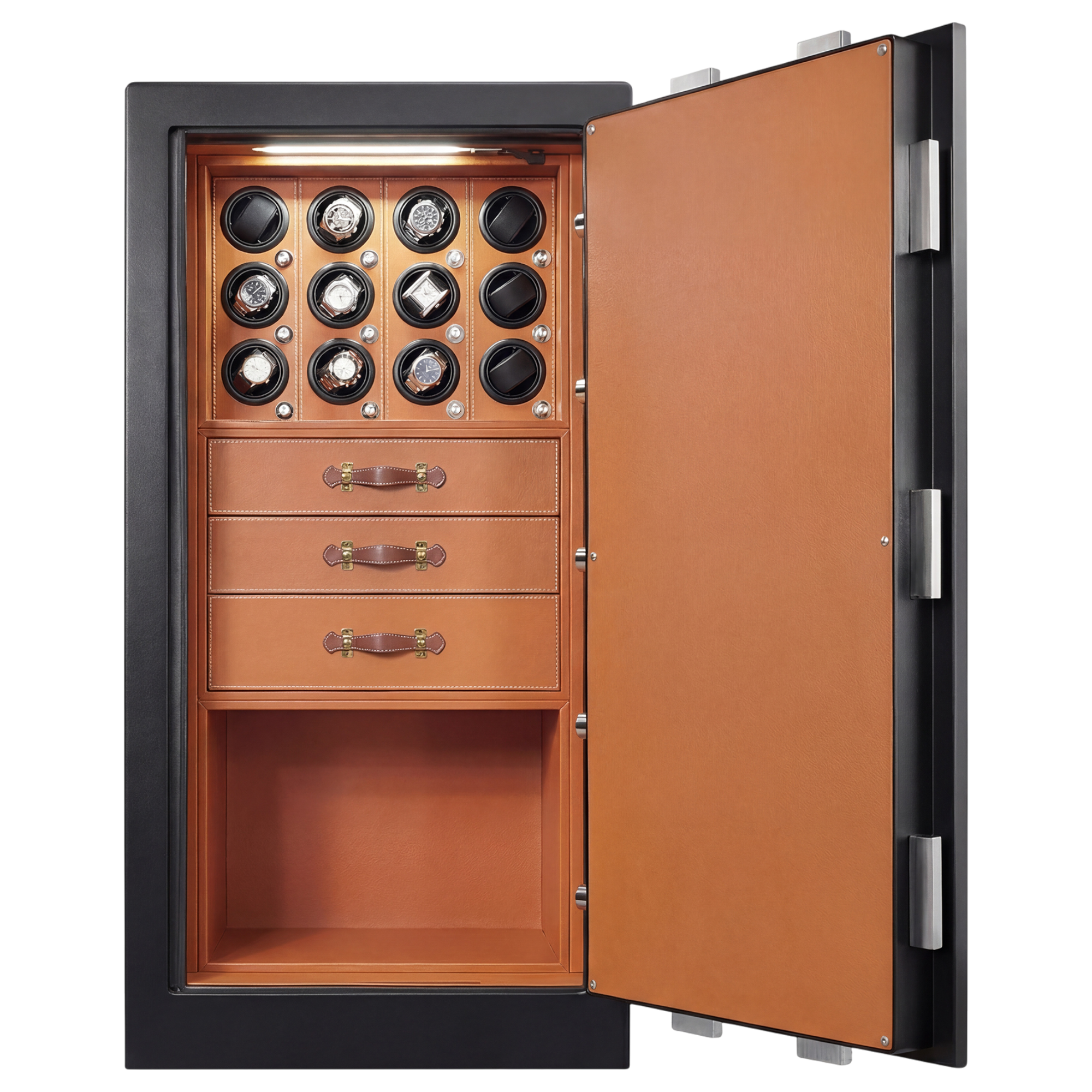
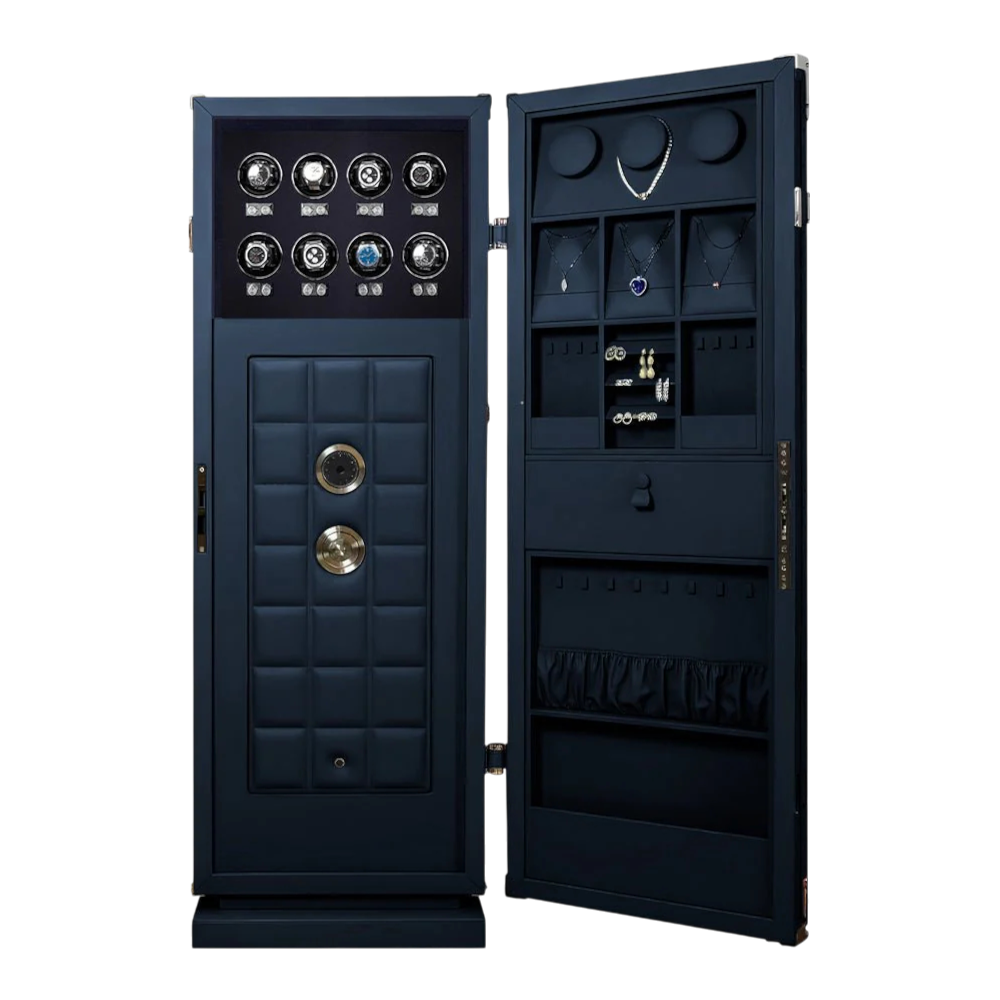
Designed for collectors who demand the best. Explore our premium watch winders and luxury safes.