A watch winder keeps an automatic movement turning; a storage box keeps it still and protected. Which one actually serves your collection better in 2026 depends on complication type, how often you wear each piece, and what you're protecting against — dust, theft, or a dead power reserve.
TL;DR
Watch winder vs storage box is really a question of motion versus containment. A winder such as the Impresario Series 12 Watch Winder keeps perpetual calendars, moon phases, and GMTs running so you never reset a date wheel by hand. A lined case like the Millenary Jewelry Box or a vault like the Apollo Watch Safe Box protects against light, dust, humidity, and theft, but does nothing for a stopped movement. If your collection is under six pieces worn in rotation, buy the box — simpler, cheaper, and sufficient. If you own complications that reset badly or a collection worth insuring, buy the winder, and pair it with secured storage. Most serious collectors in 2026 end up owning both.
Why this matters
An automatic movement without a winder stops once its power reserve runs out — typically somewhere in the 40-to-70-hour range depending on the caliber. A stopped three-hand watch is a two-minute fix. A stopped perpetual calendar or moon phase is a different problem entirely: some require a service center visit to reset correctly.
A storage box solves none of that. What it solves is everything a winder ignores: UV fading on dial lume, dust in the case back, humidity swings that fog crystals, and the basic fact that an unlocked drawer is not a deterrent to theft. The two products are answering different threats, which is why the "vs" in this comparison is misleading — the real question is which threat applies to your watches right now.
What you'll need
- A count of your automatic watches and which have complications (GMT, moon phase, perpetual calendar, annual calendar)
- A rough sense of how many days per week each piece actually gets worn
- A target location: closet shelf, nightstand, home office, or wall-mounted
- A budget range — winders and safes from Enigwatch run from roughly $5,000 to over $21,000 depending on slot count and materials
- Interior lining preference, since Alcantara and Nappa leather interiors behave differently under humidity than foam or velvet
The steps
1. Sort your watches by complication, not brand
Brand doesn't determine whether a watch needs winding — complication does. A simple three-hand automatic can sit for a week and get reset in under a minute. A perpetual calendar that stops can cost you a service appointment and weeks of downtime.
Separate your collection into two piles: watches that reset in seconds, and watches that don't. The second pile is your winder candidates in 2026, regardless of how many pieces you own.
2. Count actual wear days, not owned watches
A six-watch collection worn in strict rotation, one per day, never needs a winder — each piece gets worn often enough to stay wound by hand. The math changes fast once a collection grows past eight or ten pieces, because rotation days per watch drop and idle time climbs.
Common mistake: buying winder slots equal to total watches owned instead of watches that actually sit idle more than three or four days at a stretch.
3. Decide the motion question first
If step 1 flagged complications and step 2 showed idle stretches longer than a few days, a winder resolves the problem directly. The Impresario Series 12 Watch Winder is built for exactly this: a dozen slots, independent rotation programs, and a Japanese Mabuchi motor quiet enough for a bedroom.
If nothing in your collection has a complication that punishes stopping, skip the winder question entirely and move to containment.
4. Decide the containment question separately
Containment is about what happens when the watch isn't on your wrist and isn't in a winder — sitting in a drawer, a closet, or a safe. Dust, UV exposure, and theft risk don't care whether the movement is running or stopped.
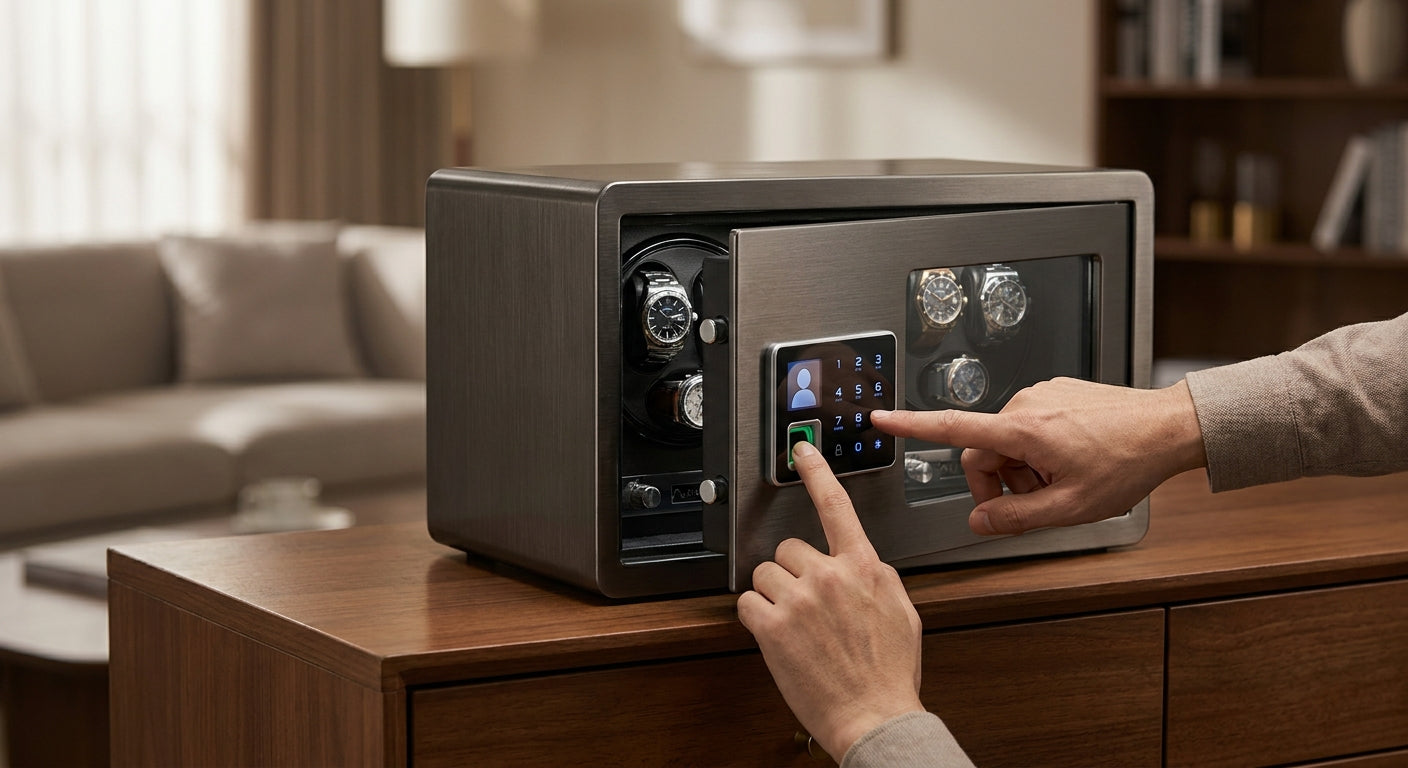
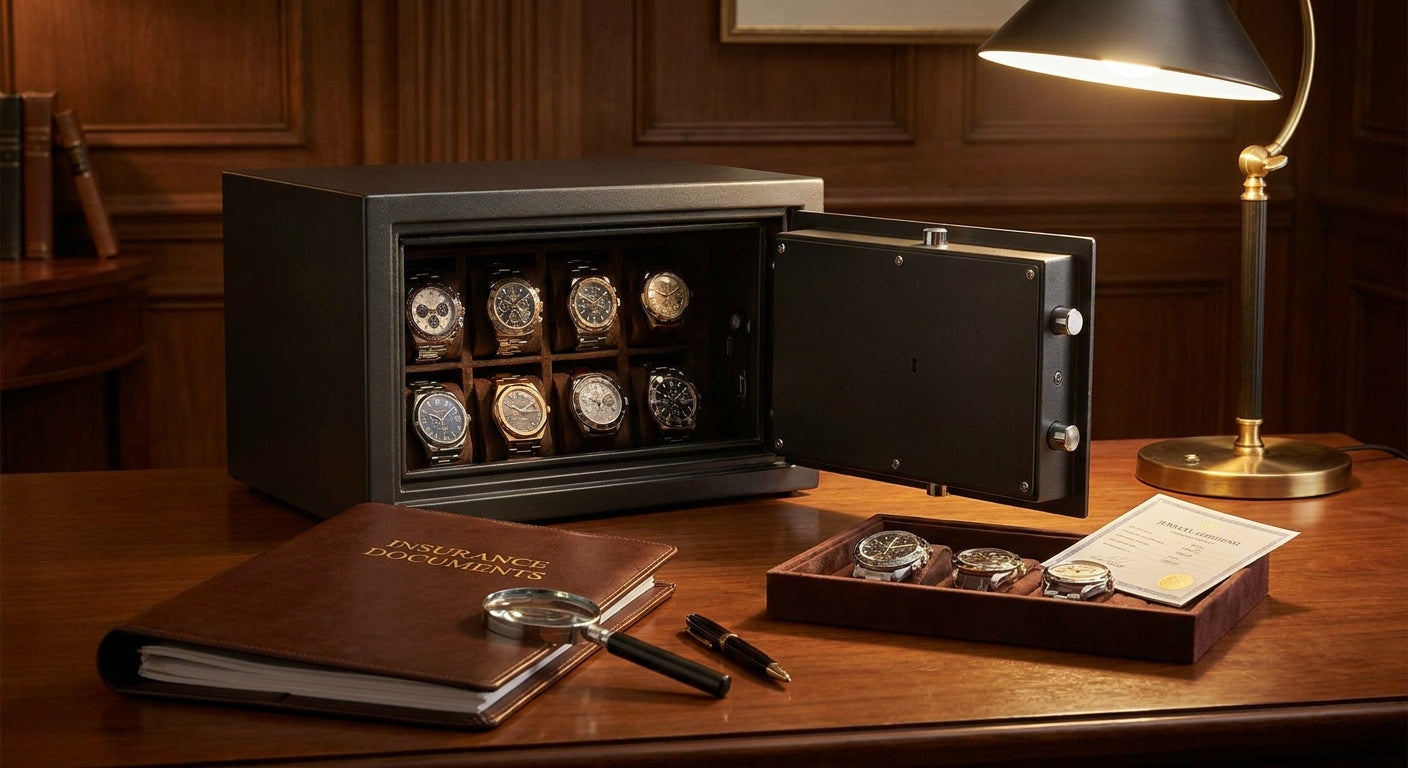
For collections under 12 pieces where security matters more than motion, the Apollo Watch Safe Box covers that gap with a locking body instead of a lined tray. For smaller collections or mixed watch-and-jewelry storage, a case like the Millenary Jewelry Box is the lighter option.
5. Match interior material to your case metals
Alcantara and Nappa leather interiors resist scuffing better than felt or foam over years of use, which matters more for platinum and rose gold cases than for steel sports watches. If your collection leans toward precious metals, prioritize interior material over slot count.
6. Budget the real number, not the sticker price
A winder that runs $5,000 to $21,000 depending on slot count and cabinetry looks expensive against a $200 drawer box — until you price a single service visit caused by a stopped perpetual calendar. Weigh the winder against what a reset actually costs you in time and money, not just against the safe's price tag.
7. Install for the failure case, not the ideal case
Every winder eventually sits through a power outage, and every safe eventually gets bumped, moved, or opened in a hurry. Buy for what happens when the lock jams or the power cuts, not just for the demo-day experience.
Troubleshooting
- Watch keeps stopping between wears, even in a nice box. The box isn't the problem — it doesn't wind anything. That's a winder gap, not a storage gap.
- Winder runs but the date wheel still resets slowly. Check the rotation program against the caliber's actual TPD requirement; wrong direction or too few rotations per day won't fully wind some movements.
- Safe interior feels damp after a few months. Humidity control is a spec question, not a materials question — foam-lined boxes trap moisture that leather interiors handle better, but neither substitutes for climate control in genuinely humid rooms.
- Winder motor hum is noticeable at night. Slot count and motor type both affect noise; a quieter Mabuchi motor setup matters more in a bedroom than in a closet or office.
- Not sure which watches actually need a winder. Go back to step 1 — the complication list, not the price tag, answers this.
Tools and resources
- A written inventory of your collection by complication type
- A tape measure for the intended shelf, closet, or wall space
- A sense of which watches you'd insure separately, since that shapes the safe-vs-box decision
- The Millenary Jewelry Box for mixed watch-and-jewelry storage under a dozen pieces
- The Impresario Series 12 Watch Winder if your complication list from step 1 came back long
What to do next
Once you've sorted motion needs from containment needs, the next question is whether winding itself is doing your watches any harm — a myth that keeps some 2026 buyers stuck. The full breakdown is in does a watch winder damage automatic watches.
FAQ
Is a watch winder better than a storage box? Neither is universally better — a winder solves stopped movements and complication resets, a storage box solves dust, light, and theft. Most collections with complications need both by 2026 standards.
Do storage boxes protect watches from theft? A lined case does not, but a locking safe like the Apollo Watch Safe Box does. If theft is the concern, look at safes, not display boxes.
How much does a watch winder cost in 2026? Enigwatch winders start around $5,000 and run past $21,000 depending on slot count, cabinetry, and motor configuration.
Does a watch need a winder if I wear it daily? No. Daily wear keeps a movement wound by hand; winders solve the problem of watches that sit idle for days at a time.
Can a storage box damage an automatic watch? A box itself doesn't damage a movement, but a stopped complication left too long can require professional resetting, which some owners mistake for winder-related damage.
What's better for a Rolex: a winder or a safe? A simple three-hand Rolex rarely needs a winder since it resets in seconds; a safe matters more for a Rolex once the collection is worth securing against theft.
Do I need both a winder and a safe? Collections with complications and real resale value typically need both — the winder handles the movement, the safe handles the asset.
How much humidity control does a watch safe need? Enough to keep interior humidity stable across seasons; leather interiors like Nappa and Alcantara tolerate swings better than foam, but climate control still matters in humid regions.
One last thing
The overwinding myth runs backwards. A storage box can't overwind a watch because it doesn't wind anything, and a modern automatic winder can't overwind one either — the mainspring on any current automatic movement disengages once fully wound, whether it sits in a box or spins on a rotor. The real risk was never overwinding. It's a stopped perpetual calendar, or an unlocked drawer, and those two problems point to two completely different products.
Related guides
Protect Your Watch Collection
Designed for collectors who demand the best. Explore our premium watch winders and luxury safes.