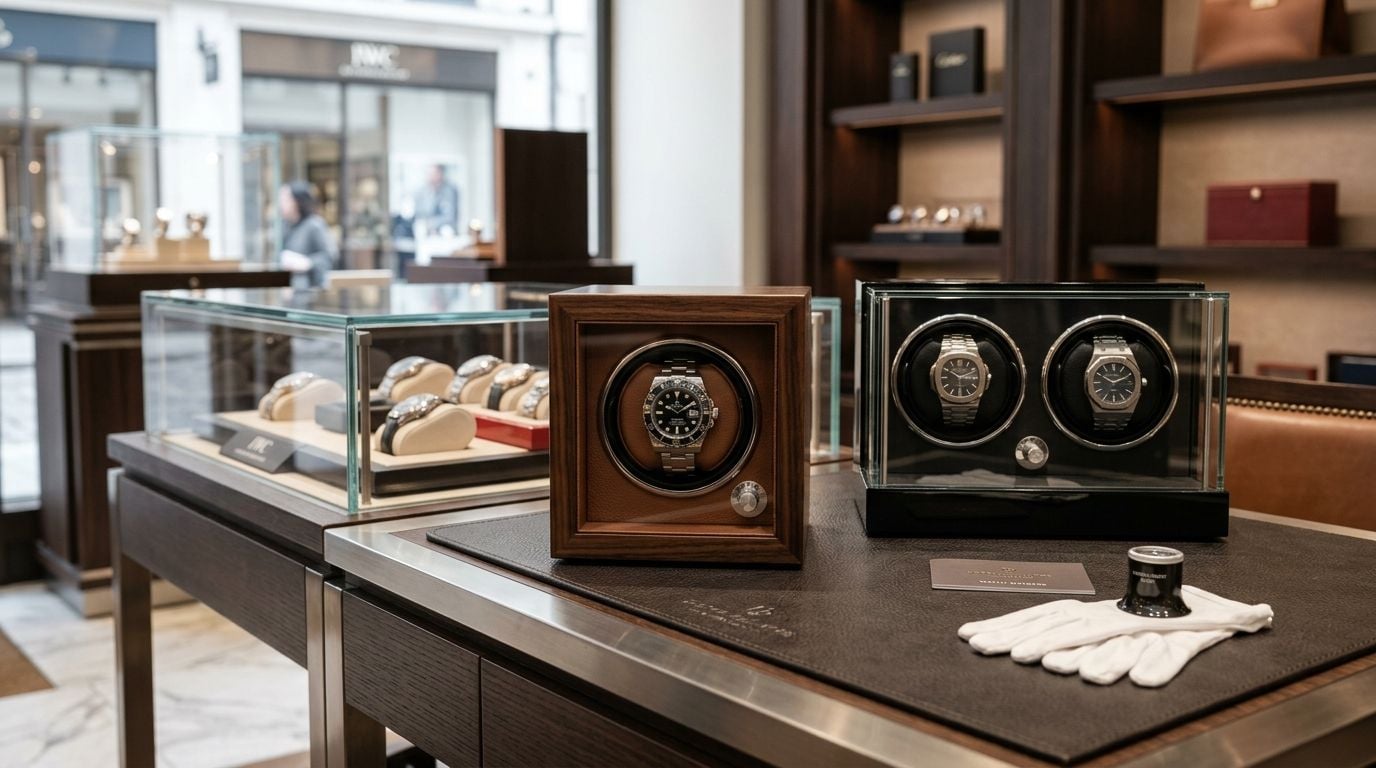

Chronograph movements carry a heavier rotor, extra sub-dials, and pusher mechanisms that make automatic winding more demanding than a plain three-hand watch — a watch winder for chronograph pieces has to match torque and turns-per-day to that added mass, not just spin at a default setting. This guide ranks five winders built for chronograph collections in 2026, from single-caliber setups to twelve-piece rotations, and tells you exactly which one fits your collection size.
Best overall: Virtuoso Series 6 Watch Winder. Best for two-piece security: Impresario Series 2 Watch Winder. Best for display: Yachtline Series 8 Watch Winder. Best budget entry: Virtuoso Series 2 Watch Winder.
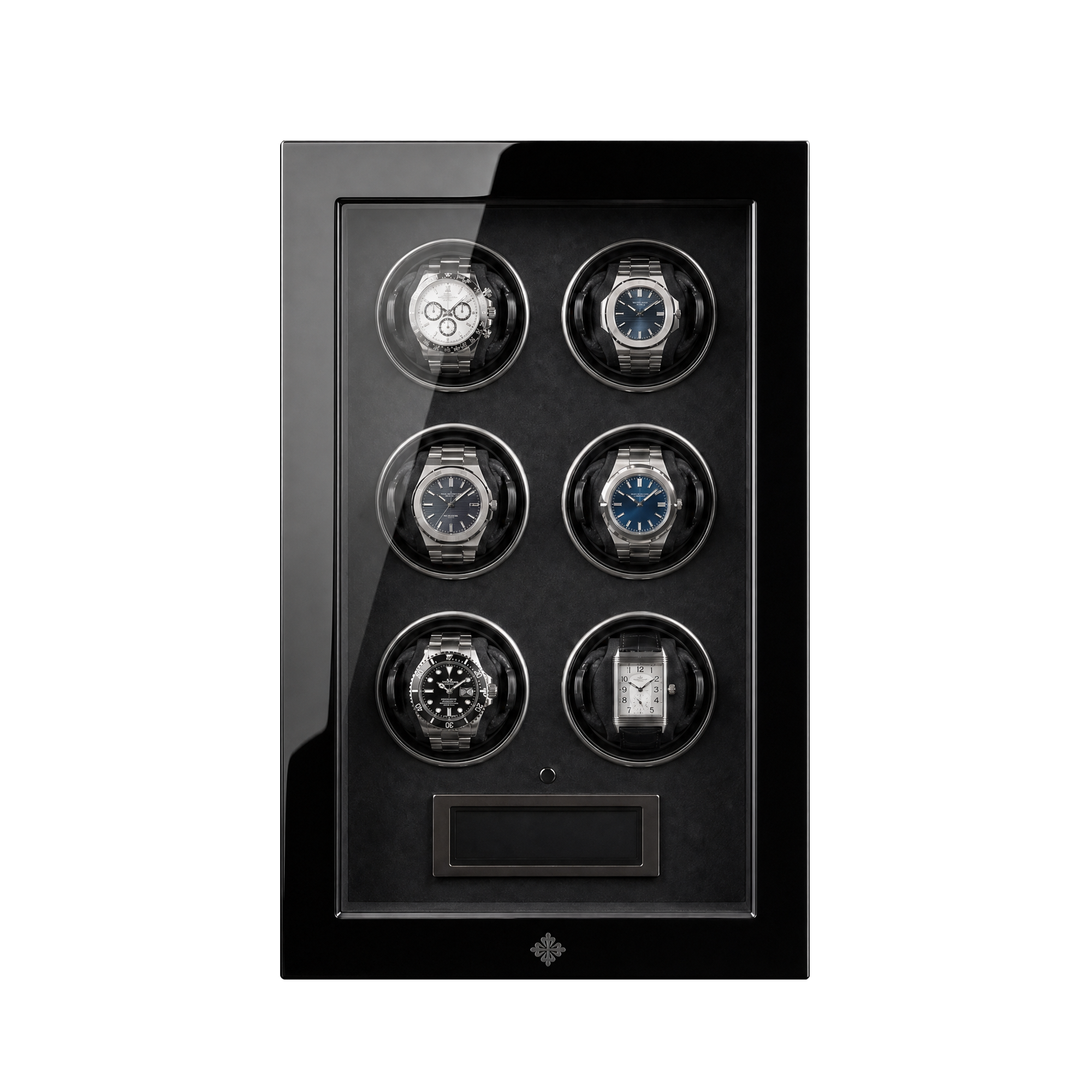
- Virtuoso Series 6 Watch Winder wins overall for chronograph collectors running mixed calibers on independent TPD programs.
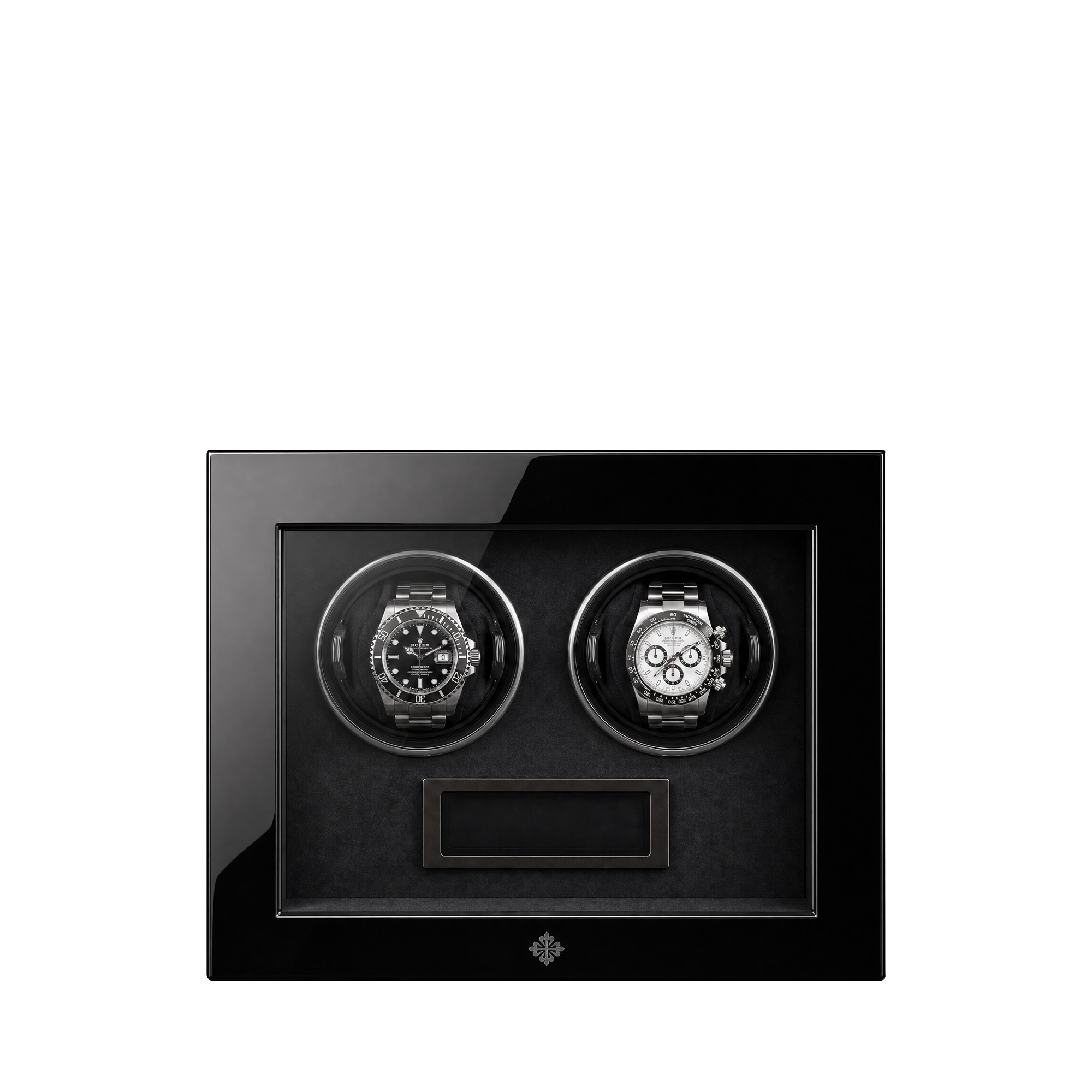
- Impresario Series 2 Watch Winder pairs fingerprint access with independent rotor settings for a two-chronograph rotation.
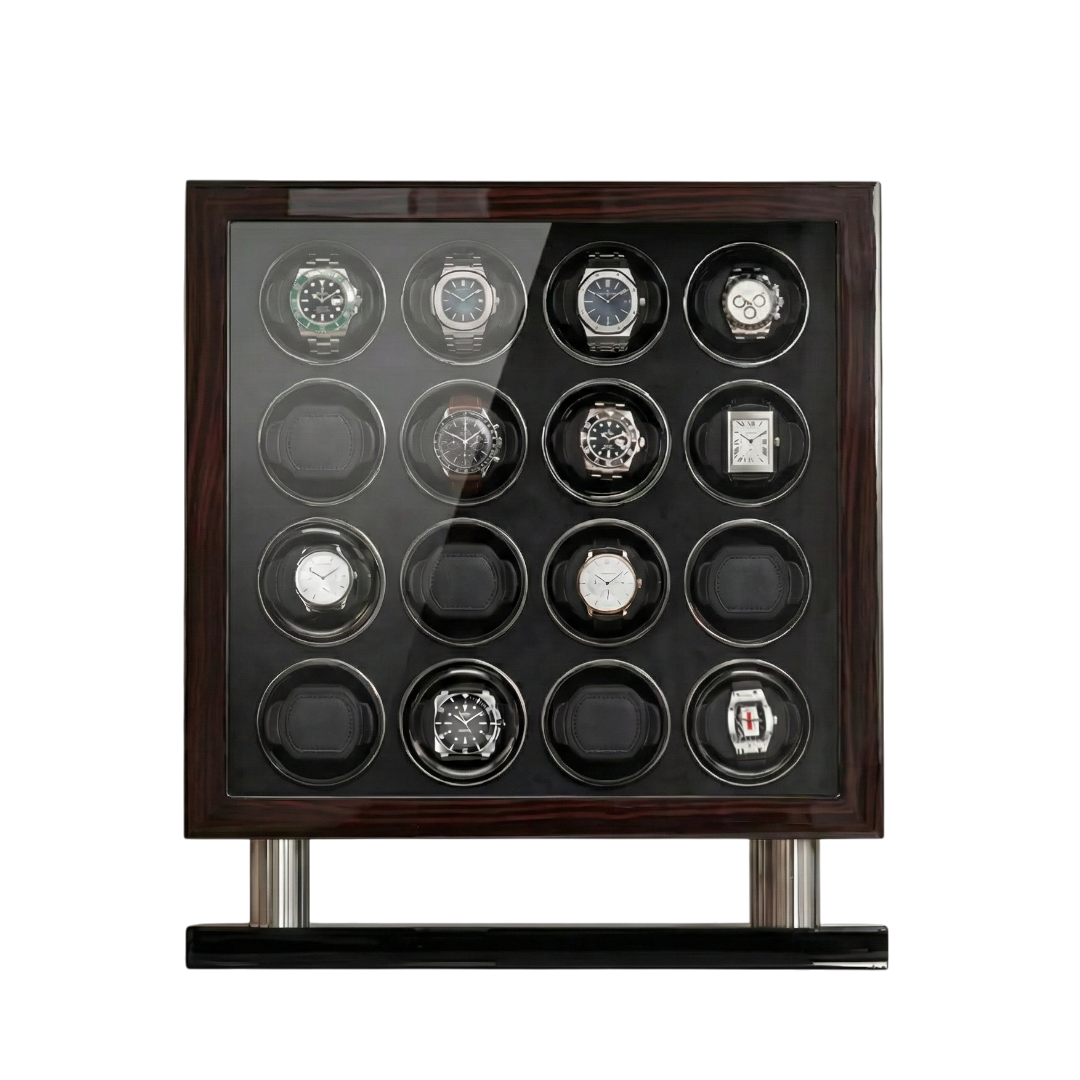
- Yachtline Series 8 Watch Winder lays eight chronographs flat, a format many collectors prefer for display.
- Virtuoso Series 2 Watch Winder is the entry point for one or two chronographs without a cabinet-scale purchase.
- A watch winder for chronograph movements needs independent per-slot programming more than a three-hand collection does.
Why this matters
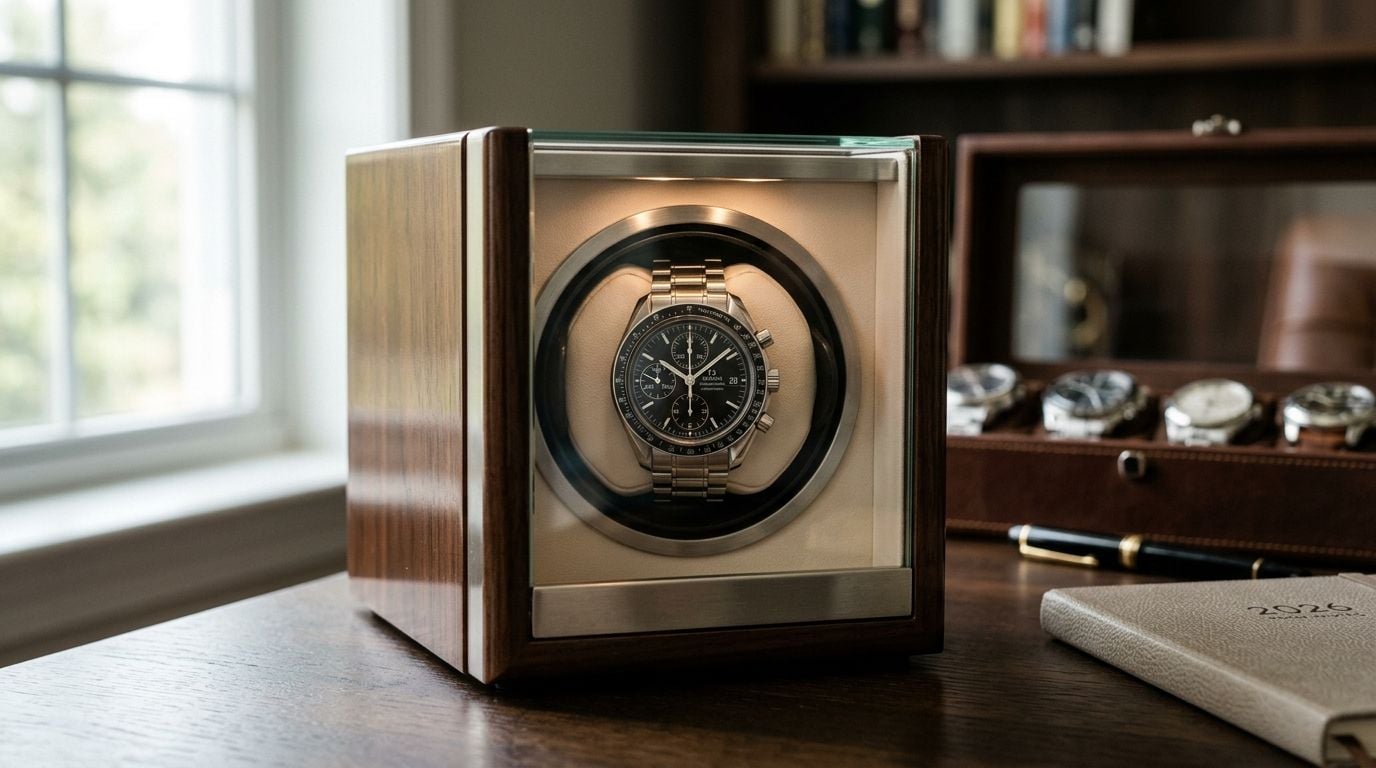
A chronograph rotor is heavier than a time-only rotor because it drives the chronograph works alongside the base movement, and pusher buttons sit proud of the case in a way three-hand watches don't. Run the wrong turns-per-day count and you either under-wind the mainspring or force the movement through more cycles than it needs. Chronograph TPD settings vary by caliber — as a general range across chronograph movements, expect somewhere between 600 and 950 turns per day, with several calibers requiring bidirectional rotation rather than one-way winding.
That's the gap most winders miss. A generic single-program box treats every watch on the same schedule. A watch winder for chronograph collections needs slot-by-slot control, because a Speedmaster-style caliber and a GMT chronograph rarely share the same TPD number.
What makes the best watch winder for chronograph collections
- Independent TPD per slot — mixed chronograph calibers need separate programs, not one setting applied to every rotor
- Bidirectional rotation — several chronograph movements specify clockwise, counterclockwise, or alternating cycles
- Telescopic, oversized cushions — chronograph cases run larger and pushers need clearance the cushion shouldn't catch on
- Motor consistency — Japanese Mabuchi motors run quieter and hold torque more evenly over years of daily cycling than unbranded substitutes
- Access control — higher-value chronographs justify biometric or key-locked security over an open box on a dresser
- Room to grow — a two-slot winder works for a starter chronograph but stalls the moment a second reference joins the collection
Watch winders for chronographs at a glance
| Winder | Best for | Standout feature | Key limitation |
|---|---|---|---|
| Virtuoso Series 6 | Mixed-caliber chronograph collections | Six independent TPD programs, one per rotor | No biometric lock |
| Impresario Series 2 | Two-chronograph rotation with security | Fingerprint access, independent per-slot programs | Only two slots |
| Yachtline Series 8 | Horizontal display of large-case chronographs | Eight rotors laid flat like a display tray | Needs more surface footprint than an upright cabinet |
| Virtuoso Series 2 | Entry-level chronograph winding | Independent TPD at the smallest footprint in the line | Only two slots, no expansion |
| Watch Winders Pillow | Oversized chronograph cases in an existing winder | Telescopic cushion spans 36mm to 55mm | Not a winder on its own |
1. Virtuoso Series 6: best watch winder for chronograph collectors with mixed calibers
The Virtuoso Series 6 Watch Winder runs six chronographs at once, each on its own program rather than a shared cycle. That matters the moment a collection mixes brands, because a Zenith chronograph and a Breitling rarely call for the same turns-per-day count or rotation direction.
Virtuoso Series 6 pros:
- Six independent TPD and direction settings running simultaneously
- Macassar Ebony exterior with Alcantara interior lining
- Scales cleanly for collectors who add references over time
Virtuoso Series 6 cons:
- No fingerprint or key lock included
- Six slots is more capacity than a one- or two-watch chronograph owner needs
Best for: collectors rotating four to six chronographs across different brands. Verdict: Buy.
2. Impresario Series 2: best watch winder for chronograph for two-piece security
The Impresario Series 2 Watch Winder unlocks with a fingerprint and runs both rotors on independent programs, which covers the two most common chronograph pairings — a dress chronograph and a sport chronograph running different TPD requirements.
Impresario Series 2 pros:
- Biometric access instead of an open cushion box
- Independent programs per slot despite the compact two-piece footprint
- Telescopic cushions sized for larger chronograph cases
Impresario Series 2 cons:
- Two slots caps growth at a second chronograph
- Biometric mechanism is one more component that can eventually need service
Best for: a two-chronograph rotation where security matters as much as winding. Verdict: Buy.
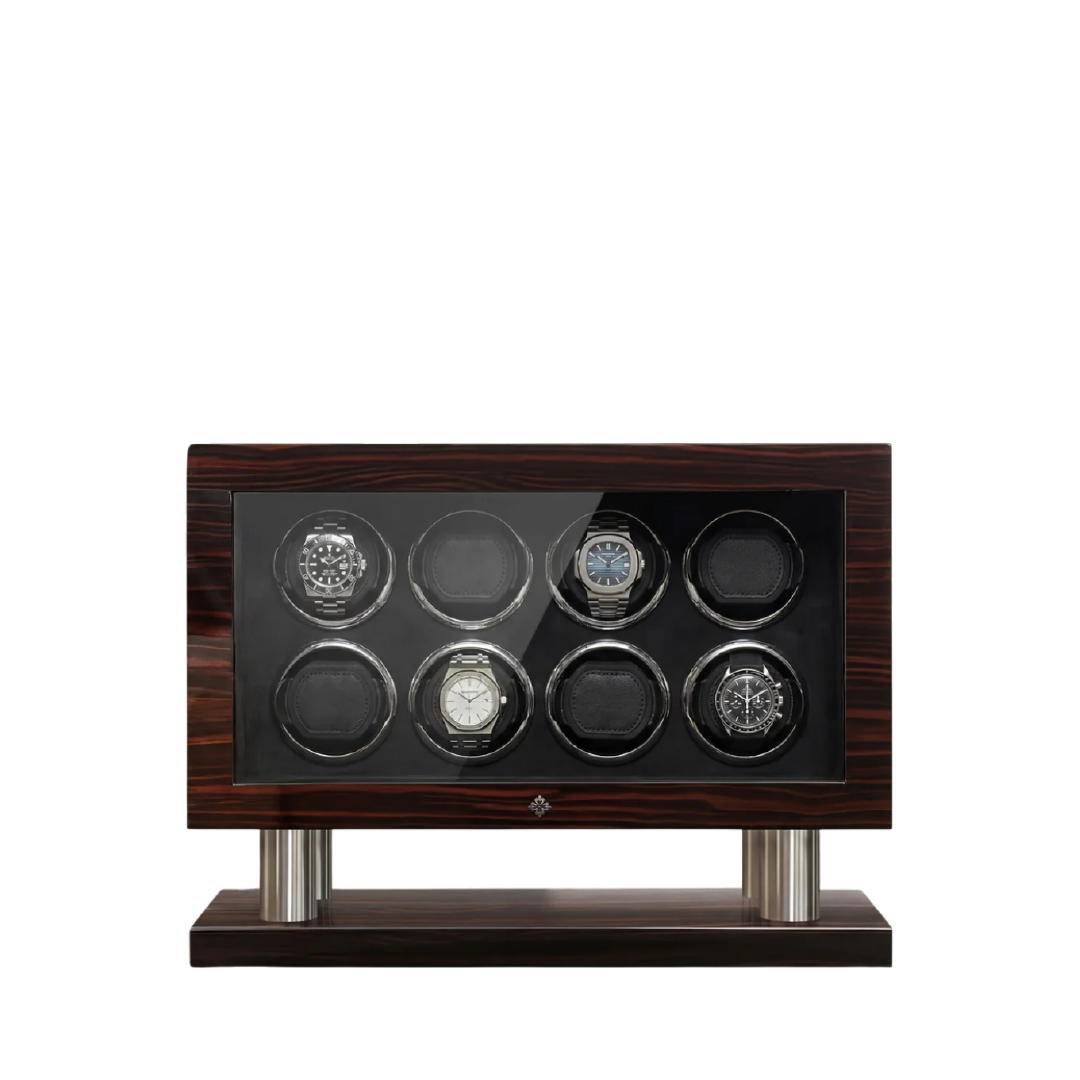
3. Yachtline Series 8: best watch winder for chronograph collections built for display
The Yachtline Series 8 Watch Winder lays eight chronographs flat, tray-style, instead of standing them upright. Chronograph dials with sub-registers and tachymeter bezels read better from above than from an angled cabinet shelf, which is the entire case for this format.
Yachtline Series 8 pros:
- Eight independent rotors visible at a glance
- Horizontal layout suits a credenza, console, or yacht cabin
- Biometric access on a display-forward unit
Yachtline Series 8 cons:
- Needs more surface area than a vertical cabinet of similar capacity
- Not the right format for a closet or drawer installation
Best for: collectors who want chronographs visible, not stored behind a door. Verdict: Buy.
4. Virtuoso Series 2: best budget watch winder for chronograph starters
The Virtuoso Series 2 Watch Winder carries the same independent-program logic as its larger siblings into a two-slot unit, which makes it the entry point for a collector with one or two chronographs and no cabinet-scale budget yet.
Virtuoso Series 2 pros:
- Independent TPD per rotor even at two slots
- Smallest footprint in the Virtuoso line
- Same Macassar Ebony and Alcantara build language as the Series 6
Virtuoso Series 2 cons:
- Only two slots — a third chronograph means buying again
- Fewer display cues than the Yachtline format
Best for: a first or second chronograph without committing to a large winder yet. Verdict: Buy.
5. Watch Winders Pillow: best accessory for oversized chronograph cases
The Watch Winders Pillow isn't a winder — it's a telescopic cushion built to span 36mm to 55mm cases, which covers most chronograph diameters including pieces with raised pushers and thick bezels. Pair it with an existing winder that's undersized for a newer, larger chronograph.
Watch Winders Pillow pros:
- Telescopic fit across a wide case-size range
- Solves a real problem: factory cushions in older winders often don't clear chronograph pushers
Watch Winders Pillow cons:
- Does nothing on its own — requires a compatible winder
- Won't fix a winder with the wrong TPD program for the caliber
Best for: an existing winder whose stock cushion doesn't fit a newer chronograph. Verdict: Buy (as an add-on, not standalone).


How we ranked these
Each winder was measured against the six criteria above: independent TPD control, bidirectional capability, cushion sizing for larger chronograph cases, motor consistency, access security, and room for the collection to grow. The Virtuoso Series 6 wins overall because it hits all six without forcing a security trade-off; the others earn their spot by solving one job — two-piece security, display, budget, or cushion fit — better than the alternatives.
Which watch winder should you choose?
If you're managing more than three chronographs across different brands, the Virtuoso Series 6 Watch Winder is the default answer in 2026 — independent programs per slot solve the actual problem chronograph collectors face. If you're starting with one or two references, the Virtuoso Series 2 does the same job at a smaller scale, and if biometric security matters more than raw slot count, the Impresario Series 2 is the better fit. Don't buy a display-forward unit like the Yachtline Series 8 unless you actually want the watches visible; it solves a preference, not a winding problem.
FAQ
What’s the best watch winder for a chronograph in 2026?
The Virtuoso Series 6 Watch Winder is the best overall pick for chronograph collections in 2026 because it runs six independent TPD programs instead of one shared cycle. That matters most once a collection mixes chronograph brands with different winding requirements.
Do chronograph watches need a different TPD setting than three-hand watches?
Chronograph movements often need higher turns-per-day counts than a plain three-hand automatic because the rotor also drives the chronograph works. As a general range, expect 600 to 950 TPD depending on caliber, and check the specific movement before setting a program.
Is a bidirectional watch winder better for a chronograph?
For calibers that specify alternating or counterclockwise winding, yes — a one-way-only winder won’t wind those movements correctly. Winders with independent per-slot programs, like the Virtuoso and Impresario lines, let you set direction per watch instead of guessing.
How many chronographs can fit in one watch winder?
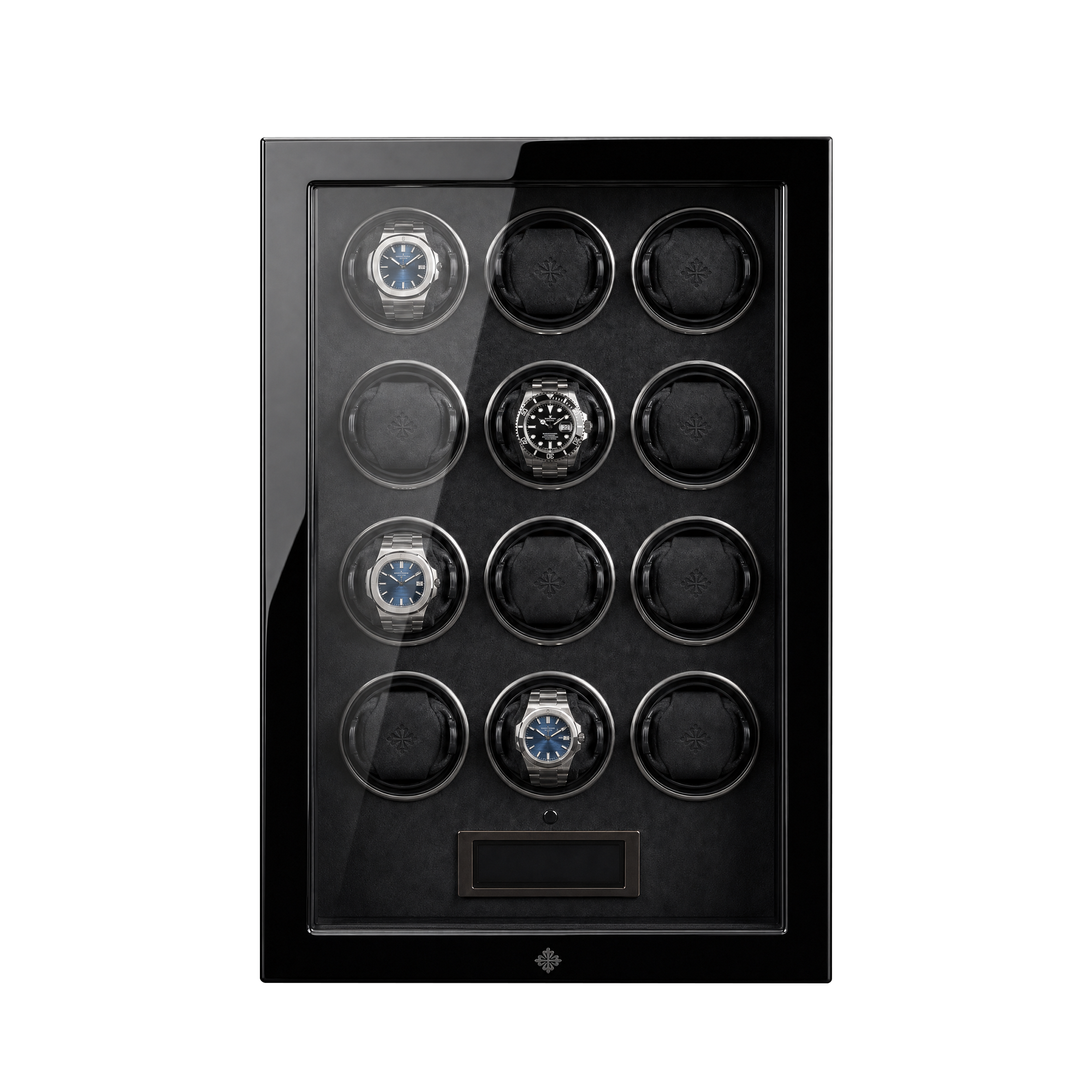
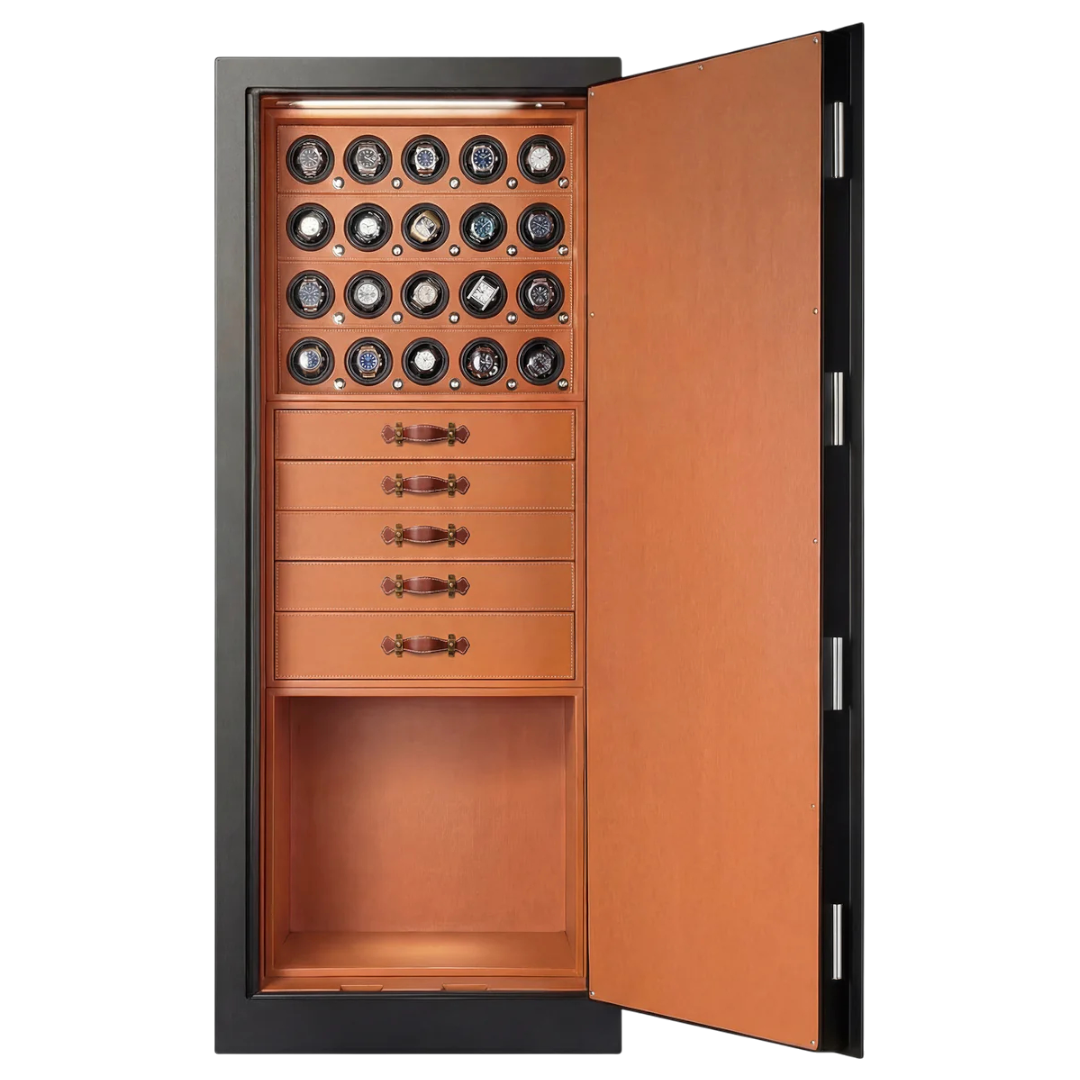
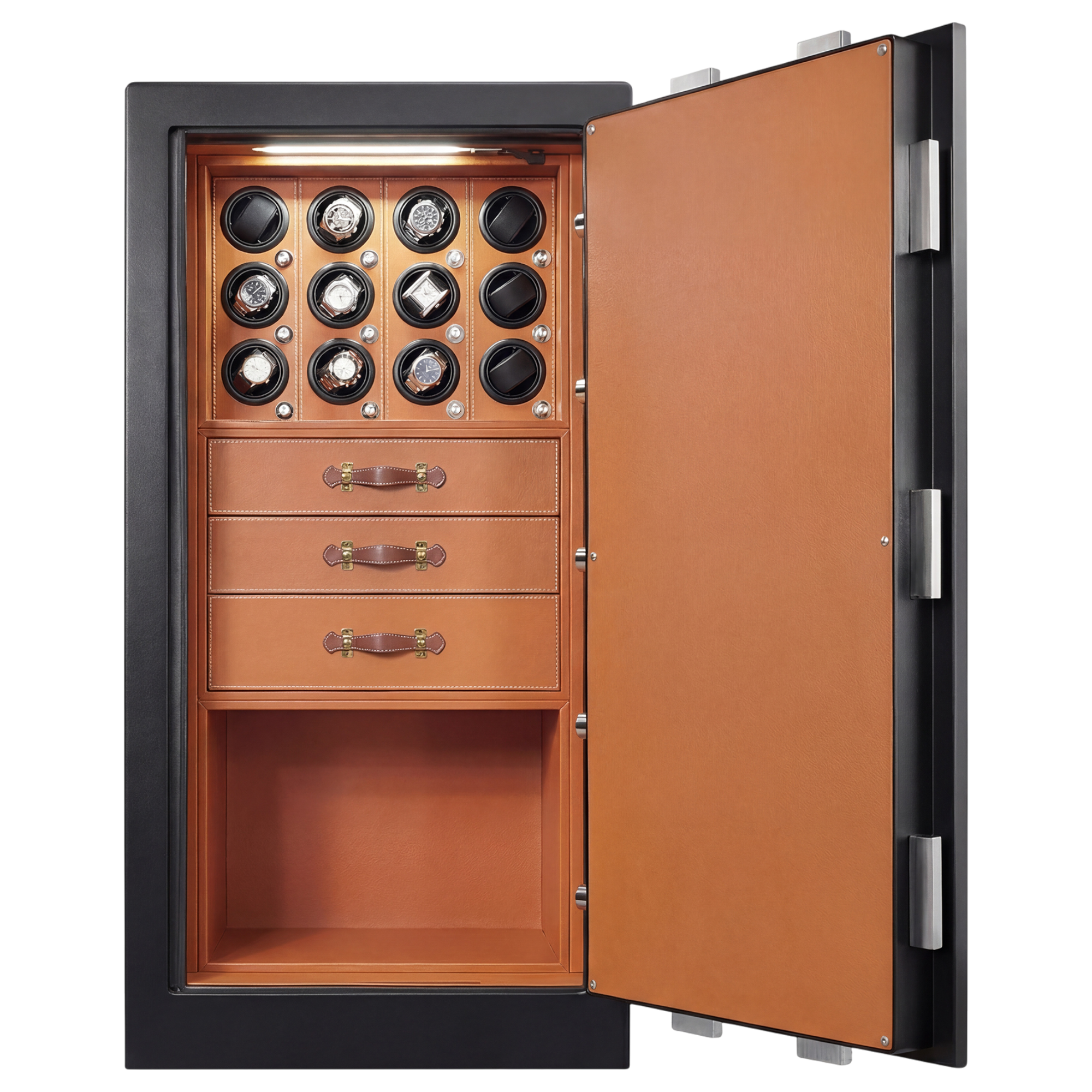
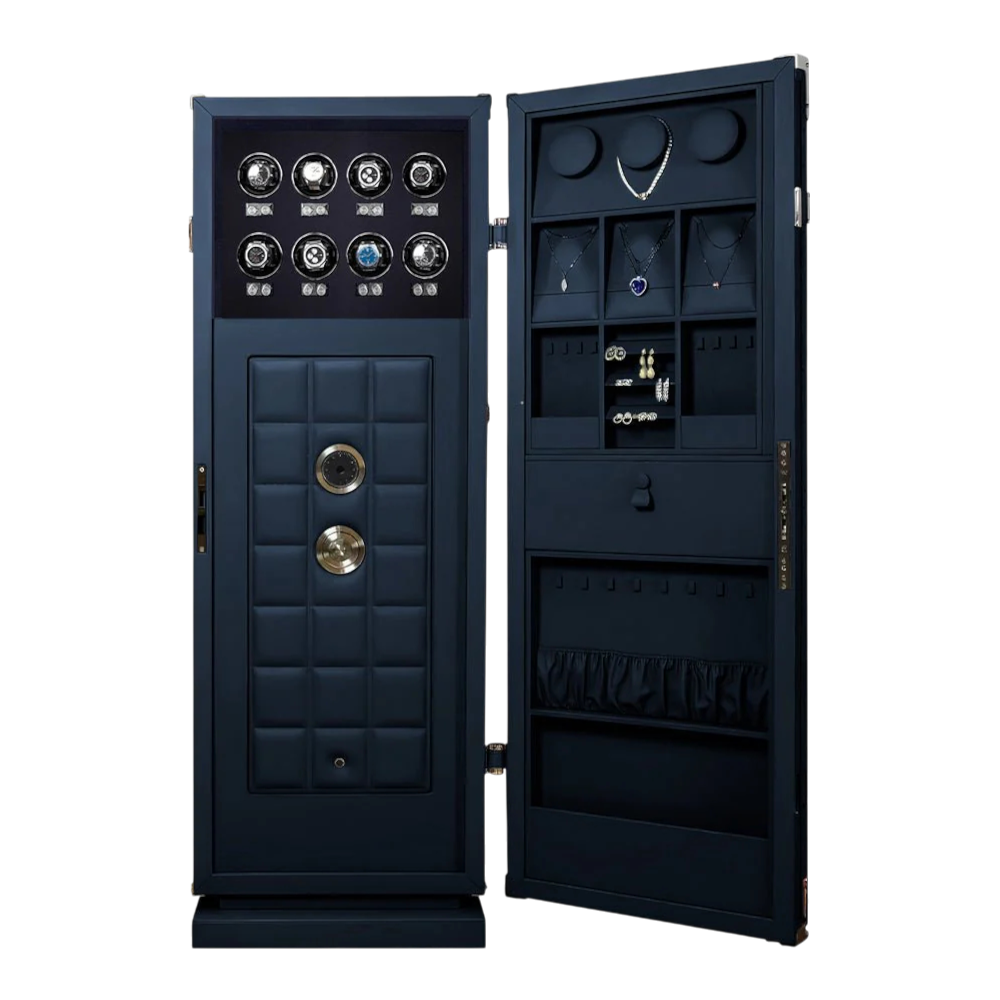
Enigwatch’s chronograph-suited lineup ranges from two slots (Virtuoso Series 2, Impresario Series 2) up to twelve (Impresario Series 12), with six and eight-slot options in between. Pick capacity based on your current collection plus a slot or two for growth.
Does a watch winder work with a chronograph that has a leather strap?
Yes, as long as the cushion accommodates the case size and strap thickness without pinching the leather. A telescopic cushion, like the one built into the Watch Winders Pillow, adjusts for cases from 36mm to 55mm.
Can one watch winder handle multiple chronograph brands at once?
Only if it offers independent programs per slot. A single-program winder forces every watch onto the same TPD and direction, which is wrong for at least one caliber in a mixed-brand collection.
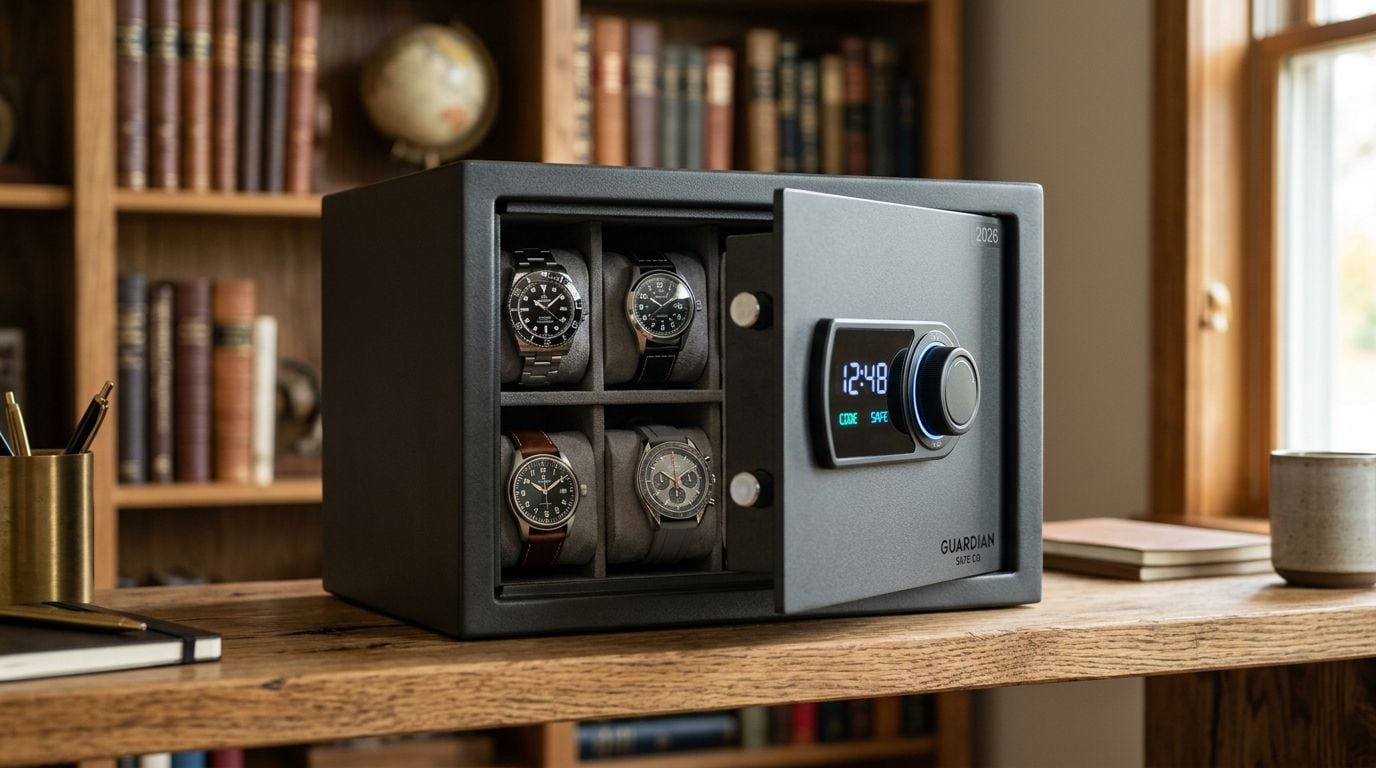
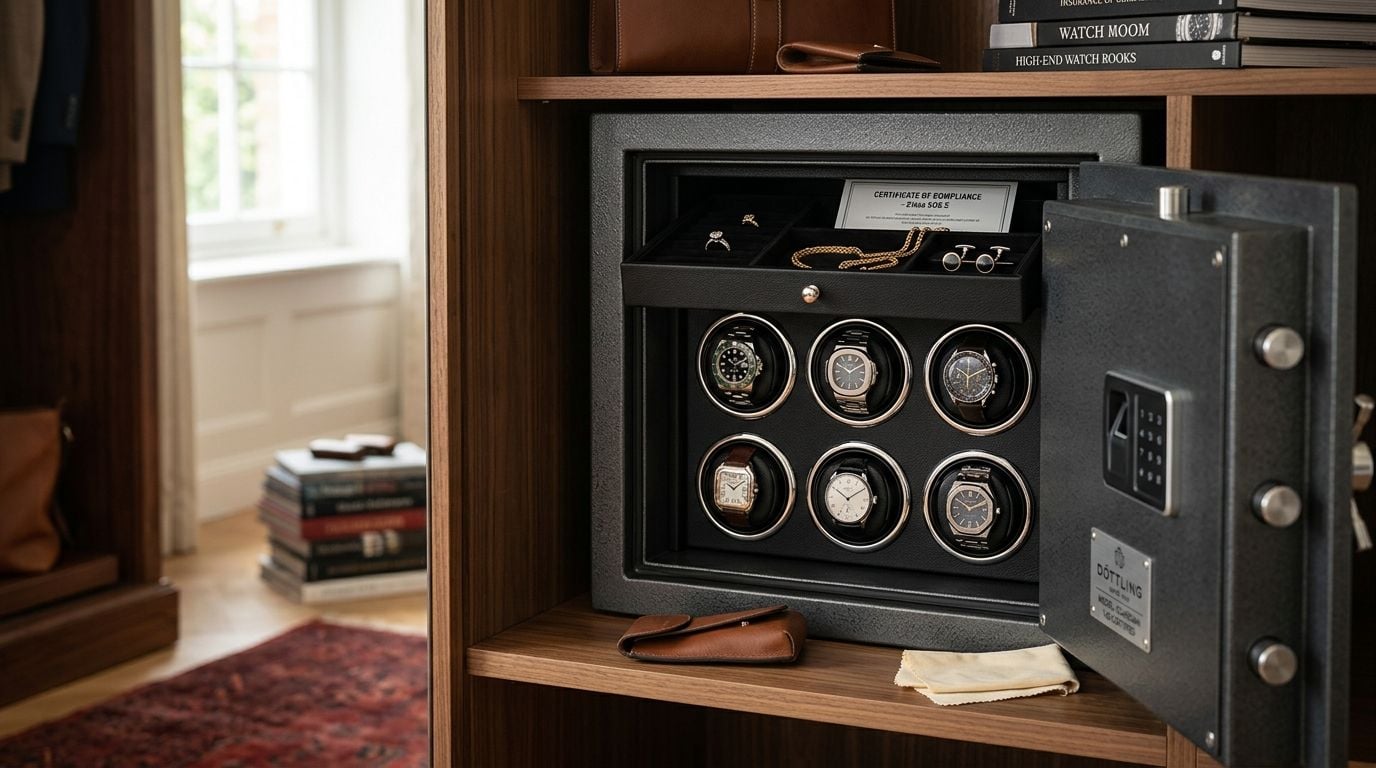
What’s the difference between a watch winder and a watch safe for chronographs?
A watch winder keeps automatic chronographs running and ready to wear by simulating wrist motion; a watch safe adds physical security and, in some models, fire protection but doesn’t wind the movement unless it’s a combined winder-safe unit.
One last thing
The detail most collectors miss: pusher buttons on a chronograph sit proud of the case, and a cushion sized for a three-hand watch can catch on them mid-rotation over months of daily cycling. Telescopic pillows built into the Virtuoso and Impresario lines matter more for chronographs than for any other watch type — check cushion clearance before checking TPD.
Related guides
Protect Your Watch Collection
Designed for collectors who demand the best. Explore our premium watch winders and luxury safes.