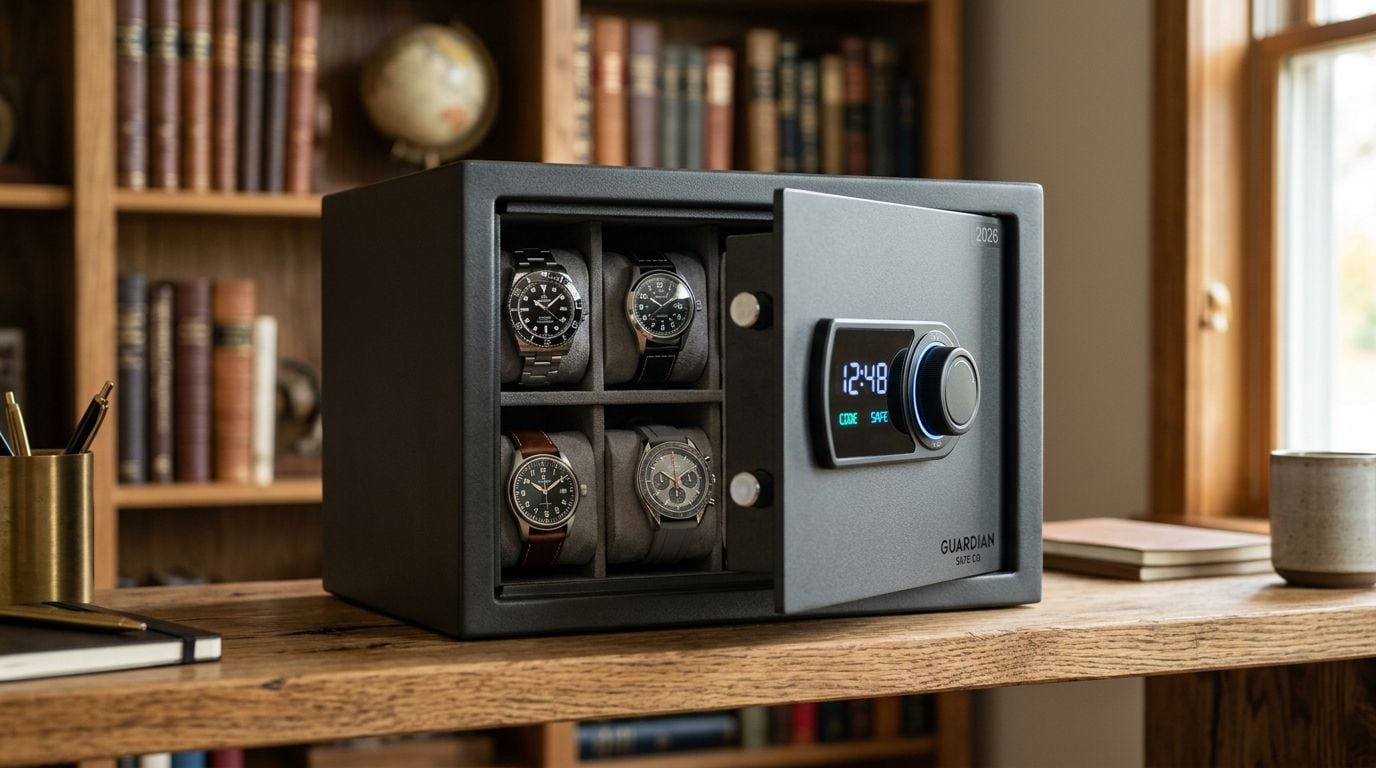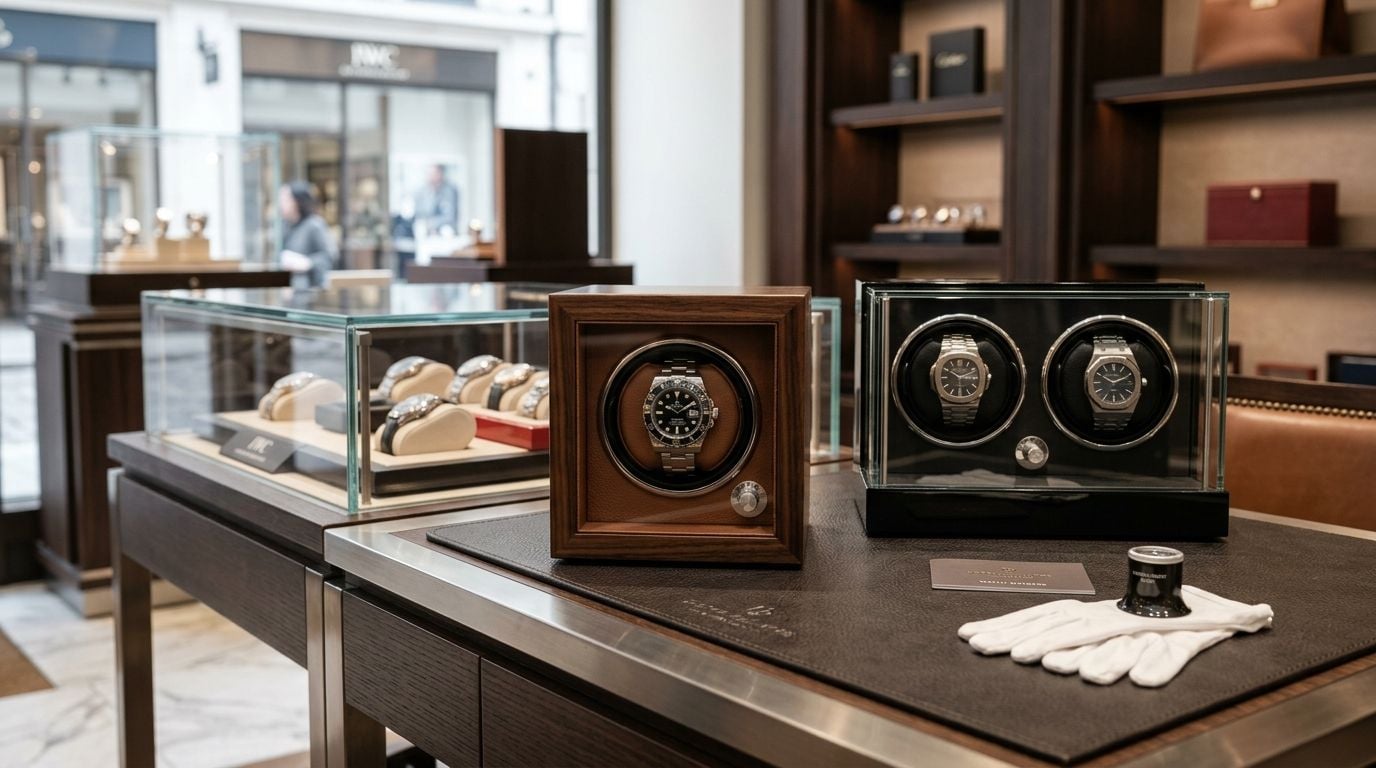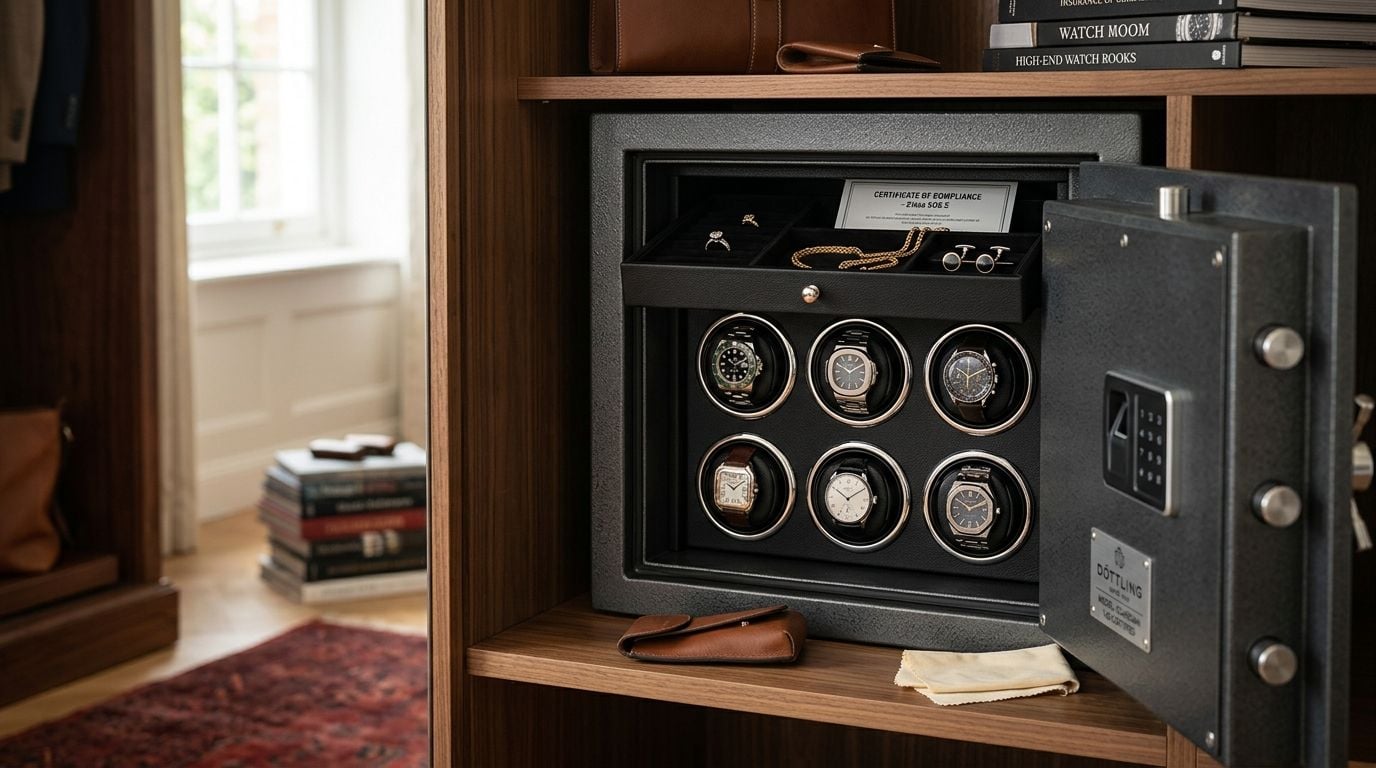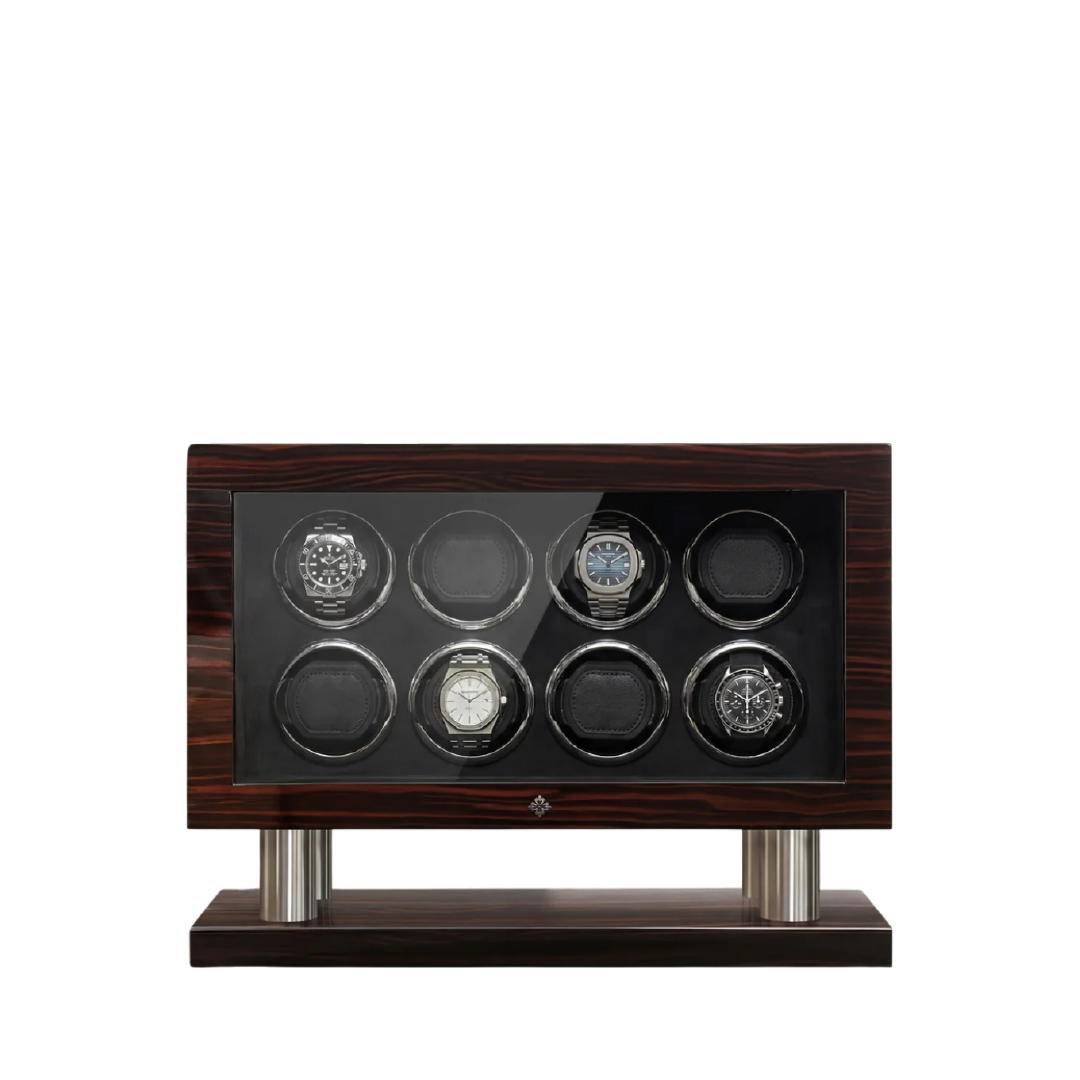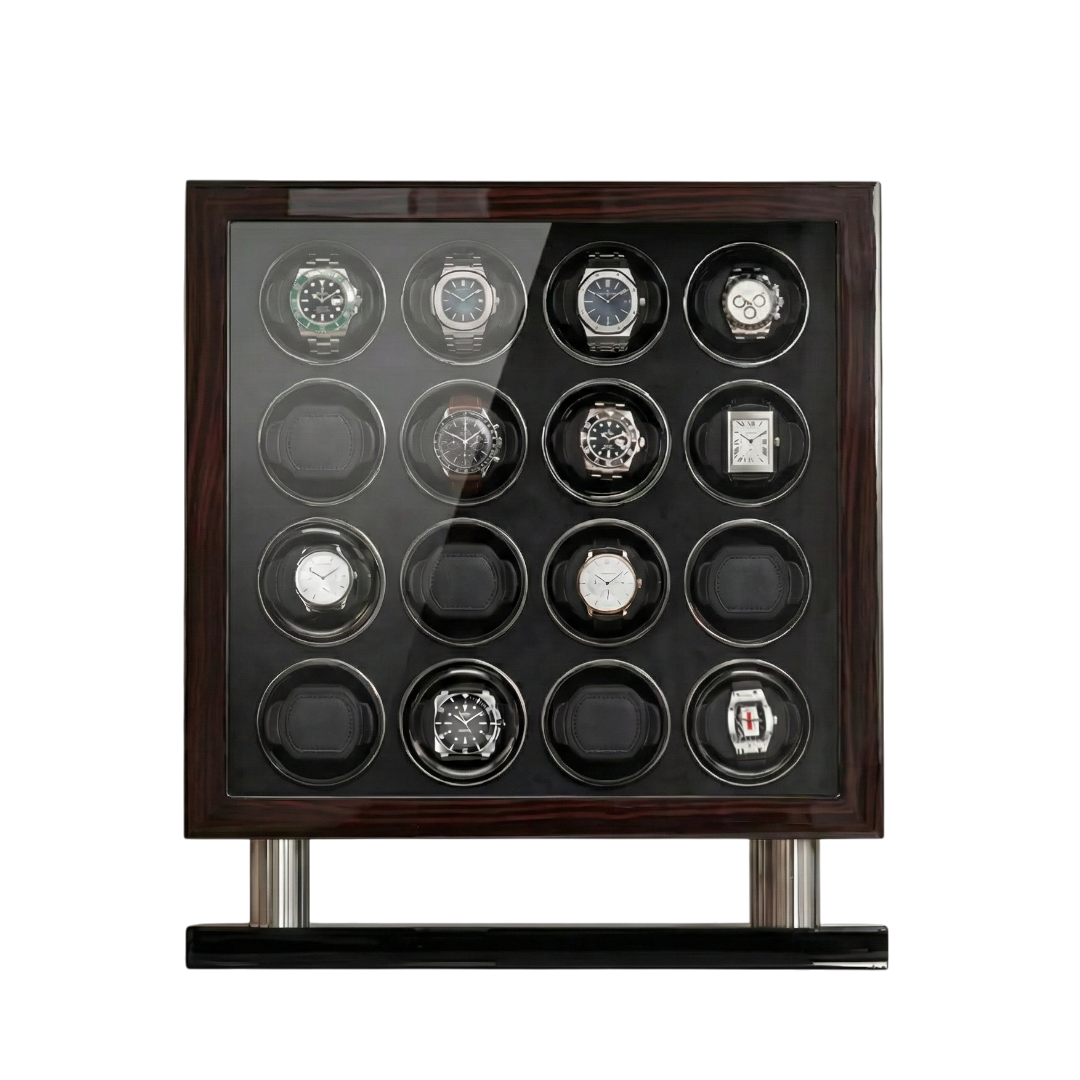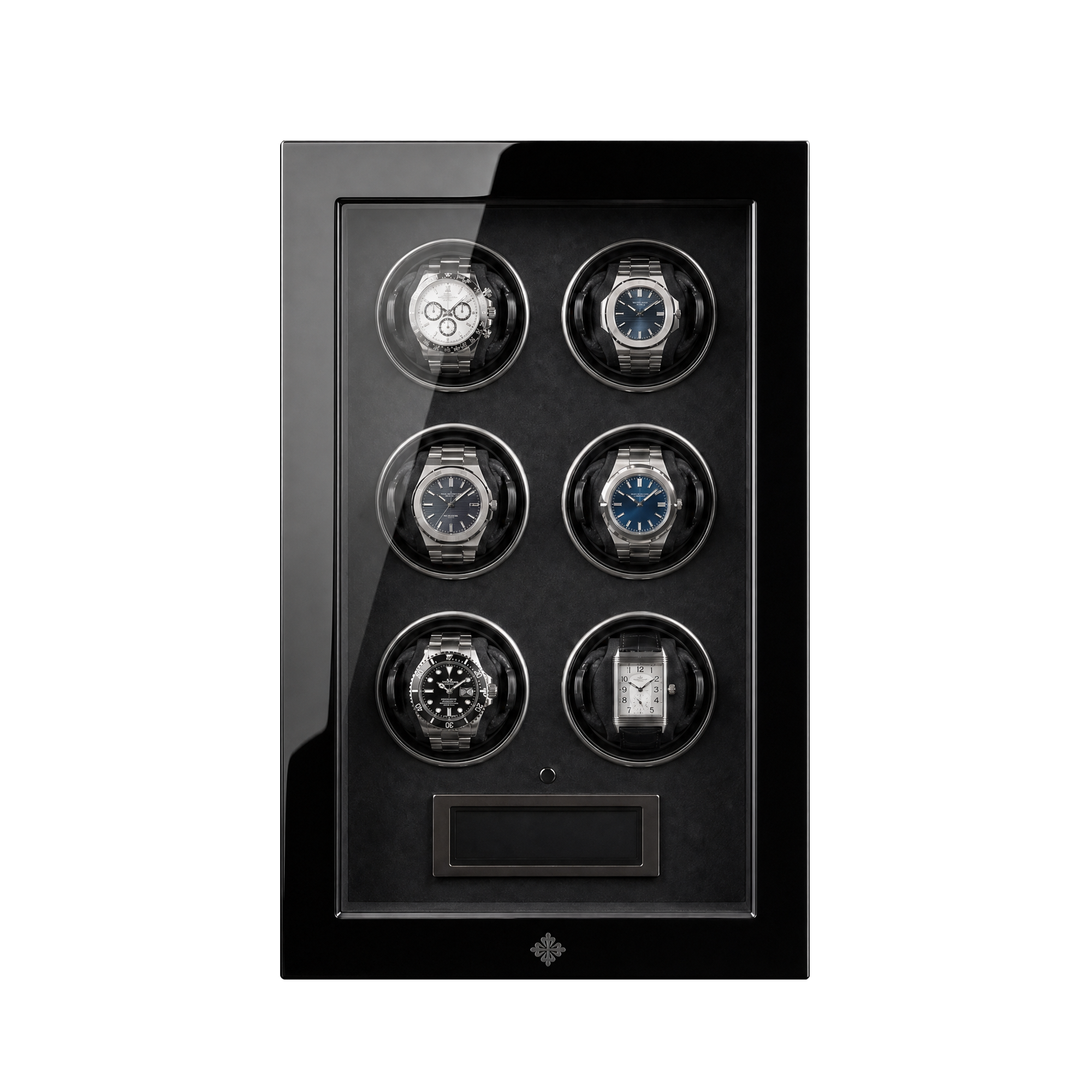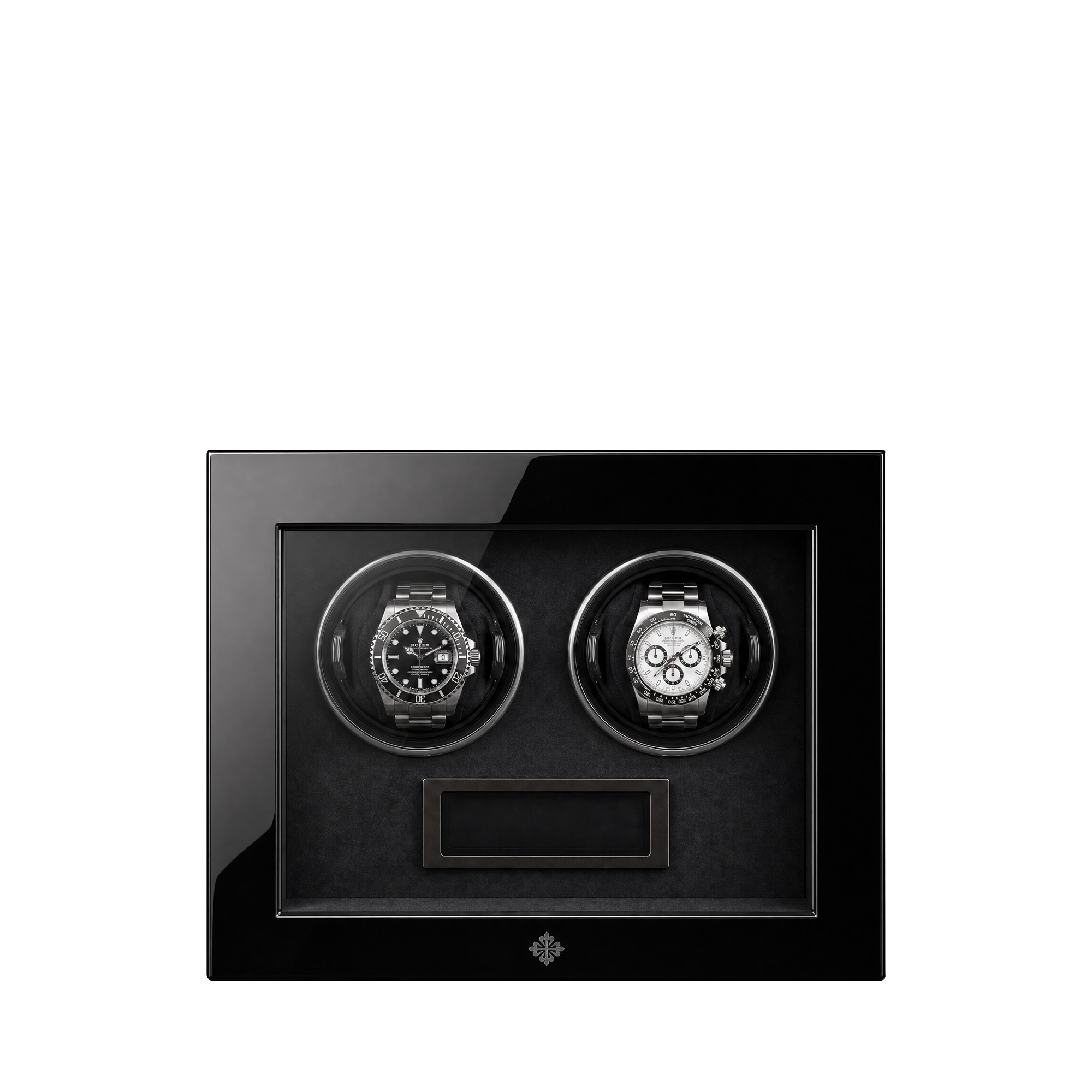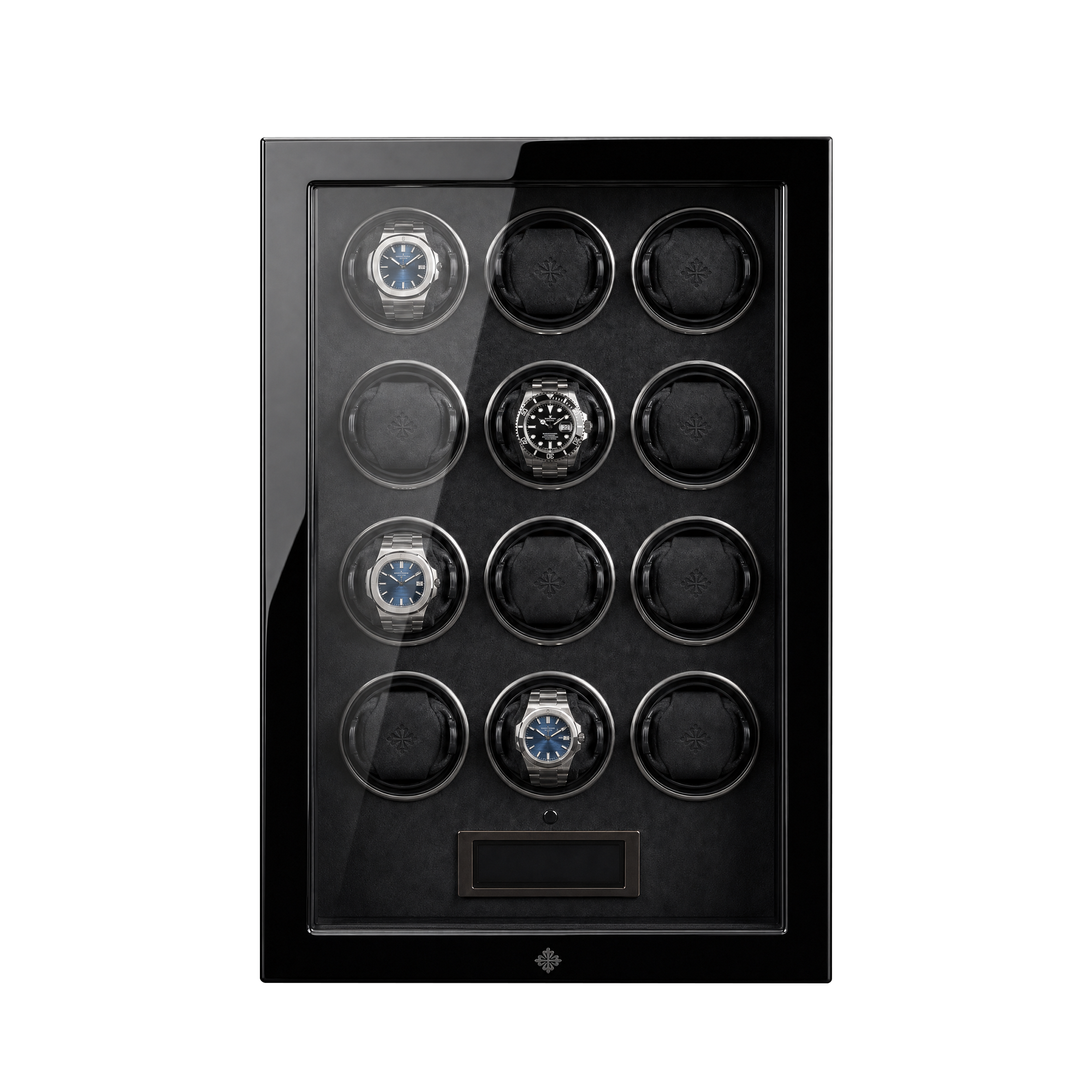

Choosing a watch safe is a decision about security tier, fire rating, capacity, interior finish, and access control. Get any of those wrong and you’re either over-spending on features you don’t need or under-protecting pieces you care about. This guide walks through the decision framework that serious collectors use: how to match security rating to collection value, why internal temperature matters more than the fire rating on the box, which interior finishes actually preserve watch cases over years, and how to think about scaling up as your collection grows. By the end, you should have a clear answer about which Enigwatch safe is the right infrastructure for your specific collection.
Step 1: Assess Your Collection Value
Security tier follows collection value. Everything else is downstream of this number.
Add up current market values across all pieces (use secondary market prices for pieces past initial warranty, retail for new pieces). Include hand-wound, automatic, quartz, and vintage. Total across the collection is what drives the safe decision.
| Collection value | Minimum safe tier | Recommended tier |
|---|---|---|
| Under $10,000 | Locked box | UL RSC, fire-rated |
| $10,000-$50,000 | UL RSC | UL RSC with 1-hour fire |
| $50,000-$250,000 | UL RSC with 1-hour fire | UL TL-15 with 2-hour fire |
| $250,000-$1M | UL TL-15 | UL TL-30 with 2-hour fire |
| $1M+ | UL TL-30 | Custom TL-30×6 or commissioned vault |
Step 2: Decide Fire Rating Tier
Fire protection matters as much as theft protection. Watches aren’t paper — lubricants fail above 200°F, rubber gaskets fail above 250°F. Standard UL fire ratings are calibrated for paper survival at 350°F internal temperature.
30-minute rating: Minimal fire protection. Appropriate only for small collections in fire-safe homes.
1-hour 350°F rating: Standard residential fire protection. Interior temperature below 350°F for one hour. Acceptable for most residential collections but risks watch damage in prolonged fires.
2-hour 350°F rating: Preferred for watch collections. Interior stays below 350°F for two hours, typically staying below 250°F during most of that window.
Class 150 or 125 ratings: Media-grade protection with interior below 150°F or 125°F. Expensive. Appropriate only for vintage pieces or perpetual calendars where mechanical stability is paramount.
Step 3: Choose Interior Finish
Interior finish matters more than buyers expect. You’re opening the safe regularly — weekly, sometimes daily. Every time a watch moves against the interior surface, abrasion happens.
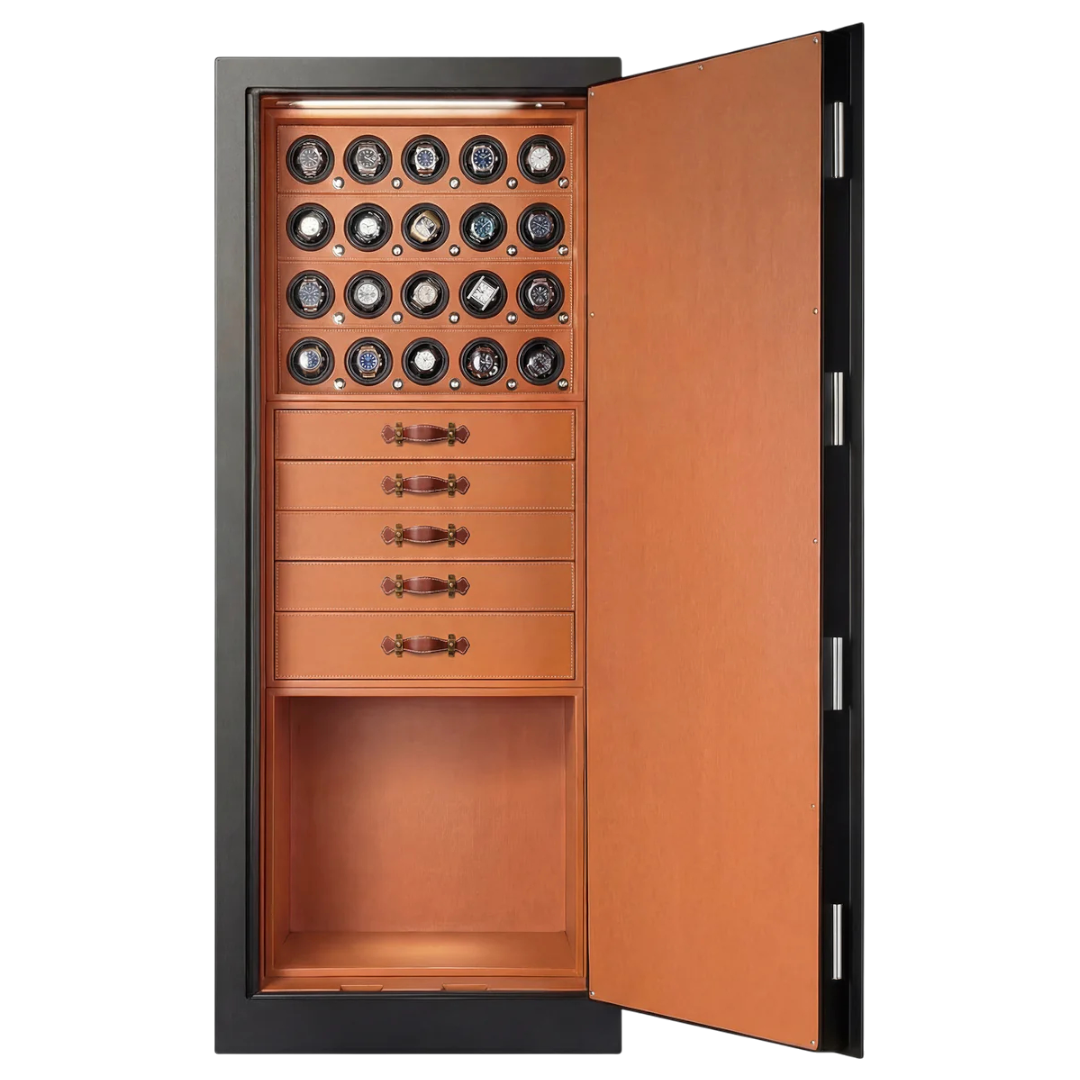
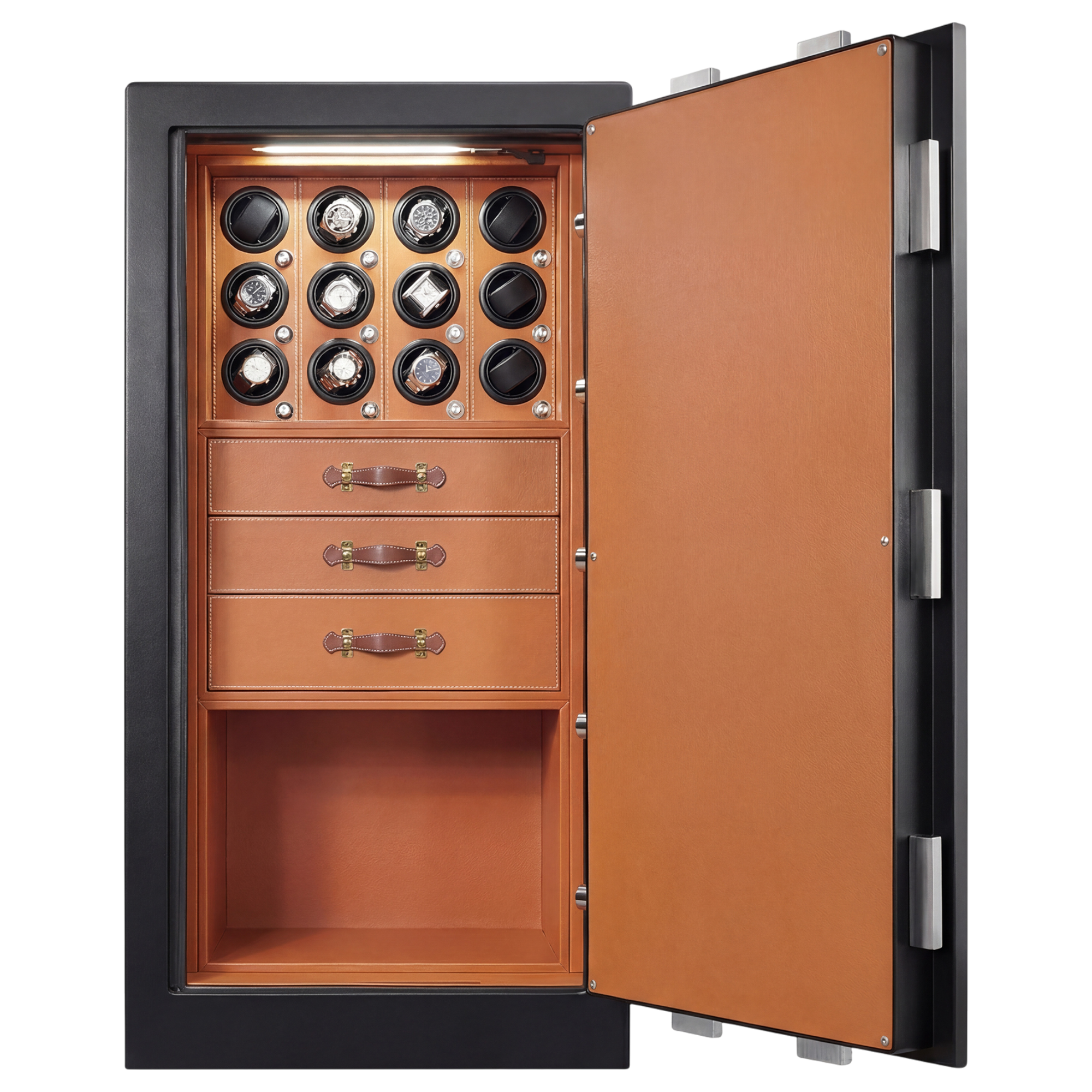
Leather-lined: Soft, safe for all case finishes, looks and feels premium. The standard for high-end watch safes.
Felt-lined: Soft, safe for all finishes, less premium aesthetic but fully functional. Common in mid-tier safes.
Cedar-lined: Aromatic, moisture-regulating, somewhat abrasive on soft metals. Better suited to storage than active-rotation.
Polyester synthetic (avoid): Common in jewellery safes marketed as watch safes. Accumulates abrasive dust. Creates micro-scratches on case finishes over years.
Step 4: Plan Capacity with Growth
Buy with room for growth. Most collectors who start at five pieces are at ten within five years. Standard guidance:
Current collection + 50% capacity for 2-3 year growth. A 6-piece collection buys a 10-slot safe. A 12-piece collection buys an 18-20 slot safe.
Account for hand-wound and occasional pieces that need storage but not winder rotors. These take space even if they’re not in daily rotation.
Step 5: Decide on Integrated Winders
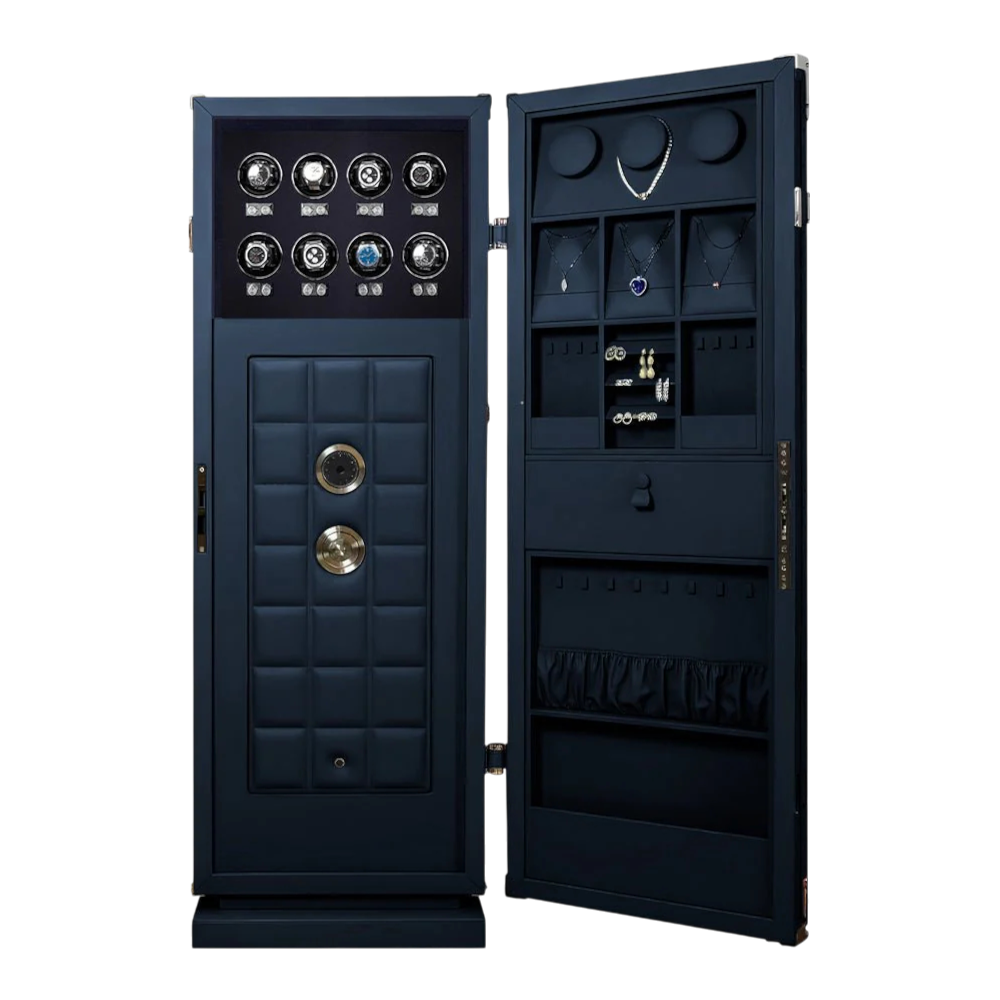
Combined winder-safe units solve the active-winding-plus-secure-storage problem in one piece of furniture. They cost roughly the same as separate winder and safe purchases but consolidate infrastructure.
Choose integrated if your collection is mostly automatic and you want them all wound inside secure storage. Choose separate units if your collection is mostly hand-wound or if you value flexibility in upgrading winder and safe independently over time.
See our combined winder-safe guide for details.
Step 6: Choose Access Control
Key-only locks are insufficient for any serious collection. Electronic access is standard.
Keypad: Familiar, reliable, vulnerable to shoulder-surfing. Use long PIN codes (8+ digits) and avoid easily guessable combinations.
Biometric: Convenient, fast access, vulnerable to sensor failure without backup. Use only with dual-authentication backup.
Dual-authentication (biometric + PIN): Best practice for watch safes. Combines convenience with security. Eliminates single-point-of-failure modes.
See our biometric safe guide for specifics on what matters in fingerprint access.
Step 7: Plan Placement and Installation
Bolt-down mounting is mandatory. Unbolted safes walk out of houses regardless of weight.
Indoor placement with stable temperature and humidity. Avoid garages, basements with flooding risk, and rooms with direct sunlight exposure.
Access routes that allow safe movement into position. Large safes may require professional moving.
Bolt-through-floor installation for concrete or reinforced flooring. For wooden floors, through-bolting to joists or structural blocking.
The Enigwatch Options by Tier
| Tier | Safe | Use case |
|---|---|---|
| Entry residential | Apollo | 5-10 piece collections under $30,000 |
| Mid residential | Veron 12 | 6-12 piece collections $30,000-$75,000 |
| High residential | Veron 20 | 12-20 piece collections $75,000-$250,000 |
| Premium residential | Titan Sanctum 20 | 20-piece collections $250,000-$1M |
| Commercial tier | Centennial Bulletproof | Collections $500,000+, ballistic protection |
| Custom vault | Custom Watch Safe | 30+ piece collections, commissioned builds |
Browse the full Vaults collection or commission a custom build through the custom safes page.
What to Skip
Watch boxes marketed as safes. These are display boxes with keyed locks. A determined burglar defeats them in seconds.
Safes with polyester liners. These damage watch cases over years of use.
Unrated fire resistance. Only UL-tested ratings mean anything.
Safes without bolt-down provisions. These aren’t designed for serious security.
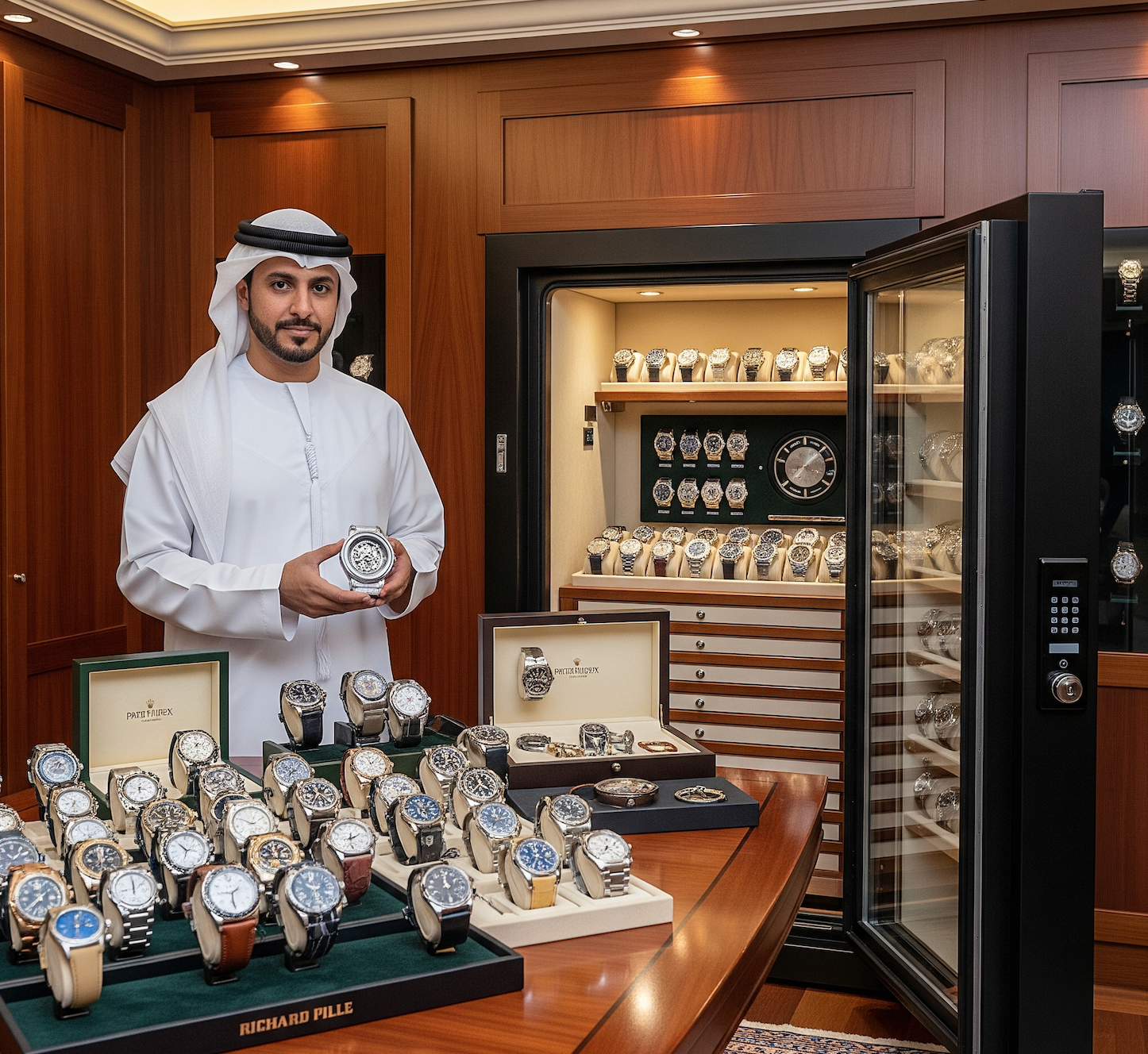
Glass-top display safes. Glass compromises fire protection and provides minimal theft resistance compared to solid steel.
Frequently Asked Questions
How do I know what safe tier I need?
Match security rating to collection total value. Under $50,000: UL RSC. $50,000-$250,000: UL RSC with 1-hour fire or TL-15. $250,000-$1M: TL-15 with 2-hour fire or TL-30. Above $1M: TL-30 or custom vault.
Is a TL-15 safe enough?
For collections $25,000 to $250,000, typically yes. TL-15 rates against power tool attack for fifteen minutes, which catches most residential burglary scenarios. For higher values or professional-target profiles, step up to TL-30.
What fire rating should I look for?
2-hour UL fire rating at minimum for serious collections. 1-hour rating is acceptable for smaller collections. Check interior maximum temperature — below 250°F is safer for watches than the standard 350°F threshold.
Do I need biometric access?
Not strictly, but dual-authentication (biometric plus keypad) is best practice for watch safes. Single-factor biometric risks lockout if the sensor fails. Keypad-only is vulnerable to shoulder-surfing.
Should I buy a combined winder-safe?
If your collection is mostly automatic and you want active winding inside secure storage, yes. If you have many hand-wound pieces, separate winder and safe give more flexibility.
How much should I budget?
Entry residential: $1,500-$3,500 USD. Mid residential: $3,500-$10,000. High residential (TL-15): $10,000-$25,000. Commercial (TL-30): $25,000-$60,000. Custom vaults: $40,000 and up.
What about travel?
Watch safes are residential furniture. For travel, use a travel case and hotel room safes for short-term storage. See our travel watch winder guide for travel-specific options.
Can I upgrade my safe as my collection grows?
Yes. Many collectors start with entry-tier safes and upgrade as collection value increases. Selling used safes recovers some investment. Plan for growth but don’t over-buy initially if current collection doesn’t justify the spend.
Build the Right Safe for Your Collection
Start with collection value, then apply the tier framework. For entry, the Apollo. For mid, the Veron 12. For premium, the Titan Sanctum 20. For commercial-tier, the Centennial Bulletproof. Or commission a Custom Watch Safe.
Protect Your Watch Collection
Designed for collectors who demand the best. Explore our premium watch winders and luxury safes.
Protect Your Watch Collection
Designed for collectors who demand the best. Explore our premium watch winders and luxury safes.