The Rolex Daytona is, by most measures, the most desirable chronograph watch in the world. The modern reference 116500LN — Oystersteel, ceramic bezel, Caliber 4130 — routinely trades above retail on the secondary market. Getting one from an authorised dealer can take years.
Which means the Daytona you own is worth protecting properly. Not just the physical watch — the experience of owning it. And a significant part of that experience is reaching for the Daytona on a race day or a track day and finding it wound, the registers at zero, ready.
A winder does that. The question is which one.
Why stopping a Daytona is more inconvenient than stopping most watches
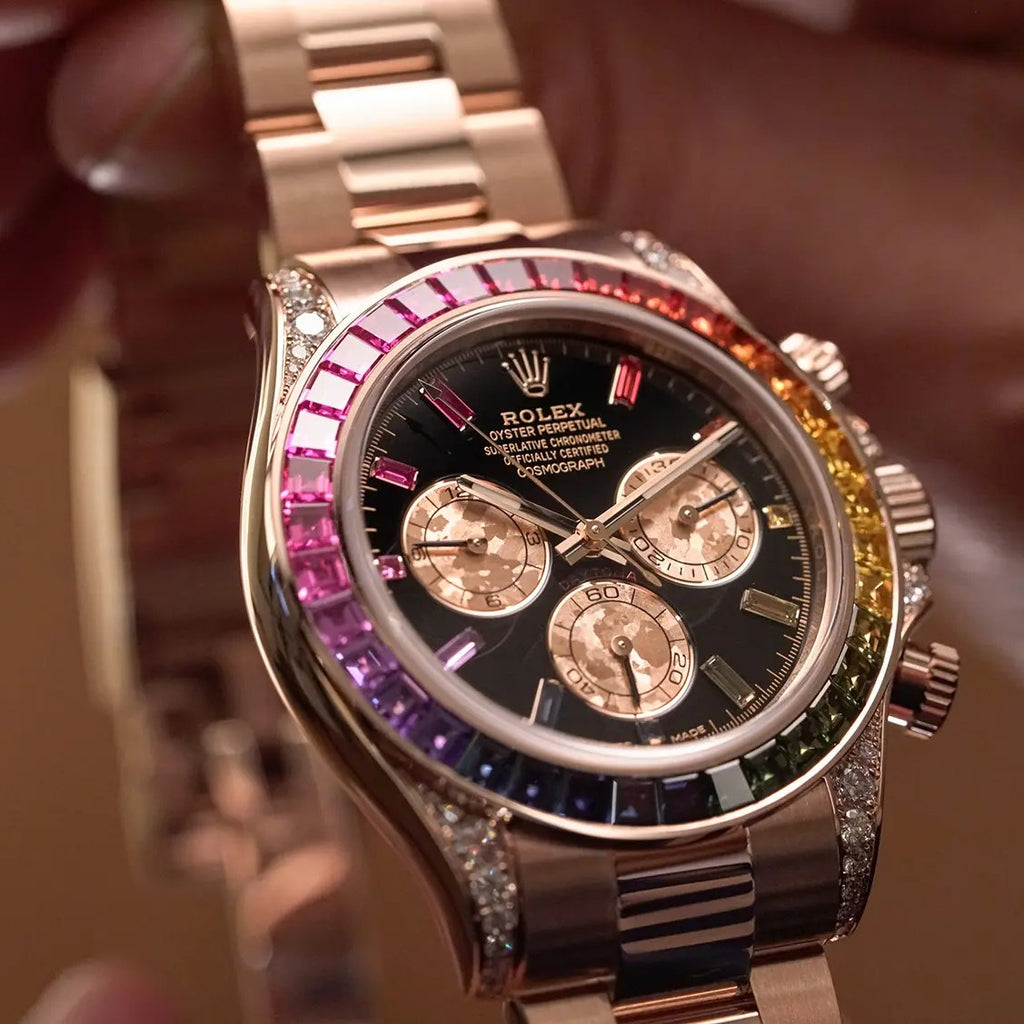
The practical case for a winder is strongest when the reset process after a power-down is most complex. The Daytona makes that case clearly.
A stopped Rolex Submariner Date takes 30 seconds to reset. Pull the crown, set the date, set the time, push back.
A stopped Daytona is different. The Caliber 4130 is a manually engineered manufacture movement with a vertical clutch chronograph. When the movement stops, the chronograph seconds hand parks wherever it was when power ran out. The minute counter does the same. Zeroing them requires running the chronograph through a reset cycle — which itself requires confirming the registers are physically at their starting positions before you start timing anything.
Most Daytona owners learn, eventually, to always keep it wound. A winder removes the learning curve entirely.
Caliber 4130: what it needs
Rolex introduced the Caliber 4130 in 2000, replacing the modified Zenith El Primero they'd been using since 1988. It's a vertical clutch chronograph with column wheel — entirely Rolex-designed and produced. Fewer parts than the El Primero, better shock resistance, more consistent accuracy.
| Reference | Caliber | TPD | Direction | Power Reserve |
|---|---|---|---|---|
| Daytona (all current steel/gold references) | 4130 | 650–800 | Bidirectional | 72 hours |
The 72-hour power reserve is genuinely useful. It means the Daytona can sit unworn for three days before stopping — more forgiving than the Submariner Date's 48-hour 3135, comparable to the GMT-Master II's 3285.
For a collector on a five-or-seven-day rotation, the Daytona will stop during the week. A winder means it never does.
The full Rolex caliber table, including older Daytona references (pre-4130), is at the Rolex TPD information page.
The Oysterflex and bracelet consideration

The Daytona comes in two main bracelet configurations: Oyster bracelet in steel or precious metal, and Oysterflex rubber strap on select references.
The Oysterflex is forgiving. The rubber elastomer construction doesn't mark easily and doesn't require the same interior care as polished metal.
The Oyster bracelet in stainless steel, white gold, yellow gold, or Everose is a different matter. The polished centre links and chamfered edges require a soft interior that leaves no contact marks. Alcantara and Italian Nappa leather meet that requirement. Generic synthetic foam does not.
Gold Daytona references — the Day-Date of chronographs — warrant particular attention here. The finish on an 18k yellow gold Oyster bracelet takes a year of careful wear to develop its natural character. A winder with the wrong interior can introduce marks in weeks of daily rotation. Our materials and construction page covers why we select the materials we do.
Which Enigwatch winder for a Daytona?

Daytona plus one other watch: The Virtuoso™ Series 2. Two independently programmed rotors. If the other piece is a Submariner or GMT, both run on the same 700 TPD bidirectional program without issue. Browse the double winder collection.
Daytona within a wider Rolex collection: The Virtuoso™ Series 6 for up to six pieces. The Impresario™ Series 12 for larger collections. The full winder range covers all sizes.
Security matters: A Daytona in gold is a significant asset. The Centennial™ Bulletproof Safe keeps it wound and secured. See the vault collection.
Frequently asked questions
What TPD for a Rolex Daytona? 650 to 800 TPD, bidirectional. The Caliber 4130 runs well across that range. 700 TPD bidirectional is the standard default.
My Daytona's chronograph seconds hand isn't at zero after I reset it — what happened? This can happen when the movement stops while the chronograph is engaged, or when a reset is performed incorrectly. The Daytona's 4130 uses a column wheel and vertical clutch — the reset mechanism is precise. If the registers are consistently not returning to zero, a service visit is warranted.
How does the Daytona 4130 compare to older El Primero-based Daytonas for winding purposes? Both use bidirectional winding. The 4130 carries a 72-hour power reserve versus the El Primero's 50 hours. Both run on the same 650 to 800 TPD bidirectional winder setting.
Can I wind a Daytona and a Submariner in the same multi-rotor winder? Yes. Both run on the same TPD direction. A system where both rotors are programmed to 700 TPD bidirectional handles both cleanly without independent programming being strictly necessary.
Browse the full winder range at enigwatch.com/collections/automatic-watch-winder.
Own the Daytona and other Rolex references? The main Rolex watch winder guide covers every current caliber in one place.
Protect Your Watch Collection
Designed for collectors who demand the best. Explore our premium watch winders and luxury safes.