If you own a Speedmaster, you own one of the most specific watches in horological history. The Speedmaster was qualified by NASA for all manned space missions in 1965. It went to the Moon in 1969 worn by Buzz Aldrin and Neil Armstrong. It helped the Apollo 13 crew time the engine burns that brought them home. It is the only watch ever to hold that qualification.
There's one thing the Speedmaster Professional Moonwatch cannot do that almost every other automatic watch can.
It cannot be wound by a winder.
The essential distinction: hand-wound vs automatic Speedmaster

The Speedmaster Professional Moonwatch — references built around Caliber 1861 and its predecessor the 321 — uses a hand-wound movement. No automatic rotor. A winder placed around it will rotate it indefinitely and achieve nothing.
This is the single most important fact for any Speedmaster owner considering a winder.
Hand-wound references (winder does not apply): - Speedmaster Professional Moonwatch (all references, Cal. 1861, 1863, 321 reissue) - Speedmaster Professional "Moonwatch" with hesalite or sapphire crystal, ref. 310.30, 310.32, 310.60 series - Speedmaster Alaska Project editions (hand-wound) - Most Speedmaster Limited Editions referencing the original Moonwatch heritage
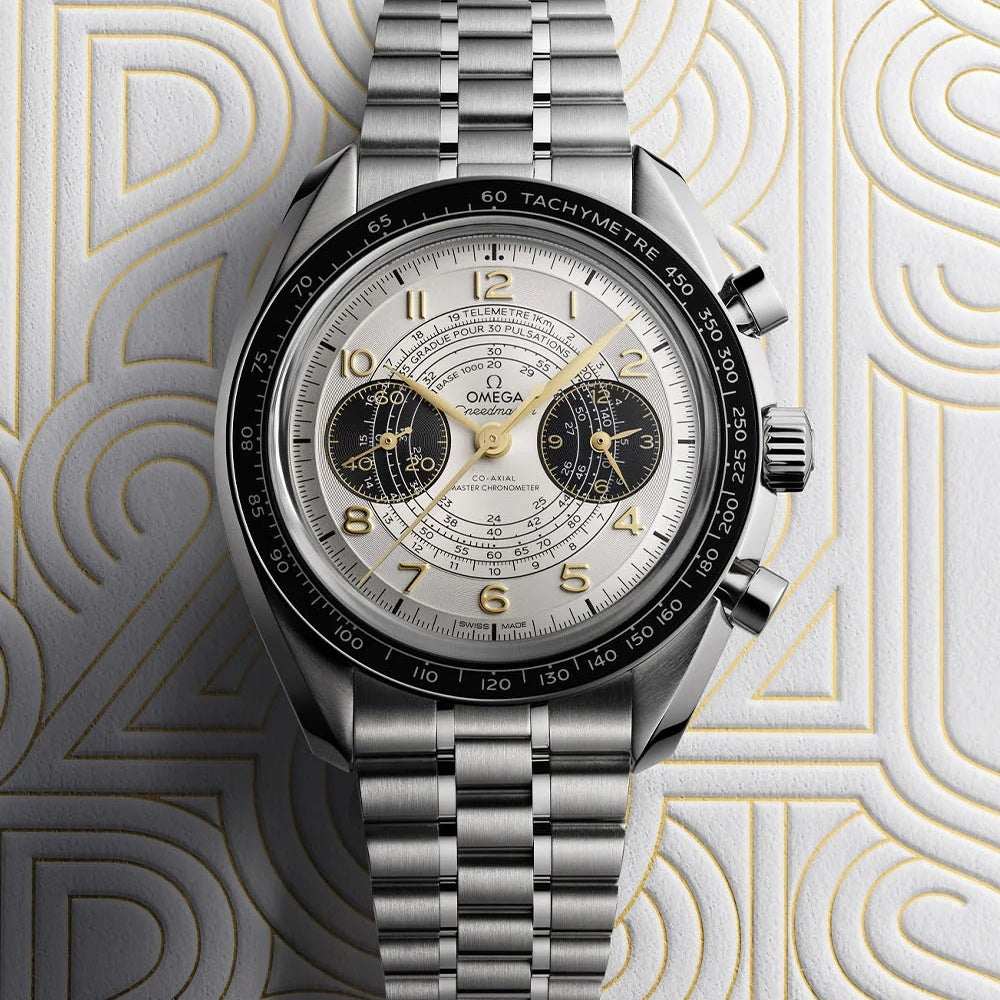
Automatic references (winder applies): - Speedmaster '57 (Cal. 9906 Master Chronometer) - Speedmaster Reduced (older production, Cal. 2890) - Speedmaster Racing Master Chronometer (Cal. 9900) - Speedmaster Automatic (various references, Cal. 3330) - Speedmaster Chronoscope (Cal. 9908 or 9916 Master Chronometer)
The quickest check: move the watch and look at the dial. An automatic movement has a rotor that spins freely when the case is moved. A hand-wound movement has no rotor — you'll see the movement through the caseback, but no rotor spins when you tilt the watch.
The collector who owns both
This is the scenario that makes the Speedmaster winder question genuinely interesting. A significant percentage of Speedmaster collectors own both a Moonwatch and at least one automatic Speedmaster variant.
The Moonwatch goes in a display case. The automatic Speedmaster goes on the winder. In a two-rotor system, one slot stays empty or holds another brand — the Moonwatch never goes on an active rotor.
This is the only watch family where "do I need a winder?" has a binary yes/no split within a single reference family. Our Omega brand guide covers this in the brand context, but the model-specific detail of which references go on a winder and which don't belongs here.
Automatic Speedmaster caliber settings
| Reference | Caliber | TPD | Direction | Power Reserve |
|---|---|---|---|---|
| Speedmaster '57 (current) | 9906 METAS | 650–800 | Bidirectional | 60 hours |
| Speedmaster Racing | 9900 METAS | 650–800 | Bidirectional | 60 hours |
| Speedmaster Chronoscope | 9908 METAS | 650–800 | Bidirectional | 60 hours |
| Speedmaster Automatic (older) | 3330 | 650–800 | Bidirectional | 60 hours |
| Speedmaster Reduced (older) | 2890-A2 | 650–800 | Bidirectional | 42 hours |
| Speedmaster Broad Arrow (vintage) | 1152 | 650 | Bidirectional | 48 hours |
All current automatic Speedmaster calibers — the Master Chronometer 9900 family and the 3330 — use bidirectional winding at 650 to 800 TPD with 60-hour power reserves. The 60-hour reserve is comfortable for a two-day rotation but insufficient for a longer period without wearing.
For the complete Omega caliber database, see enigwatch.com/pages/tpd-data.
What automatic Speedmasters need from a winder

Chronograph movement considerations
The Speedmaster Racing and Speedmaster '57 are chronograph watches. The column-wheel and co-axial chronograph mechanisms in the 9900 and 9906 families have small-tolerance components that benefit from continuous lubrication distribution. Stopping the movement for extended periods and then restarting creates the exact lubricant displacement at the clutch mechanism that chronograph specialists note as a long-term wear concern.
A winder keeps the chronograph running. The lubricants stay distributed. The clutch engagement remains consistent. See our watch winder for chronograph guide for more detail on why chronograph movements specifically benefit.
METAS certification and EMF
Current automatic Speedmaster calibers hold METAS Master Chronometer certification — tested to resist 15,000 gauss magnetic fields. A winder motor generating meaningful EMF near the movement partially offsets that certification. Enigwatch motors are specified for low EMF output at movement distance. See our materials and construction page.
Bracelet and strap considerations
The Speedmaster Racing and '57 come on metal bracelets and leather straps. Metal bracelets warrant Alcantara or Italian Nappa leather interior — soft against polished link surfaces. Leather straps are forgiving against either interior material.
Which Enigwatch winder for an automatic Speedmaster?

Automatic Speedmaster alongside one other watch: The Virtuoso™ Series 2. Browse the double winder collection.
Automatic Speedmaster within a wider Omega or mixed-brand collection: The Virtuoso™ Series 6. For Omega collectors adding a Seamaster and an Aqua Terra alongside the Speedmaster, each slot runs 700 TPD bidirectional — the same setting covers all three.
Larger collections: The Impresario™ Series 12. Browse the full winder range and use the size guide.
Frequently asked questions
Does the Speedmaster Moonwatch need a winder? No. The Moonwatch uses Caliber 1861 (hand-wound) or the reissued Caliber 321. Neither has an automatic rotor. A winder does nothing for a hand-wound movement.
What TPD for a Speedmaster '57? 650 to 800 TPD, bidirectional. The Cal. 9906 Master Chronometer runs well at 700 TPD.
How do I know if my Speedmaster is automatic or hand-wound? Tilt the watch and watch through the caseback. An automatic movement has a rotor that swings when you move the case. A hand-wound movement doesn't. Alternatively, check the reference number — current hand-wound Moonwatch references all begin with 310. Automatic references include the Speedmaster '57 (310.32 in some automatic configurations) and the Racing series.
Can I put a Moonwatch and an automatic Speedmaster in the same winder cabinet? Yes — the Moonwatch simply doesn't go on an active rotor. It sits in the storage area while the automatic Speedmaster occupies a winding slot.
Browse the full winder range at enigwatch.com/collections/automatic-watch-winder.
Full Omega collection? Start with our Omega brand guide for the complete picture.
Protect Your Watch Collection
Designed for collectors who demand the best. Explore our premium watch winders and luxury safes.