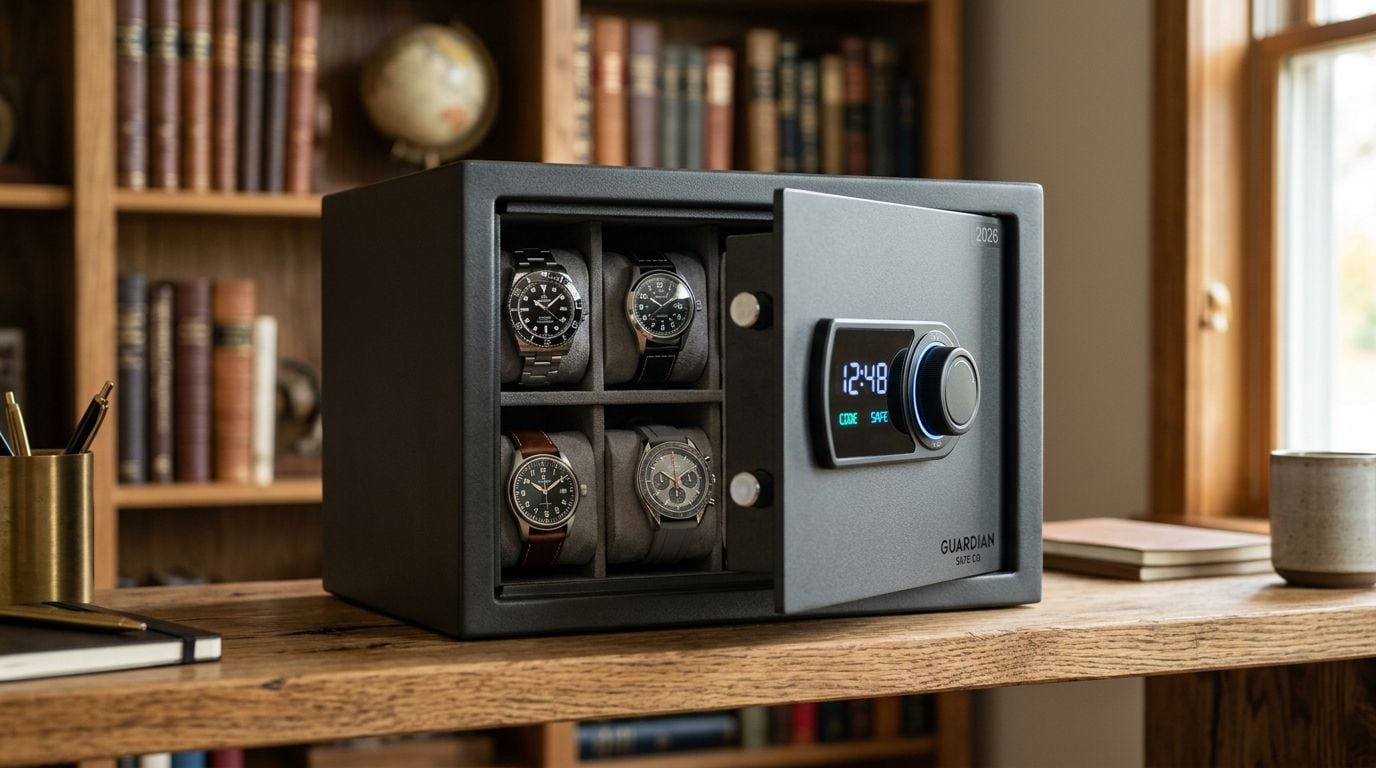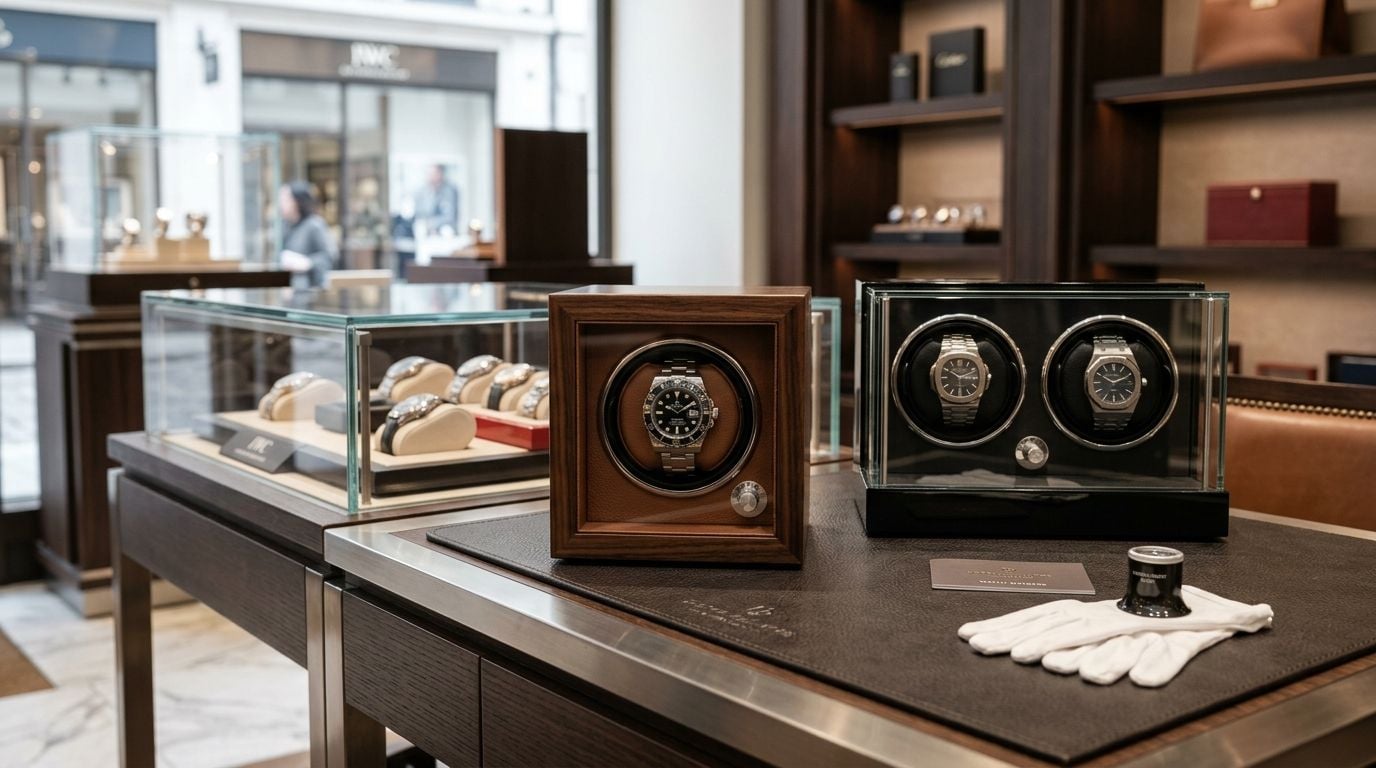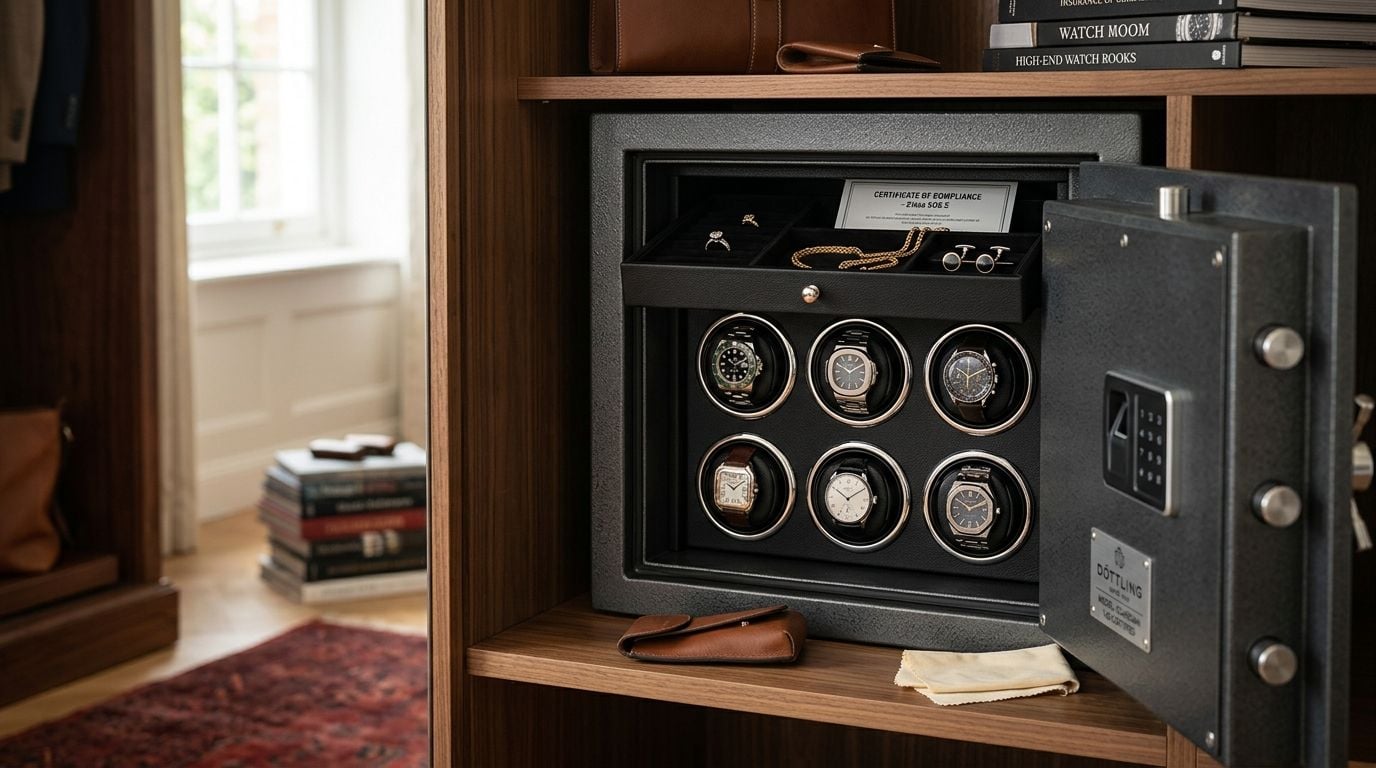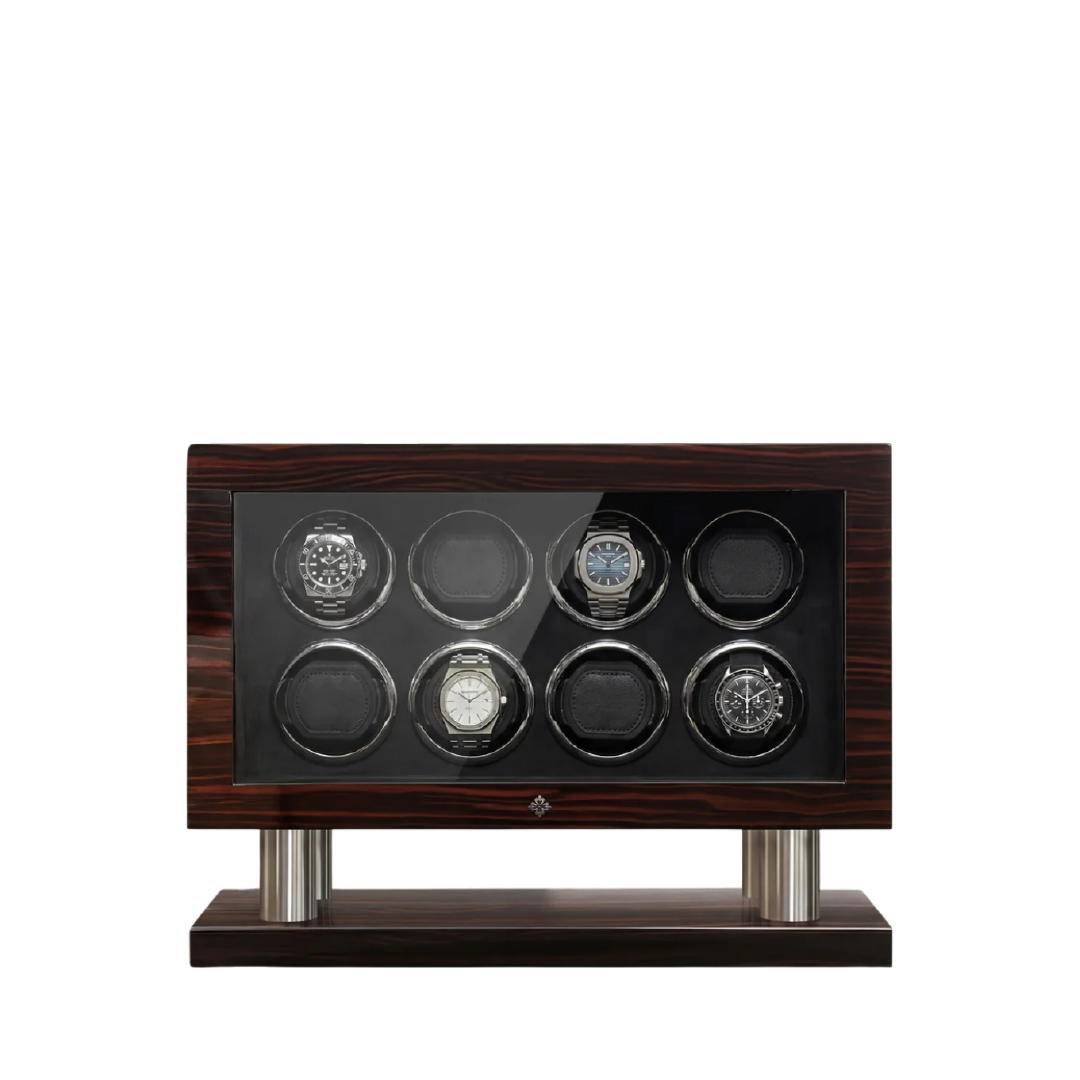

Biometric watch safes replace keys and dials with a fingerprint, and in 2026 that shift matters more than the marketing copy suggests: the right sensor and vault rating decide whether your collection is actually protected or just locked behind a gimmick.
- The Veron Elite 20 is the best overall biometric watch safe for 2026, built for 15-20 piece collections.
- The Apollo 12 biometric watch safe fits a 12-piece collection stepping up from a winder box.
- The Kryton posts a 60-minute fire rating and EN 1143-1 Grade V certification, the toughest vault tier here.
- The Centennial Bulletproof is the compact pick for two watches and a 2-hour, 695°C fire rating.
- The Titan Sanctum 20 carries AR500 ballistic Level 1 and UL TL-30 Grade III for maximum physical security.
Best overall: Veron Elite 20 Watch Safe. Best for a 12-watch collection: Apollo 12 Watch Safe. Best fire protection: Kryton Watch Safe. Best compact option: Centennial Bulletproof Watch Safe. Best ballistic protection: Titan Sanctum 20 Watch Safe.
Why this matters
A winder box protects a watch from dust. A biometric watch safe protects it from a break-in, a house fire, and the guesswork of remembering a combination under stress. The distinction between a decorative lock and a certified vault is not cosmetic — it's the difference between UL TL-30 Grade II and Grade V, and between a 60-minute fire rating and no fire rating at all. If you're weighing lock types before you shop, the biometric lock watch safe guide breaks down how fingerprint access compares to combination and key locks.
2026 collectors are buying bigger: 12-watch collections are becoming 20-watch collections, and the safe has to keep up without forcing a second purchase two years later.
What makes the best biometric watch safe
- Fingerprint sensor reliability with a backup access method — biometric-only is a liability if a sensor fails or a guest needs access
- Third-party vault certification — UL TL-30 and EN 1143-1 ratings are tested standards, not marketing labels
- Fire rating matched to real fire duration — most house fires burn well past 30 minutes before a response arrives
- Capacity that fits the collection you'll own in three years, not just today
- Interior lining that won't mark cases or bracelets — leather and Alcantara over bare metal or foam
- Weight and anchoring options that match the floor and wall you're installing into
Biometric watch safes at a glance
| Safe | Best for | Standout feature | Key limitation |
|---|---|---|---|
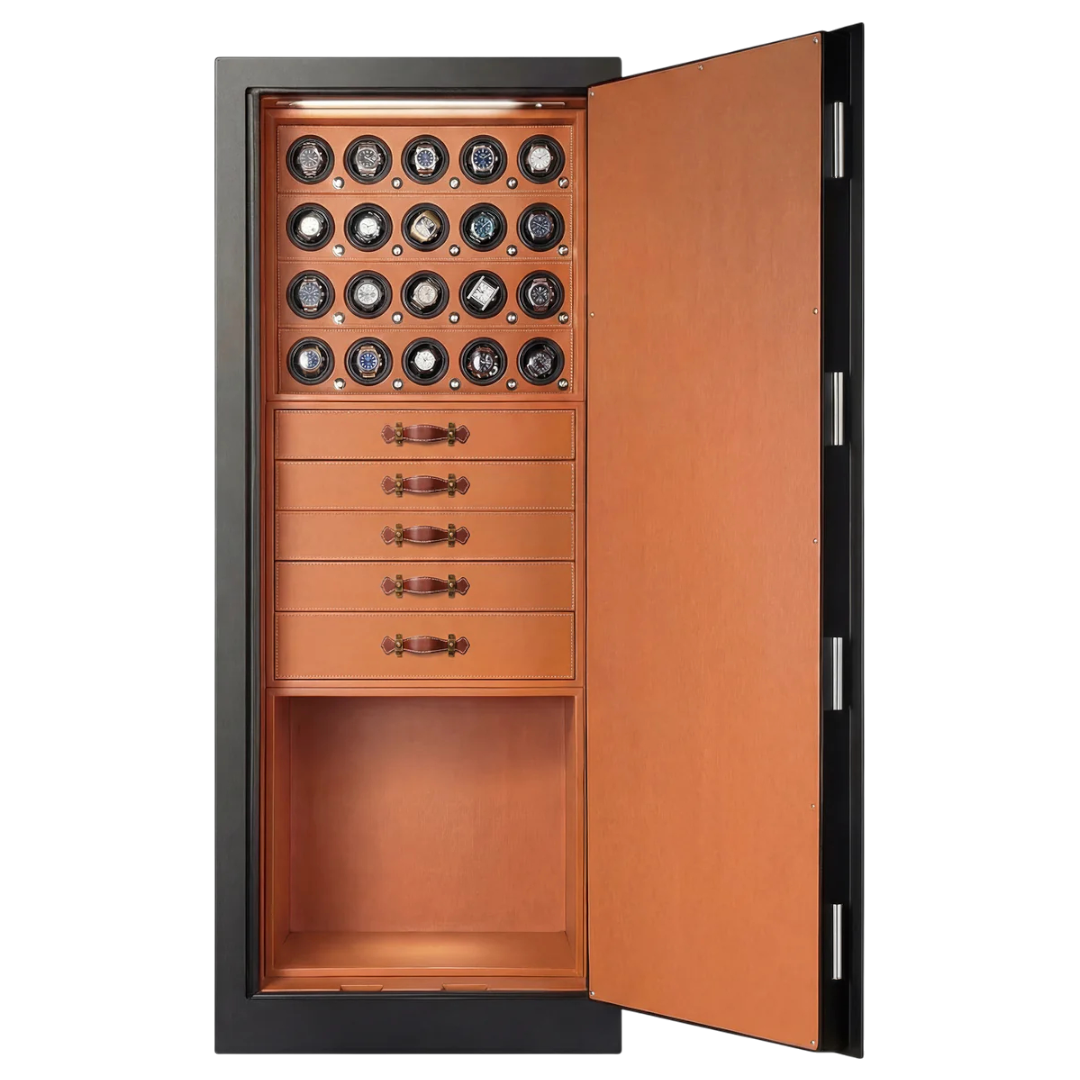
| Veron Elite 20 | 15-20 piece collections | 20 independent Japanese winding rotors | Overkill for a starter collection |
| Apollo 12 | Stepping up from a winder box | UL TL-30 Grade II certification | No headroom past 12 pieces |
| Titan Sanctum 20 | Maximum physical security | AR500 ballistic Level 1, UL TL-30 Grade III | Heavier footprint, needs a mounting plan |
| Kryton | Fire protection at scale | 60-minute fire rating, EN 1143-1 Grade V | 16-slot count sits awkwardly between tiers |
| Centennial Bulletproof | A small, curated collection | 2-hour fire rating at 695°C | Only 2 slots, no room to grow |
1. Veron Elite 20: best biometric watch safe for a 15-20 piece collection
The Veron Elite 20 is built around Italian vault architecture: Grade 304 stainless steel, a Gruppo Mastrotto Nappa leather interior, and twenty proprietary Japanese rotors running independent winding programs behind a fingerprint lock.
Veron Elite 20 pros:
- Capacity matches a large collection without forcing a jump to a full cabinet
- Twenty independent rotors mean no shuffling watches between winding schedules
- Nappa leather interior is soft enough for gold bracelets and ceramic bezels
Veron Elite 20 cons:
- 20 slots is more safe than a 6-8 piece collection needs
- Stainless steel vault construction adds real weight to a bedroom floor plan
- Fingerprint-only access needs a backup plan for guests or staff
Best for: collectors with 15-20 pieces who want display-grade design without giving up vault security. Verdict: Buy.
2. Apollo 12: best biometric watch safe for stepping up from a winder box
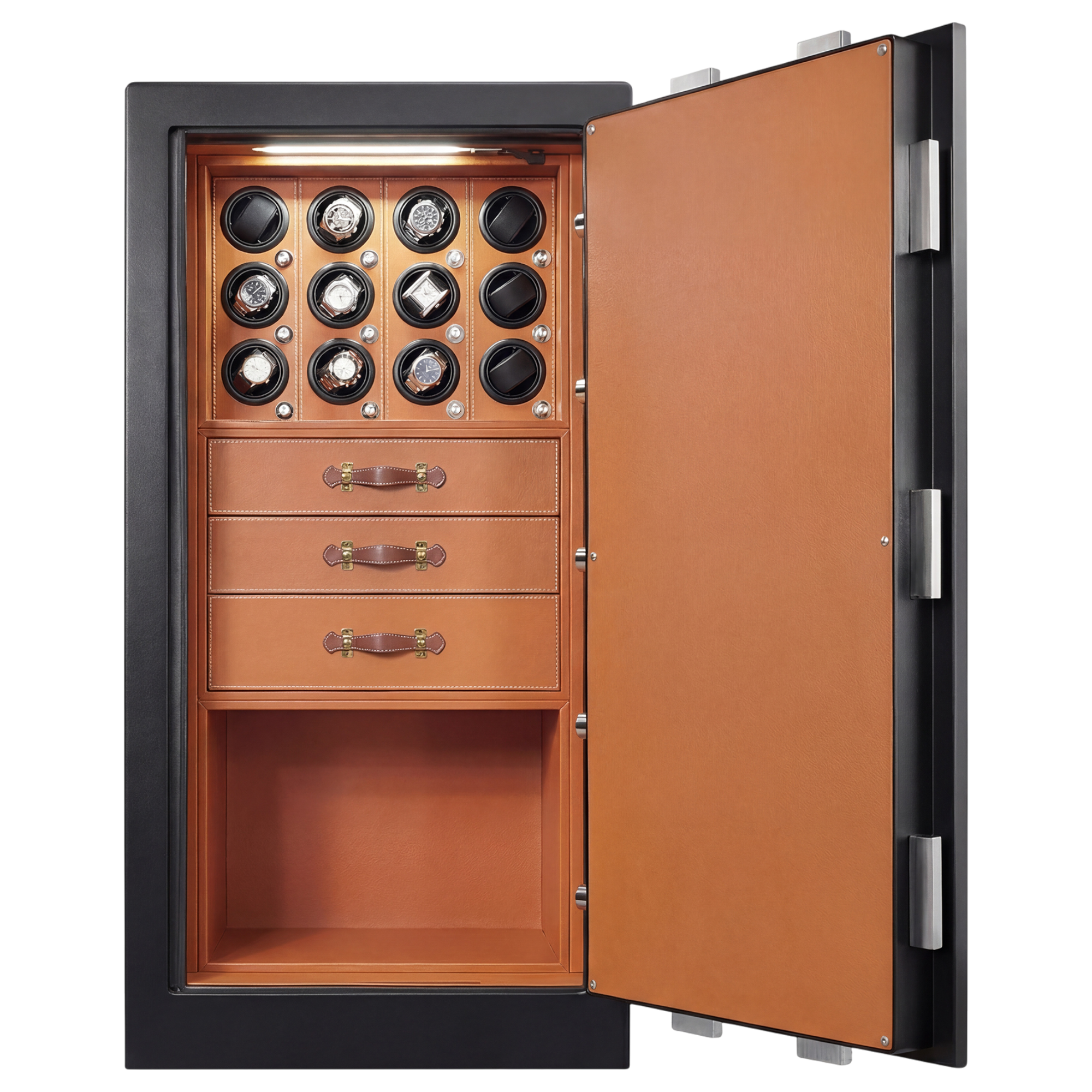
The Apollo 12 is a 12-watch vault with Grade 304 stainless steel construction, an AR500 ballistic layer, UL TL-30 Grade II certification, and integrated Japanese winding behind biometric access.
Apollo 12 pros:
- Sized correctly for an 8-12 piece collection, not padded with unused slots
- UL TL-30 Grade II is a genuine forced-entry rating tested by a third party
- Ballistic layer adds protection a standard winder box simply doesn't have
Apollo 12 cons:
- 12 slots leaves no headroom once a collection grows past a dozen pieces
- Heavier than a winder box, so floor loading matters for upper-floor installs
- Fingerprint sensors need occasional recalibration as skin changes with age or injury
Best for: a collector with 8-12 pieces upgrading from a winder box to a certified vault. Verdict: Buy.
3. Titan Sanctum 20: best biometric watch safe for maximum ballistic protection
The Titan Sanctum 20 watch safe matches the Veron Elite 20 on capacity but pushes the security tier further: AR500 ballistic Level 1 armor and UL TL-30 Grade III certification, a step above the Apollo 12's Grade II.
Titan Sanctum 20 pros:
- UL TL-30 Grade III is one of the toughest forced-entry ratings in this lineup
- AR500 ballistic Level 1 stops rounds that lighter steel construction won't
- 20-watch capacity matches large-collection needs without dropping the security tier
Titan Sanctum 20 cons:
- Grade III certification and ballistic steel add weight most closets aren't built for
- This is a security-first build, not a display piece for an open room
- Choosing between this and the Veron Elite 20 becomes a design decision as much as a security one
Best for: collectors who weight forced-entry and ballistic protection above interior finish. Verdict: Buy.
4. Kryton: best biometric watch safe for fire protection at scale
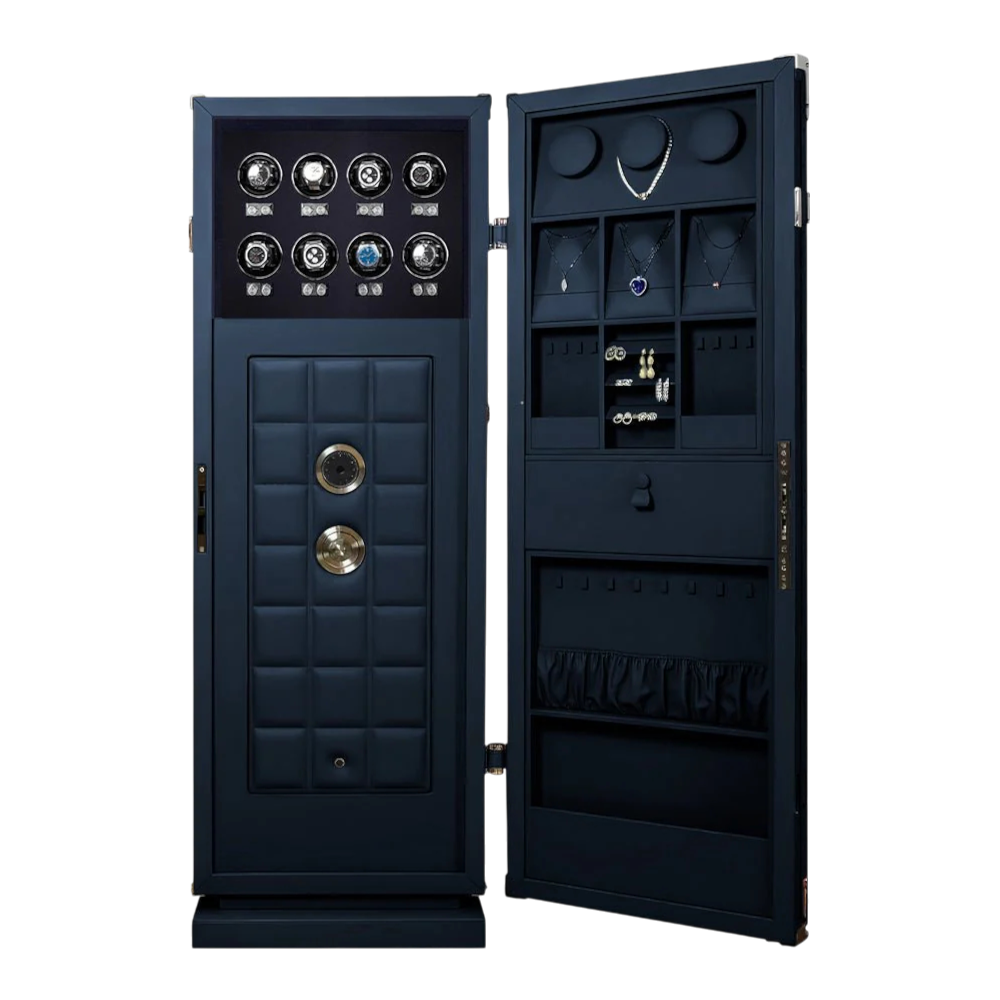
The Kryton is a 16-watch annual edition built to EN 1143-1 Grade V and UL TL-30×6 vault standards, with a 60-minute fire rating and biometric access running integrated Japanese winding.
Kryton pros:
- EN 1143-1 Grade V is a European vault standard few home safes reach
- 60-minute fire rating outlasts the average house-fire response window
- Annual-edition production appeals to collectors who want a numbered piece
Kryton cons:
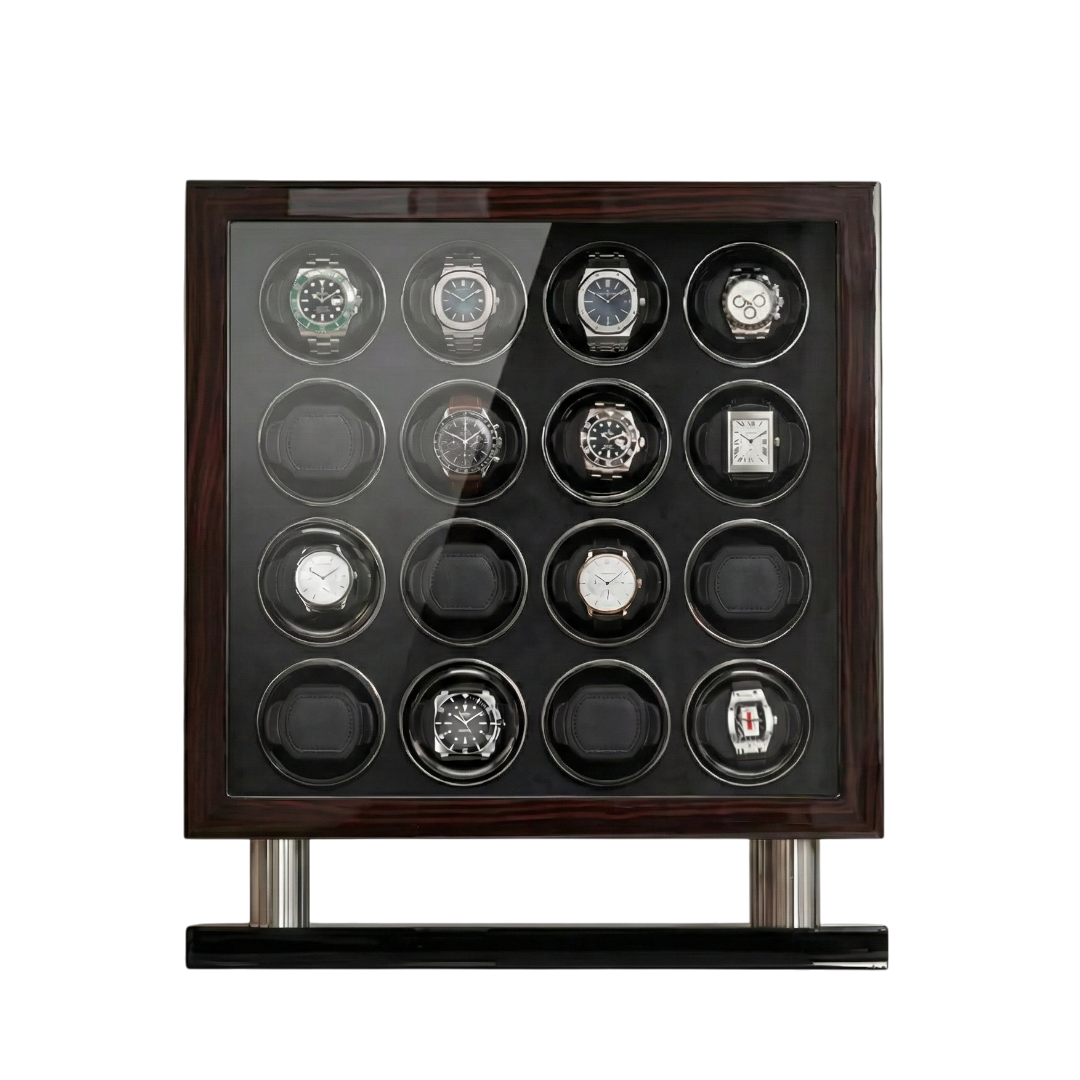
- 16-slot capacity sits between the Apollo 12 and the 20-slot options, an awkward middle for a round-number collection
- Annual-edition runs mean availability isn't guaranteed year to year
- The certification tier exceeds what most home insurers actually require
Best for: collectors who put fire protection and vault certification ahead of finish. Verdict: Buy.
5. Centennial Bulletproof: best biometric watch safe for a small collection
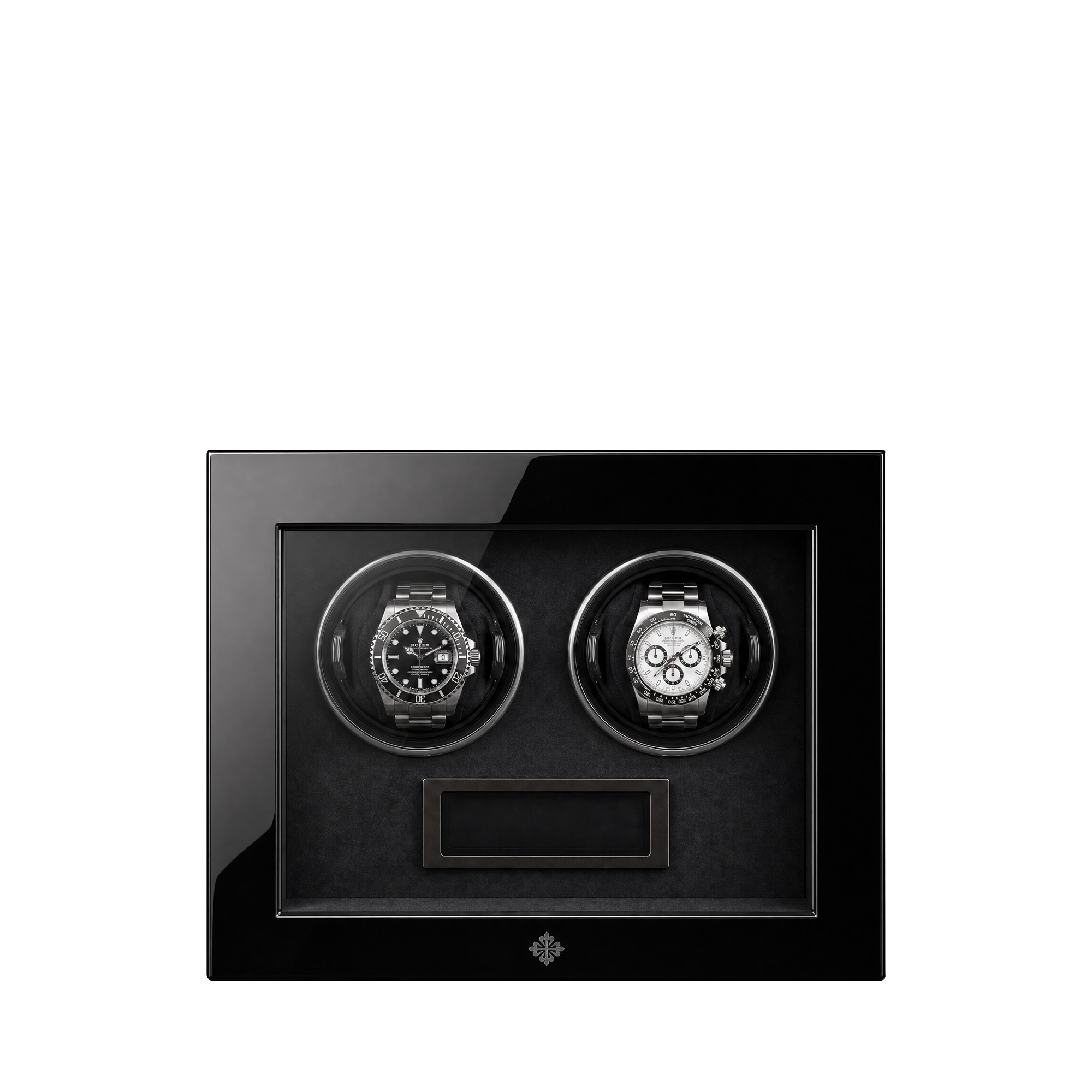
The Centennial Bulletproof watch safe is a 2-watch compact vault built from Kevlar-reinforced steel, rated Grade 3A bulletproof, with a 2-hour fire rating at 695°C and integrated Japanese winding.
Centennial Bulletproof pros:
- Small enough for a closet shelf or a locked nightstand drawer
- 2-hour fire rating at 695°C beats the Kryton's 60-minute rating outright
- Kevlar reinforcement is unusual at this capacity tier
Centennial Bulletproof cons:
- 2-slot capacity only works for a small, curated collection
- No room to grow without buying a second unit later
- Compact chassis trades vault theater for simple, dense protection
Best for: a collector with one or two grail pieces who wants real fire and ballistic protection without a full vault installation. Verdict: Buy.


How we ranked these
Each safe was measured against the same six criteria: certified vault rating, fire rating, capacity fit, sensor reliability with backup access, interior lining, and installation weight. No safe wins on every axis — the Veron Elite 20 leads on design and capacity, the Kryton leads on fire rating, and the Titan Sanctum 20 leads on forced-entry certification. That's why this is a decision tree, not a single winner.
“A biometric watch safe is only as good as its backup access plan — fingerprint-only security fails the day the sensor doesn’t.”
Which biometric watch safe should you choose?
If you're undecided, start with collection size. Under 5 pieces, the Centennial Bulletproof covers real fire and ballistic protection without the footprint of a full vault. Between 8 and 12 pieces, the Apollo 12 is the correct step up from a winder box. Past 15 pieces, choose between the Veron Elite 20 for design and the Titan Sanctum 20 for forced-entry rating — both hold 20 watches, so the decision comes down to whether finish or certification tier matters more to you in 2026. If fire protection is the non-negotiable, the Kryton's 60-minute rating and EN 1143-1 Grade V certification outrank every other consideration.
FAQ
What is a biometric watch safe?
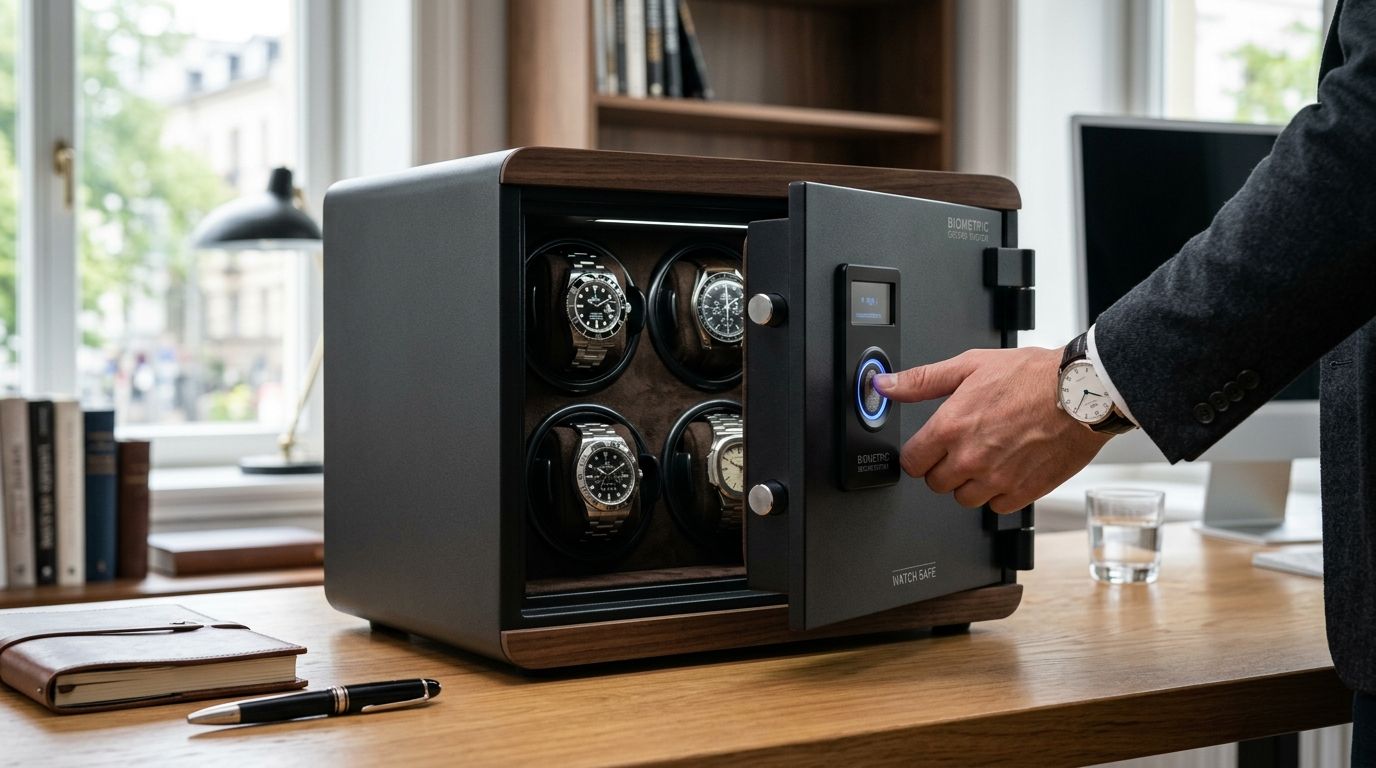
A biometric watch safe is a vault that unlocks with a fingerprint instead of a key or combination dial. Models like the Veron Elite 20 and Apollo 12 pair fingerprint access with certified steel construction and, in most cases, built-in winding.
Is a biometric watch safe better than a combination lock?
A fingerprint lock is faster to use and harder to guess than a combination, but it isn’t automatically more secure — the vault-grade steel and UL TL-30 or EN 1143-1 certification behind the lock matter more. Compare lock types directly before deciding.
How much fire protection does a biometric watch safe need in 2026?
Look for at least a 30-60 minute fire rating; the Kryton posts 60 minutes and the Centennial Bulletproof posts 2 hours at 695°C. Anything without a stated fire rating is a lockbox, not a fire-rated vault.
Can a biometric watch safe hold a growing collection?
Buy above your current count if you plan to grow. A 12-slot safe like the Apollo 12 fits a stable collection, while the 20-slot Veron Elite 20 or Titan Sanctum 20 leave room to add pieces through 2026 and beyond.
Do biometric watch safes need a backup access method?
Yes. Fingerprint sensors can fail or misread, so a safe that pairs biometric access with a mechanical key or combination backup is the safer long-term choice for households with more than one user.
What’s the best biometric watch safe for a 20-watch collection?
The Veron Elite 20 and Titan Sanctum 20 both hold 20 watches. Choose the Veron Elite 20 for Italian design and Nappa leather interior, or the Titan Sanctum 20 for AR500 ballistic protection and UL TL-30 Grade III certification.
Does a biometric watch safe include winding?
Most Enigwatch biometric safes, including the Veron Elite 20, Apollo 12, Kryton, and Centennial Bulletproof, integrate proprietary Japanese winding so watches stay wound while locked away.
How heavy is a biometric watch safe?
Vault-grade steel construction makes these safes substantially heavier than a jewelry box or winder cabinet. Larger 20-slot models need a floor and wall anchoring plan before installation, especially on upper floors.
One last thing
The smallest safe in this lineup has the best fire rating. The Centennial Bulletproof holds just 2 watches, yet its 2-hour rating at 695°C beats the 16-watch Kryton's 60-minute rating outright — capacity and fire protection don't scale together, so don't assume the biggest safe is automatically the safest one.
Related guides
- Watch safe lock types compared: key, combination, biometric
- Watch safe with fingerprint lock: what to expect
Protect Your Watch Collection
Designed for collectors who demand the best. Explore our premium watch winders and luxury safes.