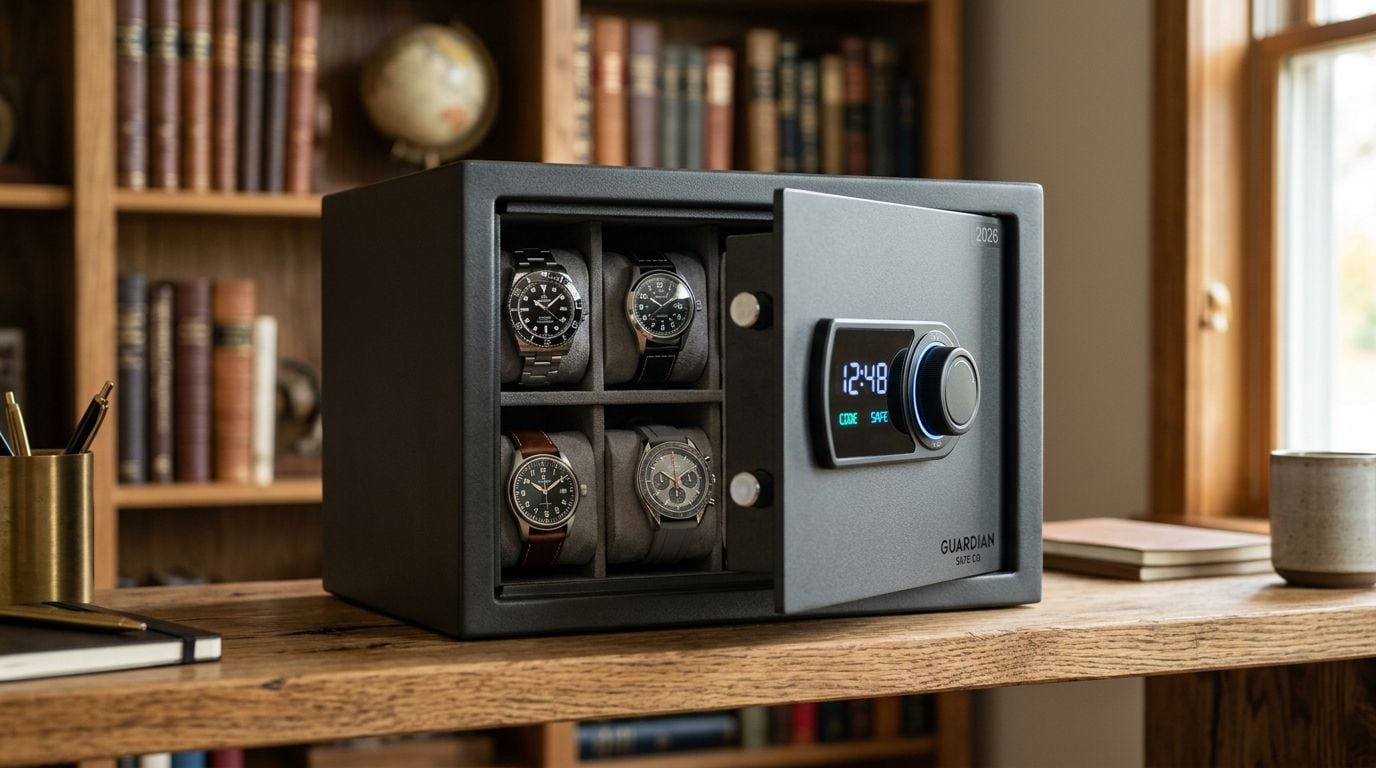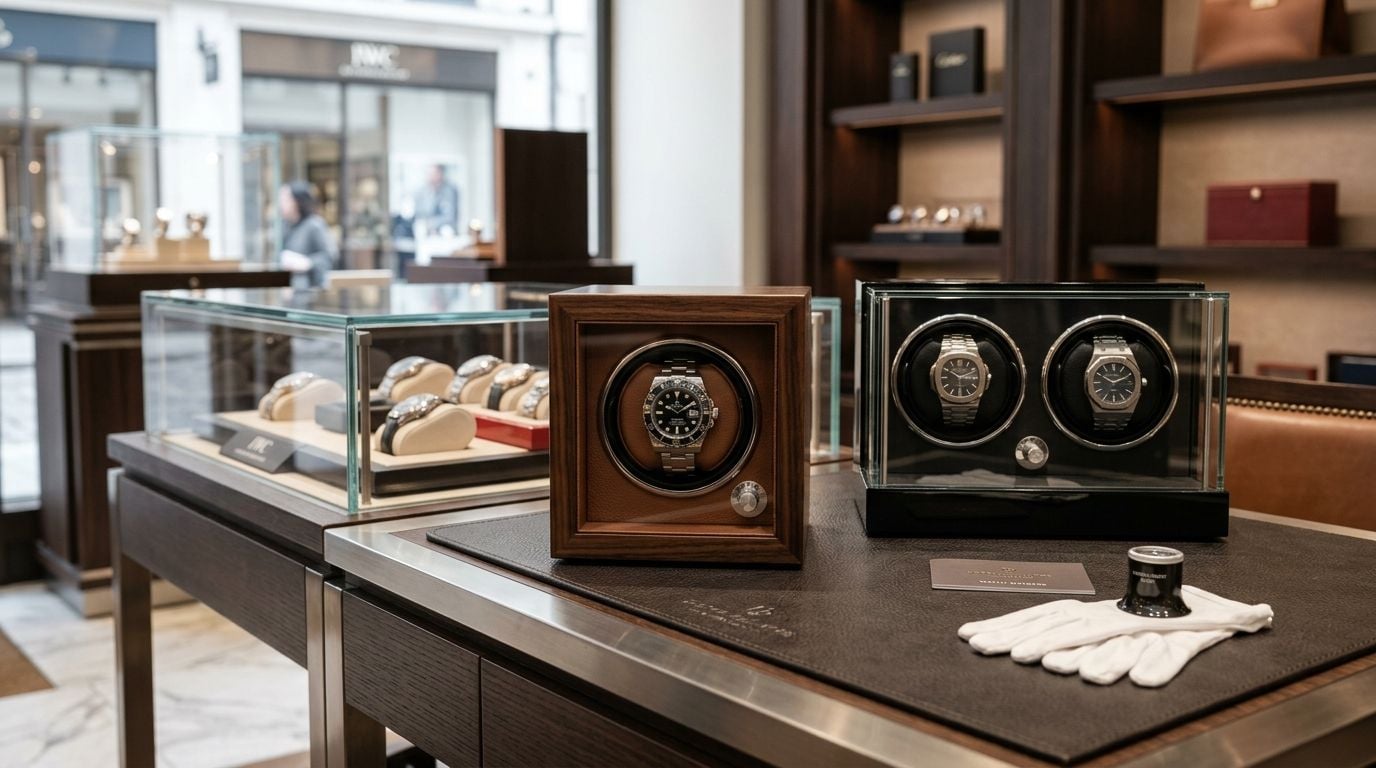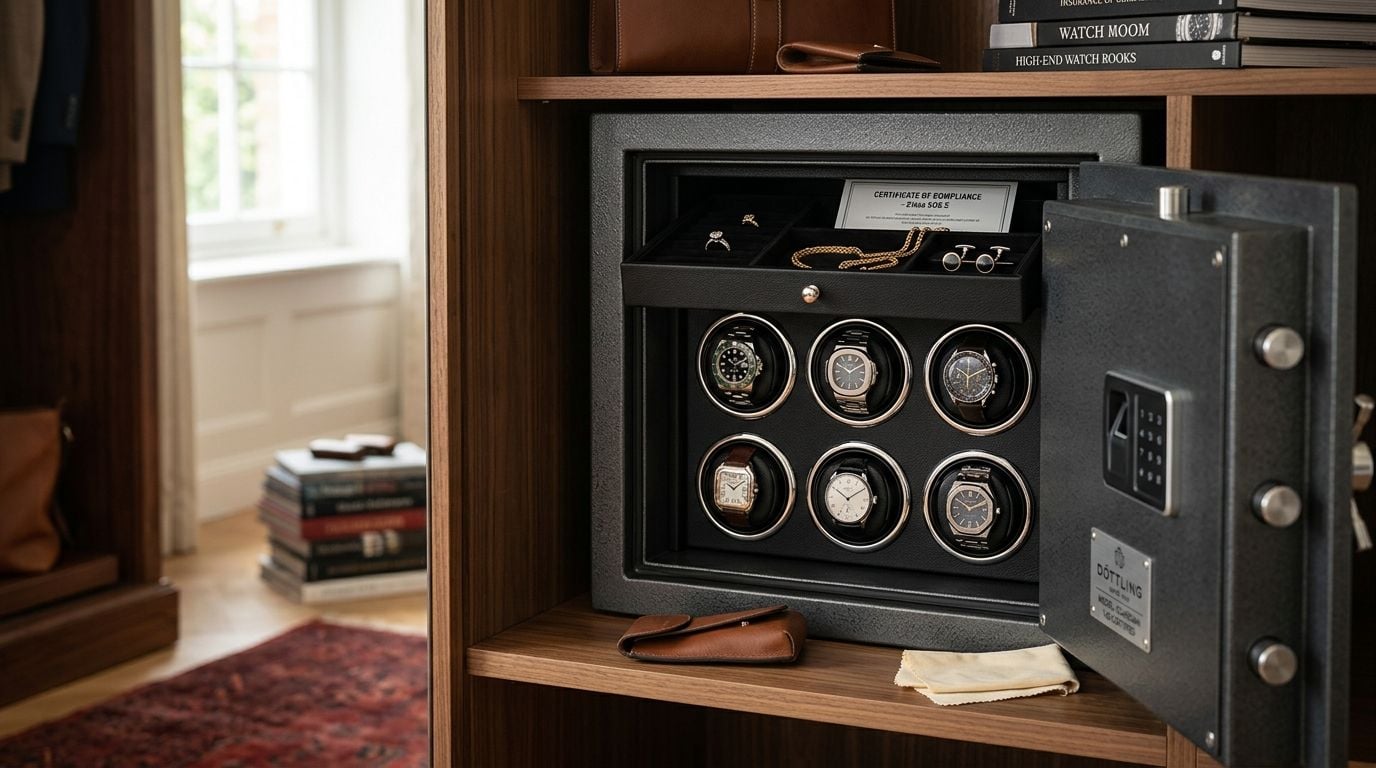

A watch safe is not a watch box with a lock. It’s a security device rated against theft, fire, and sometimes ballistic or explosive attack. The difference shows up the first time something happens — a break-in, a house fire, a flood. Good watch safes are rare. The market is full of jewellery safes marketed as watch safes, watch boxes called safes because they have a keyed lock, and UL-rated boxes with internal finishes that ruin the watches they’re supposed to protect. This guide covers what actually matters when you’re buying a safe for a serious watch collection, how to match security tier to collection value, and which Enigwatch vaults earn their place in each category.
What Makes a Real Watch Safe

Four specifications separate a real watch safe from an expensive decoration.
UL security rating. Underwriters Laboratories rates safes by resistance to tool attack. UL RSC (Residential Security Container) is baseline — protection against hand tools for five minutes. UL TL-15 is commercial tier — protection against power tools for fifteen minutes. UL TL-30 is premium — thirty minutes against professional burglary tooling. Watches worth more than $25,000 per piece belong in TL-15 or higher.
Fire rating. A UL-class 350-1 hour rating means interior temperature stays below 350°F during a one-hour external fire. That’s the threshold for paper survival. For watches, a two-hour rating with internal temperature below 250°F is better. Lubricants and rubber gaskets start to fail above 200°F.
Interior finish. The inside of a watch safe determines whether your watches sit safely or accumulate micro-scratches over years. Polyester liners common in jewellery safes are abrasive to watch cases. Proper watch safes use felt or soft leather. Some use cedar to regulate humidity.
Access control. Biometric, keypad, key, or combination. Biometric with dual-authentication (fingerprint plus keypad code) is the modern standard for serious watch safes. Key-only locks are vulnerable to key theft and picking.
Matching Security Tier to Collection Value

Buy security proportional to what’s inside.
$5,000 to $25,000 total collection value: A well-built residential safe with RSC rating and fire protection. Interior finish should be watch-appropriate. Keypad or key access is acceptable at this tier.
$25,000 to $100,000 total collection value: UL TL-15 rated safe with 1-hour fire rating. Biometric or keypad access. Bolt-down mounting. Proper interior lining. A break-in resistant to power tools for fifteen minutes catches most residential theft scenarios.
$100,000 to $500,000 total collection value: UL TL-30 rated safe with 2-hour fire rating. Dual-authentication access. Commercial-grade construction. Monitored alarm integration. Bolt-down mandatory.
$500,000+ collection value: Custom vault construction. TL-30×6 or higher rating (30 minutes resistance from all six sides). Possibly ballistic rating for premium builds. Climate control. Integration with home or commercial security systems. Sometimes dedicated watch room installations.
The Enigwatch Watch Safes
| Model | Security | Fire | Capacity | Tier |
|---|---|---|---|---|
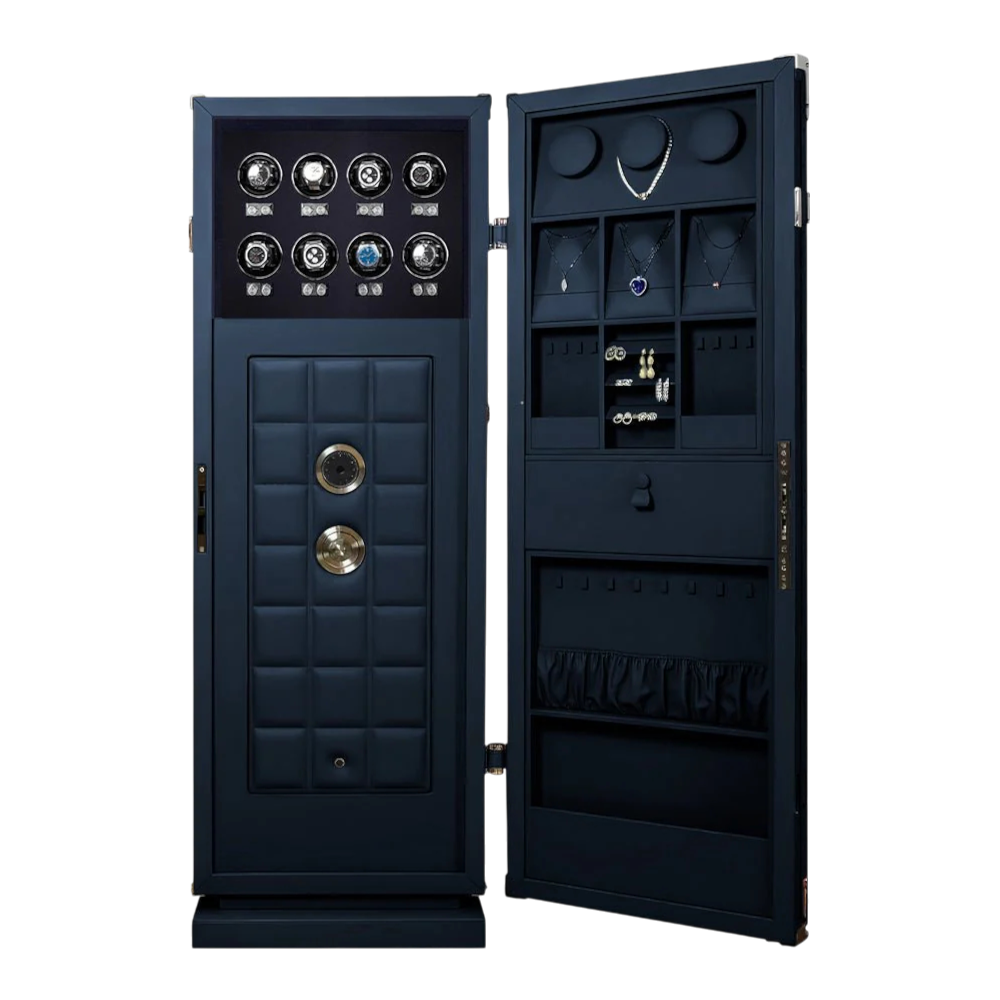
| Centennial Bulletproof | Ballistic, UL TL-30 | 2-hour | 10-20 watches | Premium commercial |
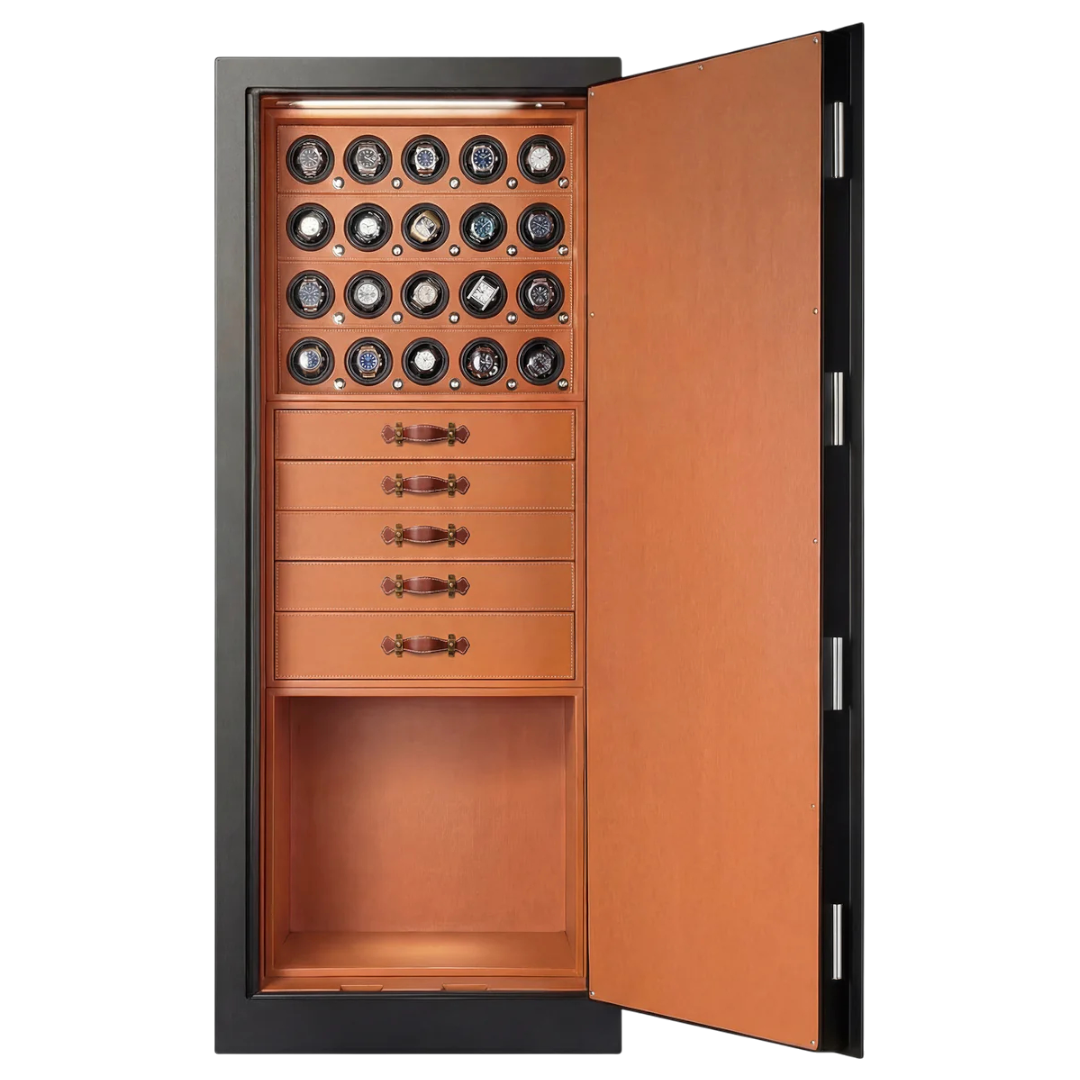
| Titan Sanctum 20 | UL TL-15 | 2-hour | 20 watches | High-end residential |
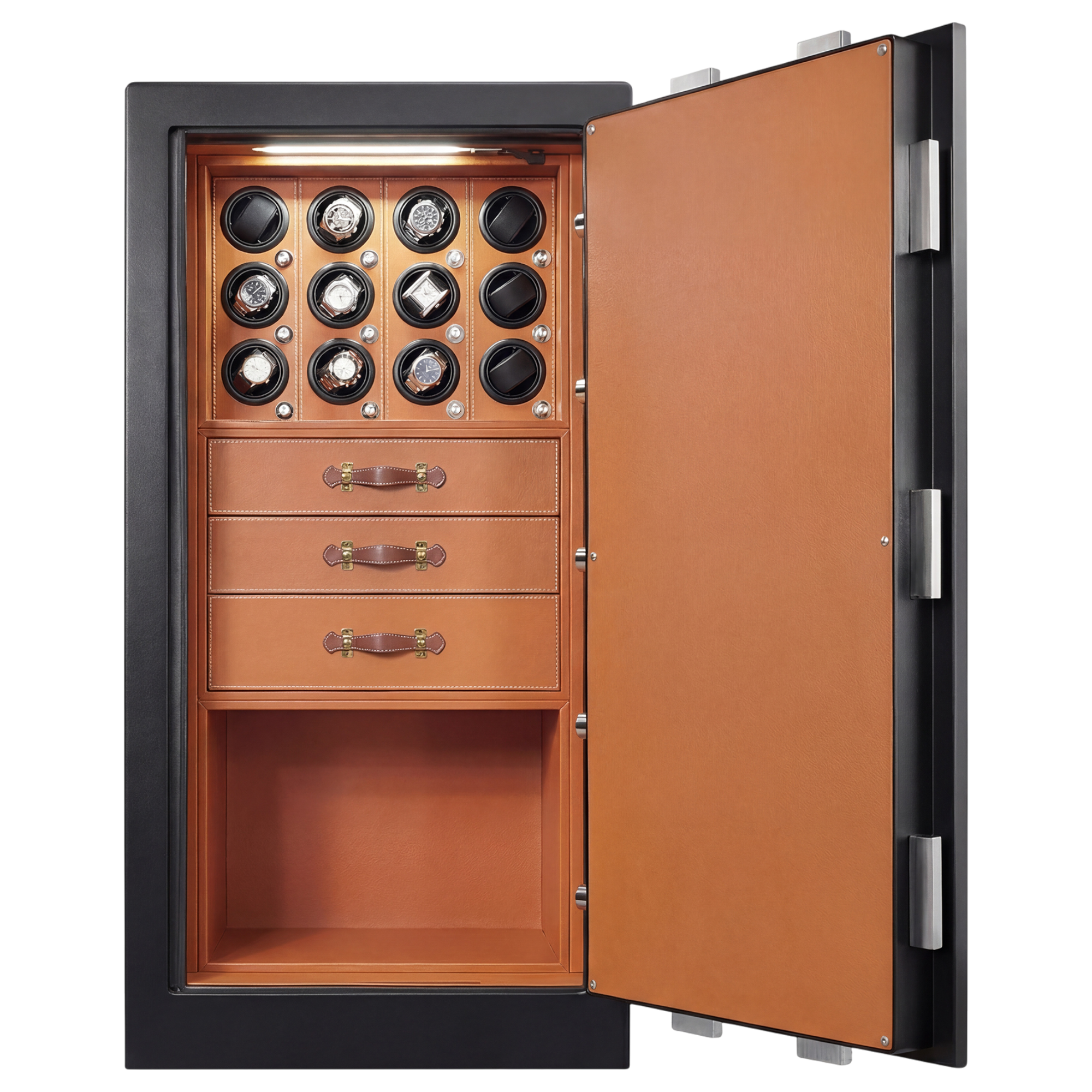
| Veron 20 | UL TL-15 | 1-hour | 20 watches | Mid-to-high residential |
| Veron 12 | UL RSC | 1-hour | 12 watches | Standard residential |
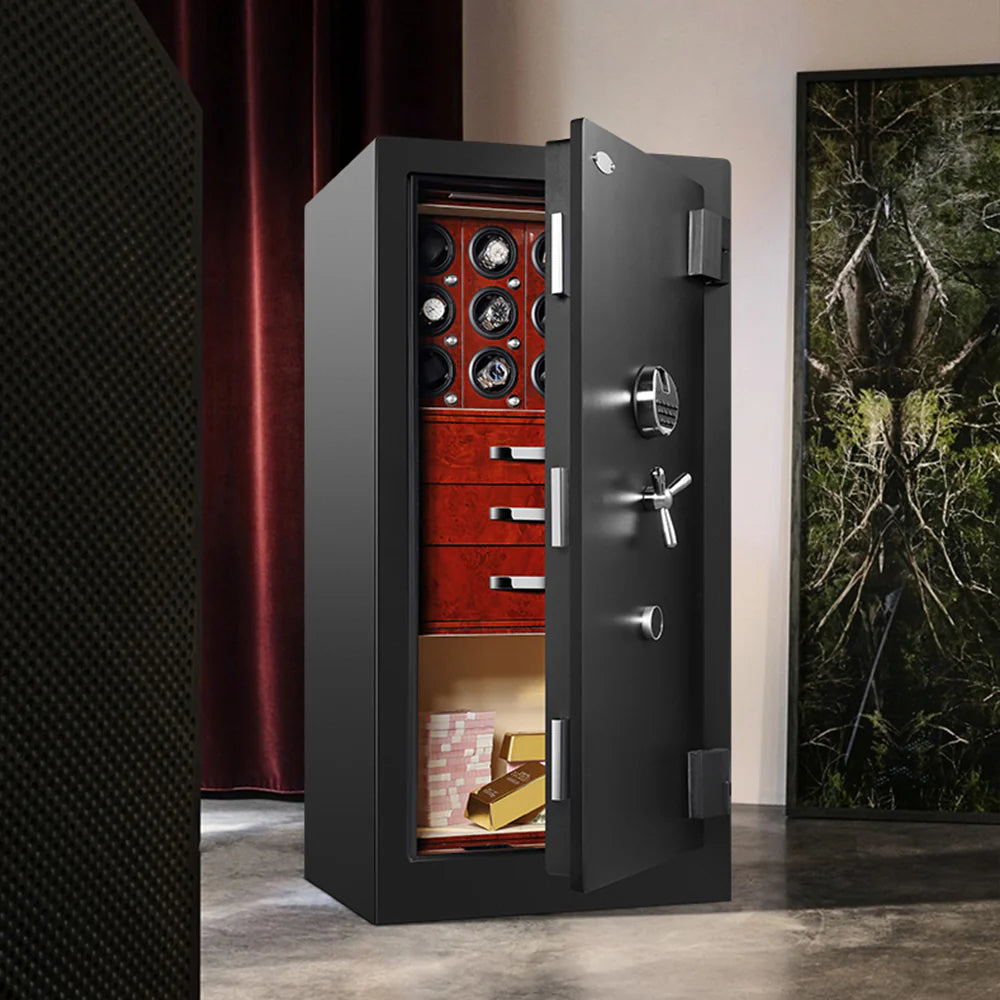
| Apollo | UL RSC | 30-minute | 6-10 watches | Entry residential |
For bespoke specification see the custom safes page. For the full range, browse the Vaults collection.
The Centennial Bulletproof: When Ballistic Rating Matters
Most residential safes offer theft and fire protection but nothing against ballistic or explosive attack. The Centennial Bulletproof is the exception. Rated against handgun and rifle rounds (NIJ Level III), TL-30 resistance to tool attack, and 2-hour fire rating.
This specification matters for collectors in higher-risk environments: celebrity targets, known collectors publicly identified, geographic locations with home invasion concerns. For most residential collectors, TL-15 is sufficient and the Centennial is over-specified. For collectors where ballistic protection is a practical requirement, nothing else in the standard residential safe market matches the specification.
The Titan Sanctum 20: The Sweet-Spot High-End Option
For collections valued $100,000 to $500,000, the Titan Sanctum 20 sits in the sweet spot. TL-15 security rating, 2-hour fire rating, twenty-watch capacity. Optional integrated winder configurations for collections that need both active winding and secure storage.
The Titan Sanctum 20 is the safe most high-end residential collectors buy. It’s rated for the security threats that actually exist at residential collection values. It’s not over-specified for markets where TL-30 isn’t necessary. And the capacity matches the typical serious-but-not-extreme collection size.
When Lower-Tier Safes Are Enough
A smaller collection or lower per-piece value doesn’t need TL-30 infrastructure. The Veron 12 and Apollo cover entry-tier security at price points appropriate for collections below $50,000 total value. Both use watch-appropriate interiors (felt-lined, soft leather), both provide fire protection, both meet baseline theft resistance.
The mistake to avoid is buying a jewellery safe marketed as a watch safe. Jewellery safes use polyester liners abrasive to watch cases over years of drawer opening. Check interior specification before buying.
What to Skip
Decorative watch boxes with keyed locks. These aren’t safes. They’re display boxes with a security theatre element. A determined thief defeats them in seconds.
Safes with polyester or synthetic interior liners. These accumulate abrasive dust that damages watch finishes over time. Proper watch safes use felt, cedar, or soft leather.
Safes without bolt-down provisions. A 200-pound safe that isn’t bolted to the floor walks out of a house in the back of a truck. Bolt-down mounting is a theft protection multiplier regardless of the safe’s internal rating.
Fire ratings without independent certification. Some manufacturers claim fire resistance without UL or equivalent third-party testing. Only UL-tested fire ratings mean anything.
Installation Considerations
Bolt-down mounting requires concrete or reinforced floor surface. Most homes have concrete basements or slab foundations that accommodate this. Bolt-down on wooden floors requires through-bolting to joists or structural blocking.
Humidity control in humid climates. A safe in Florida accumulates moisture differently than one in Colorado. Silica gel packs work for smaller safes. Active climate control (electronic dehumidifier) is appropriate for larger installations or humid environments.
Access location. Safes should be placed where they’re not obvious to casual visitors but remain accessible to the owner. Master bedroom closets, dedicated watch rooms, or basement vaults are typical. Avoid garages (humidity, temperature extremes) and ground-floor locations visible from street-level windows.
Insurance Implications
Most homeowner insurance policies limit jewellery and watch coverage to $5,000 to $10,000 aggregate without a scheduled personal property rider. For collections exceeding this, scheduled personal property coverage is standard, and some insurers require specific safe ratings for coverage.
Discuss coverage requirements with your insurer before buying a safe. Some policies offer discounts for UL-rated safes with specific construction standards. Coverage may require bolt-down mounting or alarm system integration.
Frequently Asked Questions
What makes a real watch safe?
UL security rating (RSC, TL-15, or TL-30), UL fire rating (1-hour or 2-hour at 350°F or lower internal temperature), watch-appropriate interior finish (felt, cedar, or soft leather), and secure access control (biometric or keypad). A watch box with a lock is not a watch safe.
What UL rating do I need for my collection?
RSC for collections under $25,000 total value. TL-15 for collections $25,000 to $100,000. TL-30 for collections $100,000 to $500,000. Custom construction above $500,000. Scale security to collection value rather than buying universally expensive protection.
Does a watch safe need to be fireproof?
Yes. Fire protection matters as much as theft protection. A UL-rated 1-hour fire safe keeps internal temperature below 350°F for one hour of external fire exposure. For watches, 2-hour rating is preferable because lubricants and gaskets can degrade above 200°F even before the fire rating is exceeded.
Can a watch safe have a winder inside?
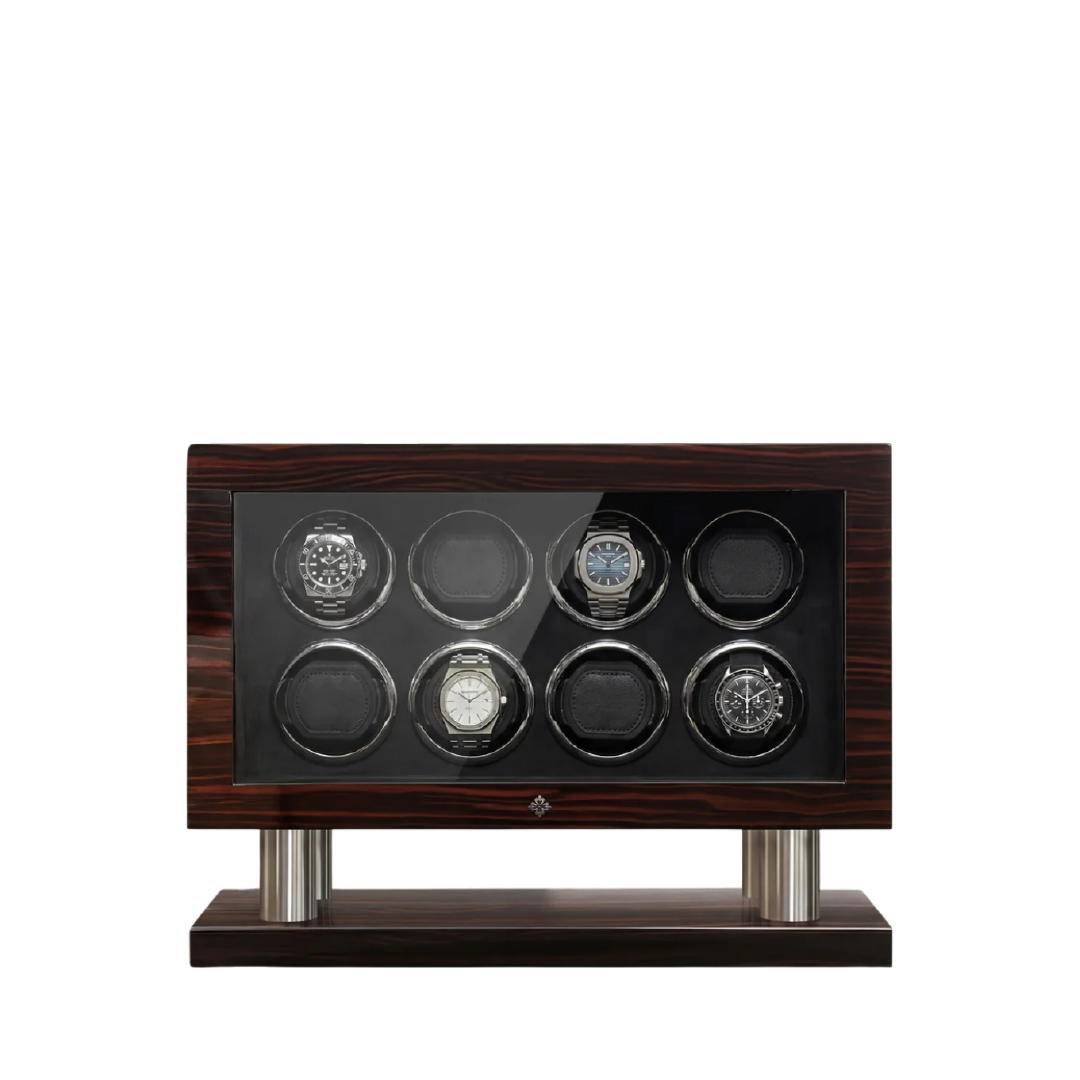
Yes, and many high-end models do. Combined winder and safe units let you actively wind automatic watches inside secure storage. See the combined winder and safe collection for integrated options.
Is biometric access better than a keypad?
For watch safes, dual-authentication (biometric plus keypad) is the standard. Biometric alone fails if the reader malfunctions. Keypad alone is vulnerable to shoulder-surfing. Dual authentication requires both, which is significantly harder to defeat.
How much does a quality watch safe cost?
Entry residential (RSC rated, 1-hour fire): $1,500 to $3,500 USD. High-end residential (TL-15, 2-hour fire): $5,000 to $15,000. Premium commercial (TL-30, ballistic optional): $15,000 to $50,000. Custom builds start at $25,000 and scale into six figures for premium specifications.
Should my safe be bolted down?
Yes. An unbolted safe, regardless of weight, can be removed during a burglary. Bolt-down mounting increases theft resistance significantly and is often required by insurers for scheduled personal property coverage at higher collection values.
What interior finish should I look for?
Felt-lined, cedar-lined, or soft-leather interiors. Avoid polyester or synthetic liners, which accumulate abrasive dust and can scratch watch cases over years of use. Cedar has the additional benefit of regulating humidity naturally.
Build the Right Home for Your Collection
Match security tier to collection value. For most serious residential collectors, the Titan Sanctum 20 hits the sweet spot. For ballistic protection the Centennial Bulletproof is in a class of its own. For mid-tier collections, the Veron 20 covers the residential sweet spot at a lower price tier.
Protect Your Watch Collection
Designed for collectors who demand the best. Explore our premium watch winders and luxury safes.
Protect Your Watch Collection
Designed for collectors who demand the best. Explore our premium watch winders and luxury safes.