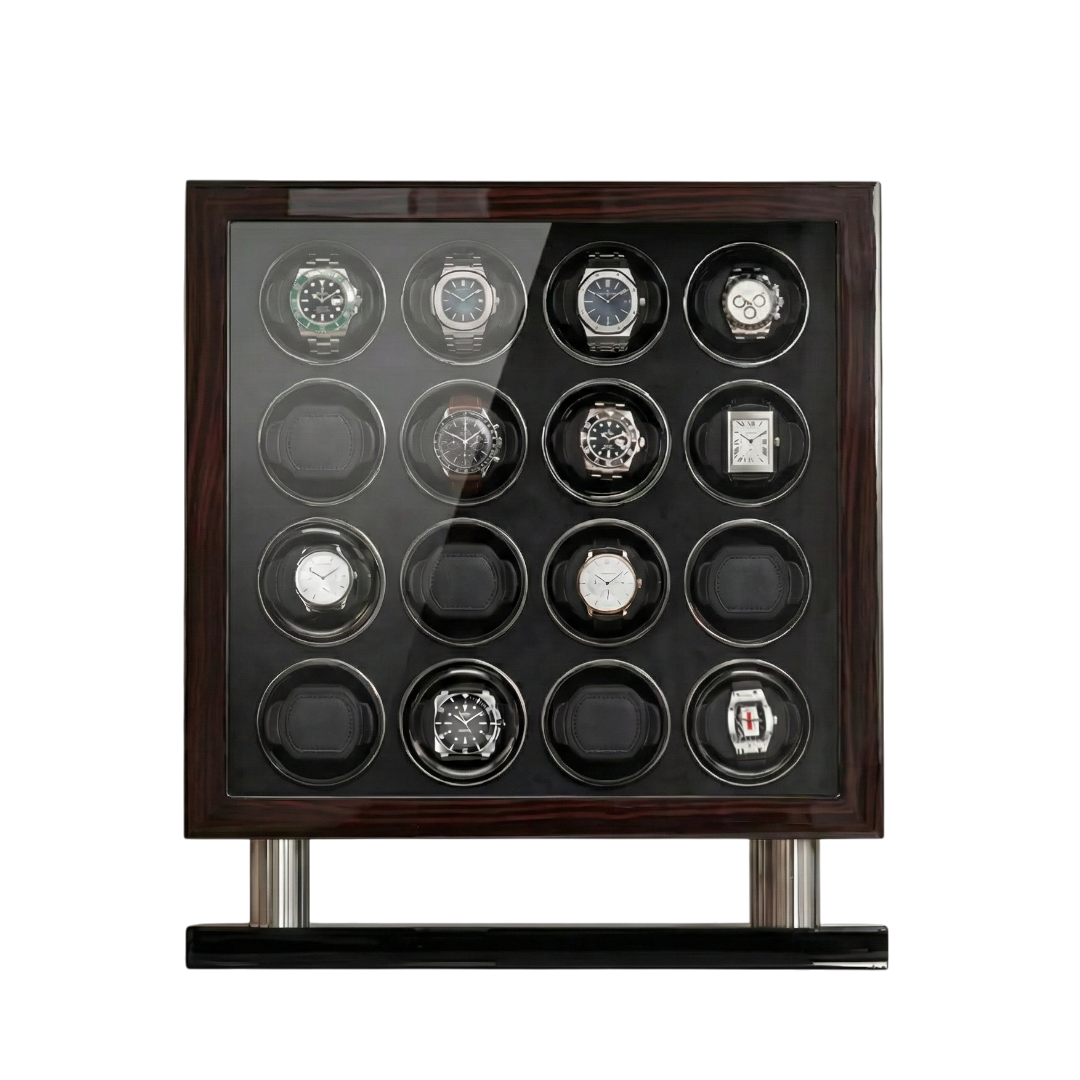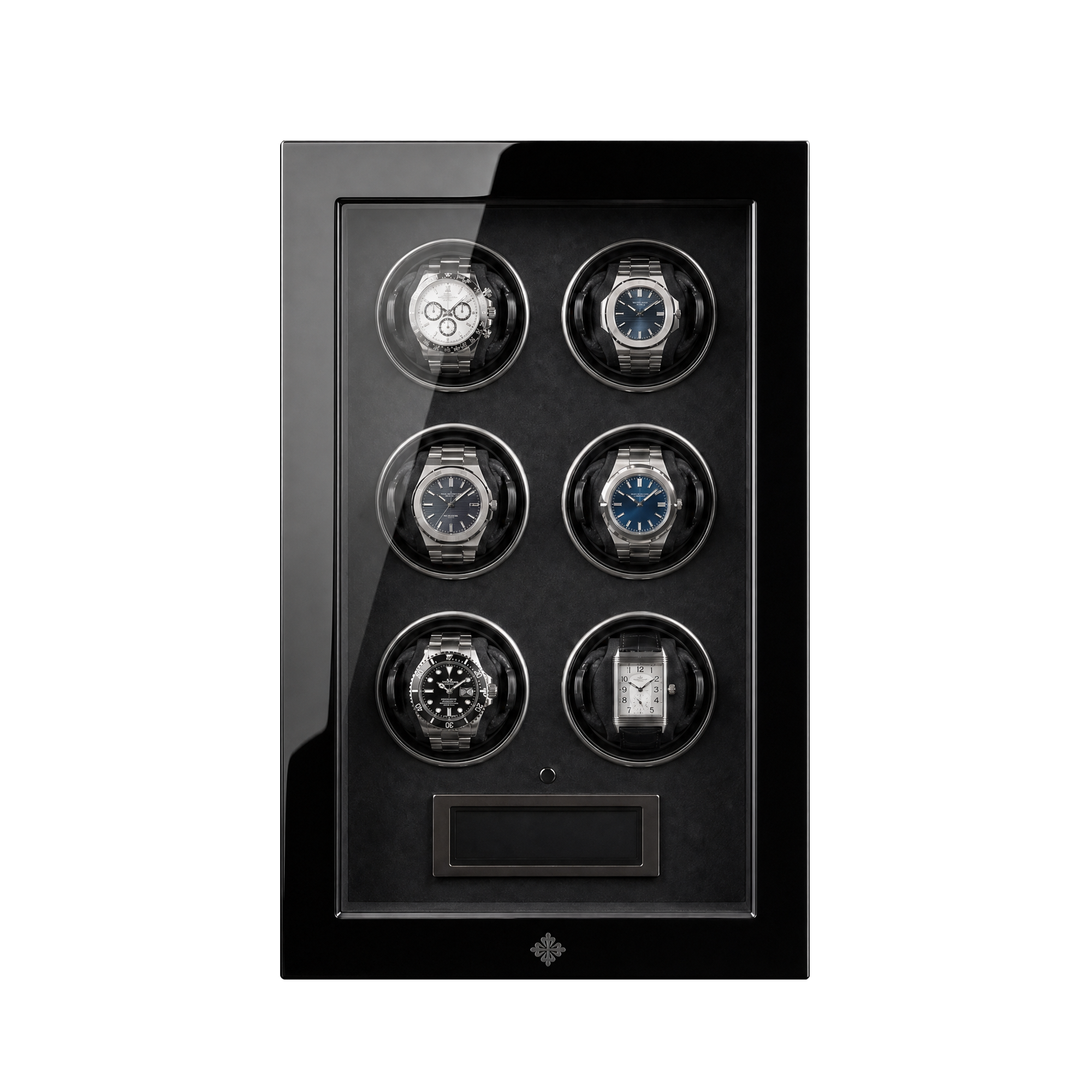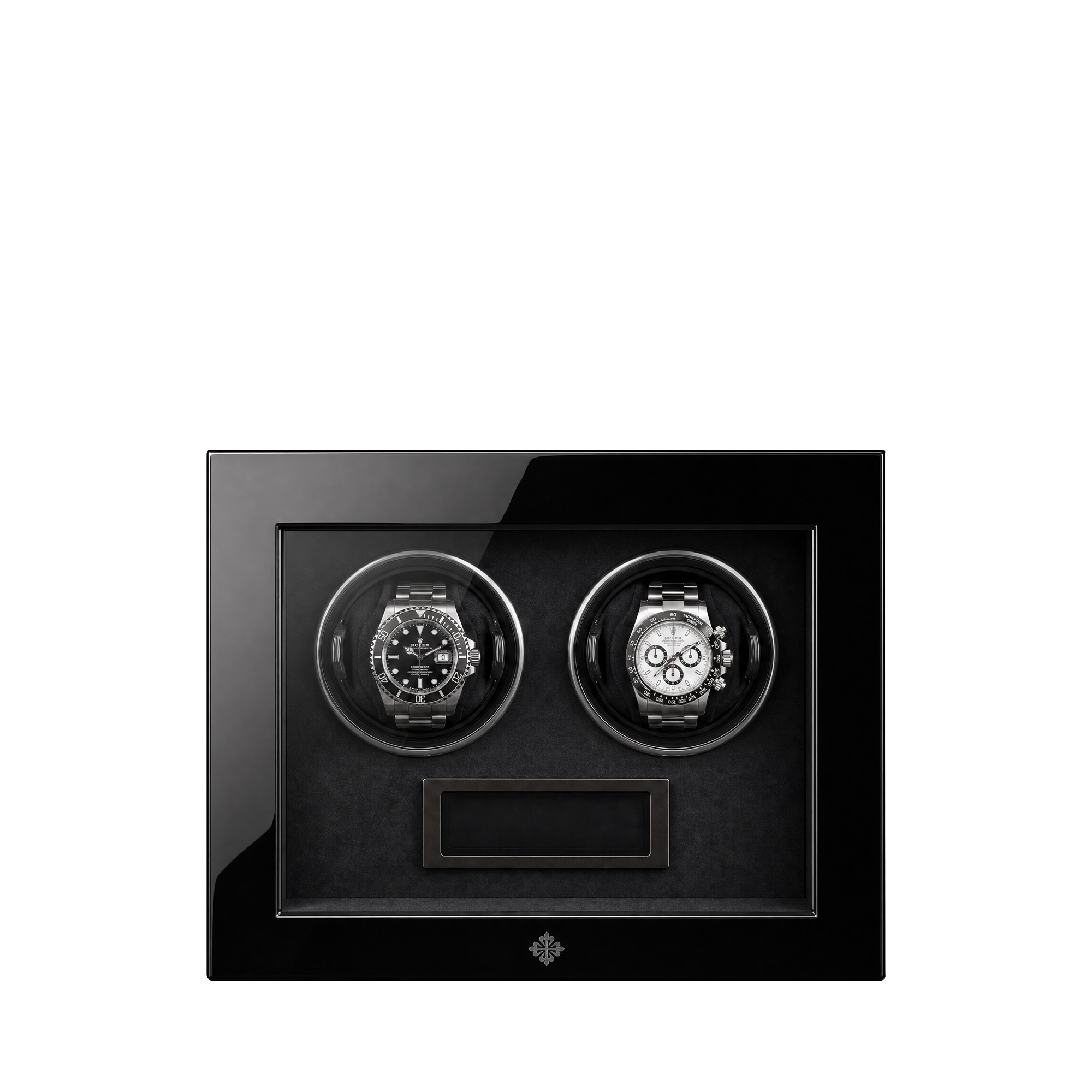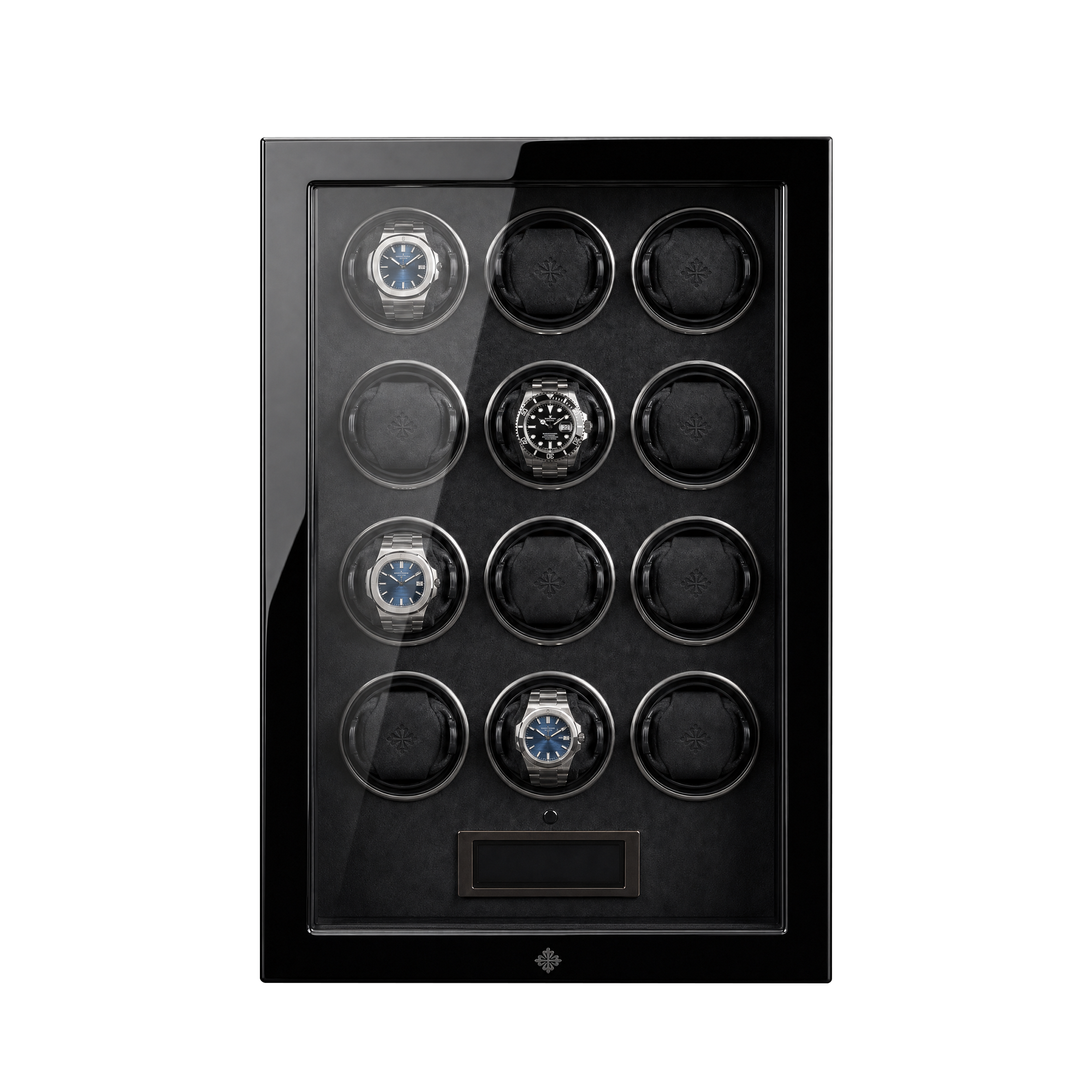

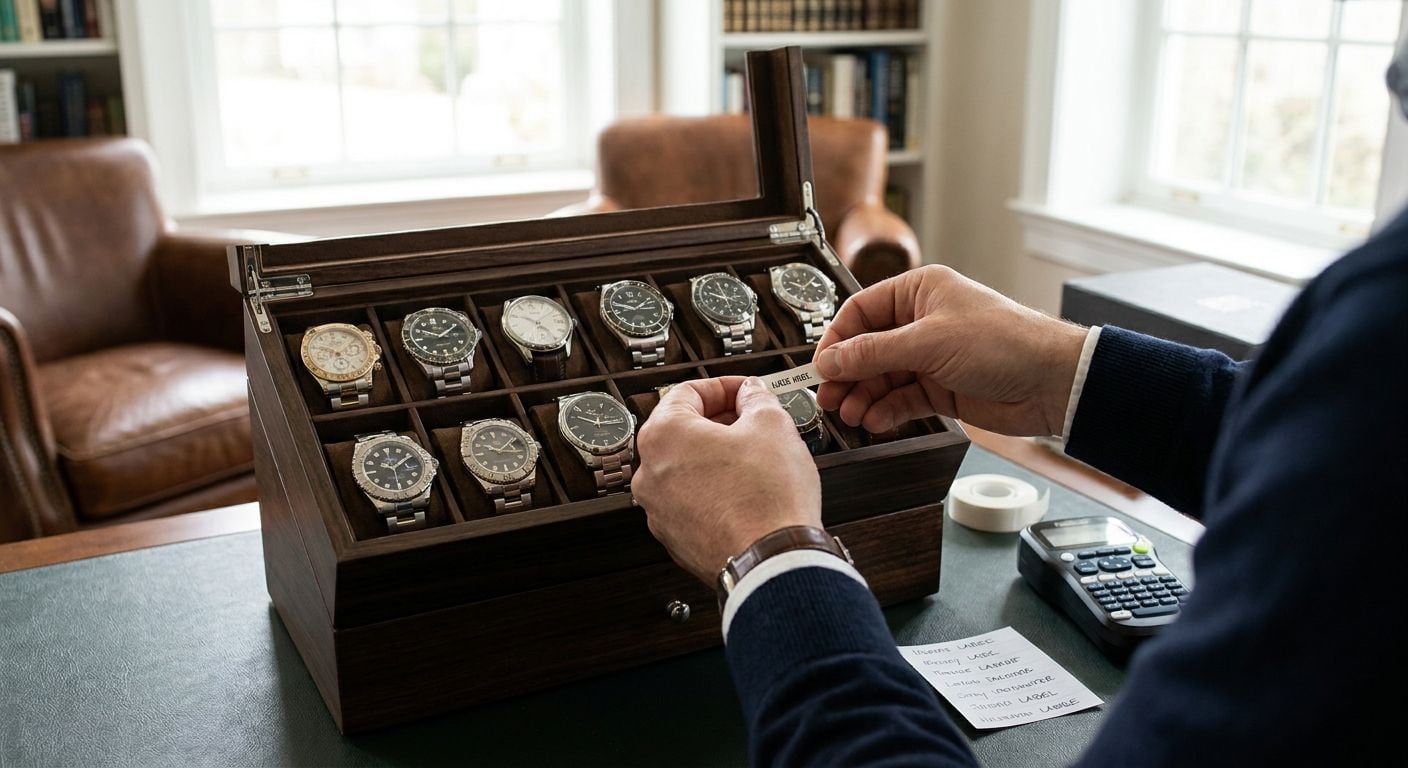
A mixed-brand collection breaks the moment you trust memory instead of a system, and slot labeling is the fix collectors skip until it costs them a stalled mainspring.
Label each watch winder slot with three fields — the watch's reference or caliber, its turns-per-day (TPD) setting, and its rotation direction — never the brand name alone, because two watches from the same manufacturer can carry different calibers with different TPD needs. Keep the record on a numbered key or removable card, not a sticker on the slot itself, and update it every time a watch rotates in or out. Get this right once in 2026 and you stop guessing at settings every time you swap a watch into the cabinet.
- Label winder slots by caliber and TPD, not brand name, in a mixed-brand collection.
- A numbered key or card beats adhesive stickers on Alcantara or Nappa interiors.
- Recheck TPD after any service visit — a fresh movement can wind differently.
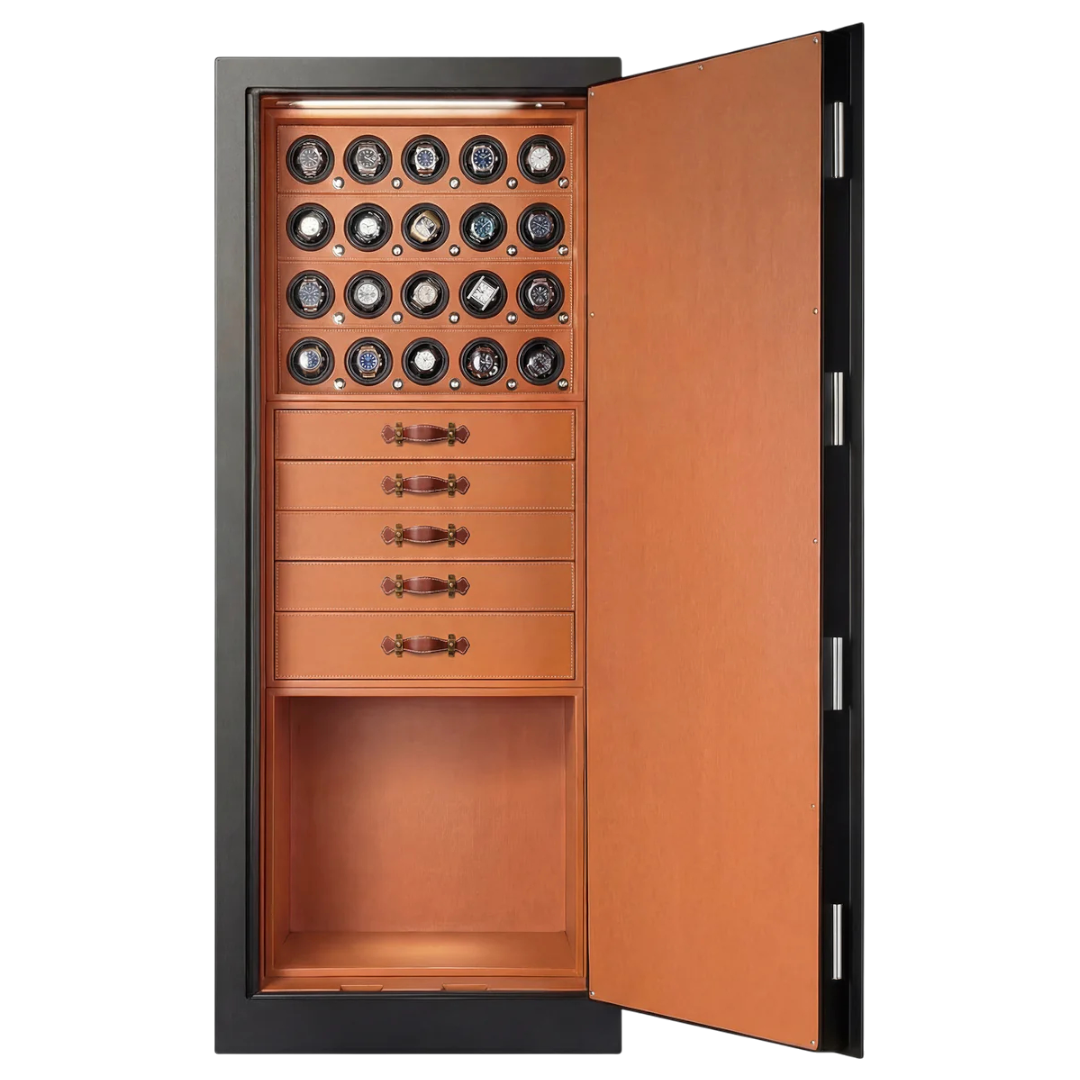
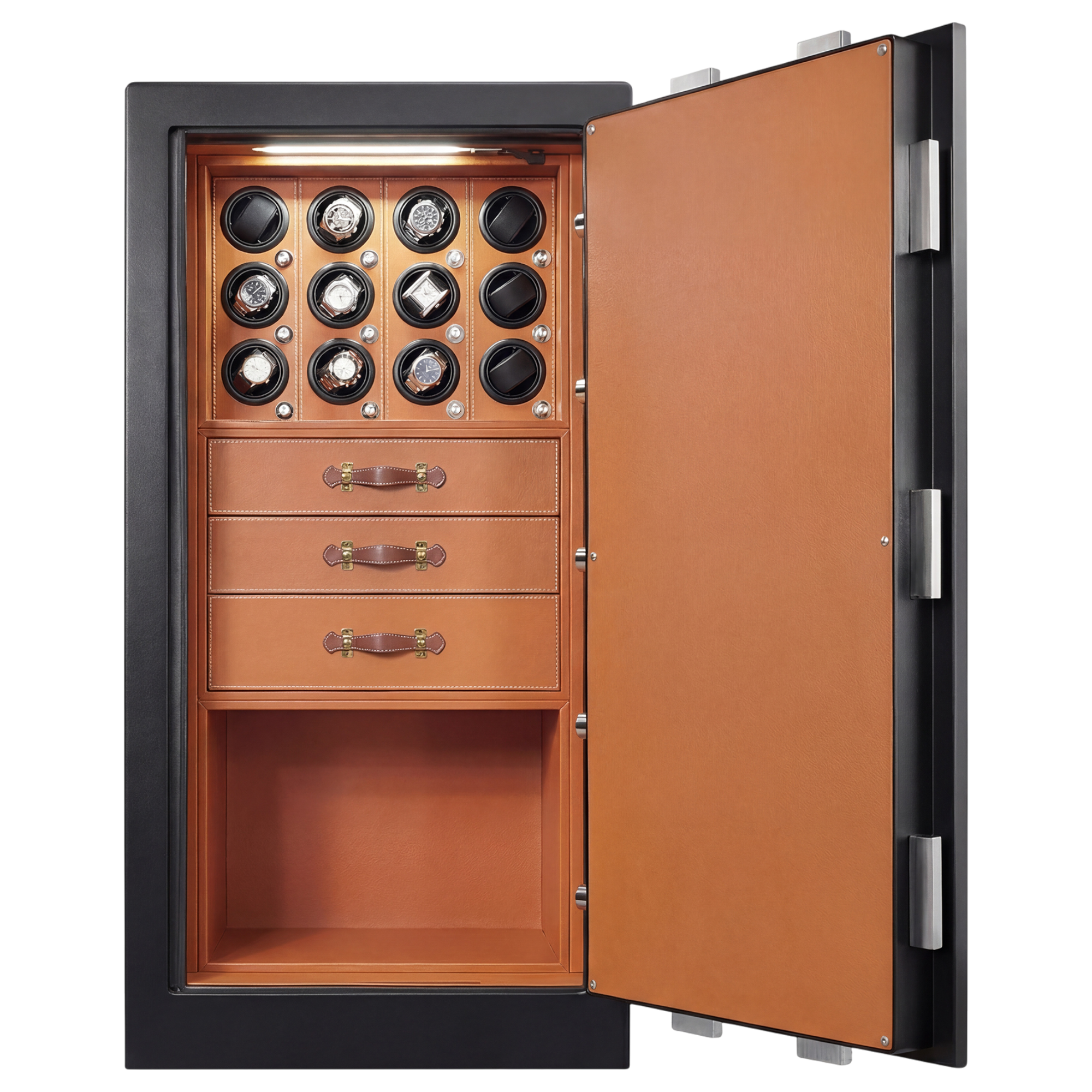
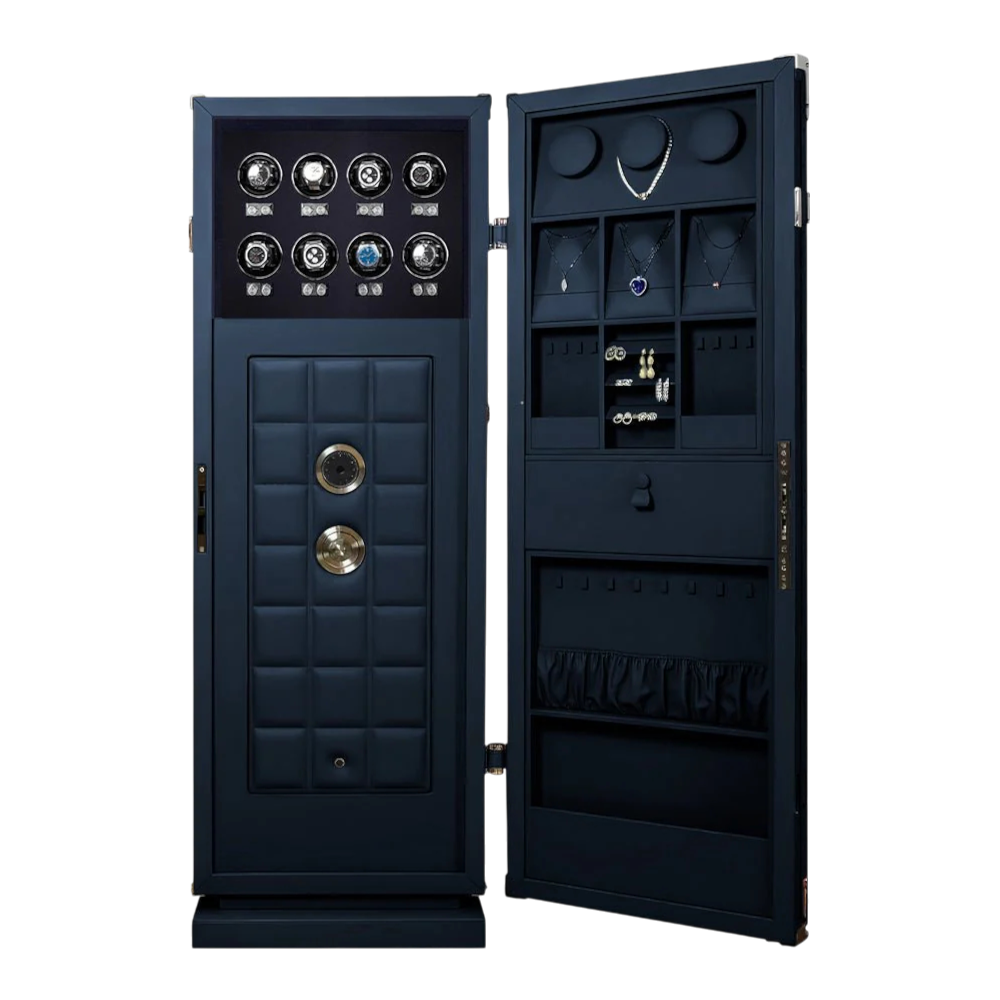
- Multi-rotor winders like the Enigwatch Virtuoso Series 6 and Impresario Series 12 run independent programs per slot, which makes labeling worth doing right.
Why this matters
A winder with six rotors running one TPD program across six different calibers defeats the reason you bought six rotors. The wrong turns-per-day setting either under-winds a mainspring so the watch stops between wears, or keeps a caliber turning long after it's fully wound, which does nothing but add wear.
Collectors with five or more watches in rotation lose track of which slot holds which setting within a few weeks unless the labeling is deliberate from day one. The full TPD reference guide breaks down why turns-per-day differs by caliber rather than by brand, which is the root of most mislabeling mistakes.
How to label watch winder slots for a mixed-brand collection
Follow this order and the labeling holds up even as watches rotate in and out over 2026 and beyond.
- Number the slots, not the brands. Slot 1, Slot 2, Slot 3 — a number never changes even when the watch inside does.
- Log three fields per slot. Reference or caliber, TPD setting, and rotation direction (clockwise, counterclockwise, or bidirectional). Nothing else belongs on the card.
- Use a physical key, not a slot-side label. Adhesive residue damages Alcantara and Nappa leather over time, so keep the record on a laminated card or engraved tag stored separately from the interior.
- Store the key where you'll actually see it. A drawer front, a cabinet door pocket, or a card taped inside the lid works better than a note on your phone you'll forget to check.
- Update the key at every swap. The five seconds it takes to update a card is cheaper than a stalled mainspring three weeks later.
- Recheck TPD after service. A caliber that comes back from a service center can wind slightly differently, and the rotation programs guide covers how each mode on a winder actually behaves once you change a setting.
Comparing multi-slot winders for labeling discipline
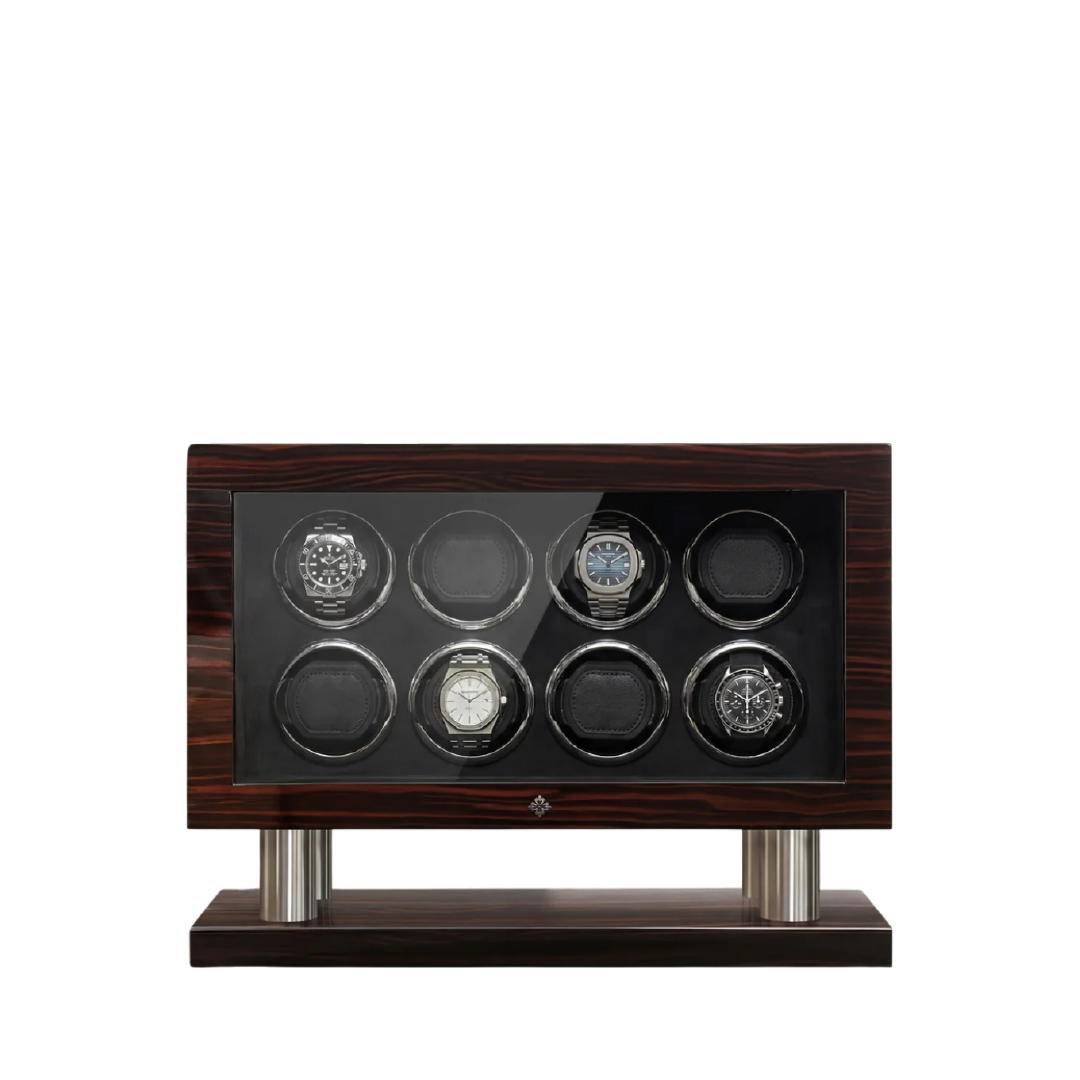
A winder that runs one TPD program across every slot makes labeling pointless — you're forcing every watch onto a setting that fits none of them. Winders with independent programs per rotor are the ones worth labeling carefully, because each slot genuinely holds a different setting.
| Winder | Slots | Program type | Best for |
|---|---|---|---|
| Virtuoso Series 6 | 6 | Independent TPD per rotor | Collectors running six different calibers at once |
| Impresario Series 12 | 12 | Independent TPD per rotor, fingerprint lock | Larger mixed-brand collections that need a full logged key |
| Yachtline Series 8 | 8 | Independent TPD, horizontal layout | Collections displayed flat on a console or credenza |
The Virtuoso Series 6 works for a six-watch mixed collection because each rotor takes its own program, so the label on Slot 4 never has to match Slot 1. That's the exact problem a labeling system solves and a single-program winder cannot.
Honest tradeoffs: independent-rotor winders cost more than single-program units, and the labeling discipline this article covers only pays off if you actually maintain the key card. Skip the multi-program winder if your collection is one or two calibers that share the same TPD — a simpler winder and a simpler label are both fine there.


Why TPD settings vary from slot to slot
Turns-per-day isn't a brand setting — it's a caliber setting, and that's why a labeling system built around brand names fails a mixed collection. The variables that actually change TPD needs:
- Movement architecture. Different calibers wind at different mechanical efficiencies even inside the same case size.
- Mainspring length and reserve. A longer power reserve generally tolerates a lower TPD without stopping.
- Rotor direction requirement. Unidirectional movements need a matched winder direction; bidirectional movements are more forgiving.
- Manufacturer spec sheet. Each maker publishes its own recommended range, which is why how to read a watch winder spec sheet is worth a look before you set any slot.
- Slot orientation. Horizontal mounts and vertical mounts can wind a caliber slightly differently in the same winder.
- Recent service history. A movement just back from cleaning and lubrication can behave differently for the first few weeks of rotation.
Do I need a different TPD for every watch, or can I group them?
Group only watches with nearly identical calibers and TPD needs — otherwise treat each slot independently. The entire reason multi-rotor winders exist is to avoid forcing six different movements onto one shared setting, so grouping defeats the equipment you already own.
Should I label winder slots by brand or by caliber?
Label by caliber and TPD, not by brand name, because two watches from the same manufacturer can use different movements. A brand-only label tells you nothing useful the moment you swap in a different reference from that same maker, which is common in any Rolex and Patek mixed collection.
What's the safest way to label leather or Alcantara-lined slots?
Keep the record off the interior lining entirely and use a removable card or engraved tag instead. Adhesive residue from stickers damages Alcantara and Nappa leather over time, and that damage isn't reversible once the finish is compromised.
FAQ
What’s the best way to label watch winder slots?
Log three fields per slot on a removable card: caliber or reference, TPD setting, and rotation direction. Skip adhesive labels on the slot itself and update the card every time a watch swaps in or out.
How many TPD does a winder slot need?
TPD requirements vary by caliber rather than by a fixed number, so no single figure covers every mixed-brand collection. Check the manufacturer’s spec sheet for each watch rather than copying a setting from a different reference.
Is it better to label by brand or by caliber?
Label by caliber and TPD, not brand name, since two watches from the same maker can need different settings. A brand-only label breaks down the moment you rotate in a different reference from that manufacturer.
Can I put a sticker label on the leather interior?
No — adhesive residue damages Alcantara and Nappa leather over time. Use a removable card or an engraved tag kept outside the lined interior instead.
Do all winder slots in a cabinet need the same TPD?
No, and forcing every slot onto one TPD program defeats the purpose of a multi-rotor winder. Independent-program winders exist specifically so each slot can run its own setting.
How do I remember which slot holds which watch?
Keep a numbered key card in the drawer front or door pocket, not on your phone. A number for each slot never changes even as the watch inside it rotates.
Does rotation direction matter for labeling?
Yes — unidirectional movements need a matched winder direction, so direction belongs on the label alongside TPD and caliber. Getting direction wrong on a unidirectional movement means the rotor turns without actually winding the mainspring.
What happens if I use the wrong TPD setting on a slot?
The watch either under-winds and stops between wears, or keeps turning well past full wind with no benefit. Neither outcome damages the movement immediately, but both mean the winder isn’t doing its job.
One last thing
The label that fails first in most collections isn't the tag on the slot — it's the collector's memory of which watch moved where last week. A one-line log with the date, slot number, and TPD setting outlasts any sticker system, and it takes less time to maintain in 2026 than most people spend deciding which watch to wear each morning. Set the log up before the first watch goes into a new winder, not after the second time you've guessed wrong.
Related guides
- Watch winder direction: clockwise vs counterclockwise
- Watch winder for a Rolex and Patek mixed collection
Protect Your Watch Collection
Designed for collectors who demand the best. Explore our premium watch winders and luxury safes.