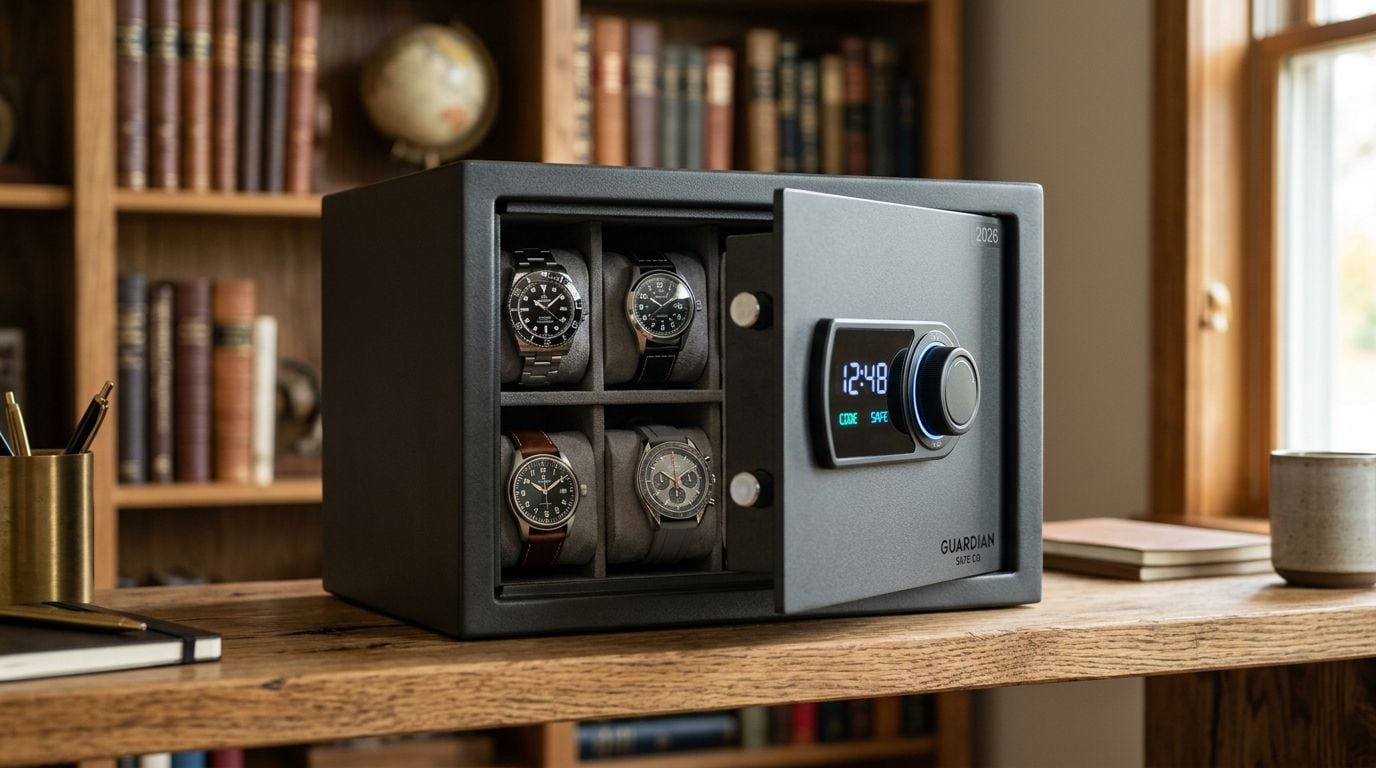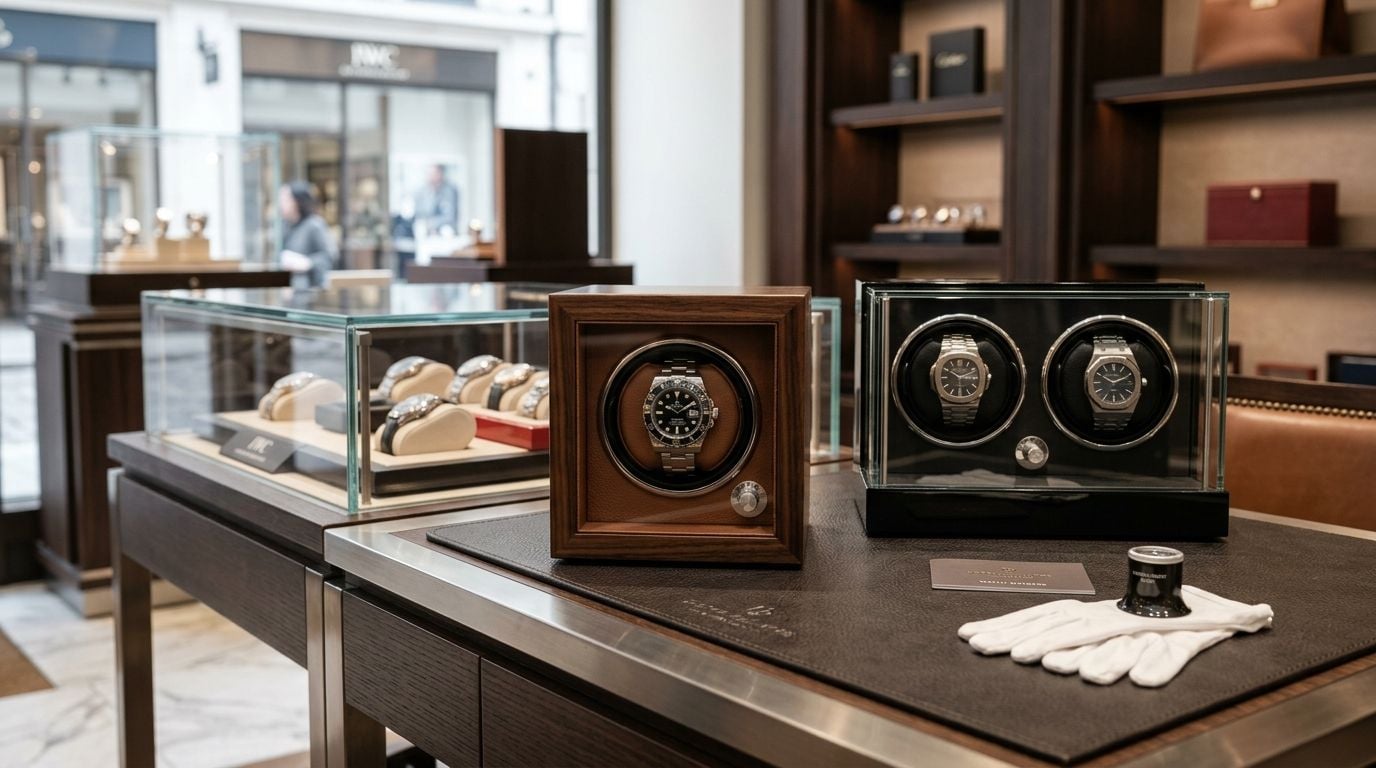

A watch safe for a collector who lends pieces to museums has to satisfy two audiences at once: a registrar who wants a condition report and a paper trail, and a would-be thief who never gets the chance to test the vault at all. That's a different brief from a home safe bought for peace of mind — a loan piece travels, gets inspected on arrival and departure, and sits inside someone else's insurance policy for months at a stretch.
- A watch safe for museum loans needs UL TL-30 vault construction, biometric access, and a fire rating a registrar can cite in a loan agreement.
- The Titan Sanctum 20 from Enigwatch pairs UL TL-30 Grade III certification with AR500 ballistic steel for pieces going out on rotating exhibitions.
- Condition reports and dated photographs matter more than the safe’s rating when a registrar questions a damage claim.
- Insurance riders for loaned pieces need current appraisal paperwork the safe itself cannot substitute for.
Why a watch safe matters when you lend to museums
A registrar's loan agreement doesn't just ask where the piece will sit between exhibitions — it asks how you'll prove condition, custody, and security if anything goes wrong. A watch safe with a biometric lock answers the custody question directly: an access log tied to a fingerprint is easier to defend in a claim than a shared key that anyone in the house could have used.
The piece also isn't sitting untouched. It leaves for the exhibition, comes back, goes out again for the next loan cycle. Every one of those handoffs is a moment where a registrar, a courier, and your own insurer all need the same paper trail pointing the same direction. The safe is one part of that trail, not the whole thing.
Document provenance and condition before the loan
A registrar's checklist starts before the watch ever leaves the house. Get this done early and every later step gets faster.
- Photograph the case, dial, and clasp under raking light from four angles
- Record the movement's serial number alongside the case serial
- Confirm the certificate of authenticity matches the piece being loaned, not a prior owner's paperwork
- Get an appraisal dated within the window the museum's registrar specifies
- Keep the box and papers stored separately from the watch itself
Choose a vault rated for the piece's value tier
Not every safe on the market is built to the same standard, and a registrar's facility report will ask for the specific rating, not a general claim of "secure storage." Fire rating numbers on a watch safe mean different things depending on the duration and the temperature tested against, so read the spec sheet before you commit to a model.
- Confirm UL TL-30 grade — II, III, or V — against what the loan agreement requires
- Check the stated fire rating duration and the temperature it's tested at
- Look for ballistic rating (AR500 or equivalent) if the piece will sit in a higher-crime facility between shows
- Verify the safe's weight and anchoring method against the room it will actually occupy
- Match vault capacity to how many pieces cycle through loans at once, not your full collection
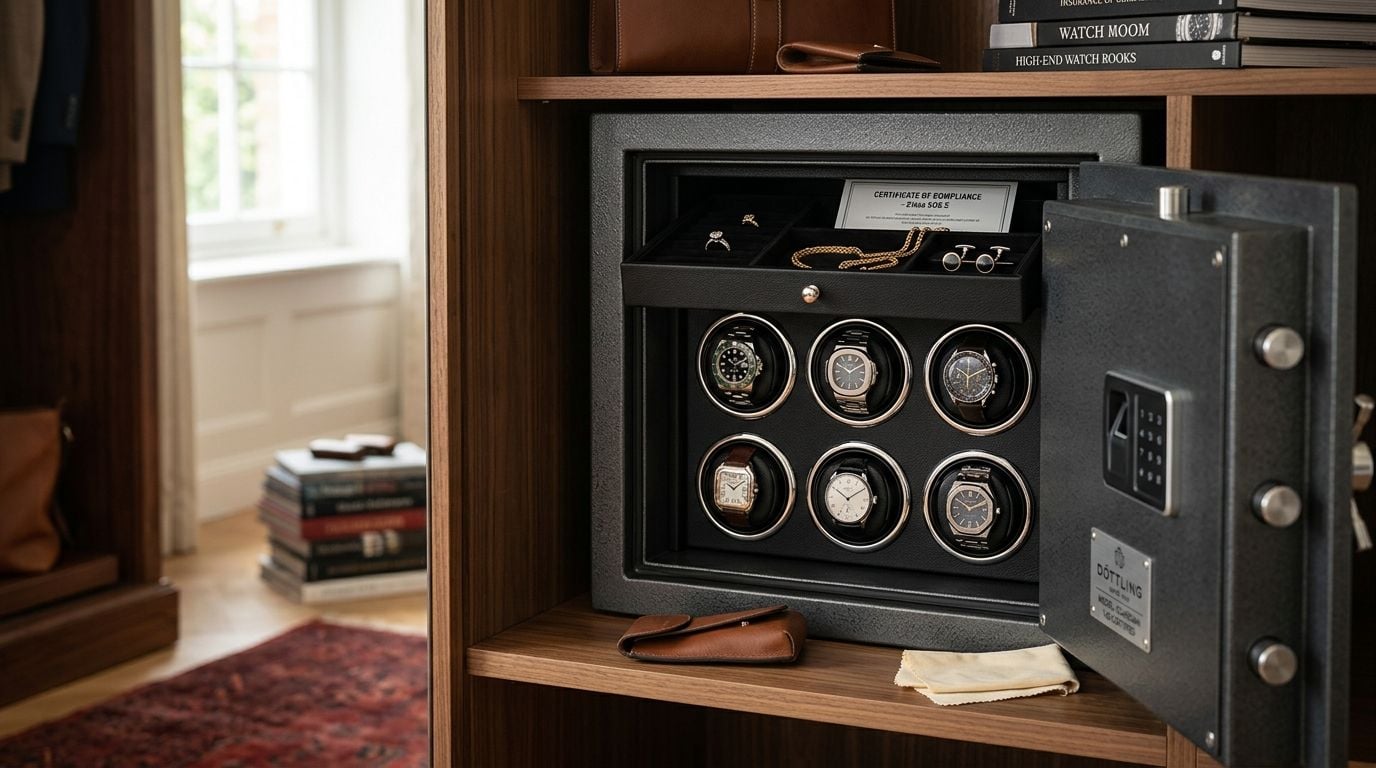
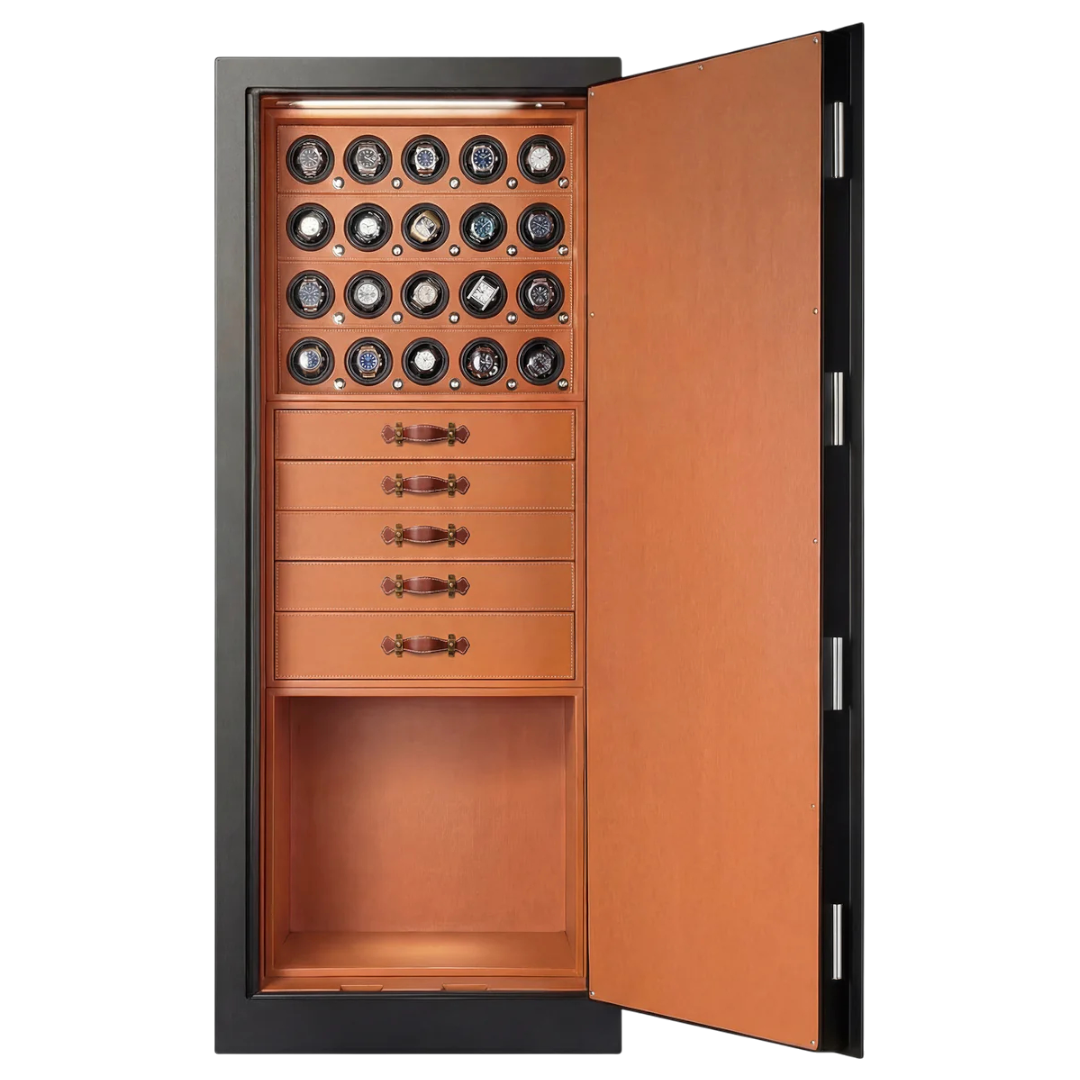
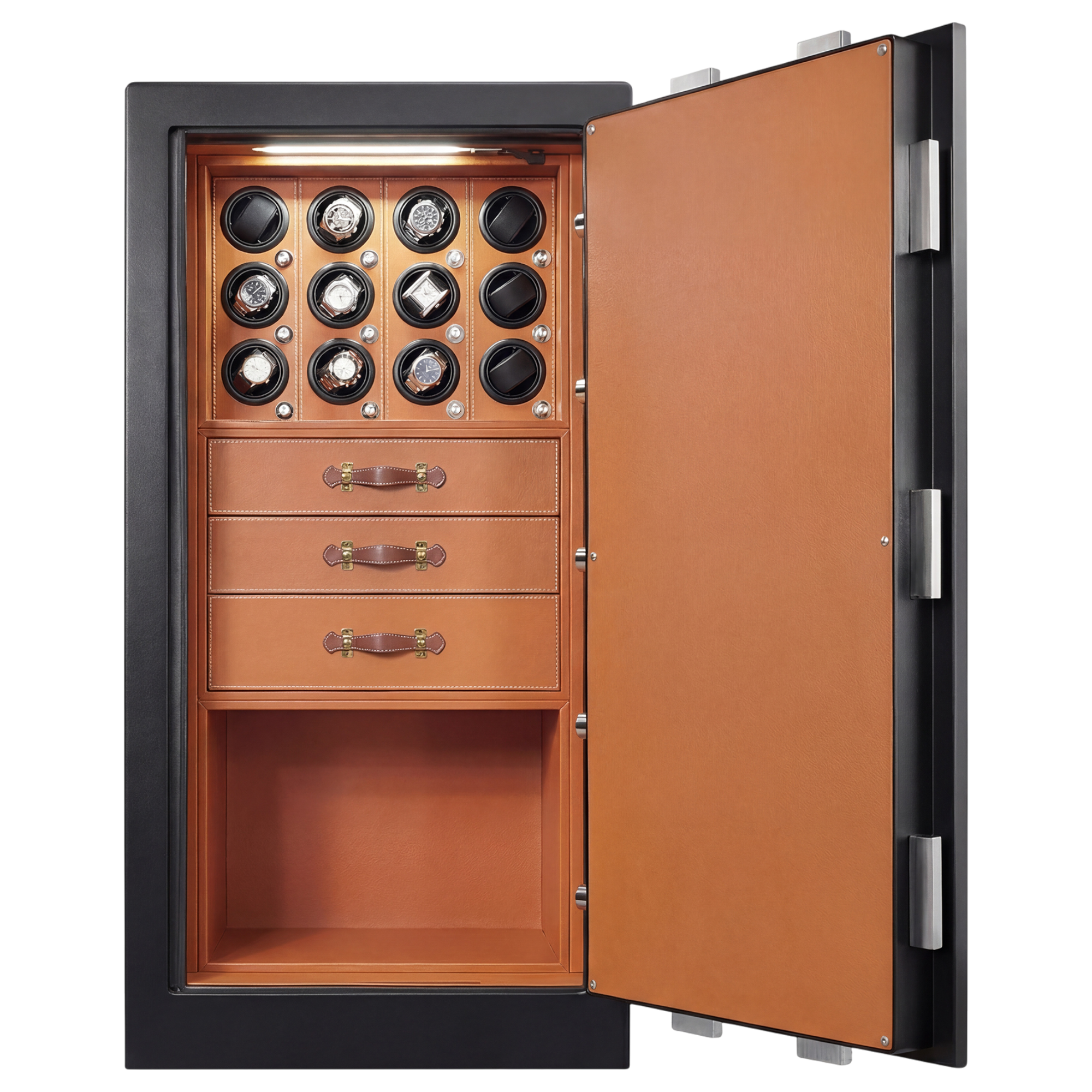
The Titan Sanctum 20 from Enigwatch is built around exactly this brief: UL TL-30 Grade III certification, AR500 ballistic Level 1 steel, and a Nappa-lined interior sized for twenty pieces moving in and out of rotation. It's not the largest vault in the catalog, but for a collector lending one or two marquee pieces at a time, the certification does the talking a registrar wants to hear.
Separate transit security from storage security
The safe protects the piece at home. It does nothing for the two legs of shipping, which is where most handling risk actually lives.
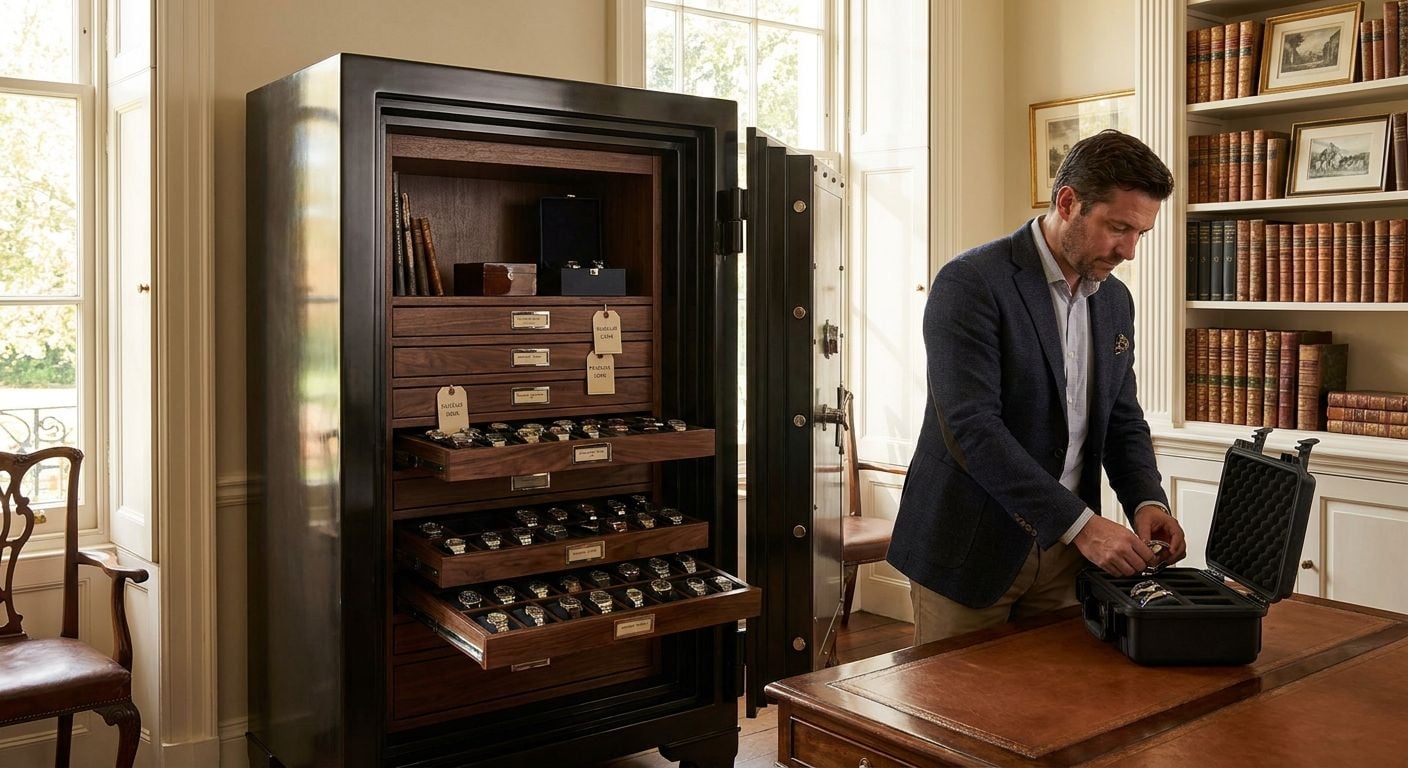
- Use a dedicated hard transit case, never the safe's own tray, for the physical move
- Insure the transit leg separately from the home storage policy
- Get a bonded courier's declared-value form signed before handoff
- Photograph the piece immediately before it leaves your hands and immediately after the courier signs
- Confirm the receiving registrar's facility report before the truck leaves your driveway
Set humidity and temperature control for the return
A piece that comes back from a climate-controlled gallery case needs to land somewhere stable, not a garage or an exterior wall closet that swings ten degrees with the season.
- Keep the safe on an interior wall, away from direct sun and HVAC vents
- Use a hygrometer inside the safe rather than trusting the room reading
- Avoid opening the safe daily during an active loan — every open cycle is a swing in interior humidity
- Store leather straps and bracelets in the same environment, not split between drawer and safe


Build an insurance file the registrar and your carrier both accept
A safe's certification sticker isn't an insurance document. What appraisers need to insure a watch collection is a separate, ongoing file, and museum loans put it under more scrutiny than a policy that just sits in a drawer.
- Confirm your policy has a fine-art or jewelry rider, not just standard homeowner's coverage
- Update the appraisal before every loan renewal, not once a decade
- Keep timestamped photographs attached to the appraisal file, not loose on a phone
- Add a loss-of-use clause for the period the piece is off-site
- Send the safe's certification documents to the registrar alongside the appraisal, not instead of it
Lock down chain of custody with access control
A registrar's facility report increasingly asks who can open the storage unit and when. An access log tied to a fingerprint answers that in one line; a shared key does not.
- Assign a single authorized user per piece where the loan agreement allows it
- Log every open event, not just the ones tied to a loan cycle
- Keep the access log separate from the general household safe's log if you store both types of pieces
- Review the log before every handoff to the courier
Plan the reinspection and rewinding on return
A piece that sat unwound for months at a gallery doesn't go straight back onto the wrist or into general rotation.
- Compare the returned piece against the original condition report line by line
- Reset the date and time only after confirming the movement is running to spec
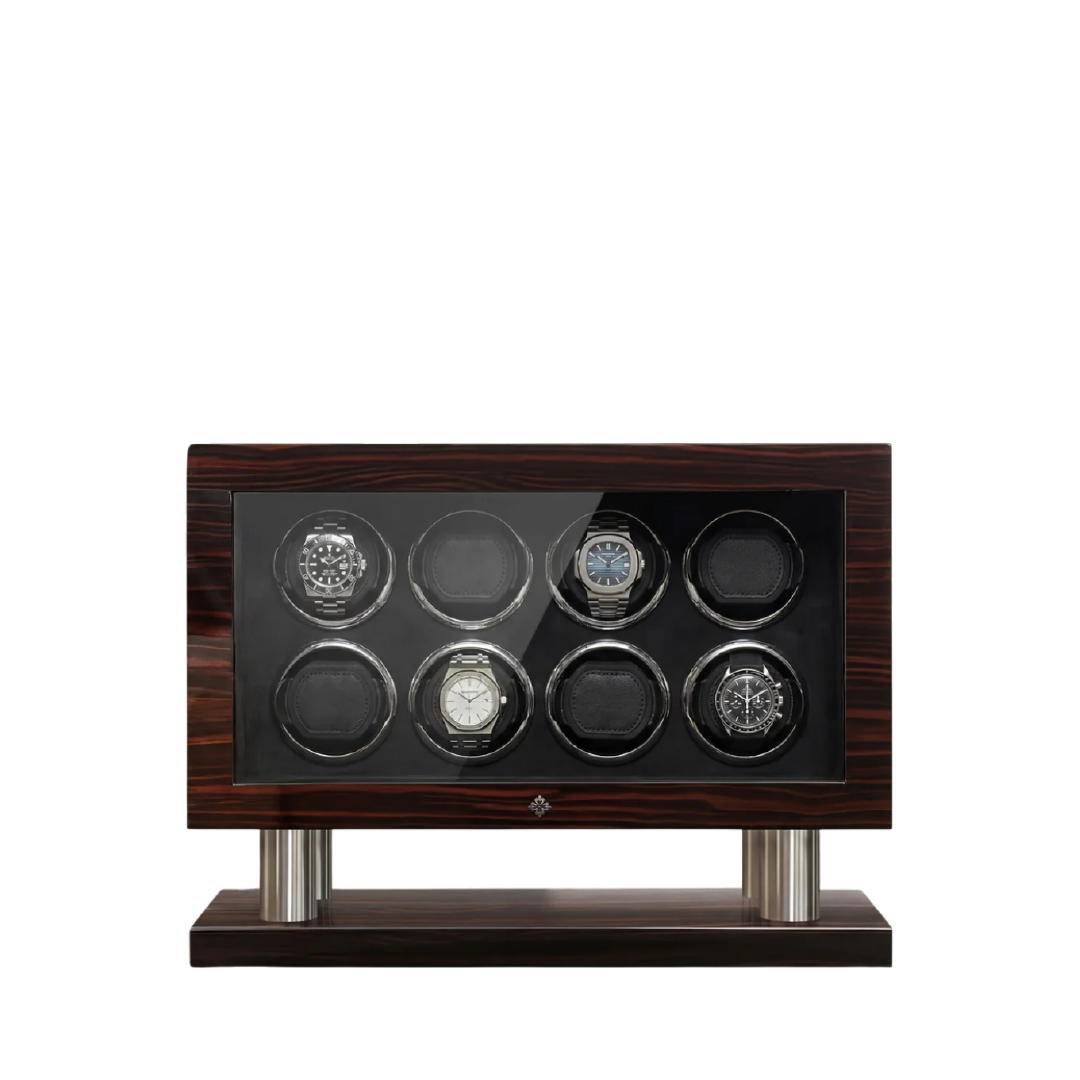
- Match the winder's TPD (turns per day) to the caliber before putting it back into daily rotation
- Photograph the piece on return, before it goes back into the vault
Watch safes for museum-loan collections compared
| Safe | Best for | Certification | Limitation | Verdict |
|---|---|---|---|---|
| Titan Sanctum 20 | Marquee pieces cycling through rotating exhibitions | UL TL-30 Grade III, AR500 ballistic Level 1 | 20-slot capacity fills fast once winding units share the space | Buy |
| Apollo 12 | Mid-size collections lending one or two pieces at a time | UL TL-30 Grade II, AR500 ballistic | Lower vault grade than the top-tier options for the highest-value single pieces | Buy for smaller loans |
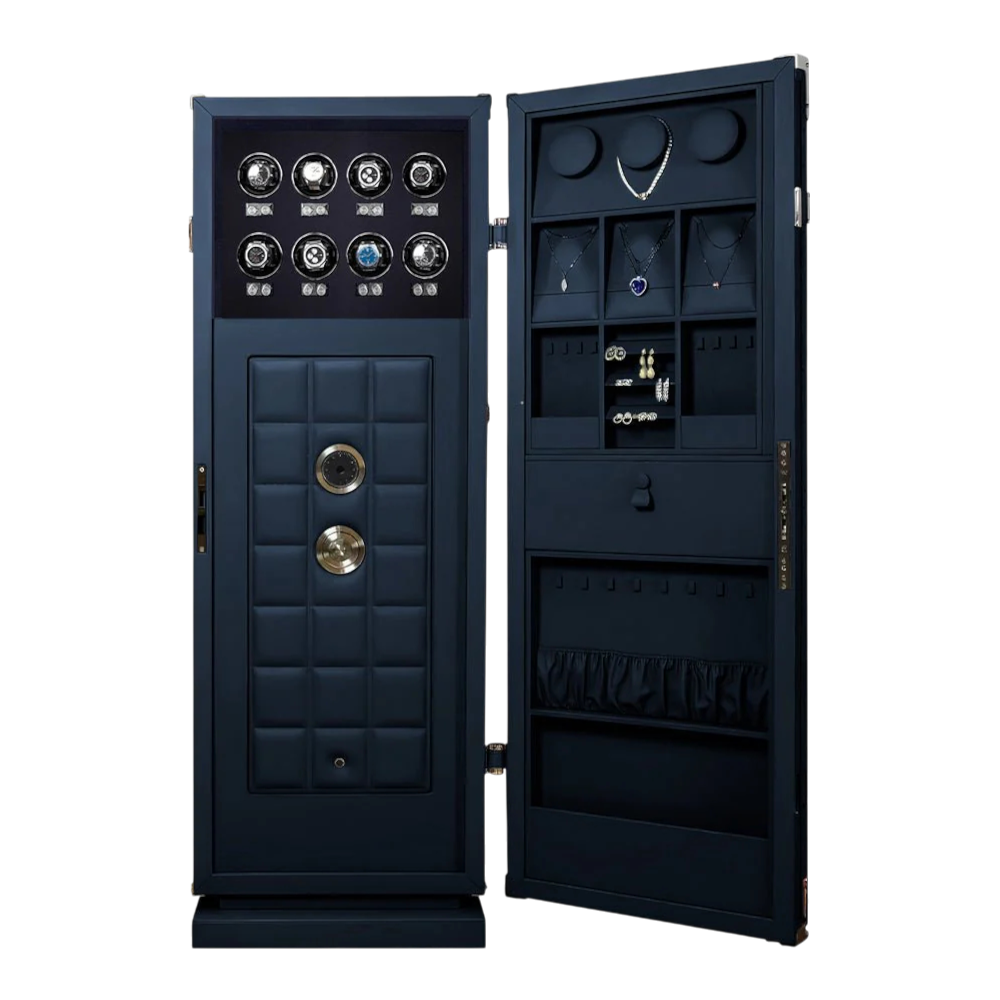
| Veron Elite 12 | Collectors who weigh Italian-made cabinetry alongside vault grade | UL TL-30 Grade III | Fire rating not specified at the level of the Gatsby Soirée | Consider |
| Gatsby Soirée | Long-term loans of the collection's most valuable pieces | UL TL-30 Grade V, hour-long fire rating, dual-authentication lock | Largest footprint in the catalog — plan the installation before ordering | Buy for top-tier loans |
Common mistakes collectors lending to museums make
- Skipping a fresh appraisal before each loan. Registrars date-stamp condition reports; a two-year-old appraisal isn't accepted at renewal.
- Treating the safe's certification as the whole insurance case. A UL rating sticker doesn't replace photographs and a documented chain of custody.
- Commingling the loan piece with the rest of the collection. A segregated slot with its own access log is easier to defend than "it's in there somewhere."
- Underestimating the two shipping legs. The safe protects the piece at home — transit is where handling risk actually concentrates.
- No rewinding plan for the return. A piece that sat unwound for a museum's run needs a TPD-matched winder before it goes back into daily rotation, not straight onto the wrist.
FAQ
What is a watch safe for museum loans?
It’s a high-security vault, typically UL TL-30 rated with biometric access, chosen to satisfy a museum registrar’s loan agreement rather than just home burglary risk. It needs documented certification, not just a locked box.
Do museums require insurance riders for loaned watches?
Most registrar agreements require a fine-art or jewelry rider with a current appraisal, separate from standard homeowner’s coverage. The safe’s certification supports the claim; it doesn’t replace the rider.
What UL rating does a watch safe need for museum loan pieces?
UL TL-30 Grade II or III covers most single-piece loans, while Grade V vaults like the Gatsby Soirée cover the highest-value pieces on long-term loan. Check the specific grade against the loan agreement, since requirements vary by institution.
Can I use a home safe instead of a dedicated watch safe for loan pieces?
A general home safe usually lacks the documented UL TL-30 certification and biometric access log a registrar’s facility report asks for. A dedicated watch safe with published ratings makes the paperwork easier to produce on request.
How long can an automatic watch sit unwound during a museum loan?
Power reserves vary by caliber, typically 40 to 70 hours, so a piece left unwound for a multi-month exhibition needs rewinding and reinspection before it returns to daily rotation. Match the winder’s TPD to the caliber rather than guessing.
Does a biometric lock matter for museum loan chain of custody?
Yes — an access log tied to a fingerprint is easier to defend in a damage or theft claim than a shared key with no record of who opened the safe and when.
What’s the difference between UL TL-30 Grade II, III and V?
The grade reflects the tool-resistance testing standard the vault door and body pass, with Grade V representing the highest tier tested. Higher grades generally mean thicker steel and longer attack-resistance ratings, which matters more for the highest-value single pieces.
One last thing
Rewind the piece before it ships, not after it arrives — a watch shipped fully wound and running holds its rate steadier through transit vibration than one wound cold on arrival, and it gives the receiving registrar a working piece to photograph on intake rather than a stopped one that raises questions it doesn't need to.
Related guides
- How appraisers need to insure a watch collection
- What watch safe fire rating numbers actually mean
- How to photograph your watch collection for insurance
Protect Your Watch Collection
Designed for collectors who demand the best. Explore our premium watch winders and luxury safes.