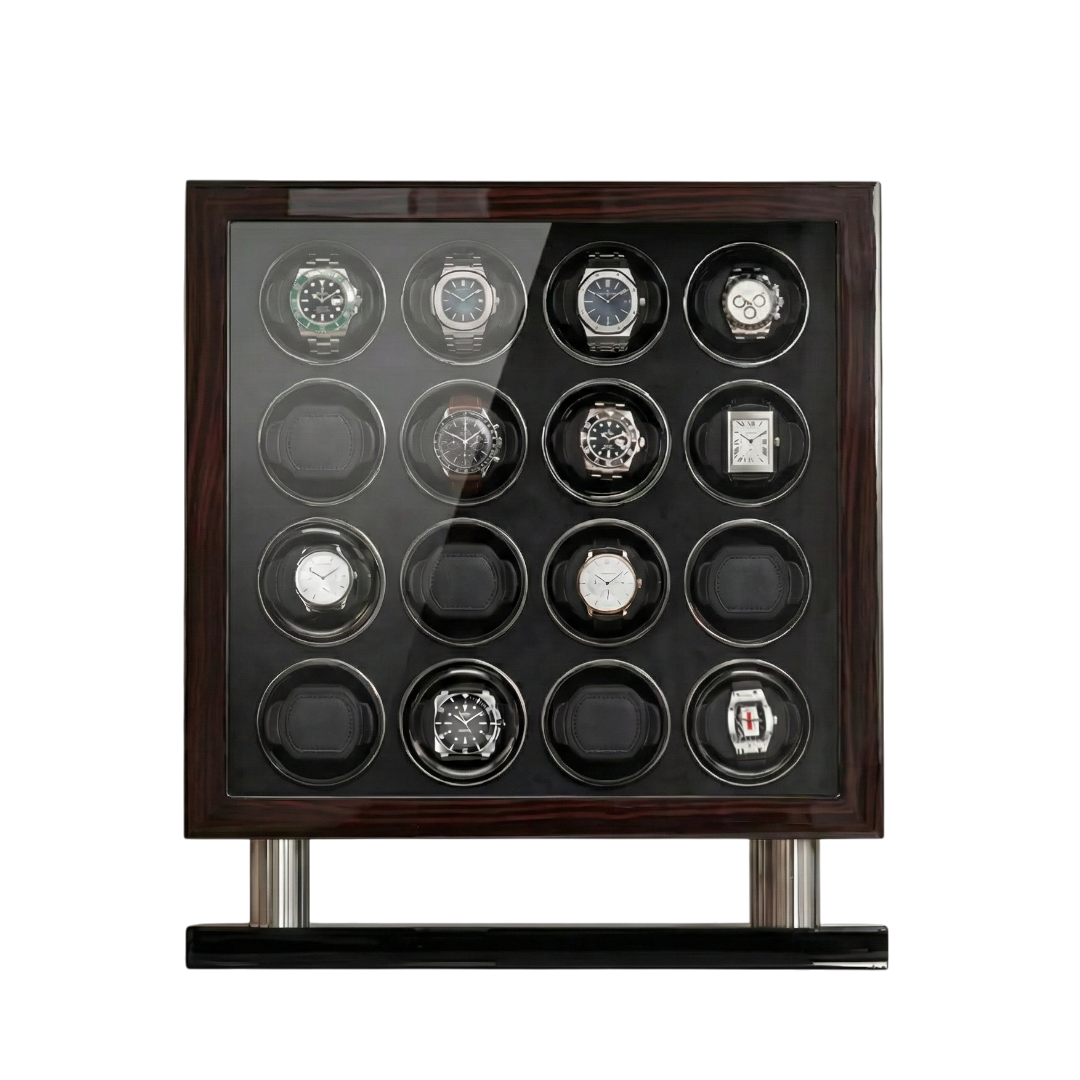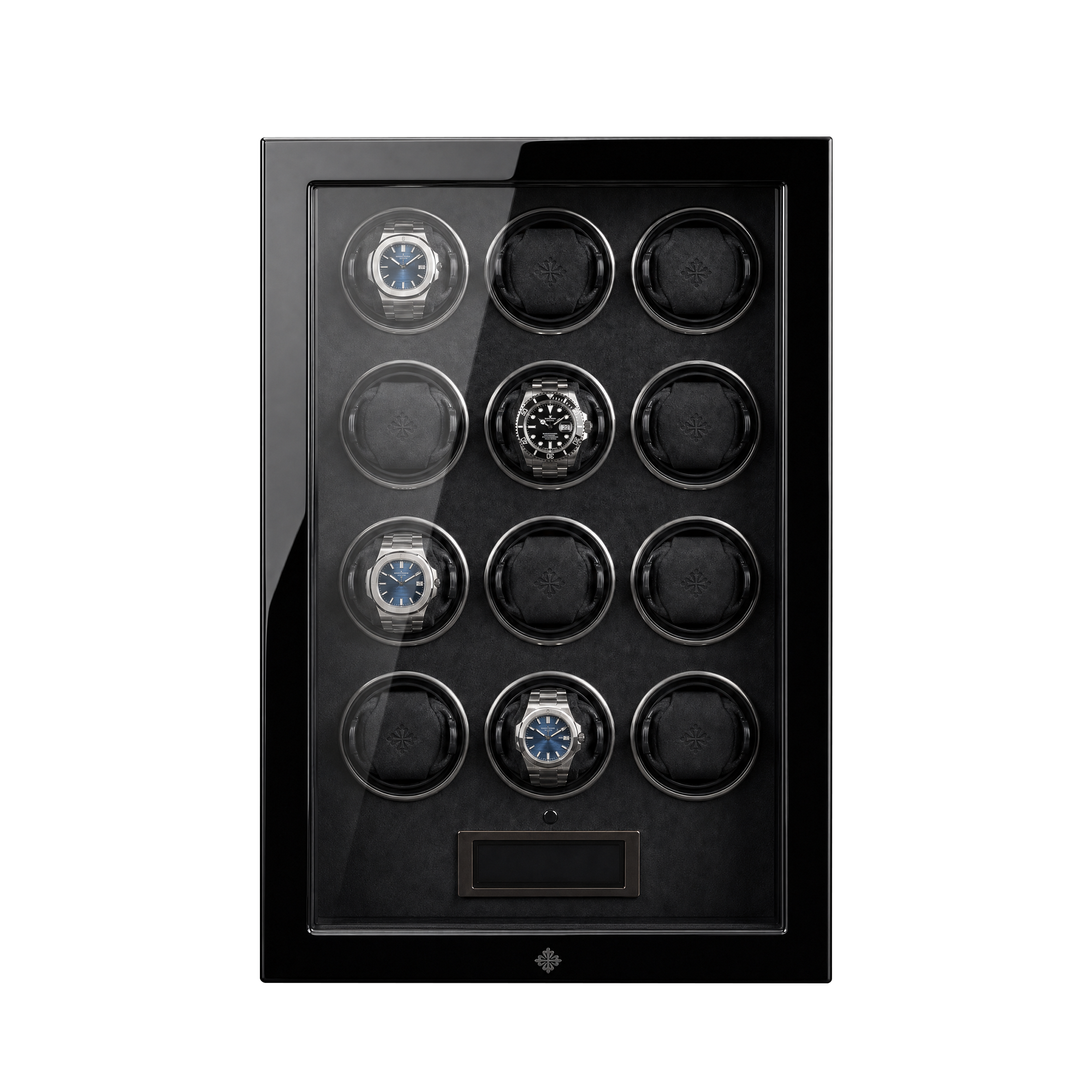

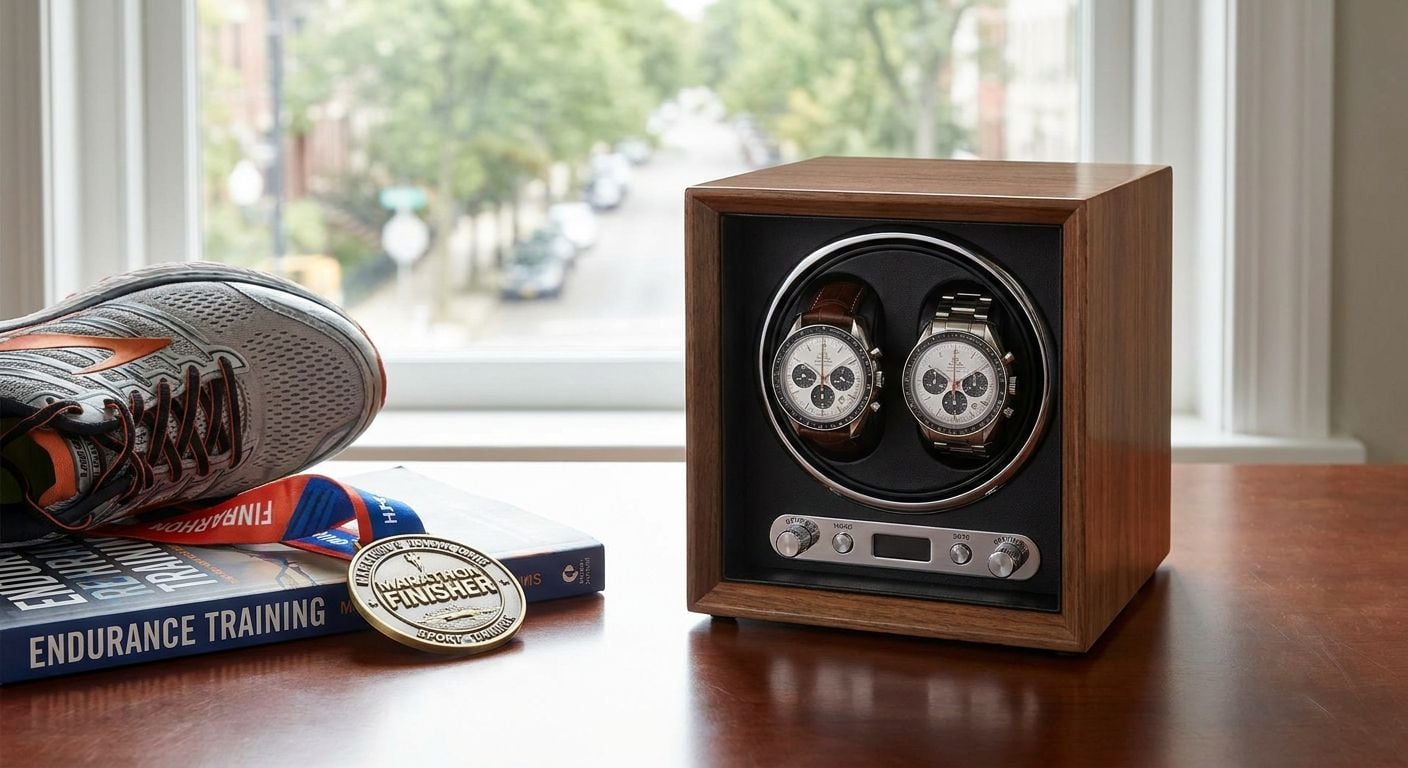
Marathon runners who collect chronographs need a watch winder that matches training blocks and race travel, not a fixed office-hours wear pattern. A collection built around chronographs from different manufacturers rarely shares one turns-per-day number, and weeks of predawn runs pull each watch out of rotation for stretches a desk-bound collector never deals with. Enigwatch builds its winders around exactly that kind of split schedule — independent TPD programs per watch, plus a plan for the pieces sitting idle while you're at a start line in another city.
- A watch winder for a marathon runner works best with independent TPD programs per watch, not one shared setting.
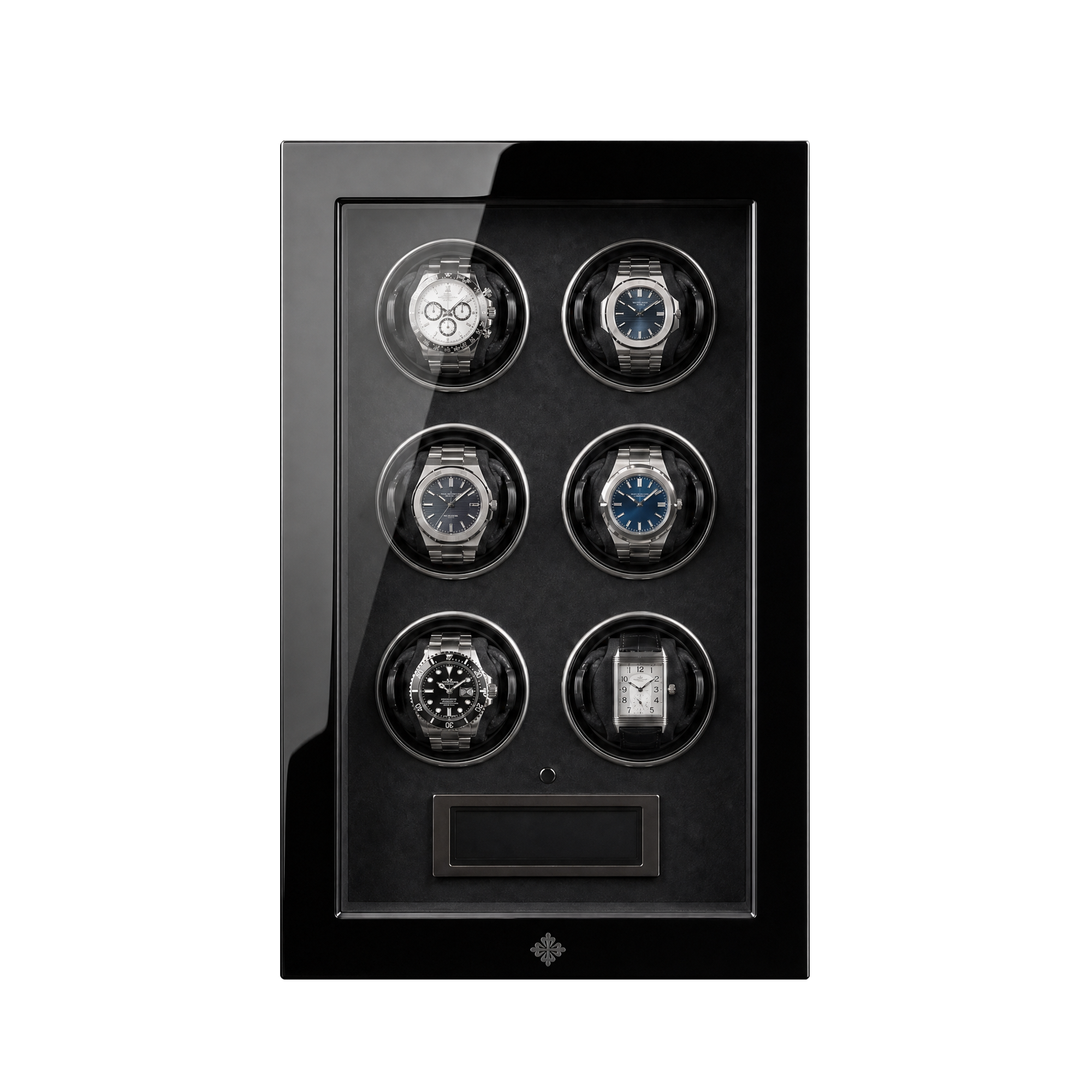
- Virtuoso Series 6 runs six chronographs on separate TPD schedules for $949 — buy it for a mixed-brand rotation.
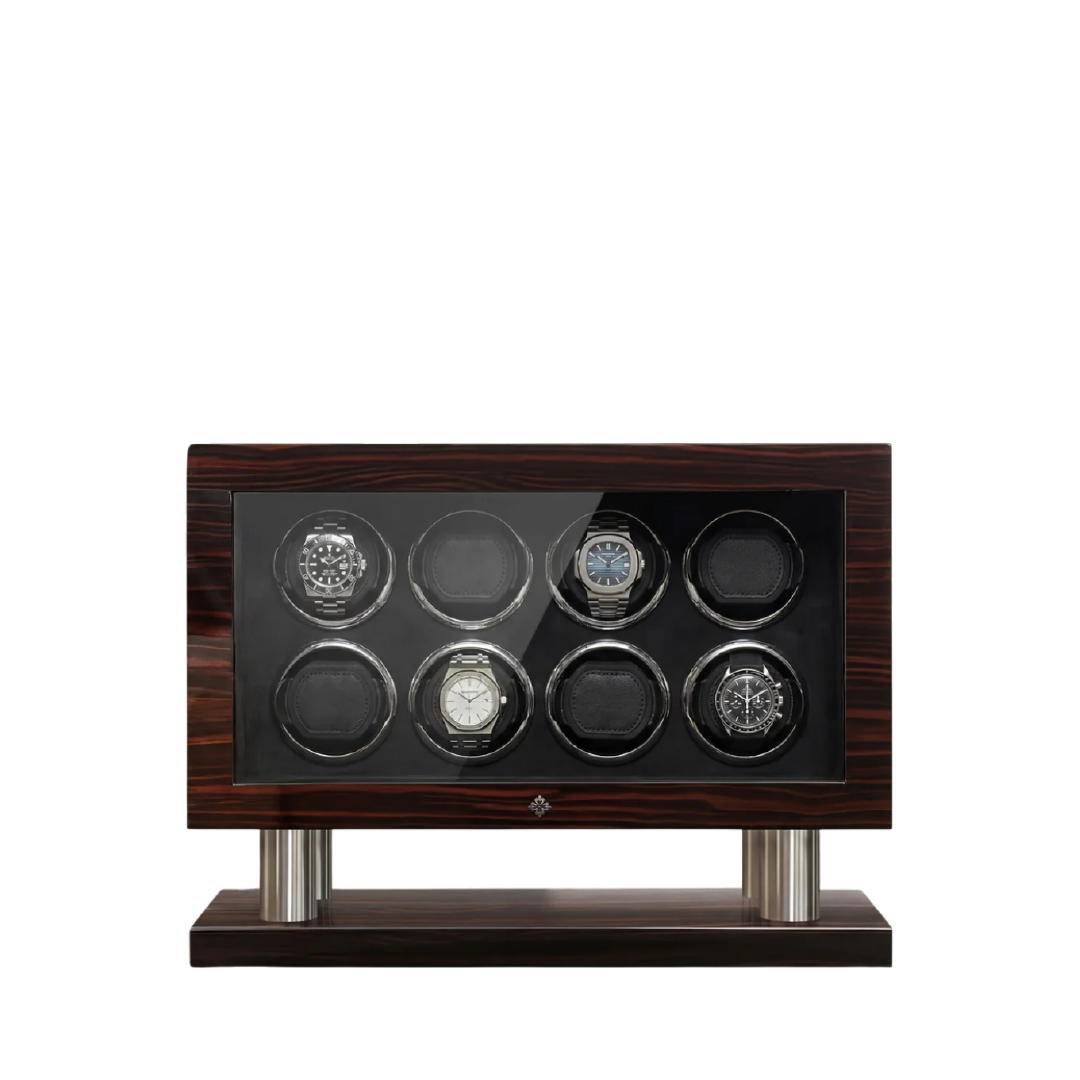
- Yachtline Series 8 displays eight watches horizontally for $1,399, better suited to a shelf than a closet.
- Race travel needs a hard case or safe, not the winder itself, to protect chronograph pushers and crowns.
Why watch winders matter for marathon-running chronograph collectors
A runner training for a fall marathon in 2026 can log 40 to 70 miles a week, often before sunrise, and a chronograph left in a drawer during that block simply stops. Automatic movements need consistent motion to stay wound and to keep any date or moon-phase complication from drifting off schedule. Getting the chronograph TPD settings right matters more here than it does for a single-watch owner — a Rolex Daytona and a Zenith El Primero don't wind at the same rate, and one shared setting shortchanges whichever movement needs more turns.
Chronographs common in this crowd include the Omega Speedmaster, Rolex Daytona, Zenith El Primero, and Tudor Black Bay Chrono, each with its own TPD range and its own pusher tolerances. A rotation of three or four of these rarely shares a single program, which is the whole argument for a winder with independent rotors instead of one dial that guesses.
Race travel adds a second layer most single-watch guides skip. A runner flying to Boston, Chicago, or Berlin for a 2026 race leaves the home winder running unattended while the watch worn that week rides in a travel case or hotel drawer. The winder has to keep rotating correctly for the days you're gone, and the chronograph that isn't in rotation needs protection that doesn't depend on a full watch safe you didn't pack for a four-day trip.
How to set up a watch winder for a marathon runner's chronograph collection
Work through these steps before you buy anything. The calendar and TPD groundwork matter more than the winder itself, and skipping them is how collectors end up with a $1,399 box running the wrong program on every watch inside it.
Log your training and race calendar first
Before buying anything, map out how often each chronograph actually leaves the safe versus sits idle for weeks at a time.
- List every 2026 race on the calendar, including taper weeks when wrist time drops
- Note travel weeks and how many nights you'll be away from home
- Mark long-run days when a chronograph stays off the wrist entirely
- Track which chronograph you reach for on rest days versus race days
- Flag any watch that hasn't left the box in over a month
Set a turns-per-day baseline for each chronograph you own
TPD isn't a universal number. It's specific to the caliber inside the case, and guessing wrong either overwinds a movement or lets it run down.
- Check the movement caliber stamped on the case back or listed in the papers
- Look up the manufacturer's stated TPD range instead of guessing at a number
- Start at the low end of that range and adjust after two weeks of wear
- Keep manual-wind chronographs out of the winder entirely — they don't belong in one
- Note the TPD separately for each watch so a shared winder doesn't default to one setting
Choose a winder that runs independent programs, not one shared setting
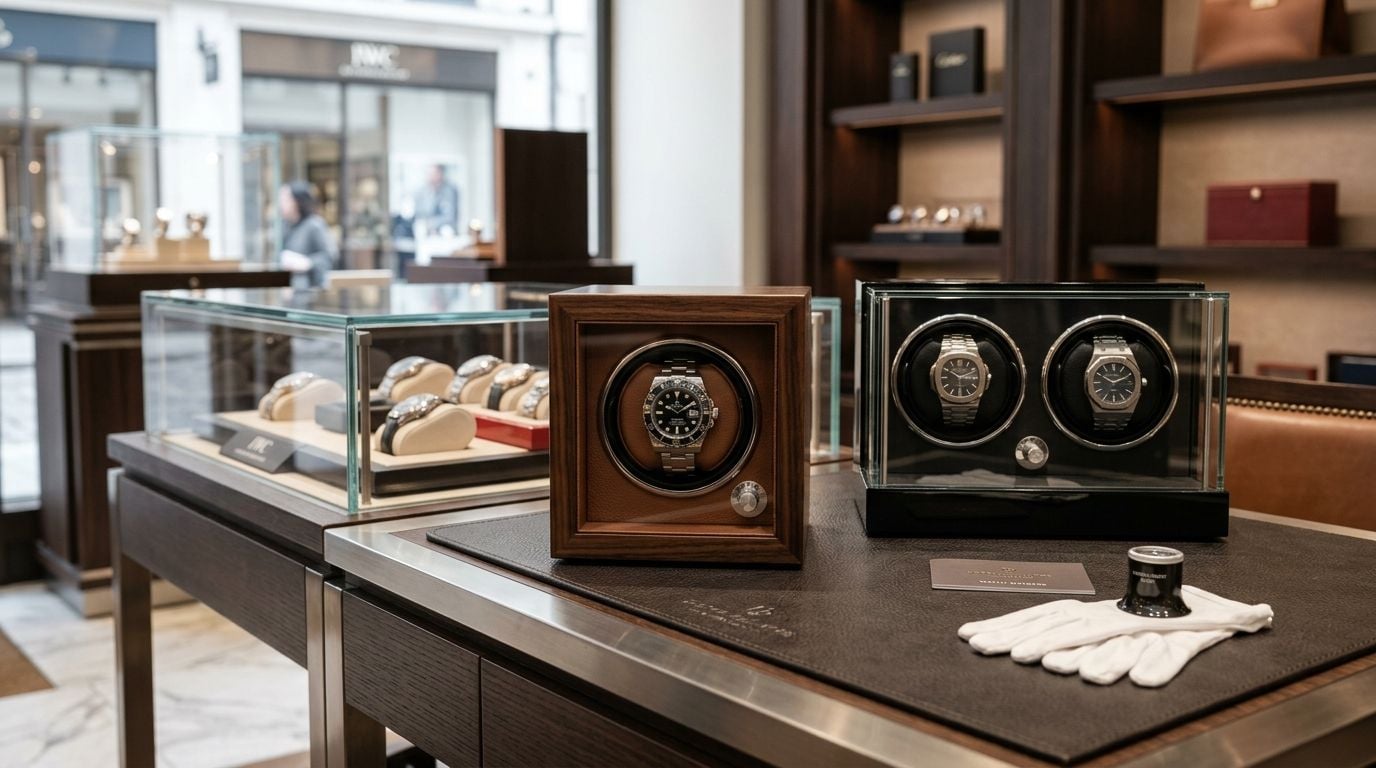
A single TPD number across a mixed-brand collection undercharges some movements and overwinds others. This is where an Enigwatch watch winder with multiple independent rotors earns its price over a basic single-program box.
- The Virtuoso Series 6 watch winder runs six chronographs on six separate programs from one panel
- The Yachtline Series 8 spreads eight watches horizontally, each on its own schedule
- Match slot count to your active rotation, not your entire collection sitting in a safe
- Confirm the winder supports bidirectional and clockwise-only movements if your chronographs mix both types
Decide if a safe belongs in the setup, not just a winder
A winder keeps watches wound. It doesn't lock them down while you're away for a race weekend, and that's a separate problem to solve.
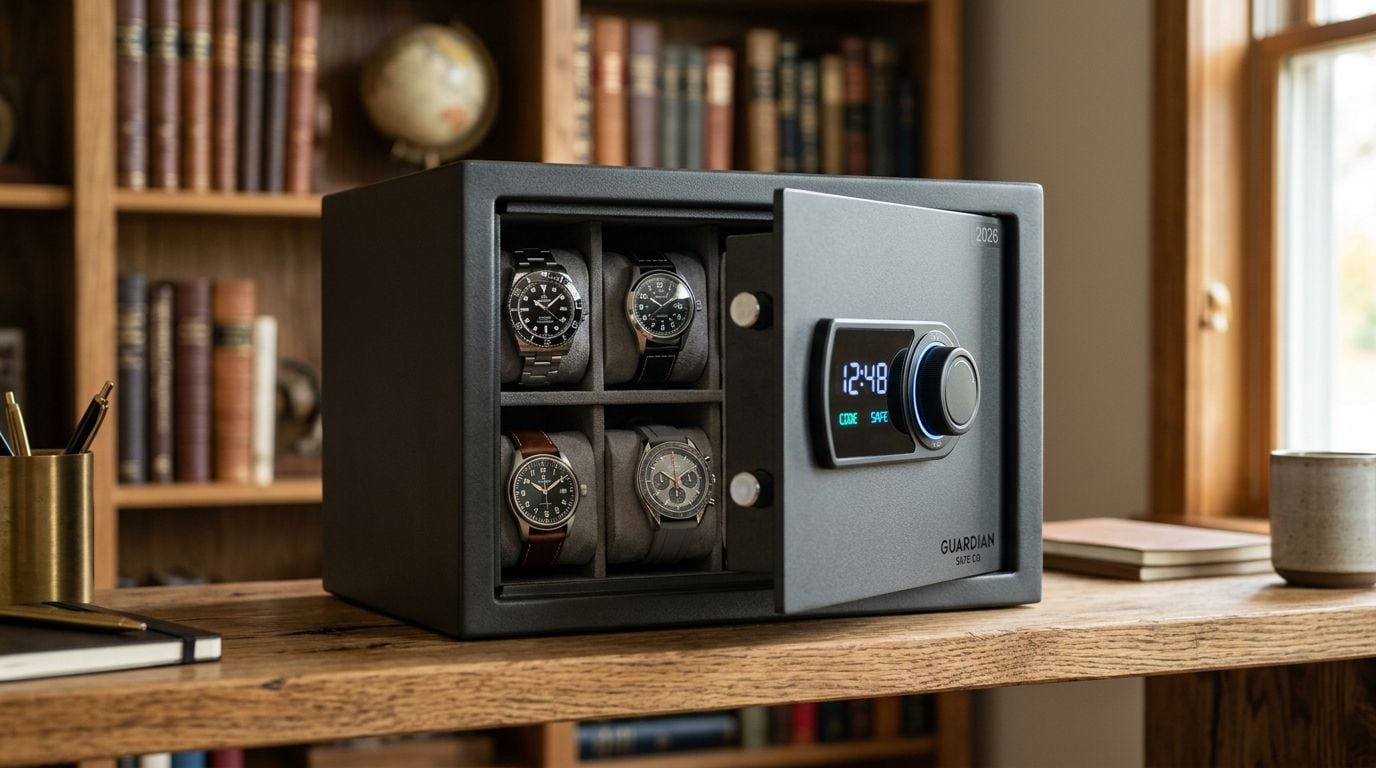
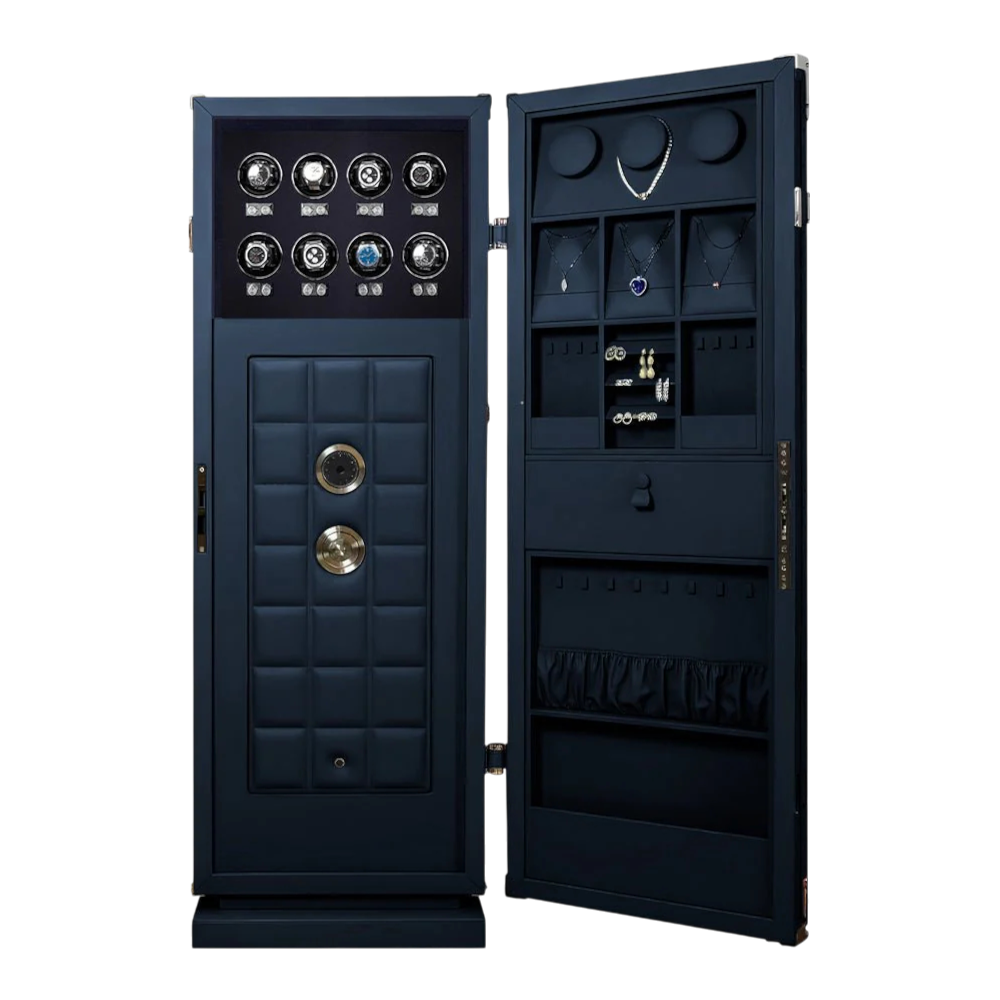
- A compact model like the Centennial Bulletproof Watch Safe covers a two-watch travel pairing
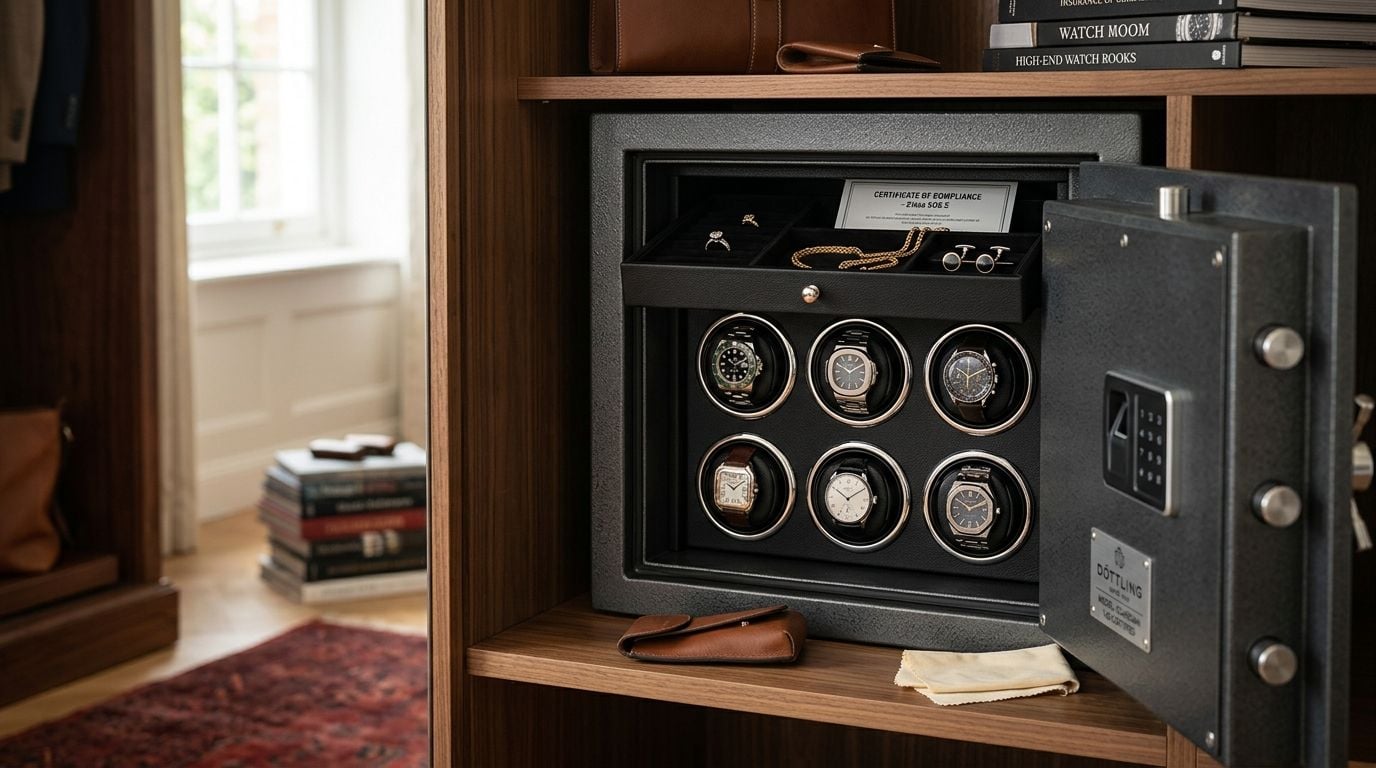
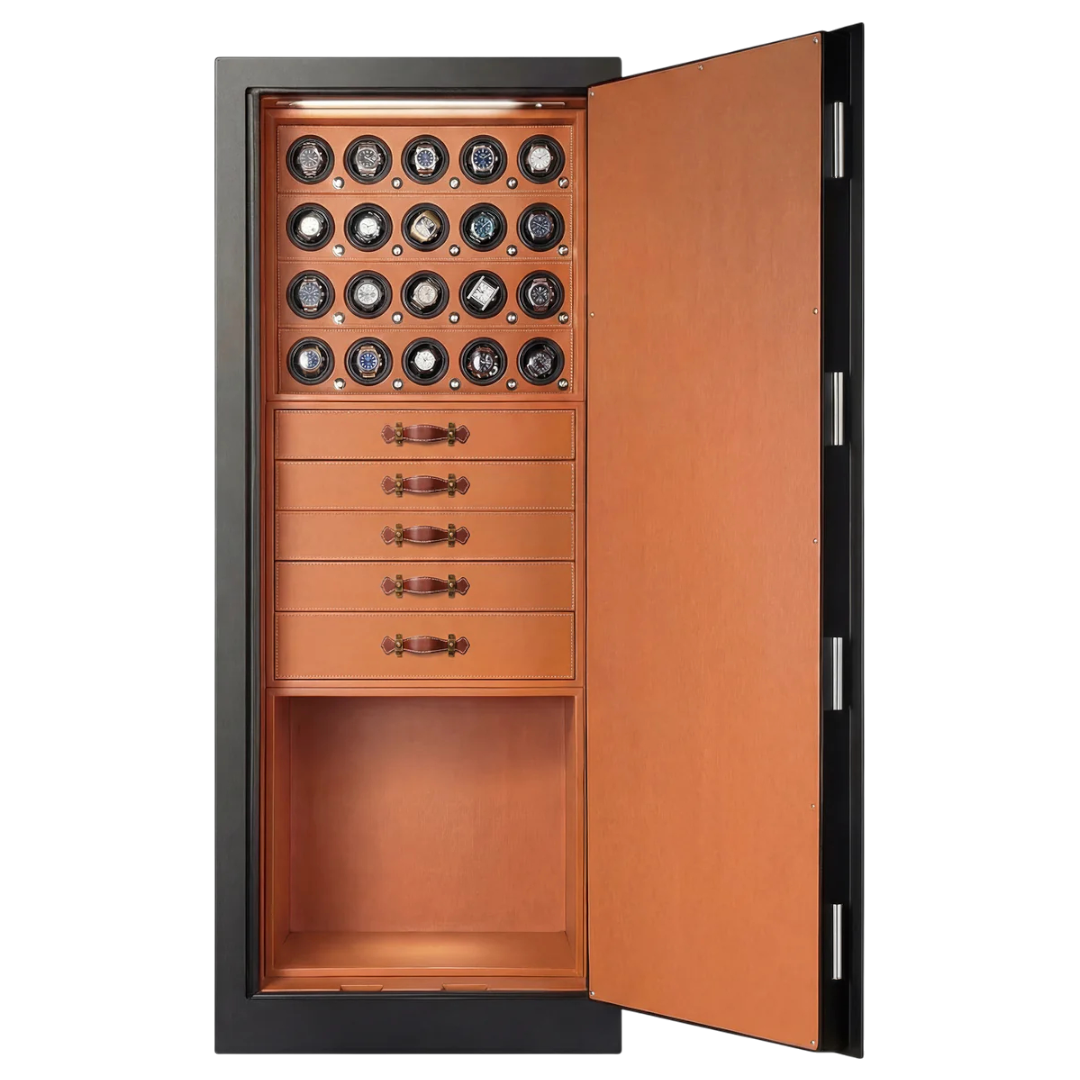
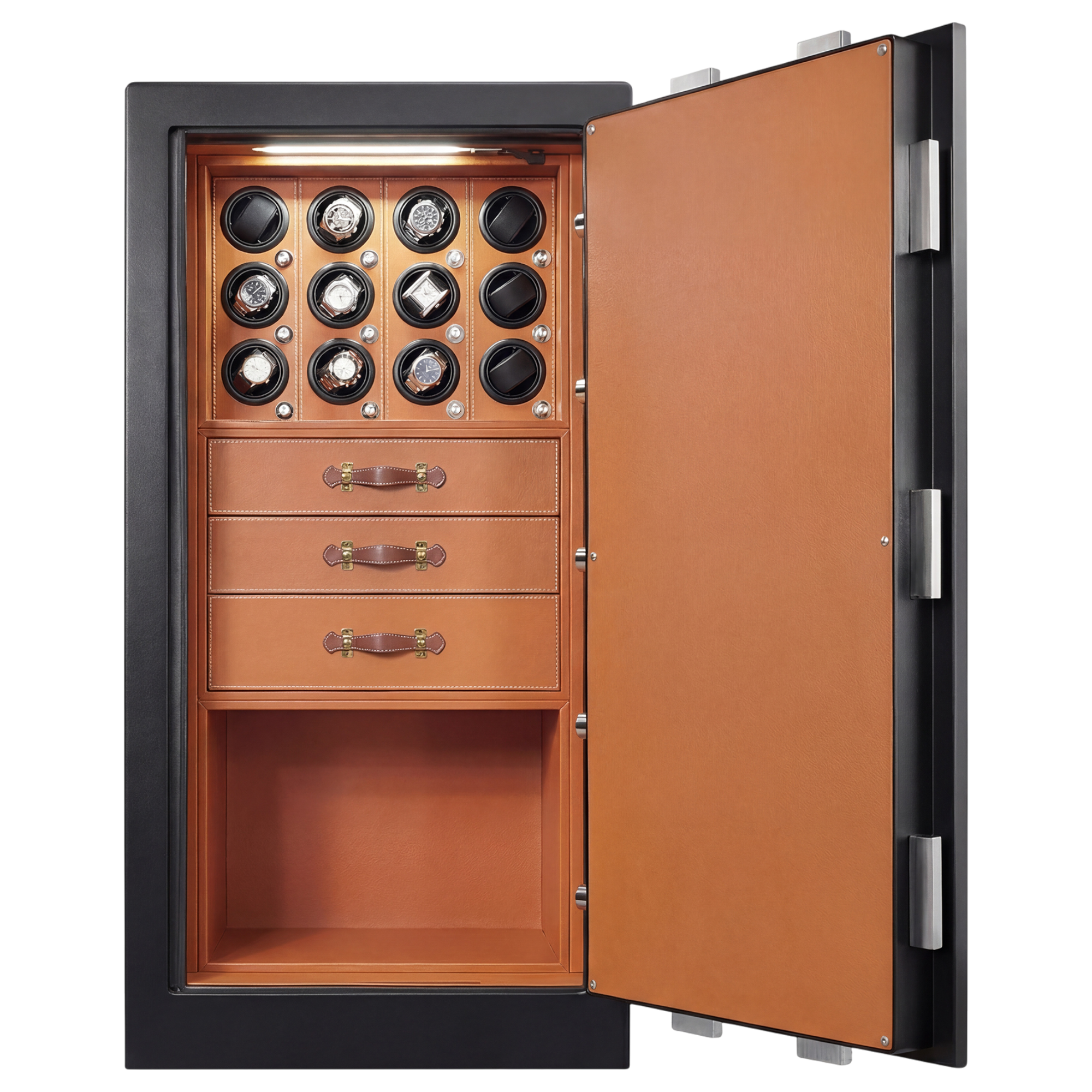
- A larger vault like the Titan Sanctum 20 Watch Safe suits a full chronograph collection at home
- Biometric access matters more for a household with training partners or kids moving through the closet
- Weigh fire rating against how often you're actually away from home for multi-day trips
Separate travel storage from home rotation
Pack the chronograph you're racing in a padded travel case, not inside the winder box.
- Leave home winders running; unplugging one resets its program on most models
- Confirm your hotel or rental has a lockable drawer before you land, not after
- For multi-night training camps, bring a hard case rather than improvising with a sock or a jacket pocket
- Note the TPD setting before you leave so you can restart the program correctly on return
Protect pushers and crowns from sweat and grit
Chronograph pushers see more wear on a runner's wrist than on almost any other collector's.
- Rinse the case and bracelet after a sweaty long run before the watch goes back into rotation
- Check pusher gaskets annually on any chronograph worn during tempo runs or humid conditions
- Keep a microfiber cloth in your gym bag, not just on the nightstand
- Skip pressing chronograph pushers underwater unless the watch is rated for it
Recheck settings after every taper and race block
A chronograph idle for a three-week taper often runs fast or slow for its first days back on the wrist.
- Reset the date and any active complications before returning it to daily wear
- Log actual accuracy against the winder's TPD setting once a quarter
- Adjust TPD based on that log, not the factory default alone
- Revisit the whole rotation after your last 2026 race, before the off-season starts
How the winder options compare for a mixed chronograph rotation
Four options cover most marathon-running chronograph collections, from a single travel piece to a six-watch rotation running six different programs at once.
| Option | Best for | Starting price | Key limitation |
|---|---|---|---|
| Virtuoso Series 6 | Six chronographs, each on a different TPD program | $949 | Fixed six-slot count, no biometric lock |
| Yachtline Series 8 | A larger rotation displayed horizontally on a shelf | $1,399 | Needs more shelf depth than a vertical box |
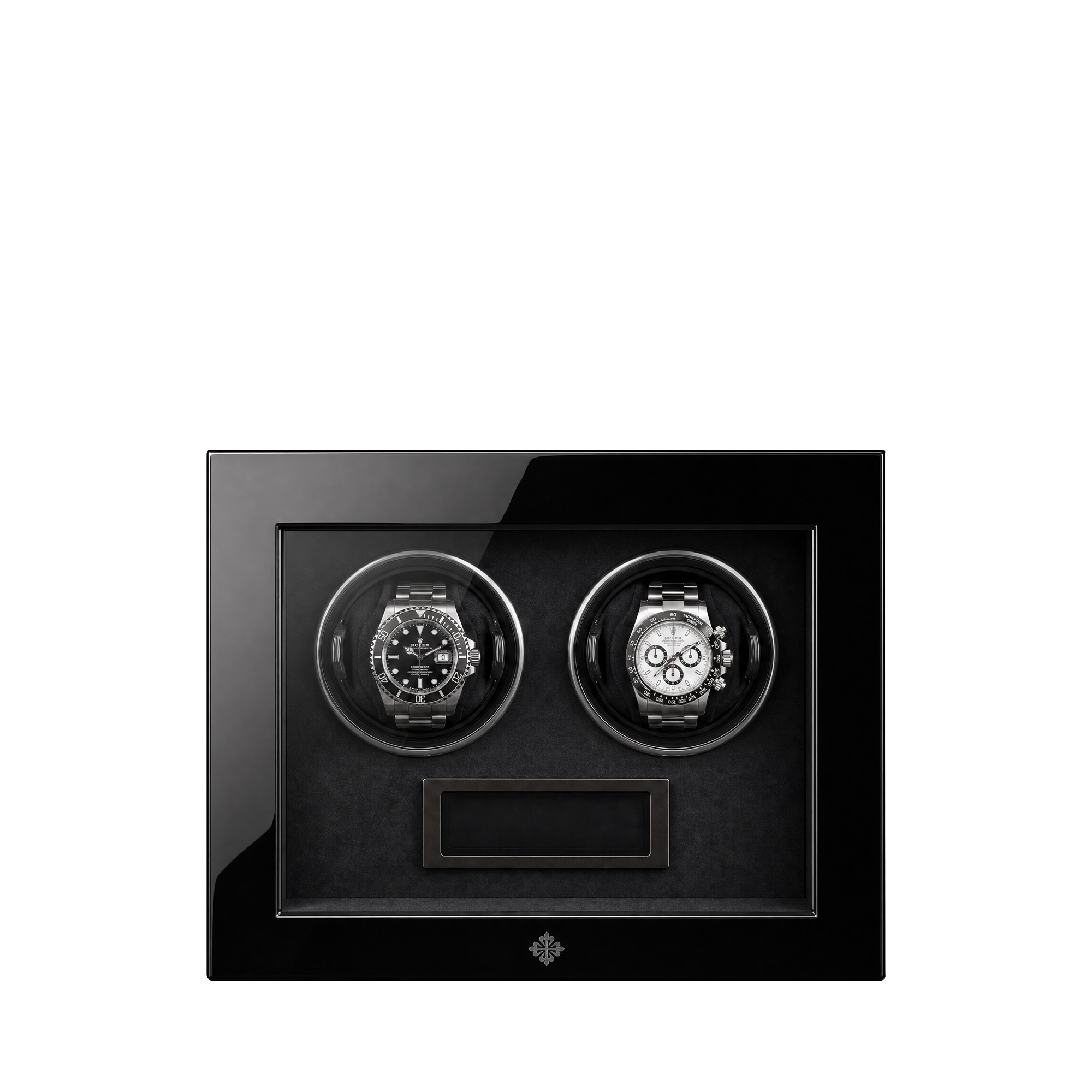
| Impresario Series 2 | A two-chronograph travel pairing with fingerprint access | $649 | Only two slots — too small for a full rotation |
| Watch Winders Pillow | A single race-week chronograph packed in a duffel | $59 | No motor; repositioned by hand |
The Virtuoso Series 6 is the pick for a runner with three to six chronographs across different brands — the independent programs matter more than the price gap to a cheaper single-shared-setting box. Skip the Impresario Series 2 if your active rotation runs past two watches; buy it only as a dedicated travel pairing.


Common mistakes marathon-running chronograph collectors make
These show up often enough in mixed running-and-watch circles that they're worth naming directly.
- Setting one TPD number for a mixed-brand rotation, which stalls higher-torque movements and overwinds lighter ones
- Leaving a chronograph on the wrong program through an entire off-season, then finding it days off at the start of the next training block
- Packing a wound chronograph loose in a gym bag on race weekend instead of a padded case
- Ignoring pusher gaskets on a watch worn during humid tempo runs, then finding fogging under the crystal
- Assuming every automatic in the collection needs winding, when manual-wind chronographs should sit out of the box entirely
FAQ
What’s the best watch winder for a marathon runner with multiple chronographs?
The Virtuoso Series 6 is the best watch winder for a marathon runner with three to six chronographs, because it runs six independent TPD programs instead of one shared setting. A runner with only one or two watches is better served by the Virtuoso Series 2 or Impresario Series 2.
Do chronographs need a different TPD setting than three-hand automatics?
Yes, TPD depends on the caliber, not the watch type. Two chronographs from different brands can need different turns-per-day settings even though they’re the same complication.
Should I leave my watch winder running while I’m away at a race?
Leave it running. Unplugging most winders resets the program, and you’ll have to reconfigure TPD and rotation direction when you get home.
How many chronographs can one winder rotate at a time?
It depends on the model. Options in this guide range from two slots on the Impresario Series 2 up to eight on the Yachtline Series 8, each running independent programs.
Is a watch safe better than a winder for race-week travel?
They solve different problems. A winder keeps watches wound at home; a safe or padded travel case protects the one you’re not wearing while you’re away for a race.
Does sweat during training damage an automatic chronograph?
Sweat itself doesn’t damage a properly sealed case, but pusher gaskets on chronographs wear over time with repeated exposure. Rinse the watch after sweaty runs and check gaskets annually.
How much does a luxury watch winder cost in 2026?
The winders in this guide range from $59 for a travel pillow with no motor to $1,399 for an eight-slot rotating winder in 2026. Multi-slot models with independent programs sit between $600 and $1,500.
Can a manual-wind chronograph go in a watch winder?
No. Manual-wind movements aren’t designed to be wound by a rotor and should be wound by hand and stored in a cushion or safe instead.
One last thing
“The chronograph you wear least is usually the one that needs the highest TPD setting, not the lowest.”
A longer rest between wears means a colder mainspring start each time, and a program set too low leaves that watch running down between training blocks instead of staying ready. Set your least-worn chronograph's program a notch above the rest, not below, and check it again after your next taper in 2026.
Related guides
- Watch winder for a night shift worker with an irregular wear schedule
- Best portable watch winder for frequent travelers
Protect Your Watch Collection
Designed for collectors who demand the best. Explore our premium watch winders and luxury safes.