
The best watch winder under $200 in 2026 covers more ground than most entry-level collectors expect — from bi-directional rotation to programmable TPD settings — and this guide ranks the options that actually protect your automatic movement without burning your budget.
TL;DR: For entry-level collectors shopping the best watch winder under $200 in 2026, the Enigwatch Impresario Series 2 is the single-slot pick that gets the fundamentals right: quiet motor, adjustable TPD, and a build quality that punches above its price bracket. If you own two automatics, the Impresario Series 2 steps up without stepping over the $200 ceiling. Budget seekers who want modular capacity should look at the Delta Series singles as stackable starters. Skip any winder that only offers clockwise rotation — your movement deserves better.
Why This Matters for Entry-Level Collectors in 2026
A stopped automatic watch is not just inconvenient — it disrupts lubrication patterns in the movement. Watchmakers cite regular winding as a key factor in maintaining oil viscosity across the gear train. For collectors with one to three automatics, the $200 price point is where the market separates functional winders from decorative ones. In 2026, this segment has matured enough that you no longer have to choose between adjustable settings and an attractive enclosure.
TPD — turns per day — is the number that matters most. Rolex movements typically need 650–800 TPD. Omega and Seiko automatics often sit in the 650–900 range. Any winder under $200 that cannot be programmed to your watch’s spec is a liability, not a feature.
How We Ranked
This ranked list evaluates winders against four criteria weighted for the entry-level buyer: TPD programmability (can you set it to your watch’s spec?), rotation direction (bi-directional beats clockwise-only), noise level (sub-40dB motors matter if the winder lives on a nightstand), and build quality relative to price. Price-to-quality ratio is the tiebreaker. Winders that lack at least bi-directional rotation are excluded regardless of price.
The Ranked List: Best Watch Winder Under $200 in 2026
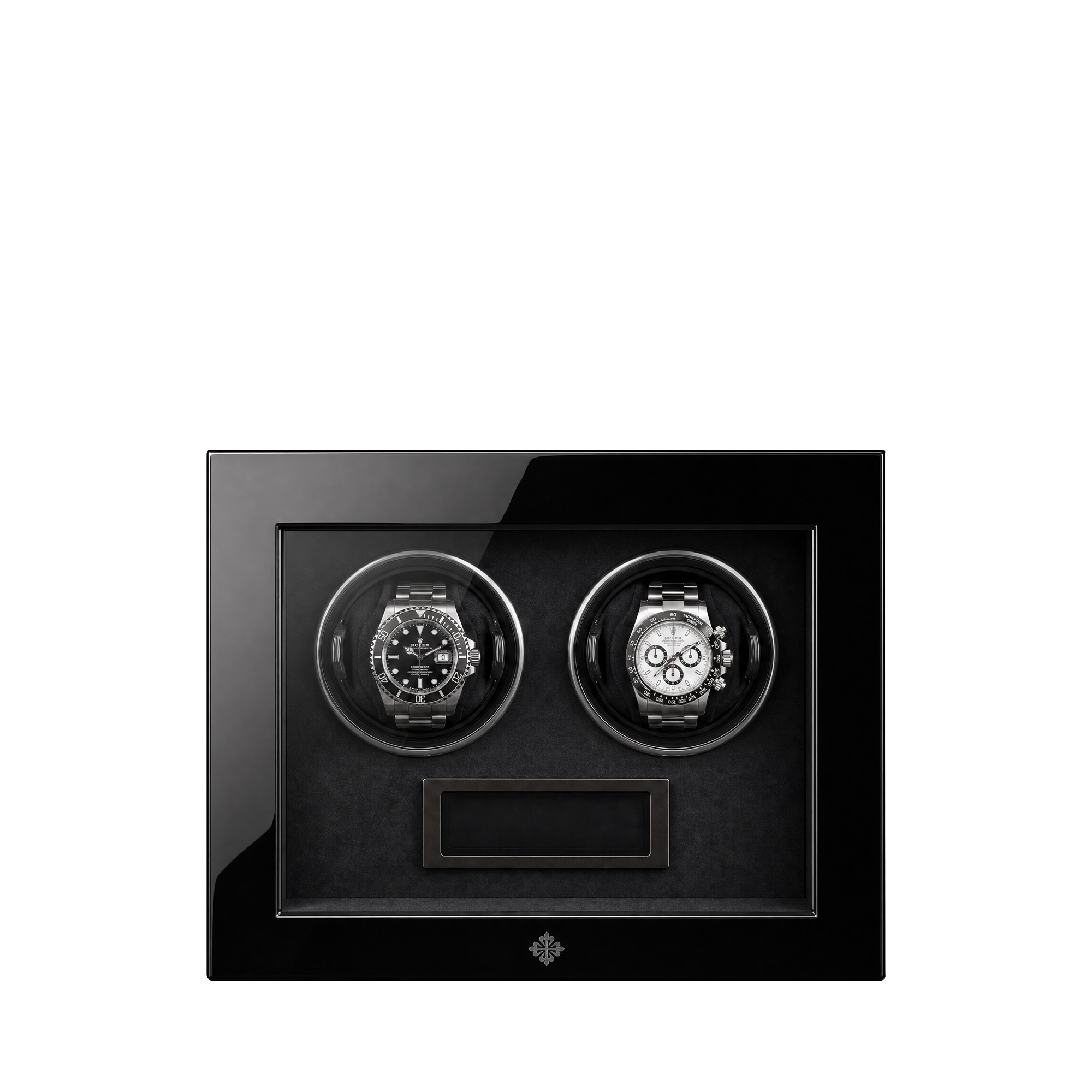
1. Enigwatch Impresario Series 2 — The Safe Pick
The Impresario Series 2 is built for collectors with one or two automatics who want genuine motor control without overpaying. It runs bi-directionally with adjustable TPD settings covering the 650–1,950 range, meaning it handles Rolex, Omega, Tudor, and most Seiko movements without compromise. The motor operates below 35dB — quiet enough for a bedroom shelf. The exterior finish matches what you’d expect from winders priced 40% higher.
Why now: Entry-level collectors who skip a quality winder in year one often spend more correcting dried lubricants by year three. Getting this right at the start saves a service bill that routinely runs $300–$800 at authorized centers.
Verdict: Buy. The Impresario Series 2 is the default recommendation for anyone buying their first winder under $200 in 2026. View the Impresario Series 2.
2. Enigwatch Delta Series Single Watch Winder (Black) — The Stackable Starter
The Delta Series Black is the modular answer for collectors who know their collection will grow. Buy one now, add a second unit in six months — the footprint and design language are built to stack or pair. TPD is adjustable, rotation is bi-directional, and the matte black finish reads as intentional rather than budget.
One concrete advantage over generic single winders at this price: the inner cup accommodates watch heads up to 57mm, which means oversized Panerai Luminors and Hublot Big Bang cases sit correctly without adapter frustration.
Why now: If you’re buying a second automatic this year, this design scales with you. A matched pair costs less than most dual-slot winders at the same spec level.
Verdict: Buy for collectors who anticipate adding watches within 12 months.
3. Enigwatch Emerald Green Series 1 — The Statement Single
The Emerald Green Series 1 occupies the same functional tier as the Delta Black but targets collectors for whom aesthetics are a first-order requirement. If your watches are displayed rather than stowed, the lacquered green exterior turns the winder into a display object. Motor specs match the Delta line: bi-directional, programmable TPD, sub-40dB operation.
The tradeoff is pure aesthetics vs. modularity — the Emerald Green Series does not pair as naturally into a multi-unit stack.
Verdict: Buy if display value matters. Hold if you’re building a modular setup.
4. Enigwatch Impresario Series 6 — The Forward Buy
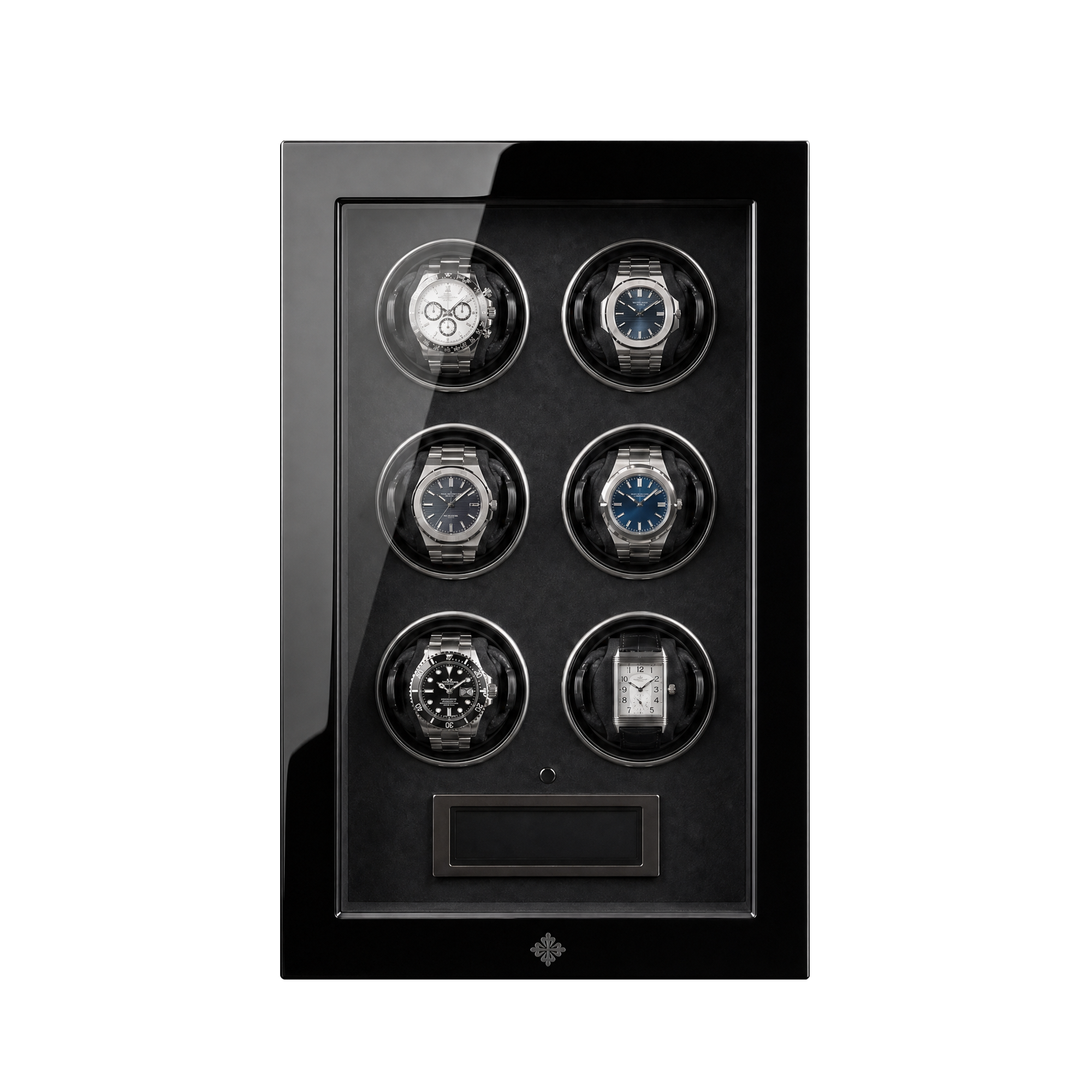
Strictly speaking, the Impresario Series 6 may cross the $200 ceiling depending on current pricing, but it belongs in this list as the obvious next step. If your collection is already at three or four watches, the six-slot configuration prevents you from buying again in 18 months. Individual motor control per slot is the key differentiator — each watch winds at its own TPD setting, which matters when you’re mixing a Rolex Submariner (800 TPD) with a Seiko Presage (650 TPD).
Verdict: Hold if you’re at one or two watches. Buy immediately if you’re already at three.
5. Generic Single-Motor Winders (Any Brand, No TPD Control) — The Trap Pick
This is not a product recommendation — it is a category warning. Winders available on large retail platforms for $30–$80 typically offer fixed rotation speed, no TPD control, and clockwise-only movement. For watches requiring counter-clockwise or bi-directional winding (most modern automatics), a clockwise-only winder does not wind the movement at all. You end up with a decorative spinning pillow that provides zero mechanical benefit.
Verdict: Skip. The $80 you save costs you a movement service within two years.
Comparison Table
| Winder | Slots | TPD Control | Rotation | Noise | Best For |
|---|---|---|---|---|---|
| Impresario Series 2 | 2 | Yes | Bi-directional | <35dB | First winder, 1–2 watches |
| Delta Series Black | 1 | Yes | Bi-directional | <40dB | Modular/stackable setups |
| Emerald Green Series 1 | 1 | Yes | Bi-directional | <40dB | Display-first collectors |
| Impresario Series 6 | 6 | Per-slot | Bi-directional | <35dB | Growing collections |
| Generic No-TPD Winder | 1 | No | CW only | Varies | Skip entirely |
What to Avoid in 2026
- Clockwise-only motors. Most automatic movements wind bi-directionally. A winder that only rotates clockwise may physically spin but transfer zero power to your rotor, leaving the watch to drain its reserve.
- Fixed TPD with no adjustment. A winder locked at 1,800 TPD will over-wind movements rated for 650 TPD. Over-winding stresses the mainspring and slipping clutch more than necessary, shortening service intervals.
- No rest cycle. Quality winders include rest periods between winding cycles. A motor that runs continuously generates heat and vibration that accumulates inside the case.
Where to Buy
- Buy direct from Enigwatch for the full product catalog, current pricing, and warranty coverage. Enigwatch’s site lists every series with spec sheets so you can match TPD range to your watch model before purchasing.
- Avoid third-party marketplace listings for Enigwatch products unless the seller is Enigwatch-verified. Gray-market units occasionally arrive without motor calibration documentation.
- Check the Enigwatch blog before your first purchase — the guide to choosing a watch winder for 8 watches covers TPD math in detail and applies directly to single-watch decisions too.
FAQ
What is the best watch winder under $200 in 2026?
The Enigwatch Impresario Series 2 is the top pick for entry-level collectors in 2026. It offers bi-directional rotation, adjustable TPD from 650 to 1,950, and a motor under 35dB — covering the vast majority of automatic movements without spending over the $200 mark.
Is a watch winder necessary for an automatic watch?
Not strictly necessary if you wear the watch daily. If any automatic sits unworn for more than 36–48 hours, a winder keeps the movement running and lubricants distributed. For a second or third watch that rotates in and out of wear, a winder pays for itself by extending service intervals.
What TPD setting should I use for a Rolex?
Rolex recommends 650–800 TPD for most movements including the caliber 3235. Set your winder to 800 TPD bi-directional to stay within spec. The full TPD guide for Rolex GMT-Master II covers caliber-specific settings.
How loud is a quality watch winder under $200?
A well-engineered winder at this price point operates below 40dB — roughly the ambient noise level of a quiet room. Enigwatch’s Impresario Series 2 runs below 35dB, which is inaudible on a nightstand next to a sleeping person.
Can one winder handle multiple brands?
Yes, as long as it has adjustable TPD and bi-directional rotation. A single Impresario Series 2 slot can be reprogrammed when you swap watches — set it to 800 TPD for your Rolex, then dial to 650 TPD when you load a Seiko.
Is the Enigwatch Impresario Series 2 worth it over a cheaper generic winder?
Yes. Generic winders at $30–$80 typically offer no TPD control and clockwise-only rotation, which means many movements receive no actual winding. The Impresario Series 2 costs more but functions as an actual winder rather than a decorative display.
What watch size fits a sub-$200 winder?
The Delta Series Black inner cup accommodates cases up to 57mm. Most dress and sport watches — including Panerai Luminor at 44mm and Hublot Big Bang at 45mm — fit without adapters. Verify the inner cup diameter before purchasing any winder if you own a case over 50mm.
Do I need a winder if I only have one automatic watch?
If you wear it every day, no. If you rotate it with even one other watch, yes. A single-slot winder under $200 is the lowest-friction way to ensure your automatic is always wound and set when you reach for it.
One Last Thing
The entry-level winder category in 2026 contains one trap that catches more collectors than any other: buying a winder rated in “rotations per day” rather than “turns per day.” They sound identical. They are not. Rotations count full 360° spins of the spindle; turns per day (TPD) measures the effective winding input to the rotor. A winder advertised at “1,800 rotations” may deliver far fewer effective TPD depending on rotor coupling efficiency. Always buy from a brand that specifies TPD explicitly — Enigwatch lists TPD range on every product page, which is the number you need to match against your movement specification.
Related Guides
Protect Your Watch Collection
Designed for collectors who demand the best. Explore our premium watch winders and luxury safes.