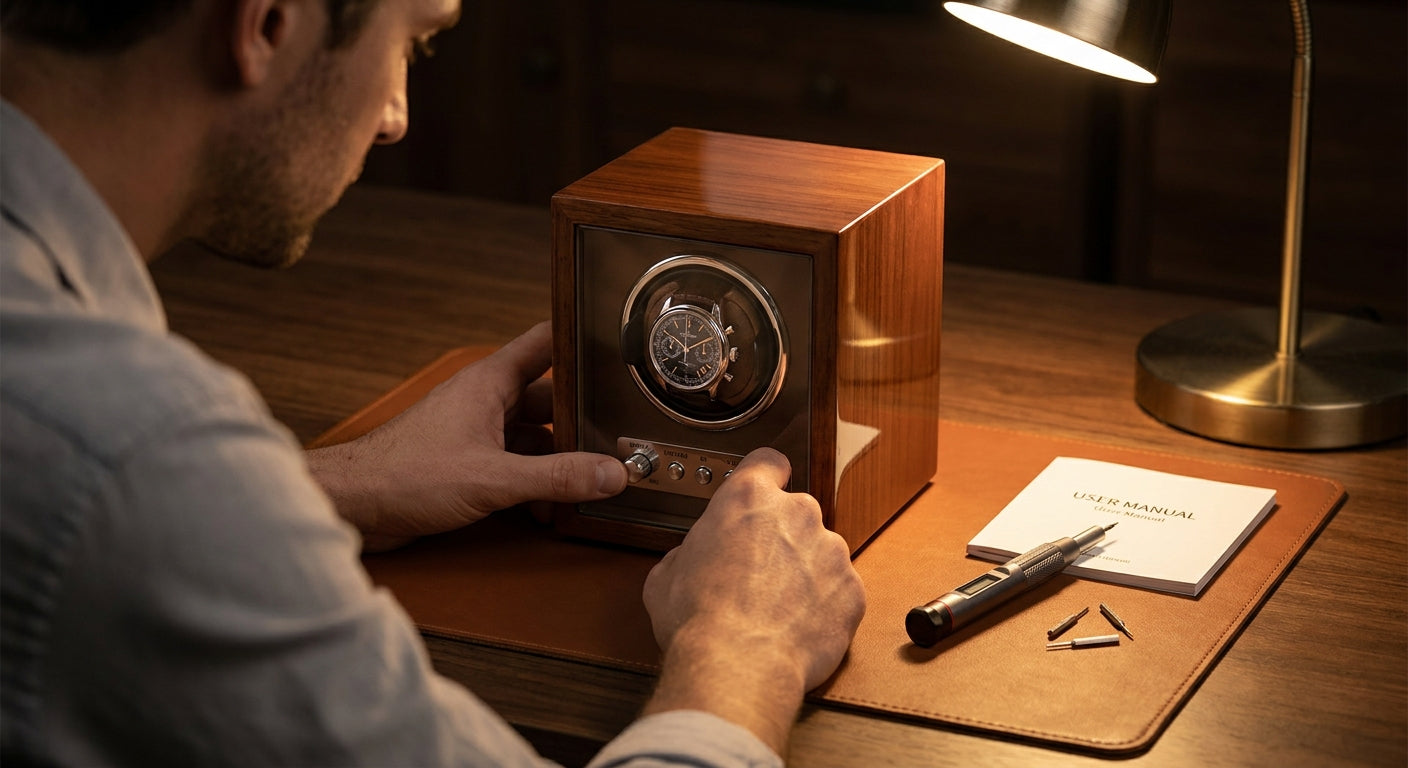
Cleaning a watch safe interior wrong is how collectors end up with scuffed Alcantara, cloudy lacquer, or a jammed winder motor. Done right, a full interior clean takes under 30 minutes and costs nothing but a soft brush and the correct cleaner.
TL;DR
Cleaning a watch safe interior without scratching means removing watches and cushions first, vacuuming with a brush attachment on low suction, wiping leather or Alcantara with a pH-neutral cleaner (never alcohol or ammonia), and letting the interior air-dry for at least two hours before restocking. Verdict: safe to do at home quarterly, no professional needed, unless the safe uses a built-in winder with exposed motor components, where a gentle motor and rotor cleaning method applies instead. In 2026, most Alcantara-lined safes on the market, including Enigwatch models, tolerate this routine without any finish degradation.
Why this matters
Dust, skin oils, and leather off-gassing build up inside a closed safe faster than most owners expect. That residue attracts moisture, which is the actual enemy of a $5,000-plus watch, not the safe's exterior finish.
A scratched interior lining also devalues the safe itself and can transfer fine grit onto watch casebacks and bracelets every time you open the door. Collectors storing six-figure pieces in Alcantara-lined safes tend to underestimate how abrasive a dry paper towel or a stiff-bristle brush actually is against a napped textile.
What you'll need
- A soft-bristle brush (makeup brush or dedicated horsehair brush, not a toothbrush)
- A handheld vacuum with a brush attachment, set to lowest suction
- Microfiber cloths, at least two, lint-free
- pH-neutral leather cleaner or plain distilled water
- A small bowl for diluting cleaner (1 part cleaner to 10 parts water)
- Cotton swabs for corners and lock mechanisms
- A watch pillow or soft tray to hold pieces during cleaning
- 30 to 45 minutes of uninterrupted time
If your safe has a built-in winder, keep watches on their winder pillows rather than laying them flat on a towel while you work.
The steps
1. Remove every watch before you start
This sounds obvious and gets skipped anyway. Take out all pieces and set them on a pillow or soft cloth away from the cleaning area, because loose dust and cleaner residue land on anything left inside.
Common mistake: cleaning around watches still in the safe. Cloth fibers and cleaner droplets end up on crowns, crystals, and clasps.
2. Vacuum loose debris with the brush attachment
Low-suction vacuuming pulls out dust, hair, and grit that would otherwise get ground into the lining during wiping. Run the brush attachment slowly across every surface, corners included, for 2 to 3 minutes.
Set suction to the lowest setting your vacuum offers. Full suction on Alcantara or Nappa leather can pull at seams and loosen stitching over repeated cleanings.
Expected outcome: visible dust and fiber lint gone, surface feels slightly less flat to the touch.
3. Dust the corners and hardware with a soft brush
A vacuum nozzle misses tight corners, hinge recesses, and around biometric sensors. A soft brush gets into those without applying pressure that could scratch the panel edges.
Work in one direction along any grain in the leather or fabric. Circular scrubbing motions are what actually cause the fine scratches owners blame on "wear."
Common mistake: brushing hardest at the corners because that's where dust collects. Corners are also where finish is thinnest — go lighter there, not harder.
4. Wipe leather and Alcantara with diluted pH-neutral cleaner
Mix one part pH-neutral leather cleaner to ten parts distilled water in a small bowl. Dampen a microfiber cloth, wring it until it's barely moist, and wipe in straight lines rather than circles.
Never spray cleaner directly onto Alcantara or leather. Direct spray oversaturates the material and can leave water spots that darken permanently on lighter interiors.
Expected outcome: interior looks matte and even, no streaking, no darkened patches. Test any new cleaner on a hidden interior edge first and wait 10 minutes before treating the whole panel.
5. Clean wood veneer trim separately, if present
Safes with exotic wood veneer trim, like macassar ebony paneling, need a dry microfiber wipe only. Water and cleaner strip the finish faster on wood than on leather or Alcantara.
A light coat of wood-specific conditioner, applied every 6 months rather than every cleaning, keeps veneer from drying out and cracking at the seams.
Common mistake: using the same leather cleaner on wood trim because it's already in your hand. Wood veneer and Nappa leather need entirely different treatment.
6. Dry completely before restocking watches
Leave the door open and let the interior air-dry for a minimum of 2 hours. Closing a damp safe traps humidity against watch casebacks, which is the exact condition that causes moisture damage inside a case.
A small silica pack placed inside during the drying window speeds this up and does no harm left in place afterward.
Expected outcome: interior feels bone-dry to the touch, no residual cleaner smell.
7. Check the lock mechanism and biometric sensor last
Use a dry cotton swab, not liquid, around any biometric reader or keypad. Moisture near electronic locks is the single most common cause of lock failures reported by owners in 2026.
Wipe the exterior of the sensor only. Never insert a swab or cloth into the sensor housing itself.
Troubleshooting
Cleaner left a water spot on Alcantara. Dampen the same spot evenly with distilled water and blot dry immediately, rather than letting one wet patch dry alone. Uneven drying is what causes the visible ring.
Interior smells musty after cleaning. The safe likely wasn't fully dry before you closed it. Repeat the drying step with the door open for 4 hours and add a fresh silica pack.
Leather feels stiff after a few cleanings. You're using too much cleaner relative to water. Cut the dilution to 1 part cleaner per 15 parts water and follow with a light leather conditioner.
Fine scratches appeared on the panel edges. Check your brush bristles for grit buildup. A brush used on a dusty exterior first, then reused on the interior, drags abrasive particles across the finish.
Biometric sensor stopped responding after cleaning. Moisture likely reached the sensor housing. Let the safe sit open for 24 hours before trying the sensor again; if it still fails, that's a hardware issue, not a cleaning one.
Cushions look flattened even after cleaning. Cleaning doesn't restore cushion loft. That's a separate wear issue — a cushion versus drawer interior layout comparison covers which style holds up longer under daily use.
Tools and resources
- pH-neutral leather cleaner, available at most leather goods retailers
- Soft horsehair or makeup brush
- Handheld vacuum with low-suction brush attachment
- Silica gel packs, replaced every 3 to 4 months
- Distilled water, not tap water, to avoid mineral spotting
- Reference guide on interior humidity levels if your safe runs consistently damp regardless of cleaning routine
What to do next
Once the interior is clean and dry, check whether ongoing humidity is a bigger issue than surface dust. The guide on watch safe humidity levels explains what range collectors should target and when a dedicated dehumidifier insert makes sense over routine cleaning alone.
FAQ
What's the best way to clean a watch safe interior? Vacuum with low suction, then wipe leather or Alcantara with a heavily diluted pH-neutral cleaner in straight lines, never circles. Wood veneer trim gets a dry microfiber wipe only, no liquid.
Can I use alcohol or ammonia-based cleaners inside a watch safe? No. Alcohol and ammonia strip the finish on Alcantara and leather and can discolor wood veneer within a single application. Stick to pH-neutral, leather-specific cleaners diluted with distilled water.
How often should I clean a watch safe interior? Quarterly is enough for most collections stored in a climate-controlled room. Safes in humid regions or near coastal air benefit from a monthly dust pass with just the brush, full wet cleaning still quarterly.
Is it safe to clean a watch safe with a built-in winder? Yes for the interior panels, but the winder motor and rotor need a separate, dry cleaning method — never wipe cleaner near the winder mechanism itself.
Will cleaning damage biometric locks or keypads? Only if liquid reaches the sensor housing. Dry cotton swabs on the exterior surface are safe; any liquid near the reader risks a lock fault.
Does wood veneer trim need cleaner or just a dry cloth? Dry microfiber only for routine cleaning, with a wood-specific conditioner applied twice a year. Water and standard leather cleaner both dull and can crack veneer finish over time.
How long should a safe interior dry before restocking watches? A minimum of 2 hours with the door open, longer if you used more than a light dampening. Closing a damp safe traps moisture directly against watch casebacks.
What causes scratches inside a watch safe even after careful cleaning? Almost always a brush or cloth carrying grit from a previous surface. Dedicate one brush strictly to interior use and never share it with exterior or shoe cleaning.
One last thing
Most interior damage collectors blame on "cleaning" actually traces back to the brush, not the cleaner. A brush used once on a dusty shelf and then on Alcantara carries enough grit to leave hairline marks that only show up under raking light. Keep one brush dedicated entirely to safe interiors in 2026 and reuse it for nothing else — it's the single change that prevents most of the scratching owners report.
Related guides
Protect Your Watch Collection
Designed for collectors who demand the best. Explore our premium watch winders and luxury safes.