
The IWC Big Pilot’s 46mm case and Pellaton winding system need a specific turns-per-day setting and rotation direction to stay wound correctly between wears — get either wrong and the mainspring either starves or gets pushed past what the caliber needs.
TL;DR
A watch winder for IWC Big Pilot models needs bidirectional rotation and a TPD setting between 650 and 900, matched to whichever caliber sits inside the case — the 51111 family and its twin-barrel design tolerate the lower end, while older 5000-series Big Pilots run better closer to 900. The Impresario Series 2 from Enigwatch is the Buy for a one- or two-watch Big Pilot rotation; the Virtuoso Series 6 is the Consider if the collection is growing past a pair of pilot watches. Skip any winder that only turns clockwise — IWC’s Pellaton system is built for bidirectional winding, and a single-direction motor works against it.
Why this matters
IWC built the Pellaton winding system to wind in both directions, which means a watch winder that only rotates one way is fighting the movement instead of helping it. The Big Pilot’s case is also physically larger than most watches these winders are designed around — a 46mm case (or 43mm on the newer references) needs a cushion or clamp that actually holds it without pressure on the crown or bezel. Get the TPD wrong in either direction and you’re either leaving the mainspring under-tensioned after a weekend off the wrist, or running the rotor more than the caliber was engineered to need in 2026 and beyond.
Who this is for
This guide is for IWC Big Pilot owners who wear the watch inconsistently — travelers, people who rotate between two or three pieces, or anyone who’s noticed their Big Pilot stopped after a weekend in the safe. If you wear it daily, you don’t need a watch winder for IWC automatic watches at all — your wrist does the job. This is for the collector who wants the date and time correct the moment they pick the watch back up.
What to look for in a watch winder for IWC Big Pilot
Bidirectional rotation, non-negotiable
The Pellaton system winds on both the clockwise and counterclockwise stroke of the rotor, which is the entire point of the design IWC has used since Caliber 852. A winder that only turns one direction gives the movement half the winding efficiency it was built for, and on a Big Pilot with a large barrel, that shortfall compounds over a multi-day rest.
TPD matched to the specific caliber
Big Pilots built on the 51111 caliber family carry a seven-day power reserve off twin barrels, and they don’t need aggressive winding to stay topped off — 650 to 800 TPD is enough. Older references running the 5000-series calibers, with a shorter 42-hour to 7-day reserve depending on the exact movement, sit better around 850 to 900 TPD. Setting either caliber to a fixed 650 TPD across the board, which a lot of budget winders default to, undershoots the older movement’s needs.
Case clearance for a 46mm or 43mm watch
The Big Pilot’s case is noticeably larger than a Datejust or a Speedmaster, and a cushion sized for a 40mm watch will crowd the crown guard or leave the strap folded at an angle that stresses the lugs over months of continuous rotation. Look for a winder rated for pilot-style or oversized cases specifically, not a generic slot.
Motor quality and noise, especially for bedroom placement
A Japanese Mabuchi motor runs quieter and holds calibration longer than the unbranded motors common in sub-$300 winders, which matters if the winder sits on a nightstand or dresser rather than a closet shelf. Cheap motors also drift on TPD accuracy over a year or two of continuous use, which defeats the purpose of setting a precise number in the first place.
Rest interval programming
Some collectors set a winder to run for a set number of hours and rest for the remainder of the day rather than spinning continuously — this mirrors the natural wrist motion the caliber was designed around more closely than 24/7 rotation. A programmable interval is a feature worth having even if the Big Pilot doesn’t strictly need it.
Build quality that survives daily cycling
A winder running one to two watches, 365 days in 2026, puts real hours on its motor and gearing. Interior materials matter less for function than fit and finish, but a winder built with Alcantara or leather cushions tends to come from a manufacturer that also sourced a better motor — the two usually track together.
Top picks for an IWC Big Pilot rotation
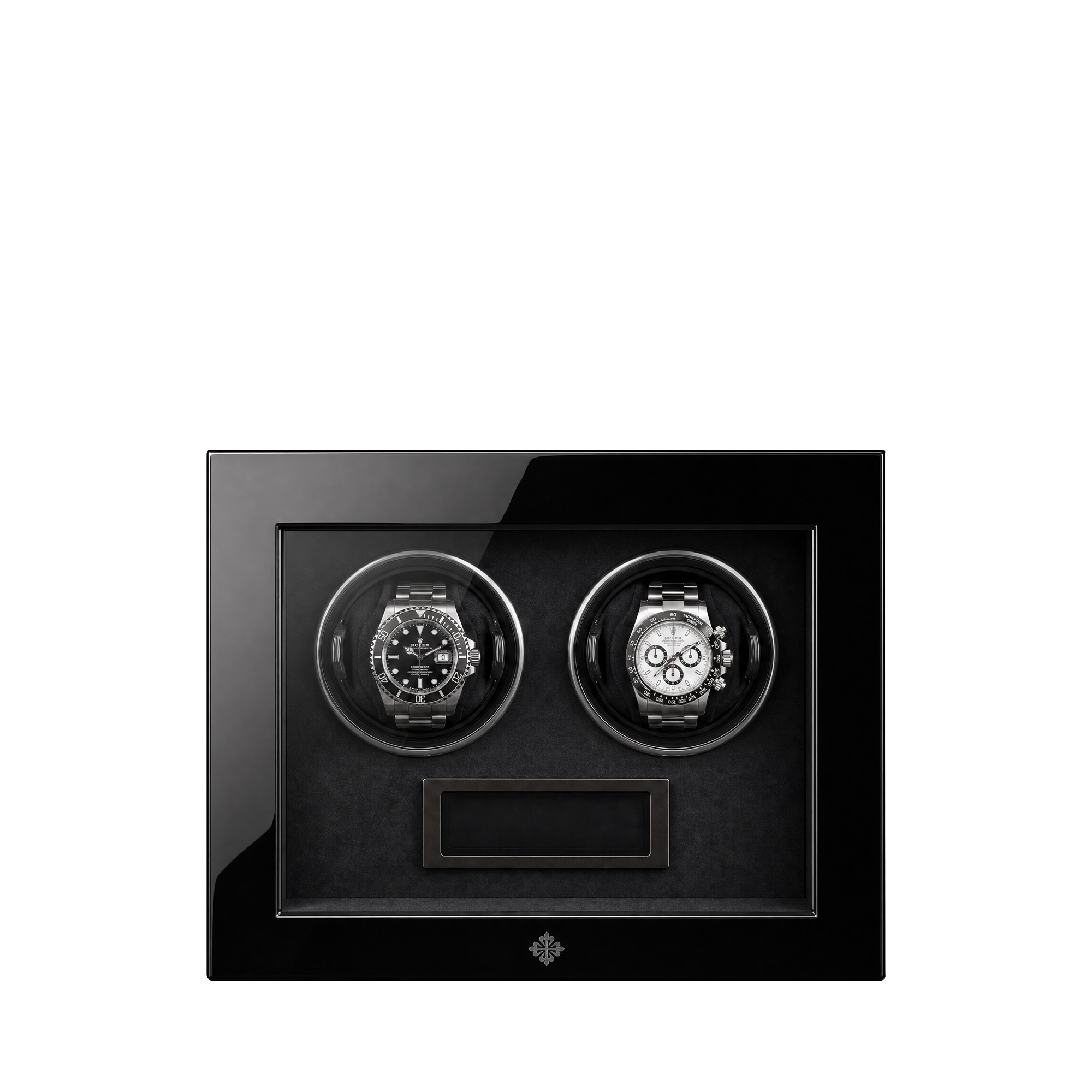
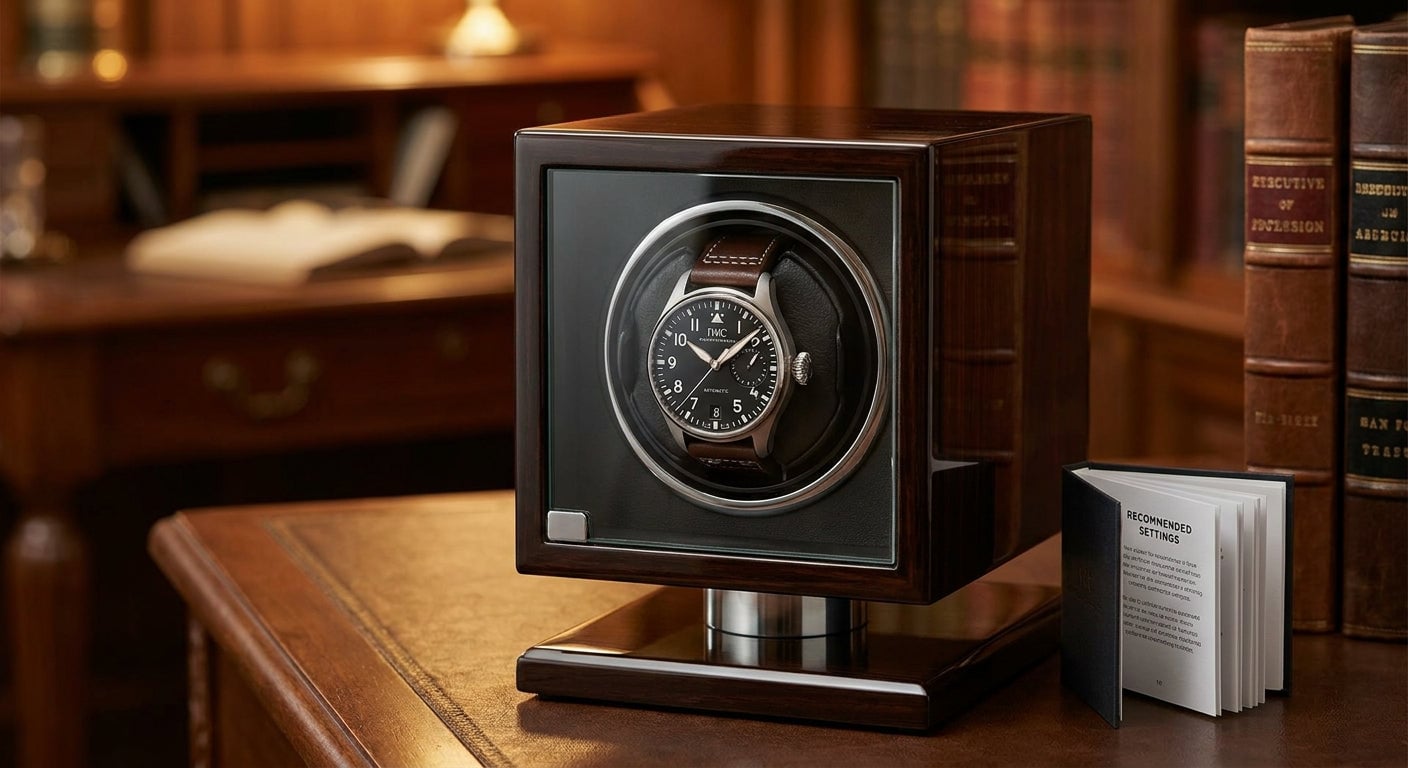
Impresario Series 2 — the safe pick. Two-slot capacity, bidirectional Mabuchi motor, adjustable TPD settings that cover the 650-900 range a Big Pilot needs regardless of caliber generation. If you own one Big Pilot and rotate it with a second watch, this is sized correctly and doesn’t overbuy capacity you won’t use. Verdict: Buy.
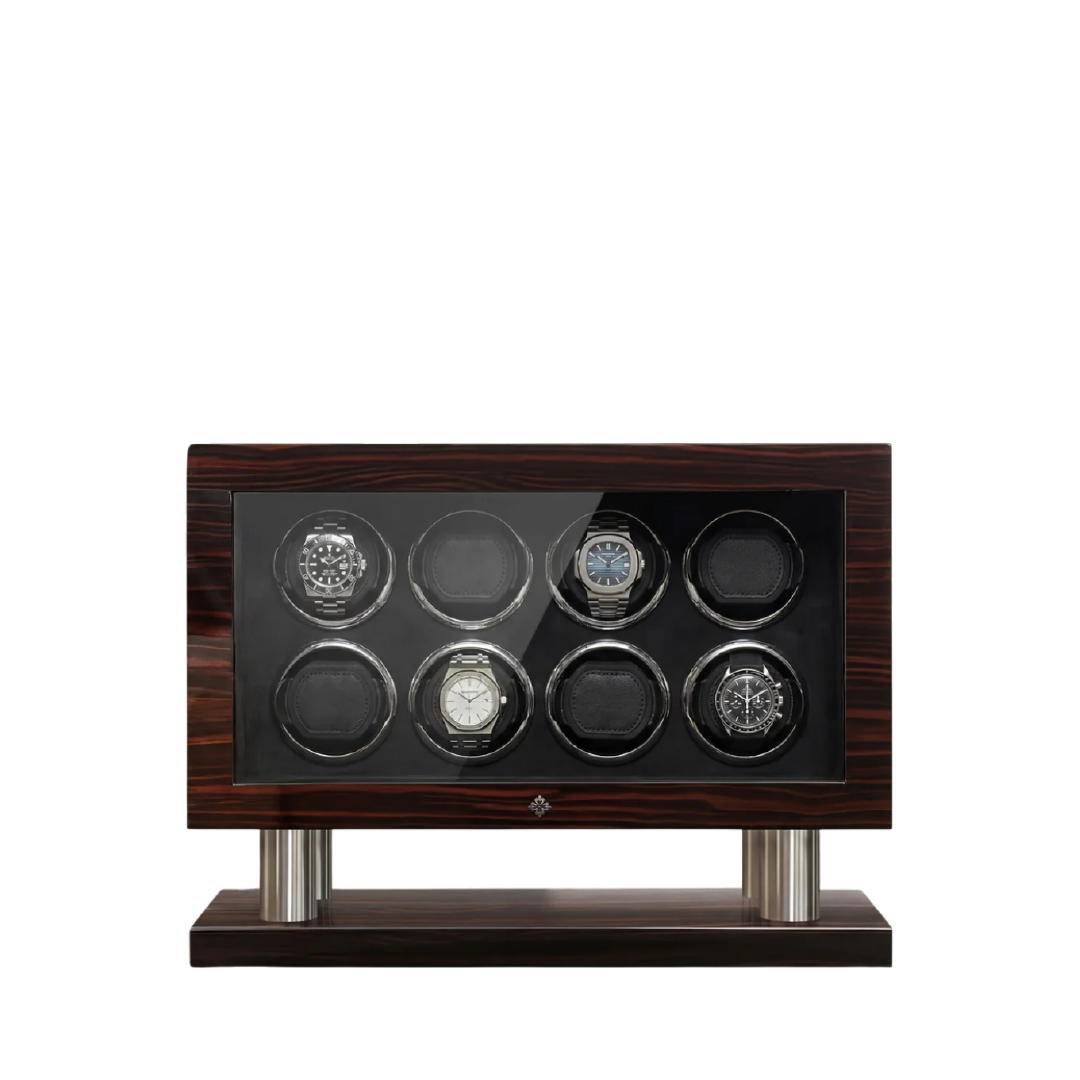
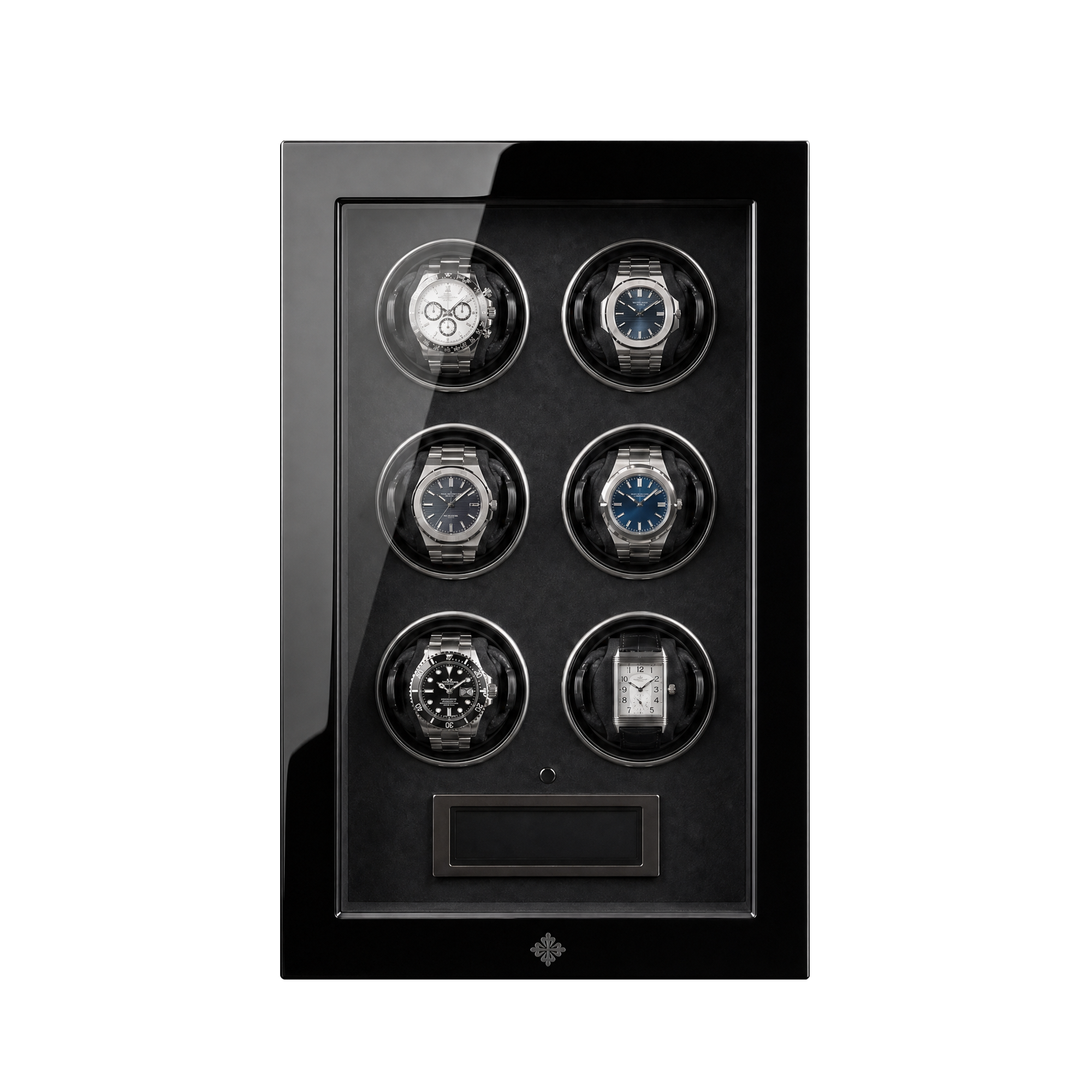
Virtuoso Series 6 — the collector’s expansion. Six-slot capacity with cushions built for larger cases, which matters once a Big Pilot sits alongside two or three other oversized pieces rather than a single backup watch. The step up in slots makes sense the moment your rotation grows past a pair. Verdict: Consider.
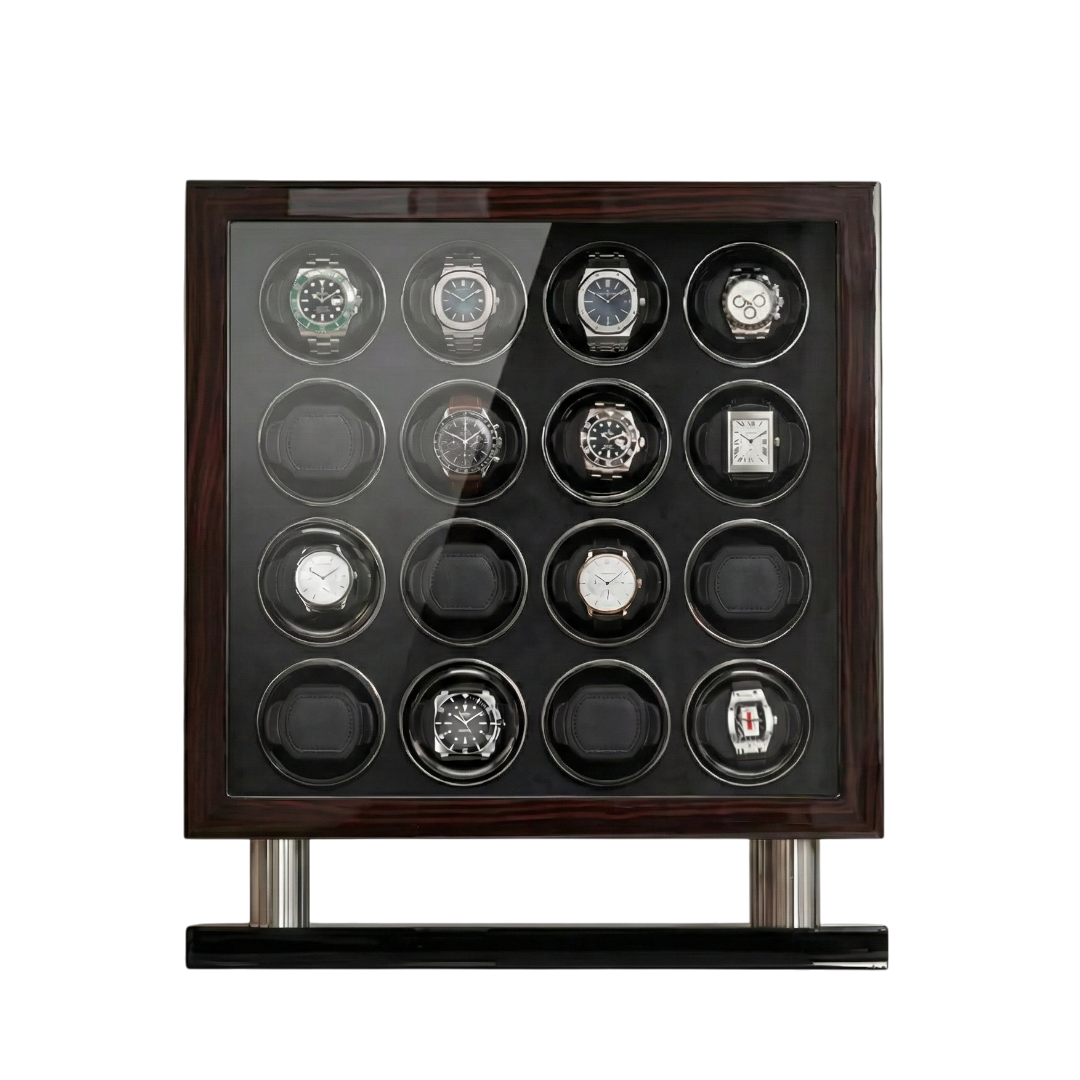
Yachtline Series 8 — the wildcard. Eight-slot capacity built for collectors mixing a Big Pilot with other large-diameter divers or pilot watches from different brands. It’s more winder than most single-model owners need, but if the Big Pilot is one piece in a broader pilot-watch collection, the extra slots remove the need to buy a second unit later. Verdict: Consider.
What to avoid
- Single-direction winders marketed as “universal.” They’ll technically rotate the rotor, but they ignore half of what the Pellaton system was engineered to do, and the watch loses winding efficiency it would otherwise get for free.
- Fixed-TPD winders locked below 650. These are built for smaller, easier-to-wind calibers and will leave an older 5000-series Big Pilot under-tensioned after a few days off the wrist.
- Undersized cushions sold as “one size fits most.” A 46mm case doesn’t sit the same in a cushion built for a 38mm dress watch — the strap ends up at an angle, and the crown can press against the cushion wall over time.
Verdict comparison
| Criteria | Why it matters for a Big Pilot | What to check before buying |
|---|---|---|
| Rotation direction | Pellaton winding is bidirectional by design | Confirm the winder lists clockwise/counterclockwise/alternating, not clockwise-only |
| TPD range | 51111-family calibers need less than older 5000-series movements | Look for adjustable TPD from 650 to 900, not a fixed number |
| Case clearance | 46mm/43mm cases crowd small cushions | Check the winder is rated for pilot or oversized watches |
| Motor type | Cheap motors drift on accuracy over time | Japanese Mabuchi motors hold TPD calibration longer |
| Rest programming | Continuous spin isn’t necessary for a 7-day reserve caliber | Programmable intervals extend motor life without hurting wind |
FAQ
What TPD should a watch winder use for an IWC Big Pilot?
Set 650 to 800 TPD for Big Pilots running the 51111 caliber family, and 850 to 900 TPD for older 5000-series references. Bidirectional rotation matters more than the exact number within that range.
Does the IWC Big Pilot need bidirectional rotation?
Yes. The Pellaton winding system winds on both the clockwise and counterclockwise stroke, so a single-direction winder only uses half the mechanism’s efficiency.
Can one watch winder hold multiple Big Pilots?
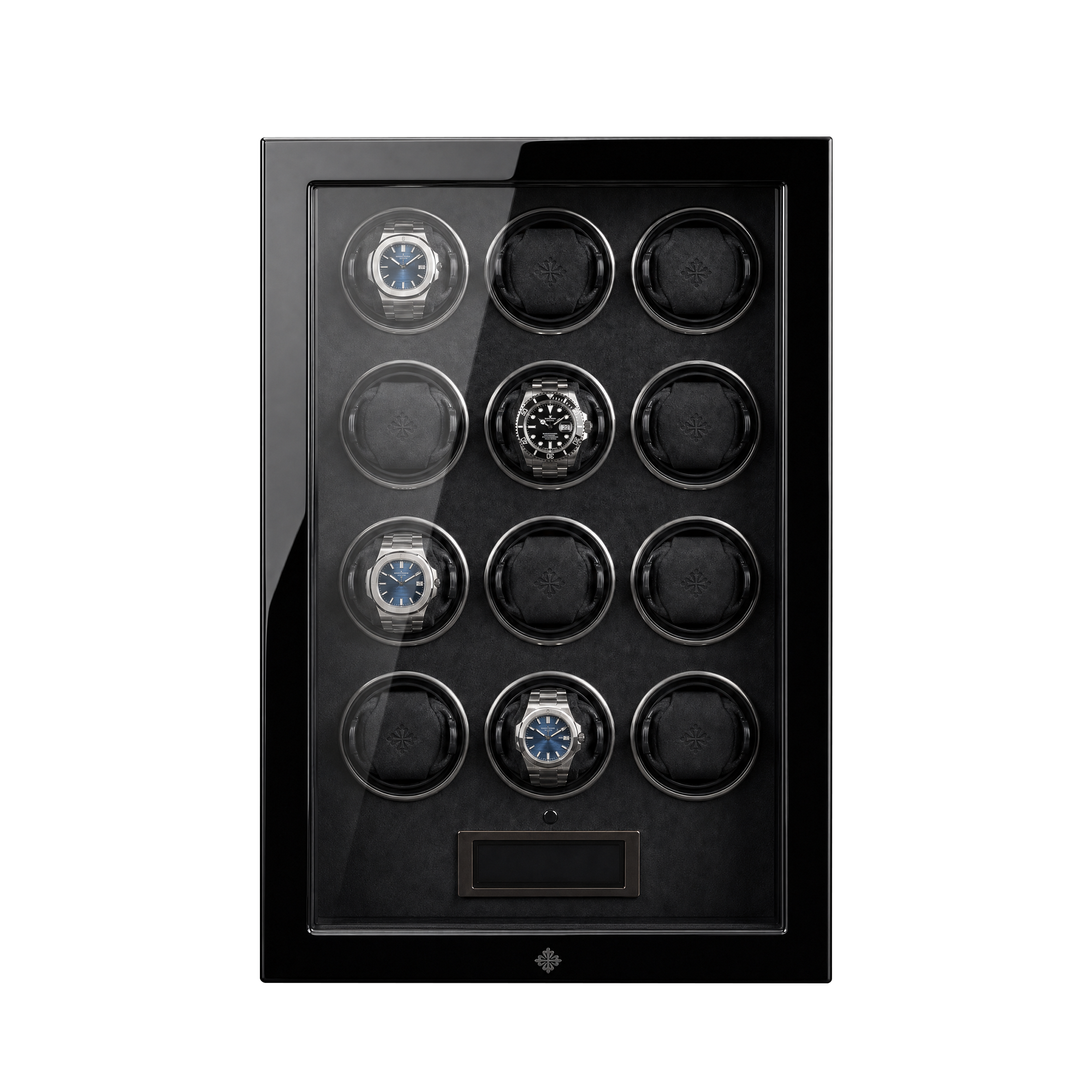
Yes, multi-slot winders like the Virtuoso Series 6 or the Yachtline Series 8 handle multiple oversized cases as long as the cushions are rated for pilot-style watches, not standard 38-40mm slots.
How long does a Big Pilot need on a winder to fully wind?
A fully depleted mainspring typically reaches full wind within 8 to 12 hours of continuous rotation at the recommended TPD, though this varies slightly by caliber generation.
Is a cheap watch winder bad for the Big Pilot’s Pellaton system?
A budget winder that only spins one direction or runs a fixed low TPD won’t damage the movement, but it will leave it chronically under-wound, which shows up as time loss after a few days off the wrist.
What’s the difference between the Impresario Series 2 and Virtuoso Series 6 for a Big Pilot?
The Impresario Series 2 fits a single Big Pilot plus one backup watch; the Virtuoso Series 6 makes sense once the rotation grows to three or more oversized pieces.
Does the Big Pilot’s case size actually affect winder choice?
Yes. A 46mm or 43mm case needs a cushion or clamp built for oversized watches — standard slots crowd the crown guard and can angle the strap against the lugs over months of use.
Should the winder run continuously or on an interval?
An interval setting, running a few hours on and resting the remainder of the day, is closer to natural wrist motion and reduces unnecessary motor hours without hurting wind retention on a 7-day reserve caliber.
One last thing
The detail most Big Pilot owners miss: the 51111 caliber’s twin-barrel design means it needs less winding motion than the case size suggests, not more. A 46mm watch looks like it should demand an aggressive TPD setting, but the movement inside is engineered for efficiency, and running it at 900+ TPD around the clock accomplishes nothing the caliber doesn’t already get at 700.
Related guides
Protect Your Watch Collection
Designed for collectors who demand the best. Explore our premium watch winders and luxury safes.
Protect Your Watch Collection
Designed for collectors who demand the best. Explore our premium watch winders and luxury safes.