
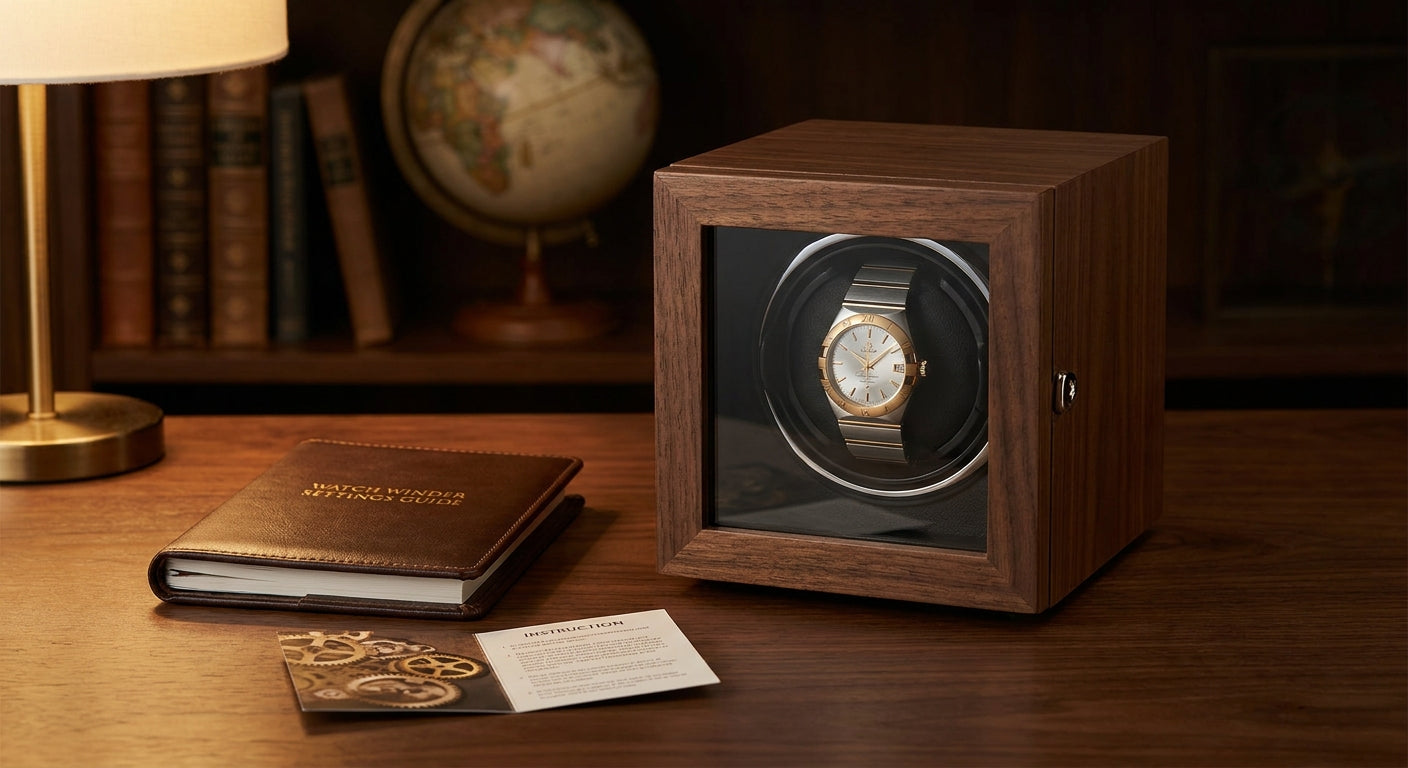
An Omega Constellation runs on a bidirectional automatic rotor, which means the wrong watch winder for Omega Constellation owners either underwinds it or wastes motor life spinning in a direction the caliber ignores half the time.
A watch winder for Omega Constellation collections has to solve three specific problems: turns per day (TPD) calibrated to the Co-Axial caliber, true bidirectional rotation, and a cushion sized for the Constellation’s integrated bracelet and claws. The Virtuoso Series 2 and Impresario Series 6 from Enigwatch both clear that bar at the 650-950 TPD range most Constellation calibers call for, and both ship with Japanese Mabuchi motors rated for continuous bidirectional cycling. If you’re storing a single Constellation, the Virtuoso Series 2 is the pick; if the collection is growing past two Omegas, move to the Impresario Series 6. Skip anything advertised as a generic “universal” winder without a published TPD range in 2026 — that’s the fastest way to end up with a watch that’s either overwound or stopped by Tuesday.
Why this matters
The Constellation’s modern calibers — 8500, 8900, and their Co-Axial descendants — use a free-sprung balance and a bidirectional winding rotor, which is more forgiving on friction than older lever-based movements but still needs a consistent daily turn count to stay accurate off the wrist. Set a winder too low and the mainspring never reaches full wind; set it too high and you’re adding wear cycles for no accuracy gain. Enigwatch’s guide on choosing a watch winder for Omega Constellation breaks down caliber-specific numbers, but the short version: most references land between 650 and 900 TPD, not the 800-1200 range some generic reviews recommend for heavier chronograph movements.
Who this is for
This is written for Omega Constellation owners with at least one automatic reference in regular rotation — whether that’s a single 2026-era Constellation with the 8900 caliber, or a mixed shelf with a Seamaster or Speedmaster alongside it. If you wear the watch daily, you don’t need a winder. If it sits for more than a few days between wears and you don’t want to reset the date and time function every time, a properly programmed winder solves that without touching the crown.
What to look for in a watch winder for Omega Constellation
TPD range that covers 650-950
The Constellation’s Co-Axial calibers generally run best between 650 and 900 rotations per day, with some references extending closer to 950. A winder that only offers presets at 650, 900, and 1200 leaves you guessing; look for step programming in increments of 50, which most Enigwatch models offer across 6-8 stored programs.
True bidirectional rotation, not alternating-only
Some budget winders alternate direction every few hours rather than rotating in both directions simultaneously through gearing. The Constellation’s rotor doesn’t care which direction it spins in, but the motor does — a winder built for one-direction watches will underperform on a bidirectional caliber even if the settings claim otherwise. Confirm the spec sheet states “bidirectional” explicitly, not just “multi-direction.”
Motor quiet enough for a bedroom or study
A Constellation is a bedroom-adjacent purchase for most owners — it sits on a dresser or in a cabinet, not a vault across the house. Japanese Mabuchi motors, the type used across Enigwatch’s Virtuoso and Impresario lines, run at a noise level low enough for overnight use next to a bed, which matters more than most spec sheets admit.
Cushion diameter sized for the integrated bracelet
The Constellation’s claws and integrated bracelet links are wider than a standard leather-strap watch, and a cushion built for slim dress watches will pinch the bracelet or leave the case sitting off-center. Look for an adjustable cushion or one specifically rated for integrated-bracelet sport-luxury references.
Capacity that matches where the collection is going, not just where it is
Buying a 2-slot winder for one watch today is fine, but if a Seamaster or a second Constellation is a likely 2026 purchase, a 6-slot unit costs less in the long run than replacing a 2-slot winder in 18 months.
Top picks for a watch winder for Omega Constellation
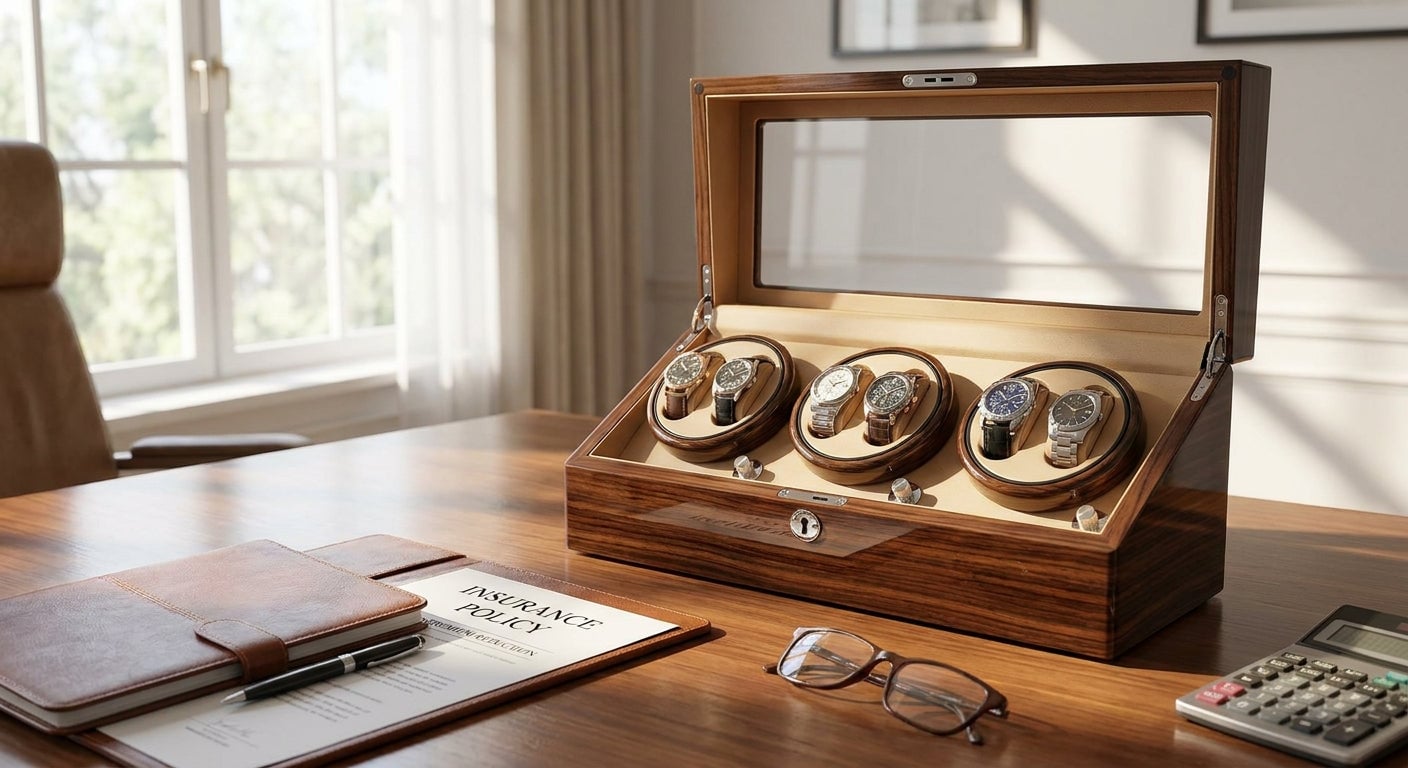
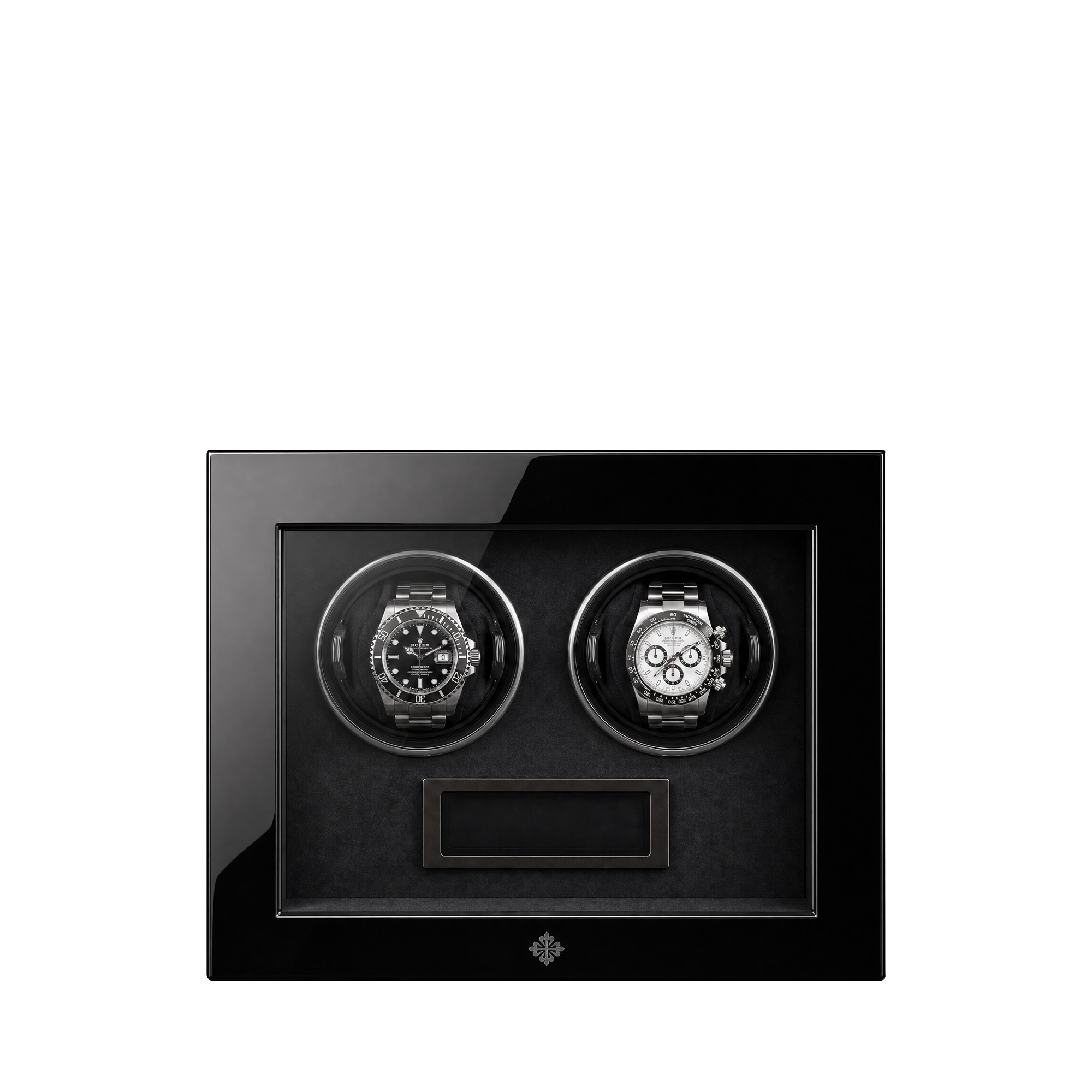
The single-watch pick — Virtuoso Series 2. Two-slot capacity, 650-900 TPD programmable in 50-rotation steps, Japanese Mabuchi motor per module. This is sized right for one Constellation and one companion piece, and the Alcantara-lined cushion holds the integrated bracelet without shifting overnight. Verdict: Buy for owners with one or two automatics in rotation.
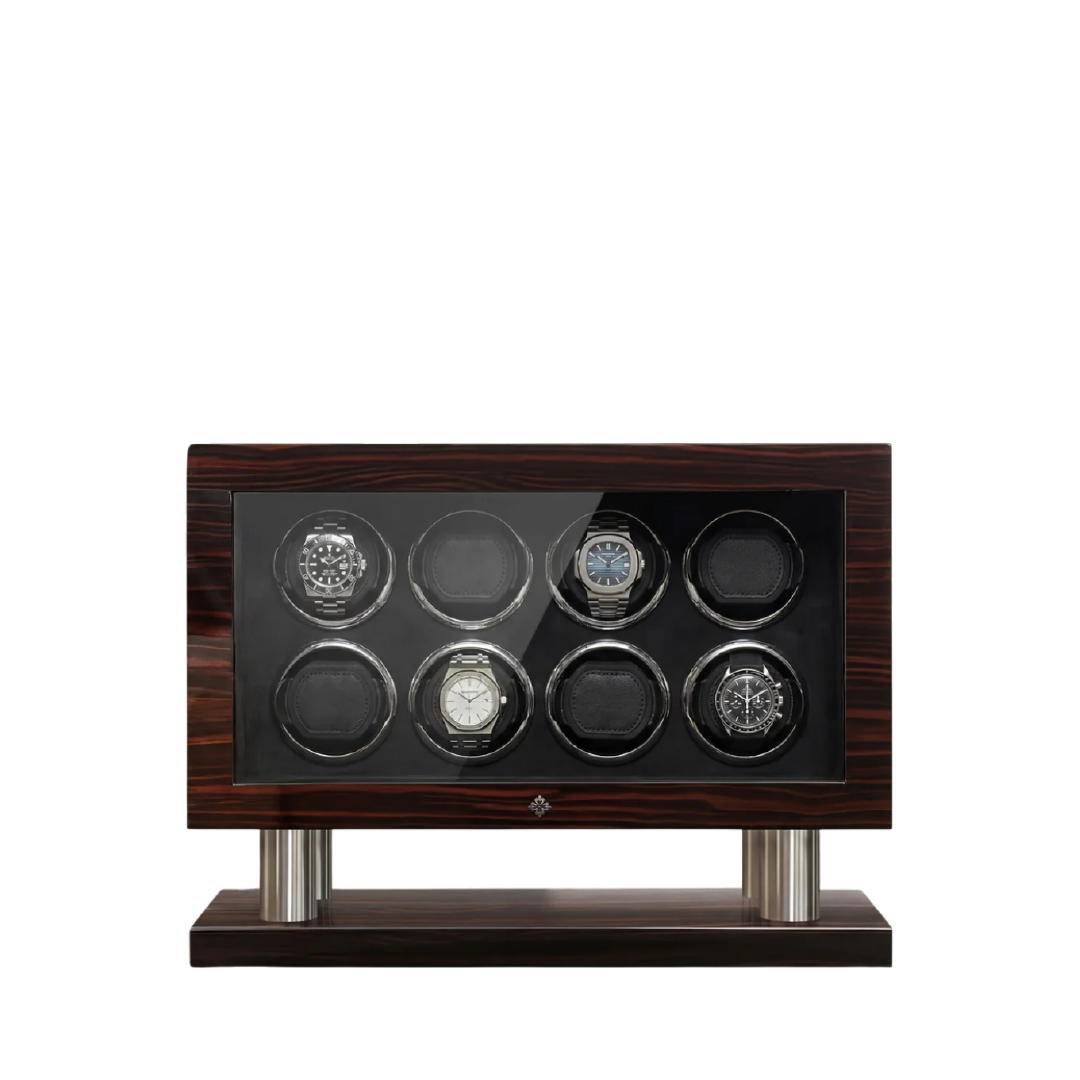
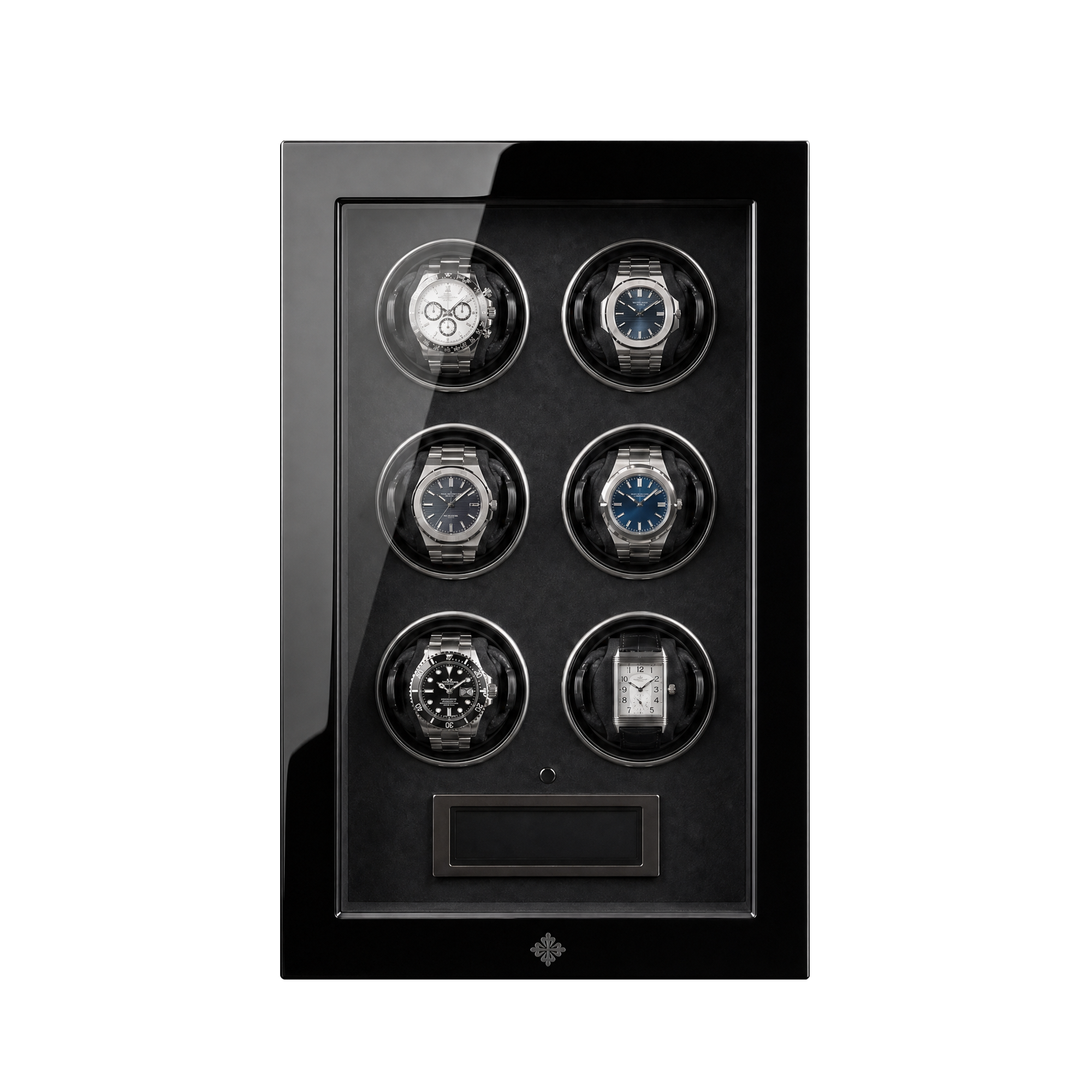
The growing-collection pick — Impresario Series 6 watch winder. Six independent modules, each programmable to its own TPD and direction, which matters if you’re mixing a Constellation with a Rolex or Patek that wants a different rotation count. At 650-950 TPD per slot, it covers the Constellation’s full caliber range without forcing a compromise setting across watches. Verdict: Buy for anyone past a two-watch collection or planning to be by end of 2026.
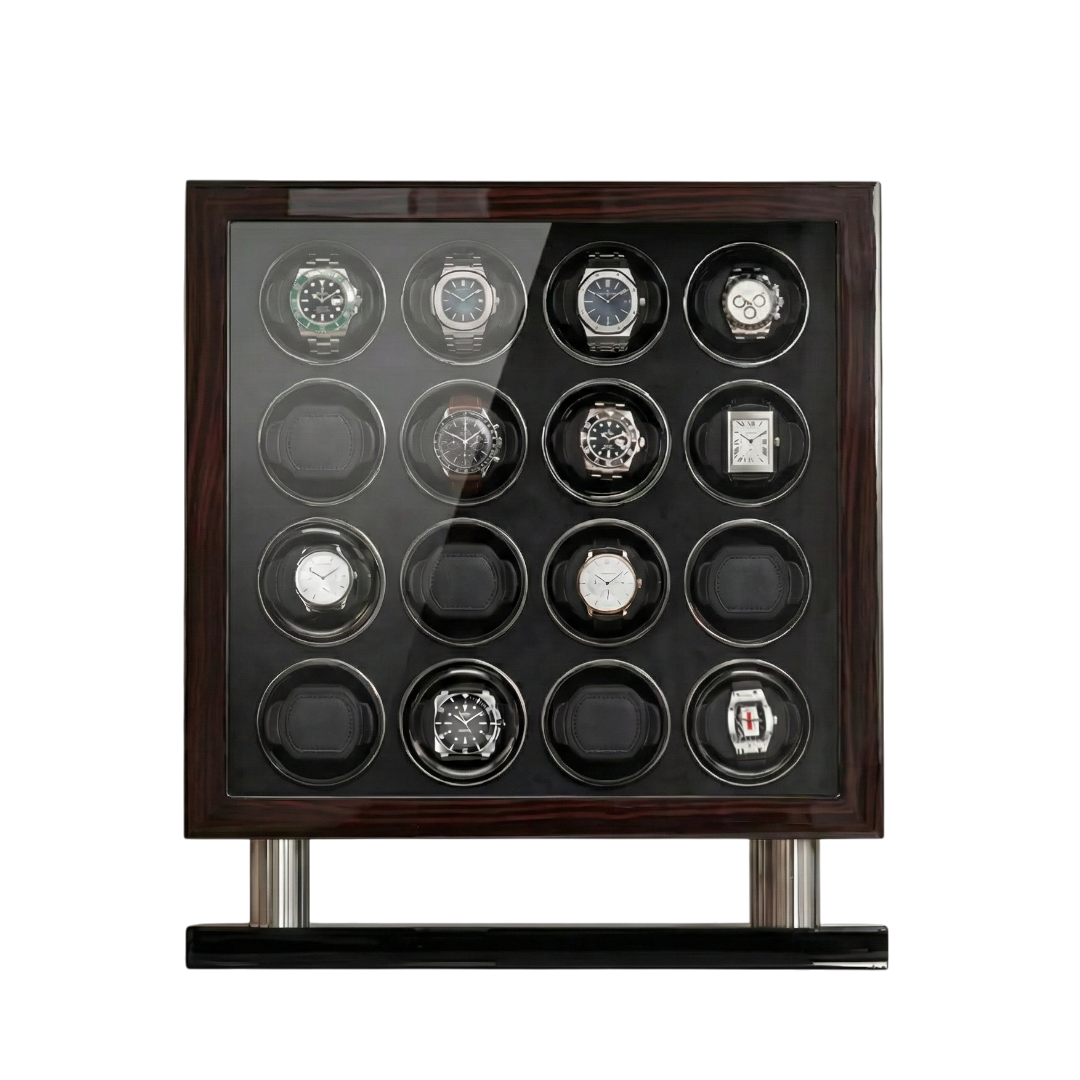
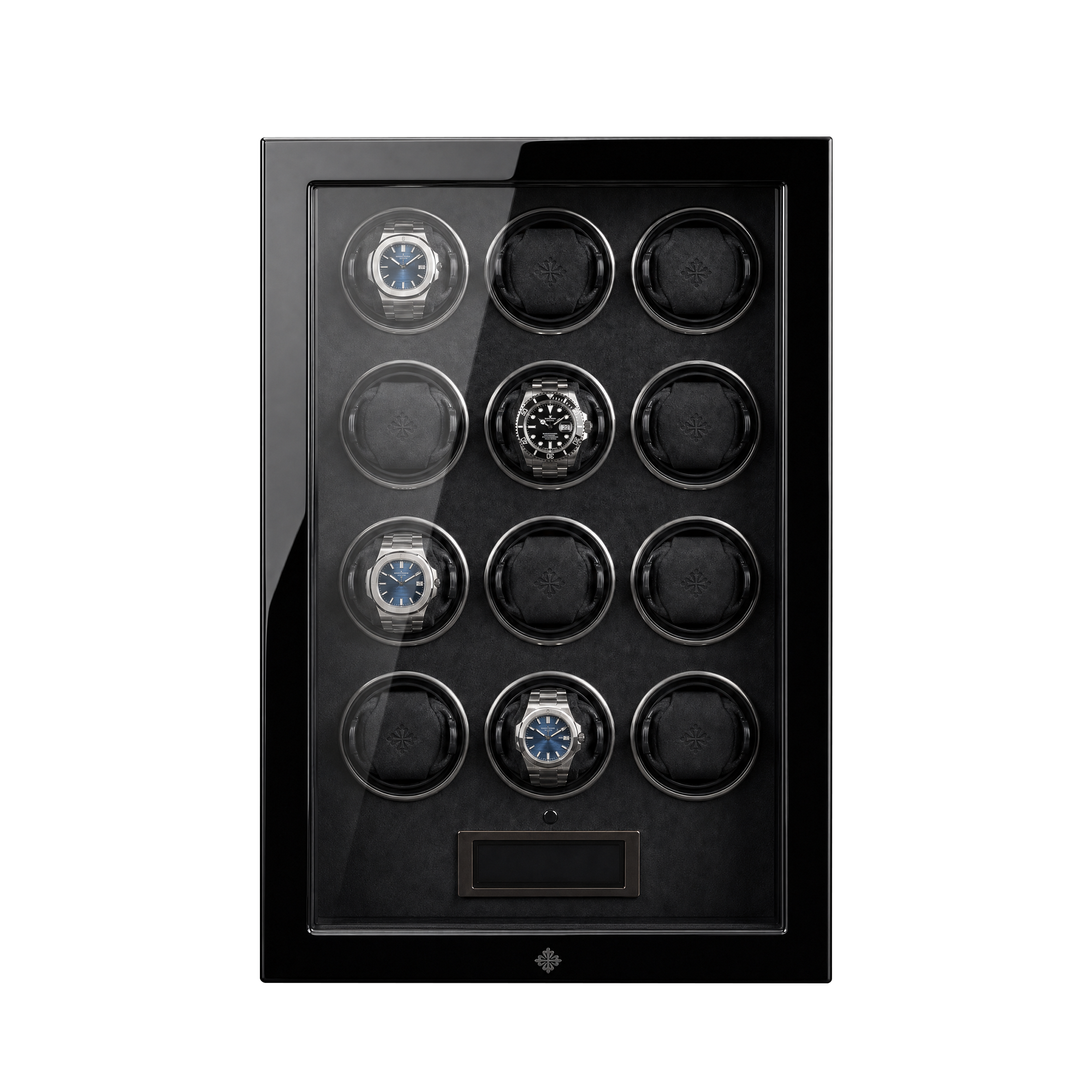
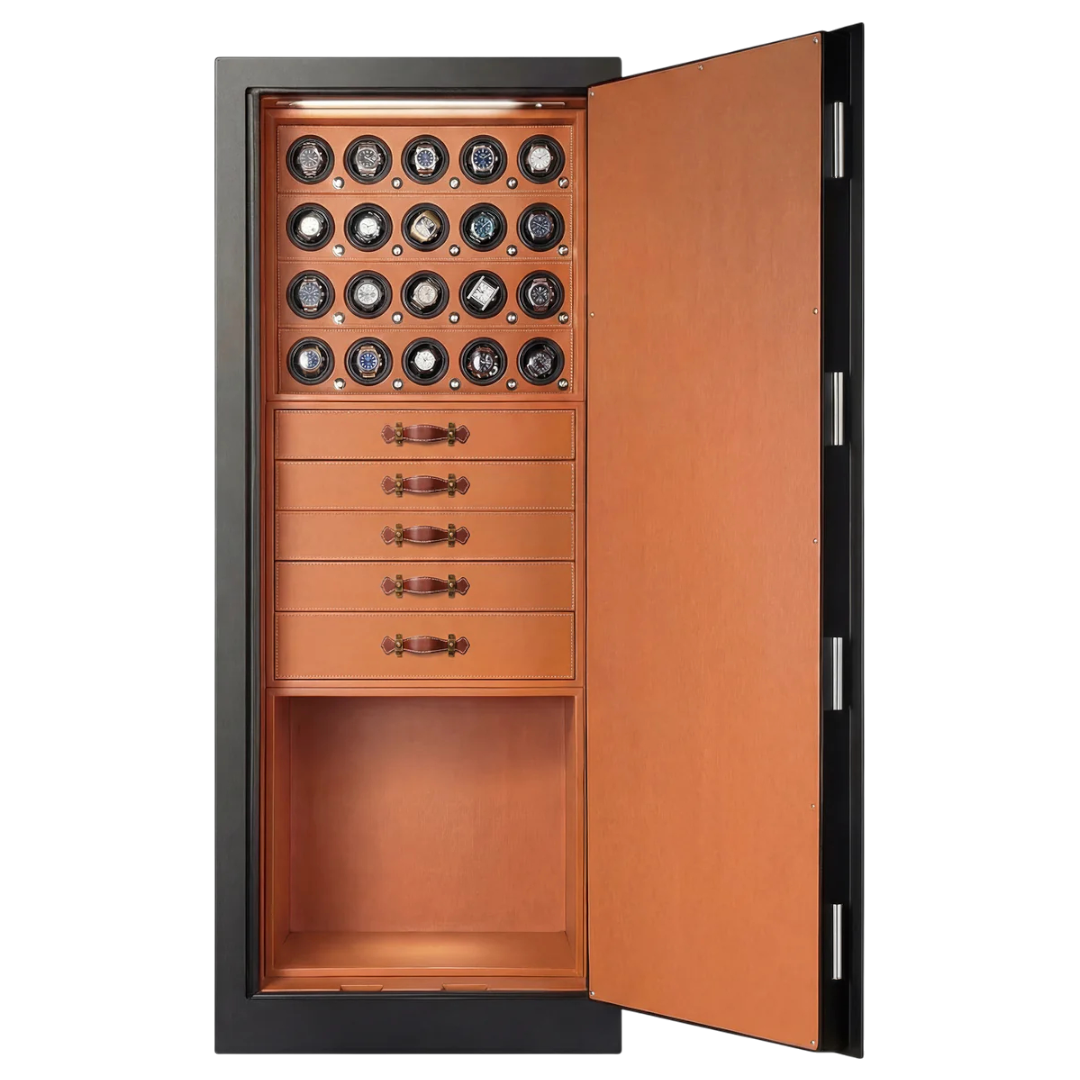
The full-shelf pick — Impresario Series 12 watch winder. Twelve slots at the same per-module programmability as the Series 6, built for collectors consolidating an entire Omega lineup plus other brands into one cabinet. It’s more winder than most single-model Constellation owners need on day one. Verdict: Consider if the collection already spans eight or more automatics; otherwise it’s overbuilt for the job.
The one to pass on — a generic 8-slot bargain winder with a single shared motor. Shared-motor units force every watch on the same TPD and direction regardless of caliber, which defeats the purpose for a mixed Omega and non-Omega collection. Verdict: Skip if you own more than one watch brand.
What to avoid
- Foam-only cushions with no bracelet clearance — the Constellation’s claws sit proud of the case, and a flat foam pillow will press against them at an angle over months of storage.
- Winders capped at 800 TPD with no adjustment above it — fine for some Constellation references, short of what the 8900 caliber prefers on the high end.
- Unidirectional-marketed winders sold as “compatible with all automatics” — technically they’ll turn the rotor, but they’re not built for the bidirectional wear pattern a Co-Axial caliber expects.
Verdict comparison
| Criterion | Virtuoso Series 2 | Impresario Series 6 | Impresario Series 12 |
|---|---|---|---|
| TPD range | 650-900, 50-step | 650-950, 50-step | 650-950, 50-step |
| Direction | Bidirectional | Bidirectional, per-slot | Bidirectional, per-slot |
| Motor | Japanese Mabuchi | Japanese Mabuchi, per module | Japanese Mabuchi, per module |
| Capacity | 2 watches | 6 watches | 12 watches |
| Best for | Single Constellation + one more | Growing mixed collection | Full multi-brand shelf |
| Verdict | Buy | Buy | Consider |
FAQ
What TPD setting is best for an Omega Constellation?
Most Constellation references with Co-Axial calibers 8500 or 8900 wind correctly between 650 and 900 turns per day. Start at 750 and adjust after a week of monitoring the power reserve.
Does the Omega Constellation need a bidirectional watch winder?
Yes. The Co-Axial rotor winds in both directions, and a unidirectional-only winder will undercharge the mainspring compared to a properly bidirectional unit.
Is a single watch winder enough for one Omega Constellation?
A two-slot winder like the Virtuoso Series 2 covers one Constellation with room for a second automatic, which is more practical long-term than a strict single-slot unit.
Can a watch winder damage an Omega Constellation?
A winder set well above 950 TPD for extended periods adds unnecessary wear cycles, but there’s no evidence a properly programmed bidirectional winder at 650-900 TPD causes damage.
How many slots do I need for a growing Omega collection?
Six slots, as on the Impresario Series 6, covers most collectors adding a second or third watch within a year or two without needing a replacement unit.
How much does a luxury watch winder cost in 2026?
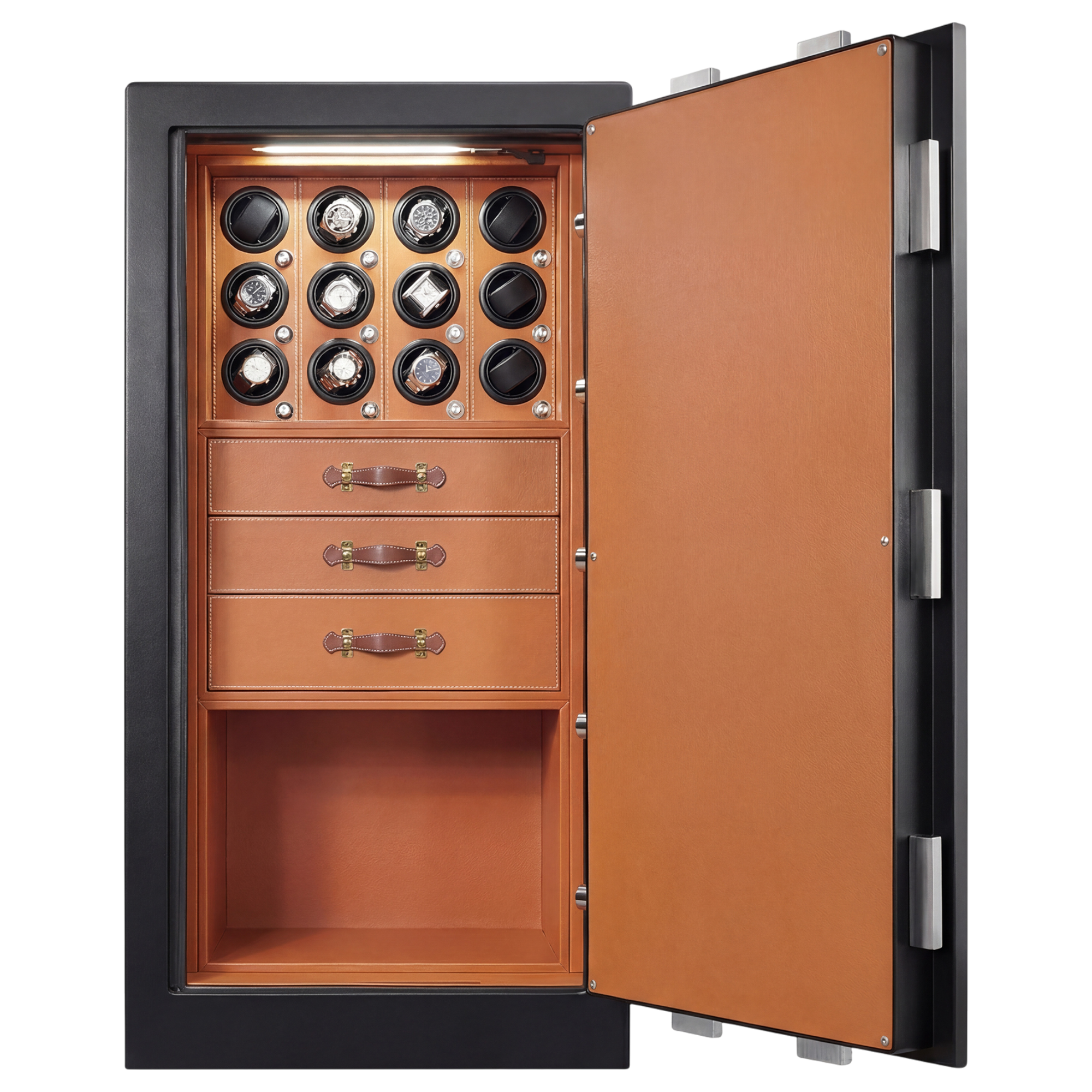
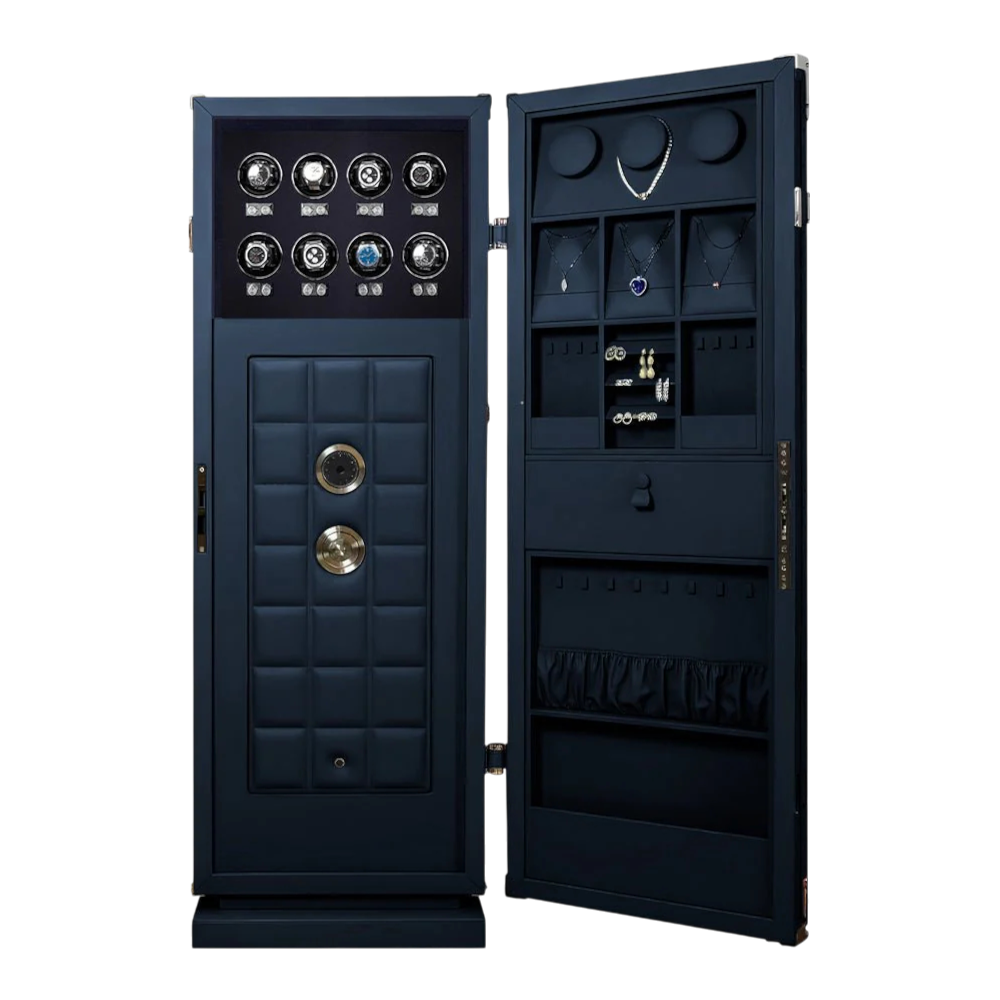
Enigwatch’s winder and safe lineup runs from roughly $5,000 to more than $21,000 depending on capacity, materials, and finish, with lifetime warranty coverage included across the range.
Should I store my Omega Constellation in a safe instead of a winder?
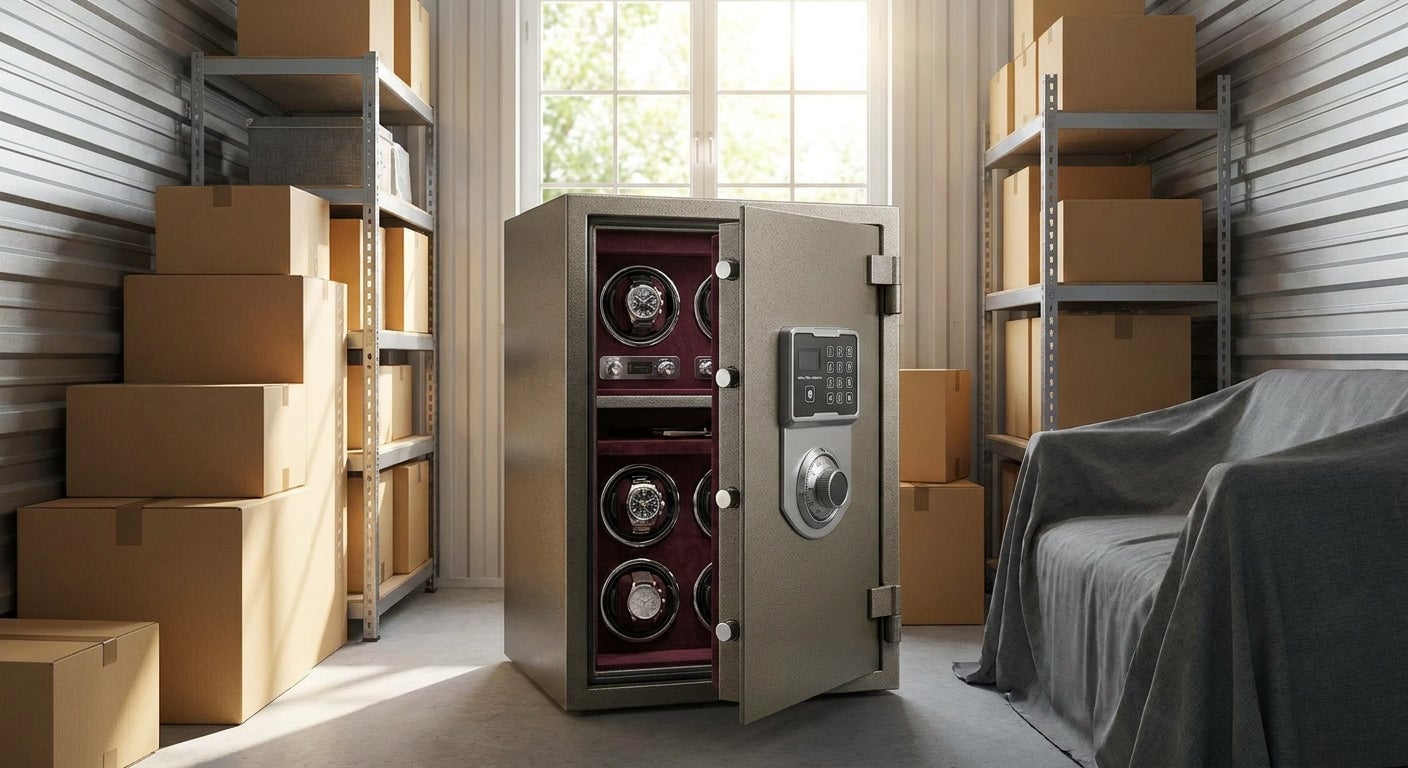
A safe protects against theft and fire but doesn’t keep the movement wound; pair a winder with a safe, or choose a combined unit, if security is also a concern.
What happens if TPD is set too low for a Constellation?
The mainspring won’t reach full wind, and the watch may run down between uses even while sitting in the winder — check the power reserve after 48 hours and raise the setting in 50-rotation steps.
One last thing
The Constellation’s free-sprung balance is more tolerant of TPD variance than older Omega calibers, which is why the 650-900 range works across most references rather than needing caliber-by-caliber precision — a detail most generic winder guides skip entirely in 2026.
Related guides
Protect Your Watch Collection
Designed for collectors who demand the best. Explore our premium watch winders and luxury safes.
Protect Your Watch Collection
Designed for collectors who demand the best. Explore our premium watch winders and luxury safes.