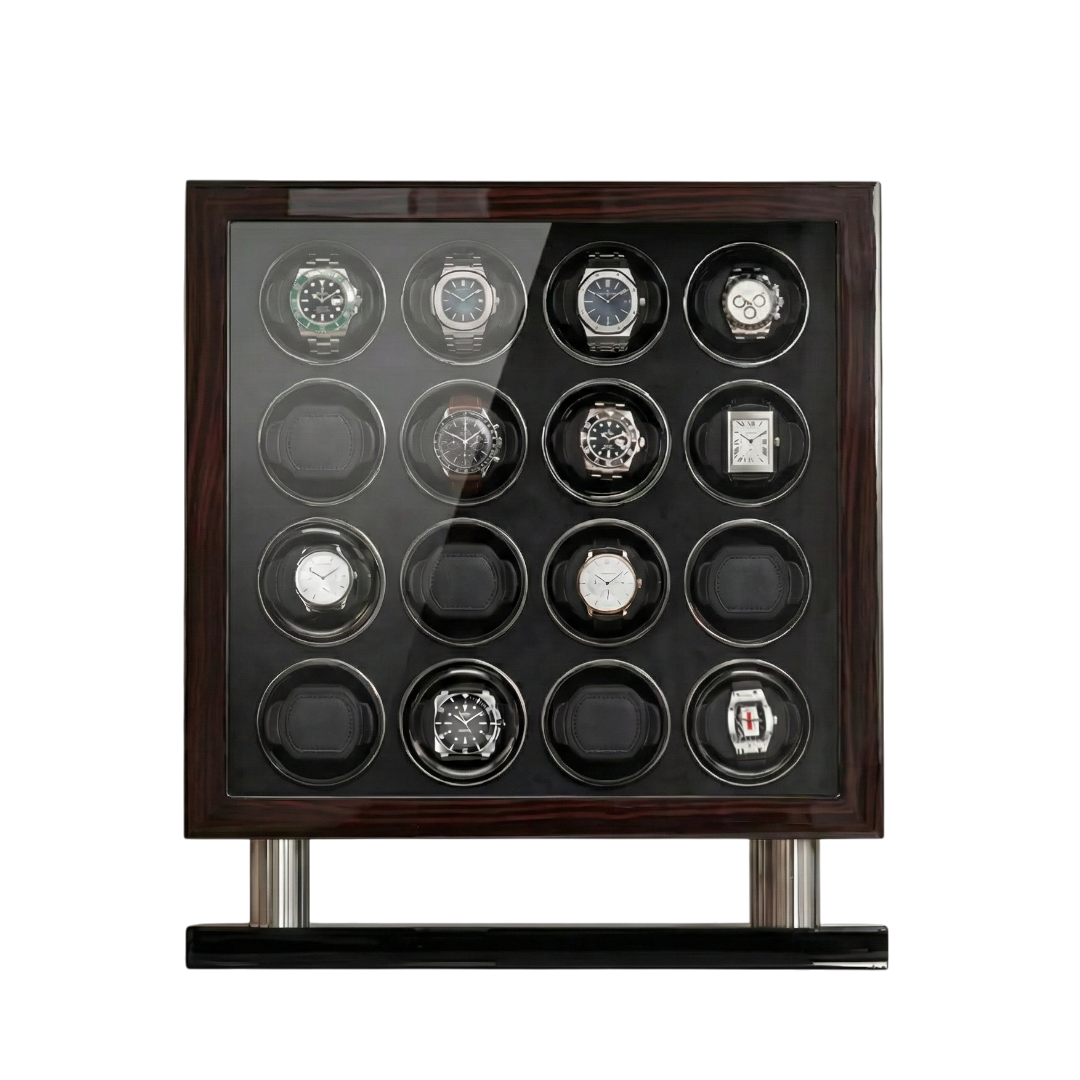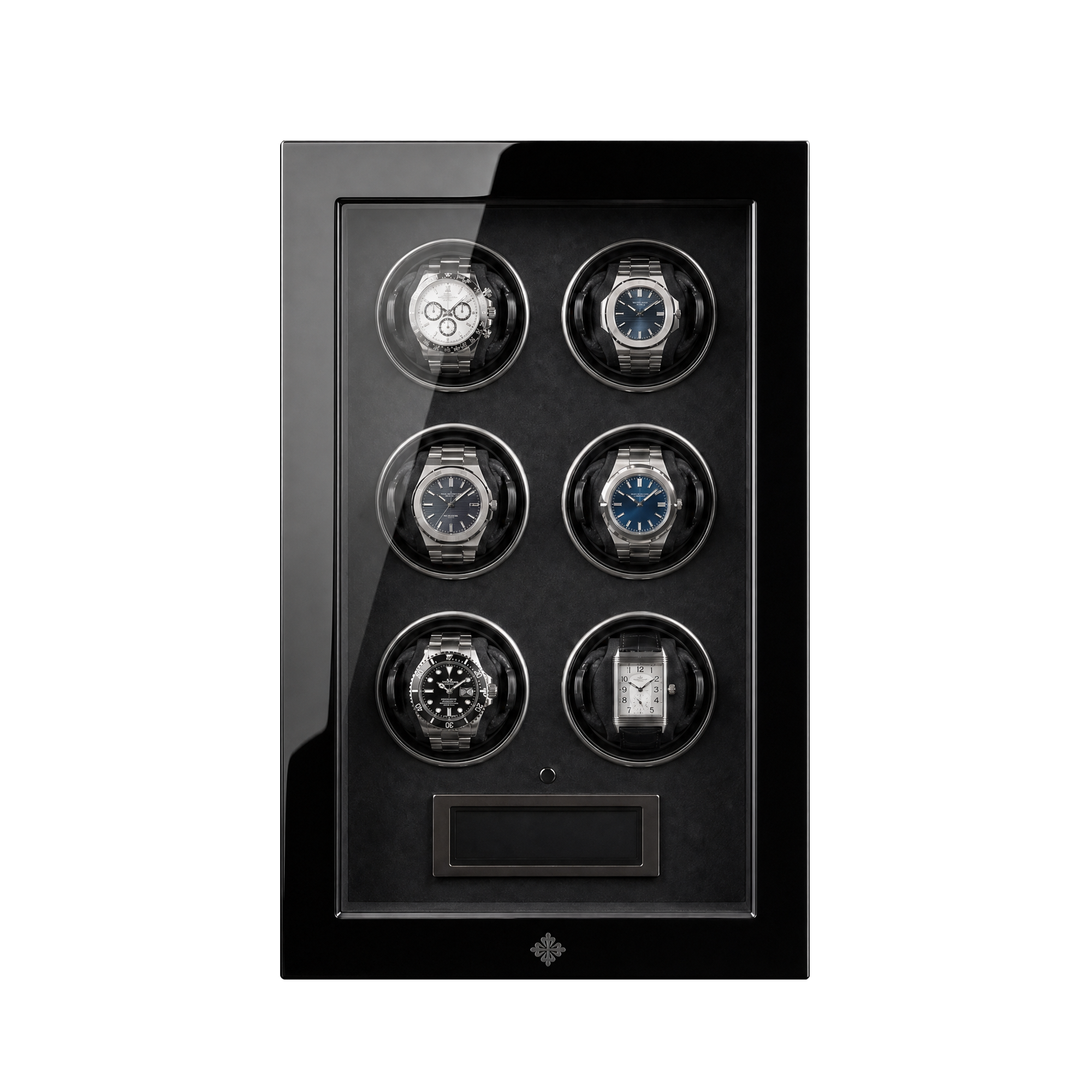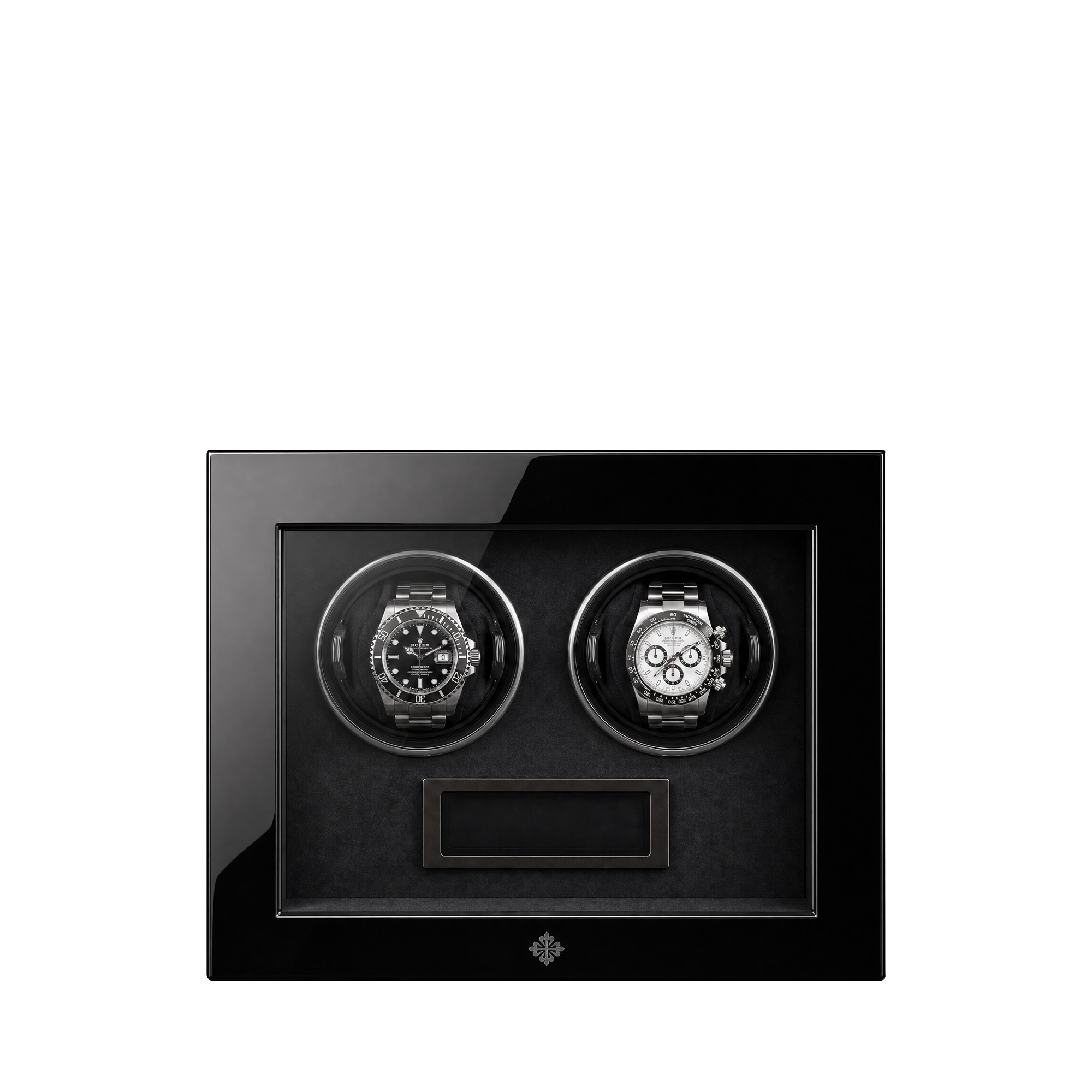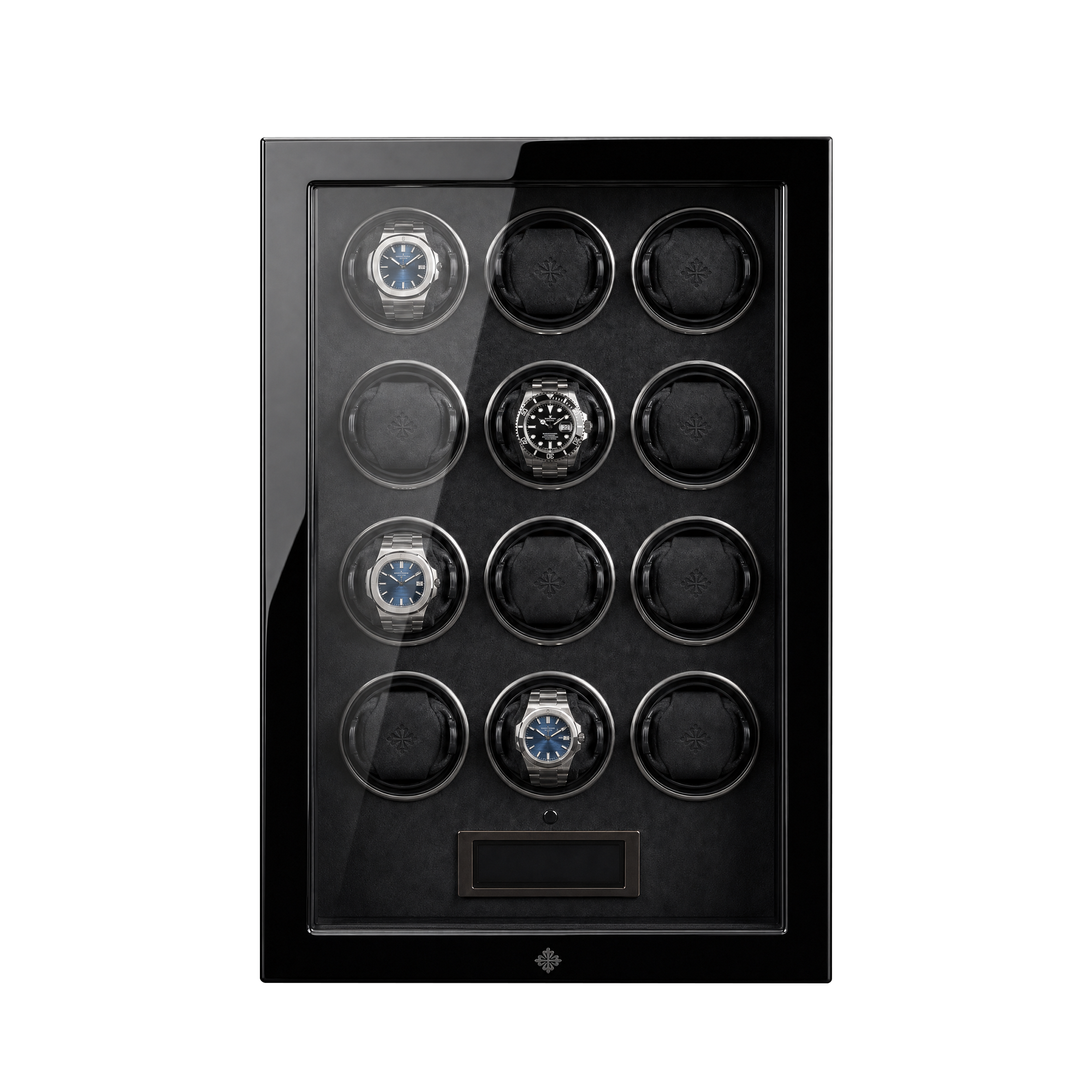


A watch winder for women solves one specific problem: your automatic watch stops every time you set it down for more than 36–48 hours, and resetting the time, date, and complications every morning is not how you want to start your day.
TL;DR: The best watch winder for women with automatic watches in 2026 keeps turns-per-day (TPD) between 650 and 1,800 depending on your brand, runs bidirectionally, and holds the watch securely without rattling a smaller case diameter. Enigwatch winders in the Impresario and Virtuoso lines cover single-watch to 12-watch setups that fit this profile. If you wear a Rolex Lady-Datejust, Omega Constellation, Cartier Ballon Bleu, or any other automatic movement, you need a winder — not a watch box.
Why this matters in 2026
Women’s automatic watches have surged in the collector market. Movements like the Rolex Calibre 2236, Omega Co-Axial 8520, and Cartier 076 all require consistent winding to keep perpetual calendars and moon phases accurate. A stopped watch loses not just time — it loses lubrication distribution inside the movement. Running a winder is cheaper than a service call.
Who this is for
You rotate between 1 and 6 automatic watches. At least one has a complication — a date, moon phase, or dual time zone — that’s painful to reset manually. You may have smaller-case watches (28–36 mm) that slip around in standard winder cups built for 44 mm sport watches. You want the unit to look good on a vanity, dresser, or in a closet safe — not like a utility appliance.
What to look for in a watch winder for women
TPD range that covers women’s movements
Most women’s automatic movements require between 650 and 1,800 TPD. Rolex’s Calibre 2236 (used in the Lady-Datejust 28 and Pearlmaster) officially needs 650–800 TPD. Omega’s 8520 used in the Constellation needs 650–950 TPD. A winder locked at a fixed 1,200 TPD works, but one that lets you dial in 650–1,800 in steps means you’re not over-winding a delicate movement. In 2026, every Enigwatch unit ships with individual per-slot TPD settings — you’re not stuck at one global setting for all slots.
Bidirectional rotation
Some movements only wind in one direction; others wind in both. The Rolex 2236 winds clockwise only. The Omega 8520 winds bidirectionally. If your winder only spins counterclockwise, a Rolex Lady-Datejust sits on a spinning rotor that does exactly nothing. Confirm that the winder either auto-detects or lets you set CW, CCW, or both per slot.
Secure fit for smaller case sizes
A 28–34 mm watch in a standard cup sized for a 42 mm Submariner will bounce during rotation. That’s not catastrophic, but it causes bracelet scratches and, over time, stress on the crown. Look for adjustable inner cups or a cushion system that grips down to 28 mm. Enigwatch includes adjustable cushions on all current models that accommodate cases from 28 mm upward.
Quiet motor under 30 dB
If the winder runs on a nightstand or in a bedroom closet, motor noise matters. A winder audible from across the room at night will get unplugged — which defeats the purpose. Enigwatch motors on the Impresario and Virtuoso lines operate at low enough decibel levels for bedroom placement. If you’re uncertain about noise, check the watch winder noise guide before buying.
Aesthetics that match jewelry storage
This is not vanity — it’s function. A winder you hate looking at gets hidden in a drawer, which means it isn’t winding your watch. The Emerald Green Series and the Millenary Jewelry Box format from Enigwatch were specifically designed to sit alongside jewelry trays without visual friction. If you store watches and jewelry together, a combined unit removes the need for two separate pieces of furniture.
Modular capacity
Buy for the collection you have in 2026, not the one you had in 2022. A single-slot winder is a short-term solution if you’re actively adding to a collection. Starting with a 4- or 6-slot unit costs marginally more upfront and eliminates the need to replace hardware in 18 months.
Top picks
The clean single-slot start — Impresario Series 2
The safe pick for one or two watches. Individual TPD settings per slot, bidirectional rotation, and a compact footprint that fits on a standard shelf. Concrete spec: 2-slot capacity with per-slot TPD control from 650 to 1,800. Verdict: Buy if you wear one watch daily and a second occasionally. See the Impresario Series 2 watch winder.
The mid-collection workhorse — Virtuoso Series 6
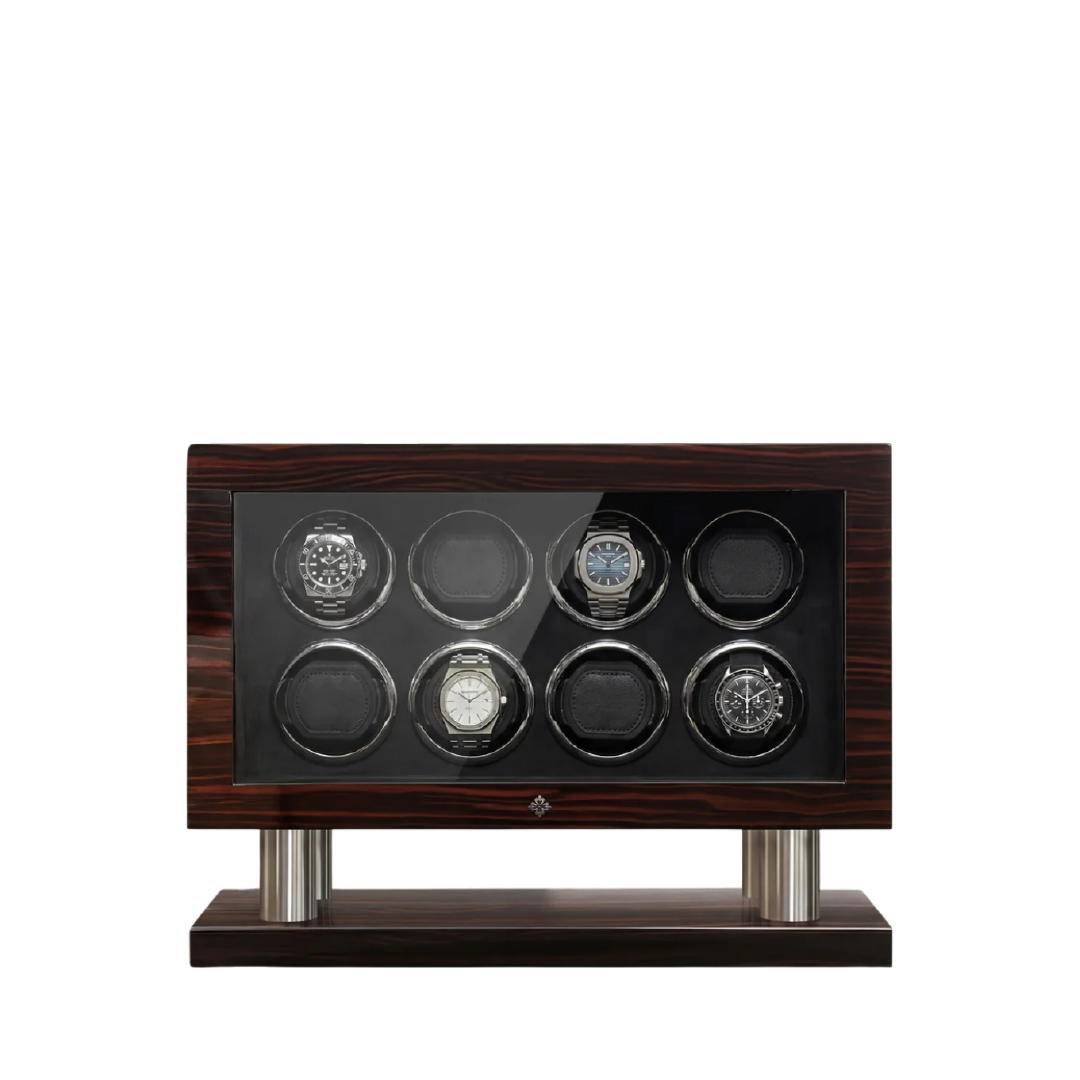
The right size for 3–6 watches. Handles the full range of women’s movements simultaneously — Rolex CW-only on slot 1, Omega bidirectional on slot 2, Cartier at lower TPD on slot 3. Built for a dresser or closet shelf. Verdict: Buy for anyone rotating 4 or more watches. See the Virtuoso Series 6 watch winder.
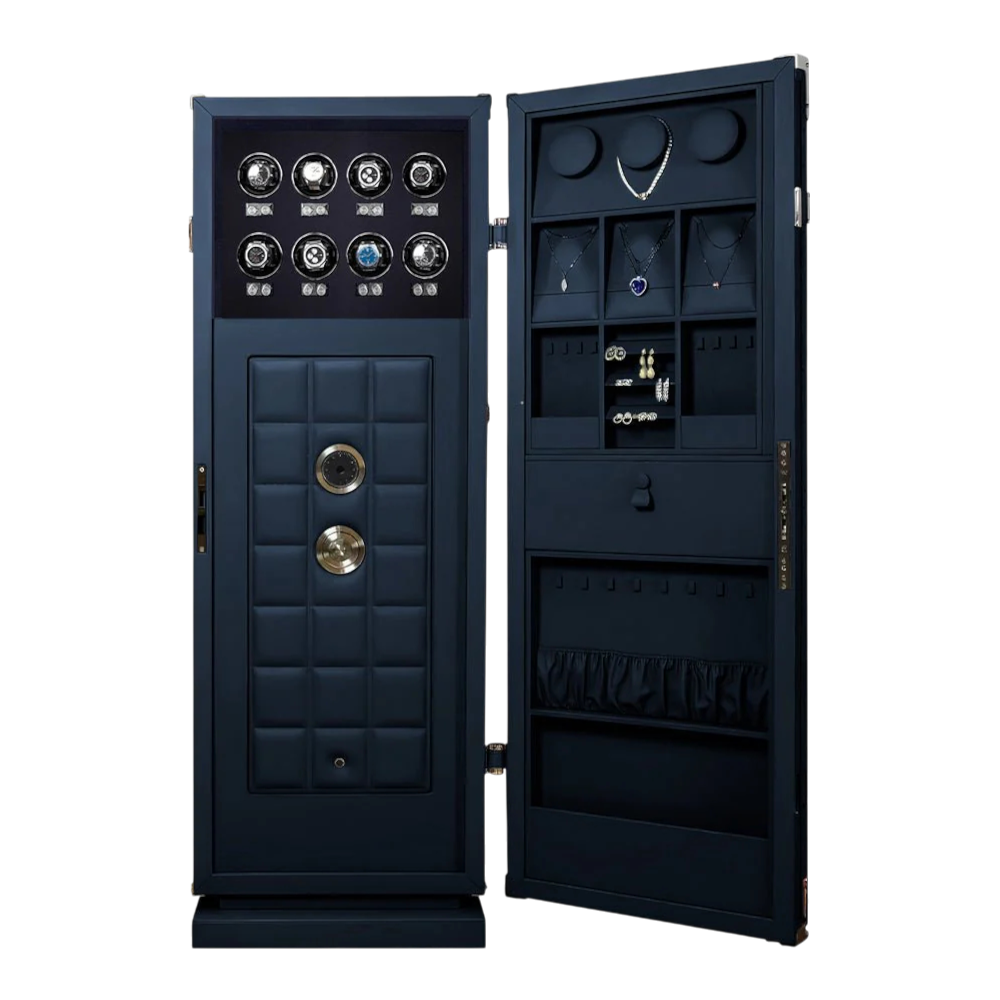
The jewelry-watch hybrid — Millenary Jewelry Box
For collectors who want watch winding and jewelry storage in one unit. Combines winder slots with dedicated ring, bracelet, and earring compartments — useful if your automatic watches live alongside the rest of your collection. Verdict: Consider if you’d otherwise buy a separate jewelry box anyway. See the Millenary Jewelry Box.
What to avoid
- Fixed TPD with no adjustment. Any unit that spins at one speed regardless of brand cannot be optimized for the Rolex 2236 (needs 650–800 TPD) versus an Omega Seamaster 300 (can handle up to 1,950 TPD). You’ll either under-wind one or over-stress another.
- Cups with no size adjustment. A 28 mm Cartier Mini Ballon Bleu in a cup built for a 44 mm case will rattle. Standard cups that bottom out at 36 mm are marketed as “universal” but are not universal for women’s sizing.
- Single-direction-only units without disclosure. Some budget winders spin counterclockwise only and bury that fact in spec sheets. A clockwise-only movement on a CCW winder winds zero turns per day. Always confirm rotation direction options before buying.
Comparison table
| Model | Slots | TPD Range | Bidirectional | Min Case Size | Best For |
|---|---|---|---|---|---|
| Impresario Series 2 | 2 | 650–1,800 | Yes | 28 mm | 1–2 watch rotations |
| Virtuoso Series 6 | 6 | 650–1,800 | Yes | 28 mm | 3–6 watch collections |
| Millenary Jewelry Box | Variable | 650–1,800 | Yes | 28 mm | Watch + jewelry combo |
FAQ
What is the best watch winder for women in 2026?
For a single automatic watch, the Impresario Series 2 covers most women’s movements with per-slot TPD and bidirectional rotation. For 3–6 watches, the Virtuoso Series 6 handles mixed brands simultaneously without manual adjustment between winding days.
Do women’s automatic watches really need a winder?
Yes, if the watch has a complication — date, moon phase, annual calendar — that requires manual reset when the movement stops. A watch that stops every 36–48 hours off the wrist needs either daily wearing or a winder. A winder is more reliable than daily wear.
What TPD does a Rolex Lady-Datejust need?
The Calibre 2236 inside the Lady-Datejust 28 requires 650–800 TPD, clockwise direction only. Most quality winders in 2026 cover this range, but confirm the minimum TPD setting goes down to 650 before buying.
Will a watch winder scratch my bracelet?
Not if the cup fits correctly. An oversized cup that allows movement during rotation causes bracelet contact against the cup wall. Properly fitted cushions that hold the case firmly prevent this. Enigwatch adjustable cushions accommodate 28 mm cases without gap.
Can I use one winder for both a Rolex and an Omega?
Yes — provided the winder sets rotation direction and TPD independently per slot. A Rolex needs CW at 650–800 TPD; an Omega 8520 needs bidirectional at 650–950 TPD. These are incompatible settings on a shared global motor. Individual slot control resolves this.
Is a watch winder safe to run overnight?
Yes. Quality winders use a rest cycle — the motor runs for a programmed interval, then pauses — which mimics natural wrist activity and prevents the automatic movement from being over-wound. Enigwatch units include programmable rest intervals.
How much does a good watch winder cost in 2026?
Entry-level single-slot winders from reputable brands start around $150–$300. Mid-range 4–6 slot units from Enigwatch sit in the $400–$900 range. Avoid sub-$100 units — fixed TPD, no direction control, and cheap motors that transmit vibration to the crown.
What is the difference between a watch winder and a watch box?
A watch box stores watches statically. A watch winder rotates the watch to keep the automatic movement wound. If your watch has no complications and you don’t mind resetting time each morning, a box is fine. If it has a date or moon phase, a winder pays for itself in avoided resets.
One last thing
The moon phase complication on a Jaeger-LeCoultre Rendez-Vous or a Patek Philippe Calatrava Ladies requires a full manual reset — crown adjustments across multiple steps — if it stops for even one day. On some movements, a stopped moon phase drifts at a rate of 1 day per 122 years; resetting it manually once per year is feasible, but resetting it every time you skip wearing a watch for two days is not. A winder eliminates that entirely.
Related guides
Protect Your Watch Collection
Designed for collectors who demand the best. Explore our premium watch winders and luxury safes.