
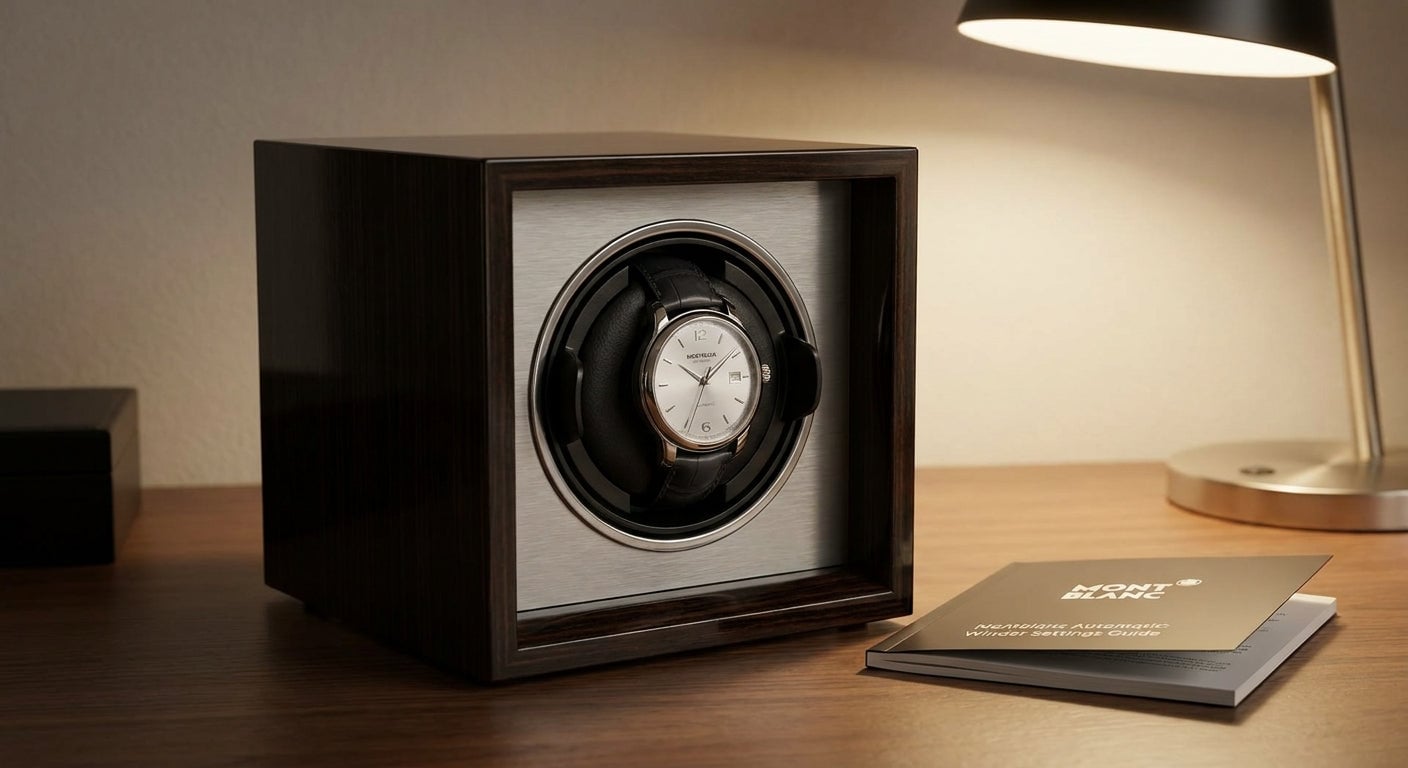
Montblanc automatic watches span a wide range of movements — from the in-house Calibre MB 29.15 in the Star Legacy to the ETA-based movements in the Heritage and Bohème lines — and each one has a specific TPD window that determines whether your winder keeps the watch running or quietly degrades it over time. Getting the watch winder settings for Montblanc right takes about five minutes once you know the numbers.
TL;DR: Most Montblanc automatics need 650–800 TPD (turns per day) in bidirectional rotation. In-house Montblanc Calibre MB movements sit at the lower end of that range; ETA 2892-based models tolerate up to 900 TPD. Set your winder to bidirectional, 650–750 TPD, with a rest cycle of at least 4 hours per 24-hour period. That covers the Star Legacy, 1858, Heritage, and Summit lines as of 2026.
Why This Matters
An overworked mainspring is a real service risk. Montblanc uses a slipping-clutch mechanism in most calibers, which means an overwound spring won’t snap — but sustained overcranking at 1,200+ TPD still accelerates wear on the rotor bearing and the reverser wheels. Under-winding is the more common mistake: a Montblanc Star Legacy set at 300 TPD CW-only will stop within 48 hours on a 42-hour power reserve movement. Both errors cost money. The settings below cost nothing.
Who This Is For
This guide is for Montblanc owners who already own or are shopping for a watch winder and need exact numbers — not theory. You own one or more Montblanc automatics (Star Legacy, 1858, Heritage, Bohème, or Summit) and you want the winder set correctly from day one. You are not a watchmaker, and you should not need to be.
What to Look for in a Watch Winder for Montblanc Automatics
TPD Range That Covers 650–900
Montblanc’s movement family spans ETA and in-house calibers. The winder must reach at least 900 TPD to handle every Montblanc variant without a second unit. Budget winders often cap at 600 TPD — that is not enough for the ETA 2824-2 used in some Heritage models, which performs best at 800–900 TPD.
Bidirectional Rotation
Every current Montblanc automatic caliber winds in both directions. A clockwise-only or counterclockwise-only setting cuts effective winding efficiency roughly in half, forcing you to compensate by increasing TPD and risking over-rotation. Bidirectional is not a premium feature — it is the correct setting, full stop.
Independently Programmable Slots
If you own more than one watch, each movement has its own TPD requirement. A Montblanc 1858 (MB 29.15) sitting next to a Bohème (ETA 2671) needs different settings. A winder that forces all slots to run the same program is a compromise from the start.
Rest Periods (Sleep Cycles)
Montblanc recommends that movements not wind continuously. Most Enigwatch units include programmable rest cycles. Set a minimum 4-hour rest window per 24 hours. This mimics natural wrist wear and prevents the slipping clutch from engaging unnecessarily over long off-wrist periods.
Quiet Motor at Under 25 dB
Winders live in bedrooms and offices. Montblanc owners typically store watches where they sleep or work. A motor running above 30 dB is audible at 3 feet in a quiet room. Look for Japanese Mabuchi or equivalent motor specs — Enigwatch units use motors rated at 20–22 dB at standard operating load.
Case Fit for Larger Montblanc Cases
The Montblanc 1858 Geosphere and some Star Legacy cases run 42–44 mm with thick lugs. A winder holder that maxes out at 40 mm case diameter will scratch the crown or fail to secure the watch properly. Verify the cushion accommodates at least 55 mm lug-to-lug.
Montblanc Movement Settings: The Reference Table
| Model / Line | Calibre | TPD Recommended | Direction | Power Reserve |
|---|---|---|---|---|
| Star Legacy | MB 29.15 | 650–750 | Bidirectional | 42 hrs |
| 1858 (automatic) | MB 24.17 | 700–800 | Bidirectional | 42 hrs |
| Heritage Chronométrie | ETA 2892-A2 | 800–900 | Bidirectional | 42 hrs |
| Bohème (automatic) | ETA 2671 | 650–750 | Bidirectional | 40 hrs |
| Summit 2 (smartwatch) | N/A — not an automatic | Not applicable | — | — |
| Villeret | MB 16.29 / external calibres | 700–800 | Bidirectional | 42–60 hrs |
For any Montblanc not listed here, default to 700 TPD bidirectional and monitor whether the watch keeps time after 72 hours off the wrist. Adjust upward by 50 TPD if it stops.
Top Winder Picks for Montblanc Owners
The Single-Watch Pick — Delta Series Single Watch Winder
The safe pick for a one-Montblanc household. This unit runs at adjustable TPD from 300 to 1,200 and covers the full Montblanc movement range. Set it to 700 TPD bidirectional with a 4-hour rest cycle per 24-hour period. The cushion accommodates cases up to 58 mm lug-to-lug, which covers every current production Montblanc.
Verdict: Buy — if you own one Montblanc and want a clean, single-purpose solution.
See the Delta Series single watch winder (black) for current availability.
The Dual-Watch Pick — Impresario Series 2 Watch Winder
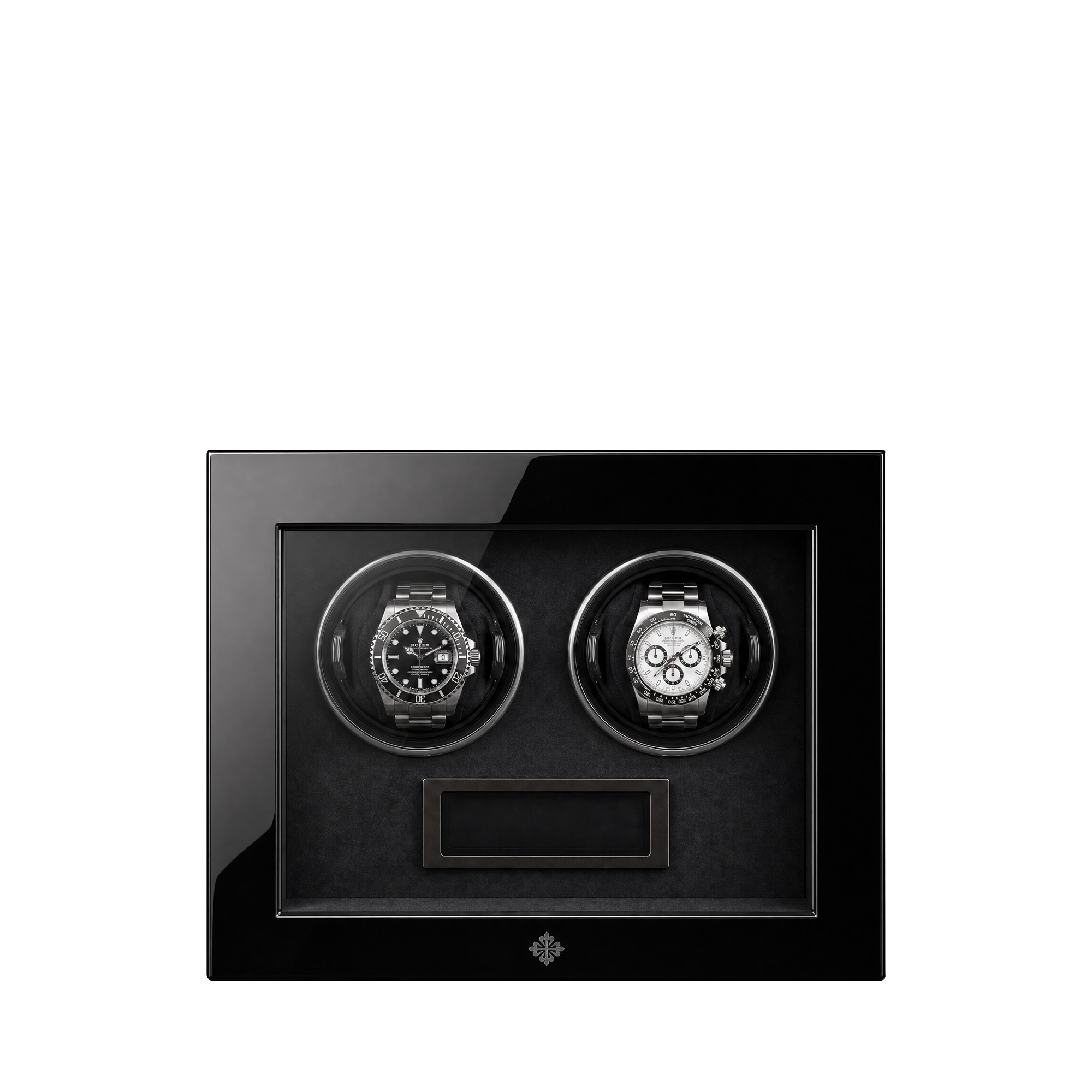
The practical pick for two-watch Montblanc pairings. Two independently programmable slots mean you can run your Star Legacy at 700 TPD and a Heritage Chronométrie at 850 TPD simultaneously. Motor noise measures under 22 dB in Enigwatch’s testing environment. The 2026 version ships with a Japanese Mabuchi motor and a removable inner cup sized for sport-case watches.
Verdict: Buy — the clear choice for owners who rotate between two Montblanc references.
The Collector Pick — Impresario Series 6 Watch Winder
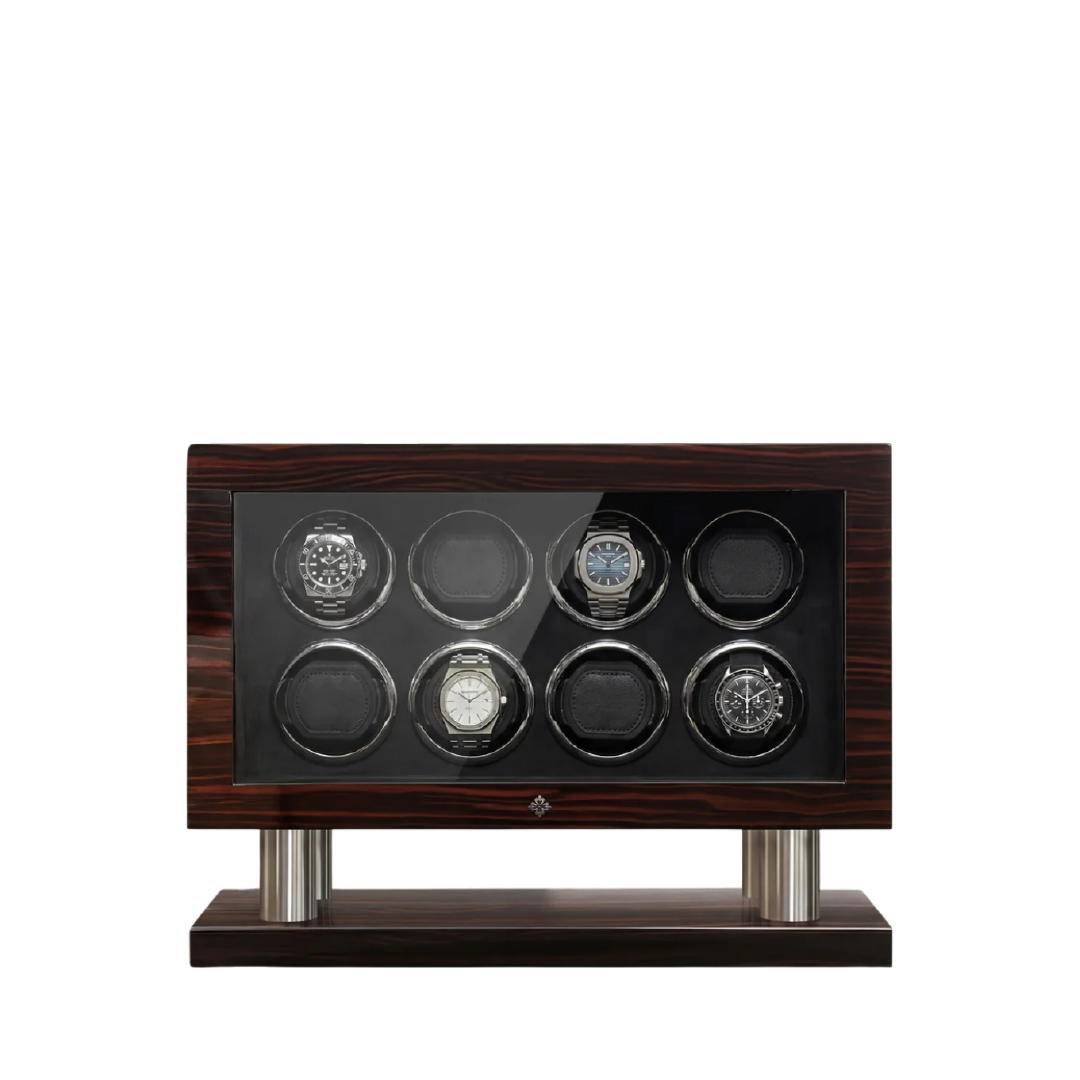
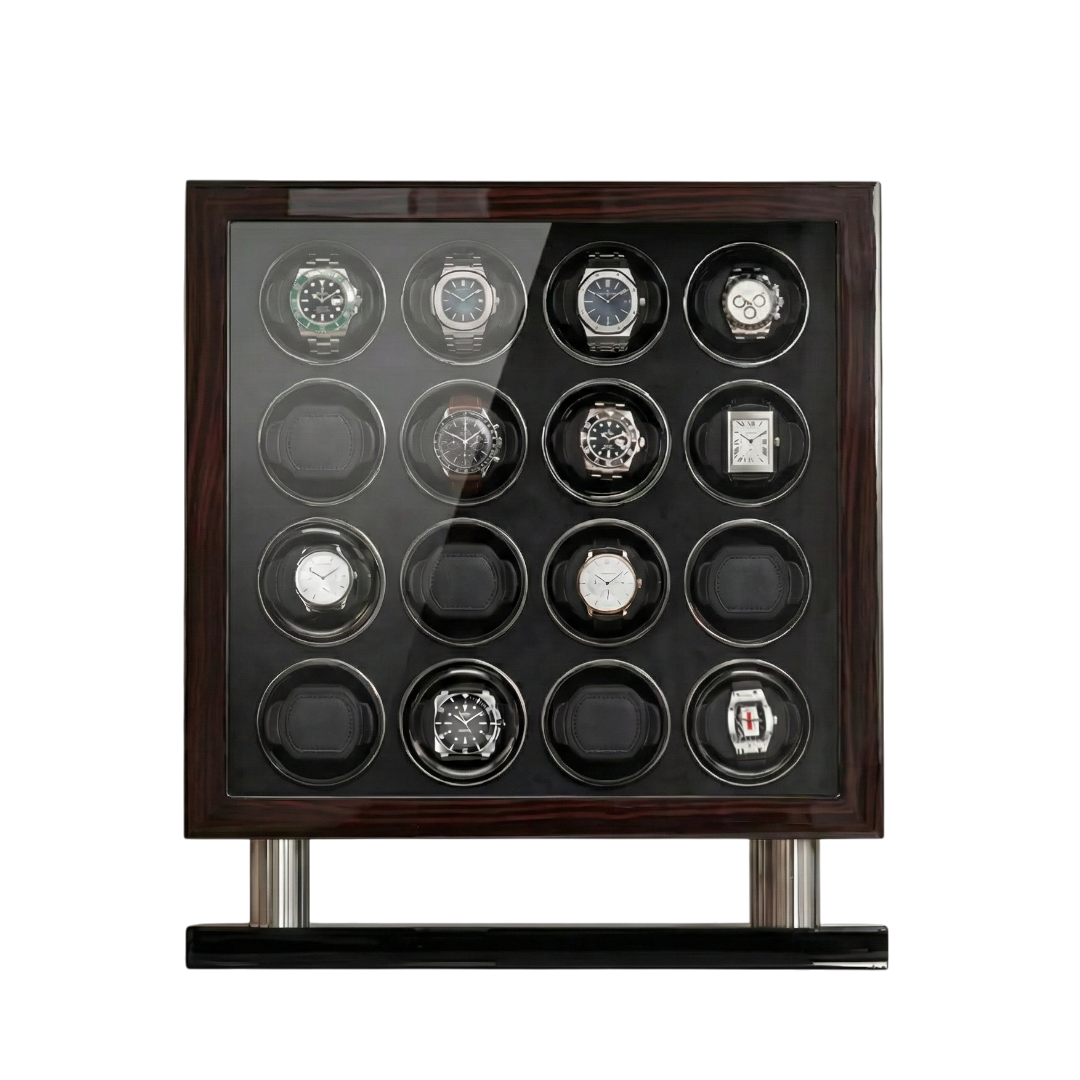
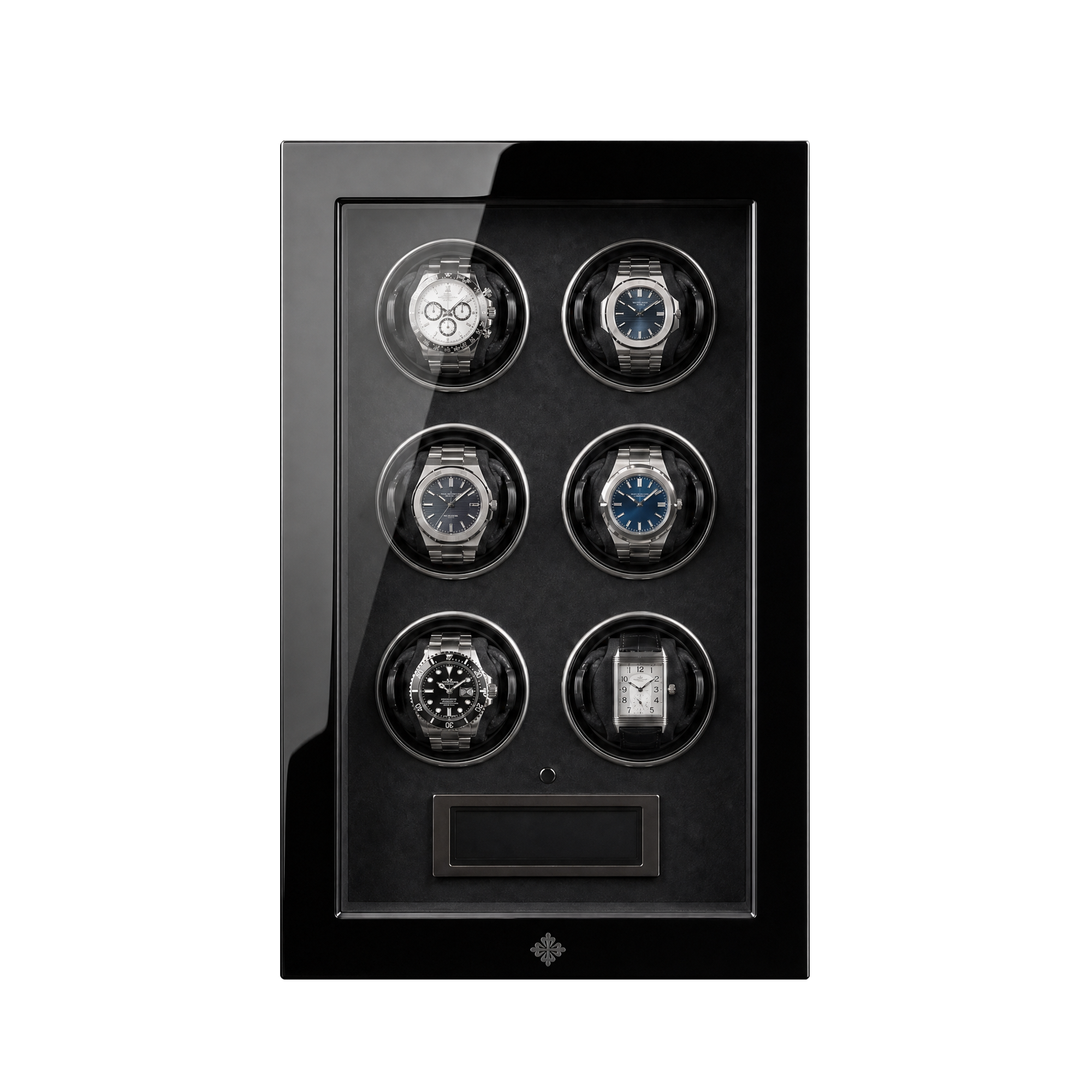
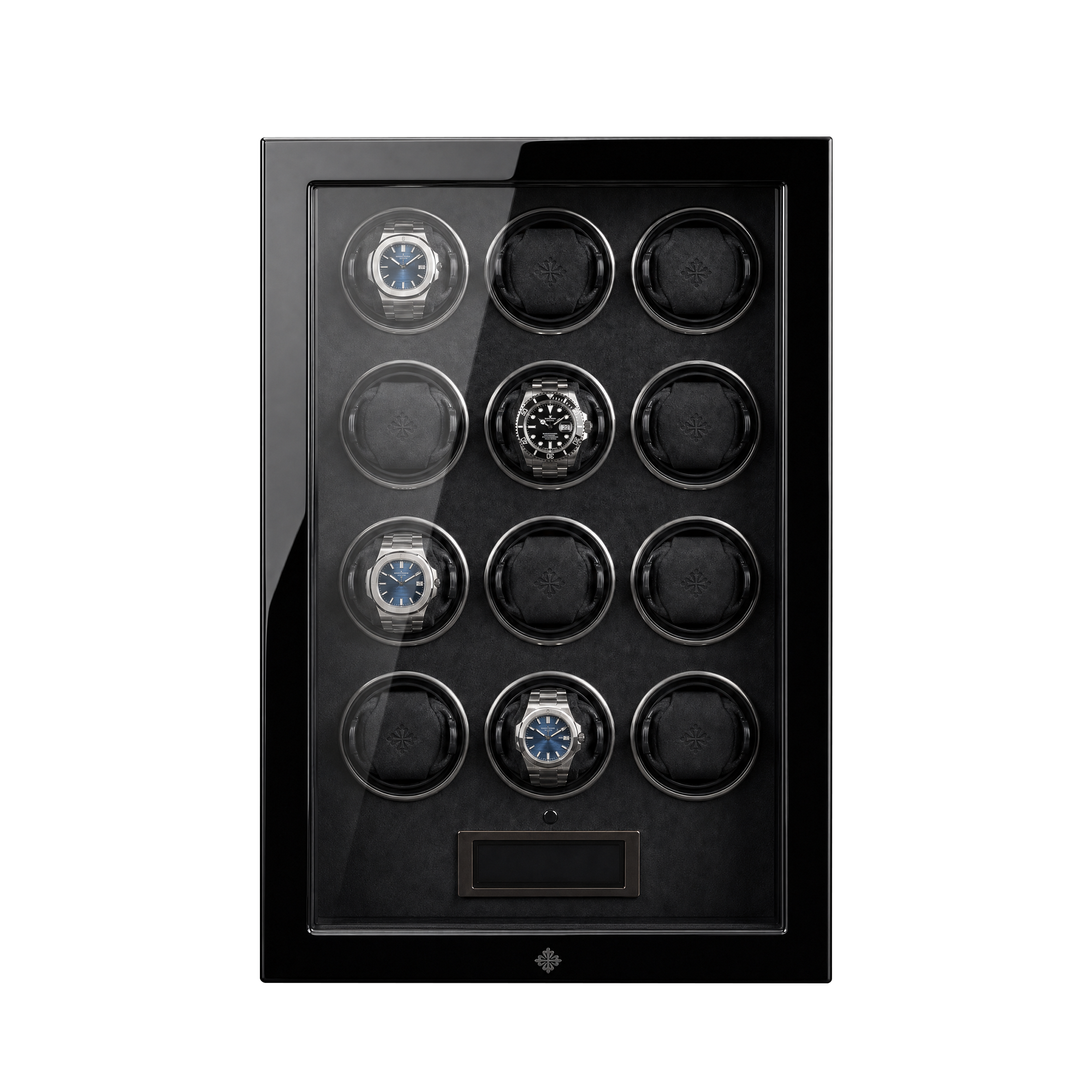
The wildcard for a serious Montblanc collection. Six independently programmed rotors, each adjustable from 300 to 1,800 TPD. If you carry the Villeret, 1858, and Star Legacy simultaneously, this runs all three at their individual optimum settings without compromise. At $650–$950 depending on finish, this is not an impulse buy — but it is the last winder you buy for a Montblanc-heavy collection.
Verdict: Buy if you have 4+ watches. Consider if you have 2–3 and anticipate growth.
See the Impresario Series 6 watch winder for specs and pricing.
What to Avoid
- Preset-only winders with fixed 650 TPD CW programs. These look right on paper for a Star Legacy but leave ETA-based Heritage models under-wound. If the winder does not let you change direction and TPD independently per slot, walk away.
- Foam-cushion winders without adjustable holders. Foam compresses and loosens over weeks. A Montblanc Star Legacy at 44 mm will shift inside a foam-only holder, causing crown abrasion. Look for silicone-gripped or velvet-covered adjustable holders.
- Winders marketed as “universal” with a single shared motor. A single rotor driving all slots cannot run at different TPD per slot. Every Montblanc in a shared-motor unit runs at the same speed — which is incorrect for mixed-caliber collections.
FAQ
What TPD does a Montblanc automatic need in a watch winder?
Most Montblanc automatic movements perform correctly at 650–800 TPD bidirectional. ETA-based models such as the Heritage Chronométrie with the ETA 2892-A2 can run up to 900 TPD. Use 700 TPD bidirectional as your universal starting point in 2026 if you are unsure of the specific caliber.
Should a Montblanc winder run clockwise, counterclockwise, or bidirectional?
Bidirectional. All current production Montblanc automatic calibers wind efficiently in both directions. Clockwise-only or counterclockwise-only settings cut winding efficiency and require higher TPD to compensate, increasing mechanical wear.
How many turns per day does a Montblanc Star Legacy need?
The Star Legacy with Calibre MB 29.15 needs 650–750 TPD bidirectional. The movement has a 42-hour power reserve. At 700 TPD bidirectional with a 4-hour daily rest cycle, the watch stays wound and runs within spec.
Can a watch winder damage a Montblanc automatic?
A winder set significantly above the recommended TPD — say, 1,500 TPD continuous bidirectional — will engage the slipping clutch repeatedly, adding wear to reverser components over months. Setting the winder correctly at 650–900 TPD with a rest cycle does not damage the movement. The more common real-world error is under-winding, which causes the watch to stop.
Does a Montblanc 1858 need a different winder setting than a Star Legacy?
Slightly. The 1858 with Calibre MB 24.17 runs optimally at 700–800 TPD; the Star Legacy with MB 29.15 sits at 650–750 TPD. Both use bidirectional rotation. If your winder only has one setting for both, use 700 TPD bidirectional — it is safe for both calibers.
What rotation direction does the Montblanc Bohème use?
The Bohème automatic uses an ETA 2671 movement, which winds bidirectionally. Set the winder to bidirectional at 650–750 TPD. The ETA 2671 is a compact ladies’ caliber with a 40-hour power reserve, so it is slightly more sensitive to over-rotation than the larger sport-oriented movements.
Is 1,000 TPD too high for a Montblanc?
For most Montblanc calibers, yes. 1,000 TPD exceeds the recommended range for every in-house Montblanc movement and sits above the ETA 2892-A2’s comfortable ceiling. Stick to 900 TPD as the absolute maximum for any Montblanc automatic in 2026.
Do I need an independently programmable winder if I only own one Montblanc?
Not necessarily. A single-slot winder with adjustable TPD and rotation direction covers one watch perfectly. Independent programming becomes essential when you add a second watch with a different caliber — which is common among Montblanc collectors who combine a Star Legacy daily driver with a Villeret or Bohème.
One Last Thing
Montblanc uses the Sellita SW200-1 in some of its more recent Heritage automatic references sold outside certain markets in 2026 — it is mechanically identical to the ETA 2824-2 and needs the same 800–900 TPD setting. If your Heritage shipped after mid-2024 and you purchased it from a non-Swiss retailer, check the caseback: “SW200” engraved on the rotor means you should run at the higher end of the range, not 650 TPD.
Related Guides
Protect Your Watch Collection
Designed for collectors who demand the best. Explore our premium watch winders and luxury safes.