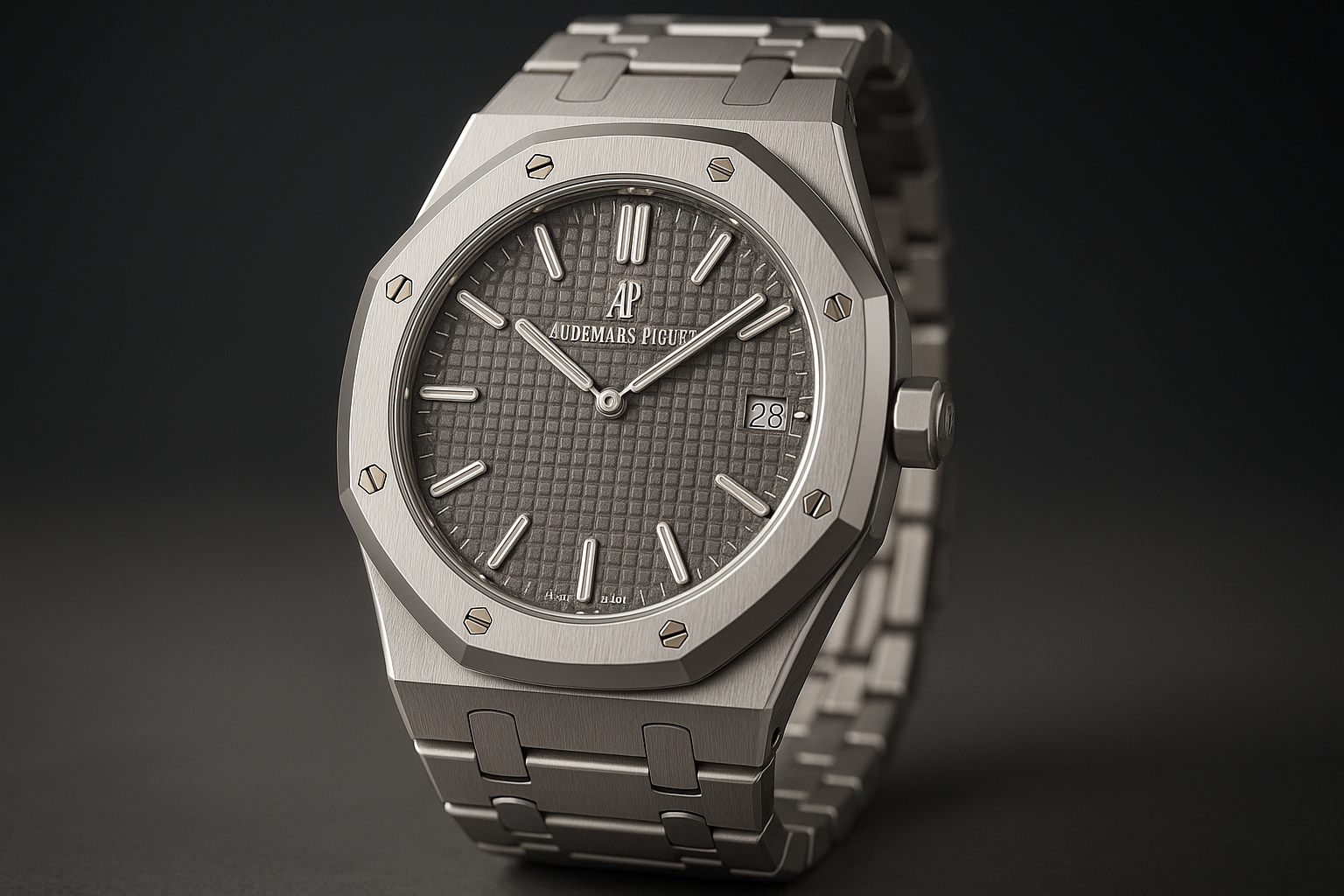
An Audemars Piguet watch winder should run bidirectional at 650 turns per day, the setting every AP automatic movement calls for. Most AP movements carry a 60-hour power reserve, so they are less demanding than many comparable luxury movements and hold full power reserve even at the lowest TPD setting on any quality winder.
The right winder matters as much as the right setting. Our watch winders are built for collectors at this level, with per-rotor TPD control.
This guide covers the correct TPD settings for every major AP collection, case compatibility, and product recommendations built for collectors at this level. For a full reference of TPD requirements across all major Swiss brands, see Enigwatch's TPD reference guide.
What Controls How an AP Winder Should Be Set?
 Turns Per Day (TPD) — the number of rotations completed in 24 hours. AP movements are efficient — 650 TPD is sufficient for every caliber in the current lineup. Running an AP at 1,800 or 2,200 TPD adds unnecessary rotor wear with zero benefit to the movement.
Rotation Direction — all current Audemars Piguet automatic movements wind bidirectionally. Always set your winder to bidirectional. Unidirectional settings result in incomplete winding and will not maintain full power reserve.
Case and Pillow Compatibility — this matters more for AP than most brands. The Royal Oak's octagonal bezel and integrated bracelet create a wider case profile than round-cased watches. Confirm your winder uses flexible, adjustable pillows that support the case from the caseback without placing pressure on the bezel or crystal.
Audemars Piguet Watch Winder Settings by Collection
| Collection | Caliber | Power Reserve | Recommended TPD | Direction |
|---|---|---|---|---|
| Royal Oak (3-hand) | Cal. 3120 | 60 hours | 650 | Bidirectional |
| Royal Oak Chronograph | Cal. 2385 / 2326 | 40 hours | 650 | Bidirectional |
| Royal Oak Offshore | Cal. 3126 / 3124 | 50 hours | 650 | Bidirectional |
| Royal Oak Offshore Chronograph | Cal. 3126 | 50 hours | 650 | Bidirectional |
| Millenary | Cal. 4101 | 60 hours | 650 | Bidirectional |
| Code 11.59 | Cal. 4302 / 4401 | 70 hours | 650 | Bidirectional |
| Royal Oak Concept | Cal. 2897 | 10 days | 800 | Bidirectional |
Note: The Royal Oak Concept's 10-day power reserve is exceptional — 650 TPD will maintain it comfortably but 800 ensures it stays fully wound even with irregular wearing patterns.
AP Movement Breakdown

Cal. 3120 (Royal Oak 3-hand) — AP's in-house automatic movement used across the core Royal Oak lineup since 2003. 60-hour power reserve, bidirectional. The movement is entirely manufactured in Le Brassus, Switzerland. 650 TPD is the correct setting — anything above this is unnecessary.
Cal. 3126 (Royal Oak Offshore) — the chronograph movement used in the Offshore line. 50-hour power reserve, bidirectional automatic winding. The Offshore case is larger than the standard Royal Oak (42-44mm vs 39-41mm) — confirm your winder pillow accommodates the larger case diameter.
Cal. 4101 (Millenary) — AP's open-worked movement designed to be viewed through the oval Millenary dial. 60-hour power reserve, bidirectional. The Millenary's case shape is elliptical rather than round or octagonal — pillow flexibility matters here.
Cal. 4302 / 4401 (Code 11.59) — AP's newest in-house movements, introduced with the Code 11.59 collection in 2019. Up to 70-hour power reserve. Bidirectional winding, 650 TPD.
How to Set Up Your Winder for an AP Watch
- Set rotation direction to bidirectional
- Set TPD to 650 for all standard AP models (800 for Royal Oak Concept only)
- Place the watch face-up on the pillow — for the Royal Oak, ensure the octagonal bezel is not resting against any hard surface
- Confirm the pillow adjusts to the case width — Royal Oak cases run 37-41mm, Offshore 42-44mm
- Run for 24 hours then verify timekeeping accuracy
If your AP watch has not been worn in several days, manually wind it by rotating the crown 20-30 times before placing it on the winder. This brings the power reserve up before the winder takes over maintenance. Not sure which winder size suits your collection? See our watch winder size guide.
Model-Specific Winder Guides
For more detail on winders for specific AP collections:
- Best watch winders for AP Royal Oak Chronograph
- Best watch winders for AP Royal Oak Offshore
- Best watch winders for AP Diver
Recommended Winders for Audemars Piguet Collections
Impresario Series 12 Watch Winder
 The strongest match for AP collectors. Twelve individually programmable rotors with Alcantara-lined interior — the soft lining prevents micro-abrasion on the Royal Oak's polished case finishing and integrated bracelet links. Fingerprint access, silent Mabuchi motor, bidirectional across all rotors. The Impresario 12 is the top-selling winder in the Enigwatch lineup by revenue and the natural choice for collectors holding multiple AP pieces. Ships 3-5 business days, lifetime motor warranty.
Yachtline Series 16 Watch Winder
 For larger collections or mixed-brand winding. Sixteen individually programmable rotors — each set independently, so an AP Royal Oak at 650 can sit alongside a Royal Oak Concept at 800 without adjustment. Silent Mabuchi motor, bidirectional. Ships 3-5 business days, lifetime motor warranty.
When a Watch Safe Is the Better Choice
An AP Royal Oak in steel starts around $25,000 at retail. The Royal Oak Offshore begins above $30,000. AP watches are actively appreciated assets — the Royal Oak Jumbo in steel has sold at auction above $180,000. A collection of two or three AP pieces represents a financial position that warrants more than an open winder on a shelf.
Enigwatch's watch safes combine integrated winding rotors with certified fire-resistant, bulletproof glass and biometric access. Your AP watches stay wound and secured simultaneously. For AP collectors specifically, the safe argument is stronger than for almost any other brand — see our watch safe buying guide for help deciding between a winder and a safe.
Veron Elite 20 — 20-watch capacity, individually programmable winding rotors, biometric and key access, fire and impact certified. The most purchased Enigwatch safe over the past 12 months.
Titan Sanctum 20 — same 20-watch capacity with heavier gauge steel and Macassar Ebony finish. Built for collections where the safe is a display piece as much as a security solution. Production lead time 4-8 weeks with freight delivery.
Centennial Bulletproof Watch Safe — ballistic-rated glass, 12 winding rotors. For high-value AP collections where security is the primary requirement. Production lead time 4-8 weeks. 10-year structural warranty on all three models.
Frequently Asked Questions
What TPD should I use for an Audemars Piguet Royal Oak? 650 TPD, bidirectional. The Cal. 3120 movement used in the core Royal Oak lineup has a 60-hour power reserve and is fully maintained at 650 TPD. There is no benefit to running a Royal Oak at higher settings.
What TPD should I use for an AP Royal Oak Offshore? 650 TPD, bidirectional. The Cal. 3126 movement in the Offshore has a 50-hour power reserve. 650 TPD maintains it comfortably.
Can I use one winder for multiple AP watches? Yes — provided the winder has individually programmable rotors. The Impresario 12 and Yachtline 16 both allow per-rotor TPD and direction settings. A shared-setting multi-rotor winder is not recommended for mixed AP collections.
Does the Royal Oak's octagonal case need a special winder? No special winder is needed, but pillow compatibility matters. The Royal Oak's octagonal bezel and integrated bracelet create a wider profile than standard round cases. Quality winders with flexible, adjustable pillows handle this without modification — confirm the pillow adjusts to at least 41mm case width for the standard Royal Oak and 44mm for the Offshore.
How does an AP winder compare to an Omega or Tag Heuer winder setup? The settings are identical — 650 TPD bidirectional for all three brands' core movements. AP movements have longer power reserves than most Tag Heuer calibers (60 hours vs 38-42 hours for the Caliber 5), meaning they are actually less demanding to maintain on a winder. The key difference with AP is case compatibility rather than movement requirements. See our Omega watch winder settings guide and Tag Heuer watch winder settings guide for direct comparisons.
For Cartier collectors, see our watch winder for Cartier guide — Cartier automatic movements use the same 650 TPD bidirectional setting, but confirm your model is automatic before winding.
Is a winder necessary for an Audemars Piguet with a 60-hour power reserve? Not strictly necessary if you wear the watch daily. However for collectors who rotate between multiple AP pieces, a winder ensures every watch is daily-ready without manual resetting. Given the value of AP timepieces, a winder also reduces the stop-start cycles that occur when a movement is left unwound repeatedly — minimizing long-term wear on the movement's lubricants.
Protect Your Watch Collection
Designed for collectors who demand the best. Explore our premium watch winders and luxury safes.