

The Patek Philippe Nautilus runs on the Caliber 26-330 S C J (or its close relatives in older references), and dialing in the wrong turns-per-day figure on a watch winder is the fastest way to overwind the mainspring or let the power reserve drop dead overnight. This guide covers the exact watch winder settings for the Patek Philippe Nautilus — TPD range, rotation direction, rest cycles — and explains why each parameter matters for this specific movement.
TL;DR: The Patek Philippe Nautilus needs 650–800 TPD (turns per day), bidirectional rotation, and a rest interval of at least 4–6 hours per 24-hour cycle. Start at 650 TPD and confirm the watch holds time for 48 hours before locking in a setting. Any quality winder with programmable TPD and bidirectional mode — such as Enigwatch winders — handles the Nautilus without modification.
Why the Nautilus Settings Are Non-Negotiable
Patek Philippe publishes a recommended winding window for most of its movements. The Nautilus family sits in the 650–800 TPD range, which is moderate by Swiss manufacture standards — lower than an Omega Seamaster (800–1,000 TPD) and higher than some ultra-thin dress movements. The Caliber 26-330 is a self-winding movement with a peripheral rotor that winds bidirectionally, so a clockwise-only winder leaves roughly half the winding efficiency on the table. In 2026, most premium winders support bidirectional mode; if yours does not, it is the wrong winder for this watch.
Overwinding is largely a myth with modern slip-clutch mechanisms, but sustained high TPD — say, 1,500+ — causes unnecessary wear on the rotor bearing over years of use. The Nautilus deserves better.
Who This Is For
This guide is written for the Nautilus owner who already has the watch but is choosing or configuring a winder for the first time — or who inherited a winder from another watch and is not sure the settings carry over. If you own a Ref. 5711, 5712, 5726, or 5990, these settings apply. The Ref. 5726 Annual Calendar and 5712 Moonphase carry the same base movement family and share the same winding requirements.
What to Look for in a Watch Winder for the Nautilus
Programmable TPD Range That Reaches 800
Many entry-level winders top out at 600 or 650 TPD and advertise that as sufficient for “most” automatics. The Nautilus sits at the upper end of the moderate band. A winder that cannot reach 800 TPD leaves you stuck at a single fixed number with no room to fine-tune. Look for a winder with at least a 300–1,200 TPD range and 50-TPD increments or finer.
True Bidirectional Mode — Not Just Alternating
Bidirectional means the rotor winds in both clockwise and counterclockwise rotation within a single winding cycle. Some cheaper units advertise “bi-di” but simply alternate days — clockwise Monday, counterclockwise Tuesday. That is not the same thing and does not replicate real wrist motion. The Nautilus movement’s bidirectional winding efficiency depends on consistent both-direction input within each cycle.
Configurable Rest Periods
The Nautilus has a power reserve of approximately 35–45 hours depending on the specific caliber variant. A winder running 24/7 without rest periods keeps the mainspring perpetually compressed at or near full wind. A 4–6 hour rest window per 24-hour cycle mimics natural on-wrist behavior and reduces cumulative stress on the barrel and click spring. If your winder has a sleep timer or cycle interval setting, use it.
Low Vibration and Noise Floor
The Nautilus movement contains a balance wheel oscillating at 28,800 vibrations per hour (4 Hz). Consistent micro-vibration from a cheap DC motor can disturb amplitude over time, particularly in a travel or display context where the winder sits on a shelf near the watch 24 hours a day. Look for winders with brushless motors or motor-isolation mounts. A good winder runs below 35 dB measured at 1 meter — a number worth asking about before buying.
Watch Cushion Fit for the Nautilus Case
The Nautilus has an unusual integrated bracelet design and a relatively thick case at the lugs (roughly 8.3 mm on the 5711/1A). Most standard watch cushions accommodate it, but verify that the holder clamps on the cushion — not on the bracelet. Bracelet contact points on winder pillows cause micro-scratches on the integrated links over time. Adjustable-diameter holders that grip the case body are the right choice.
EMF and Magnetic Field Shielding
Watch winder motors generate electromagnetic fields. Patek Philippe movements are not rated for magnetic resistance the way some field watches are. Position the motor housing at least 3 cm from the case back, or choose a winder with a motor placed outside the watch compartment. In 2026, several winder manufacturers address this with external motor placement; it is a legitimate differentiator, not marketing.
Exact Winder Settings for the Patek Philippe Nautilus
| Setting | Recommended Value |
|---|---|
| Turns per day (TPD) | 650–800 |
| Starting point | 650 TPD |
| Rotation direction | Bidirectional |
| Rest period | 4–6 hours per 24-hour cycle |
| Motor distance from case | Minimum 3 cm |
| Power reserve (reference) | 35–45 hours |
Start at 650 TPD. Wear the Nautilus for a full day after the first 48 hours on the winder and check the power reserve when you remove it. If it is not fully wound, step up to 700 TPD and repeat the test. Most owners find 700 TPD sufficient for daily maintenance; 800 TPD suits a Nautilus worn less than 3 days per week.
Top Picks from Enigwatch for the Nautilus
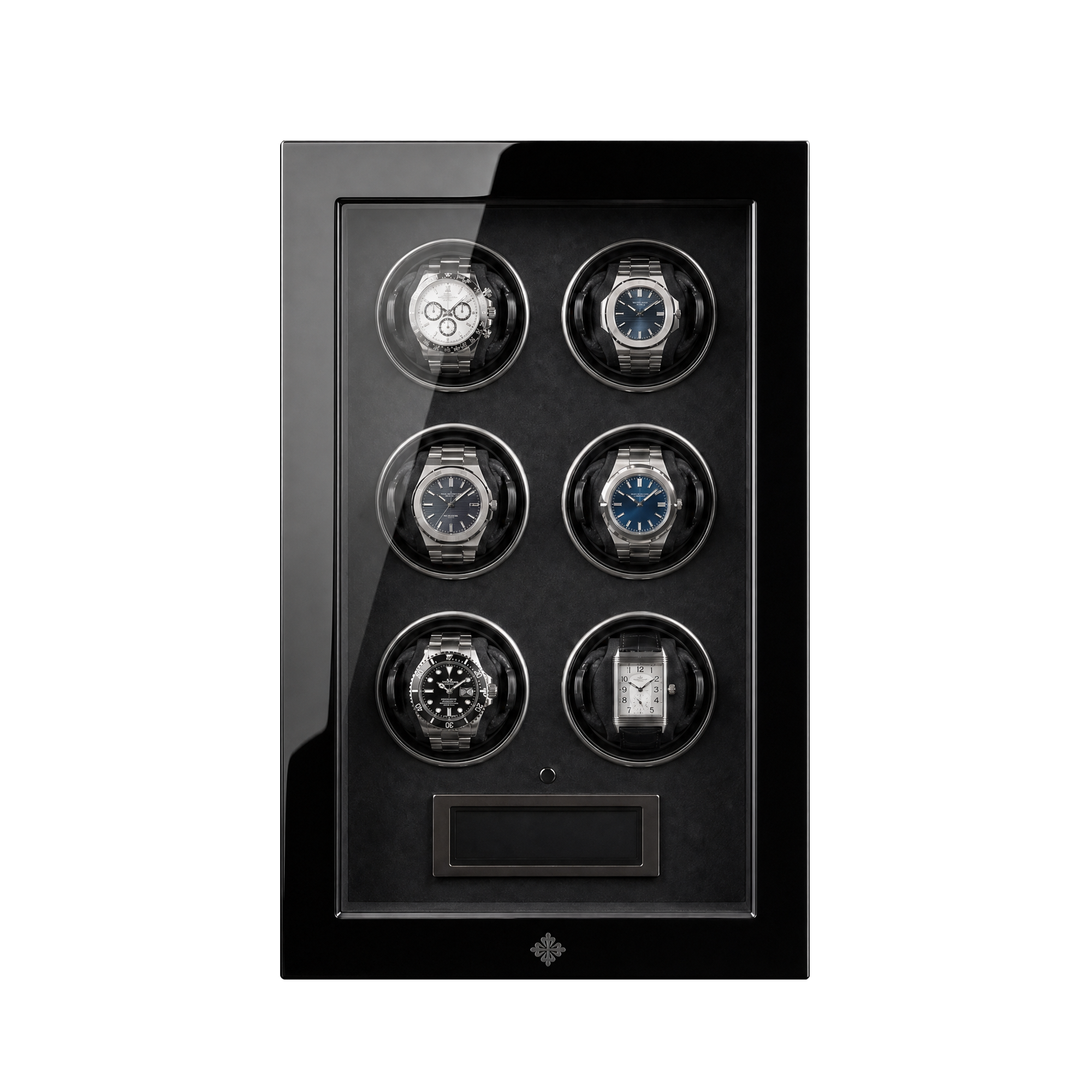
The safe pick — Impresario Series 6 Watch Winder
Supports up to 6 watches, each with independent TPD and direction settings. Bidirectional mode is standard. Set the Nautilus module to 700 TPD bidirectional with a 5-hour rest. Brushless motor. The right choice if you own 2–6 automatics including the Nautilus. Buy.
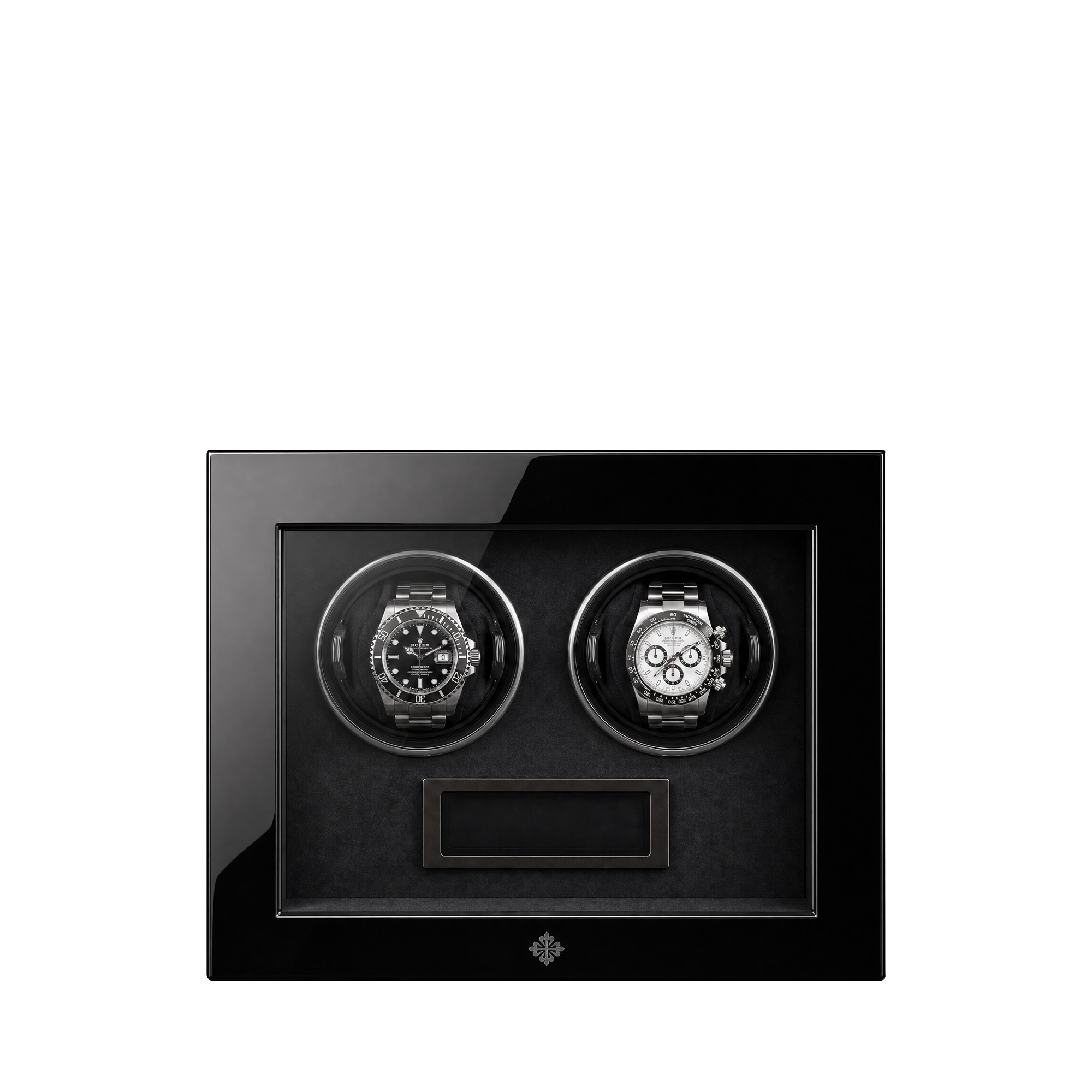
The single-watch focus — Impresario Series 2 Watch Winder
Two-slot unit, ideal if the Nautilus is one of two primary daily wears. Individual module programming means you are not locked into a shared TPD setting. Compact footprint for a nightstand or office shelf. Buy.
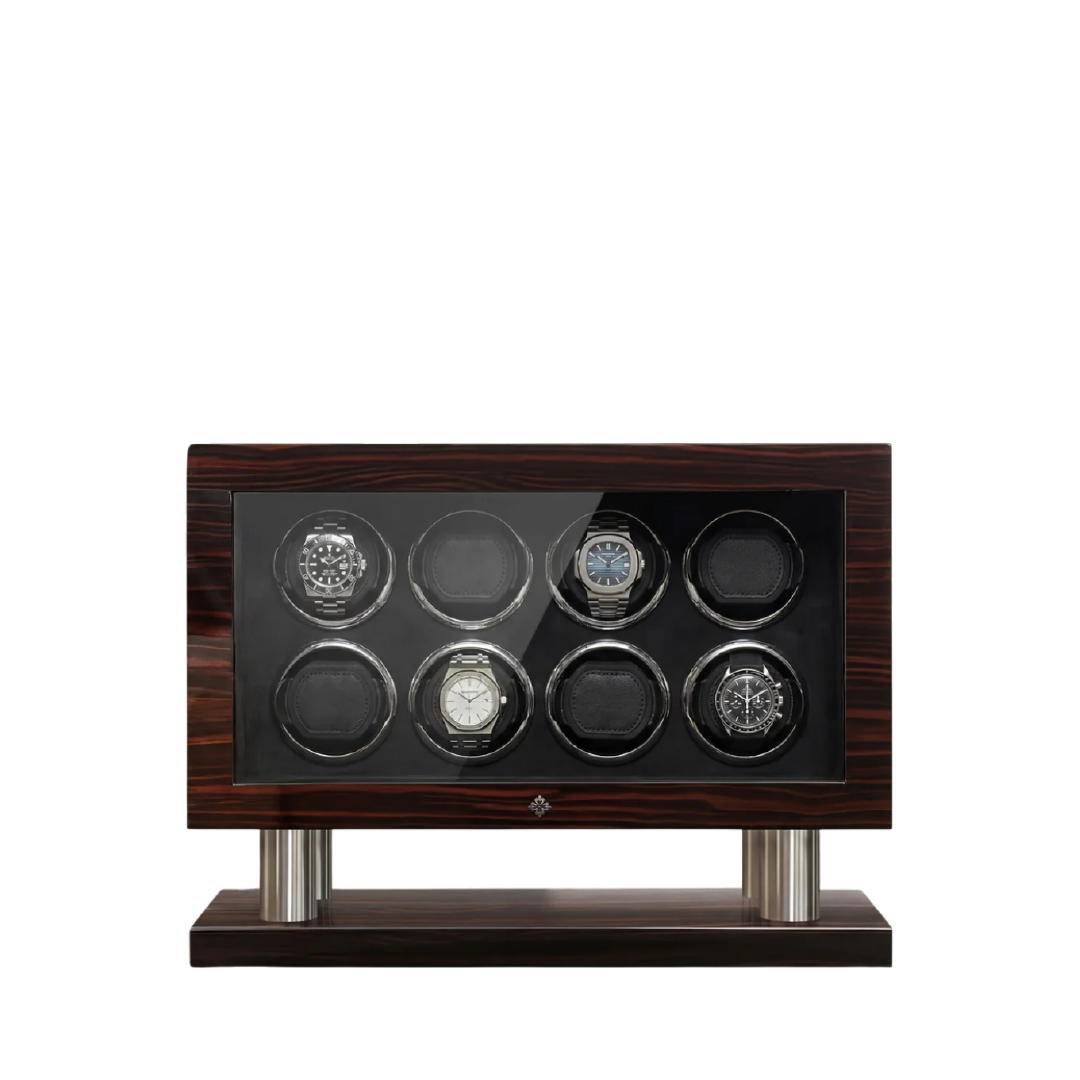
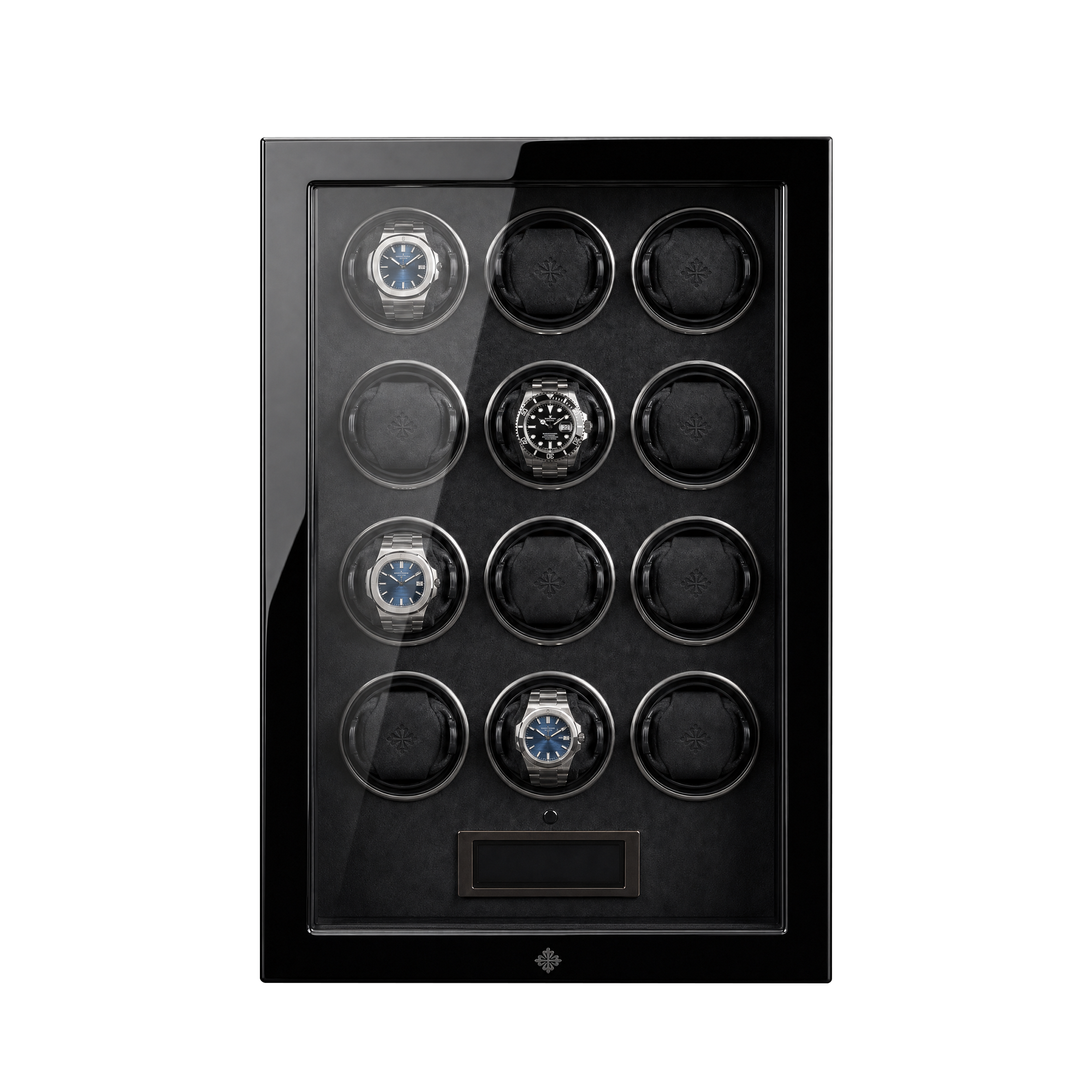
The collector’s cabinet — Virtuoso Series 6 Watch Winder
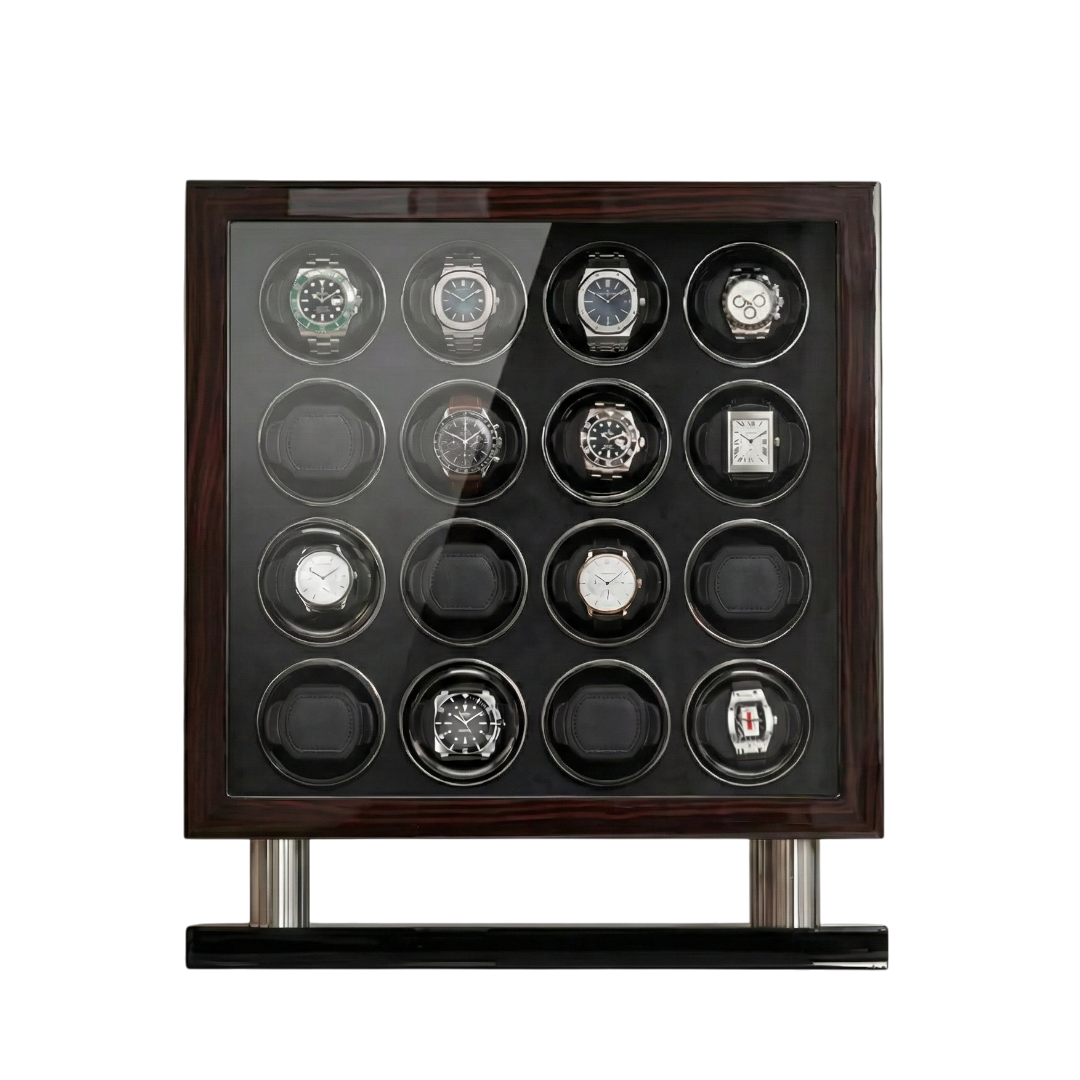
Built for display-forward collectors. Six individual winding modules, each independently programmable to 650–800 TPD bidirectional. The Nautilus sits in a dedicated slot without sharing a rotation cycle with a Rolex or IWC that needs different settings. Buy.
What to Avoid
- Fixed-TPD winders: Any winder that ships with a single preset rotation count (e.g., “1,000 TPD, not adjustable”) is the wrong tool for a Nautilus. You cannot optimize what you cannot configure.
- Clockwise-only or counterclockwise-only modes without bidirectional: The Nautilus movement winds bidirectionally. Half-winding it consistently produces uneven mainspring tension and poor timekeeping.
- Cheap cushions that contact the bracelet: The Nautilus integrated bracelet is part of the watch value. A winder pillow that rests on the bracelet links instead of the case body creates wear patterns that devalue the piece.
FAQ
What TPD does a Patek Philippe Nautilus need in a watch winder?
The Nautilus needs 650–800 TPD. Start at 650 and increase to 700 or 800 if the watch is not fully wound after 48 hours on the winder.
Does the Patek Philippe Nautilus wind clockwise or counterclockwise?
The Nautilus movement winds bidirectionally. Set your winder to bidirectional mode — not clockwise-only or counterclockwise-only.
Can I use the same winder for a Nautilus and a Rolex Submariner?
Yes, provided each slot has independent TPD settings. The Submariner runs best at 650–800 TPD bidirectional, which overlaps with the Nautilus. A multi-slot winder with per-module programming handles both without compromise.
Is it safe to run the Nautilus in a watch winder 24/7?
Not without a rest period. Build in a 4–6 hour rest per 24-hour cycle to avoid continuously compressing the mainspring. Most quality winders have a programmable sleep interval.
Will a watch winder damage the Patek Philippe Nautilus?
A correctly set winder — 650–800 TPD, bidirectional, with rest periods — will not damage the Nautilus. A winder running 1,500+ TPD with no rest is a different story. The risk is rotor bearing wear over years, not immediate damage.
How do I know if my winder setting is correct for the Nautilus?
After 48 hours on the winder at the chosen TPD, remove the watch and check the power reserve indicator (on models that display it) or simply wear it and note if it keeps running through the following night. If it stops before 35 hours off the winder, increase TPD by 50 and retest.
Does the Patek Philippe Nautilus 5726 Annual Calendar need different winder settings?
The 5726 uses the Caliber 324 S QA LU 24H/303 base, which shares the same winding architecture. Use the same 650–800 TPD bidirectional setting. The annual calendar complication does not change the winding requirement.
What happens if I set the TPD too high for a Nautilus?
Modern Patek Philippe movements include a slip-clutch that prevents overwinding. The practical consequence of running excessively high TPD long-term is rotor bearing fatigue, not a broken mainspring. Stay at or below 800 TPD.
One Last Thing
Patek Philippe recommends a full service on Nautilus movements every 3–5 years. A correctly configured winder — 700 TPD bidirectional, 5-hour rest daily — does not accelerate that service interval. A poorly configured winder running the watch at 1,200+ TPD continuously does. The settings above are based on the published movement specifications and the standard care guidelines Patek Philippe applies to its self-winding calibers as of 2026.
Related Guides
Protect Your Watch Collection
Designed for collectors who demand the best. Explore our premium watch winders and luxury safes.