
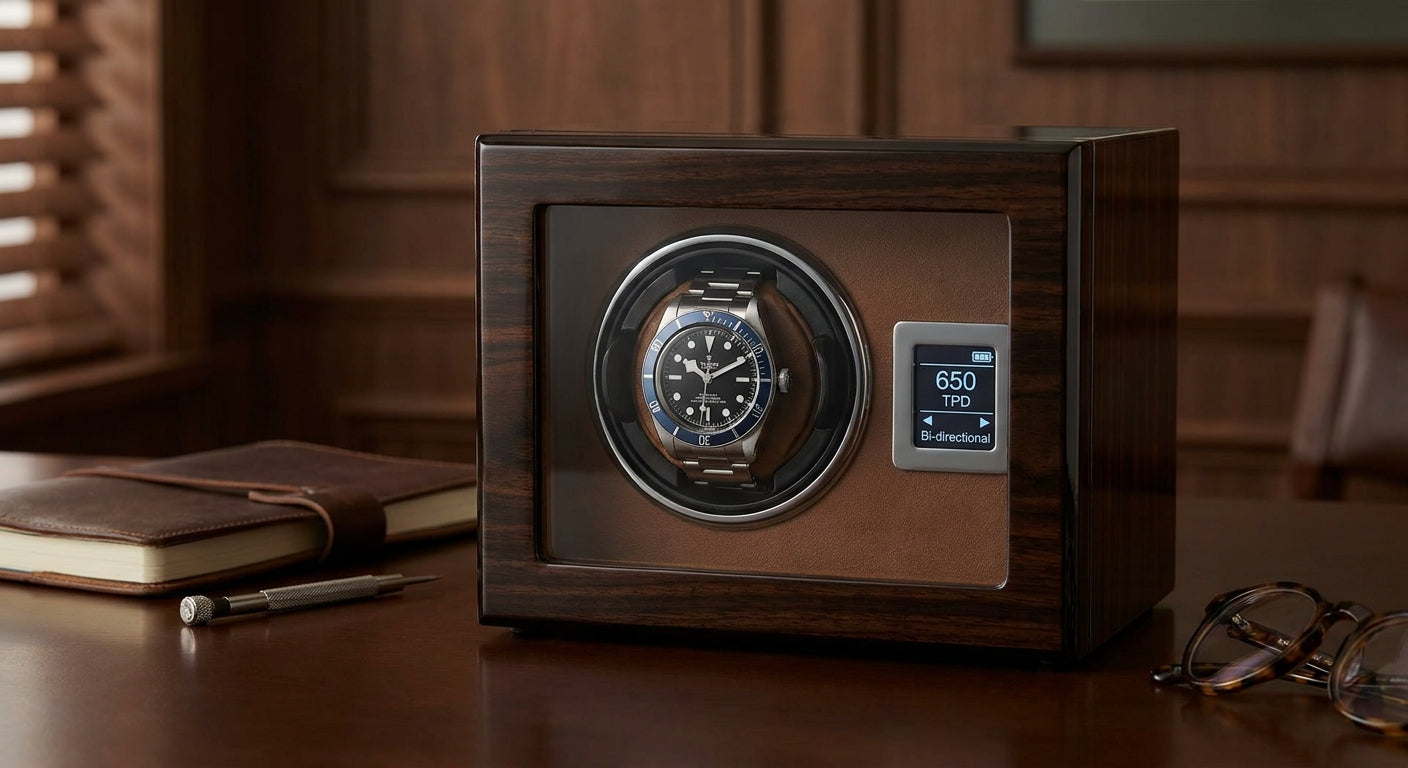
The Tudor Black Bay runs on a bidirectional automatic movement that demands specific winder settings — get them wrong and the watch either stops or, worse, over-winds the mainspring mechanism. This guide gives you the exact turns-per-day (TPD) range, the correct rotation direction, and the rest intervals to set in 2026.
TL;DR: Tudor Black Bay models need 650–800 TPD, bidirectional rotation, with 4–6 hour rest intervals per cycle. Any winder that lets you dial in those parameters will keep the Black Bay running accurately without stressing the movement. Enigwatch winders with programmable TPD and direction controls are built for exactly this use case. Set it once and leave it.
Why This Matters
The Tudor Black Bay family — including the BB58, BB41, BB Pro, and BB GMT — uses ETA-based or Tudor’s in-house MT5601 and MT5612 calibers. These movements have a power reserve of 70 hours (MT5601/MT5612) or around 38–42 hours (ETA 2824-based variants). A winder that spins 1,500 TPD bidirectionally on a watch that only needs 700 will not break the mainspring, but it will increase wear on the rotor and winding mechanism over years of daily use. In 2026, with Black Bay prices ranging from $3,500 to over $5,000 at retail, protecting the movement is not optional.
What You’ll Need
- A programmable watch winder with adjustable TPD (minimum range: 500–1,000)
- Direction control: bidirectional, clockwise, or counterclockwise selectable
- Programmable rest intervals (sleep cycles)
- A watch holder/cushion sized for a 41mm or 39mm case (Black Bay 58 lugs are wider than they look)
- Your Black Bay’s specific caliber number (printed on the caseback or in the manual)
The Steps
Step 1: Identify Your Caliber
Flip the watch over. The MT5601 and MT5612 are Tudor’s in-house movements and appear in the Black Bay 41, BB Pro, and BB GMT (two-timezone). The BB58 in its 39mm format uses either the MT5402 or, in current production, the MT5612. ETA 2824-2 variants were phased out after 2015 but appear in pre-owned examples.
Why it matters: the MT5612 and MT5601 have a 70-hour power reserve, so they tolerate slightly lower TPD settings than the older ETA variants. Getting this wrong means your watch stops before you pick it up on Monday morning.
Common mistake: Assuming every Black Bay uses the same caliber. The BB GMT dual-timezone model has the MT5652, which has identical winding requirements to the MT5612 — bidirectional, 650–800 TPD — so the settings below apply across the current lineup.
Step 2: Set Rotation Direction to Bidirectional
All current Tudor Black Bay calibers wind in both directions — the rotor engages the mainspring on clockwise and counterclockwise swings. Set your winder to bidirectional (CW+CCW). A unidirectional setting at the same TPD number will produce roughly half the effective winding because the rotor freewheels on one arc.
Expected outcome: the watch reaches full power reserve (70 hours on MT56xx) within the first 8–12 hours on a bidirectional winder starting from half-wound.
Common mistake: Leaving the winder on “clockwise only” because it was the factory default. Always verify the direction setting when you first program the unit.
Step 3: Set TPD to 650–800
650 TPD is the floor for reliable winding on the MT56xx calibers. 800 TPD is a comfortable ceiling that keeps the movement fully wound without unnecessary rotor activity. If your winder only offers fixed steps (e.g. 650, 750, 900, 1,000), choose 750. Avoid settings above 900 for everyday use — they provide no timekeeping benefit and add cumulative wear.
For ETA 2824-2 variants in pre-owned Black Bays: the same 650–800 TPD range applies. The ETA 2824-2 is one of the most tolerant movements in the industry and will accept settings up to 1,000 TPD without issue, but there is no upside to exceeding 800.
Common mistake: Maxing out the TPD because “more is better.” It is not. A fully wound mainspring cannot accept more energy; excess rotor spinning just generates heat and friction.
Step 4: Program Rest Intervals
Set your winder to run for 4–6 hours, then rest for 2–4 hours, then repeat. This mimics the natural activity pattern of a wrist and prevents the rotor from spinning continuously against a fully-charged mainspring.
Most programmable winders express this as a duty cycle (e.g. 4 on / 2 off, or 6 on / 4 off). Either works for the Black Bay. If your winder only offers “continuous” mode, drop the TPD to 500–600 to compensate — continuous low-TPD produces roughly the same effective winding as intermittent higher-TPD.
Expected outcome: the movement stays within 5–10 seconds per day of rated accuracy, which matches Tudor’s factory specification of +/- 4 seconds per day for COSC-adjacent in-house calibers.
Step 5: Size the Holder for Your Specific Black Bay
The Black Bay 41 has a 41mm case diameter but the lugs extend 47–48mm end-to-end. The BB58 is 39mm across but its lug-to-lug is 47mm, nearly identical to the larger model. A standard cushion sized for a 40mm watch will fit both — but verify the cushion grips the watch firmly without the bracelet links catching on the winder drum.
Enigwatch winders ship with adjustable inner cups that accommodate case diameters from 32mm to 52mm, so sizing is not a concern across the Black Bay range.
Common mistake: Using a pillow that lets the watch slide or rattle inside the drum. Even minor lateral movement changes the effective TPD delivered to the movement.
Step 6: Verify and Confirm After 48 Hours
After 48 hours on the winder, pick up the Black Bay and check: is the seconds hand sweeping at the correct rate? Does the date change at midnight (or close to it)? Set the time, leave it running for 24 hours unworn, and compare against a phone clock. If the watch is running more than 8 seconds fast or slow per day, first rule out the movement needing a service — a winder cannot fix a movement that needs cleaning.
Expected outcome in 2026: a healthy Black Bay MT5612 on correct settings will run within +4/-2 seconds per day, consistent with Tudor’s stated spec.
Troubleshooting
Watch stops overnight despite being on the winder.
Direction is likely set to unidirectional. Confirm bidirectional is active. If the winder is correct, the power reserve may be depleted from a mis-programmed rest interval that is too long — reduce rest time to 2 hours max.
Watch gains more than 10 seconds per day on the winder.
This is a movement issue, not a winder issue. The Black Bay needs a service if it consistently gains above +8 seconds per day under optimal conditions. A winder cannot cause a watch to gain time.
The winder drum vibrates noticeably.
The watch is either too light for the drum’s counterweight balance or the holder cushion is worn. Replace the inner cup or add a sizing insert. Enigwatch stocks a watch winder replacement inner cup if the original has softened.
Winder runs but the watch is always under-wound.
Check that the adapter power supply is delivering the rated voltage. An undersized transformer causes the motor to run slower than its programmed TPD. Enigwatch sells a watch winder power supply transformer as a direct replacement if the original unit is suspect.
The watch bracelet snags on the drum during rotation.
Either the bracelet is too loose (tighten by one link) or the drum diameter is too small for the Black Bay’s wide bracelet. Move the watch to a larger-diameter drum slot if your winder has multiple sizes.
Winder runs continuously and the watch feels warm.
A warm caseback is normal — rotor friction generates a small amount of heat. If the case is hot to the touch, the motor itself may be failing. Continuous heat above ambient room temperature is not normal and the motor should be replaced.
Tools and Resources
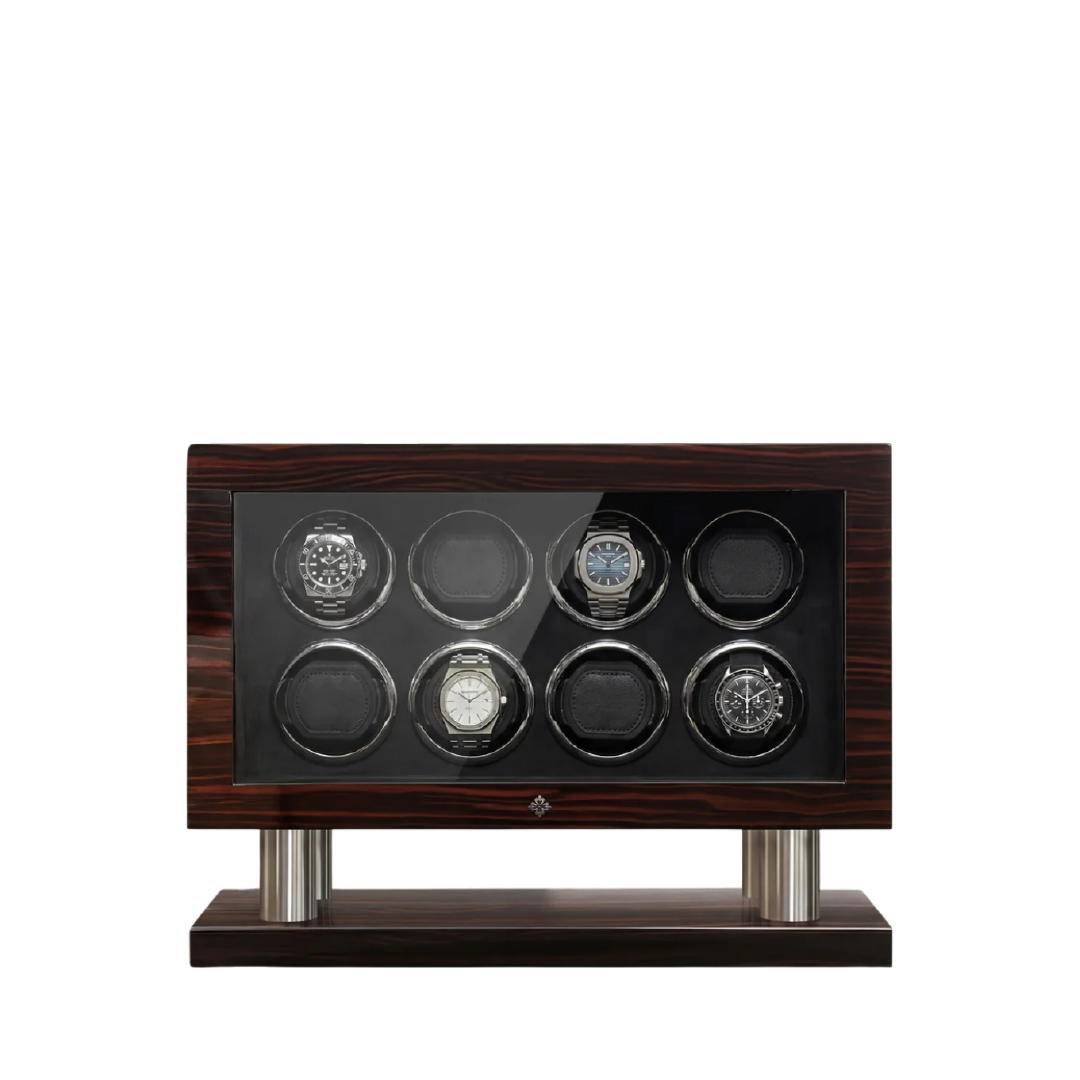
- Impresario Series 6 Watch Winder — programmable TPD, bidirectional, fits the full Black Bay range, 6-slot capacity
- Tudor Black Bay user manual (included with new purchase; caliber number on page 1)
- A regulated timepiece or GPS clock for the 48-hour accuracy check
- Microfiber cloth for caseback inspection
What to Do Next
If you own multiple automatic watches beyond the Black Bay, the winding requirements diverge significantly by brand. The watch winder settings for Grand Seiko Spring Drive guide covers one of the most different movement architectures in the market — the Spring Drive requires clockwise-only rotation and stricter TPD ceilings than Tudor.
FAQ
What TPD setting should I use for a Tudor Black Bay?
650–800 TPD bidirectional is correct for all current Black Bay calibers (MT5601, MT5612, MT5652). 750 TPD is the single best setting if your winder offers that step.
Is clockwise or counterclockwise better for the Tudor Black Bay?
Neither — bidirectional is the correct setting. All current Tudor MT-series calibers engage the mainspring on both rotation arcs, so unidirectional settings cut effective winding roughly in half.
Can a watch winder over-wind a Tudor Black Bay?
No. Modern automatic movements including the MT56xx series have a slip clutch that disengages when the mainspring is fully wound. Excessive TPD wastes motor cycles but does not damage the mainspring. The real downside is increased rotor wear over years of unnecessary spinning.
How long does a Tudor Black Bay last on a winder without running?
The MT5601 and MT5612 have a 70-hour power reserve. On correct winder settings, the movement never runs down — it stays continuously wound. If you remove the watch for 72 hours without the winder, it will stop and need a manual or wrist-wind restart.
Do I need a special winder for the Tudor Black Bay GMT?
No. The BB GMT uses the MT5652, which has the same TPD and direction requirements as the MT5612. Any winder set to 650–800 TPD bidirectional will handle it correctly.
What happens if I use the wrong winder settings for years?
Continuously running above 1,200 TPD bidirectional adds measurable wear to the rotor bearing and winding mechanism. Tudor service intervals are 5–7 years; aggressive over-winding may accelerate that to 4 years on a heavily worn example.
How do I know if my winder’s TPD setting is accurate?
Count the number of full rotations per minute and multiply by 1,440. A winder set to 750 TPD should complete approximately 0.52 full rotations per minute. Many winders display actual RPM on a digital readout; cross-check against the TPD formula if accuracy matters.
What winder size should I buy if I own more than one Black Bay?
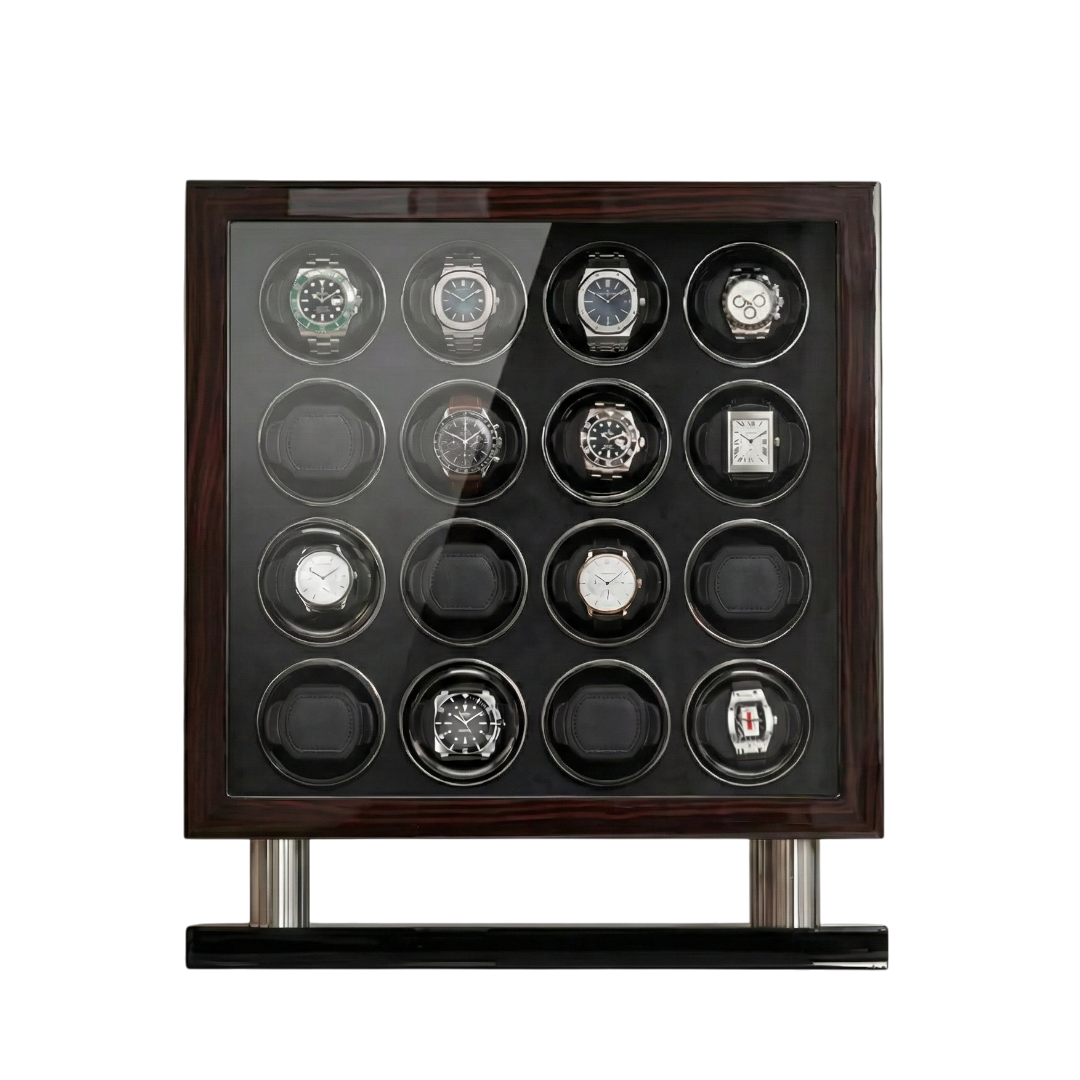
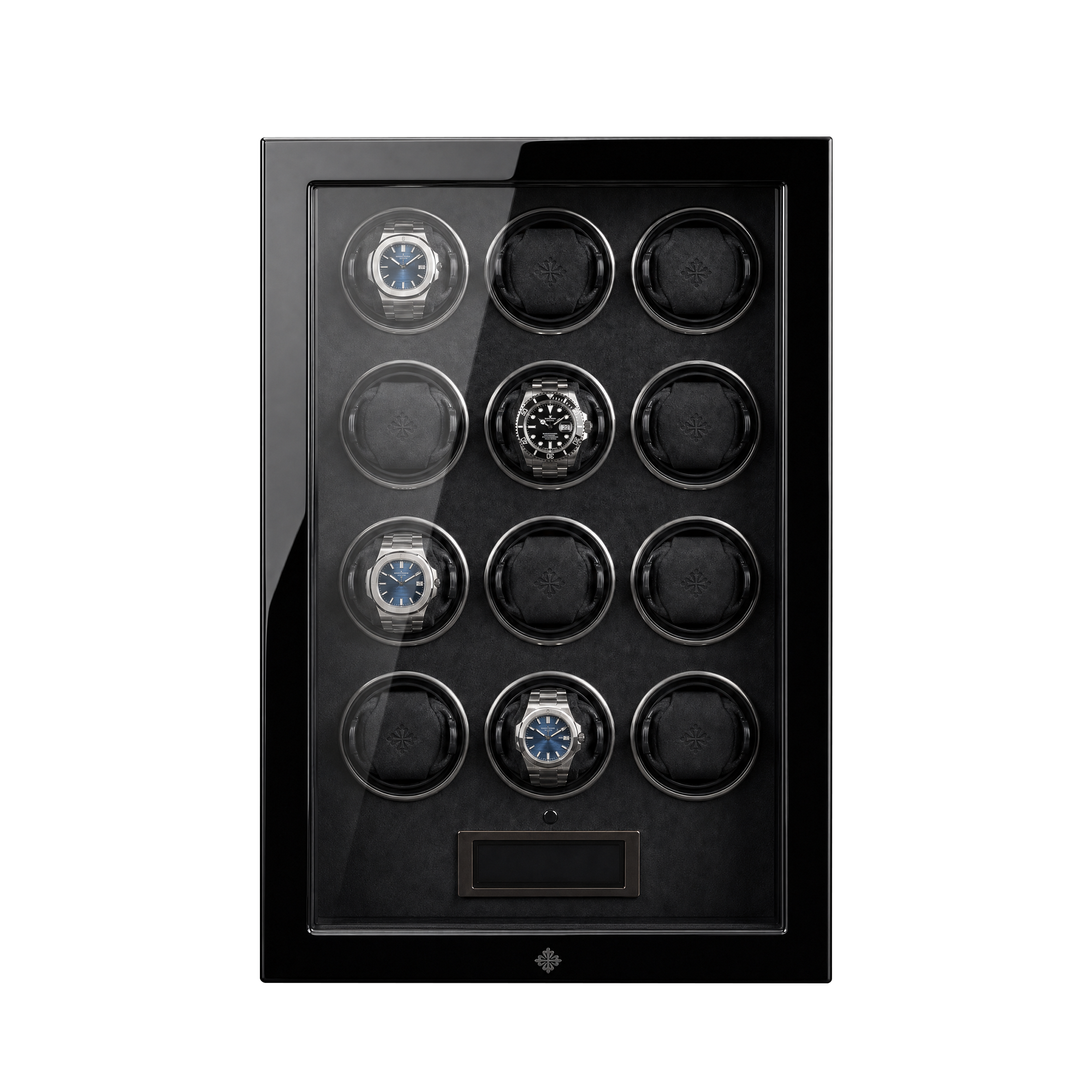
A 6-slot unit handles a typical 2–4 watch collector with room to grow. If your collection exceeds 6 watches across brands, a 12-slot unit gives you the flexibility to set each slot independently — important when mixing Tudor, Rolex, and other brands with different TPD requirements.
One Last Thing
The Tudor Black Bay BB58 in its bronze variant uses the same MT5612 caliber but the bronze case expands slightly with temperature changes over time. If you store the bronze BB58 in an enclosed winder safe in a room that fluctuates more than 20°F seasonally, the crown seal can develop micro-gaps. Keep the crown fully pushed in and screwed down before placing any Black Bay on a winder — Tudor rates the current Black Bay line to 200 meters water resistance, but that rating assumes a properly sealed crown.
Related Guides
Protect Your Watch Collection
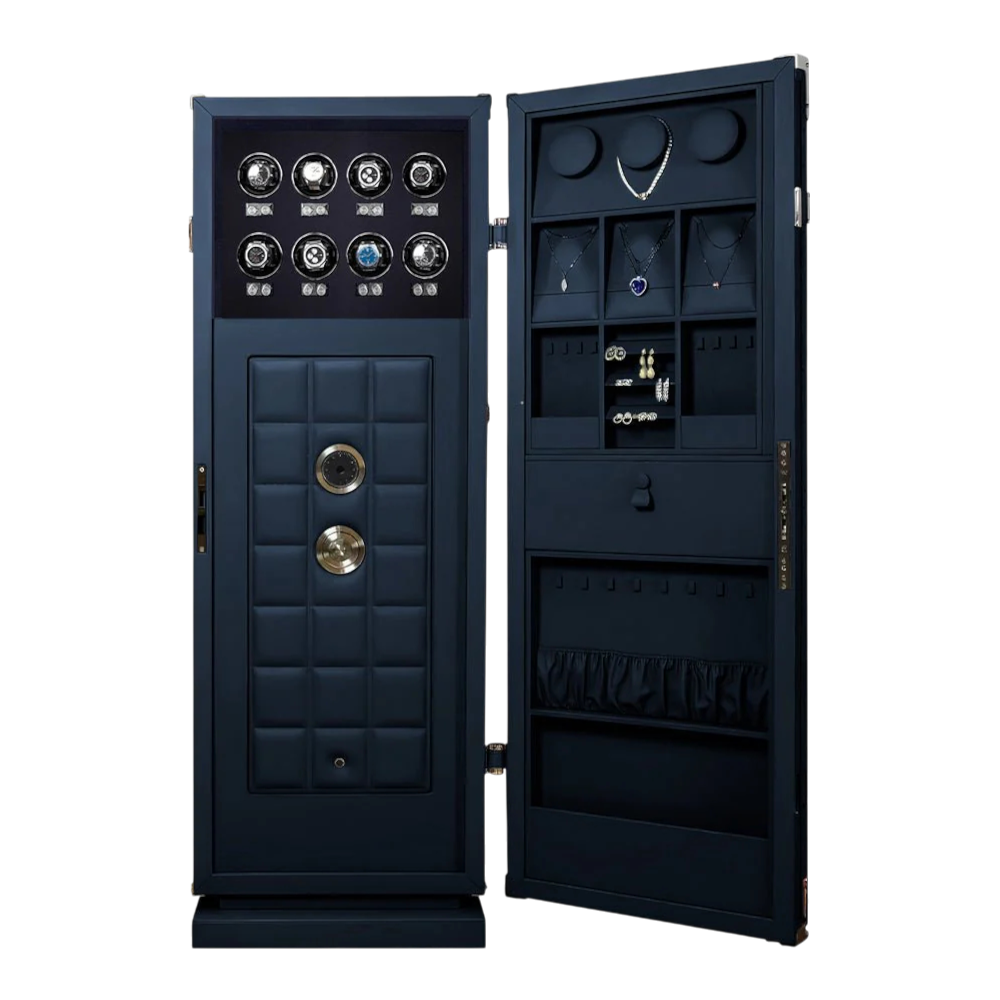
Designed for collectors who demand the best. Explore our premium watch winders and luxury safes.