
Your Patek deserves better than a drawer
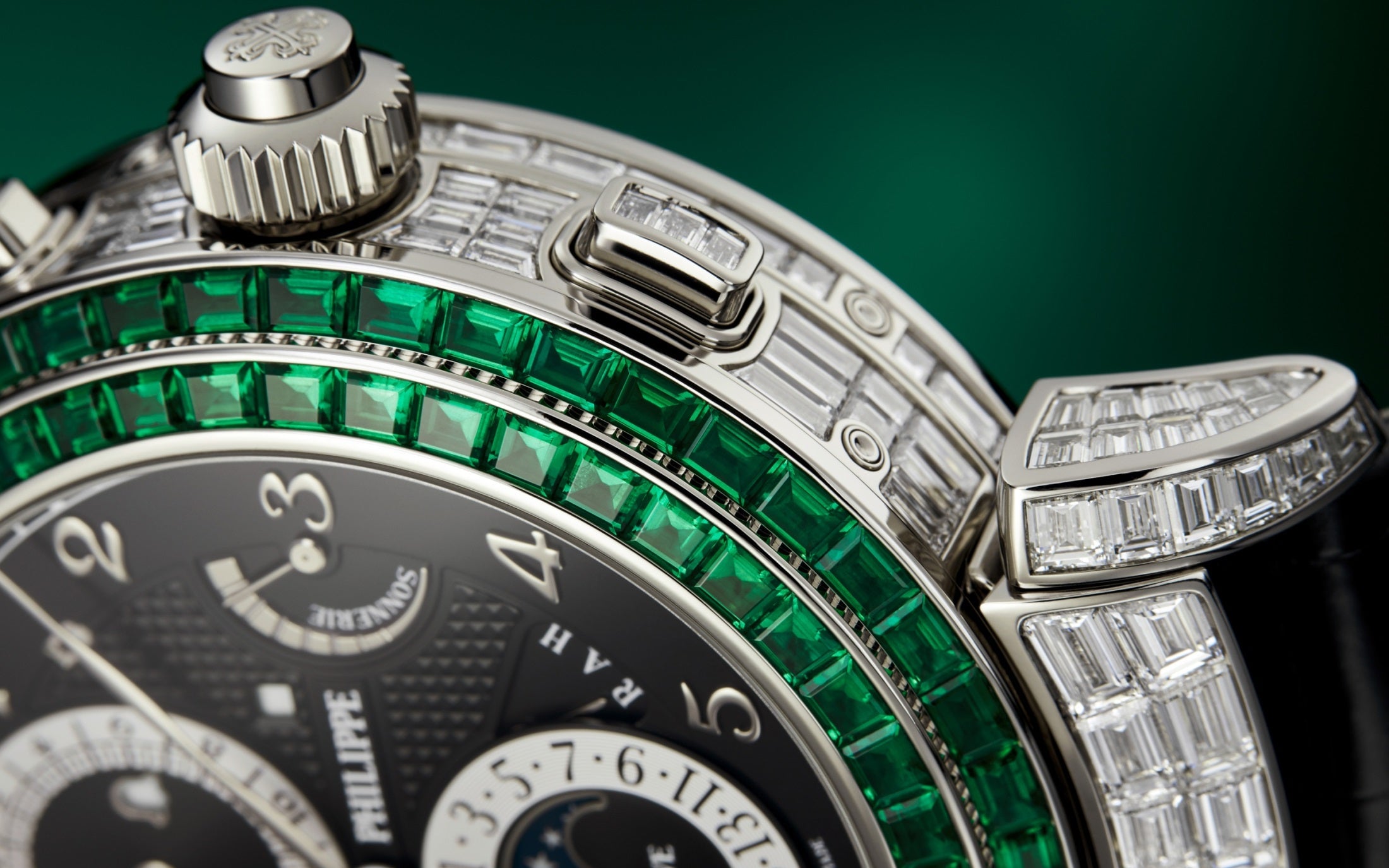 Most serious collectors I know started in the same place. A watch box on the dresser. A safe deposit box at the bank for the big pieces. And a quiet, low-grade worry every time they left the house.
That’s where the conversation usually starts. Not with wanting a luxury watch safe. With realizing the watches have outgrown everything they’re currently sitting in.
This guide is for collectors at that point. The pieces you own are real. The collection has a number attached to it now. And the storage isn’t keeping up.
We’ll cover what a luxury watch safe actually is, how it’s rated, and where the real differences sit. We’ll also cover when a safe isn’t enough and you need a proper watch vault. I’m going to be direct about what matters and what’s marketing.
What counts as a luxury watch safe
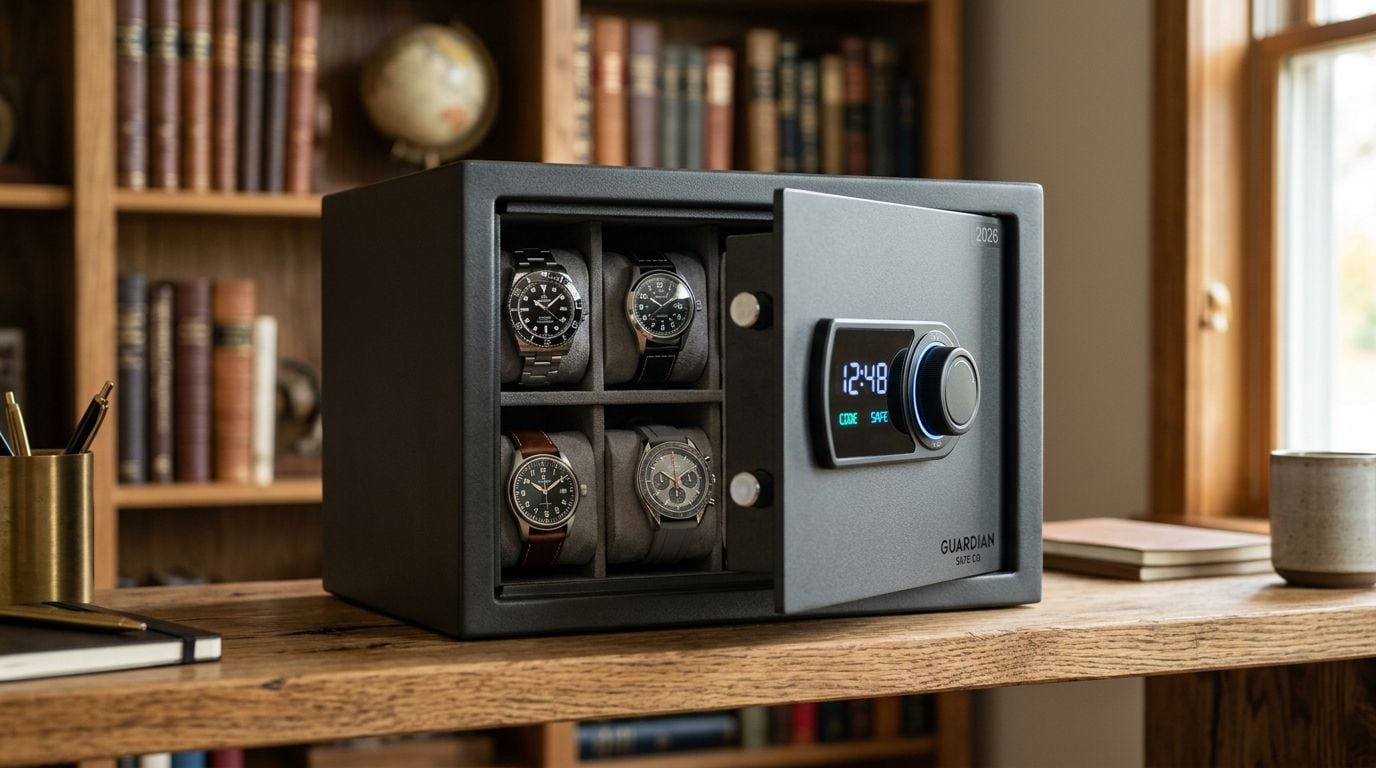
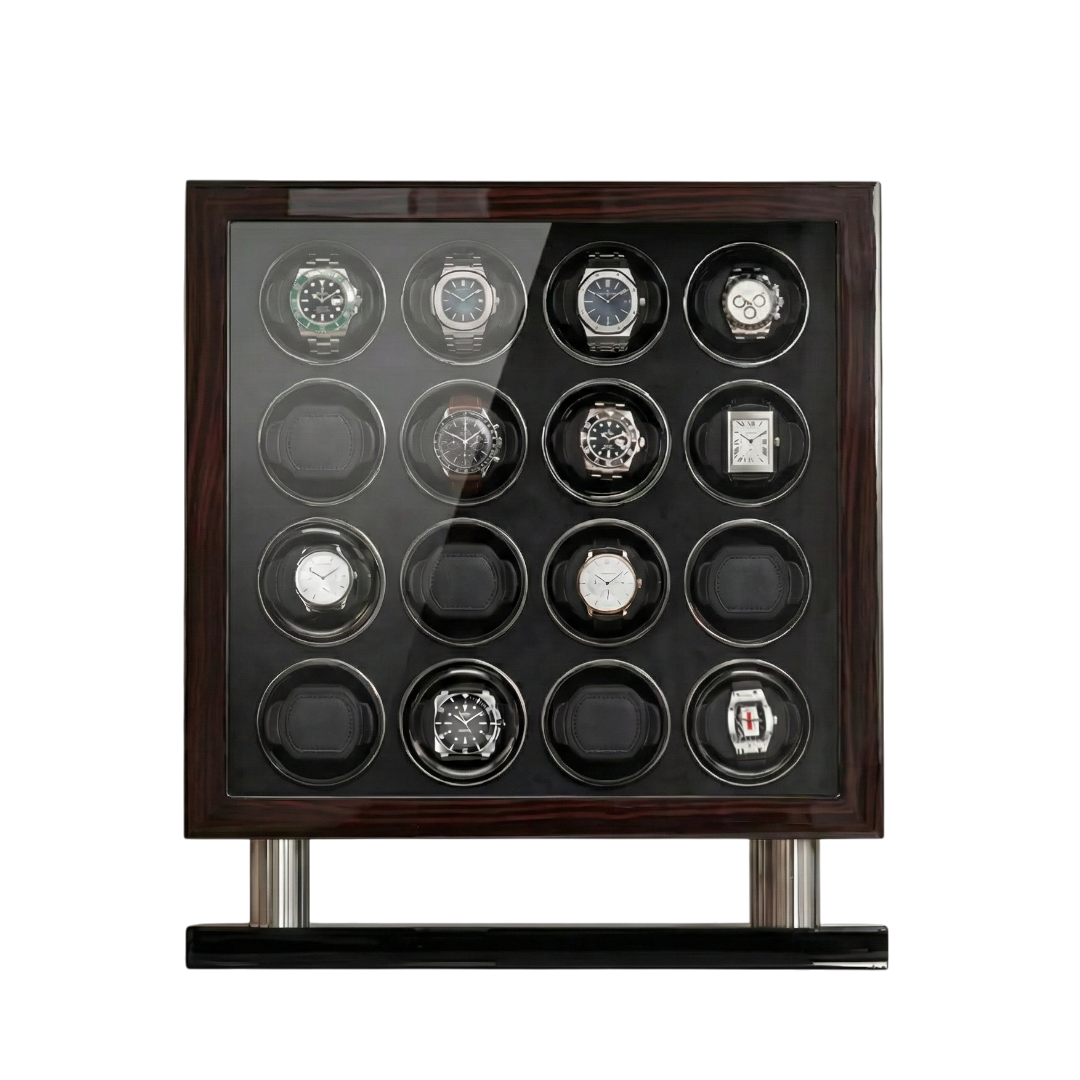
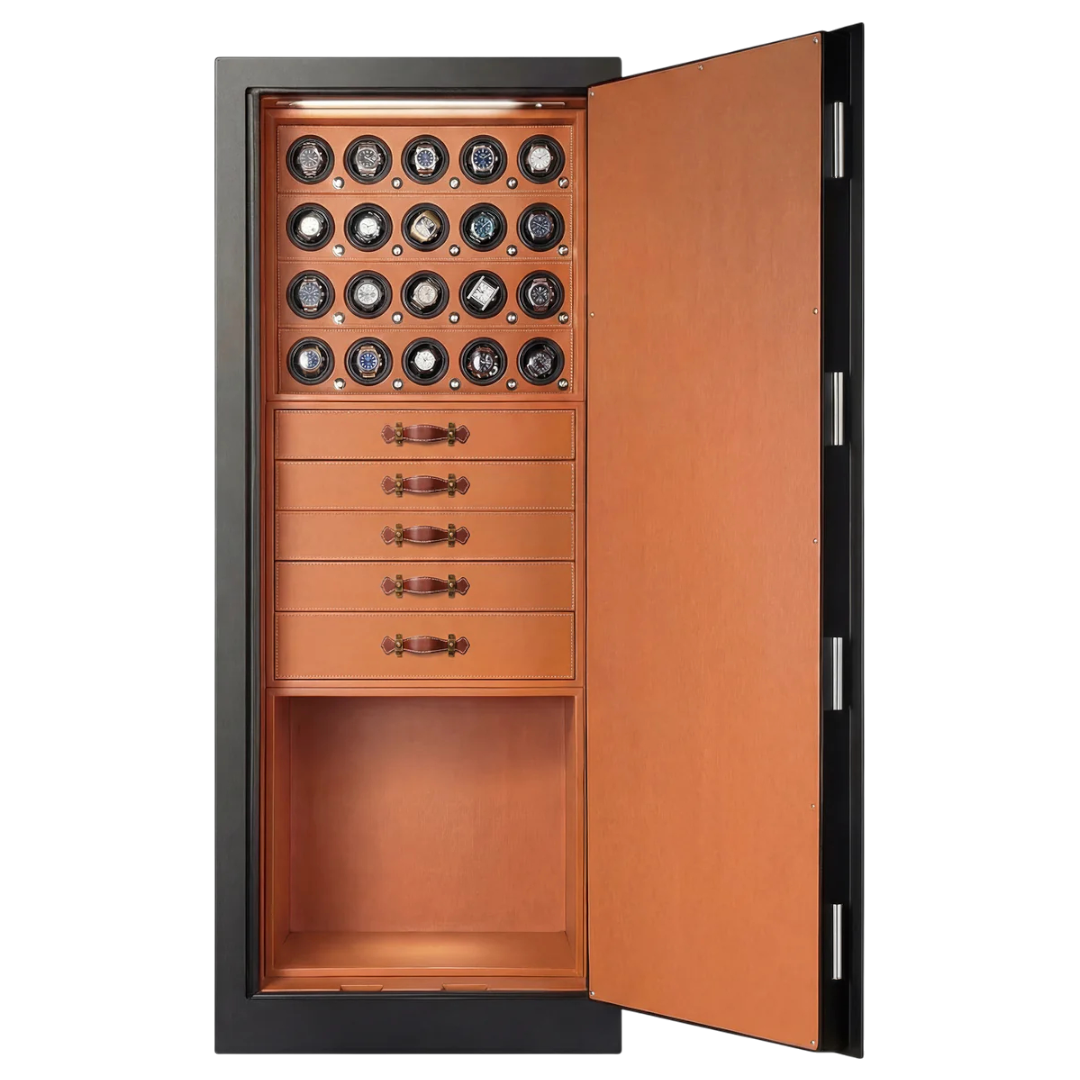
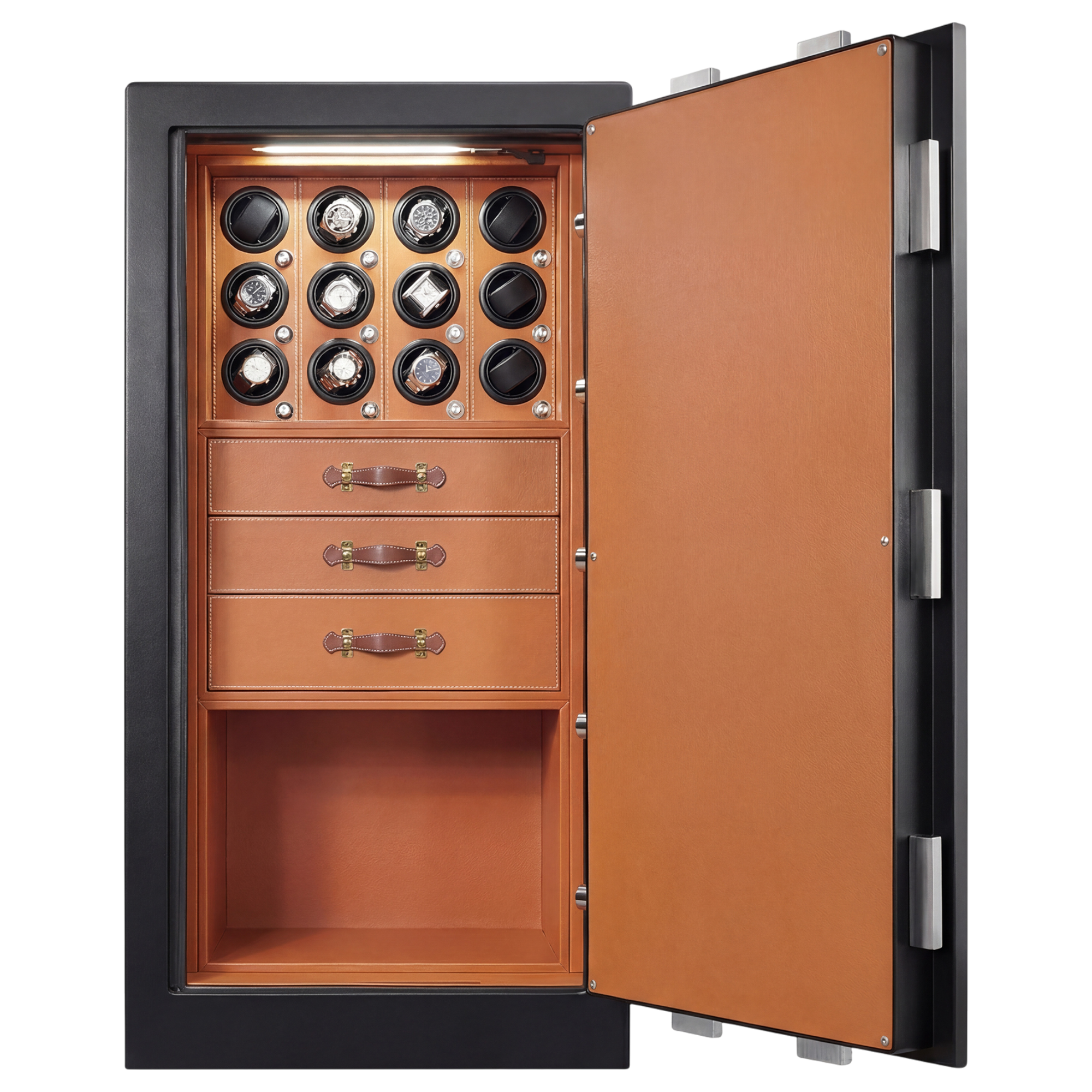
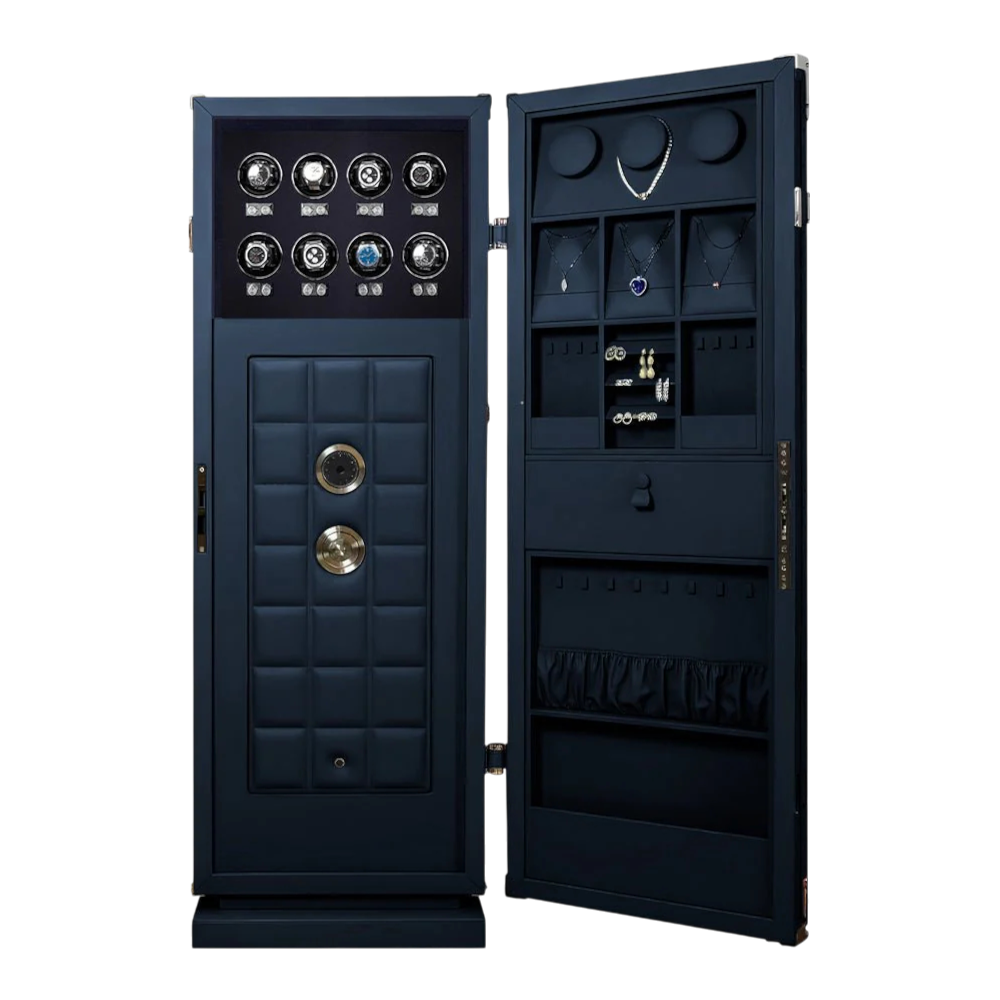
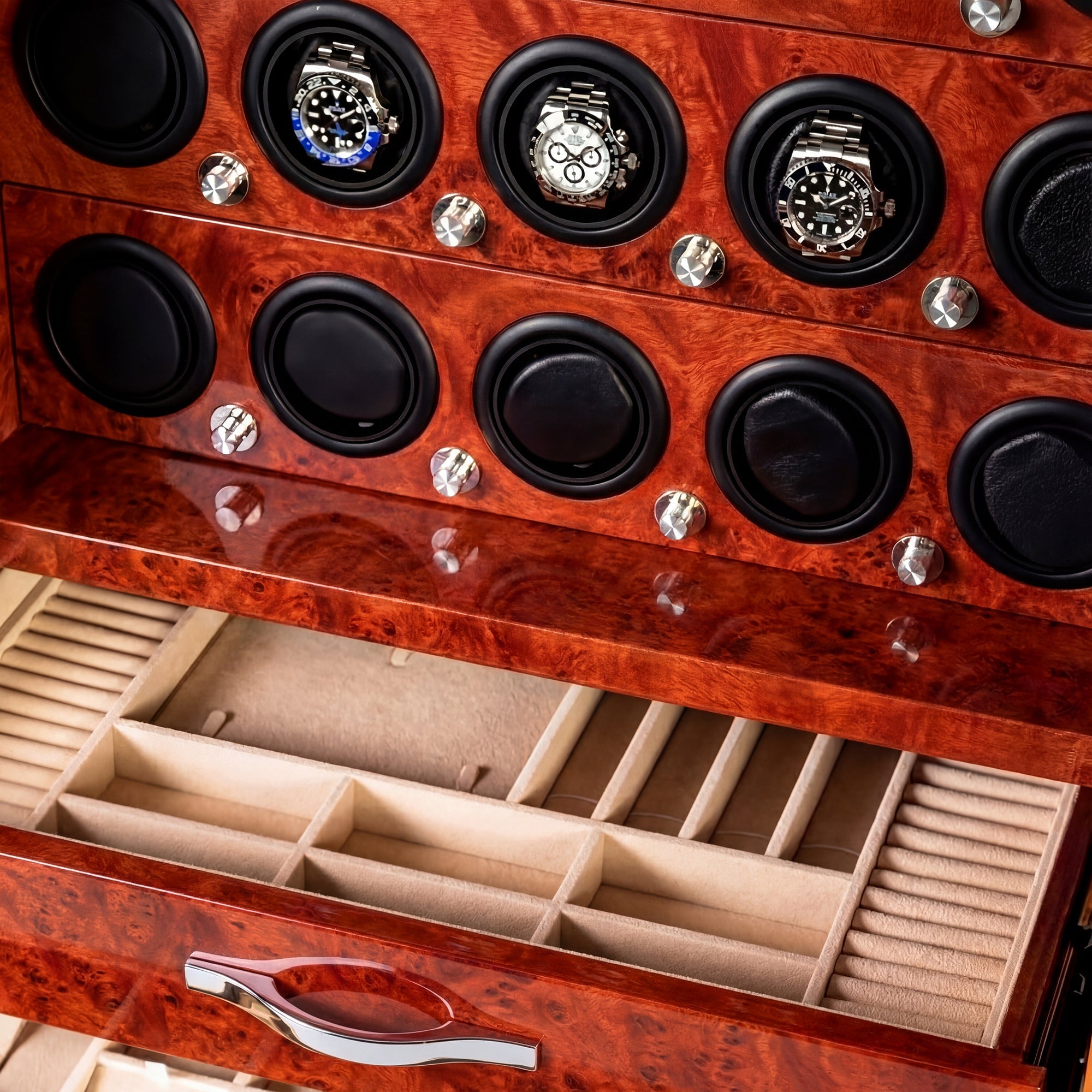 A luxury watch safe is built to protect a real collection against real threats. Fire. Theft. Magnetism. Humidity. Power loss. It’s architecturally considered, not mass-produced. And it’s designed to display the collection, not just hide it.
There’s a gap between a watch box and a luxury watch safe that most people underestimate. A watch box keeps your pieces organized. A safe keeps them in the house you left them in.
Here’s the practical spec difference:
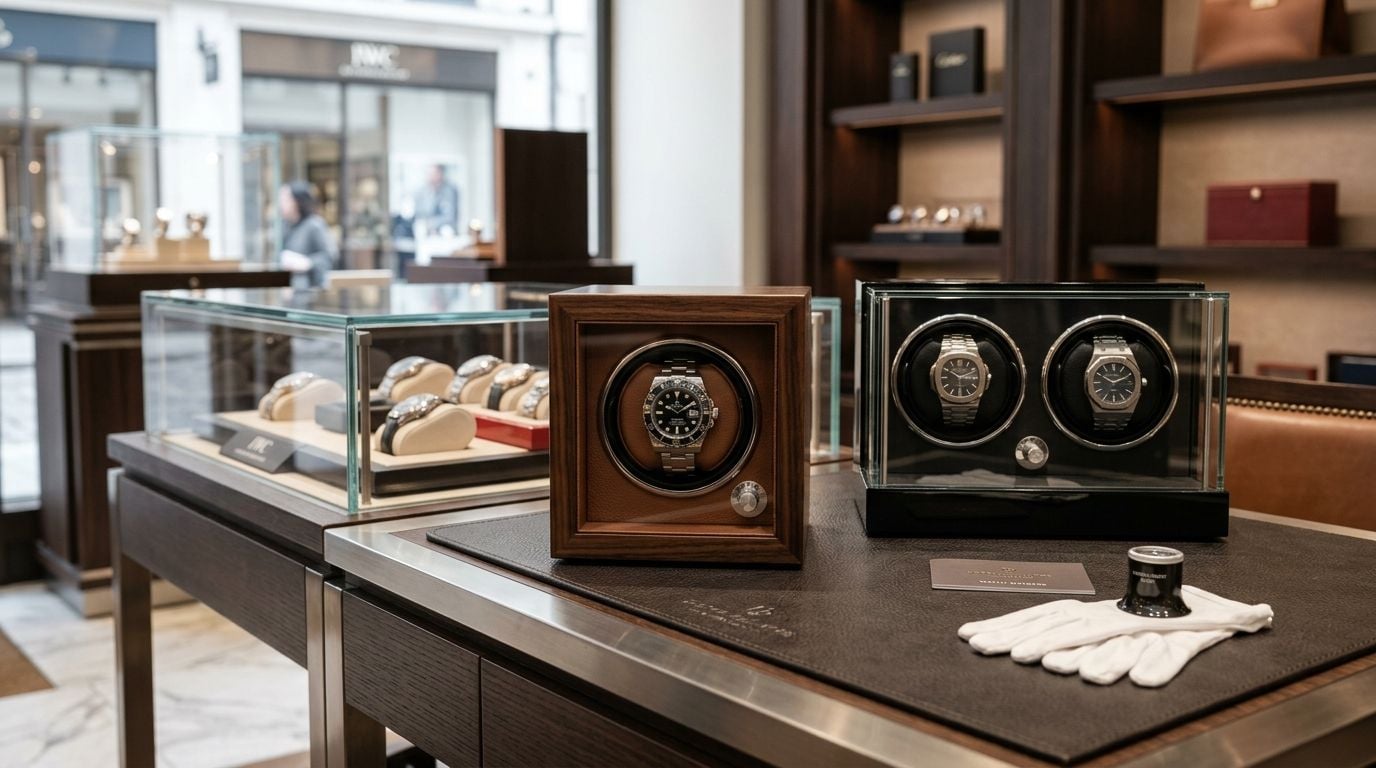
Entry watch box: $100-$500. Leather, glass lid, no fire rating, no security rating, no winding. Fine for daily rotation of pieces you wear.
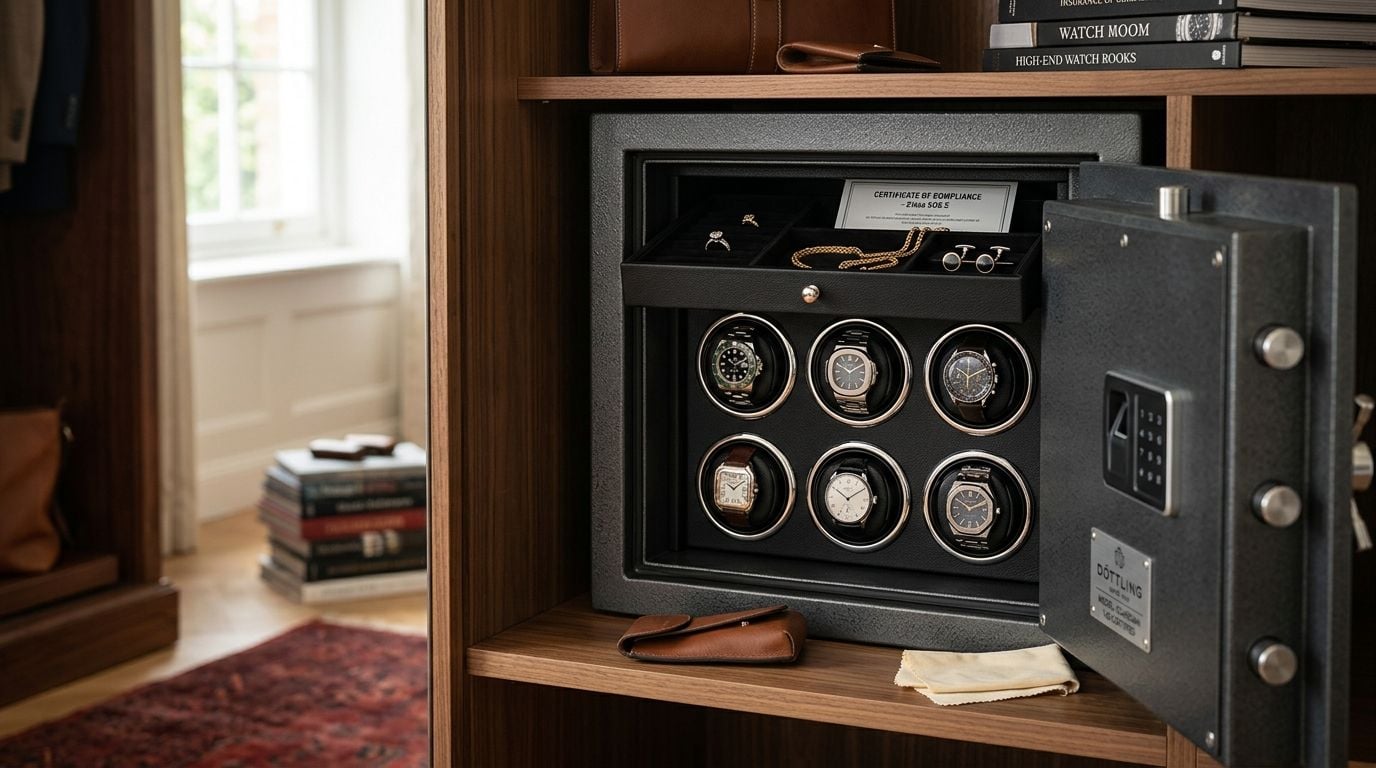
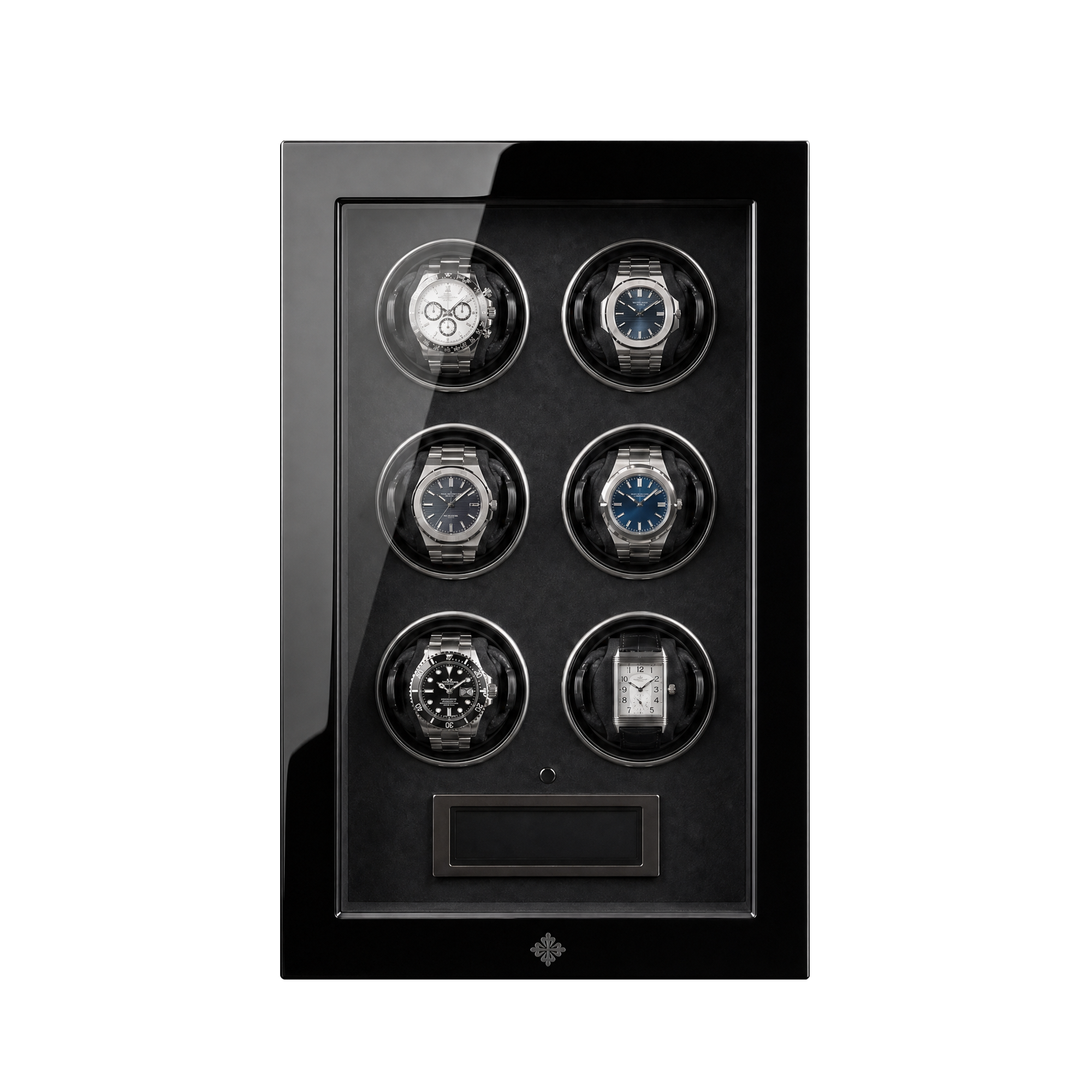
Luxury watch safe: $3,000-$15,000. Fire-rated, burglary-rated, integrated winders, biometric or dual-authentication locking, proper materials (Macassar ebony, piano lacquer, Italian leather interiors). Built for collections in the $50K-$300K range.
Custom watch vault: $15,000-$50,000+. Architect-designed, built into cabinetry or a safe room, 30-100+ watch capacity, UL-rated fire and burglary certifications, biometric layers, programmable TPD per rotor. Built for collections at $300K and up, or collections that include insured pieces with storage requirements.
If you’re shopping luxury watch safes, you’re in the second or third category. Not the first.
The four threats every serious collector plans for

Fire
Fire is the threat collectors consistently underestimate. A house fire hits 1,000°C within minutes. Most residential safes aren’t rated for that. They’re rated for paper, which burns at 232°C. Watches are metal and crystal. They’ll survive hotter, but the movements, gaskets, and leather straps won’t.
Proper luxury watch safes hold internal temperatures under 177°C for 60 minutes at 1,000°C external heat. That’s the UL 72 Class 350 standard, scaled for collections. Our Centennial bulletproof watch safe box is built to that spec.
Burglary
Burglary ratings go by UL classifications: RSC, B-rate, C-rate, TL-15, TL-30. The numbers refer to minutes. A TL-30 safe resists 30 minutes of attack with power tools. Most luxury collections sit between B-rate and TL-15. If your collection is insured for $500K+, your carrier may require TL-30 or higher.
Magnetism
This one gets missed. Phones, speakers, wireless chargers, and even some cookware emit magnetic fields strong enough to magnetize a mechanical movement. A magnetized watch runs fast. Sometimes by minutes per day. Proper watch safes include magnetic shielding (soft iron or mu-metal layers) and keep electronic winders isolated from the watch compartments.
Humidity and UV
Leather straps cure. Dials fade. Rubber gaskets dry. A stable environment matters, especially for pieces you don’t wear often. Good safes run humidity control between 40-55% RH and block UV. The ebony veneer and Alcantara interiors we use are chosen partly for that reason.
Fire-rated watch safes: what the numbers actually mean
This is where marketing copy and real specifications diverge fastest. “Fireproof” is a meaningless word. What matters is the rating.
Here’s a quick reference:
| Rating | Test Conditions | Internal Max | Duration |
|---|---|---|---|
| UL 72 Class 350 | 1,000°C external | 177°C | 60-120 min |
| UL 72 Class 150 | 1,000°C external | 66°C | 30-60 min |
| ETL Verified 1 Hour | 842°C external | 177°C | 60 min |
| “Fire-resistant” (no spec) | Unverified | Unknown | Unknown |
If a safe lists “fireproof” with no certification body, no test standard, and no internal temperature spec, it’s decoration. A real fire rating will always cite UL, ETL, Intertek, or a country-specific equivalent.
Our fireproof watch safes are built and tested to UL 72 Class 350 specifications. 60 minutes at 1,000°C. That’s the minimum for serious collections.
Biometric security and what it actually adds

What biometrics do well: 1. Fast daily access for you 2. Prevent key or combination sharing with cleaners, contractors, guests
What biometrics don’t do: Stop a determined thief. The lock isn’t the security layer. The safe body is. A burglar isn’t picking your fingerprint scanner. He’s attacking the door seam with a pry bar or a cutting tool. That’s why the burglary rating (TL-15, TL-30) matters more than the lock type.
The best luxury watch safes combine biometric access with mechanical or electronic backup, plus a time delay or dual-authentication mode. The Veron 20 watch safe box and the Titan Sanctum 20 both use that stacked architecture. Biometric for speed. Mechanical backup for redundancy. Dual-authentication for high-security mode when you travel.
When a safe isn’t enough: the case for a watch vault
A safe holds your collection. A vault displays it.
The shift from safe to vault usually happens around the 20-watch mark, or when a collector starts wanting to see the collection every morning instead of just locking it away.
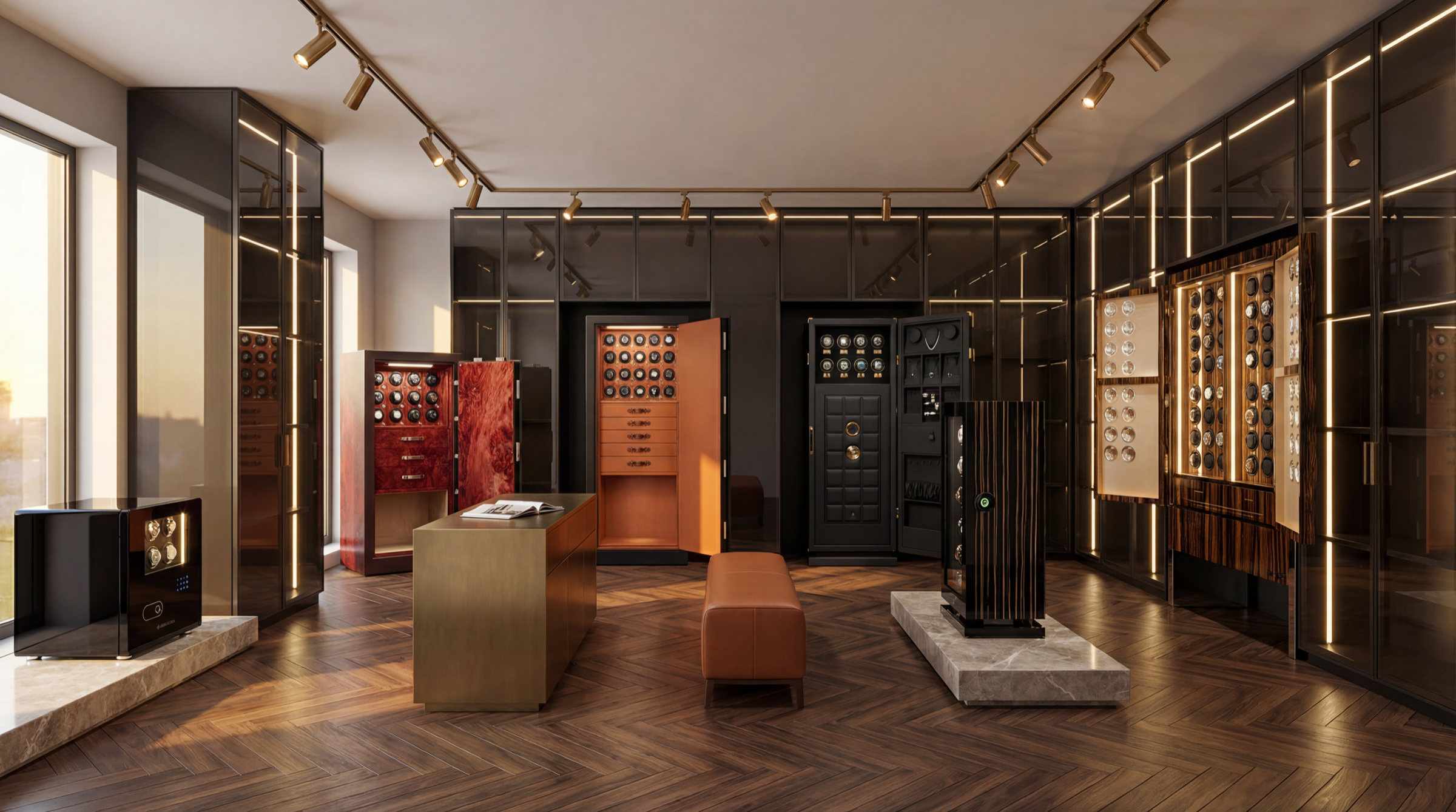
A proper custom watch vault is integrated into cabinetry, a closet, a dressing room, or a dedicated safe room. It’s sized to the collection and the space. The best ones feel like architecture, not furniture.
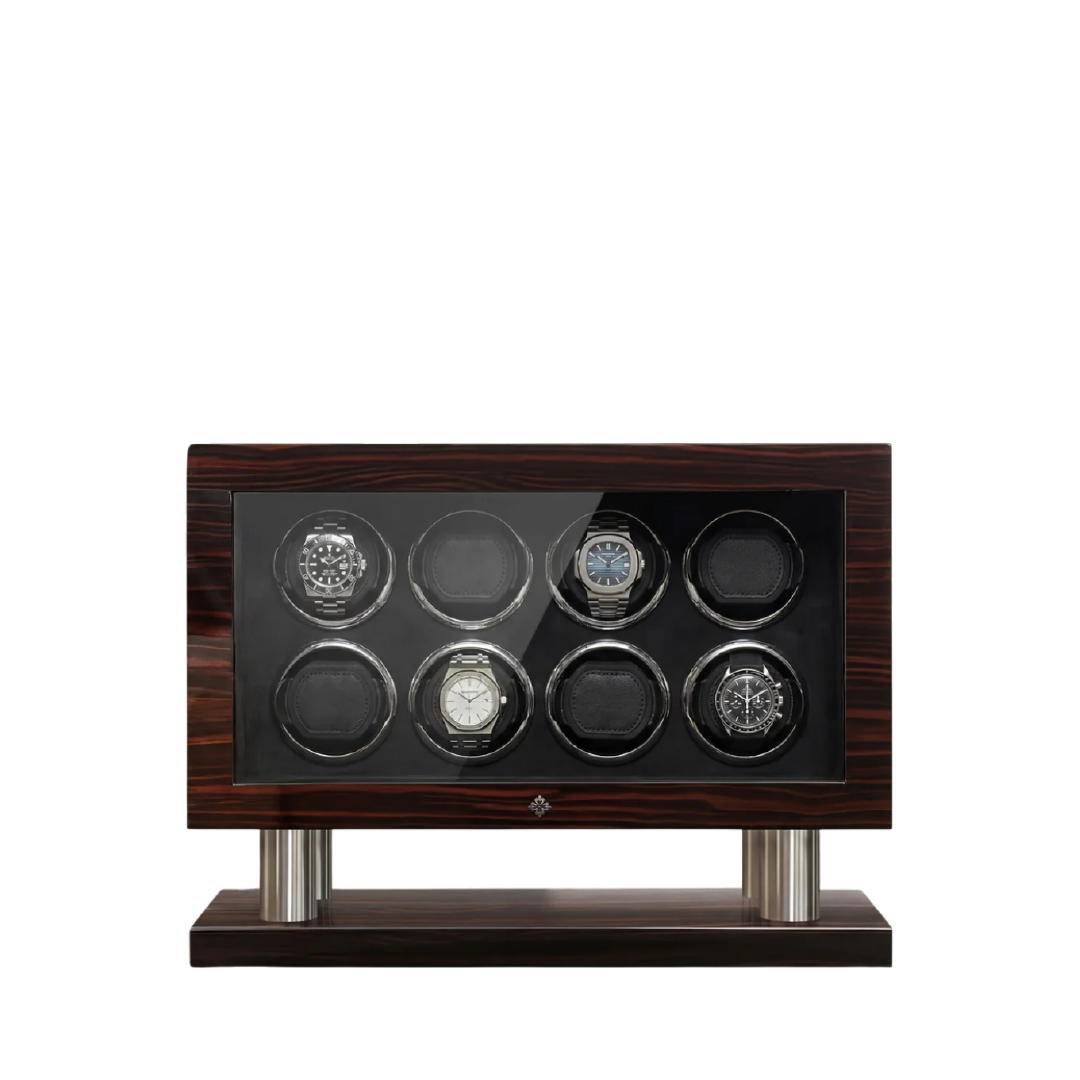
Here’s where the math changes. A 6-watch winder with a small safe compartment handles a collection up to maybe $150K. A 24-rotor vault with cabinet integration handles $300K-$1M+. Beyond that, you’re in fully bespoke territory. 40-60 rotors, biometric layers, fire-rated walls, ambient lighting, and in some cases structural integration with the room itself.
The conversation with a collector at that level isn’t “which model fits my budget.” It’s “here’s my collection, here’s my space, what’s possible.” That’s where architect-designed builds matter. We start with the collection inventory and the floor plan, then design backward from there.
Integrated winders: why a watch safe with winders makes sense
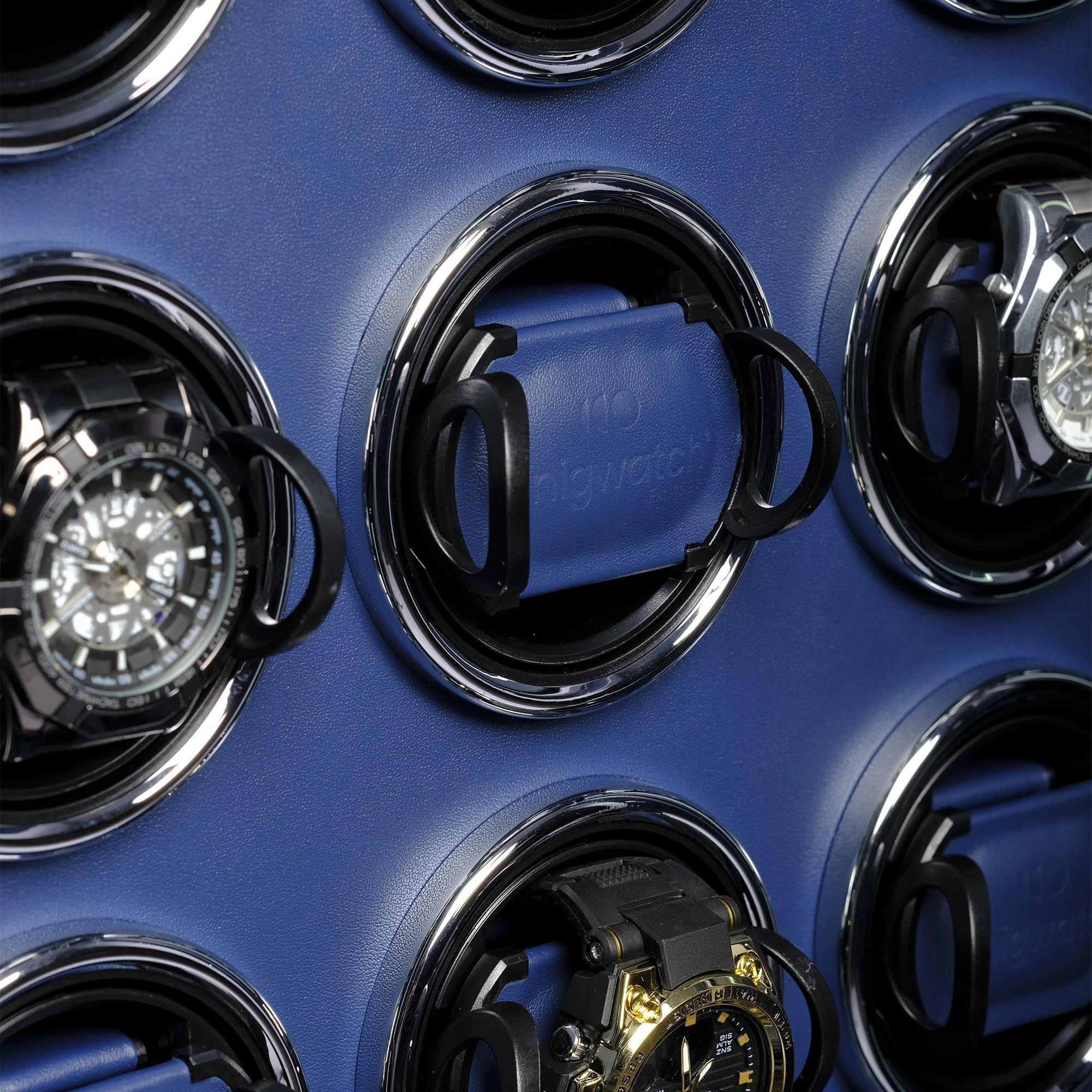 If your collection is mostly automatic movements, and most luxury collections are, the safe needs to do more than hold watches. It needs to keep them running.
An automatic movement that sits still for 48 hours stops. A stopped watch isn’t broken, but it’s a hassle. Date complications need to be reset. Perpetual calendars can take 10-15 minutes of correction. Moon phase indicators drift. Multiply that by 12 watches and you’ve lost an afternoon every time you want to wear something different.
A luxury watch winder safe solves this. Rotors keep the movements charged. You open the safe, pick your watch, wear it. Done.
The two specs that matter on winders:
TPD (Turns Per Day): Different movements need different rotation counts. A Rolex DateJust wants 650-750 TPD. A Patek 5711 wants 800. An AP Royal Oak Offshore chronograph wants 950. Cheap winders give you one setting. Proper ones let you program TPD per rotor. Our Virtuoso series programs independently for every watch.
Motor quality: Mabuchi motors run quiet and last 10,000+ hours. Maxon motors (same brand NASA uses on Mars rovers) run 50,000+ hours at full spec. The difference on spec sheets is small. The difference in a bedroom at 3am is huge.
What a luxury watch safe should actually cost
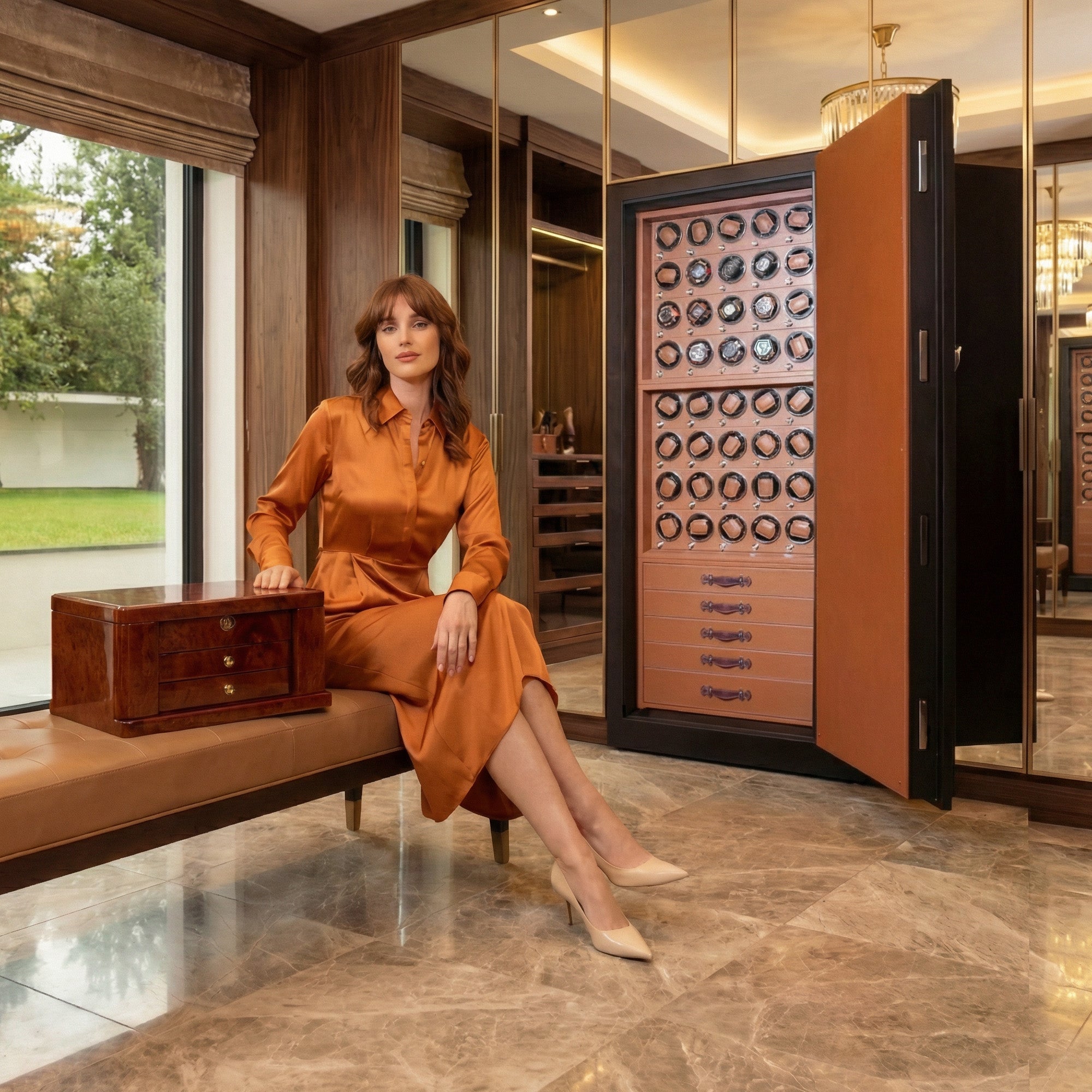 Collectors ask this early, and the honest answer is: it depends on the collection.
Here’s a rough framework:
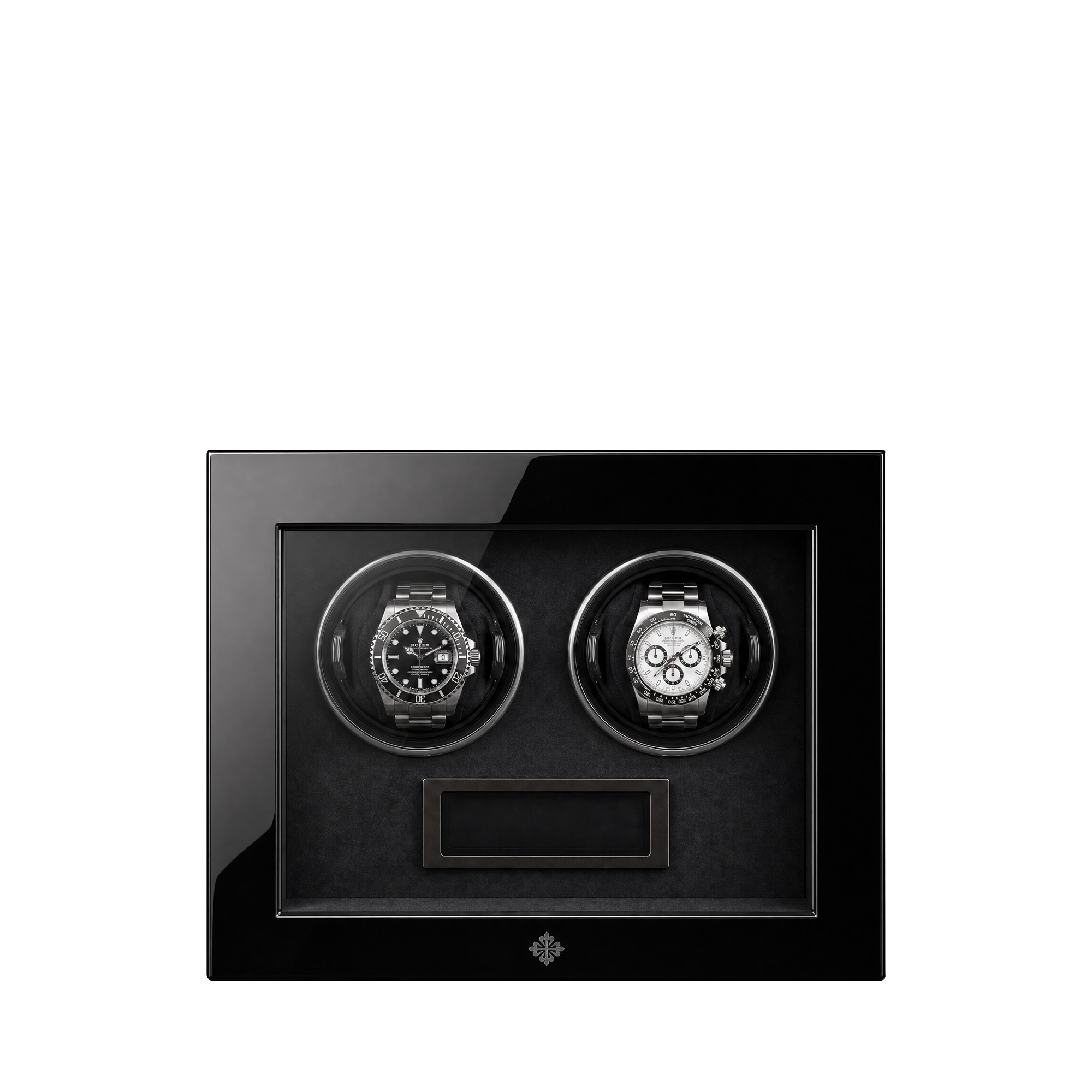
- Collection under $25K: A premium watch box and a high-quality single watch winder is often enough. Spending $5K on a safe for a $20K collection is asymmetric.
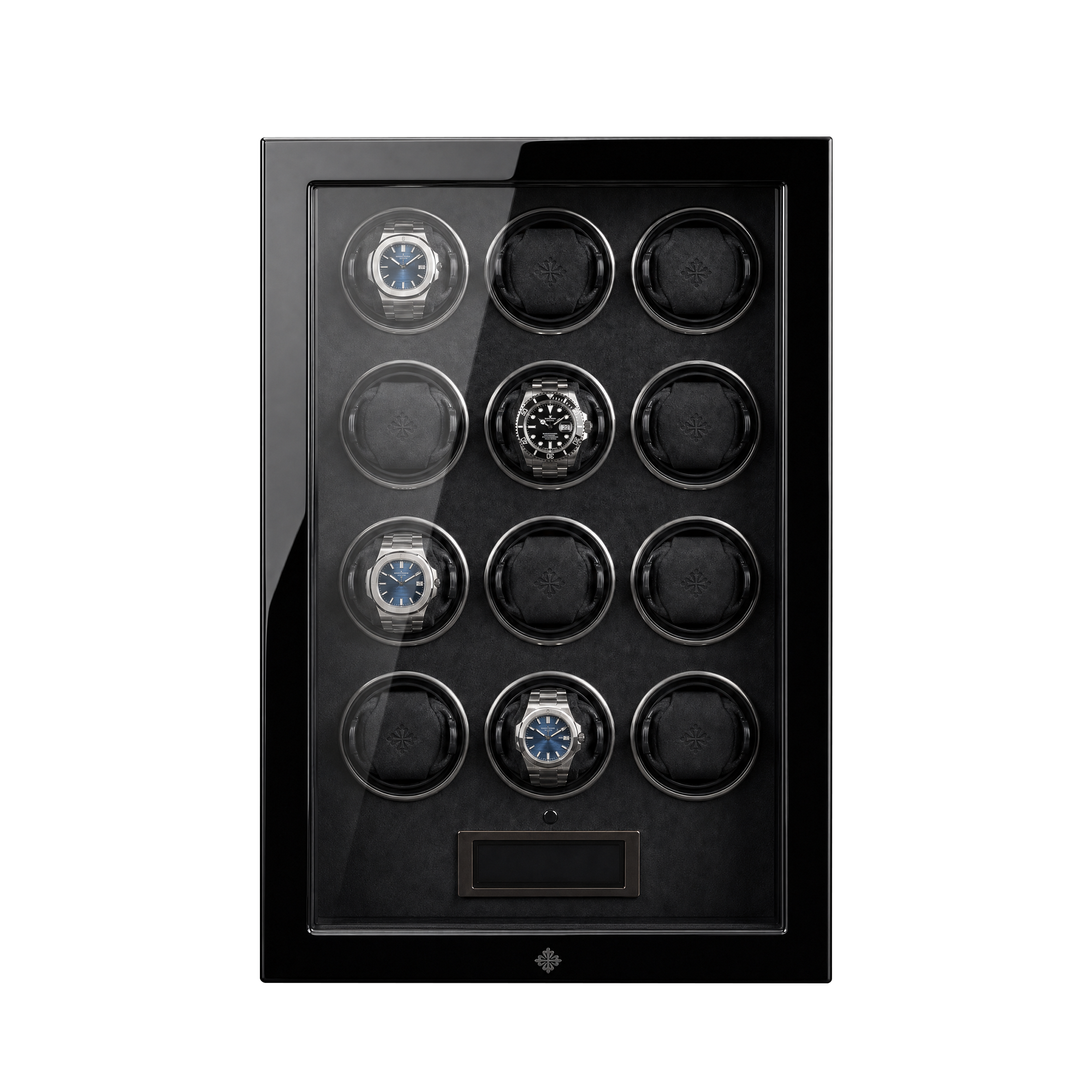
- Collection $25K-$100K: A 6-12 watch winder safe in the $3K-$8K range. Fire-rated, basic burglary rating, biometric with mechanical backup.
- Collection $100K-$300K: A 16-24 watch safe with integrated winders, TL-15 or higher, UL 72 Class 350 fire rating. $8K-$15K range. This is where most serious collectors land.
- Collection $300K+: Custom vault territory. $15K-$50K+. Architect-designed, integrated into the home, sized to the collection and planned for expansion.
The rule of thumb we use: 3-5% of the insured collection value on proper storage is defensible. More than 10% is usually over-spec’d. Less than 1% means you’re under-protected.
The build quality details most buyers miss

Door fit: The door should close with even pressure across all four sides. A door that closes tight on one side and loose on the other isn’t just cosmetic. It means the seal is compromised, which means the fire rating is compromised.
Interior finish: Italian Nappa leather, suede-backed Alcantara, or ebony veneer. Not painted MDF. Not fake suede. You can tell the difference by feel within 30 seconds.
Hinges: Concealed hinges rated for the door weight. A luxury watch safe with 200+ pounds of door weight needs industrial-grade hinges. Cheap hinges sag within a year.
Rotor mounts: Watch holders should be adjustable to fit different case sizes and strap types. A 38mm dress watch and a 44mm diver shouldn’t need different winders.
Backup systems: Battery backup for electronic winders. Mechanical key override for biometric locks. Redundant systems for power loss and lockouts.
Installation and white-glove delivery
This gets glossed over. A 400-pound watch safe doesn’t just arrive and get carried upstairs. Proper delivery involves:
- Pre-delivery site assessment (floor loading, doorway clearance, elevator access)
- White-glove handlers (not a standard freight crew)
- On-site positioning, leveling, and anchoring
- Setup of winders, biometrics, and backup systems
- Walkthrough with the owner
We handle this directly on every order. For custom vaults, the architect works with your contractor during build-out. For off-the-shelf luxury safes, we coordinate delivery and setup in one visit.
If the company selling you a luxury watch safe throws it on a freight pallet and hopes for the best, that’s a signal.
Frequently asked questions
How much does a luxury watch safe cost?
A proper luxury watch safe starts at around $3,000 and runs up to $15,000 for high-end production models. Custom watch vaults start at $15,000 and can reach $50,000 or more depending on capacity, materials, and architectural integration.
What’s the difference between a watch safe and a watch vault?
A watch safe is a standalone, freestanding or cabinet-mounted unit designed to hold and protect a watch collection, typically 6-24 pieces. A watch vault is a custom, architect-designed storage system built into a room or cabinetry, often holding 30-100+ watches with additional security and display features.
Do I need a fire-rated watch safe?
If your collection is worth more than $25,000 or includes pieces that can’t be easily replaced, a fire-rated watch safe is essential. House fires destroy mechanical movements, leather straps, and crystals within minutes. Look for UL 72 Class 350 certification at minimum.
Are biometric watch safes more secure?
Biometric locks add convenience and prevent combination sharing, but they don’t replace proper burglary ratings. A secure luxury watch safe combines biometric access with a TL-15 or higher burglary rating, mechanical backup, and proper safe-body construction.
Can a watch safe hold winders too?
Yes. A watch winder safe combines secure storage with automatic movement winding. Quality options let you program different turns-per-day settings for each watch, keeping Rolex, Patek, AP, and other automatic movements charged and ready to wear.
How many watches should a safe hold?
Most collectors start with 6-12 watch capacity and upgrade as the collection grows. A good rule: buy capacity for your next 3-5 years of collecting, not just today’s count. Upgrading a safe is expensive. Buying the right size once is cheaper.
What’s the best luxury watch safe brand?
The right brand depends on collection size and whether you want a production model or a custom build. For production models $3K-$15K, look for UL certifications, Mabuchi or Maxon motors, programmable TPD, and architect-level design. For collections above $300K, custom builds make more sense than off-the-shelf options. We design both at Enigwatch.
Where to start

- What’s the insured value of your collection today, and what will it be in 5 years?
- How many watches do you want to keep wound and ready to wear?
- Is this going into a closet, a dressing room, or integrated into cabinetry?
The answers point you to production safe, winder-safe, or custom vault. From there, it’s about fit.
Browse our watch winder safe collection for production models, or contact us for a custom vault consultation if your collection has outgrown standard options.
Serious collections deserve serious storage. That part isn’t negotiable.
Protect Your Watch Collection
Designed for collectors who demand the best. Explore our premium watch winders and luxury safes.
Protect Your Watch Collection
Designed for collectors who demand the best. Explore our premium watch winders and luxury safes.