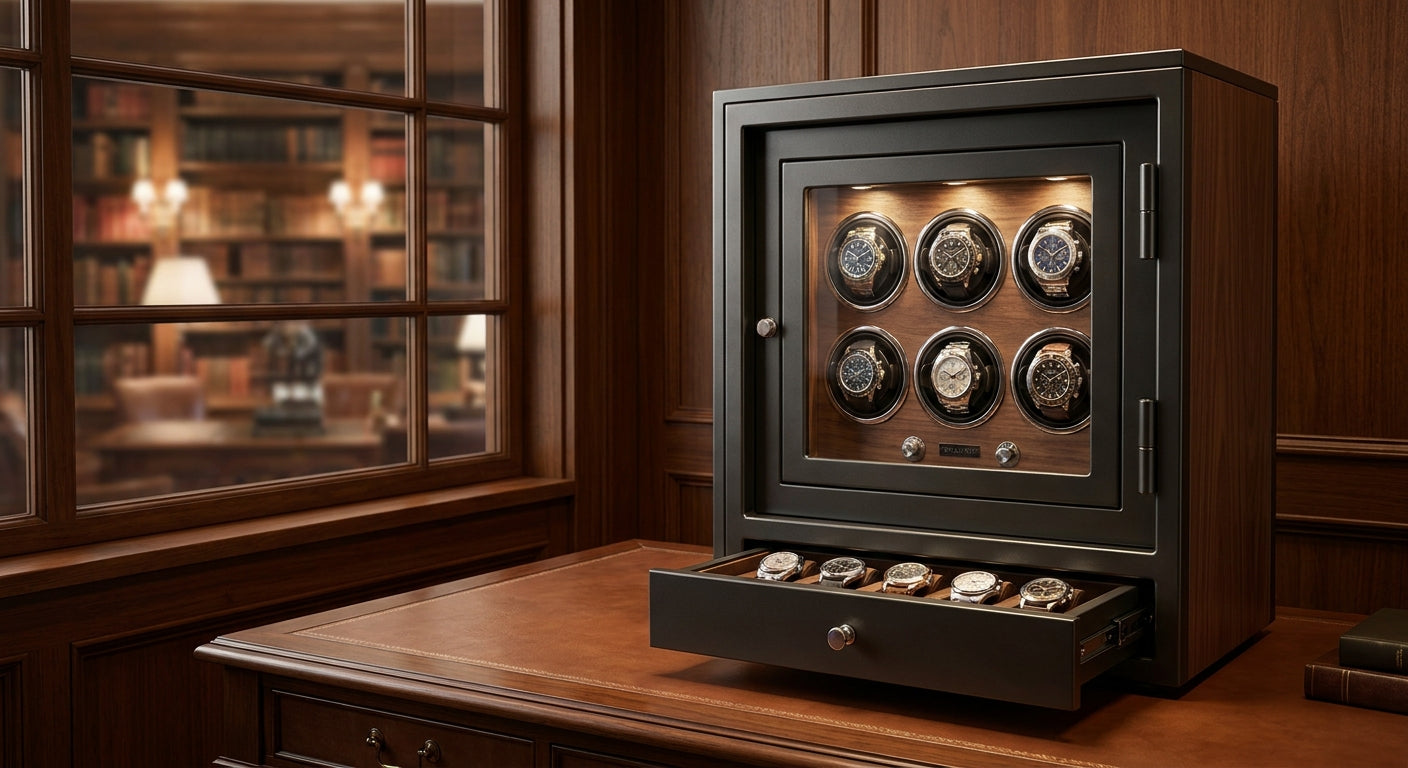
A watch safe arrives crated, heavy, and sealed — and the five minutes you spend inspecting it before the courier drives off determine whether a shipping problem becomes your problem or the carrier's.
TL;DR: A proper watch safe delivery inspection means checking the crate for impact damage, confirming the lock and biometric scanner function before the courier leaves, and photographing the interior before you sign the delivery receipt. Skip any of these and a claim for a cracked Alcantara panel or a dead scanner becomes your cost to fix in 2026, not the freight carrier's. Verdict: inspect on-site, refuse a damaged crate, sign only after you've tested the lock.
Why this matters
A watch safe in the $5,000 to $21,000 range travels in a crate that can weigh 200 to 400 pounds depending on the model. That crate gets forklifted, palletized, and handled by three or four different people between the factory and your front door.
Freight damage claims have a window — usually 24 to 48 hours after delivery — and most carriers require the damage to be noted on the delivery receipt at the time of drop-off, not reported a week later after you've had time to unbox it properly. If you sign a clean receipt and find a dented door or a failed biometric reader the next day, you've made the claim significantly harder to win. This is the single most common mistake collectors make with high-value freight shipments, and it's avoidable in about ten minutes at the curb.
Enigwatch ships every watch safe crated and palletized, and the inspection steps below apply whether you bought an Apollo, a Veron, or a Centennial-series unit.
What you'll need
- A phone camera with a full charge — you'll photograph the crate from all four sides before opening it
- A flat pry bar or claw hammer for crate removal (most crates are screwed, not nailed, so a cordless drill helps)
- The lock credentials — combination, key, or biometric enrollment card, whichever came with your unit
- A tape measure, if you're confirming the safe fits through the doorway before the crate comes inside
- 15-20 minutes before the delivery truck leaves — do not rush this
- A second person to help tilt or shift the unit; a fully loaded 20-slot safe like the Apollo watch safe is not a one-person lift
The steps
1. Photograph the crate before it's opened
This creates your baseline record. Walk all four sides and the top, and shoot close-ups of any corner that shows crushing, water staining, or a torn strap. Freight carriers weigh crate-exterior evidence heavily when assessing a concealed-damage claim, so a clean set of "before" photos protects you even if the interior turns out fine.
Common mistake: opening the crate first and photographing the safe afterward. By then you've lost the exterior evidence that proves the damage happened in transit rather than in your garage.
2. Check the crate weight against the packing slip
A crate that's noticeably lighter than the listed shipping weight can indicate a leak, a missing component, or a safe that's shifted loose inside the packaging. A 20-slot steel safe crate typically ships in a fairly tight weight band — a discrepancy of 15-20 pounds or more is worth flagging with the carrier before you sign.
Weight matters again once the safe is out of the crate, because floor loading and wall-mount anchoring both depend on it — that's covered in more detail in what a watch safe weighs and why it matters for installation.
3. Inspect the exterior finish once uncrated
Run your hand along every edge and seam, not just a visual scan — a hairline dent under low light is easy to miss but easy to feel. Check the door hinge alignment; a door that doesn't sit flush after a drop can mean an internal frame has shifted, which won't always show as a cosmetic mark.
Expected outcome: a factory-finish safe should show no gaps at the door seam and no marks on any load-bearing panel. Cosmetic scuffs on the crate itself are normal; scuffs transferred onto the safe body are not.
4. Test the lock mechanism before you sign anything
Whether your unit uses a biometric scanner, a digital keypad, or a mechanical key, cycle it at least three times while the delivery crew is still present. A biometric reader that fails to enroll a fingerprint on the first attempt is common and not a defect — but a reader that won't respond at all after multiple tries is.
Common mistake: assuming the lock will "warm up" and work fine once the delivery team leaves. If it's not responding on delivery day, it's not going to fix itself, and you want that documented while there's still a witness.
5. Open the safe and check the interior finish
Alcantara and Nappa leather interiors can shift slightly in transit even with foam bracing, but they shouldn't show tears, crushed padding, or adhesive separation from the panel. Check every slot cushion and the base tray, not just the top layer you can see at a glance.
Why it matters: interior trim damage is harder to claim after the fact because it's easy for a carrier to argue it happened during your own unboxing. Photograph the interior in the position you found it, before you touch or rearrange anything.
6. Confirm power and any electronic features function
If your model includes interior lighting, a digital lock display, or humidity control, plug it in and run it for a few minutes before the delivery crew leaves, or at minimum within the first hour. A unit that arrives with a dead board is rare in 2026 given how these are packaged, but it happens, and it's a far simpler fix when caught same-day.
7. Sign the delivery receipt with specific notes, not a blank signature
If everything checks out, sign clean — a clean signature with no notes is what lets you activate a lifetime warranty claim smoothly down the line if something surfaces later. If you found anything in steps 1 through 6, write it directly on the receipt in the driver's presence: "door seam gap, left side" or "biometric reader unresponsive." A verbal complaint after the truck pulls away carries no weight with a freight carrier.
Troubleshooting
The crate arrived crushed on one corner but the safe looks fine. Photograph it anyway and note it on the receipt. Concealed damage inside a safe body isn't always visible in the first five minutes — a noted exterior issue protects you if a problem surfaces days later.
The biometric scanner won't enroll a fingerprint. Try a different finger and make sure the sensor surface is dry and clean first — that resolves the majority of first-attempt failures. If it still won't read after five tries across two fingers, treat it as a hardware issue and note it before signing.
The door doesn't close flush. Check for a shipping bolt or foam shim still lodged in the hinge track — safes are often shipped with a temporary door brace that needs removing first. If the misalignment persists after removing all packaging inserts, it's a frame issue, not a packaging one.
The delivery crew wants you to sign before you've opened the crate. You have the right to inspect before signing on any freight delivery — this isn't a courtesy, it's standard freight practice for high-value shipments. Ask them to wait the extra ten minutes; a reputable carrier will.
You missed the inspection window and found damage a day later. Document everything immediately with photos and contact the carrier and Enigwatch the same day. Claims filed later than the standard 24-48 hour window are harder to win, but not impossible if the damage pattern clearly indicates transit rather than handling in your home.
The safe's fire rating spec sheet doesn't match what you expected. Confirm the model and rating against the documentation that shipped with the unit before assuming an error — rated protection numbers are often misread. The breakdown in watch safe fire rating: what the numbers actually mean explains how to read those figures correctly.
Tools and resources
- Phone camera for a timestamped photo record
- Cordless drill or pry bar for crate removal
- The packing slip and warranty documentation that ships with your unit
- A helper for any move over roughly 200 pounds
- The delivery receipt itself — treat it as a legal document, not paperwork to sign quickly
What to do next
Once the safe has passed inspection, the next decision is placement and anchoring. A safe that isn't bolted down defeats much of its purpose regardless of how well it survived shipping — see how to mount a watch safe to a wall stud for the anchoring steps before you load a single watch into it.
FAQ
What's the best time to inspect a watch safe on delivery? Inspect it immediately, while the delivery crew is still on-site — this is the only window where a witnessed exterior and lock check protects a freight damage claim.
Is it normal for a watch safe crate to look damaged on the outside? Minor crate scuffing from transit is common and doesn't necessarily mean the safe inside is affected. Crushed corners, torn straps, or water staining are not normal and should be photographed before opening.
How much does it cost to file a freight damage claim in 2026? Filing itself is free with most carriers, but claims require photo documentation and a receipt noted at delivery — the cost is really the time spent gathering evidence if you skip the on-site inspection.
Should I test the biometric lock before signing for delivery? Yes, cycle it at least three times with the delivery crew present. A reader that's unresponsive on delivery day rarely resolves itself afterward.
What happens if I sign the delivery receipt without checking the safe? A clean, unmarked signature is treated by carriers as acknowledgment that the shipment arrived in good condition, which makes a later damage claim far harder to support.
Do watch safes need professional installation after delivery? Most luxury safes over 200 pounds benefit from professional installation and anchoring, particularly for wall-mounted or floor-bolted models, though this depends on the specific unit and installation surface.
Is a scuffed interior cushion covered under warranty? Cosmetic transit damage discovered and documented on delivery day is generally treated differently than wear reported months later — document it immediately rather than waiting.
How long do I have to report watch safe delivery damage? Most freight carriers require damage noted within 24-48 hours of delivery, and ideally on the delivery receipt itself at the time of drop-off.
One last thing
The detail collectors skip most often isn't the lock or the exterior — it's the packing slip weight. A crate that's 15 pounds lighter than spec sheet weight in 2026 is the single fastest tell that something shifted or went missing in transit, and it takes ten seconds to check against a bathroom scale or the carrier's own manifest before you ever touch a screwdriver.
Related guides
Protect Your Watch Collection
Designed for collectors who demand the best. Explore our premium watch winders and luxury safes.