
Watch safe hinge types get skipped in most buying guides because the spec sheet leads with fire rating and lock type. That is a mistake: the hinge is the single point that decides whether a door still seals flush in 2026, five years, or a decade after installation.
- Concealed and continuous hinges outlast exposed pin hinges on any door heavier than a jewelry box lid.
- External hinges are a security liability no matter the steel grade — pry one pin and the door swings free.
- Veron Elite 12 pairs Grade 304 stainless with UL TL-30 Grade III certification, the body class that needs multi-point hinge support. Buy for vault-grade security.
- Hinge sag shows up as a widening door gap before any lock problem appears — check it yearly.
- Watch safe hinge types matter more on doors carrying ballistic or Kevlar-reinforced steel, where weight is concentrated at the swing edge.
Why this matters
A watch safe door is not a jewelry box lid. Once you add Grade 304 stainless steel, ballistic layers, or a Kevlar-reinforced panel like the one on the Centennial Bulletproof Watch Safe, the door itself can weigh far more than a standard home safe door. That weight rides entirely on the hinge assembly, every time the door opens.
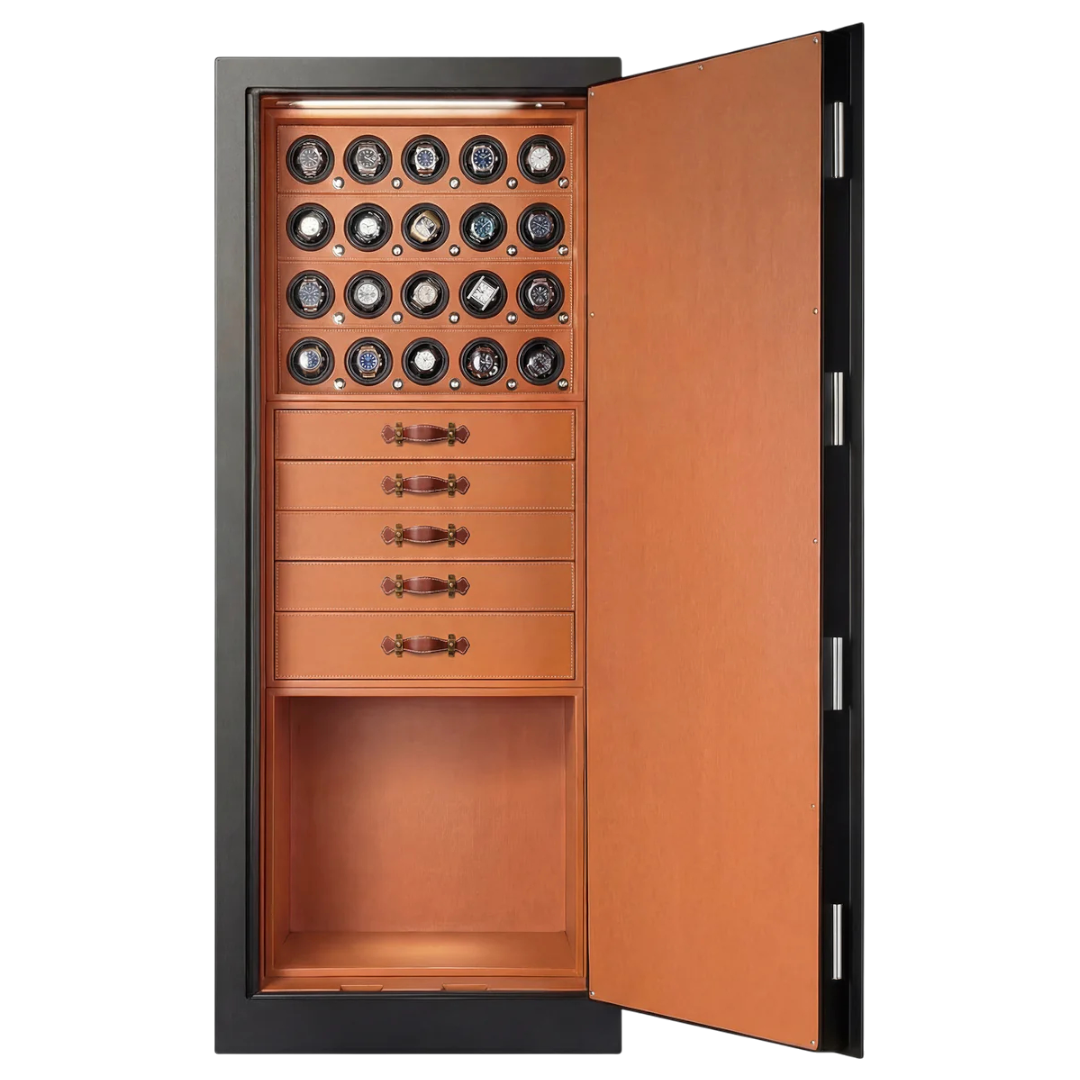
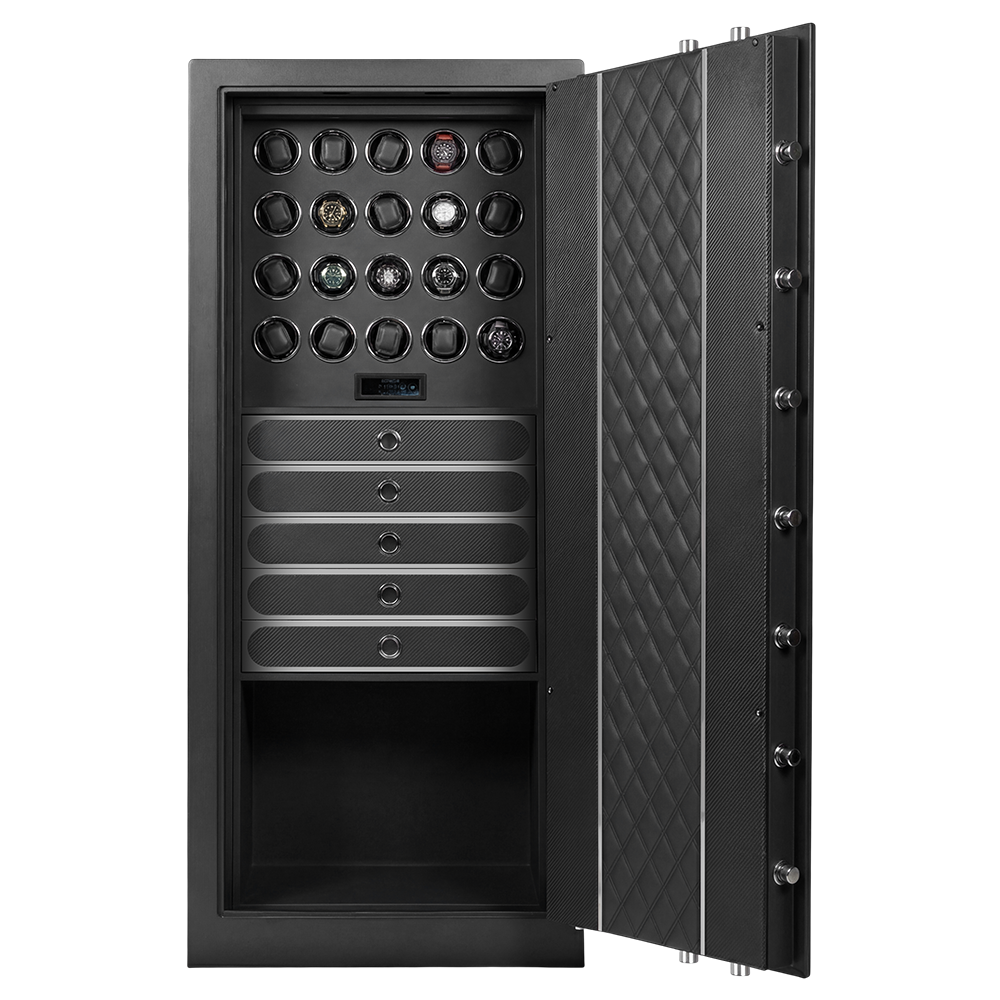
Most buyers evaluate a safe on fire rating and lock mechanism, then discover the real problem three years in: the door drops half an inch at the latch side and no longer closes flush. That is a hinge issue, not a lock issue, and it is preventable if you check hinge construction before you buy — not after the Titan Sanctum 20 Watch Safe or anything comparable is sitting in your closet.
What you’ll need
- The full spec sheet or product page for the safe you’re evaluating — hinge type is rarely on the front page
- A flashlight, to inspect hinge placement on a floor model or delivery unit
- A tape measure, to check door gap consistency top to bottom
- 10 minutes with the door open and closed slowly, listening and watching for drag
- Knowledge of your collection’s weight class — a 20-slot vault door carries different hinge demands than a 6-slot cabinet
The steps
1. Identify the hinge type before anything else
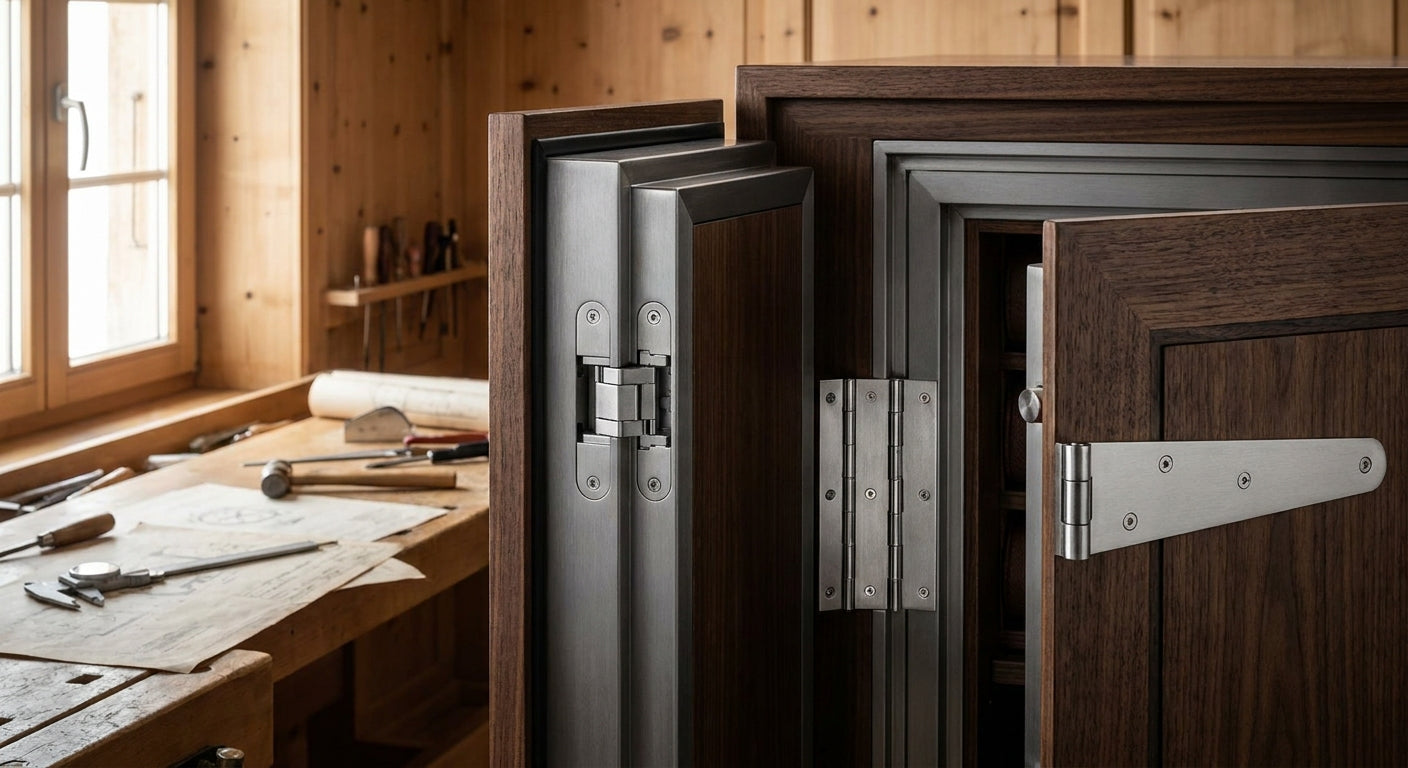
Safes use three hinge families: exposed pin hinges, continuous (piano) hinges, and internal/concealed hinges. Exposed pin hinges are cheapest to manufacture and the first thing to fail under repeated heavy-door cycling. Continuous hinges run the full height of the door and distribute load across dozens of interlocking teeth instead of two or three pin points.
Common mistake: assuming a heavy door means a strong hinge. Weight and hinge quality are unrelated variables — a 200-pound door on a cheap pin hinge fails faster than a lighter door on a continuous strip.
2. Check hinge placement — external or concealed
External hinges sit outside the door, visible and exposed. Concealed hinges sit inside the frame, protected by the same steel body that resists the rest of the attack. On a security safe, an external hinge is a design flaw: a pry bar on an exposed pin defeats the door regardless of what UL rating the body carries.
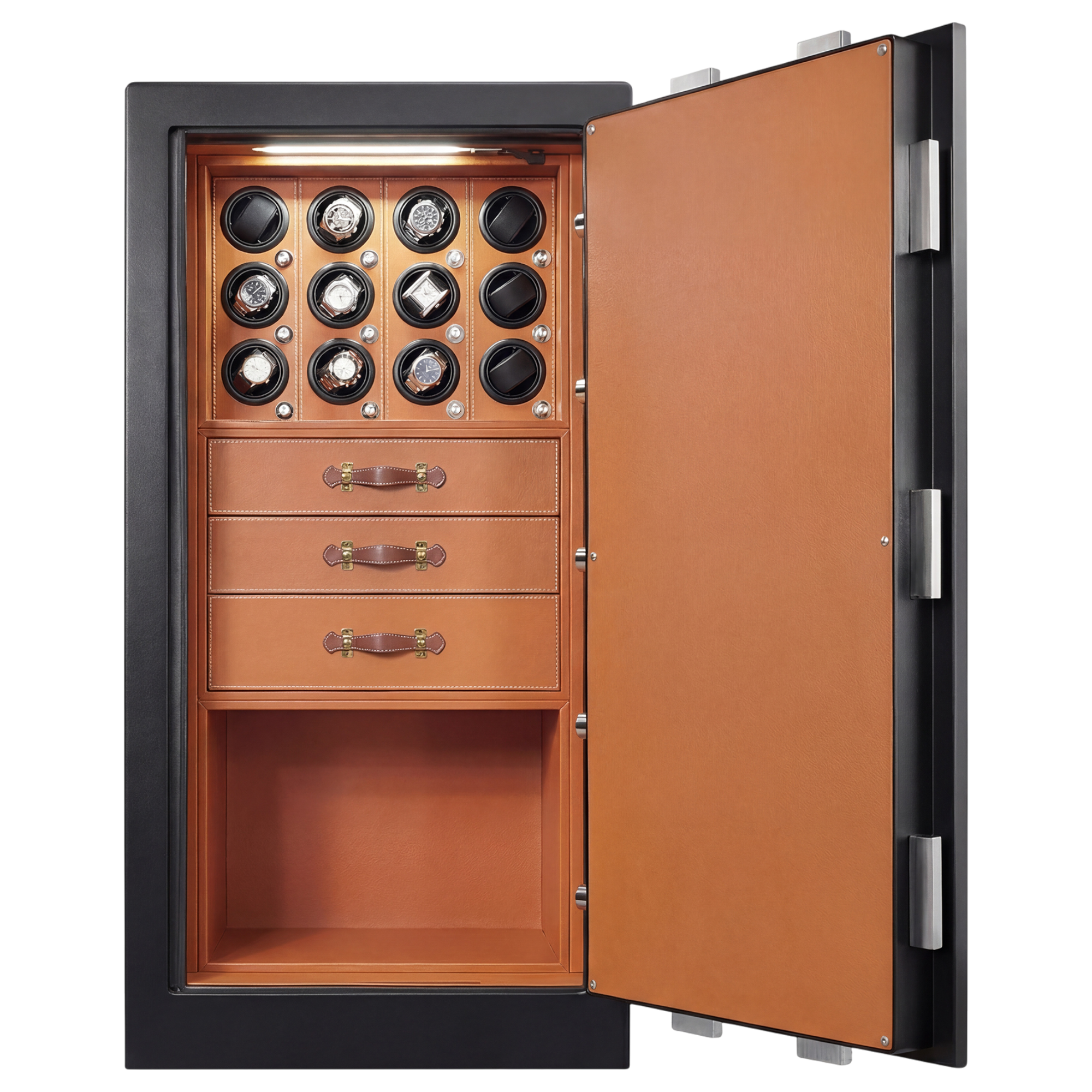
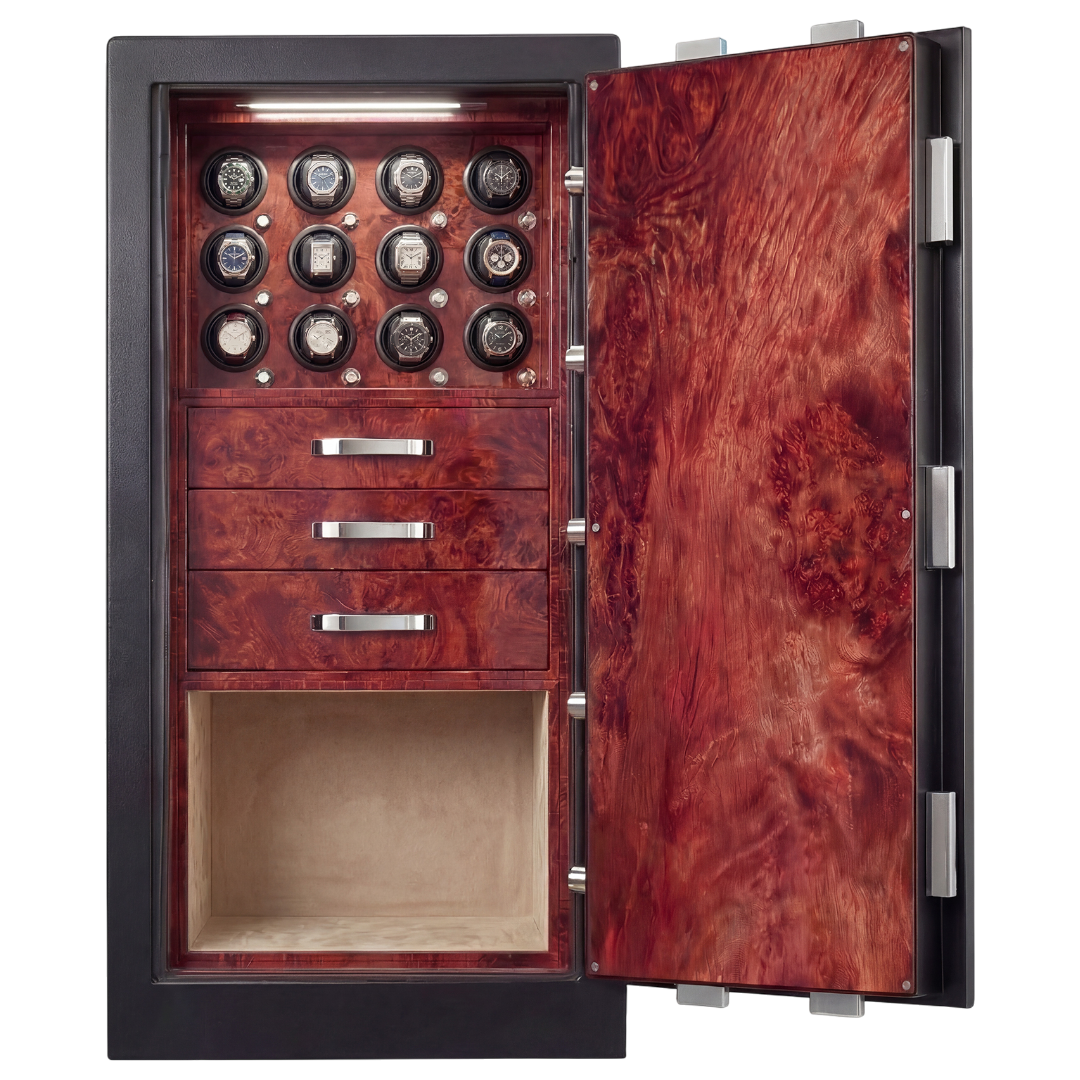
The Veron Elite 12 Watch Safe is built on Grade 304 stainless steel and certified UL TL-30 Grade III — that certification only means something if the hinge side of the door resists the same attack methods as the lock side. Concealed hinge construction is what makes a UL rating apply to the whole door, not just the bolt work.
3. Verify the steel grade at the hinge, not just the body
Manufacturers sometimes spec a high-grade body steel and a lower-grade hinge bracket, because the hinge bracket is cheaper to source separately. Ask directly whether the hinge hardware matches the body’s steel grade. A Grade 304 stainless body with a mild-steel hinge bracket corrodes at the hinge first, especially in humid climates or coastal installations.
4. Match hinge support to door weight class
A single pin hinge is fine on a door under roughly 40 pounds. Past that, you need either a continuous hinge or a multi-point ball-bearing hinge system — three or more load points instead of two. Safes built with ballistic panels, like the AR500 Level 1 construction on the Titan Sanctum line, carry enough door mass that a two-point hinge will visibly sag within a few years of daily use.
Verdict: if the door weighs more than a household oven door, a single pin hinge is a Skip.
5. Test alignment before delivery is signed off
Open and close the door slowly on delivery. The gap between door and frame should be even top to bottom — not wider at the top and tighter at the bottom, which signals the hinge is already under strain or was installed slightly out of true. Catching this on delivery day means a swap; catching it in year two means a repair call.
Common mistake: signing off on delivery without opening the door fully at least five times. Hinges that bind under repeated use often feel fine on the first open.
6. Ask what the hinge warranty actually covers
A lifetime warranty on the safe body means little if the hinge mechanism is excluded or covered separately with a shorter term. Get the hinge coverage confirmed in writing, not implied by the general warranty language on the box.
7. Plan for hinge maintenance on high-cycle doors
A safe opened daily — a nightstand or dressing-room unit — puts far more cycles on its hinge over 2026 and beyond than one opened twice a week. High-cycle doors benefit from an annual check: open the door, watch for drag, listen for a click or grind that wasn’t there at install.
Troubleshooting
Door sags at the latch side after a year of use. This is classic pin-hinge wear on a heavy door. If the hinge isn’t user-serviceable, this is a warranty call, not a DIY fix.
Gap widens unevenly top to bottom. The door was likely installed slightly out of plumb, or the hinge bracket has begun to flex. Recheck the mounting bolts on the frame side before assuming the hinge itself has failed.
Hinge squeaks or grinds on open. Usually dust or dried lubricant, not structural failure — but on a concealed hinge you can’t reach without a service call, so don’t ignore it for months.
Hinge corrosion in humid or coastal installations. Confirm the hinge hardware is the same steel grade as the body. A mismatched bracket corrodes years before the rest of the safe shows any wear.
Door won’t close flush after a move. Moving a heavy safe can shift the frame slightly. Re-level the unit before assuming the hinge has been damaged — most “broken hinge” complaints after a move are actually leveling issues.
Tools and resources
- The full hinge and body spec sheet for any safe you’re comparing — request it if it’s not published
- A guide to door thickness and what actually stops a break-in, since hinge quality and door thickness get evaluated together
- A breakdown of what UL burglary rating numbers actually mean for context on why concealed hinges matter to certification
- A level and a tape measure for annual inspection
What to do next
Once hinge type is confirmed, move to lock type and fire rating — the other two specs that determine whether a safe holds up past 2026. A concealed continuous hinge on a Grade 304 body, paired with a UL TL-30 rating and a fire rating stated in both time and temperature, is the combination that ages well rather than the one that looks good in a showroom.
FAQ
What are the main watch safe hinge types?
The three main watch safe hinge types are exposed pin hinges, continuous piano hinges, and internal concealed hinges. Concealed and continuous designs hold up better on heavy security doors because they distribute load across more contact points and resist prying from outside.
Are external hinges a security risk on a watch safe?
Yes, external hinges are a security risk regardless of the body’s steel grade. A pry bar applied to an exposed hinge pin can defeat the door without ever touching the lock, which is why concealed hinge construction is standard on vault-grade safes in 2026.
How do I know if a watch safe hinge is failing?
A failing hinge shows up as an uneven door gap, drag when opening, or a door that no longer closes flush at the latch side. Catching this early, ideally on an annual check, prevents a full hinge replacement later.
Does hinge type affect a safe’s UL rating?
Yes. A UL TL-30 rating like the one on the Veron Elite 12 Watch Safe applies to the whole door assembly, and a weak or exposed hinge undermines that rating even if the body steel meets the standard on its own.
Do heavier watch safe doors need different hinges than lighter ones?
Yes. Doors under roughly 40 pounds function fine on a single pin hinge, but heavier doors built with ballistic panels or Kevlar-reinforced steel need continuous or multi-point ball-bearing hinges to avoid sagging within a few years.
Can a watch safe hinge be repaired instead of replaced?
It depends on whether the hinge is user-serviceable or built into a concealed frame. Many concealed hinge assemblies require a service call rather than a DIY fix, which is why warranty coverage on the hinge specifically matters.
Do humid climates affect watch safe hinges?
Yes, humidity accelerates corrosion at the hinge if the hinge hardware is a lower steel grade than the body. Matching hinge steel to body steel, such as Grade 304 stainless throughout, avoids this failure point.
Is a lifetime warranty enough coverage for hinge failure?
Only if the warranty language explicitly includes the hinge mechanism. Some lifetime warranties cover the body and lock but treat hinges as a separate, shorter-term component, so it is worth confirming before you buy.
One last thing
The detail most collectors miss: a concealed hinge does double duty as a security feature and a longevity feature at once. It’s not just harder to pry from outside — it’s also protected from the dust, humidity, and daily contact that wear down an exposed pin over years of use. On a safe holding a collection worth five or six figures, that’s the $200 hinge decision protecting the other $20,000.
Related guides
Protect Your Watch Collection
Designed for collectors who demand the best. Explore our premium watch winders and luxury safes.
Protect Your Watch Collection
Designed for collectors who demand the best. Explore our premium watch winders and luxury safes.