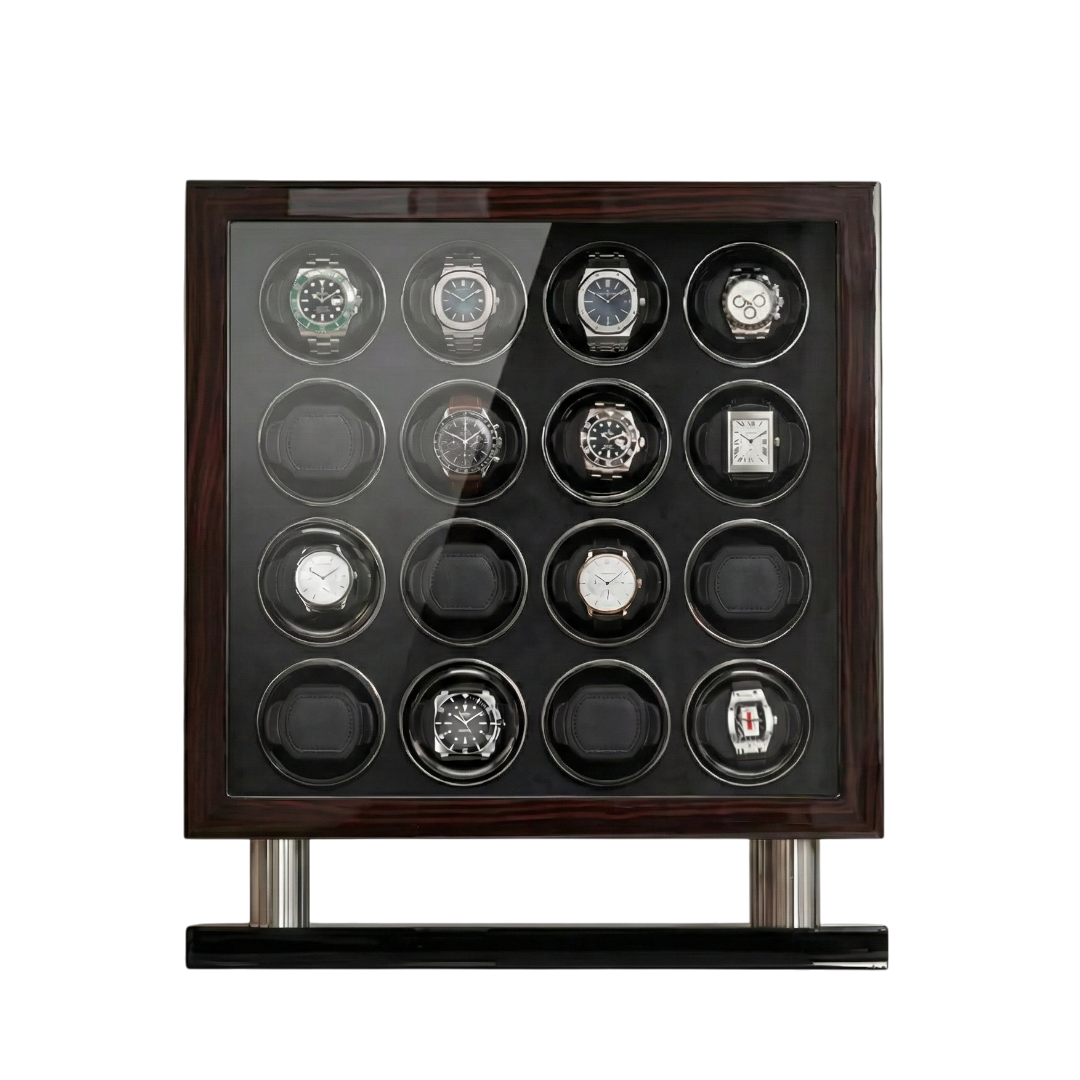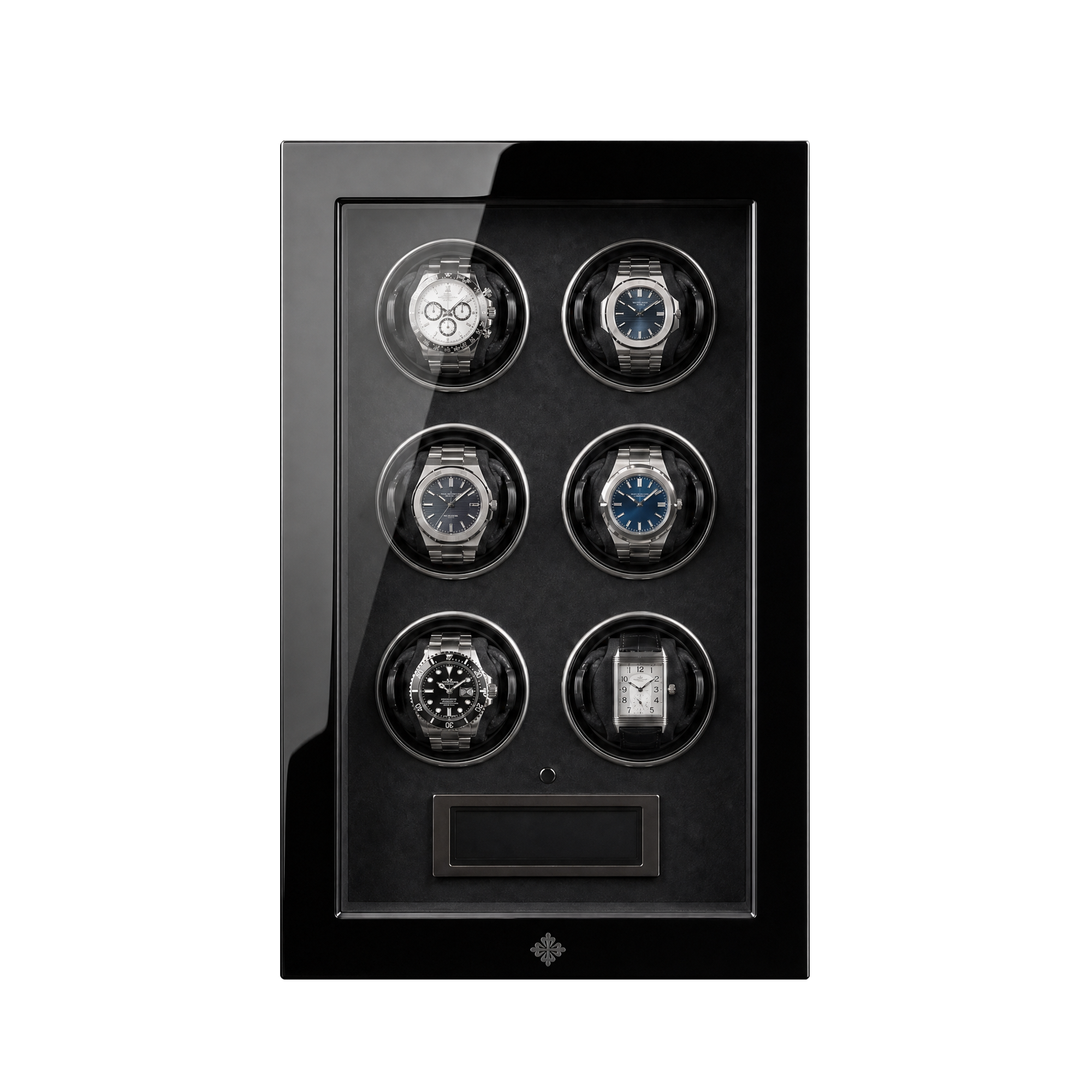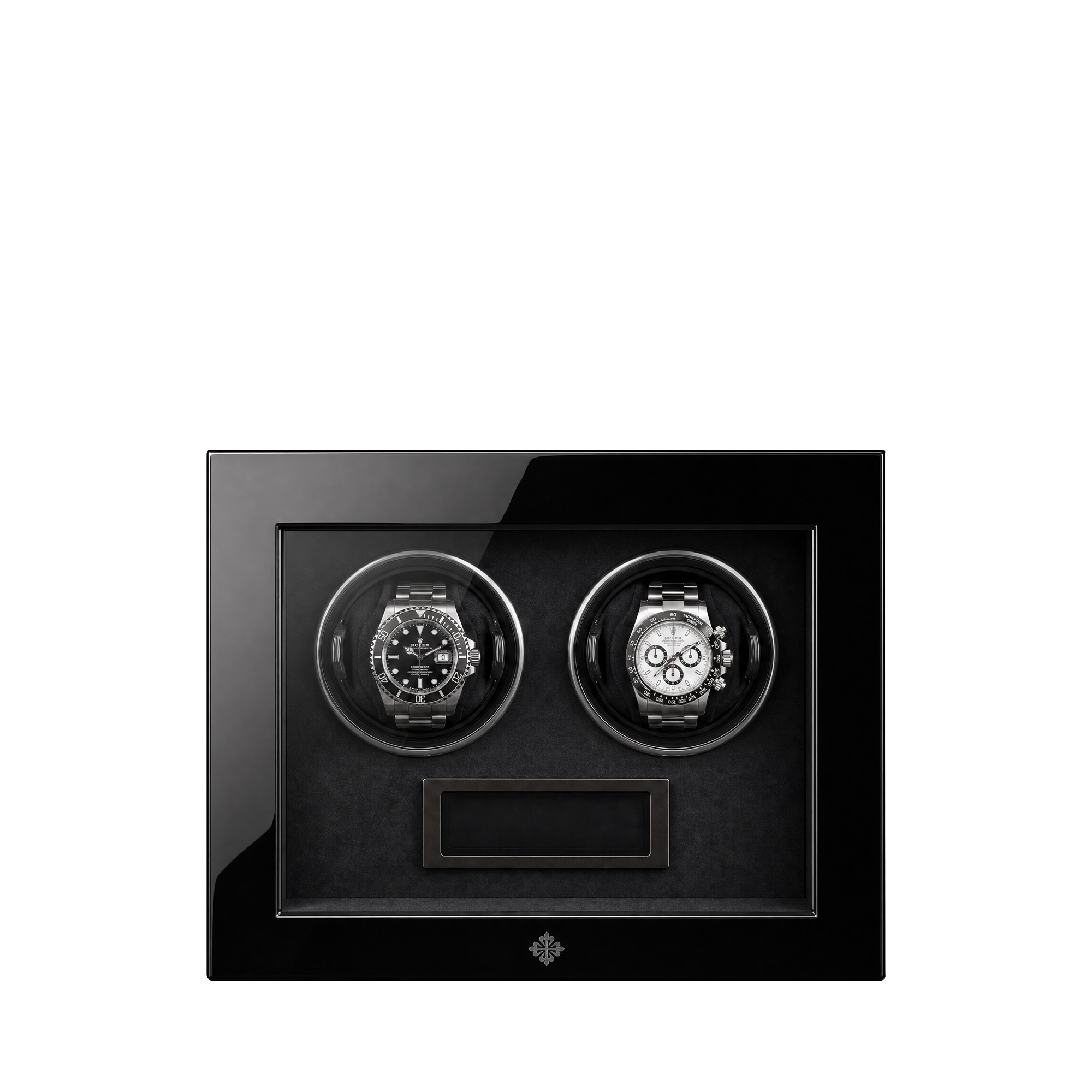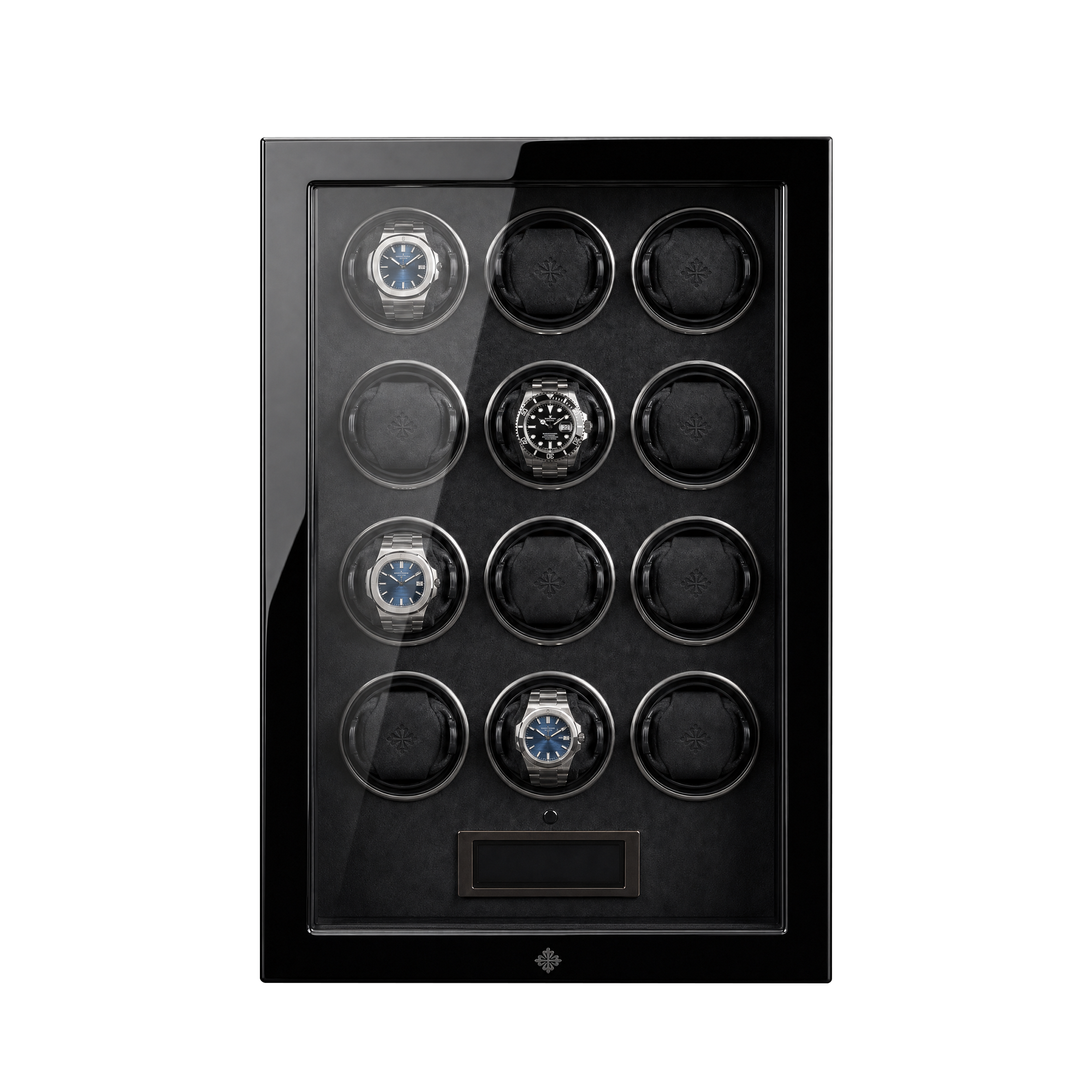

Eight-slot winders occupy a specific niche: large enough to house a real collection, compact enough to sit on a dresser or shelf without dominating the room. This guide covers every specification that matters when choosing a watch winder for 8 automatic watches, with the Enigwatch Yachtline Series 8 as the primary reference point.
TL;DR: The Enigwatch Yachtline Series 8 watch winder is the benchmark 8-slot unit for serious collectors in 2026. It runs Japanese Mabuchi motors, supports individually programmable TPD settings per rotor, and finishes in Italian Alcantara — exactly what a mixed collection of Rolex, AP, and Omega references demands. If you own eight automatics worth keeping wound, this is the unit built for them.
Why an 8-Slot Winder Is a Different Decision
A single winder is a utility purchase. An 8-slot winder is an infrastructure decision. At this capacity, you are managing watches with different power reserves, different TPD requirements, and likely different movement directions — a Rolex Submariner (650 TPD, bidirectional) sitting beside a Patek Philippe Nautilus (650–800 TPD, bidirectional) sitting beside a Panerai Luminor (650 TPD, clockwise). One motor with one program serves none of them well. In 2026, the standard for an 8-slot unit at the collector level is individual motor control per position, not a shared program across all eight rotors.
The cabinet material, motor source, and noise floor all compound when you have eight positions running simultaneously. These are the criteria that separate a display box from a purpose-built winder.
Who This Guide Is For
This guide is written for the collector who owns between six and ten automatic watches and has outgrown smaller winders. You are not buying your first winder. You have specific references — likely a mix of brands — and you understand that a Breitling Navitimer and an IWC Portugieser do not share the same TPD target. You want a unit that handles a mixed collection correctly, looks appropriate in a bedroom or study, and does not require replacement in three years.
What to Look for in a Watch Winder for 8 Automatic Watches
Individual Motor Control Per Position
This is the non-negotiable specification for an 8-slot unit. Each of your eight watches has its own movement architecture — some require 500 TPD, others 800 TPD. A shared-motor design forces you to choose one program for all eight, which means seven watches are running at the wrong setting. Look for units where each rotor has its own programmable TPD range and directional control (clockwise, counterclockwise, bidirectional).
Motor Quality and Noise Floor
Japanese Mabuchi motors are the industry reference for silent, long-life operation. In an 8-position unit running overnight in a bedroom, noise accumulates. A single cheap motor at 35 dB is tolerable; eight of them are not. The Yachtline Series 8 uses Mabuchi motors throughout — a specification detail that matters when the winder runs continuously in a living space. If a manufacturer does not name their motor source, treat that as a red flag.
Interior Material and Watch Protection
Alcantara and Nappa leather interiors protect case flanks and crystal edges. Generic felt liners compress over time, create pressure points, and leave micro-scratches on soft-metal cases. For watches priced above $10,000 per piece, the interior material deserves the same scrutiny as the motor. Pillow sizing also matters: oversized cushions for a 40mm AP Royal Oak will leave a 47mm Panerai loose in the rotor.
TPD Range and Directional Accuracy
Most serious automatics need between 500 and 900 turns per day. The direction requirement varies: Rolex movements wind bidirectionally, several Patek and Jaeger-LeCoultre calibers wind better clockwise or counterclockwise. A unit advertising “650 TPD” with no directional control is incomplete. Confirm that the unit you choose allows you to set direction independently per rotor, not just globally. The watch winder TPD explained guide covers per-brand requirements in detail.
Cabinet Construction and Security
An 8-slot winder housing eight watches represents meaningful value — at $10,000 per watch, that is $80,000 in the cabinet. Tempered glass, solid hardwood or metal frames, and a locking mechanism are not luxury features at this price point; they are minimum standards. Consider whether you want the winder to function as standalone storage or pair it with a dedicated watch safe for insurance and security purposes.
Power Delivery and Backup
Look for AC-powered units with consistent voltage regulation. Battery-powered units at this slot count drain quickly and introduce voltage drop, which directly affects rotor speed and TPD accuracy. Some 8-slot units include a power reserve indicator or automatic pause cycle — the Yachtline Series 8 uses a programmed rest interval to prevent over-rotation during extended non-wearing periods.
Top Picks
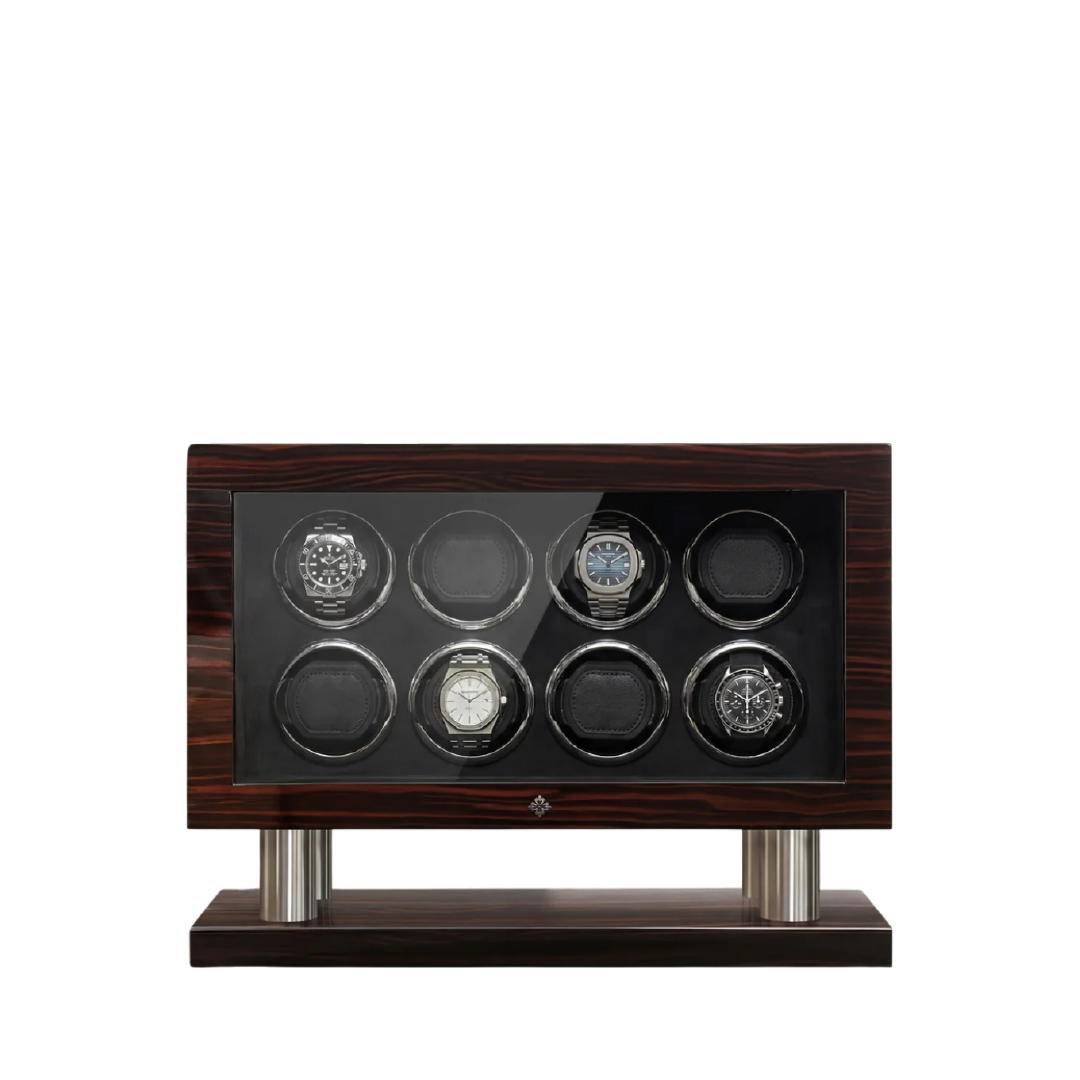
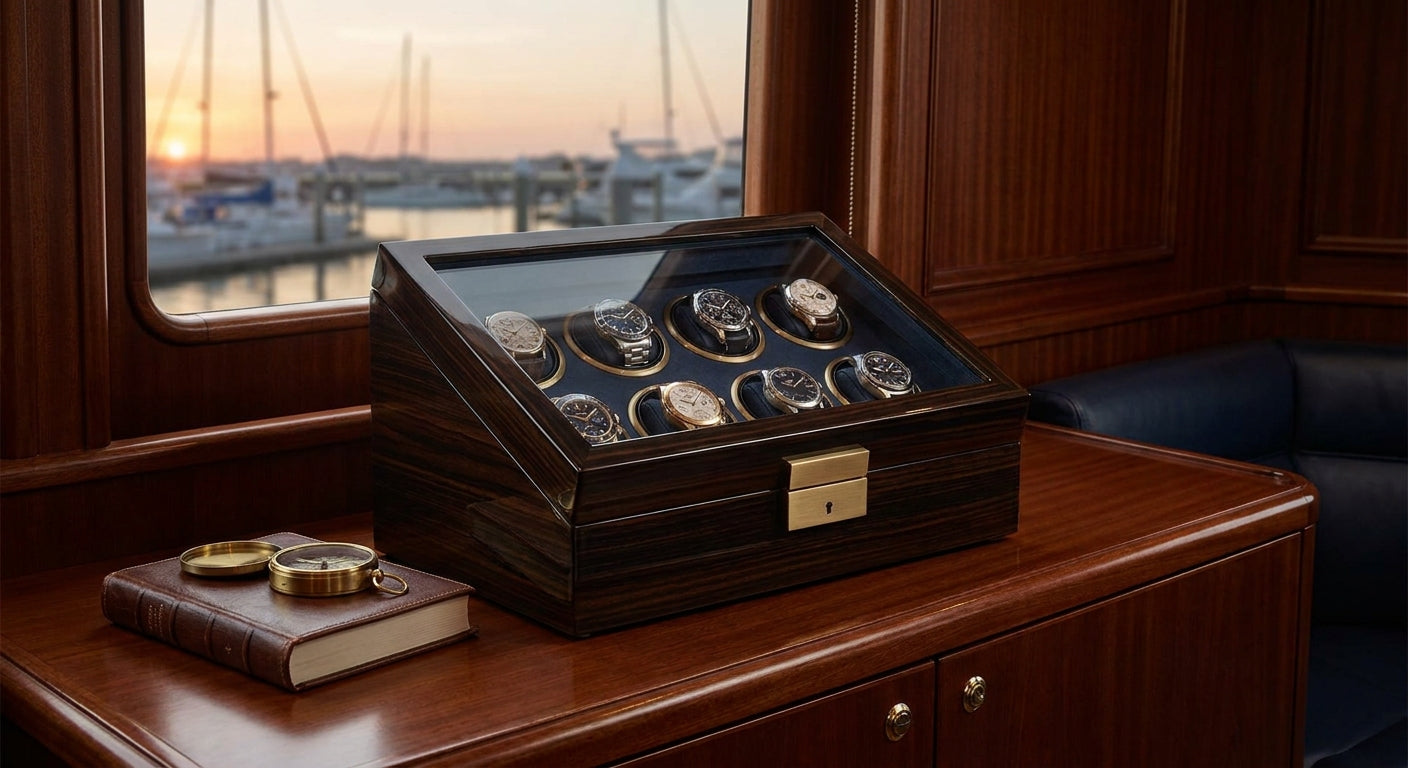
The Primary Choice — Yachtline Series 8
Hook: The unit this guide is built around. Eight individually controlled Japanese Mabuchi motors, Italian Alcantara interior, programmable TPD and direction per position.
Spec that matters: Eight independent motor programs — you set TPD and direction separately for each of the eight positions.
Concrete number: Supports TPD settings from 300 to 1,200 per rotor, covering every major automatic movement in production as of 2026.
Verdict: Buy. The Yachtline Series 8 watch winder is the correct answer for a mixed collection of serious references. Individual motor control, verified motor provenance, and interior materials that match the watches it houses. No compromise in the specifications that actually affect movement health.
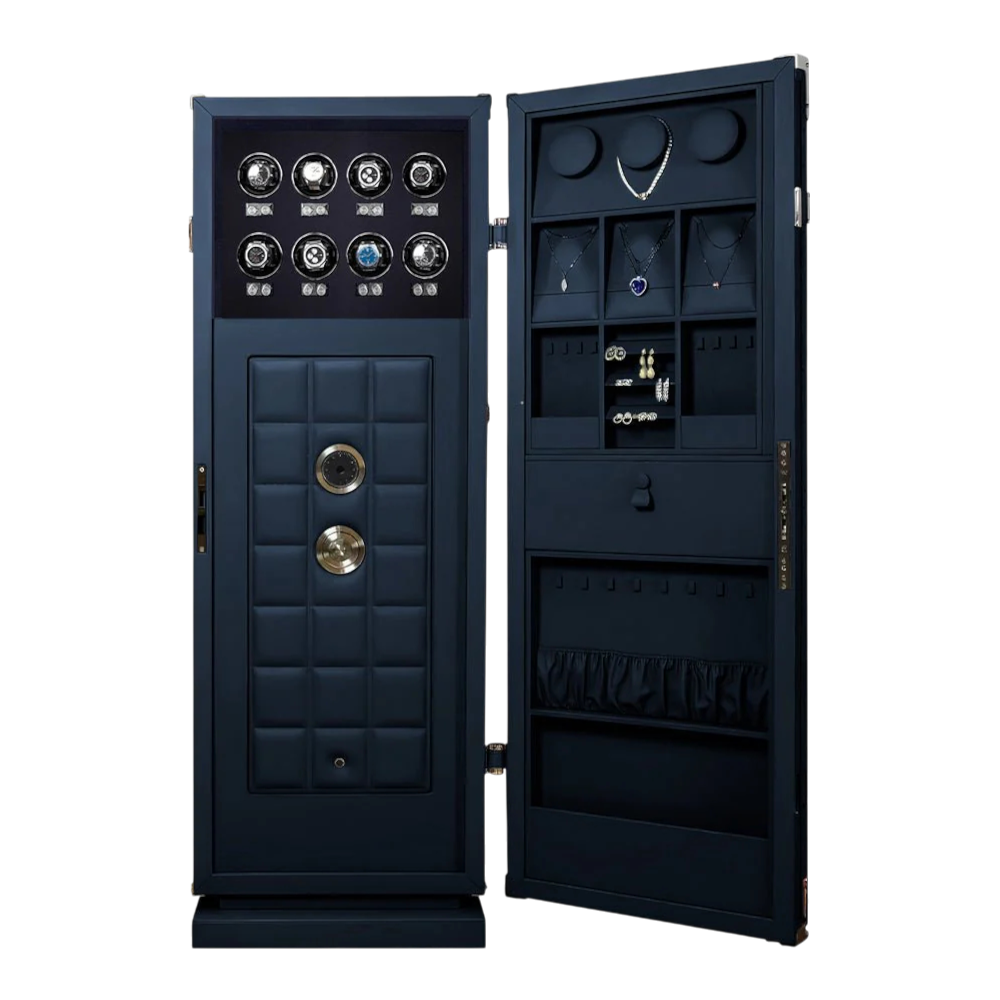
The Upgrade Path — Impresario Series 12
Hook: The wildcard — if you rotate more than eight watches or plan to add pieces in 2026, the 12-slot Impresario makes the Yachtline look like an interim purchase.
Spec that matters: 12 individually programmed rotors, exotic wood veneer exterior options, biometric lock.
Concrete number: 12 positions, same Japanese Mabuchi motor specification as the Yachtline.
Verdict: Consider if your collection is actively growing. The Impresario Series 12 watch winder costs more and occupies more space, but it eliminates the ceiling you would hit within 18 months of buying an 8-slot unit if you keep acquiring. For a stable 8-watch collection, it is overkill.
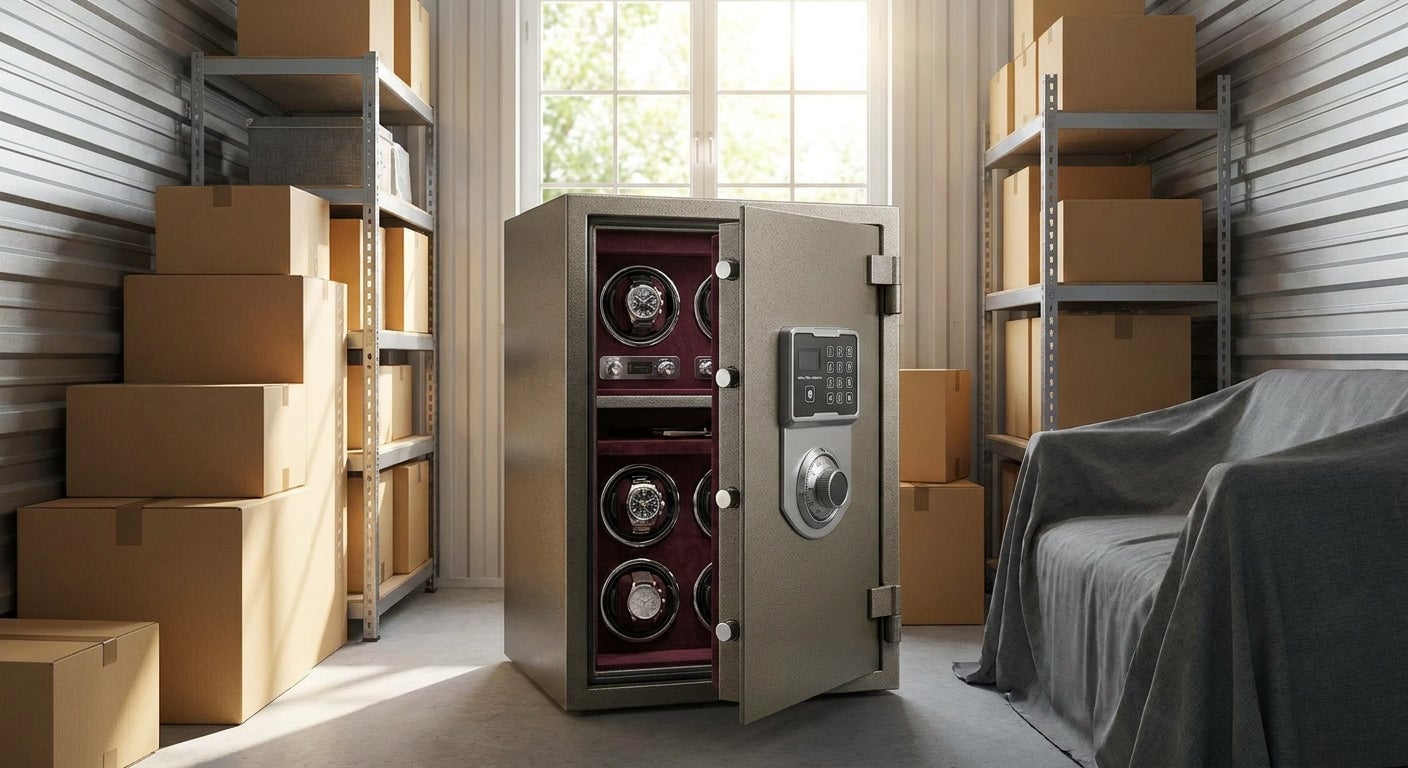
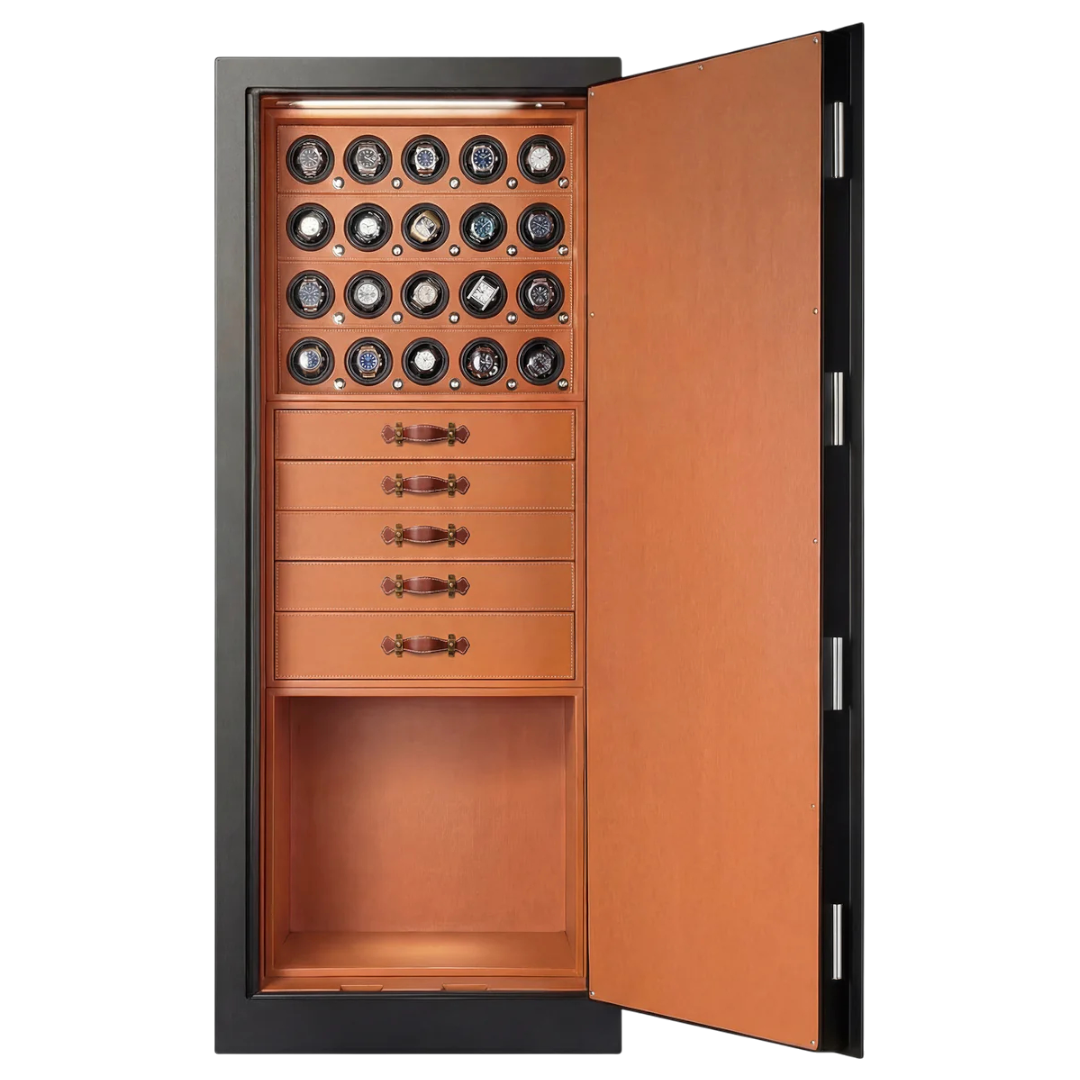
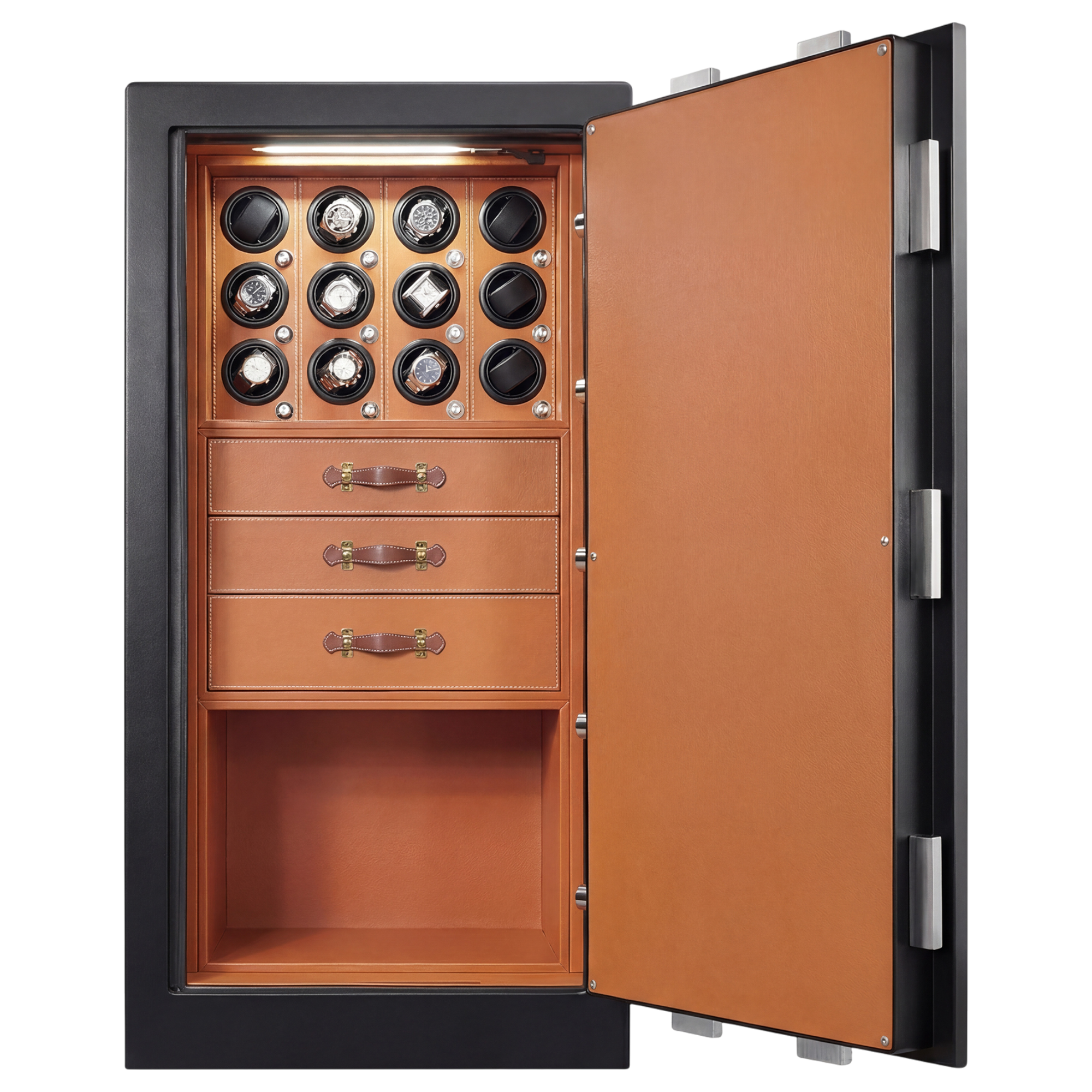
The Security Add-On — Veron 12 Watch Safe
Hook: The practical pairing. If the winder sits in a room without dedicated security, a watch safe handles overnight storage for pieces not in the winder and covers the insurance gap.
Spec that matters: Biometric access, reinforced steel construction, interior Alcantara lining consistent with the Yachtline’s interior standard.
Verdict: Consider as a complementary purchase, not a replacement. The Veron 12 watch safe box and the Yachtline Series 8 function as a system — the winder runs the daily rotation, the safe secures pieces not being worn or wound.
What to Avoid
- Shared-motor 8-slot units. Any 8-position winder that runs all rotors on one or two motors with a global program is not suitable for a mixed collection. You will under-wind some movements and over-rotate others.
- Felt or faux-suede interiors. In 2026, no 8-slot winder at the collector level should use compressed felt. It degrades, holds dust, and creates abrasion risk for brushed and polished case surfaces.
- Battery-primary power supply. At eight positions running continuously, battery power delivers inconsistent voltage. The TPD you program is not the TPD the movement receives when cells drop below 80% charge.
Comparison Table
| Criterion | Yachtline Series 8 | Impresario Series 12 | Veron 12 Safe |
|---|---|---|---|
| Positions | 8 | 12 | 12 (storage, no winding) |
| Individual motor control | Yes | Yes | N/A |
| Motor source | Japanese Mabuchi | Japanese Mabuchi | N/A |
| Interior material | Italian Alcantara | Italian Alcantara | Alcantara |
| TPD range per rotor | 300–1,200 | 300–1,200 | N/A |
| Directional control | CW / CCW / Bi | CW / CCW / Bi | N/A |
| Security lock | Yes | Biometric | Biometric |
| Best for | Stable 8-watch collection | Growing collection | Security-first storage |
| 2026 Verdict | Buy | Consider | Consider (paired) |
FAQ
What is the best watch winder for 8 automatic watches in 2026?
The Enigwatch Yachtline Series 8 is the strongest 8-slot option in 2026. Eight independent Japanese Mabuchi motors, individually programmable TPD from 300 to 1,200 turns per day, and an Italian Alcantara interior make it the correct choice for a mixed collection of serious references.
Do all 8 rotors need to run at the same TPD?
No — and they should not. A Rolex Submariner, an AP Royal Oak, and an IWC Portugieser each have different TPD targets and directional requirements. An 8-slot winder built for collectors runs each rotor on an independent program. Shared-motor designs are a compromise that costs movement health over time.
Is bidirectional winding required for all automatic watches?
No. Most Rolex movements wind bidirectionally and benefit from it. Several Patek Philippe and Jaeger-LeCoultre calibers wind more efficiently in one direction. Panerai’s OP calibers are clockwise only. A proper 8-slot unit lets you assign direction per position, not globally.
How loud should an 8-slot watch winder be?
At eight positions running simultaneously, a quality unit should be inaudible at normal conversation distance. Japanese Mabuchi motors operate below 20 dB in well-designed enclosures. If you can clearly hear the rotors from across the room, the motor specification or enclosure design is inadequate.
Can I over-wind an automatic watch in a winder?
Automatic movements have a mainspring slip-clutch mechanism that prevents over-winding. The risk is not mechanical over-tension — it is accumulated wear from excessive rotor spinning. A correctly programmed rest cycle (typically 8–12 hours of pause per 24 hours) prevents unnecessary movement stress.
What TPD does a Rolex need in a watch winder?
Rolex recommends approximately 650 TPD for most Oyster Perpetual-based calibers, bidirectional. Setting a rotor to 800 TPD bidirectional gives a small buffer without causing concern. Running a Rolex at 1,200 TPD continuously is unnecessary and generates more rotor wear than the movement requires.
How is a watch winder for 8 watches different from two 4-slot units?
Two 4-slot units mean two power sources, two footprints, and twice the cable management. A single 8-slot unit centralizes control, typically costs less than two quality 4-slot units combined, and presents as a cohesive display piece rather than a pair of boxes. The tradeoff is that a single unit failure takes all eight positions offline simultaneously.
What interior material is best for luxury watch cases?
Italian Alcantara is the preferred standard — it is dense enough to hold pillow shape over years of use, soft enough to avoid case abrasion, and does not compress into a flat surface the way felt does. Nappa leather is the secondary option, appropriate for watches with brushed steel or titanium cases.
One Last Thing
The rest interval your winder uses matters more than most buyers realize. A winder running all eight rotors 24 hours a day, 365 days a year, is spinning each movement’s rotor roughly 650 times more per day than wearing the watch would. A properly designed unit — the Yachtline Series 8 included — builds in a programmed pause cycle so the movement rests the way it would on a wrist. When you review specifications in 2026, ask specifically about rest programming, not just TPD range. It is the specification that separates a winding machine from a movement-aware storage system.
Related Guides
Protect Your Watch Collection
Designed for collectors who demand the best. Explore our premium watch winders and luxury safes.