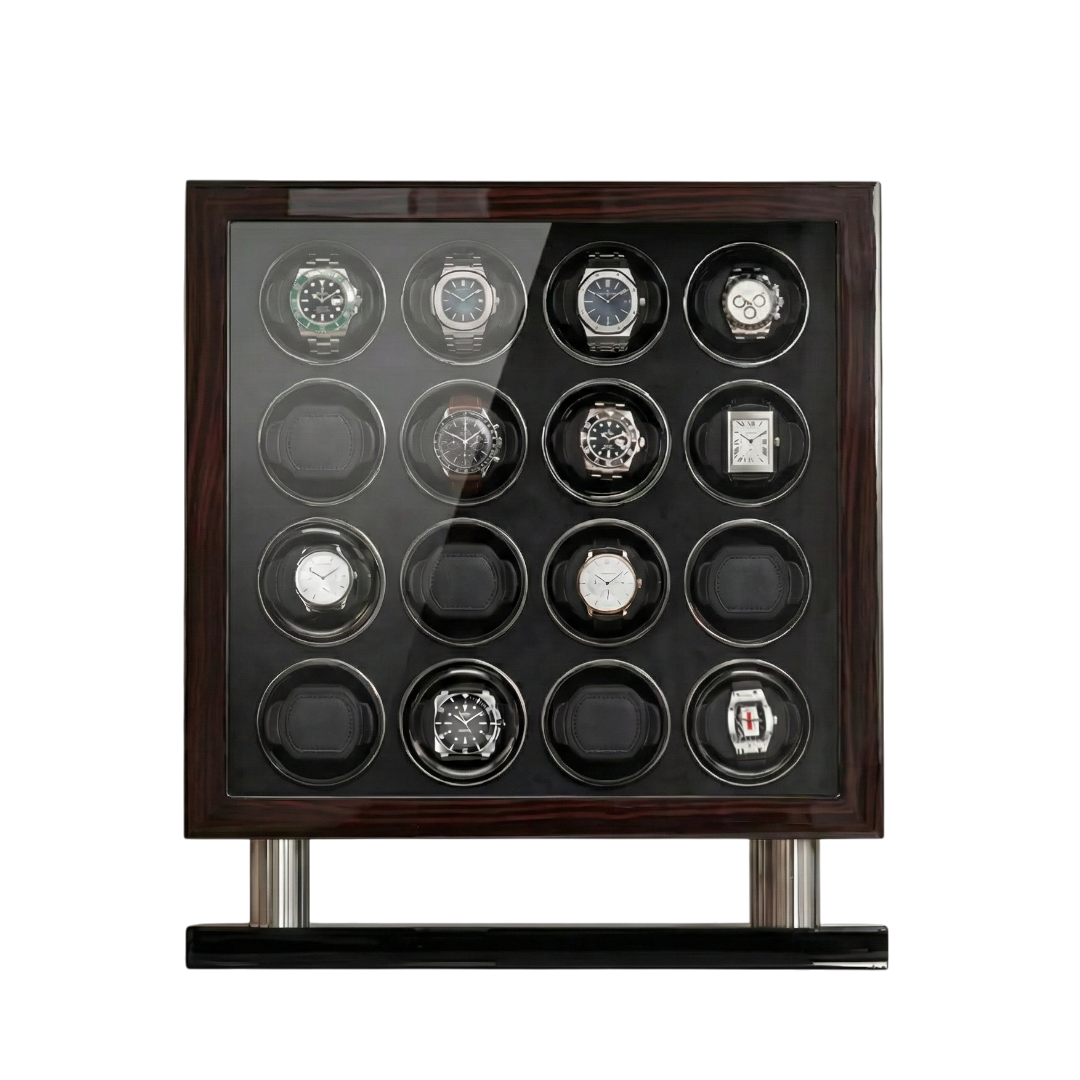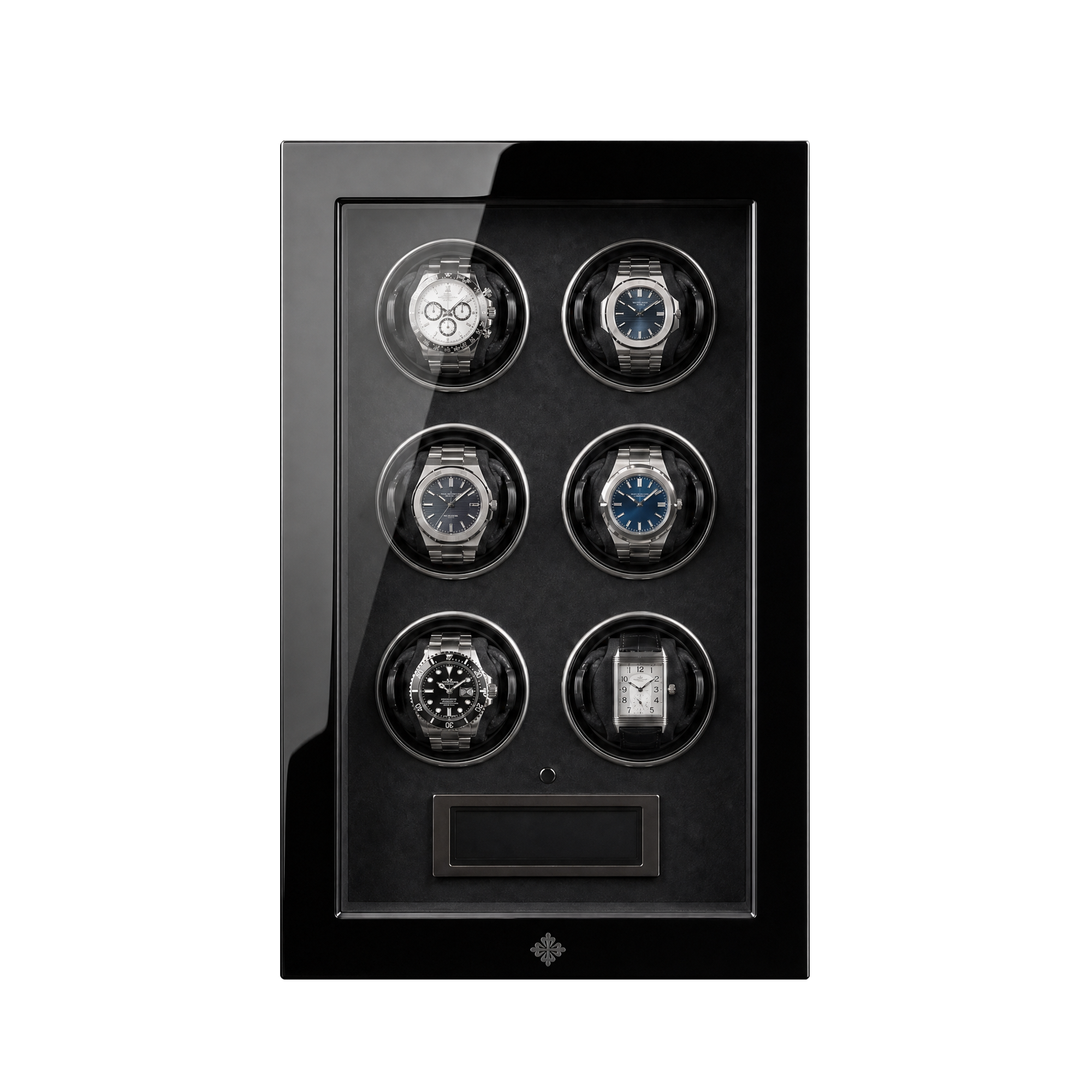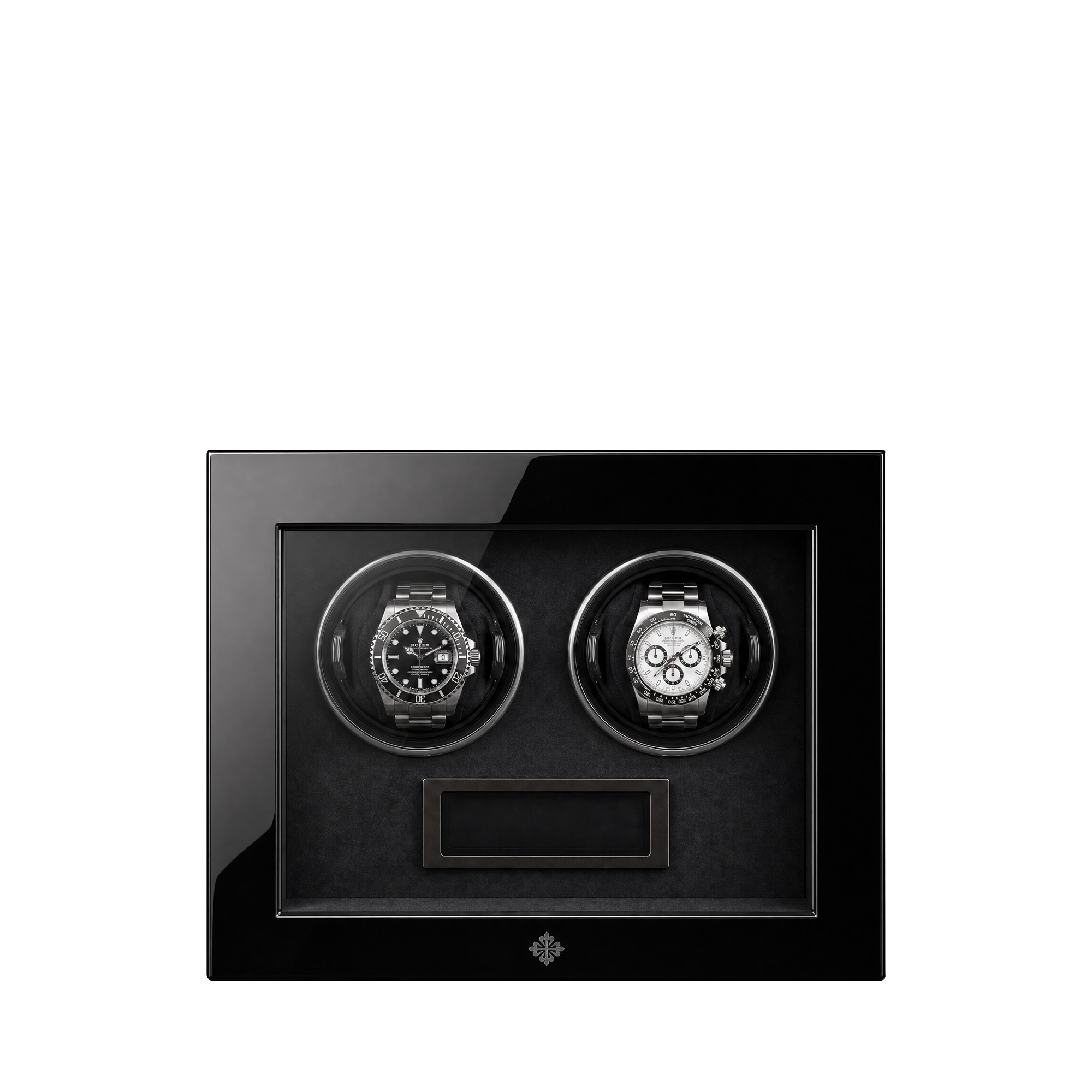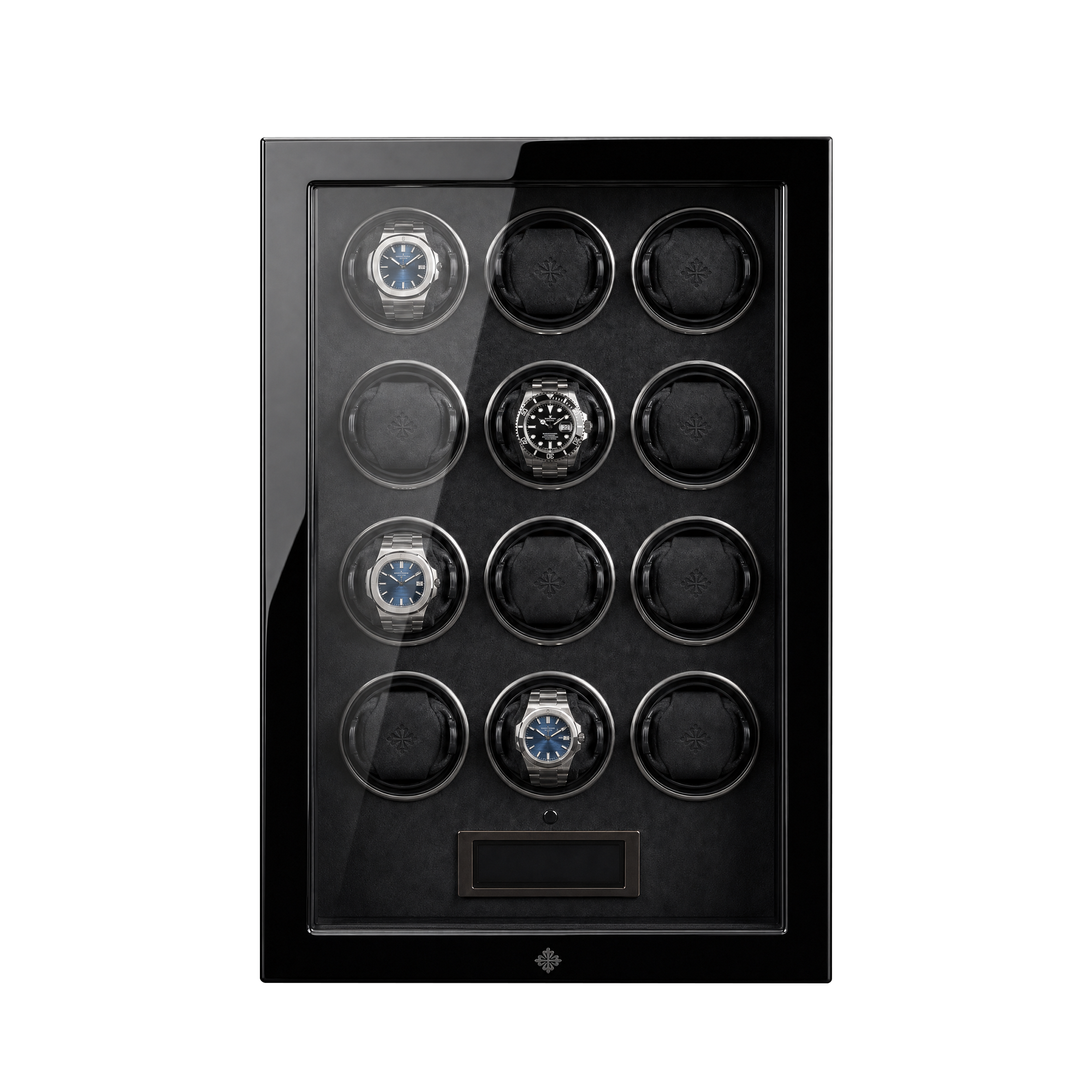

A sapphire display caseback turns the back of a watch into a second dial, and a winder that treats it like ordinary steel will scratch the crystal, crowd the movement, or spin it harder than the caliber wants. This guide names the clearance, cushion material, and motor behavior that matter when the watch winder has to hold a display caseback watch instead of a plain one.
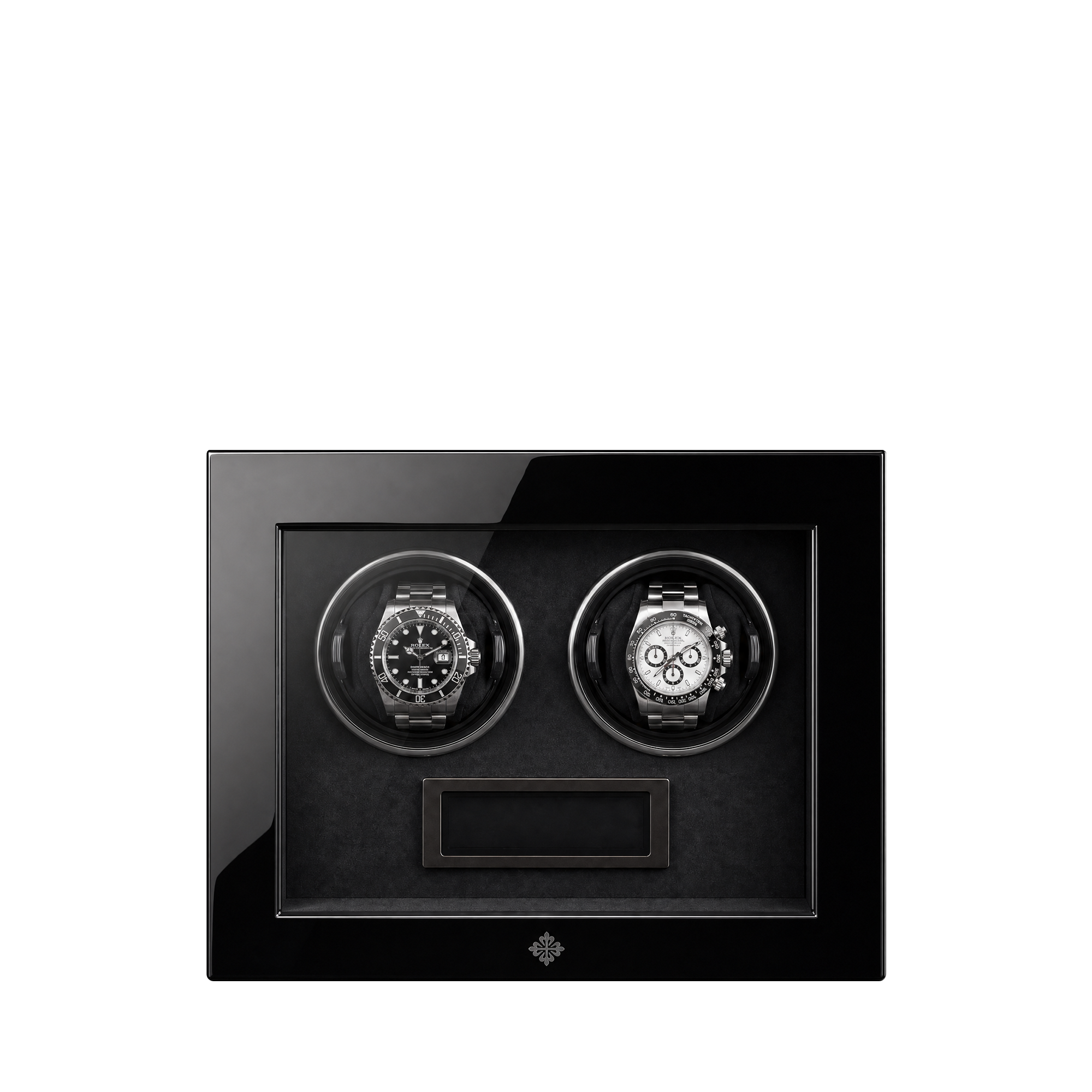
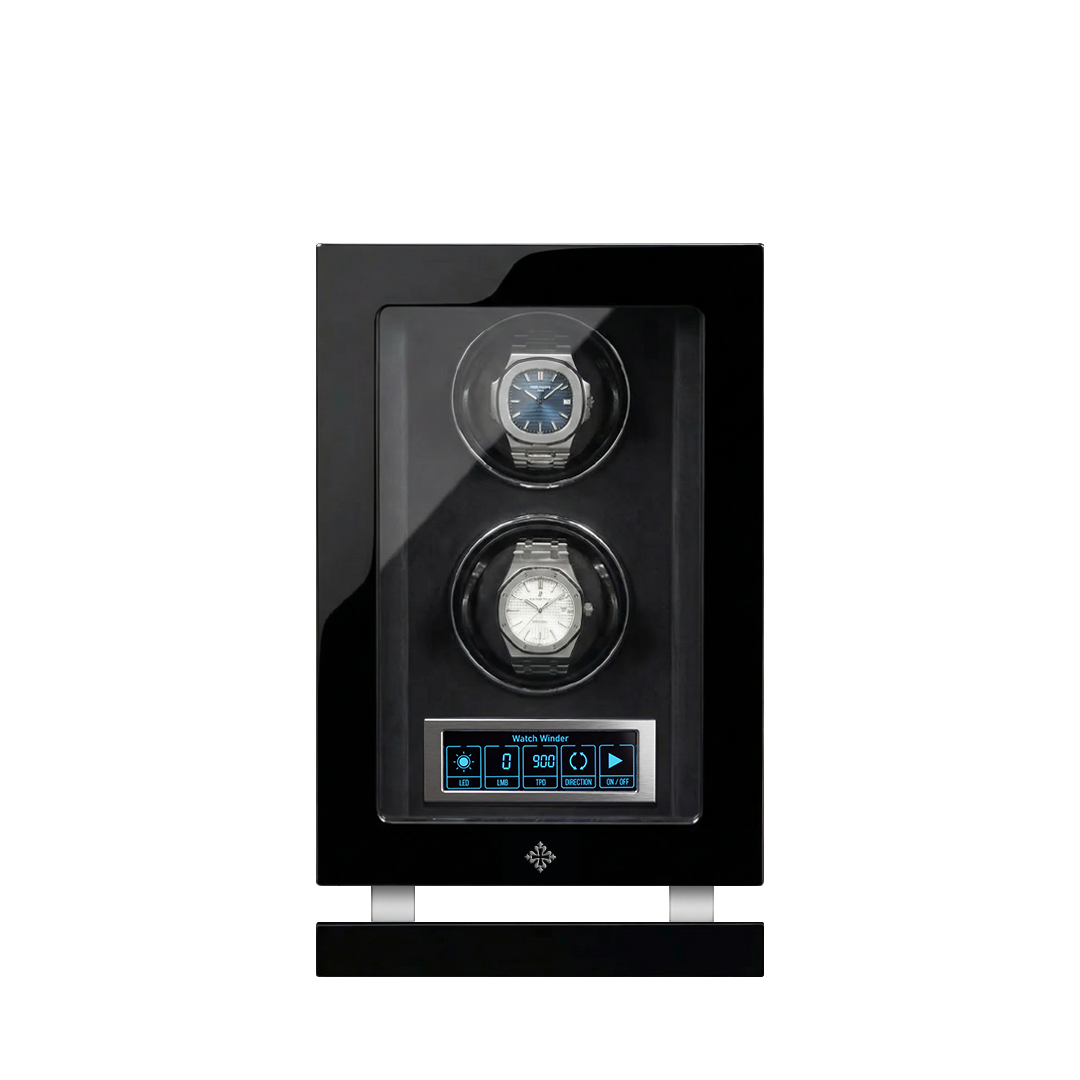
- The Virtuoso Series 2 watch winder is the safe pick for one display caseback watch — its Alcantara-lined telescopic pillow never contacts the case edge. Buy.
- The Impresario Series 2 adds a fingerprint lock and Macassar Ebony housing for $649, still gentle on exhibition backs. Buy.
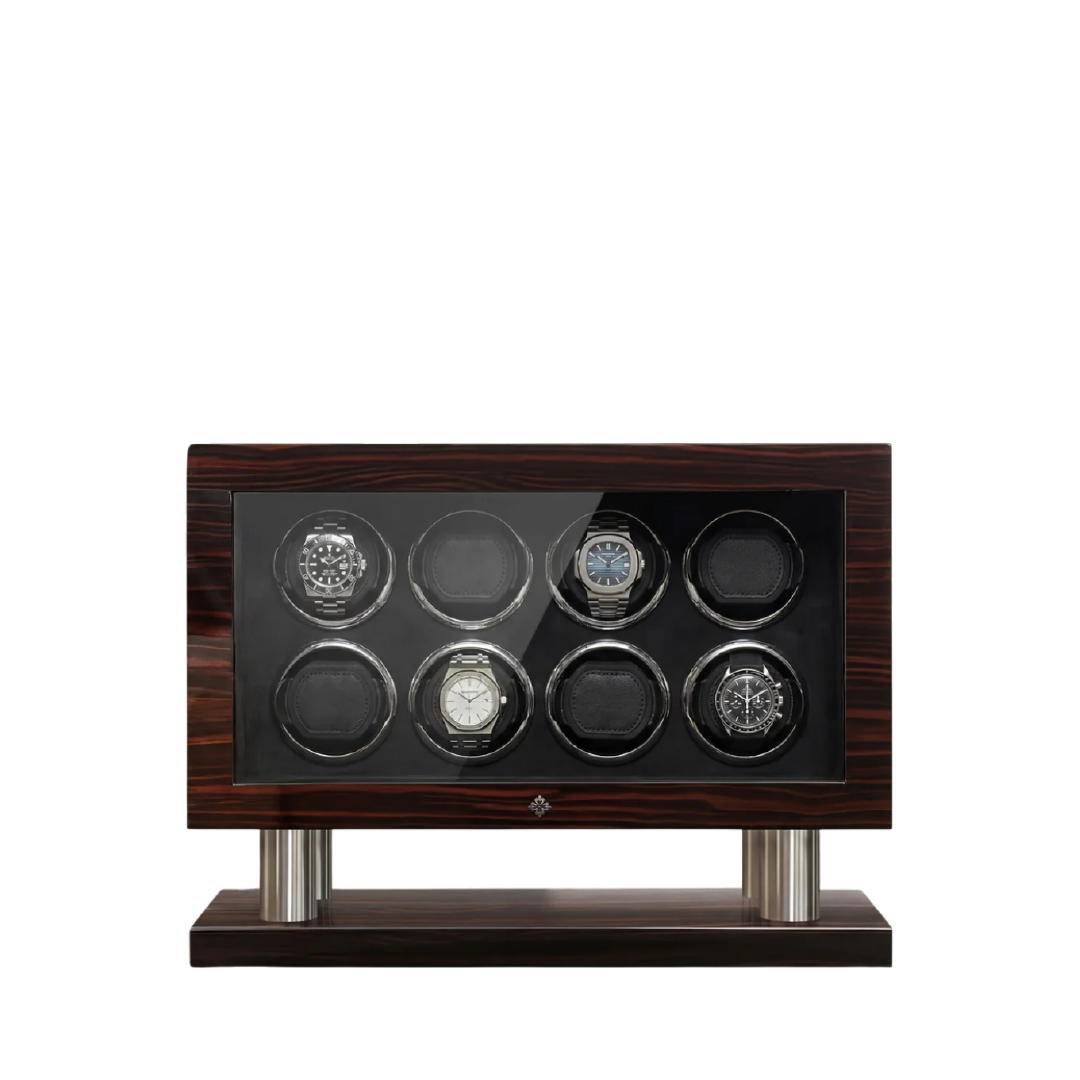
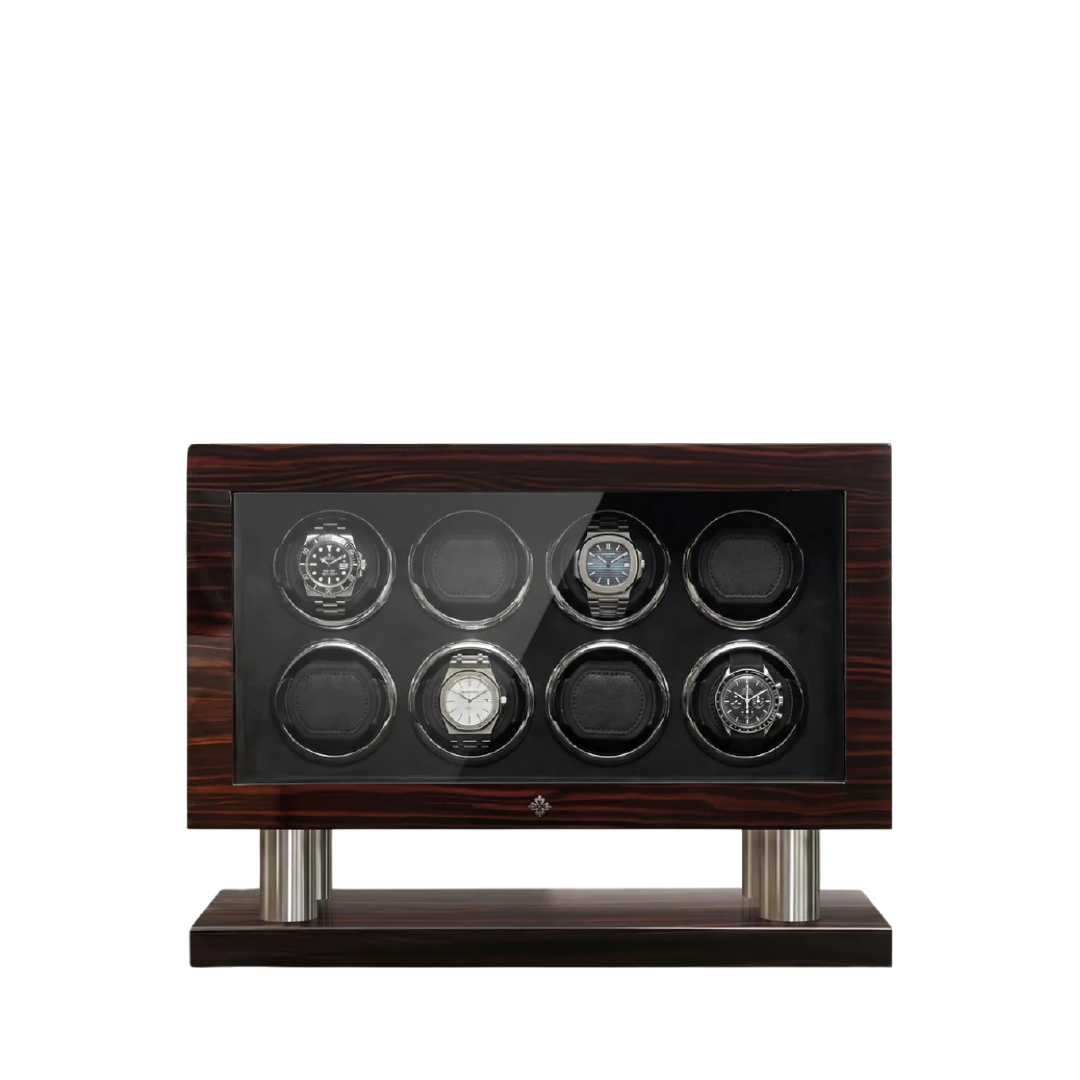
- The Yachtline Series 8 lays eight watches flat so the display caseback faces up and stays visible while winding, at $1,399. Buy.
- Skip winders with fixed foam clamps under $200 in 2026 — tight grips rub the case rim within months.
- Match TPD to the movement, not the winder’s default; an exhibition rotor spinning past spec wears its own bearing faster than the watch’s.
Why this matters
A display caseback removes the metal shield that normally absorbs contact inside a winder box. What’s left is sapphire crystal sitting inches from a rotor cushion, a telescopic pillow, or a foam clamp — and any of those can leave a ring mark on the case edge or a haze on the glass if the fit is wrong. Enigwatch’s watch winder display case guide for collectors covers the visibility side of this; this guide covers the mechanical side — what actually touches the watch while it winds.
Most of the damage reported by collectors in 2026 traces back to two things: a cushion that’s too shallow for the case height, or a motor that runs the rotor past the movement’s rated turns per day (TPD) for months without anyone checking. Both are fixable before you buy, not after.
Who this is for
This guide is for collectors who own at least one automatic with an exhibition or sapphire display caseback — a Grand Seiko Elegance, an IWC Portugieser, a Jaeger-LeCoultre Reverso, or similar — and who want a watch winder that keeps the caseback presentable, not just the movement wound. If your entire collection is solid-back divers, the constraints below matter less.
What to look for in a watch winder for display casebacks
Cushion clearance and cradle depth
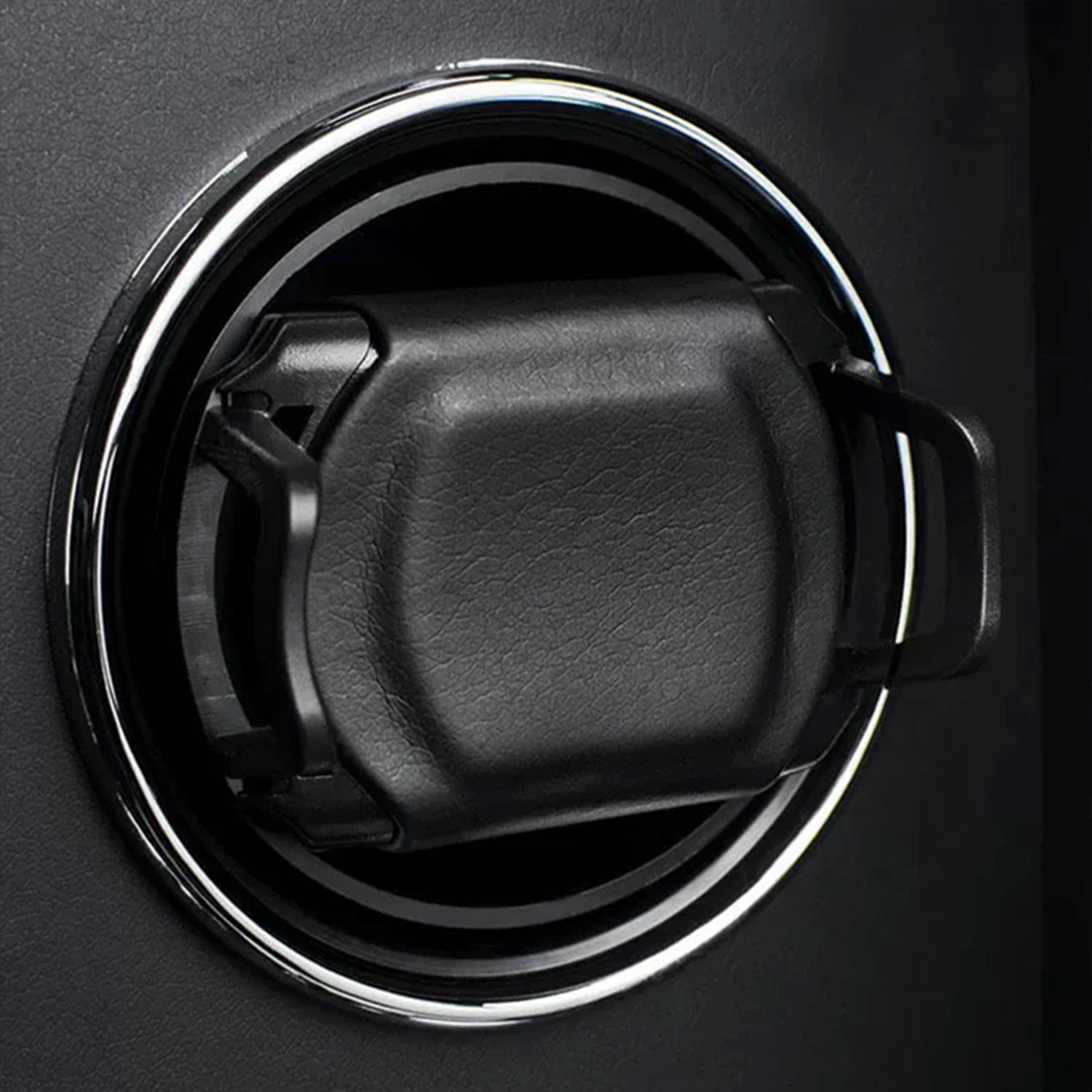
A cushion sized for a 40mm solid-back case can sit too shallow for a 44mm exhibition-back piece, pressing the case rim against the cradle wall. Telescopic pillows that extend rather than fixed foam blocks solve this because they adjust to case height instead of forcing the watch to fit a preset depth.
What the cushion is actually made of
Alcantara and Nappa leather flex slightly under pressure; dense foam and hard plastic do not. On a display caseback, that flex is the difference between a cushion that cradles the case edge and one that scrapes it every time the rotor turns.
Motor smoothness, not just motor presence
A Japanese Mabuchi motor runs quieter and with less lateral vibration than the generic motors found in sub-$150 winders. Vibration transfers through the case to the crystal over thousands of rotations a year — negligible on a solid back, more visible as micro-scratching on a display back over several years.
TPD and direction programmability
Every display caseback watch still runs on a specific caliber with a specific TPD requirement — 650 for many Rolex movements, 800 to 950 for most Omega co-axials, lower for Miyota-based pieces. A winder locked to one preset TPD either underwinds or overwinds calibers outside that range, and overwinding runs the rotor — and the exposed movement behind the sapphire — harder than it needs.
Visibility while winding
Part of owning a display caseback is looking at it. Winders with a solid lid hide that; winders with a glass top or a horizontal open tray keep the movement visible while the watch winds, which matters if display was the point of buying the watch.
Top picks for a display caseback watch
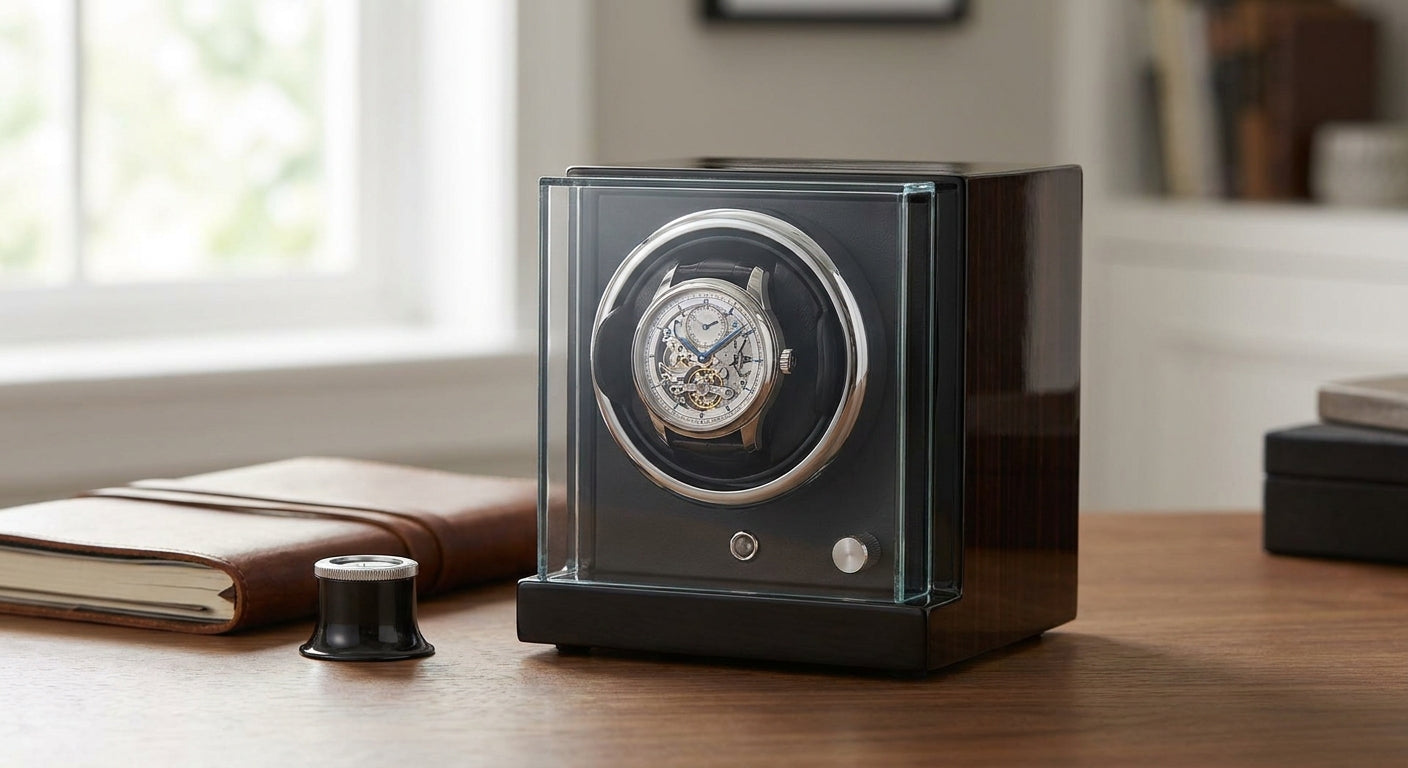
Virtuoso Series 2 watch winder — the safe pick. Two independent rotors, each on its own program, housed in Macassar Ebony with an Alcantara-lined telescopic pillow. At $599, it’s built for exactly two display caseback watches with different TPD needs run side by side. Buy for a small, mixed-caliber collection.
Impresario Series 2 watch winder — the vault-grade pick. Same telescopic pillow and Alcantara lining as the Virtuoso line, with a fingerprint lock added for $649. The lock matters less for the caseback than the cushion does, but if the winder sits somewhere accessible, this is the version that adds security without changing the fit. Buy if access control matters as much as the wind.
Yachtline Series 8 watch winder — the display piece. Eight rotors laid horizontally instead of stacked vertically, so each display caseback faces up rather than pressed against a vertical cushion wall. At $1,399, it suits a collector with several exhibition-back pieces who wants them visible on a credenza rather than closed inside a box. Buy for larger, display-forward collections; Skip if you only own one or two display caseback watches — the Virtuoso Series 2 or Impresario Series 2 covers that at a third of the cost.
Enigwatch also sells a standalone watch winder pillow accessory that telescopes from 36mm to 55mm case sizes, useful if an existing box’s stock cushion sits too shallow for one oversized display caseback piece without replacing the whole winder.
What to avoid
- Foam-clamp winders under $200. The clamp is fixed and rigid; it doesn’t flex for case height and it’s the single most common source of caseback edge marks reported by collectors.
- Winders with no visible TPD control. If you can’t set turns per day and direction, you’re running every caliber at the same setting regardless of what it needs — fine for a solid back, riskier for a movement you can watch through the glass.
- Stacked vertical cushions for oversized cases. A display caseback watch that runs 44mm or larger often sits too tall for a standard vertical cradle, forcing the case against the box lid when closed.
Verdict comparison
| Winder | Price | Rotors | Lock | Best for | Verdict |
|---|---|---|---|---|---|
| Virtuoso Series 2 | $599 | 2, independent | None | One or two display caseback watches | Buy |
| Impresario Series 2 | $649 | 2, independent | Fingerprint | Same, with access control | Buy |
| Yachtline Series 8 | $1,399 | 8, horizontal | Biometric | Larger display-forward collections | Buy |
FAQ
Does a watch winder scratch a display caseback?
A watch winder can scratch a display caseback if the cushion is rigid foam or the cradle is too shallow for the case height. Alcantara-lined telescopic pillows, like those on the Virtuoso and Impresario lines, avoid contact with the case edge.
What’s the best watch winder for a sapphire display caseback?
The Virtuoso Series 2 is the best watch winder for a single sapphire display caseback watch in 2026, at $599 with an Alcantara-lined telescopic pillow. Larger collections with several display-back pieces do better with the Yachtline Series 8.
Can a display caseback watch sit in any winder?
No — a display caseback watch needs clearance and a soft cushion material, which fixed foam-clamp winders under $200 typically don’t provide. Telescoping cushions in Alcantara or Nappa leather handle case height variation better.
Does winding a watch too fast damage a display caseback movement?
Running a rotor above the movement’s rated TPD doesn’t damage the caseback glass directly, but it does add unnecessary wear to the rotor bearing behind it. Setting TPD to the caliber’s spec, not the winder’s default, avoids this.
Is a horizontal winder better for display casebacks than a vertical one?
A horizontal layout like the Yachtline Series 8 keeps the display caseback facing up and visible while winding, which vertical stacked winders don’t. Vertical winders can also crowd oversized cases against the box lid.
How much does a watch winder for a display caseback cost in 2026?
Winders built with telescopic pillows and Alcantara interiors start around $599 for a two-watch model and run to $1,399 for an eight-watch horizontal winder. Foam-clamp winders under $200 exist but carry a higher risk of case rim contact.
Do I need a different winder for each display caseback watch?
No, a multi-rotor winder with independent TPD programs per watch handles mixed calibers without needing a separate box for each piece. The Impresario Series 2 and Virtuoso Series 2 both run two watches on separate schedules.
One last thing
The detail most collectors miss isn’t the motor or the lock — it’s cushion depth relative to case thickness. A display caseback adds height that a solid-back case doesn’t have, and Enigwatch’s telescopic pillows exist specifically because a fixed-depth cushion can’t account for that variance across a mixed collection. Check case height against cushion range before checking anything else on the spec sheet.
Related guides
Protect Your Watch Collection
Designed for collectors who demand the best. Explore our premium watch winders and luxury safes.
Protect Your Watch Collection
Designed for collectors who demand the best. Explore our premium watch winders and luxury safes.