
A rubber strap changes what a watch winder actually needs to do — clamp width, pillow depth, and rotor clearance all shift once the strap on your wrist is silicone or vulcanized rubber instead of calfskin or steel.
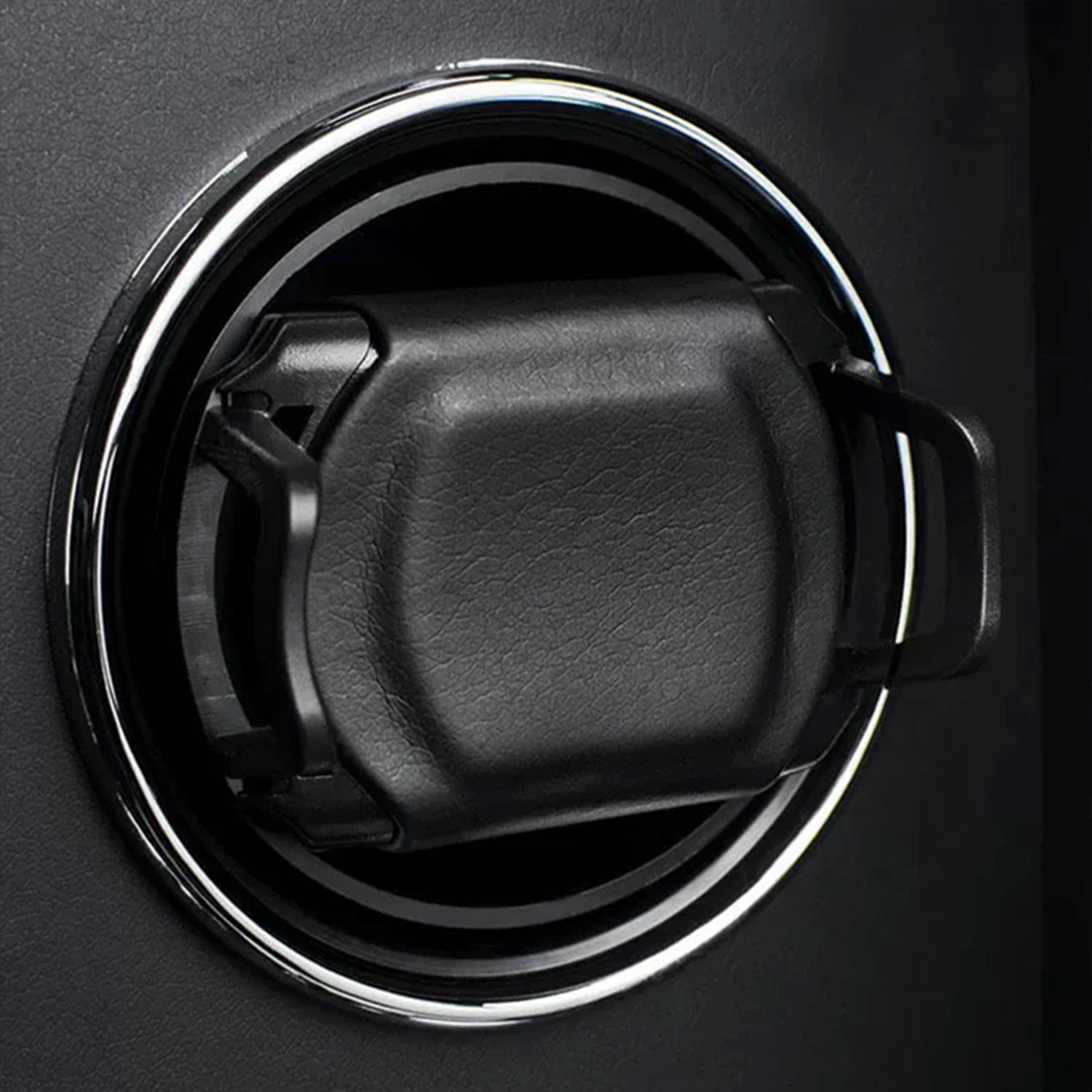
- A watch winder for a rubber strap needs a telescopic pillow, not a fixed clamp built for leather.
- Enigwatch’s Impresario Series 2 adjusts to rubber straps from roughly 20mm to 26mm — buy for daily wear.
- Rigid foam pillows crease vulcanized rubber inside three to six months of daily use — skip them.
- Virtuoso Series 6 runs six independent TPD programs, useful when rubber and leather straps share one drum.
- Rubber-strap divers commonly need 650-800 turns per day, not the 900+ some winders market as universal.
Why this matters
Rubber and silicone straps move differently under a winder’s rotor arm than leather or bracelet links do. A Panerai vulcanized rubber strap runs close to 6mm thick at the lug and sits stiffer against a curved clamp than a soft calfskin band twenty grams lighter. A pillow calibrated for leather clamps too hard against that thickness, and a crease line shows up at the contact point within weeks.
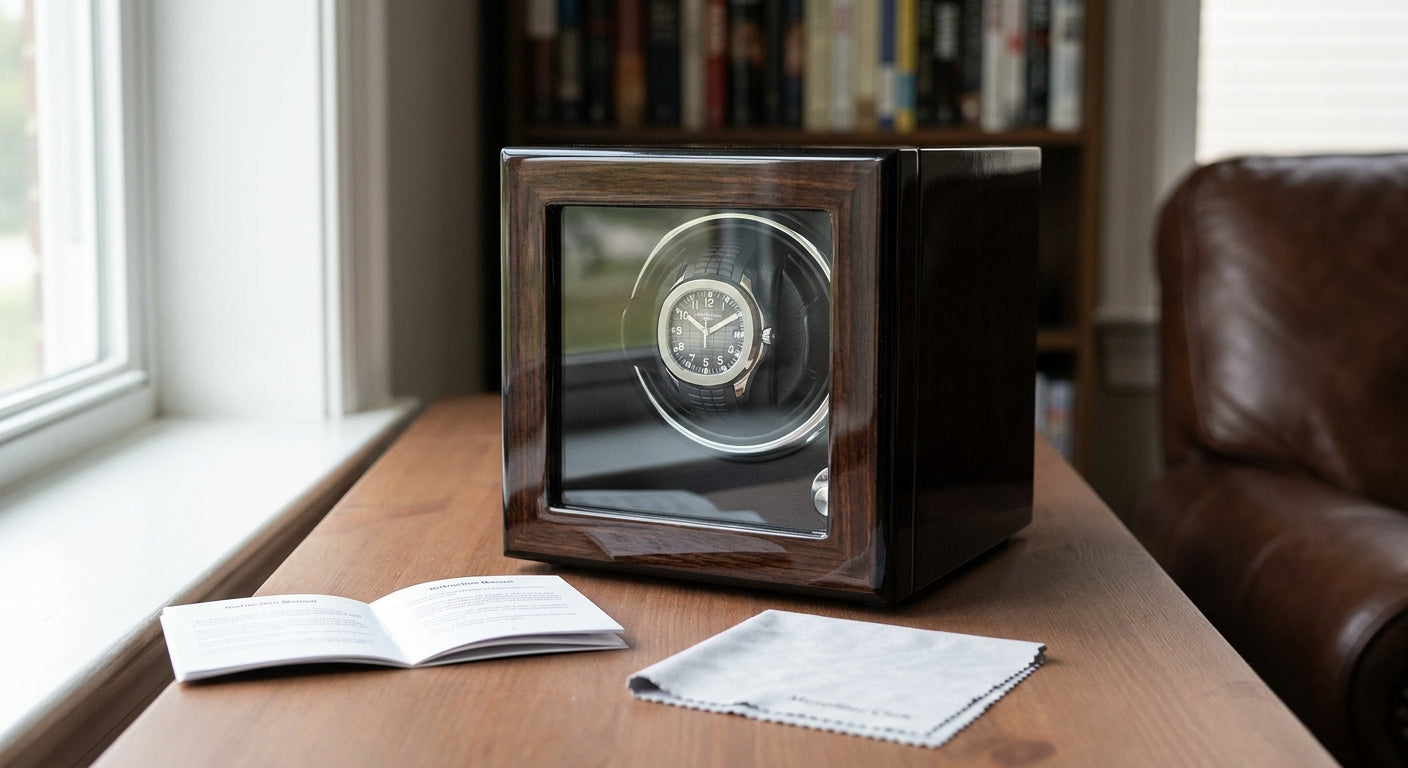
Enigwatch’s winder lineup addresses this with telescopic pillows that adjust independently of case diameter, which matters more for rubber straps than for any other strap material. The Watch Winders Pillow retrofits that adjustment onto an existing drum for $59, without forcing a full winder replacement.
The term “watch winder” gets used online as if one clamp fits every strap. It doesn’t. A rubber Oysterflex on a Rolex Yacht-Master behaves nothing like a leather strap on a dress watch once it’s locked into a rotor arm for a typical 8-to-12-hour daily wind cycle in 2026.
“A pillow calibrated for leather clamps too hard against rubber, and a crease line shows up within weeks.”
Who this is for
This guide is for collectors who own at least one automatic sports watch on a rubber, silicone, or vulcanized strap — a Panerai Luminor on rubber, an Audemars Piguet Royal Oak Offshore, a Richard Mille, a Rolex Yacht-Master on Oysterflex, or a Hublot Big Bang — and who want that watch wound correctly on the shelf without checking the strap every time the drum opens. It isn’t written for someone whose collection sits entirely on leather or metal bracelets; those straps tolerate a fixed clamp in ways rubber doesn’t.
What to look for in a watch winder for rubber straps
Telescopic pillow with adjustable clamp tension
A fixed clamp sized for a 20mm leather strap will either pinch a 26mm rubber strap or let it sit loose and slap the drum wall on every rotation. Telescopic pillows solve both problems by letting clamp width move independently of pillow height.
Rotor cage depth for strap thickness
Vulcanized rubber straps run thicker at the lug than most leather equivalents — often close to 6mm on a Panerai versus 2-3mm on calfskin. A shallow cage forces that thickness against the drum wall mid-rotation, which is where scuff marks start.
Independent TPD programming per rotor
Mixed collections are common once a rubber-strap dive watch shares drum space with a leather-strap dress piece. One rotor speed rarely serves both; a rubber-strap diver commonly runs 650-800 turns per day, while a slimmer dress caliber wants fewer. Independent programs per rotor solve that without a second winder.
Lining material that doesn’t react with rubber
Some synthetic foam linings leave a faint residue on silicone and vulcanized rubber after months of contact. Alcantara and Nappa leather linings, used across Enigwatch’s winder interiors, sit inert against rubber compounds instead of reacting with them over time.
Access speed for watches that rotate often
Sports watches on rubber straps tend to swap in and out of daily wear more than dress pieces do. A biometric lock that opens in under two seconds matters more here than on a drum holding watches that sit untouched for a season.
Top picks for rubber-strap watches
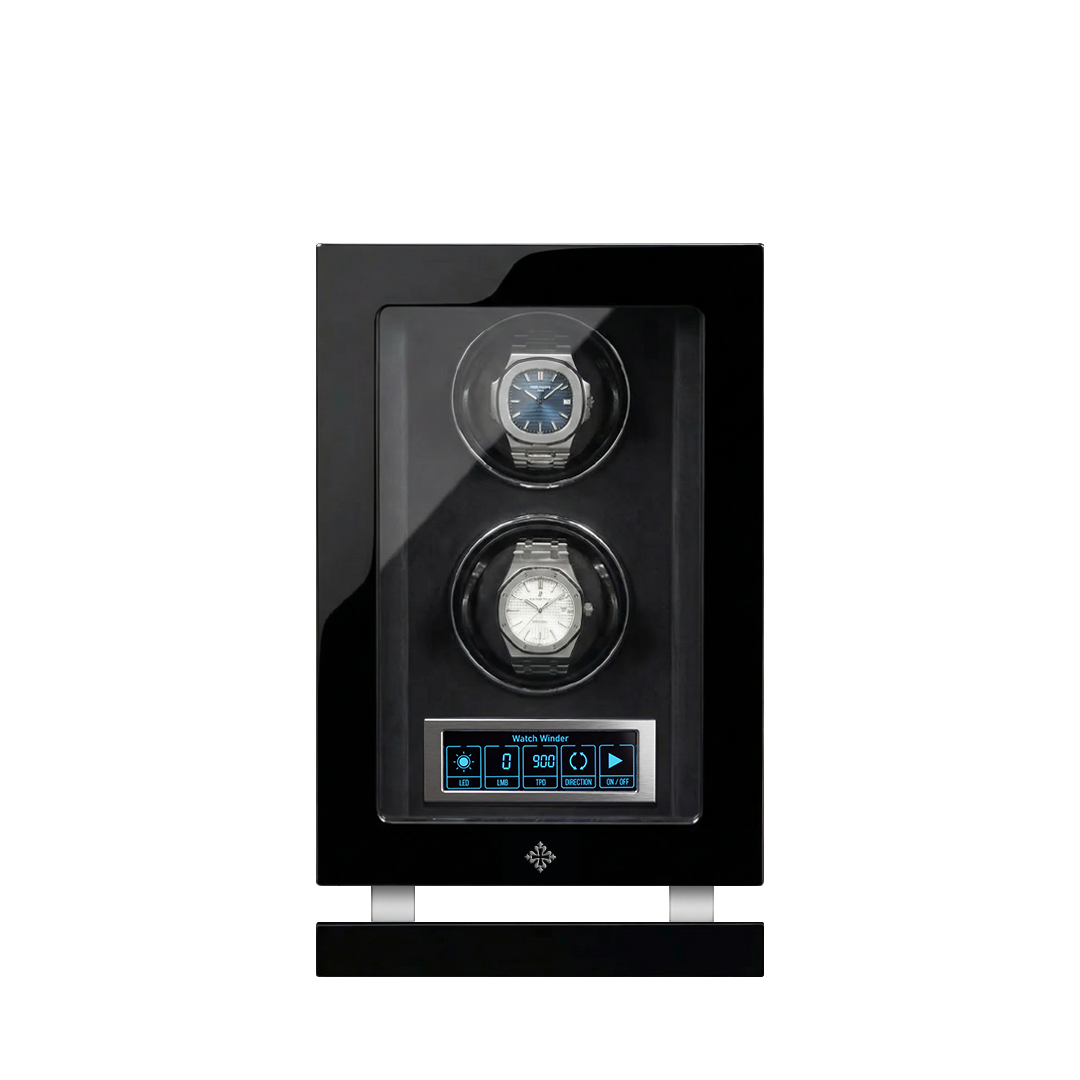
Impresario Series 2 Watch Winder — the everyday pick.
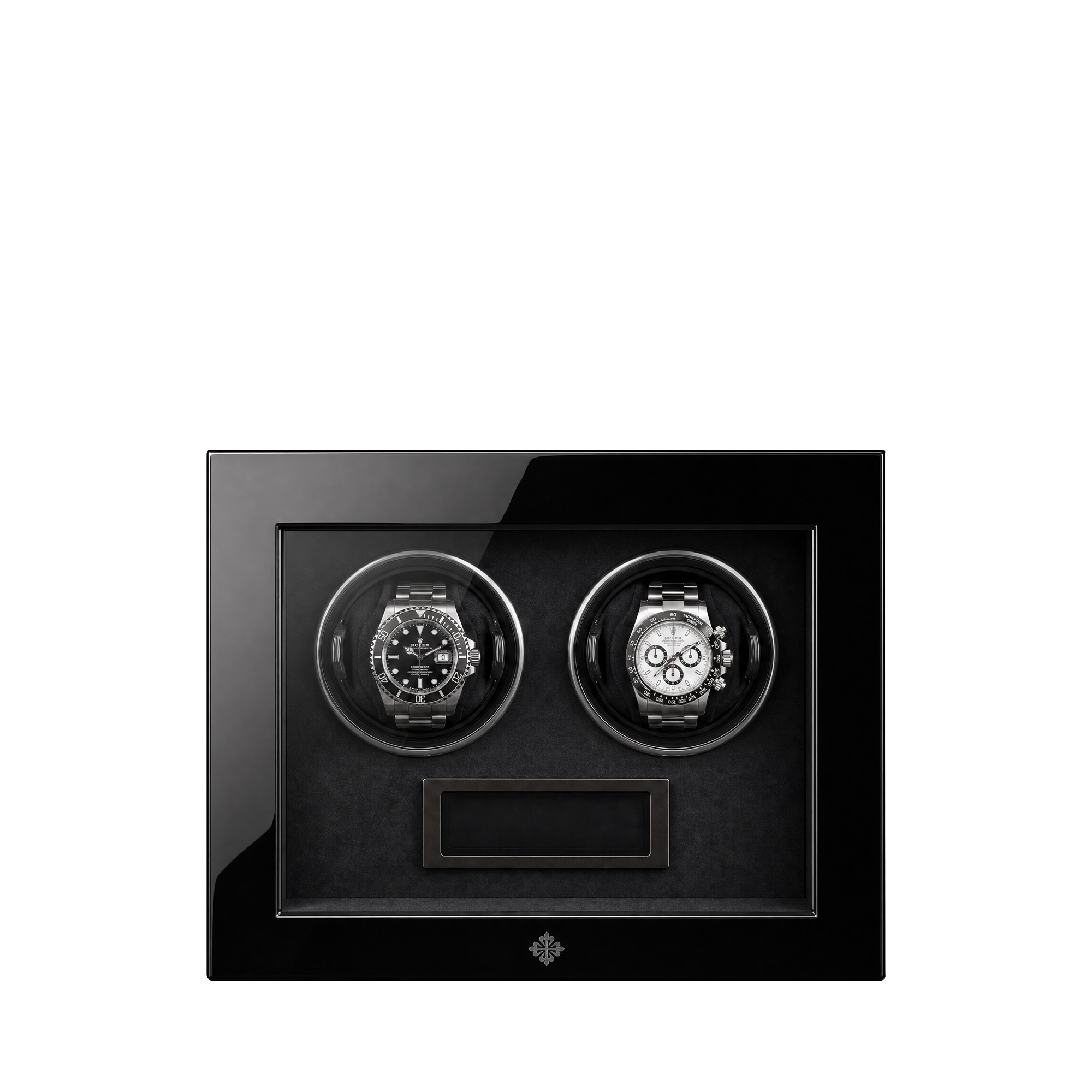
Two independent rotors, a fingerprint lock, and a telescopic pillow that adjusts to rubber straps from roughly 20mm to 26mm without swapping parts. At $649, it’s built for a single rubber-strap sports watch paired with a second piece on a different strap material, each running its own program through the ChronoSync panel. Buy if your rubber-strap watch rotates daily and shares drum space with one other piece.
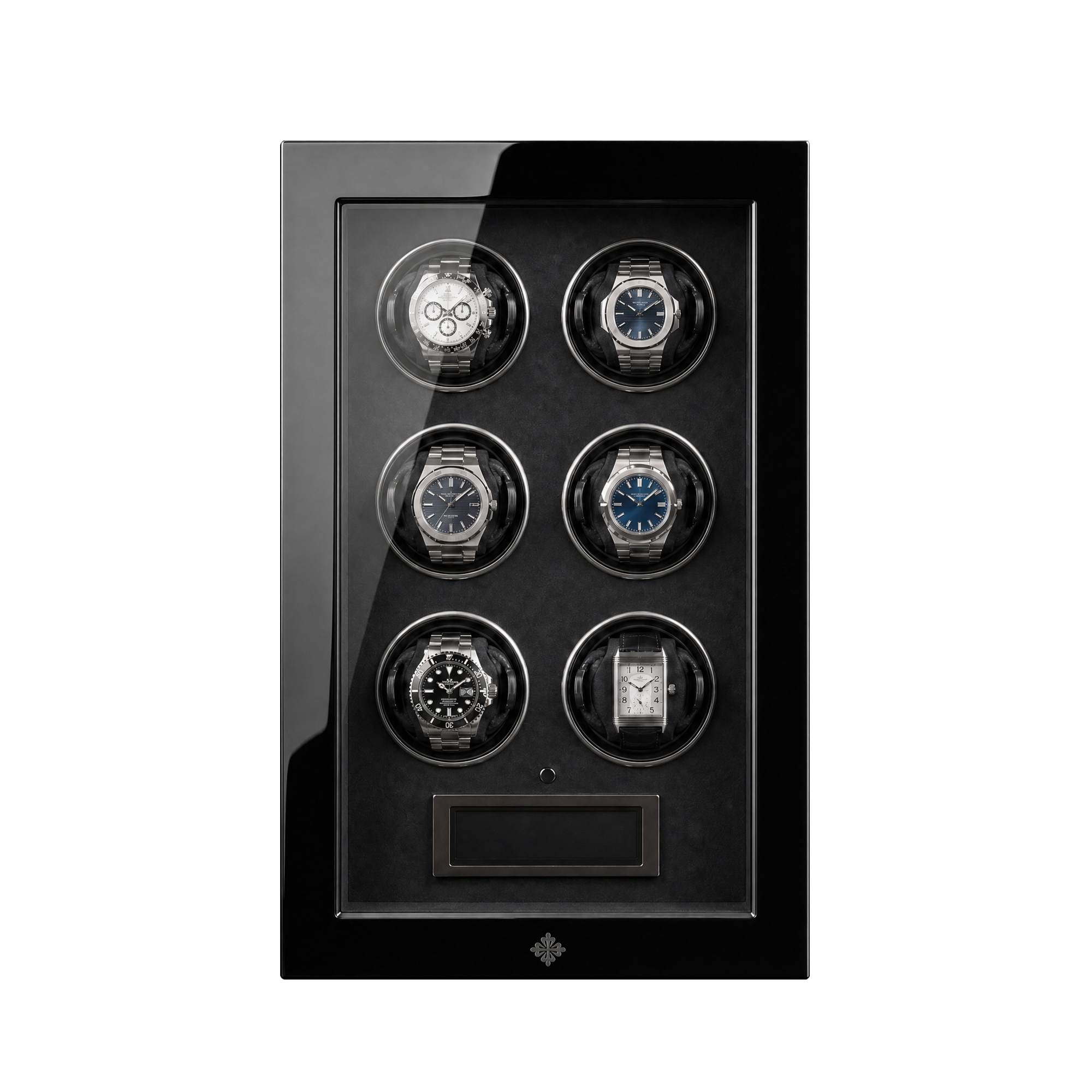
Virtuoso Series 6 Watch Winder — the mixed-collection pick.
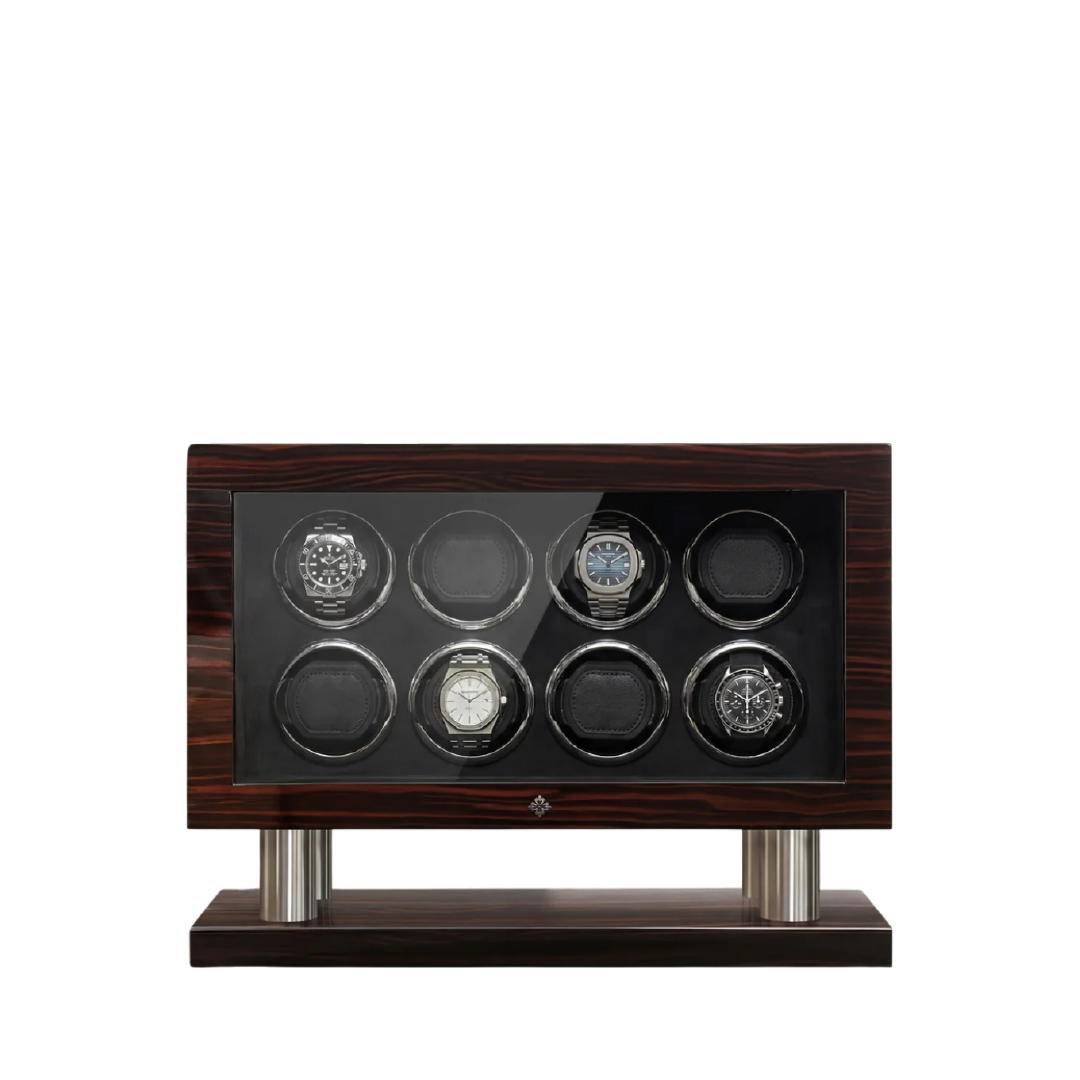
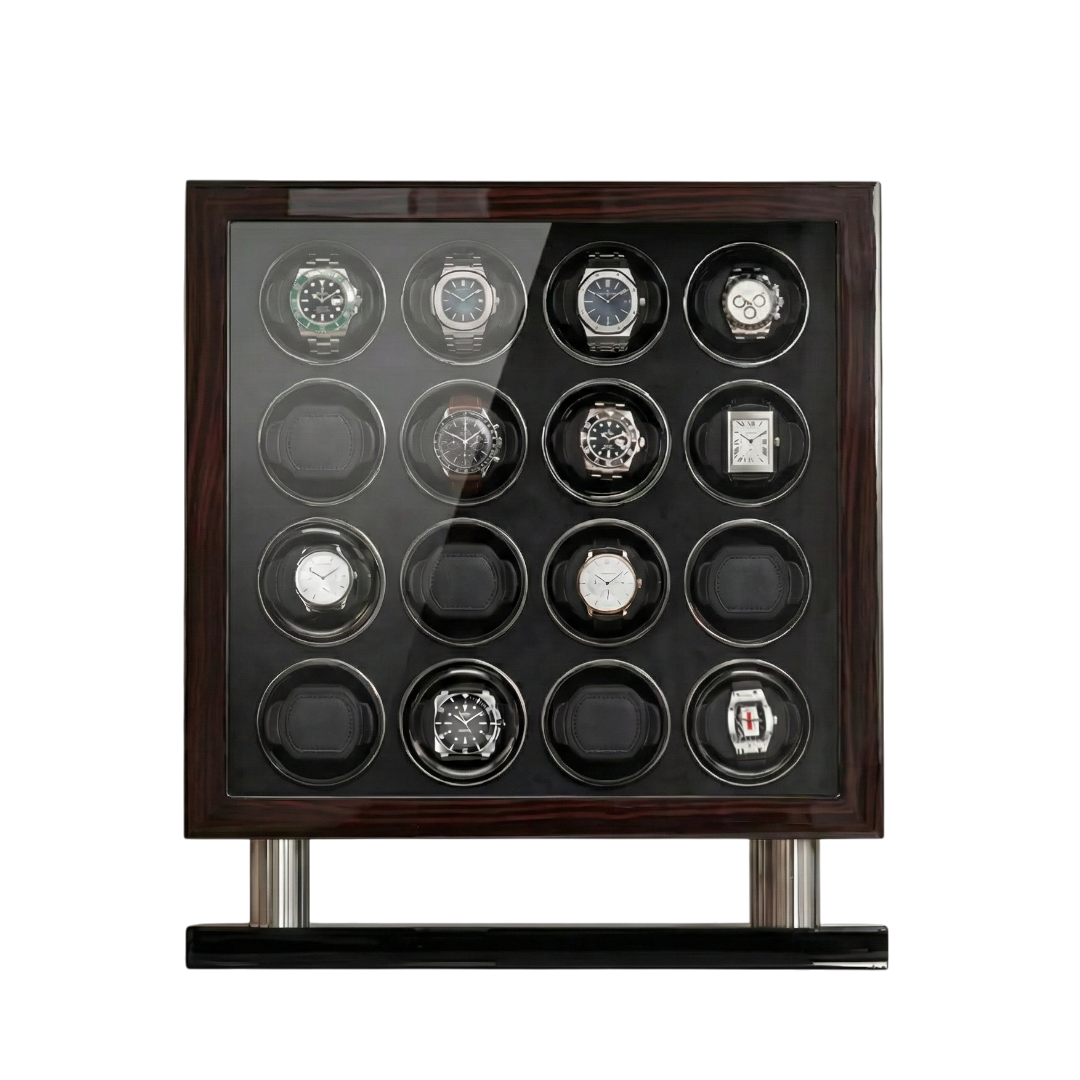
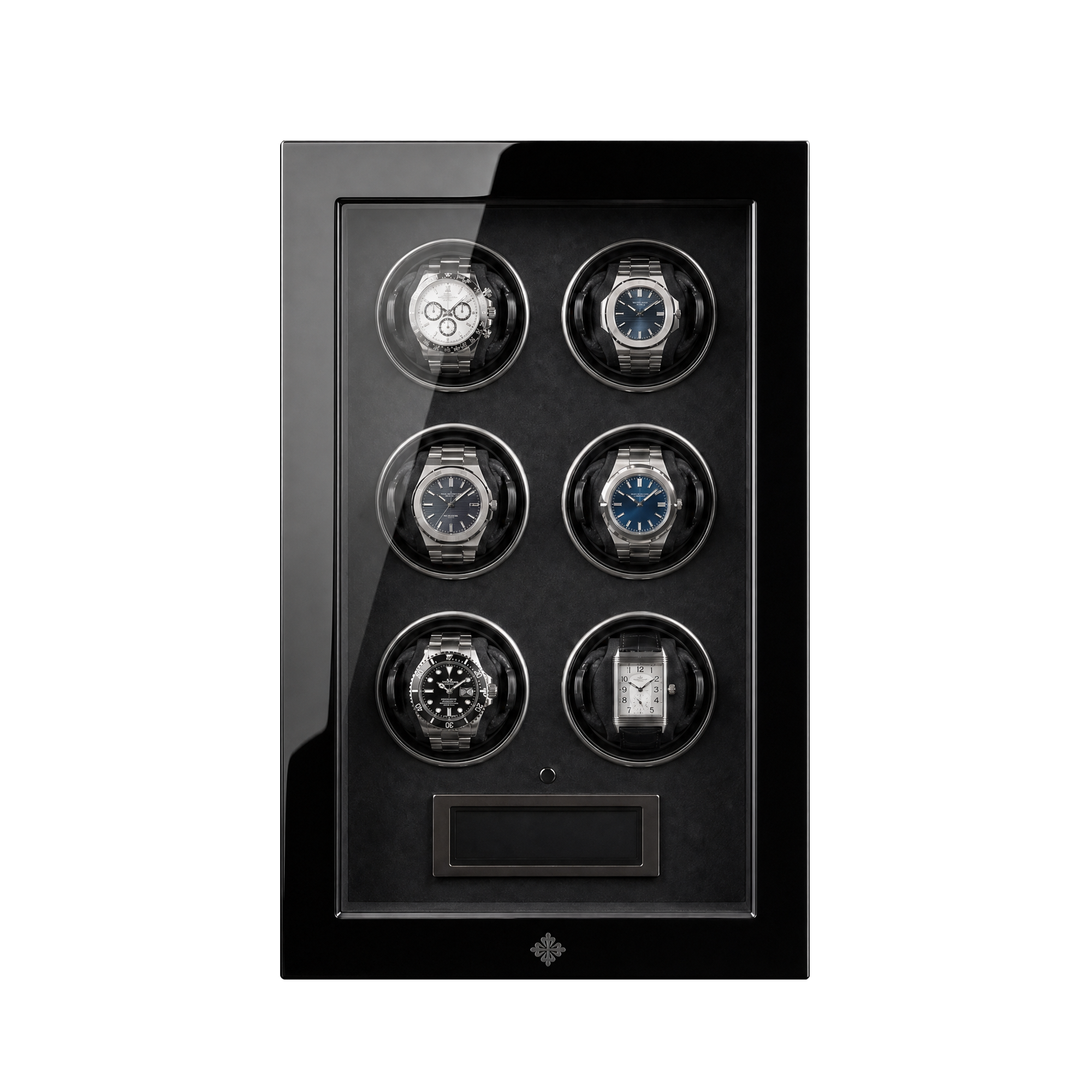
Six rotors, each running an independent TPD program, inside a Macassar Ebony and Alcantara-lined case priced at $949. This is the model for a collector whose rubber-strap Royal Oak Offshore sits next to five other calibers with five different winding requirements. Buy if rubber and leather straps are mixed across a six-piece rotation.
Watch Winders Pillow — the retrofit fix.
At $59, this telescopic pillow accommodates case sizes from 36mm to 55mm and drops into most existing drums without a full winder swap. It’s the cheapest way to correct a clamp that’s been creasing a rubber strap on an older winder. Buy as an add-on before replacing a working drum outright.
Yachtline Series 8 — the wildcard.
Eight rotors laid flat in a horizontal tray instead of stood upright, which reduces the clamp pressure that vertical drums put on wide rubber straps. At $1,399, it suits collectors with thick rubber straps like Panerai’s 26mm band who want lower contact pressure across a larger rotation. Consider it if strap thickness has caused problems on a vertical winder before.
What to avoid
- Rigid foam pillows built for leather. They don’t flex to rubber’s stiffness and tend to leave a permanent crease at the contact point inside three to six months of daily use.
- Fixed-width clamps under $200. These can’t widen past roughly 22mm, which locks out most 24-26mm dive-watch rubber straps by design, not by accident.
- Marketing claims of a single “universal” TPD. Rubber-strap divers commonly need 650-800 turns per day; running a flat 900+ TPD setting because a winder was marketed as universal adds unnecessary wear at the strap’s molded contact points, not to the movement.
Verdict comparison
| Winder | Price | Rotors | Pillow type | Best for | Verdict |
|---|---|---|---|---|---|
| Impresario Series 2 | $649 | 2, independent | Telescopic, 20-26mm | Daily rubber-strap wear | Buy |
| Virtuoso Series 6 | $949 | 6, independent | Telescopic | Mixed rubber + leather collections | Buy |
| Watch Winders Pillow | $59 | N/A (accessory) | Telescopic, 36-55mm case | Retrofitting an existing drum | Buy |
| Yachtline Series 8 | $1,399 | 8, horizontal | Flat tray, low pressure | Thick rubber straps (26mm+) | Consider |
FAQ
What’s the best watch winder for a rubber strap watch?
The Impresario Series 2 is the best fit for most rubber-strap sports watches in 2026, since its telescopic pillow adjusts from roughly 20mm to 26mm without swapping parts. Collectors mixing rubber and leather straps across several watches should look at the Virtuoso Series 6 instead.
Does a rubber strap need a different pillow than leather?
Yes — a pillow sized for leather clamps too hard against rubber’s stiffness and can leave a permanent crease within three to six months. Telescopic pillows solve this by adjusting clamp width independently of case diameter.
Can a watch winder damage a rubber strap over time?
A winder can damage a rubber strap if the clamp is undersized, creating a set line at the contact point in a matter of weeks. Using a telescopic pillow or rotating the strap’s clamp position periodically prevents this.
How wide should a winder pillow be for a Panerai rubber strap?
Panerai’s vulcanized rubber straps run close to 26mm wide at the lug, so the pillow clamp needs to open to at least that width without pinching. Fixed clamps under $200 typically top out around 22mm and don’t fit.
Is TPD different for rubber-strap dive watches?
Most rubber-strap dive watches run 650-800 turns per day, which is standard for automatic movements in that category. A winder marketed as running a flat 900+ TPD for every watch adds unnecessary wear at the strap’s contact points.
Should I remove a rubber strap watch from the winder daily?
No — a properly fitted telescopic pillow doesn’t require daily removal, since it doesn’t concentrate pressure at one point on the strap. Removal matters more with fixed clamps that were never designed for rubber’s thickness.
What lug width fits most rubber strap sports watches?
Most rubber-strap sports and dive watches fall between 20mm and 26mm at the lug in 2026, covering everything from a Rolex Yacht-Master on Oysterflex to a Panerai Luminor on rubber. A telescopic pillow needs to cover that full range.
How much do winders with adjustable pillows cost?
Winders with telescopic, adjustable pillows start around $599-$649 for single or dual-rotor models and climb to $1,399 or more for eight-rotor horizontal designs. A standalone retrofit pillow costs as little as $59.
One last thing
A rubber strap under constant clamp tension can start to show a set line at the contact point in weeks, not months, if the pillow clamp is undersized for it — rotating the strap’s position in the clamp every few weeks, or switching to a telescopic pillow that doesn’t need repositioning, is the cheaper fix compared to replacing a strap in 2026.
Related guides
Protect Your Watch Collection
Designed for collectors who demand the best. Explore our premium watch winders and luxury safes.
Protect Your Watch Collection
Designed for collectors who demand the best. Explore our premium watch winders and luxury safes.