
The TAG Heuer Aquaracer runs on one of several ETA or Sellita-based calibers — and getting the TPD and direction wrong on your winder means the rotor spins against resistance, the mainspring sees unnecessary stress, and your power reserve drifts short. This guide covers exactly what the Aquaracer needs, which winders match those specs, and what to avoid.
TL;DR: The TAG Heuer Aquaracer needs 650–800 turns per day (TPD) in bidirectional mode for most calibers (Calibre 5, 16, and their Sellita equivalents). A winder with independently adjustable motors, a quiet Japanese motor, and a rest-cycle program is the right fit for this watch in 2026. Enigwatch’s Impresario and Virtuoso series both cover this spec range. Budget winders that lock to a single direction or cap out below 600 TPD are the wrong tool.
Why the Aquaracer’s caliber dictates your settings
TAG Heuer uses ETA 2824-2 and 2892-A2 derivatives alongside Sellita SW200 and SW300 movements across the Aquaracer line. All of them wind bidirectionally — the rotor catches energy on both clockwise and counterclockwise rotation. Running a strictly unidirectional winder on a bidirectional movement wastes half of every rotation cycle. In practical terms: a winder set to 1,000 TPD clockwise-only delivers roughly 500 effective winds to a bidirectional rotor. You either under-wind the watch or the winder has to spin twice as long to compensate.
The Aquaracer’s power reserve runs 38–42 hours depending on caliber. A winder doesn’t need to replicate a full day of wrist movement — it needs to keep the mainspring within 70–90% of full tension without constant rotation. That means rest cycles matter as much as TPD count.
Who this guide is for
You own one or more TAG Heuer Aquaracers — the 300m, the Calibre 5 date, the Calibre 16 chronograph, or the newer Aquaracer Professional models — and you want a winder that keeps them accurate and dial-ready without babysitting the settings. You may be adding the Aquaracer to a collection that already includes other automatic watches, so a multi-slot winder with per-motor control is the more likely buy than a single-slot unit.
What to look for in a watch winder for the TAG Heuer Aquaracer
Bidirectional rotation as a standard setting
Every ETA and Sellita movement used in the Aquaracer line winds from both directions. A winder that offers clockwise, counterclockwise, or bidirectional modes is the minimum — but the bidirectional setting must be the default you can lock in. Some entry-level winders list “alternating” direction as a feature but switch on a fixed timer that interrupts rotation at inconvenient intervals. You want a winder where bidirectional means continuous, smooth alternation every 5–10 minutes of runtime.
TPD range of 650–800, adjustable in increments
The Aquaracer’s calibers are not power-hungry. The ETA 2824-2 is fully wound by approximately 650–700 TPD; the chronograph Calibre 16 (based on ETA 7750) tolerates up to 800 TPD without over-stress. A winder that lets you dial in 650, 700, or 750 in discrete steps is more useful than one that only offers preset modes (“low / medium / high”) with no declared TPD values. If a winder’s spec sheet doesn’t list actual TPD numbers, treat that as a disqualifying gap. Enigwatch publishes the TPD range for every motor module in their catalog, which is the baseline you should expect from any serious winder brand in 2026.
Per-slot motor independence on multi-watch units
If the Aquaracer shares a winder with a Rolex GMT-Master II (which needs ~650 TPD, bidirectional) or a Panerai Luminor (unidirectional, 650–800 TPD), you need each slot running its own program. Winders that slave all motors to a single controller are only appropriate when every watch in the box has identical specs — a rare scenario for a mixed collection. Independent motor control is a non-negotiable specification for any collector running more than one brand.
A quiet motor that won’t disrupt a bedroom or study
The Aquaracer is a daily-wear sports watch. Its owner often keeps the winder on a nightstand or in a home office, not in a dedicated vault room. Japanese Mabuchi motors — the standard in Enigwatch’s lineup — run at under 25 dB in most configurations. That’s quieter than a refrigerator compressor. Cheap AC motors or poorly balanced rotors produce a grinding hum that’s noticeable at 3 a.m. If a winder’s noise spec isn’t published, request it or assume the worst.
Rest-cycle programming
The Aquaracer’s mainspring should not be under constant rotational load. A winder that runs continuously — 24 hours of spinning — risks magnetizing the movement over time through motor proximity and keeps lubricants under unneeded shear stress. A rest cycle of 4–6 hours of winding followed by 6–8 hours off mirrors natural wrist usage far more accurately. Any winder pitched at a serious collector in 2026 should offer programmable run/rest intervals, not just TPD control.
Interior fit for a 44–47mm sports case
Aquaracer cases run large. The 300m sits at 43mm; the Calibre 16 chronograph reaches 44mm with a thicker lug-to-lug profile. Watch winder holders that are sized for dress watches — typically designed around a 38–41mm case — will either grip the lug incorrectly or leave the watch loose enough to slip. Confirm that the winder’s pillow or holder accommodates cases up to 50mm diameter and supports 22–24mm lug widths without forcing the bracelet into an unnatural bend.
Top picks for the TAG Heuer Aquaracer
The collector’s daily driver — Impresario Series 6
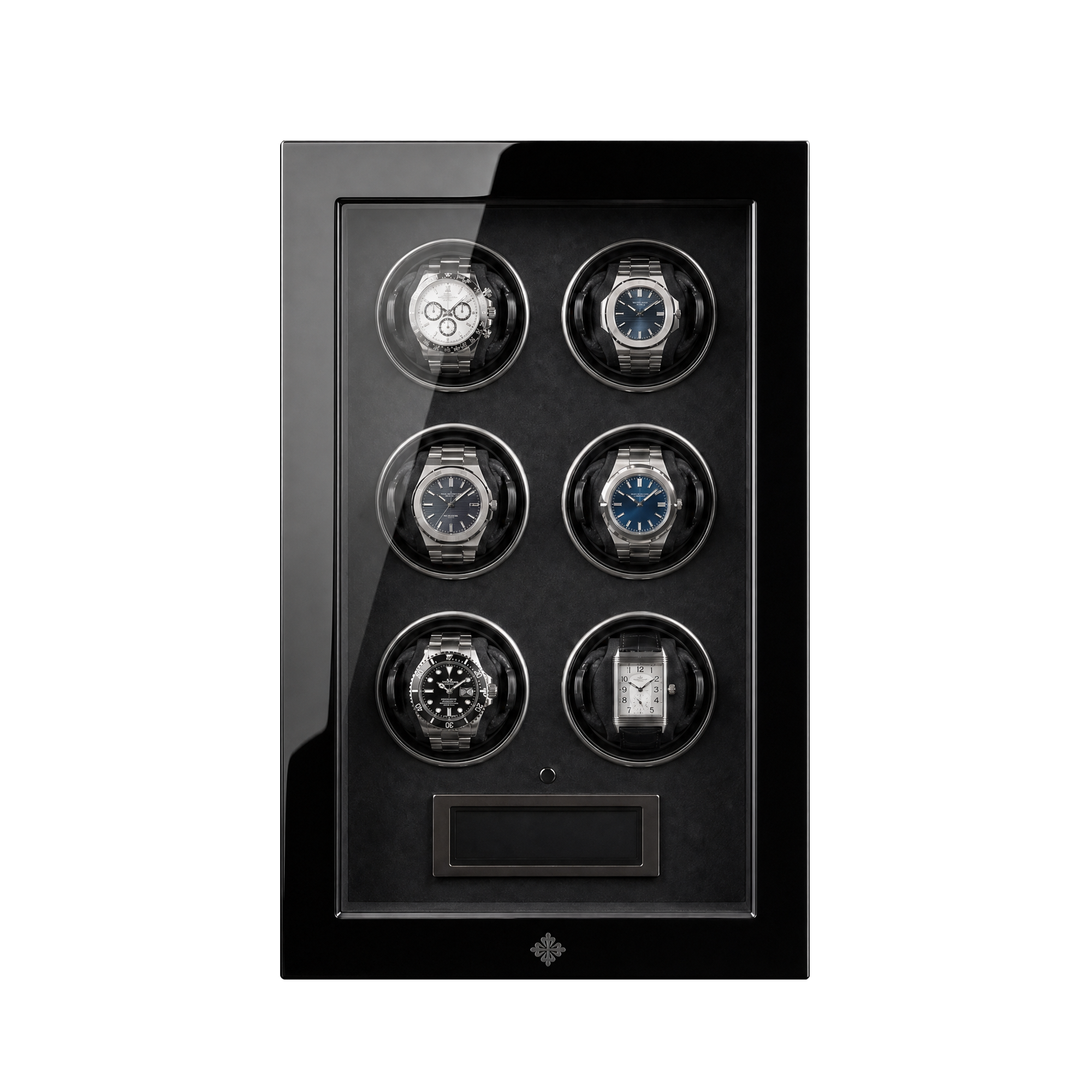
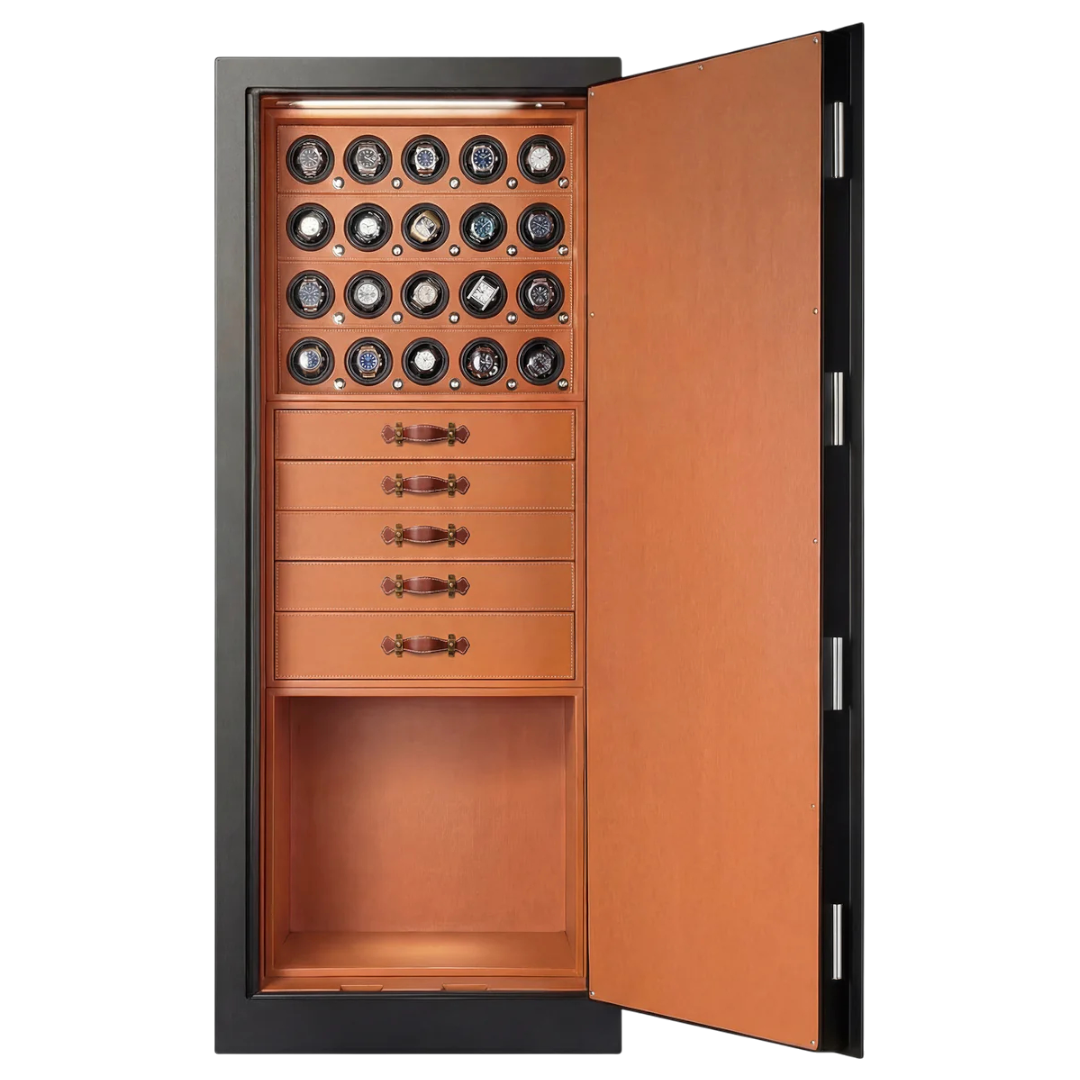
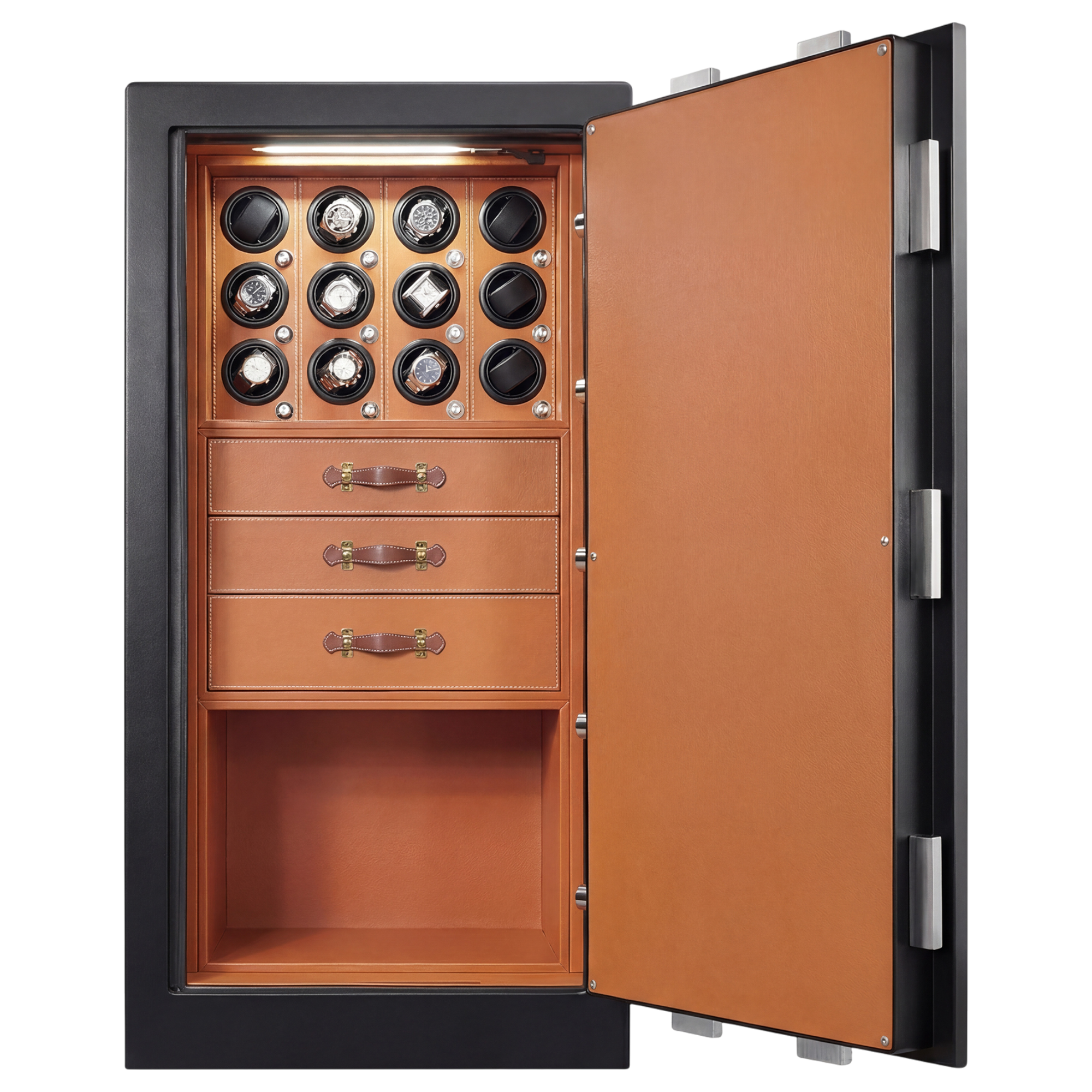
Six independently controlled motors, each individually programmable for TPD and direction. The Impresario Series 6 from Enigwatch covers 300–1,200 TPD per slot in precise increments, making 700 TPD bidirectional a trivial configuration. The interior is Italian Alcantara — non-abrasive against the Aquaracer’s brushed and polished case surfaces. Japanese Mabuchi motors keep noise below 25 dB. At six slots, you have room for the Aquaracer alongside five other automatics, each running its own program.
Verdict: Buy — the right spec, the right capacity for a growing collection, and the right materials. Impresario Series 6 watch winder
The single-watch answer — Impresario Series 2
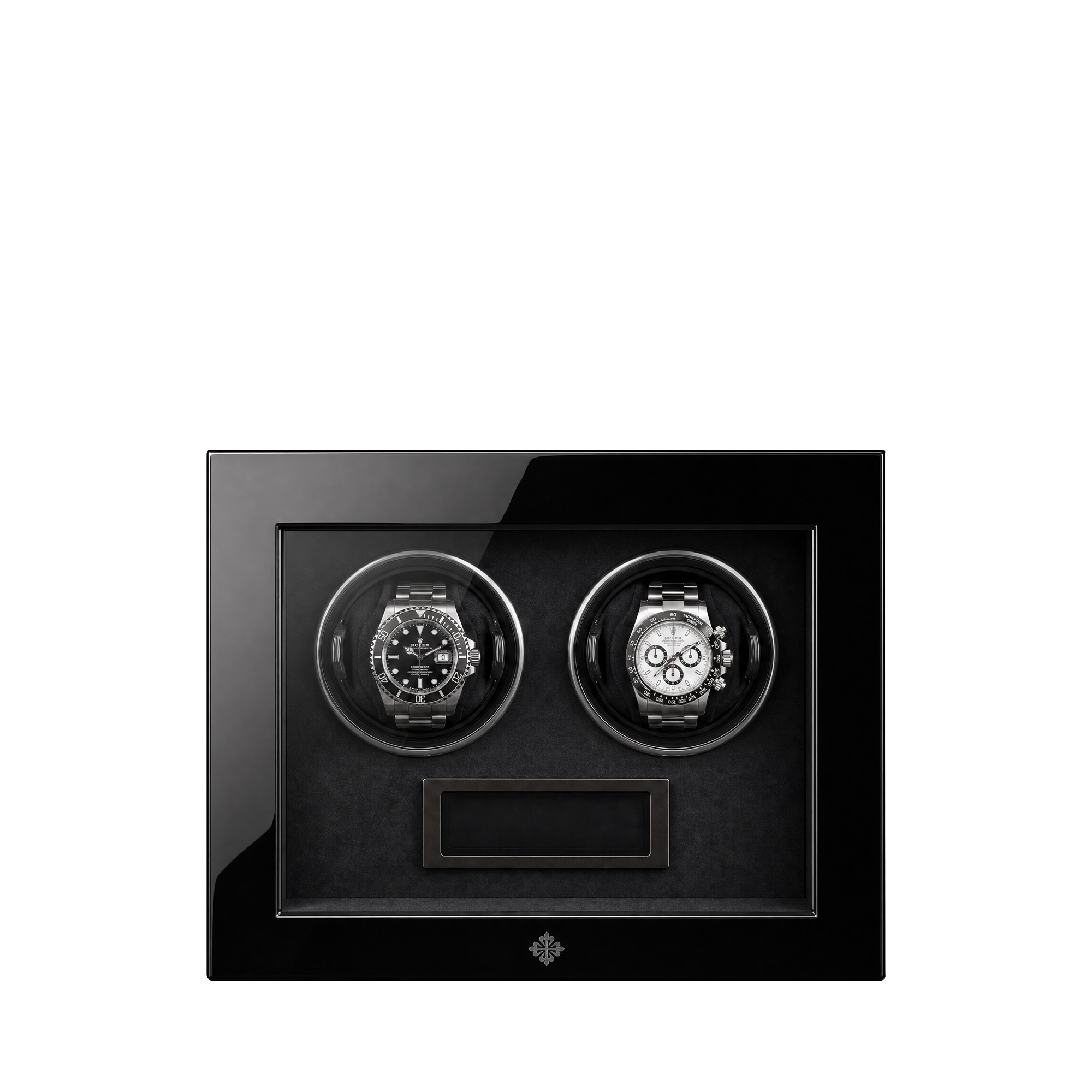
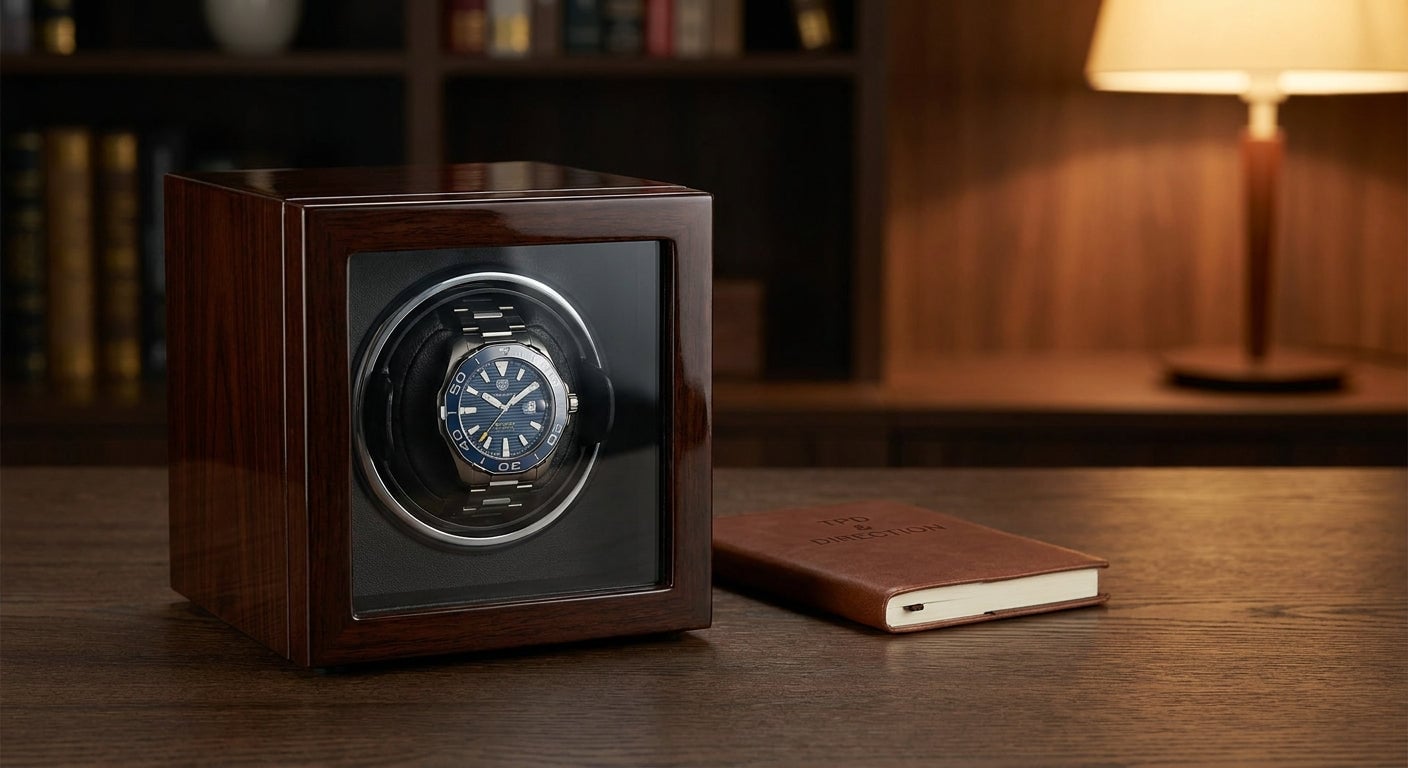
If the Aquaracer is your only automatic or you want a dedicated winder for one reference, the Impresario Series 2 pairs two independently controlled slots in a compact footprint. Run the Aquaracer on one motor at 700 TPD bidirectional; leave the second slot empty or add a second watch later. Same Mabuchi motors, same Alcantara interior, same TPD precision as the larger Impresario units. Smaller footprint means it works on a nightstand without dominating the surface.
Verdict: Buy — clean, precise, appropriate for one to two Aquaracers. Impresario Series 2 watch winder
The display-forward option — Virtuoso Series 6
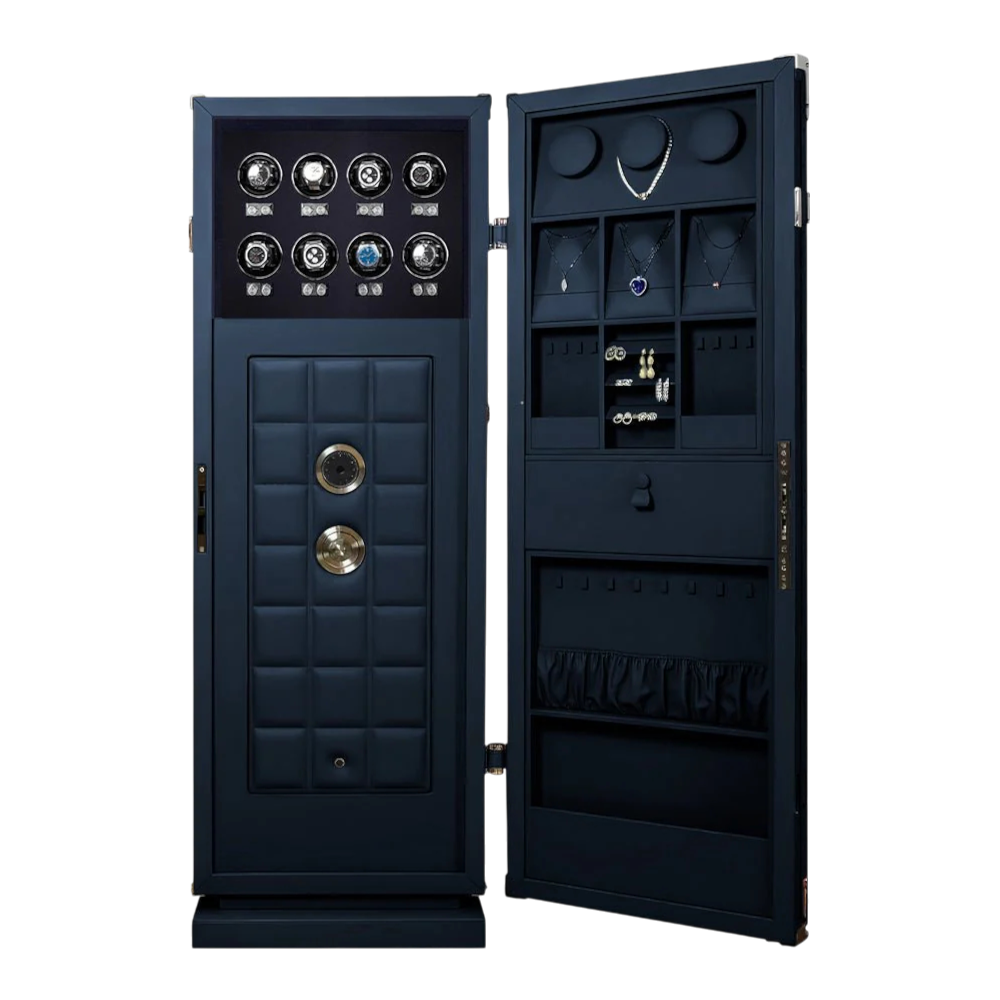
For collectors who want the Aquaracer visible when not worn, the Virtuoso Series 6 adds a glass-panel display design with LED ambient lighting. Specs align with the Impresario line: independent motors, adjustable TPD, bidirectional mode standard. The Virtuoso’s interior uses a different pillow geometry that accommodates large sports cases particularly well. If you’re placing the winder in a study or display area where the watches are part of the room’s aesthetic, the Virtuoso justifies the step up.
Verdict: Buy — functionally equivalent to the Impresario, better if display matters to you. Virtuoso Series 6 watch winder
The large-collection anchor — Impresario Series 12
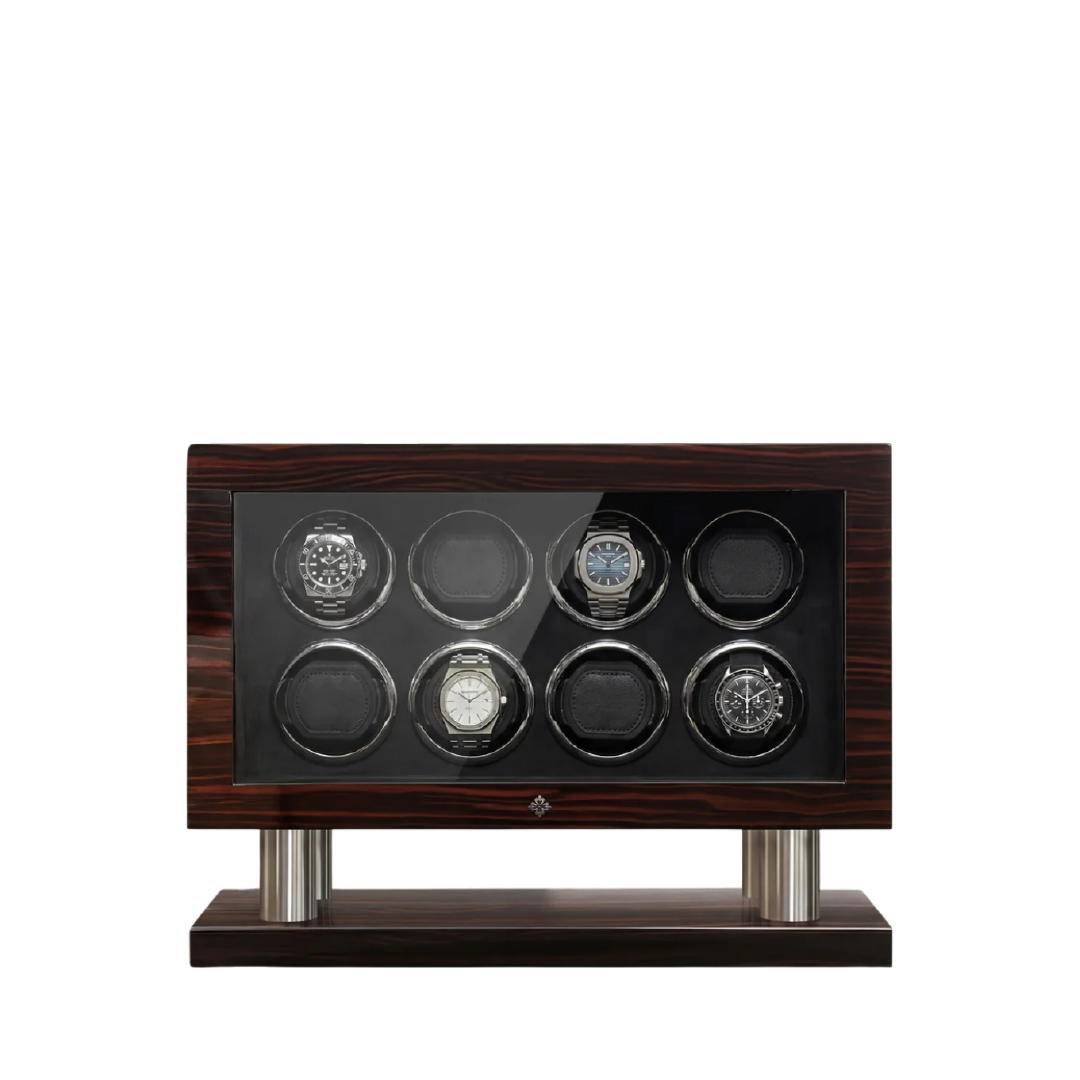
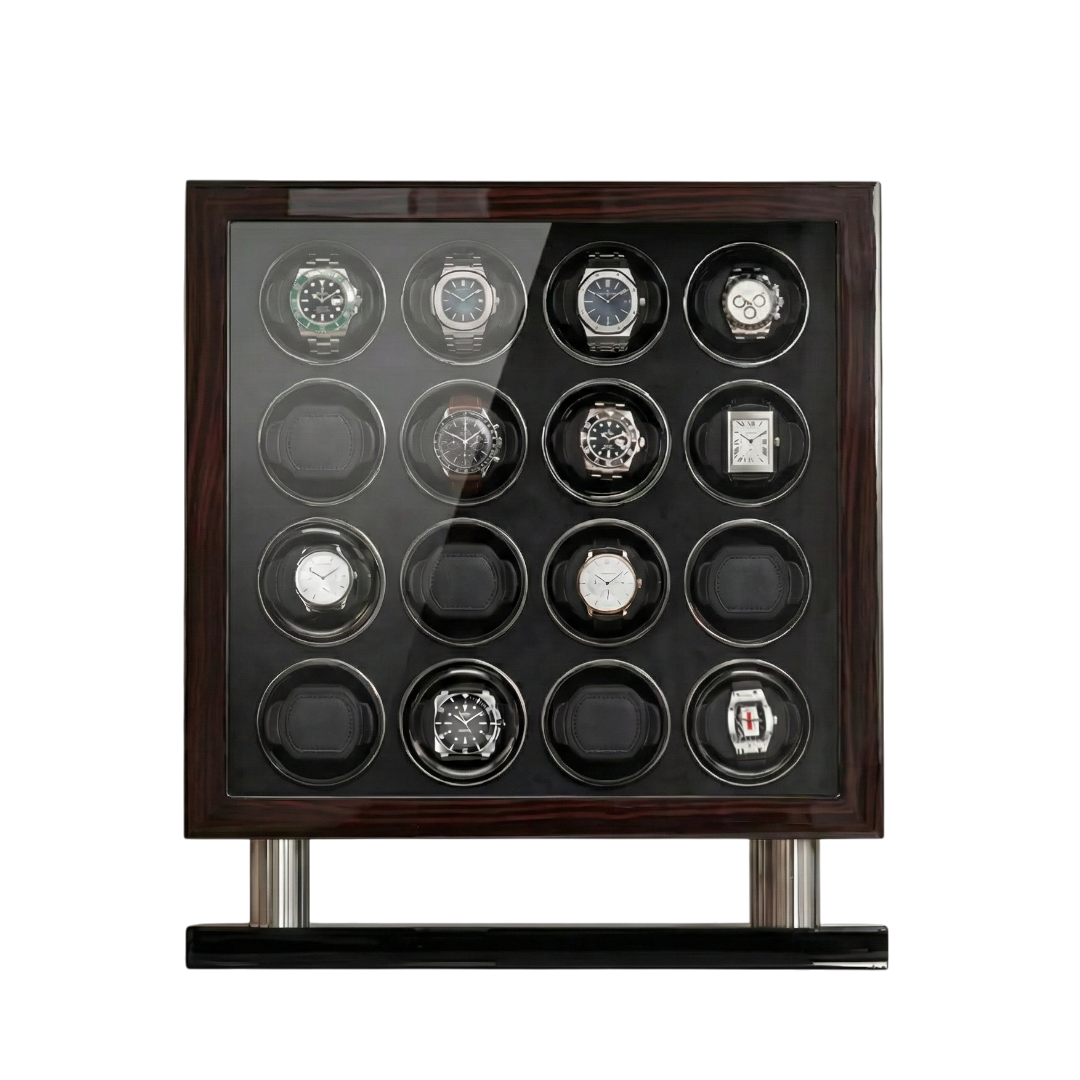
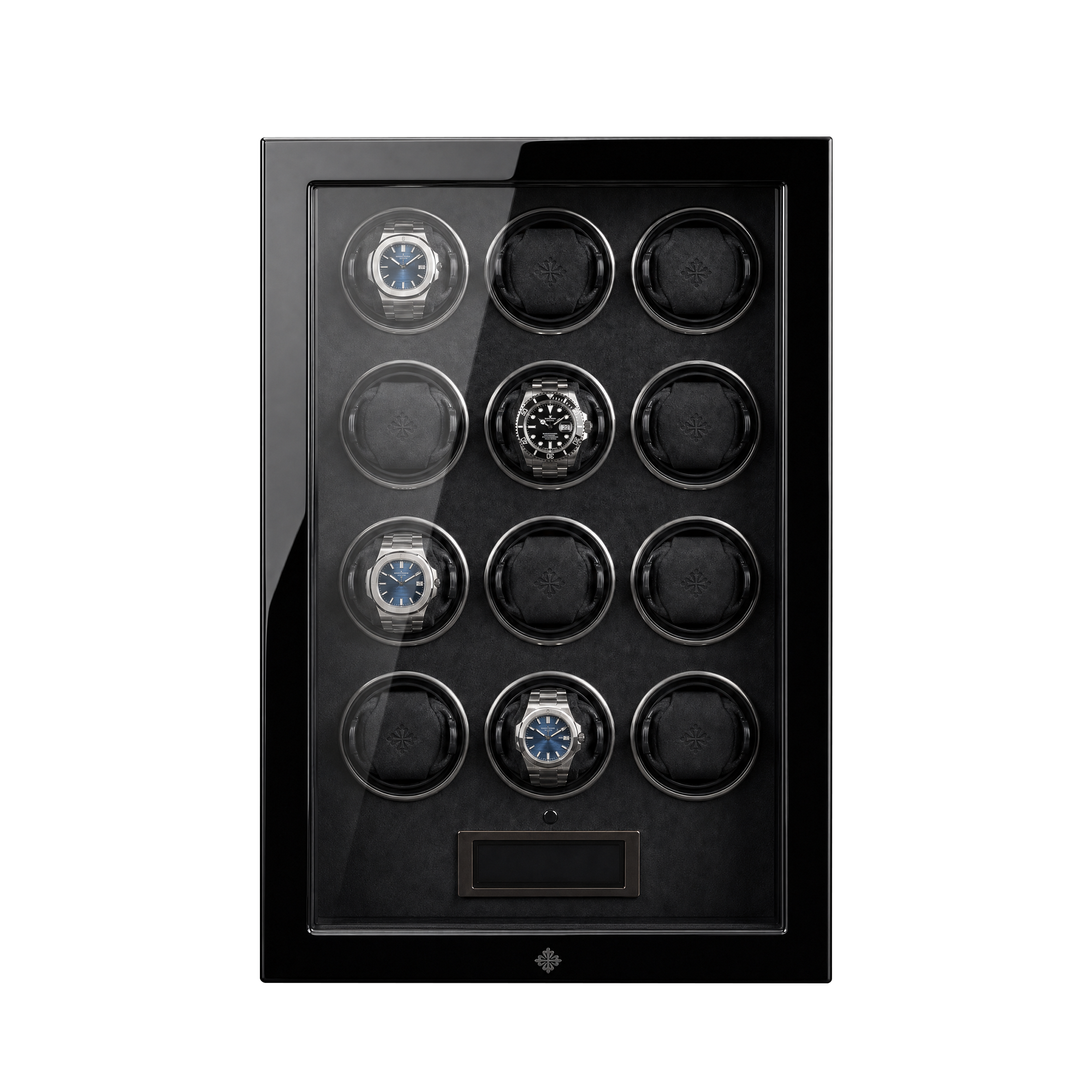
Twelve independently controlled slots. If the Aquaracer is one of several sports watches in a collection that also includes Rolex, Breitling, and Omega references — each needing different TPD programs — the Impresario Series 12 handles all of them without a second winder box. The capacity justifies the footprint when you have 8–12 automatics. For a collector running only the Aquaracer, this is more unit than you need.
Verdict: Consider — right tool if you have 8+ automatics, overkill for one or two watches. Impresario Series 12 watch winder
What to avoid
-
Single-direction winders marketed as “universal.” No ETA or Sellita movement in the Aquaracer line is unidirectional. A winder locked to clockwise-only or counterclockwise-only cuts effective winding efficiency in half and forces the rotor’s non-engaging pawl to work against the motion on every other half-turn. The watch will under-wind on low-activity days.
-
Winders without published TPD specs. In 2026, any winder brand that lists settings only as “slow / medium / fast” is hiding that they haven’t tested actual turns per day. You have no way to confirm the Aquaracer is receiving 650–800 TPD. These units are almost exclusively sourced from generic Asian factories with no movement-specific calibration.
-
Foam-padded holders sized for smaller cases. Cheap winders use a single foam pillow that compresses differently at every diameter. A 44mm Aquaracer case will sit off-center, putting lateral stress on the crown and pusher positions during rotation. Over six months, this produces micro-abrasion on the case flanks. Alcantara or leather pillows with articulated sizing rings are the correct solution.
Comparison table
| Model | Slots | TPD Range | Direction | Motor | Best For |
|---|---|---|---|---|---|
| Impresario Series 2 | 2 | 300–1,200 | CW / CCW / Bi | Mabuchi | 1–2 watches |
| Impresario Series 6 | 6 | 300–1,200 | CW / CCW / Bi | Mabuchi | 3–6 watches |
| Virtuoso Series 6 | 6 | 300–1,200 | CW / CCW / Bi | Mabuchi | Display-focused |
| Impresario Series 12 | 12 | 300–1,200 | CW / CCW / Bi | Mabuchi | 8–12 watches |
FAQ
What TPD does a TAG Heuer Aquaracer need in a winder?
Set 650–800 TPD for all ETA and Sellita-based Aquaracer calibers. The ETA 2824-2 and Sellita SW200 are fully wound at 650–700 TPD; the chronograph Calibre 16 (ETA 7750) is comfortable up to 800 TPD. Stay within that window and you avoid both under-winding and unnecessary mainspring stress.
Should a TAG Heuer Aquaracer winder run clockwise, counterclockwise, or bidirectional?
Bidirectional. Every automatic movement TAG Heuer uses in the Aquaracer line — including ETA 2892-A2 and Sellita SW300 variants — winds from both rotor directions. Running a unidirectional winder on a bidirectional movement wastes half of every rotation cycle.
Is it safe to leave an Aquaracer in a winder indefinitely?
Yes, provided the winder uses programmed rest cycles. A unit that spins continuously 24 hours a day keeps the mainspring under unnecessary constant load. A 6-hours-on / 8-hours-off cycle is appropriate for the Aquaracer’s 38–42 hour power reserve.
Can a TAG Heuer Aquaracer share a winder with a Rolex or Omega?
Yes, as long as each motor slot is independently programmable. Both Rolex (Calibre 3135, 3235) and Omega (calibers 8500, 1861) are bidirectional but have different TPD requirements. An Enigwatch Impresario Series 6 or Series 12 lets you run each slot on a separate program.
What’s the difference between the Impresario and Virtuoso series for an Aquaracer?
The winding mechanism, TPD range, and motor type are equivalent across both lines. The Virtuoso adds a display-forward design with glass panels and LED lighting — better suited for a study or display shelf. The Impresario has a more enclosed, cabinet-style design suited for a closet or vault shelf.
Does the Aquaracer’s crown size affect winder compatibility?
Not directly. What matters is the case diameter (43–44mm for most Aquaracer references) and lug width (22–24mm). Confirm the winder holder accommodates cases up to 50mm — most quality winders with articulated pillow rings do. A holder designed for a 38mm dress watch will seat the Aquaracer incorrectly.
How do I know if my winder is over-winding the Aquaracer?
You’ll notice the crown becoming stiffer to manually wind, or the seconds hand stuttering at startup after a rest period. Modern automatic movements have a slipping clutch that technically prevents mechanical over-winding, but excess rotational load accelerates lubricant degradation. Keep TPD at or below 800 and use rest cycles to avoid this scenario.
What noise level should I expect from a watch winder for a nightstand?
Under 25 dB is the target for bedroom placement. Japanese Mabuchi motors — used in Enigwatch’s lineup — consistently test at or below that threshold. Any winder that produces an audible hum at 1 meter during a quiet room night is too loud for a nightstand application.
One last thing
TAG Heuer specifies that the Aquaracer’s service interval is every 3–5 years under normal use conditions. A winder running incorrect settings — too high a TPD, no rest cycles, wrong direction — can push the service interval forward by 12–18 months by accelerating lubricant breakdown on the rotor’s reversing mechanism. Getting the settings right in 2026 is not just about convenience; it’s maintenance cost avoidance on a watch that typically runs $1,000–$4,500 at retail.
Related guides
- Watch winder for TAG Heuer 8-slot options
- Watch winder direction: clockwise vs counterclockwise
- Watch winder TPD explained: full brand reference guide
Protect Your Watch Collection
Designed for collectors who demand the best. Explore our premium watch winders and luxury safes.