
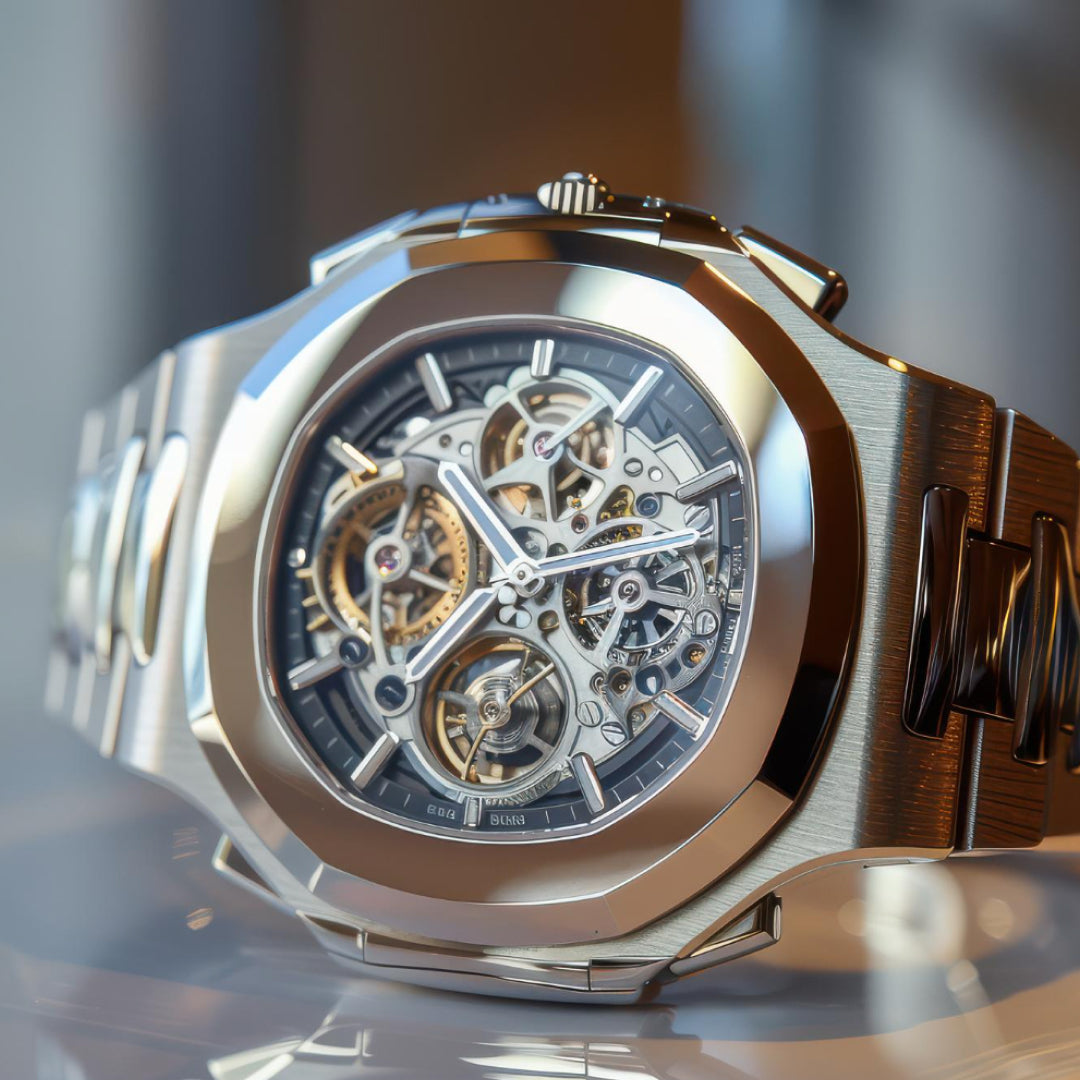
Patek Philippe’s perpetual calendars don’t just tell the time. They track the date, day, month, and year through a mechanical sequence that accounts for unequal month lengths and leap years without any manual input. That precision depends on continuous motion. Leave a Patek perpetual calendar stopped for a few weeks and the complications fall out of sync. Resetting a caliber 240 perpetual from a dead stop requires nudging correctors in the right sequence and takes patience. A quality winder eliminates that entirely. But not every winder is built for what Patek’s movements actually need.
What Happens When a Patek Philippe Stops
For a simple time-only Patek, stopping isn’t a major problem. You wind it, set the time, and move on.
For a Patek with an annual calendar, perpetual calendar, or moon phase, it’s a different situation. The annual calendar on caliber 315 or 324 tracks month lengths automatically. After a manual wind and reset, you’re working through correctors in sequence to return every display to today’s date and time. For a perpetual calendar with moon phase, add another 10 to 15 minutes to account for the lunar position.
If you rotate two or three Patek pieces through your collection, that reset time compounds. A winder keeps every piece current. You pick it up, strap it on, and it’s right.
Patek Philippe TPD Requirements by Caliber
TPD stands for turns per day — the number of full rotations a winder completes to keep a movement’s mainspring at working tension. Every Patek caliber has a threshold below which the watch stops. There’s also an upper range beyond which you’re adding unnecessary wear without benefit.
Here’s what Patek Philippe’s key calibers require:
Caliber 240 (ultra-thin Calatrava, perpetual calendar): 650 TPD, bidirectional. The micro-rotor design winds efficiently in both directions, so you don’t need a high TPD to keep it topped up.
Caliber 315 and 324 (Nautilus 5711, Aquanaut, annual calendar variants): 650 TPD, bidirectional. These are Patek’s sport movement workhorses and respond well to consistent, moderate winding.
Caliber 26-330 SC (Nautilus 5726A annual calendar): 800 TPD, bidirectional. A newer generation movement with a higher torque requirement than the earlier 315-series.
Caliber 29-535 PS (perpetual calendar chronograph): 800 TPD, bidirectional. One of the most complex movements Patek produces. Consistent winding keeps the chronograph and perpetual calendar running in sync.
Grand Complications (89xxx caliber series): 800 TPD minimum, bidirectional. If you own a grand complication, you already understand that the infrastructure around it matters as much as the movement itself.
For calibers not listed here, the full Enigwatch TPD reference covers Patek Philippe’s complete range across modern and vintage movements.
What a Patek Philippe Winder Actually Needs
Most winders are built for volume, not precision. They spin a rotor at a fixed rate in a fixed direction. That’s acceptable for a basic ETA or Miyota movement. It’s not appropriate for a Patek.
Here’s what matters when you’re housing a Patek Philippe:
Programmable TPD. You need to dial in the exact TPD your caliber requires — 650 or 800, not a generic low/medium/high preset. Look for winders with numeric TPD input.
Bidirectional rotation. Every modern Patek caliber winds in both directions. A winder running only clockwise or only counterclockwise cuts winding efficiency in half and may not keep pace with the movement’s daily power consumption.
Motor quality. Vibration is the enemy of a movement this precise. Japanese Mabuchi motors operate quietly with minimal vibration transfer to the case. Cheap brushed DC motors that rattle at low RPM have no place near a Patek.
Cushion fit. Patek cases range from the 35mm ultra-thin Calatrava to the 40mm Nautilus to the larger grand complication references. The cushion needs to hold the case securely without pressure on the crown or pushers.
Enclosed storage. Humidity and dust affect movement lubricants over months and years. A sealed or near-sealed winder chamber is better than an open display tray for long-term housing of a Patek Philippe.
The Enigwatch Winders Built for Patek Philippe
Enigwatch builds winders for collectors who treat their watches as capital assets. Every unit ships with programmable TPD, bidirectional rotation control, and a Japanese Mabuchi motor. Here’s how the lineup maps to a Patek collection.
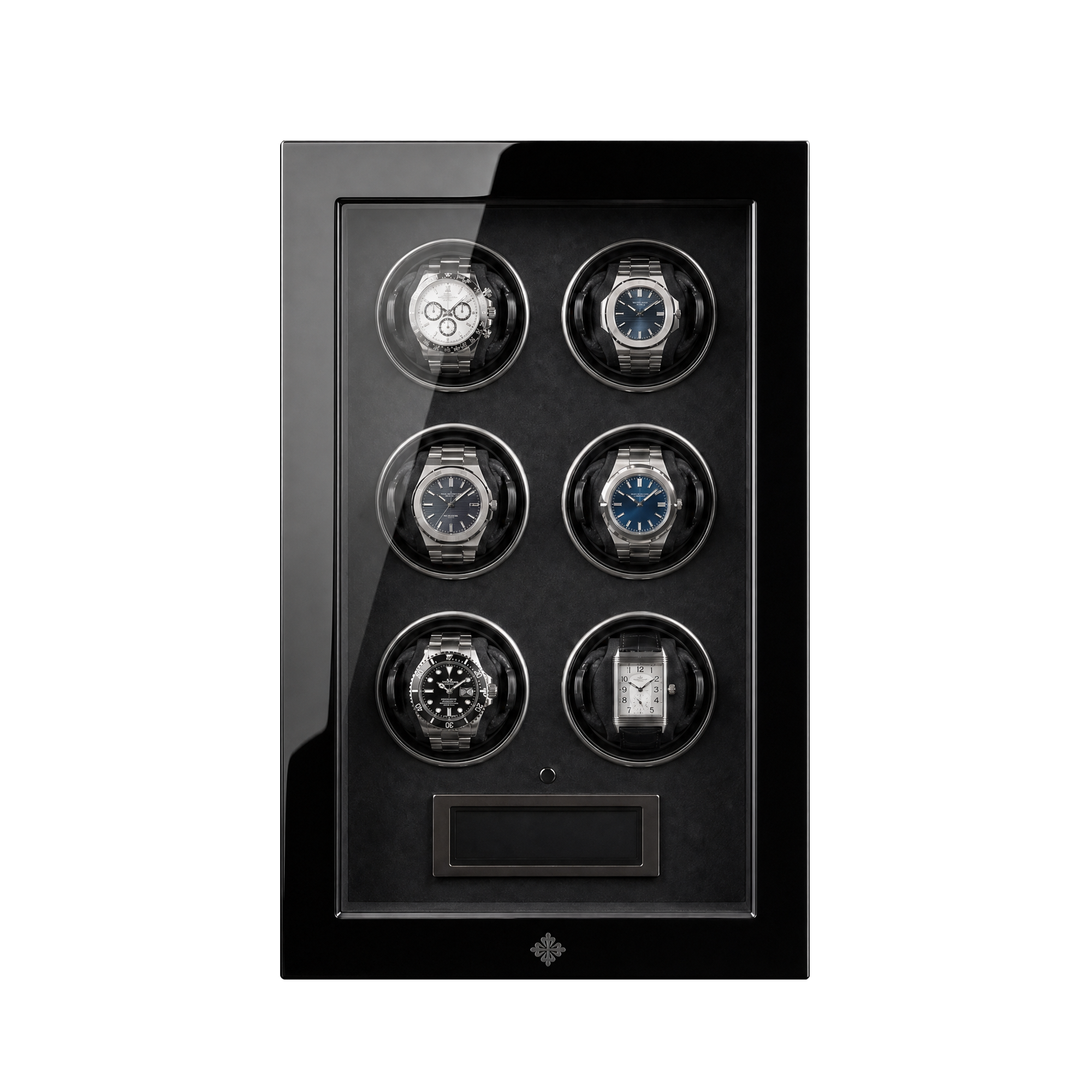
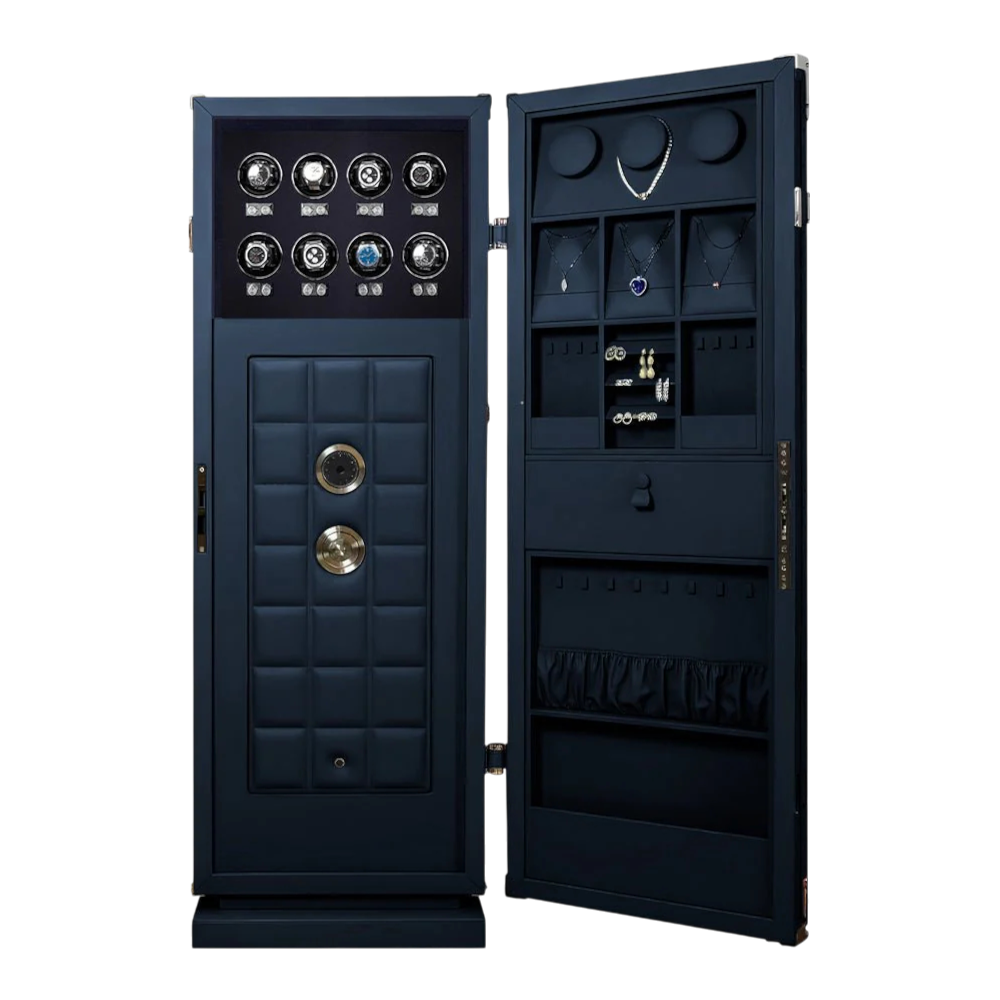
Mixed collections of two to six watches: The Impresario 6 is the right starting point for most Patek owners. Six individually programmable rotors mean each watch gets its own TPD setting. Your Nautilus running at 800 TPD and your Calatrava at 650 TPD are both handled correctly on the same unit.
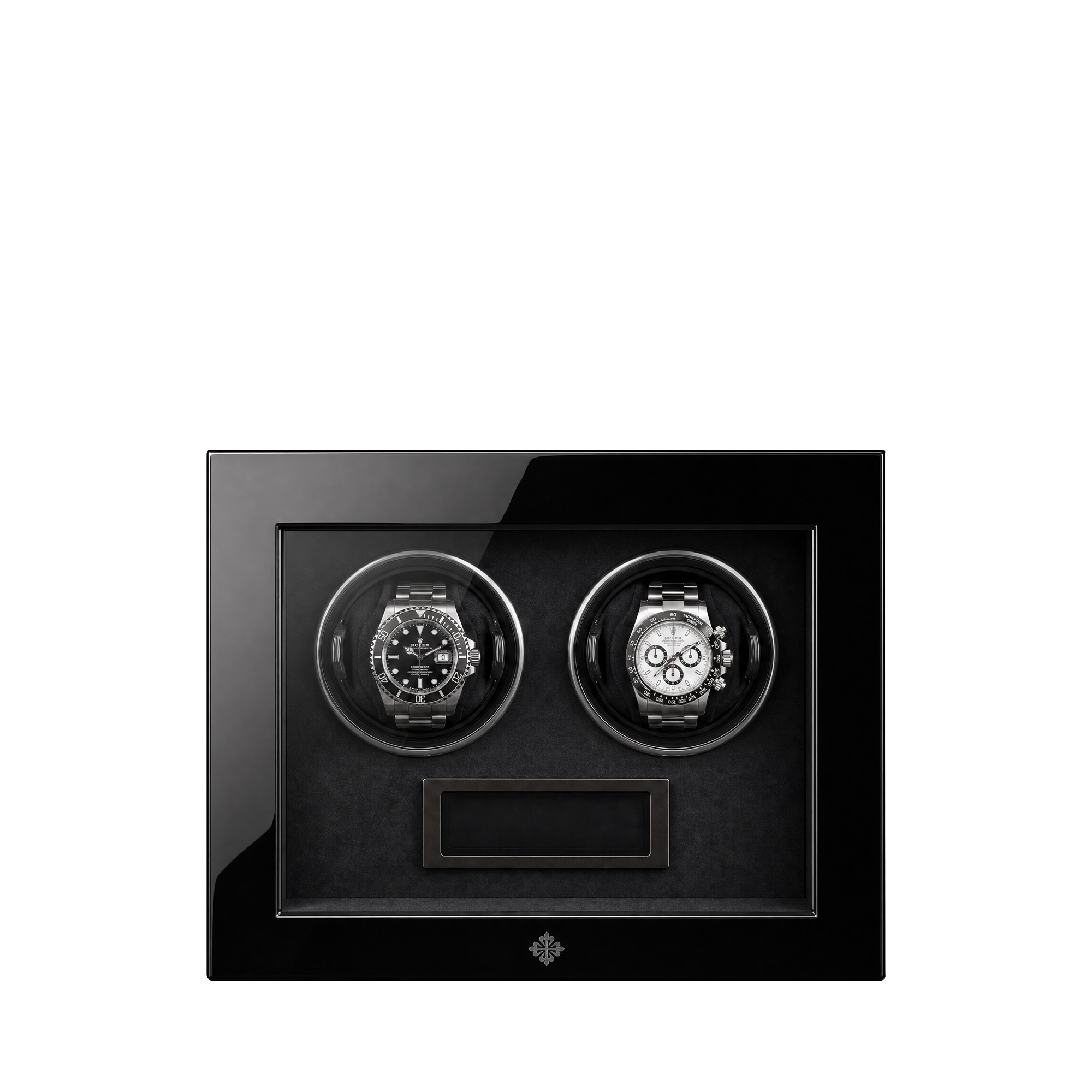
Single or paired pieces: The Virtuoso Series covers one to six rotors at a smaller footprint. Same motor quality, same programmable TPD. If your Patek is the centrepiece of a small collection, a Virtuoso 2 keeps it wound without unnecessary bulk.
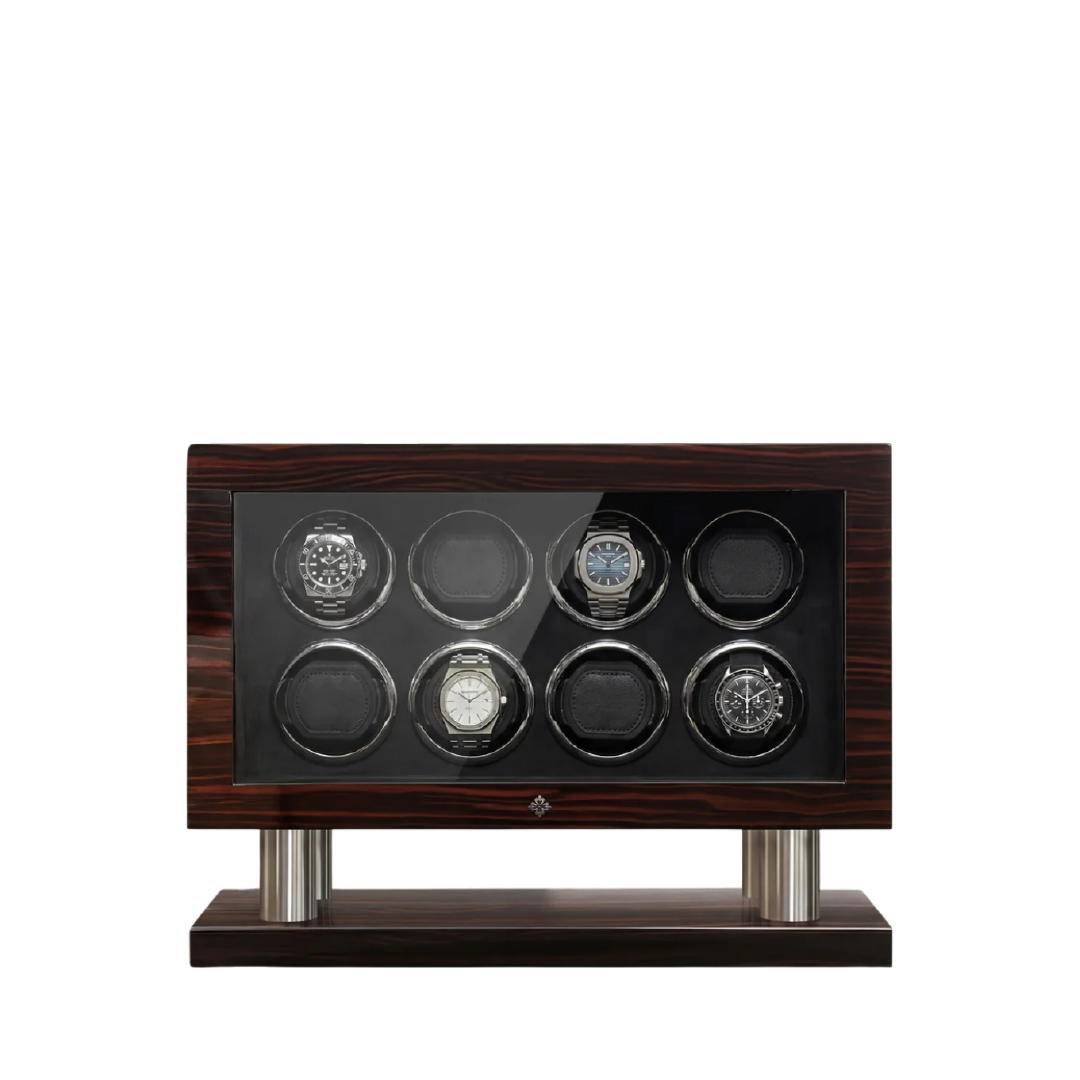
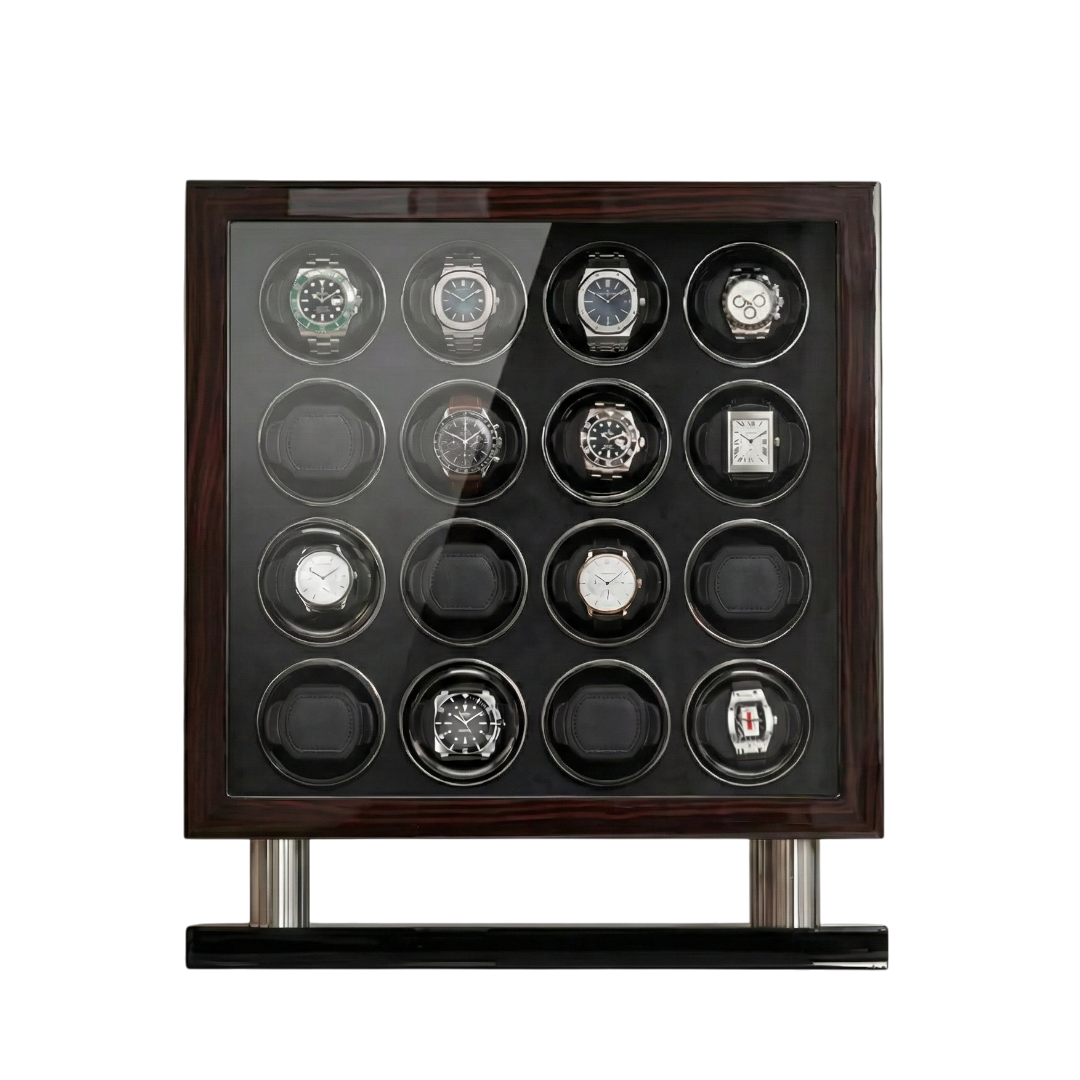
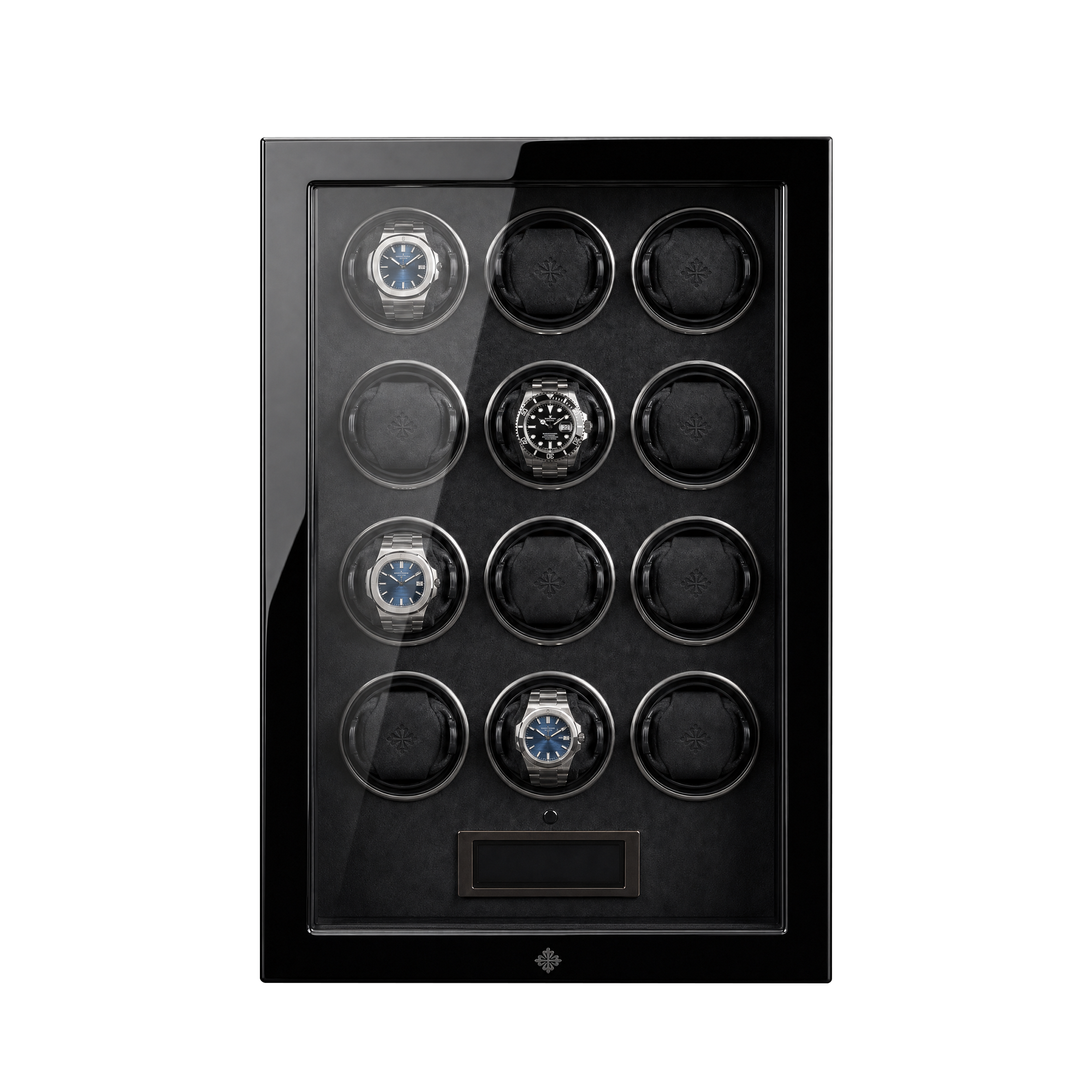
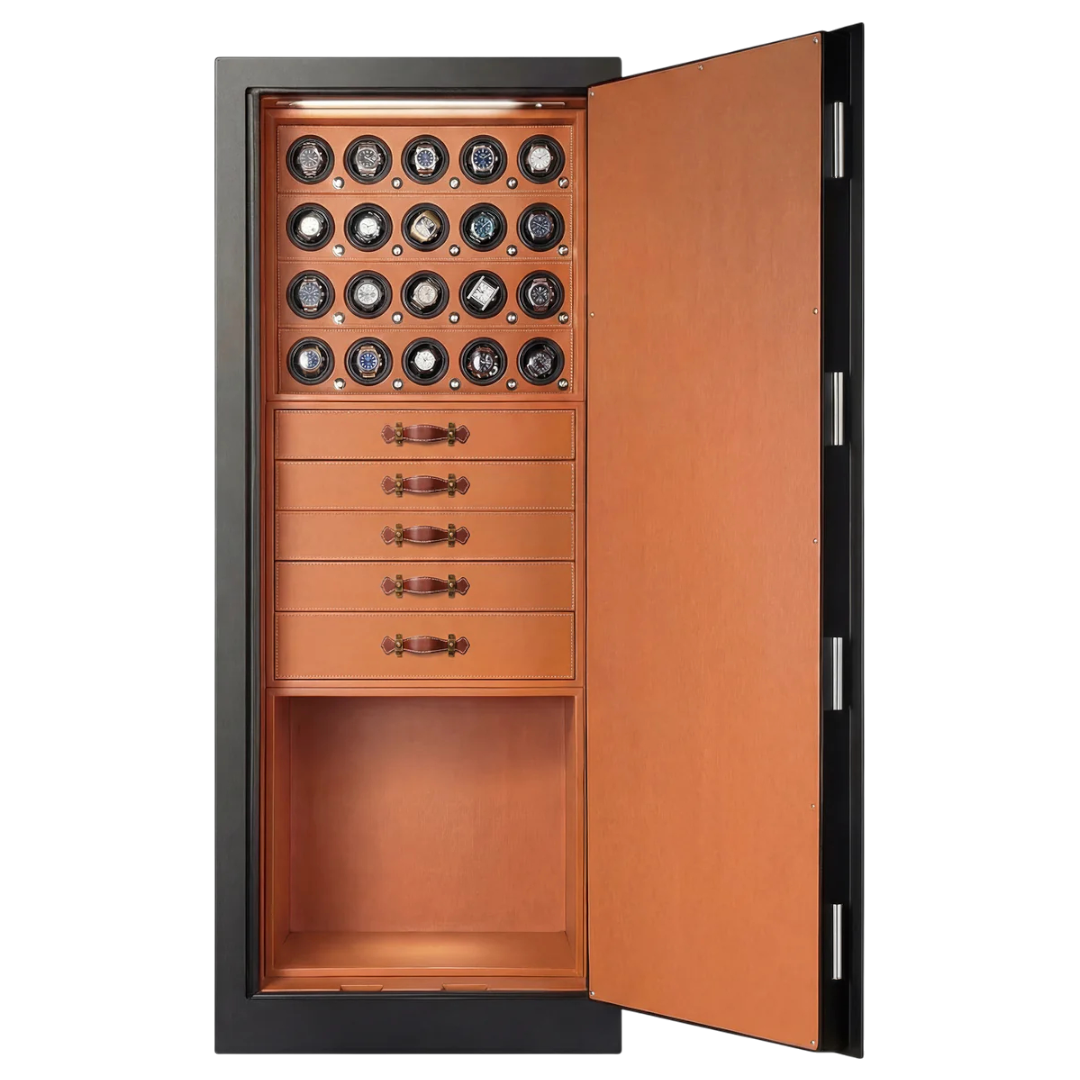
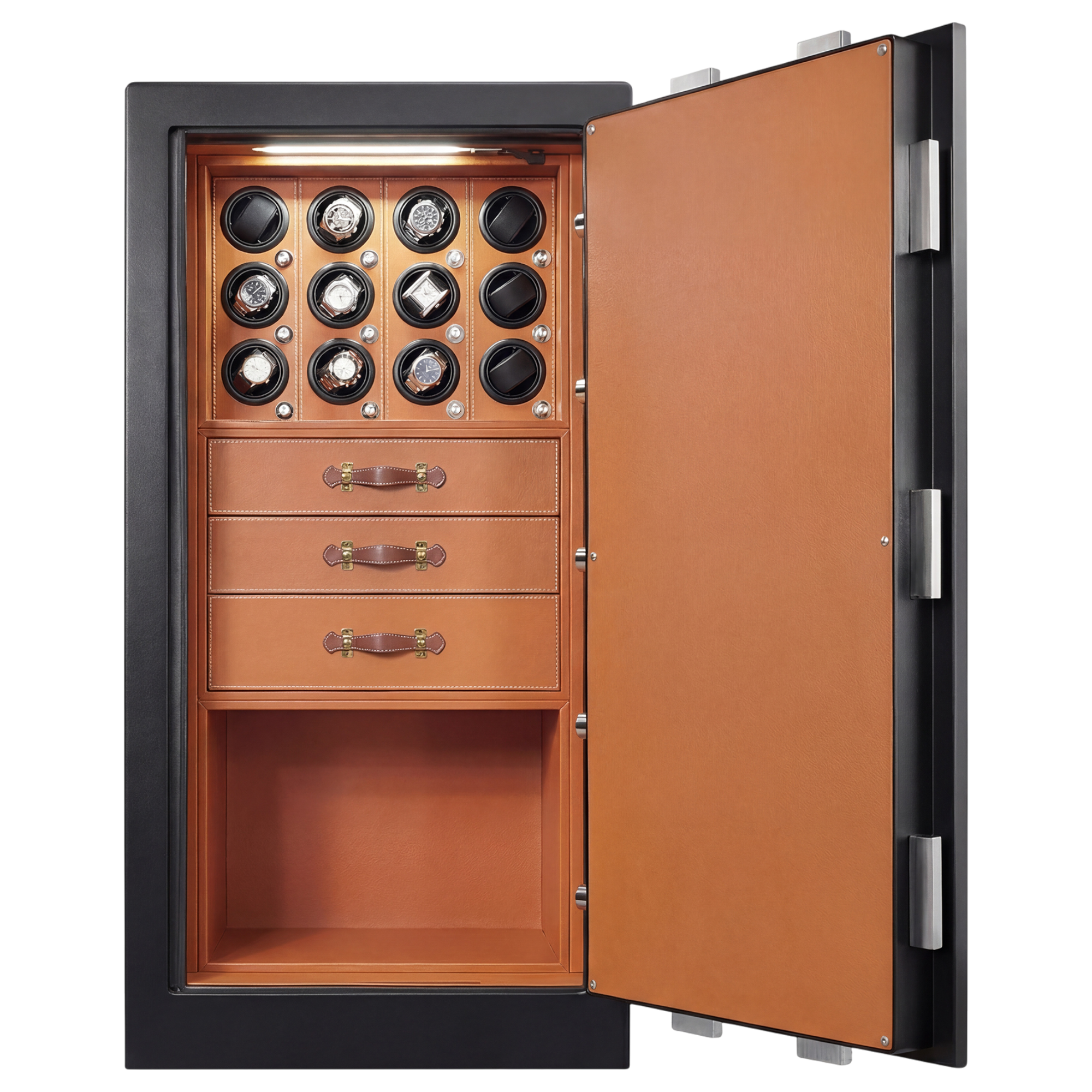
Larger holdings: If your Patek collection spans five or more references, the Yachtline 8 or Yachtline 16 gives you the capacity to run every piece simultaneously with individual settings. No scheduling. No rotation. Every watch fully wound at all times.
All Enigwatch winders use a wooden or leather-lined interior that cushions against vibration. The motor noise rating is below 10dB at normal operating distance — inaudible at night from the same room.
Setting Your Winder for a Patek Philippe
Setup takes about five minutes once the unit arrives.
Start by identifying your Patek’s caliber. It’s engraved on the caseback or listed in the original papers. Cross-reference it against the TPD values above or the full table on the TPD reference page.
Set the winder to the caliber’s required TPD — 650 for most references, 800 for the 26-330, 29-535, and grand complication movements. Set rotation to bidirectional.
Place the watch on the cushion. If the winder design allows it, position the crown facing down to reduce pressure on the stem during rotation cycles.
Run the winder for 24 hours before checking accuracy. A watch that was partially wound before placement may show a slight gain in the first cycle as the mainspring reaches full tension. After that, it should stabilise.
You shouldn’t need to adjust the settings again unless you change which watch occupies that rotor.
How Many Rotors Does a Patek Collection Need?
The short answer: one rotor per watch you want running at all times.
For perpetual calendars and grand complications, keeping every piece wound simultaneously is the only practical approach. The time cost of resetting a perpetual from dead stop makes rotating pieces through a single winder impractical when you own more than two.
For annual calendars and simpler complications, some collectors prefer rotating pieces through fewer rotors on a weekly schedule. That works, but it adds a manual step and introduces the risk of letting a piece sit too long between cycles.
If you mix Patek with other brands — Rolex, AP, IWC — buy enough rotors to cover your whole collection. A six or eight-rotor unit handles a mixed collection cleanly and keeps everything on the same infrastructure.
Frequently Asked Questions
What TPD does a Patek Philippe need?
Most Patek Philippe calibers require 650 to 800 turns per day with bidirectional rotation. Calibers 240, 315, and 324 typically need 650 TPD. Calibers 26-330 SC and 29-535 PS need 800 TPD. Grand complication movements also require 800 TPD minimum. Check your specific caliber against the Enigwatch TPD reference page for exact figures.
Can I use any automatic watch winder for a Patek Philippe?
Technically yes, but practically no. Budget winders offer fixed TPD and often single-direction rotation. Patek calibers need programmable bidirectional winding at specific TPD values. A winder that can’t deliver 650 or 800 TPD precisely will eventually let the watch stop, and the complications will fall out of sync when it does.
Is it safe to leave a Patek Philippe in a winder indefinitely?
Yes, provided the winder delivers the correct TPD and uses a quality motor with minimal vibration. Overwinding isn’t a concern — modern automatic movements use a slip clutch that prevents excess mainspring tension. A well-specified winder keeps the watch at optimal tension without adding mechanical wear.
What happens if a Patek perpetual calendar stops?
The complications fall out of sync. Resetting a perpetual calendar requires working through multiple correctors in a specific sequence to return the day, date, month, and year displays to the correct position. It takes 10 to 15 minutes and requires care to avoid forcing the mechanism. A winder makes this unnecessary.
Does a Patek annual calendar need a winder?
It doesn’t strictly need one, but it benefits from one. The annual calendar adjusts automatically for month lengths and only needs one manual correction per year at end of February. If the watch stops and you reset it incorrectly, the mechanism can be damaged. Keeping it wound eliminates that risk entirely.
How quiet should a watch winder be for a Patek Philippe?
Silent or near-silent. If you can hear the motor from across the room, vibration is transferring into the case. Enigwatch winders use Mabuchi motors rated at below 10dB at operating distance. If your current winder is audible at night, it’s not the right environment for a movement of this calibre.
Which Enigwatch winder fits a single Patek Philippe?
The Virtuoso 2 handles a single piece cleanly. If you’re likely to add watches to your collection in the next year or two, start with the Impresario 6 instead. The additional rotors cost you nothing in terms of performance, and you won’t need to buy a second unit when your collection grows.
Can the same winder run a Patek Philippe and a Rolex at different TPD settings?
Yes, on any Enigwatch multi-rotor unit with individually programmable rotors. A Rolex caliber 3235 needs 650 to 800 TPD. A Patek caliber 315 needs 650 TPD. Per-rotor control lets you optimise each watch independently without compromise.
Build the Right Home for Your Patek Philippe
Your Patek Philippe is one of the most precisely engineered objects you own. The infrastructure around it should reflect that. Browse the Virtuoso Series for compact single and multi-watch options, or go straight to the Impresario 6 if you need per-rotor control for a mixed collection.
If you’re still working out the right TPD setting for your specific caliber, the TPD reference page has the full Patek Philippe caliber breakdown before you buy.
Protect Your Watch Collection
Designed for collectors who demand the best. Explore our premium watch winders and luxury safes.
Protect Your Watch Collection
Designed for collectors who demand the best. Explore our premium watch winders and luxury safes.