
The Rolex Cosmograph Daytona runs on a self-winding caliber with a bidirectional Perpetual rotor, and putting it on the wrong winder either stalls the mainspring or wastes motor life on a rotation pattern it doesn’t need. This guide ranks the watch winders and safes worth considering for Daytona owners in 2026, with the TPD settings and hardware specs that actually matter for caliber 4130.
- Impresario Series 2 is the best watch winder for Rolex Daytona owners who want daily rotation with biometric security — Buy.
- Impresario Series 12 scales to a multi-Rolex collection with 12 independent Mabuchi rotors — Buy.
- Set 650 TPD, bidirectional, to match the Daytona’s caliber 4130 rotor — most winders on this list ship with that range programmable.
- Watch Winders Pillow at $59 fixes cushion fit for a Daytona’s Oyster bracelet or Oysterflex case where stock pillows run loose.
- Apollo 12 Watch Safe pairs vault-grade storage with built-in winding — Hold unless you’re consolidating beyond just Daytonas.
Why this matters
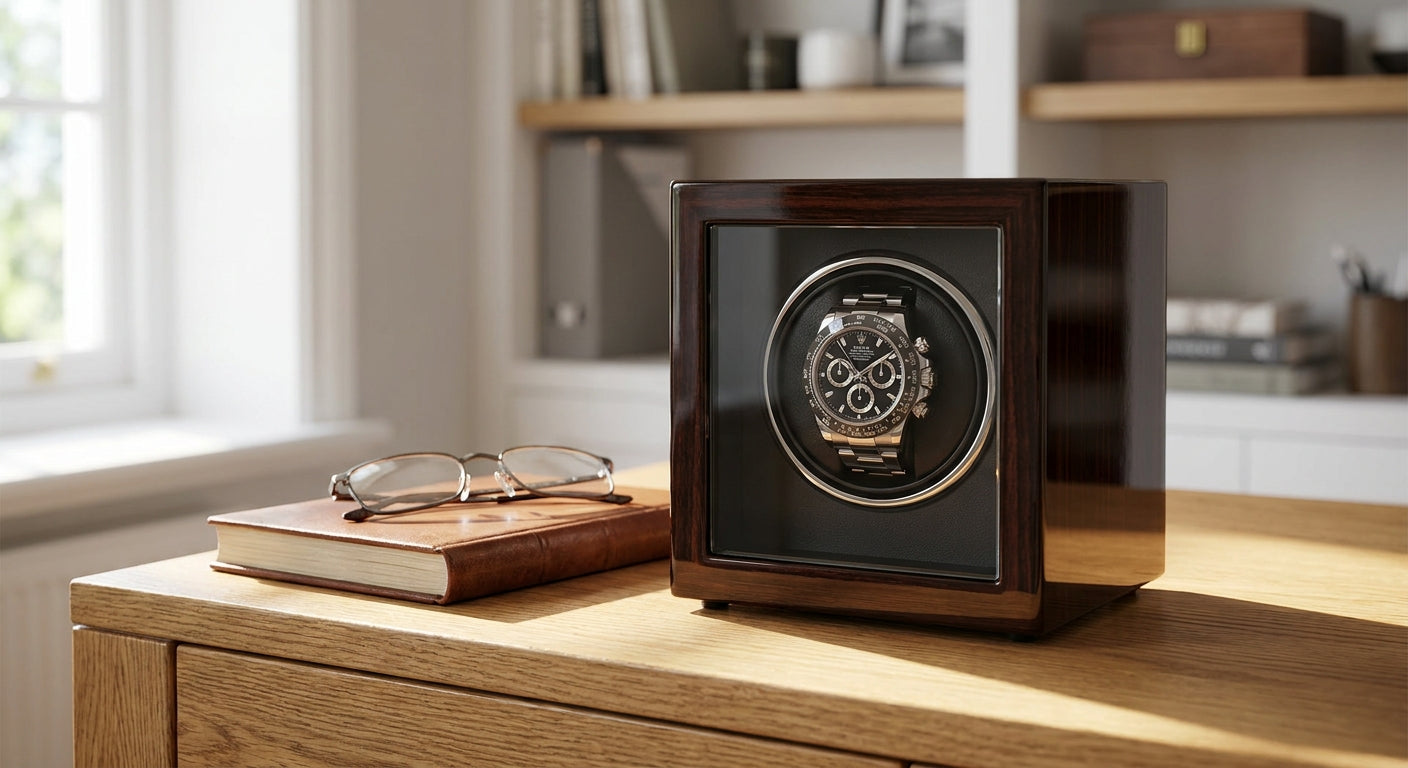
The Daytona’s caliber 4130 doesn’t care about brand loyalty — it cares about rotation direction and turns per day. Set a unidirectional winder on a Rolex and the rotor only engages the mainspring half the time it’s spinning, which under-winds the watch even after 24 hours on the machine. Enigwatch’s Rolex Cosmograph Daytona winder settings guide breaks down the exact TPD collectors run, but the short version: bidirectional, roughly 650 turns per day, matched to a motor that won’t cook the movement with heat over months of continuous use.
That’s the filter for every winder below. A machine that looks good on a dresser but ships with a fixed unidirectional program isn’t a Daytona winder — it’s decoration.
How the ranking works
Each entry gets judged against three things a Daytona owner actually needs in 2026: bidirectional rotation with a programmable TPD near 650, a case cushion sized for the Daytona’s 40mm case with either Oyster bracelet or Oysterflex strap, and a lock mechanism that matches how many other Rolex references sit next to it. Capacity and price get weighed against those first two — a 12-slot winder is wasted spend if you own one Daytona and nothing else.
Security gets separate weight. A watch in this price bracket sitting on an open shelf is a different risk profile than one behind biometric access, so safes with integrated winding get their own lane rather than getting compared dollar-for-dollar against open winders.
The ranked list
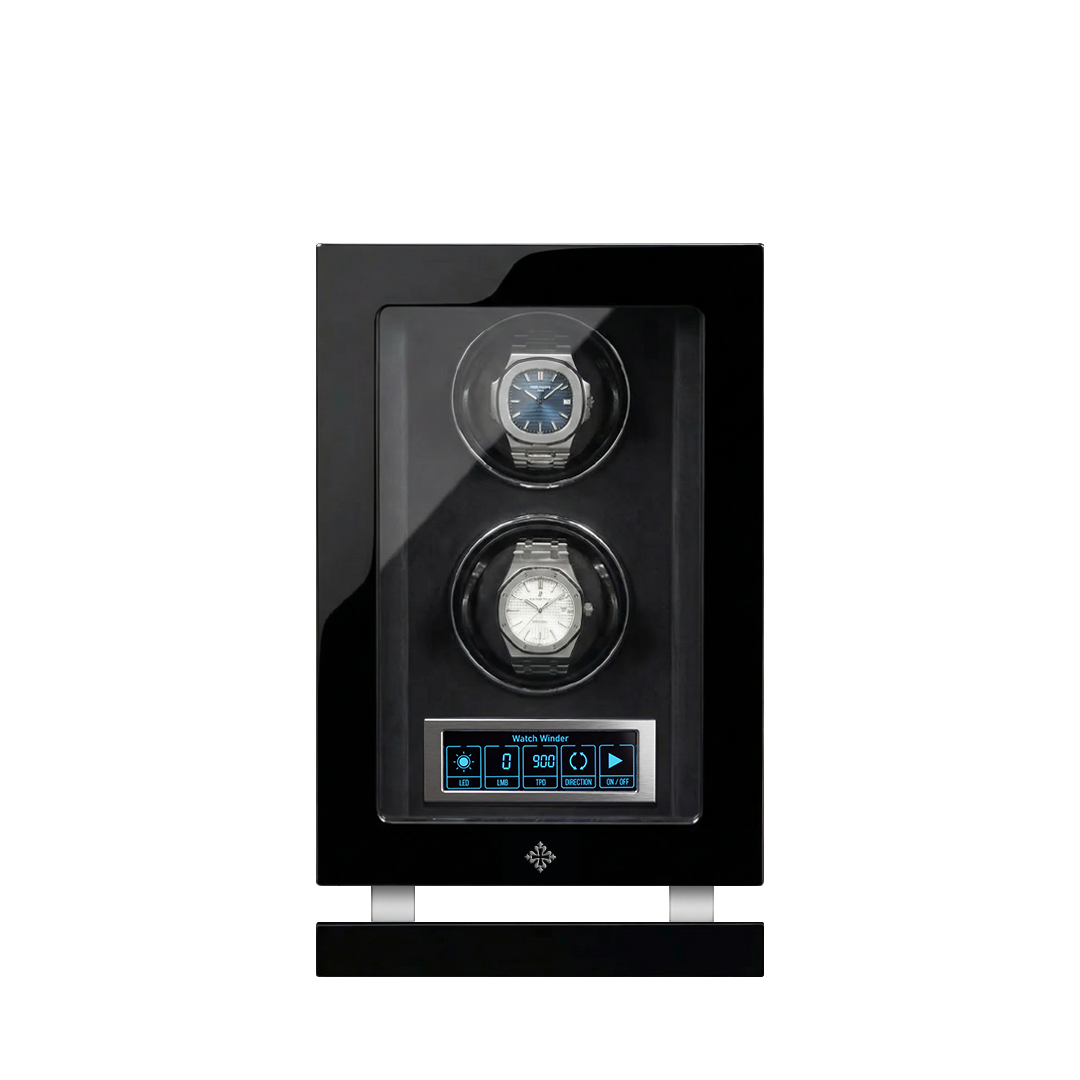
1. Impresario™ Series 2 Watch Winder — the daily-wear pick
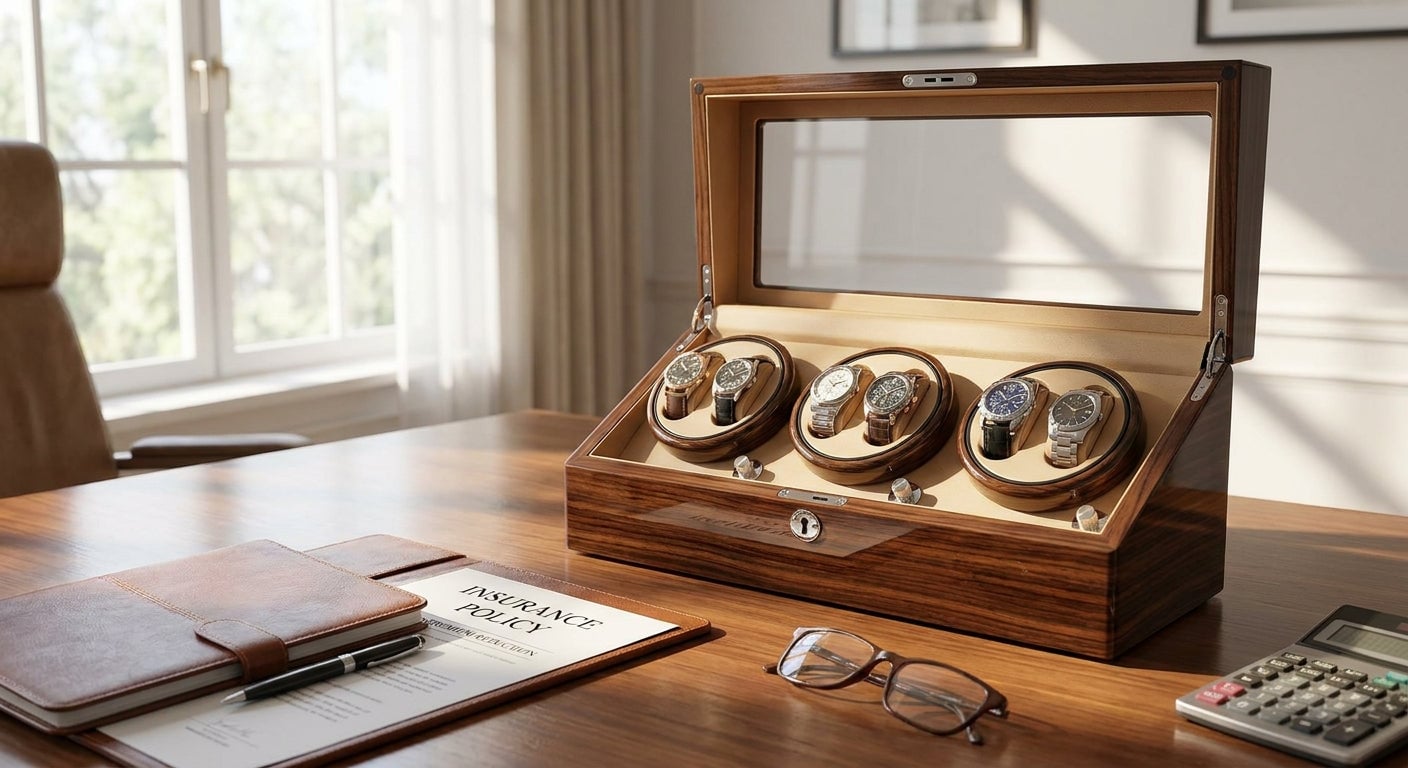
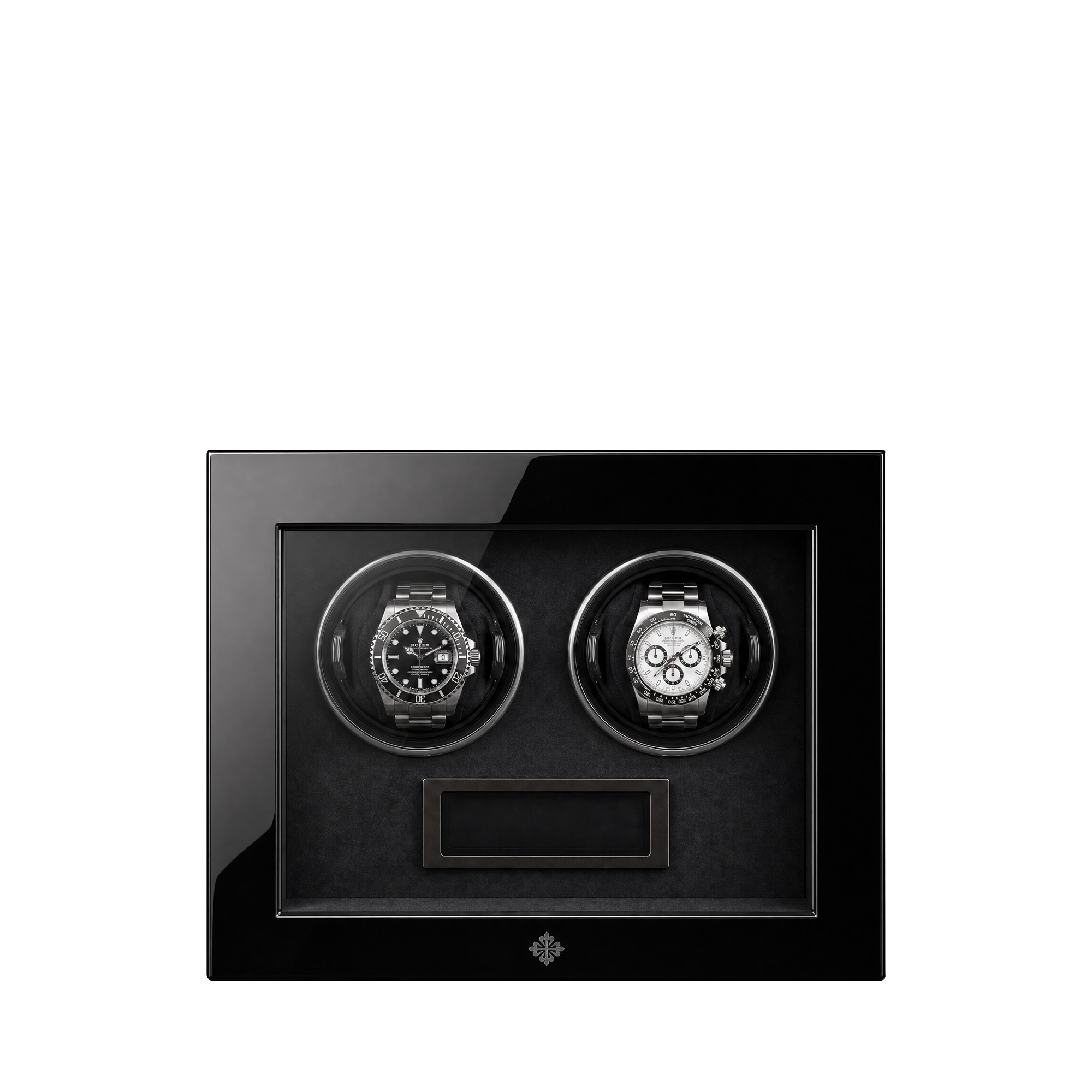
Two independent Mabuchi rotors, biometric fingerprint lock, telescopic pillow, $649. Each rotor runs its own program, so a Daytona and a second automatic (even a different reference with a different TPD requirement) wind correctly at the same time instead of sharing a compromise setting.
For a single Daytona or a Daytona-plus-one rotation, this is the size that makes sense in 2026 — no wasted slots, no unnecessary footprint. Buy.
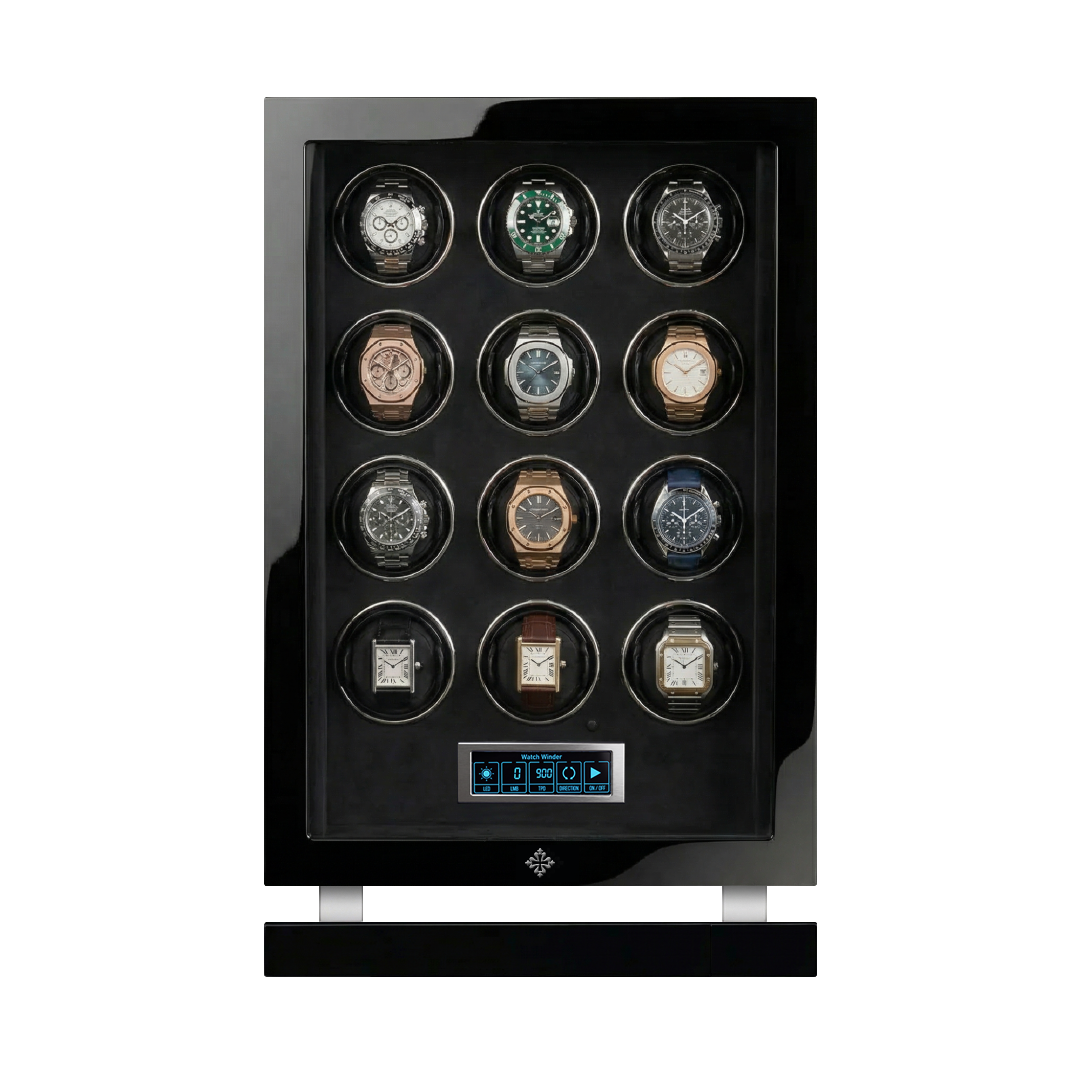
2. Impresario™ Series 12 Watch Winder — the multi-Rolex vault
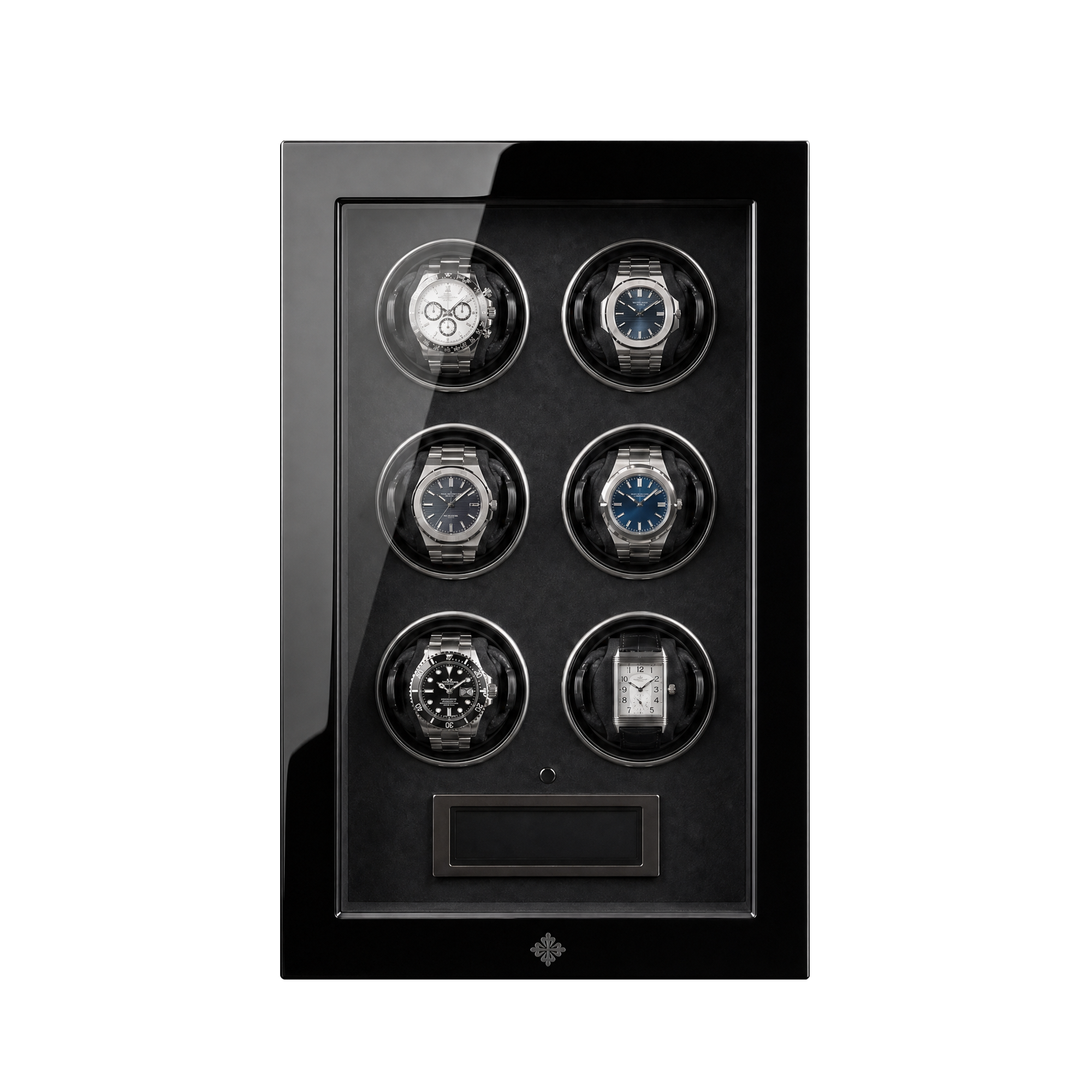
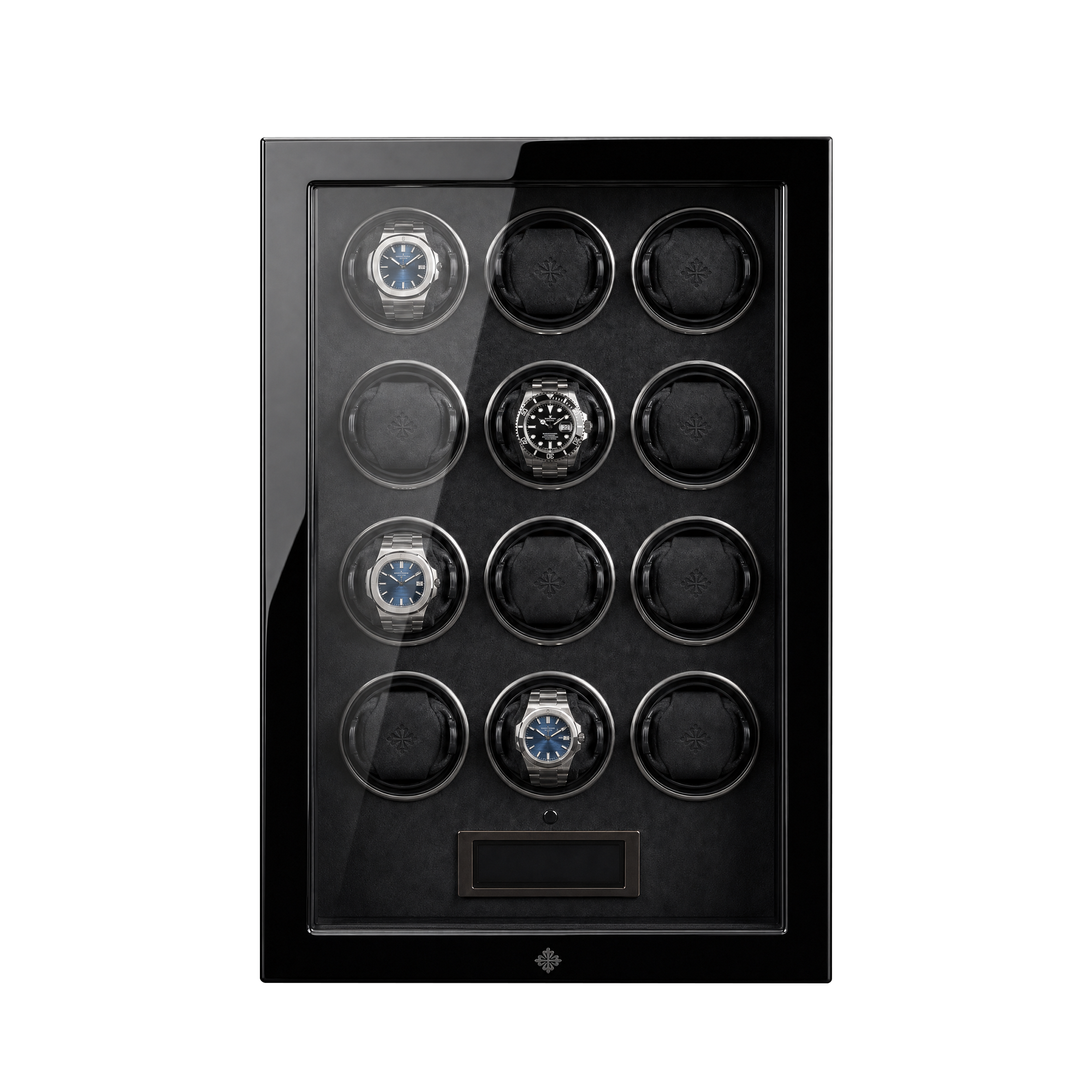
Twelve independent rotors behind a fingerprint lock, $1,499. Collectors running a Daytona alongside a GMT-Master II, a Submariner, and a handful of other automatics need independent TPD per slot, not a shared bank setting — this is the largest fingerprint-locked winder in the Impresario line and it handles that without compromise.
If your Rolex collection has outgrown a two-slot machine, this is the upgrade path. Buy.
3. Yachtline™ Series 8 Watch Winder — the display case
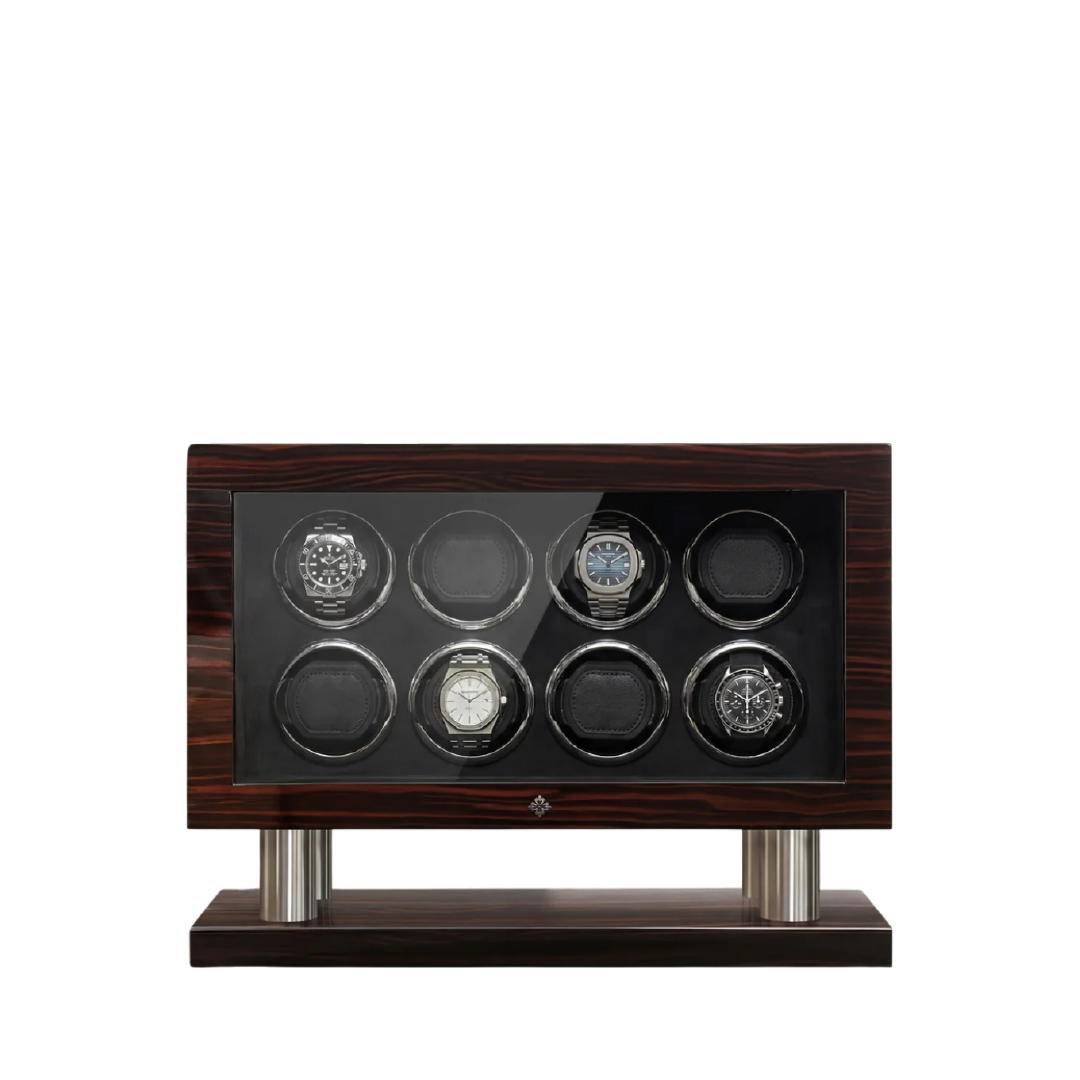
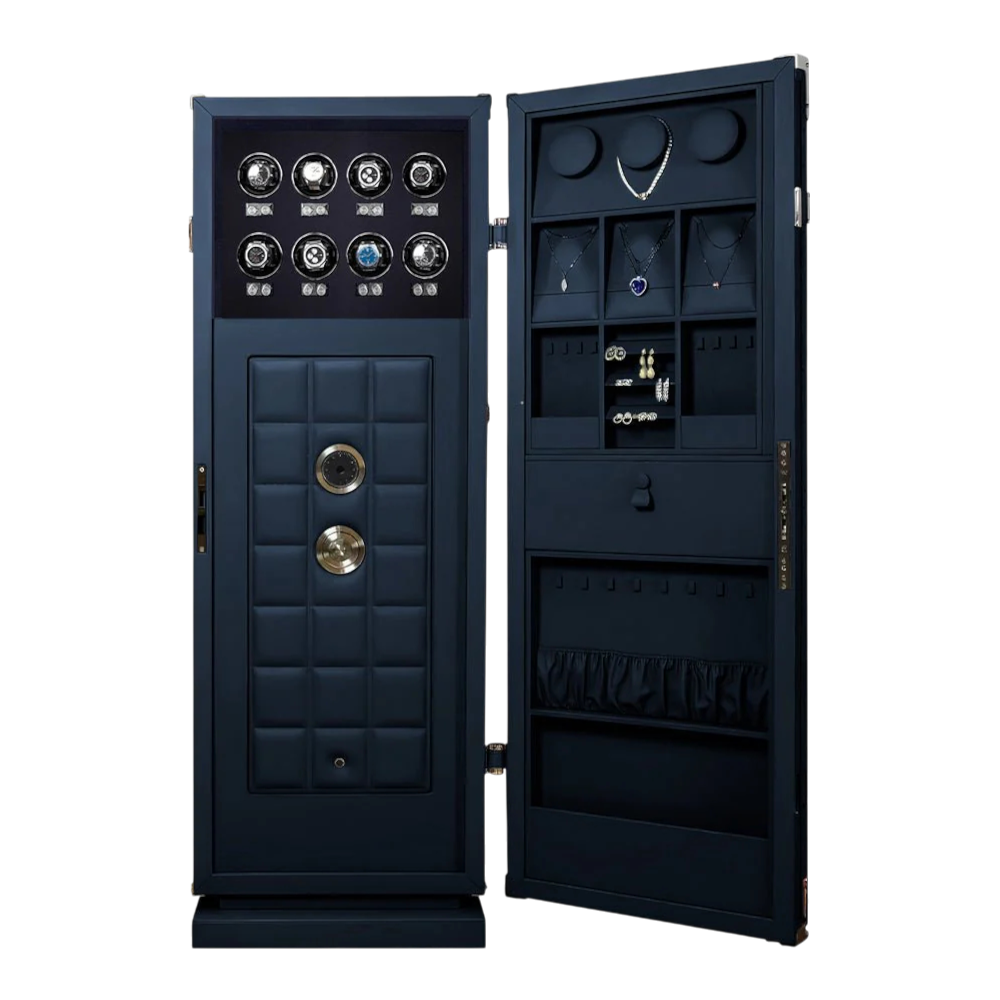
Eight rotors laid horizontally like a tray, biometric access, $1,399. It’s built to sit on a credenza or console rather than a closet shelf, which matters if the winder is also functioning as a display piece for a Daytona collection.
The horizontal layout eats more surface area than a vertical case of the same capacity, so it’s a fit question before it’s a performance question. Consider.
4. Virtuoso™ Series 2 Watch Winder — the entry point
Two rotors on independent programs, Macassar Ebony exterior, Alcantara lining, $599. It covers the same bidirectional TPD range as the Impresario line without the fingerprint lock, which lowers the price but also lowers the security tier.
Fine for a bedroom dresser in a low-traffic household; not the pick if the winder needs to double as access control. Consider.
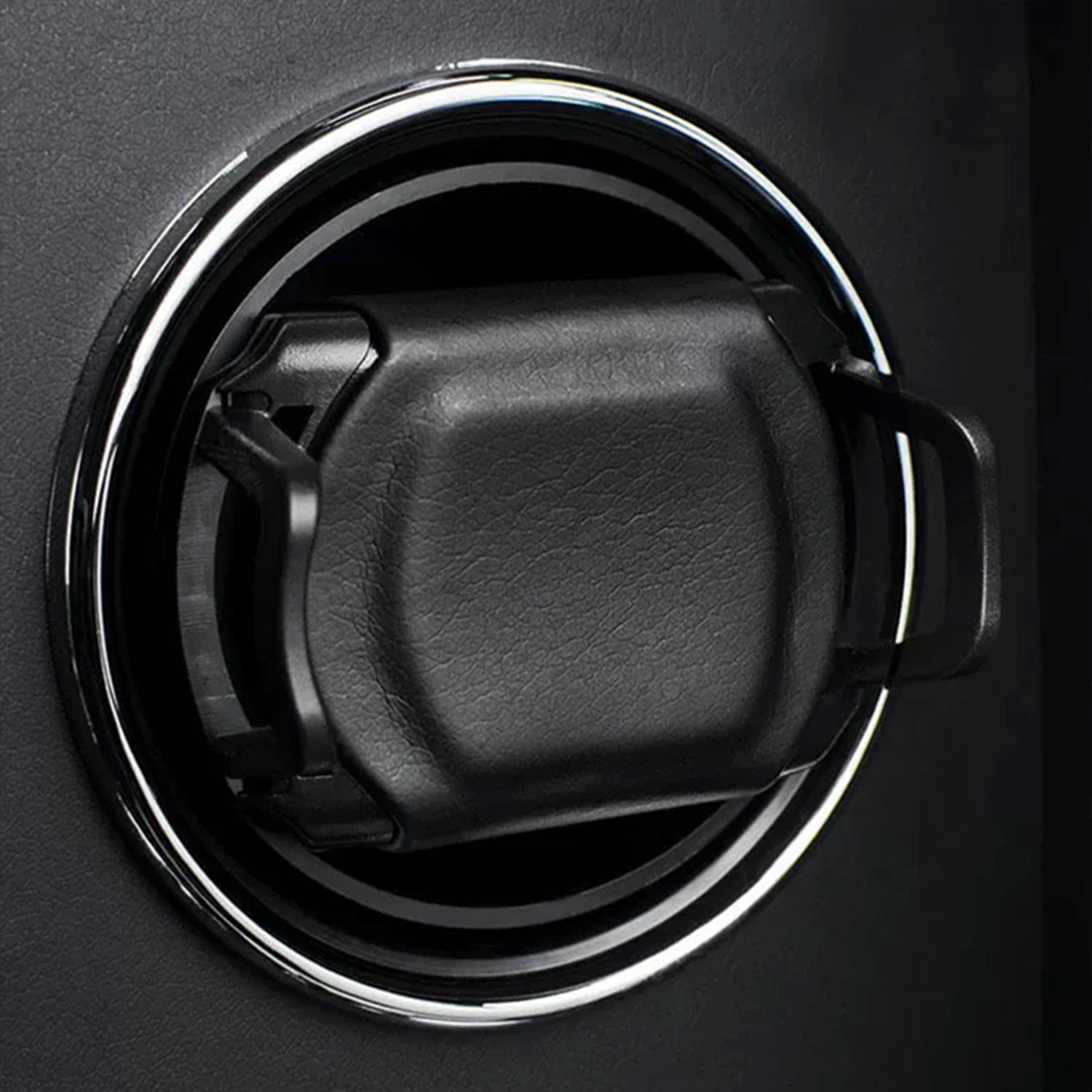
5. Watch Winders Pillow — the accessory that actually matters
Telescopic, adjustable from 36mm to 55mm, $59. A Daytona on an Oysterflex strap or full Oyster bracelet sits differently than a slim dress watch, and a stock pillow sized for the wrong case width lets the watch shift during rotation.
Cheap fix for a problem that shows up more often than collectors expect. Buy if your current winder’s stock pillow doesn’t grip the Daytona properly.
6. Apollo™ 12 Watch Safe — the storage upgrade collectors skip
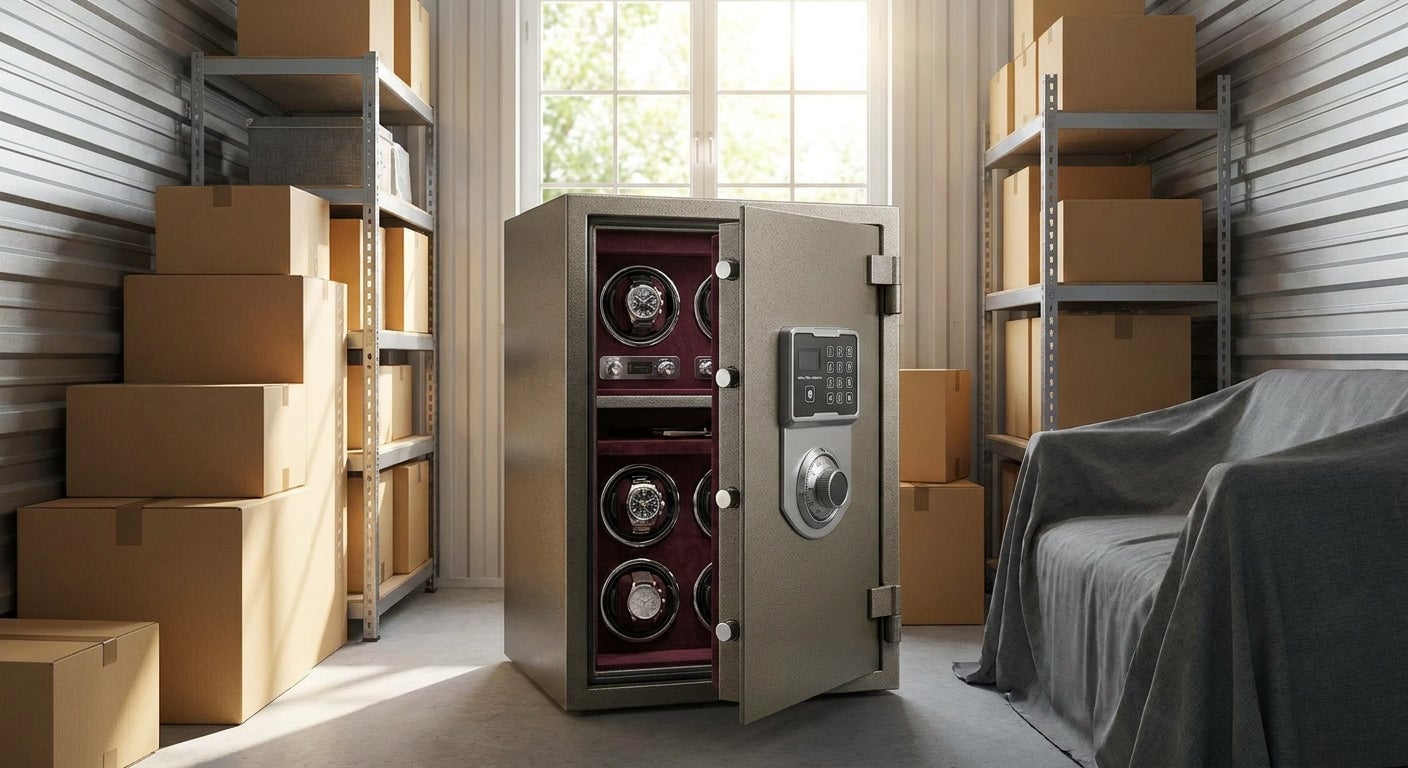
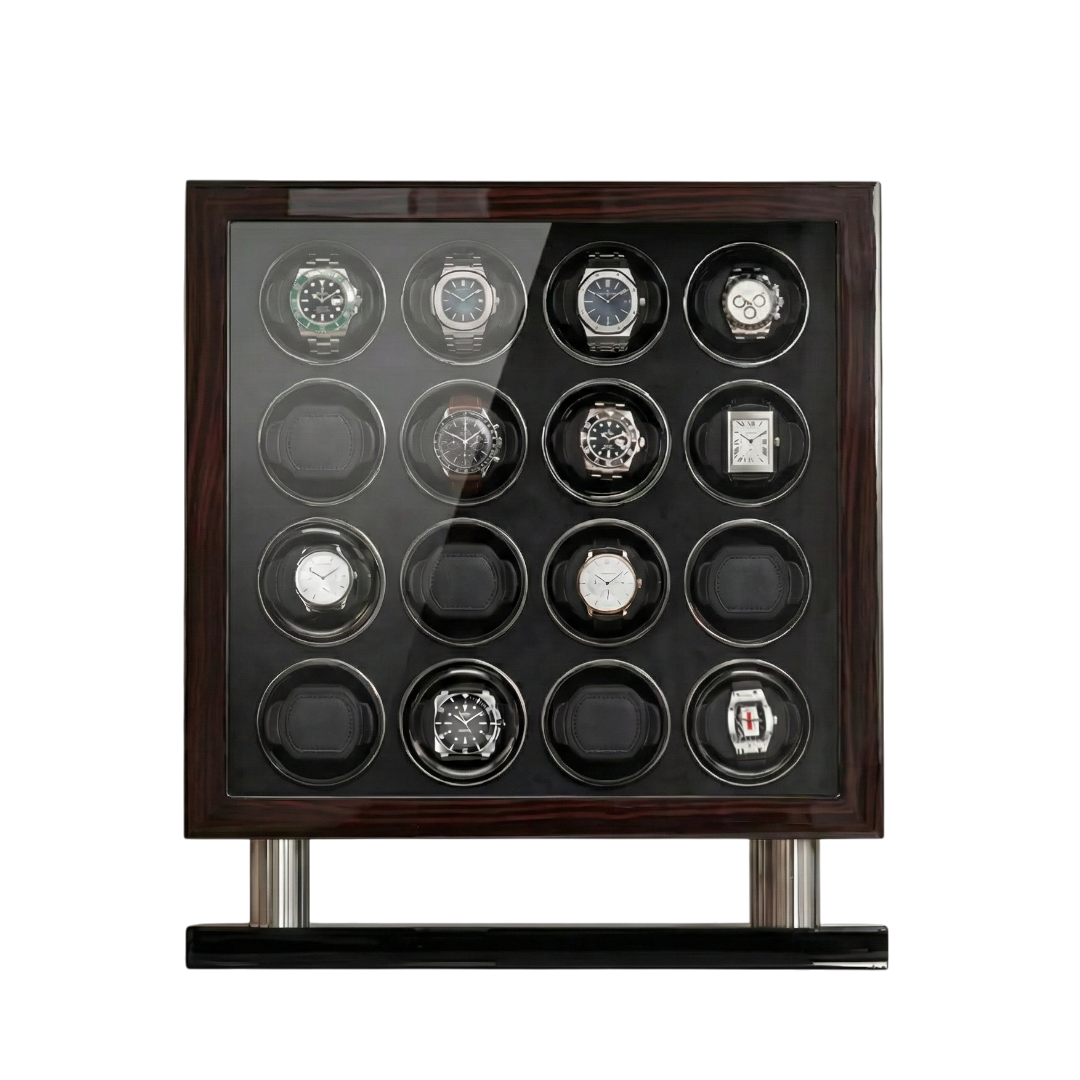
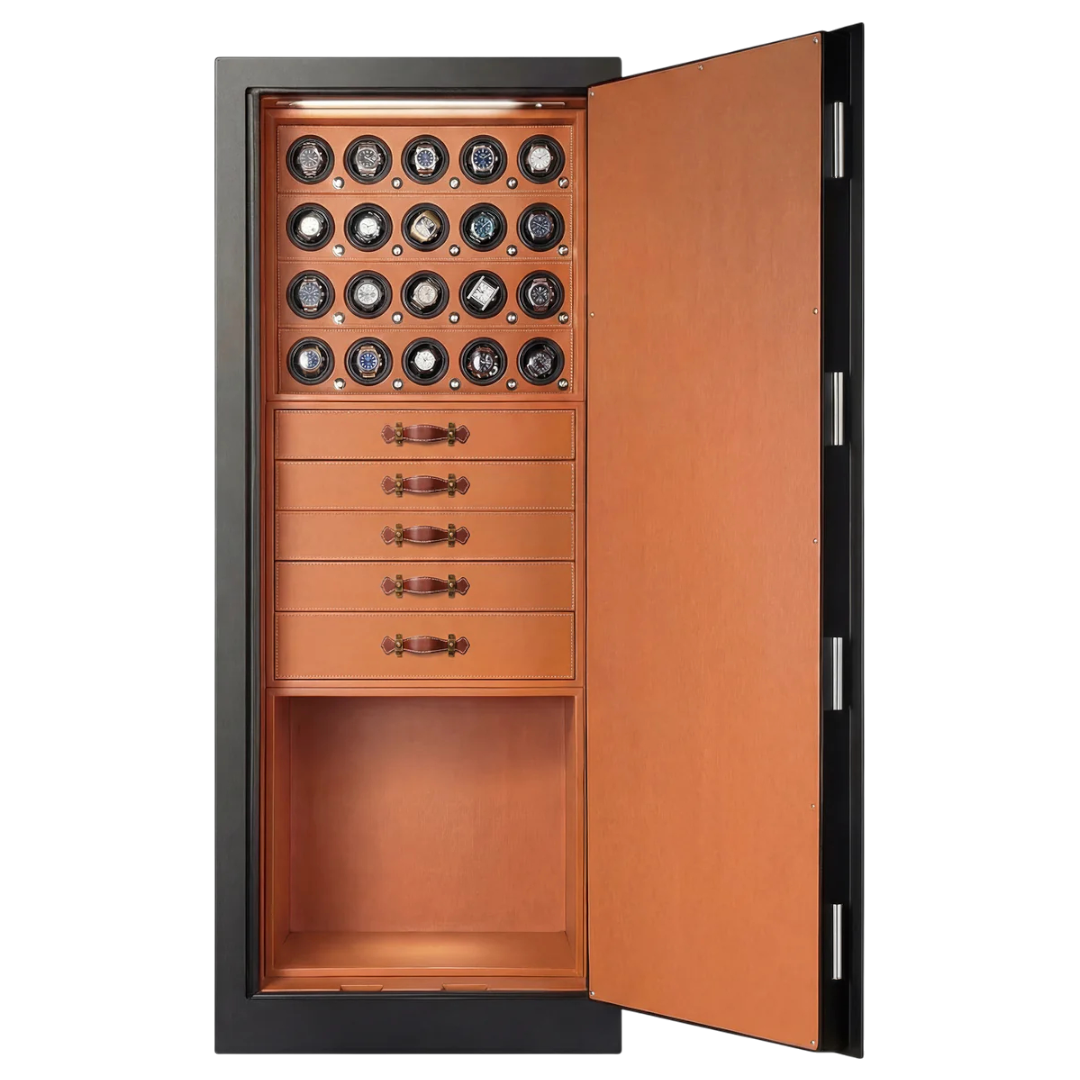
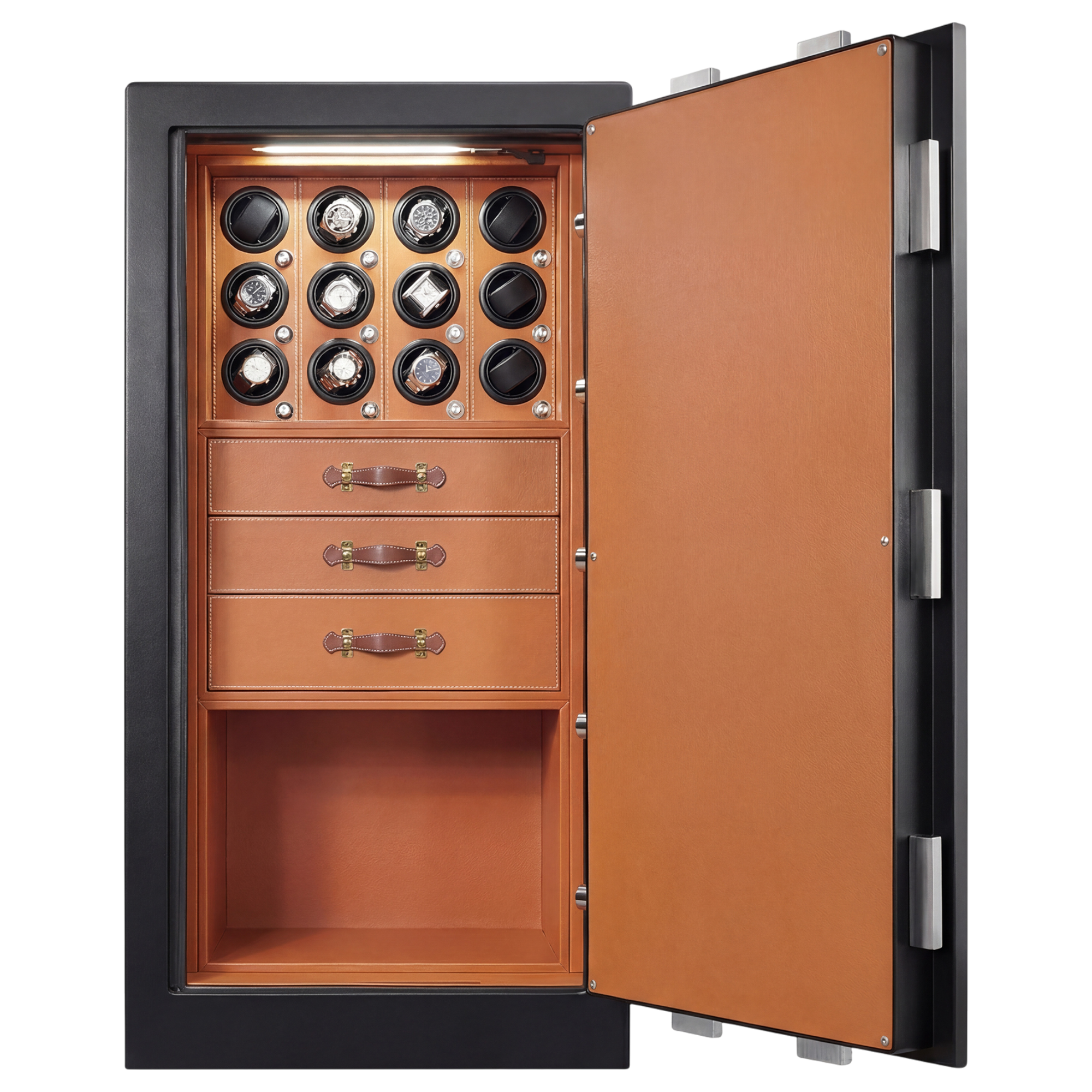
Twelve watches behind a real vault: Grade 304 stainless steel, AR500 ballistic protection, UL TL-30 Grade II certification, biometric access, and integrated proprietary Japanese winding, $7,499. This isn’t a winder with a lock bolted on — it’s a safe that happens to wind, which changes the calculation for anyone storing a Daytona worth five or six figures.
It only makes sense once the collection extends past just the Daytona into pieces that justify vault-grade security. Hold unless you’re consolidating a broader collection.
Comparison table
| Model | Rotors | Lock | TPD range | Price | Verdict |
|---|---|---|---|---|---|
| Impresario Series 2 | 2, independent | Biometric | Programmable, bidirectional | $649 | Buy |
| Impresario Series 12 | 12, independent | Fingerprint | Programmable, bidirectional | $1,499 | Buy |
| Yachtline Series 8 | 8, independent | Biometric | Programmable, bidirectional | $1,399 | Consider |
| Virtuoso Series 2 | 2, independent | None | Programmable, bidirectional | $599 | Consider |
| Watch Winders Pillow | n/a | n/a | n/a | $59 | Buy (accessory) |
| Apollo 12 Watch Safe | 12, built-in | Biometric + vault | Programmable, bidirectional | $7,499 | Hold |
Where to buy
- Buy direct rather than through a reseller — Enigwatch ships worldwide and includes a lifetime warranty and professional installation that a third-party listing won’t carry over.
- Confirm the TPD program covers roughly 650, bidirectional, before ordering — a fixed unidirectional program is the wrong machine for a Daytona regardless of price.
- If the Daytona shares a household with other Rolex references, check that rotor programs run independently rather than a single shared setting across all slots.
FAQ
What’s the best watch winder for a Rolex Cosmograph Daytona in 2026?
The Impresario Series 2 is the strongest overall pick for a Daytona in 2026 because it runs independent bidirectional programs with biometric access at $649. Collectors with a larger Rolex rotation should size up to the Impresario Series 12 instead.
Does the Rolex Daytona need a watch winder?
No watch strictly needs a winder, but a Daytona left still stops within a few days and requires resetting the time precisely once restarted. A winder keeps the caliber 4130 wound and ready without manual resetting between wears.
What TPD setting should I use for a Daytona?
650 turns per day, bidirectional, is the setting most collectors run for the Daytona’s caliber 4130. Bidirectional is non-negotiable — Rolex’s Perpetual rotor winds in both directions, so a unidirectional winder only engages the mainspring half the time.
Bidirectional or unidirectional for a Daytona?
Bidirectional, without exception. Every current Rolex movement including the Daytona’s caliber 4130 uses a Perpetual rotor that winds on both clockwise and counterclockwise rotation.
How much does a good watch winder for a Daytona cost in 2026?
A single or dual-slot winder built for a Daytona runs $599 to $1,499 in 2026, depending on lock type and rotor count. Vault-grade options with built-in winding, like the Apollo 12 Watch Safe, run closer to $7,499.
Can one winder handle a Daytona and a Submariner together?
Yes, as long as the winder runs independent programs per rotor rather than one shared setting. Both references use bidirectional Perpetual rotors at similar TPD ranges, so a multi-slot winder like the Impresario Series 12 handles them without conflict.
Will a watch winder damage my Daytona?
A correctly programmed bidirectional winder at a reasonable TPD does not damage a Daytona. Damage risk comes from mismatched settings — running a unidirectional program or an excessive TPD on a machine with a low-quality motor over months of continuous use.
Is a watch winder better than manual winding for a Daytona?
A winder is more convenient for a watch worn irregularly, since it keeps the Daytona wound and eliminates resetting after it stops. Manual winding works fine too, but the Daytona has no quickset shortcut for a chronograph that’s been sitting.
One last thing
The caliber 4130 carries roughly a 72-hour power reserve, so a Daytona worn every other day survives fine without a winder. The reason collectors still run one anyway has less to do with the mainspring and more to do with the chronograph: once it stops mid-timing, re-zeroing the sub-dials through the pushers takes real patience, and it’s the kind of fifteen-minute annoyance a $649 winder eliminates entirely.
Related guides
Protect Your Watch Collection
Designed for collectors who demand the best. Explore our premium watch winders and luxury safes.
Protect Your Watch Collection
Designed for collectors who demand the best. Explore our premium watch winders and luxury safes.