
The afternoon after you buy the $40,000 watch

Most collectors discover insurance the same way. You buy a piece that crosses some mental threshold, you pick it up, you carry it home in a box that feels smaller than it should for the price. And somewhere between the authorized dealer and your kitchen counter, a new thought shows up.
What if something happens to this.
The instinct is usually to call the homeowner’s insurance. The instinct is usually wrong. Most standard homeowner’s policies cap jewelry coverage at $2,500-$5,000 total. A single Rolex Submariner exceeds that. A serious collection is an order of magnitude past it.
This guide covers how luxury watch insurance actually works. What real carriers offer, what they require, what they quietly don’t cover, and how to set up coverage properly the first time. I’ll be direct about the parts where carriers protect themselves more than they protect collectors.
Why standard homeowner’s policies don’t cut it
Homeowner’s insurance treats jewelry as a category with a built-in cap. The cap exists because homeowner’s policies weren’t designed for collections. They were designed for a wedding ring, a watch, maybe a necklace.
Here’s what typical homeowner’s coverage looks like for watches:
| Coverage type | Typical limit | Typical perils |
|---|---|---|
| Standard homeowner’s | $1,500-$5,000 total jewelry | Fire, theft (with police report) |
| Scheduled rider (endorsement) | Per-item value, up to policy max | Broader, but still excludes mysterious disappearance |
| Specialty collector’s policy | Full declared value, per item | All-risk including mysterious disappearance |
A collection above $10,000 has outgrown standard coverage. Above $50,000, most collectors move to specialty carriers. Above $250,000, it’s usually required.
The gap most collectors don’t see: standard policies cover theft only if you can prove it was stolen. Mysterious disappearance, meaning you can’t account for where the watch went, is not covered. Leaving a Daytona in a hotel safe and finding it gone on checkout is a gray zone under a standard policy. Under a proper collector’s policy, it’s covered.
Scheduled vs blanket vs specialty: which coverage type you actually need
Three structures show up repeatedly when collectors shop insurance.
Scheduled rider (endorsement to homeowner’s): Each watch is listed individually with an appraisal and a declared value. Coverage is per-item. Premiums are usually 1-2% of declared value annually. This works up to maybe $50K-$100K collection value, at which point carriers start pushing back on adding more items.
Blanket coverage: A total collection value is insured without per-item listings. Simpler to manage but usually has per-item caps inside the blanket. Less commonly offered for luxury watches because carriers want per-item accountability.
Specialty collector’s policy: Standalone policies from carriers that specifically insure valuables. Chubb’s Masterpiece, Jewelers Mutual Perfect Circle, AIG Private Client, PURE, and Hodinkee Insurance (underwritten by Chubb) are the major options. These policies offer all-risk coverage including mysterious disappearance, worldwide coverage, market-value replacement, and agreed-value settlements.
For any serious collection, specialty is the answer. Scheduled riders work for smaller collections, but the gaps in coverage compound as the collection grows.
The four things carriers require before they’ll write the policy
Specialty carriers don’t just take your word for the collection. They require documentation and, above certain values, specific storage conditions.
1. Appraisals
Every watch above a threshold (usually $5K-$10K) needs an independent appraisal. The appraisal should include:
- Make, model, reference number
- Serial number
- Movement details and complications
- Condition grading
- Replacement value (not resale value)
- Appraiser credentials (ideally AGS, ASA, or factory-certified)
Box and papers documentation adds 15-20% to replacement value on most pieces, so the appraiser should note what’s included.
2. Photographs
High-resolution photos of each piece, front and back, with serial numbers visible. Some carriers want additional photos of complications, bracelets, and box/papers. Keep a copy offsite or in cloud storage. If the collection is stolen, the photos are what drive the police report and the insurance claim.
3. Purchase receipts and provenance
Original receipts if available. For pieces bought at auction, the auction house documentation. For secondary market purchases, whatever documentation the seller provided. Provenance matters for valuation, especially for vintage or historically significant pieces.
4. Storage conditions

This is where vaults enter the conversation. Most specialty carriers require UL-rated storage above specific collection values. The exact thresholds vary by carrier and region, but the common pattern looks like this:
| Collection value | Typical storage requirement |
|---|---|
| Under $50K | Home storage, no specific rating required |
| $50K-$150K | Fire-rated safe, burglary-rated preferred |
| $150K-$500K | UL TL-15 burglary rating, UL 72 Class 350 fire rating |
| Above $500K | UL TL-30 or higher, often with alarm monitoring and biometric access |
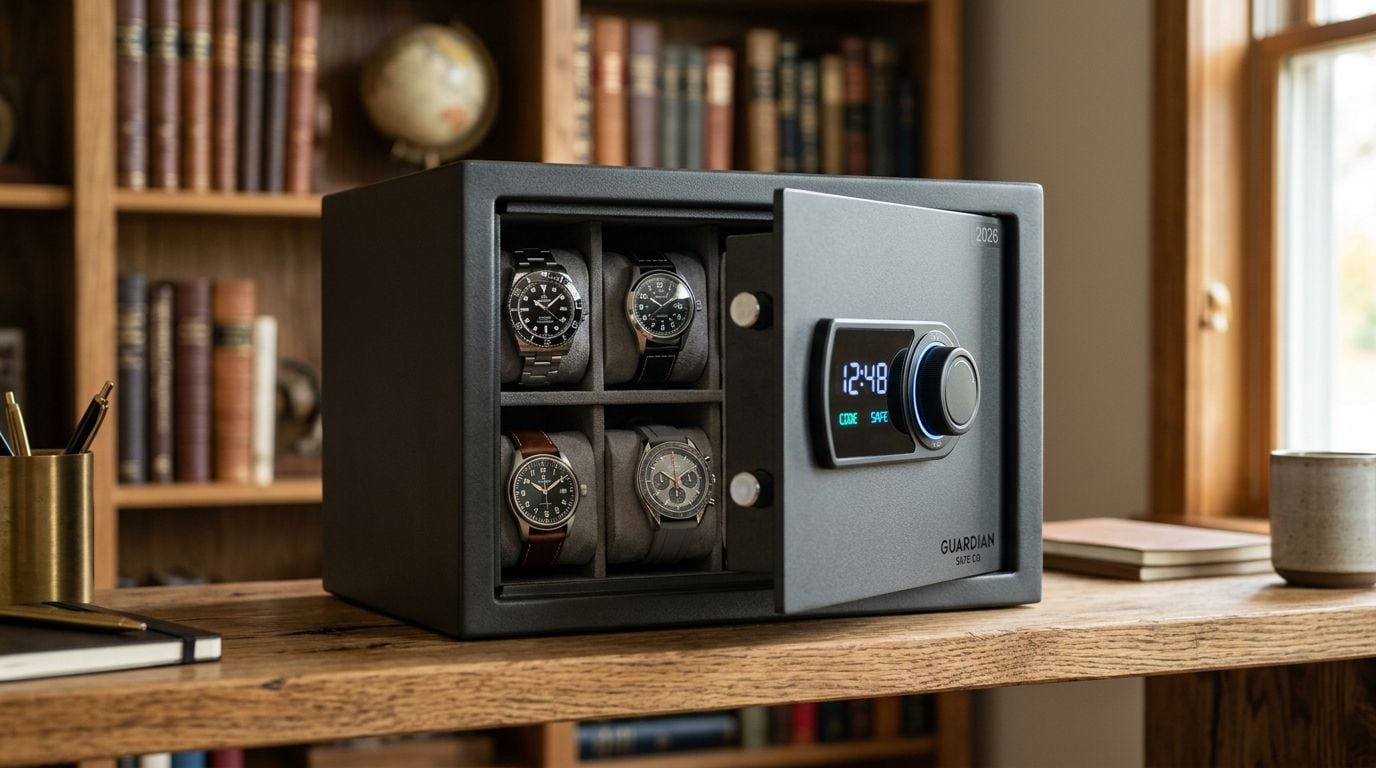
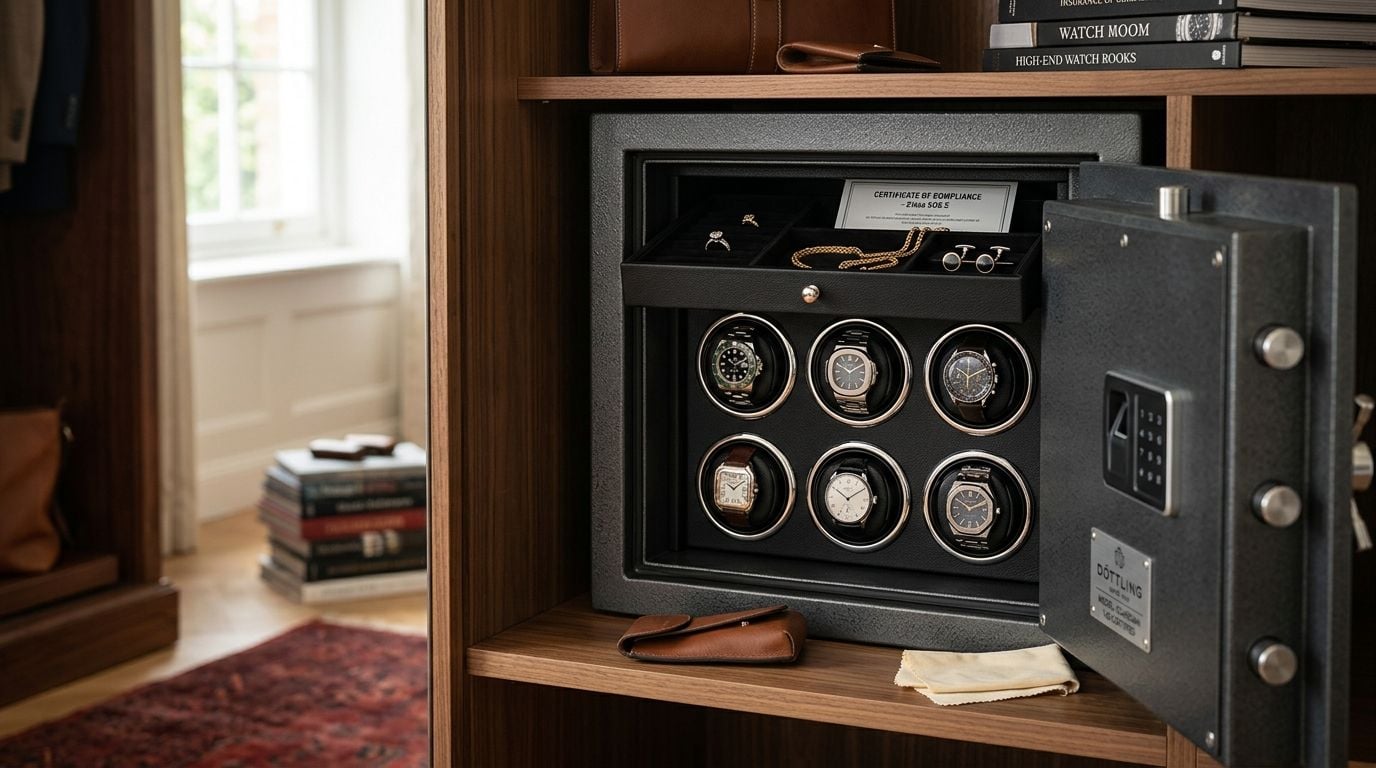
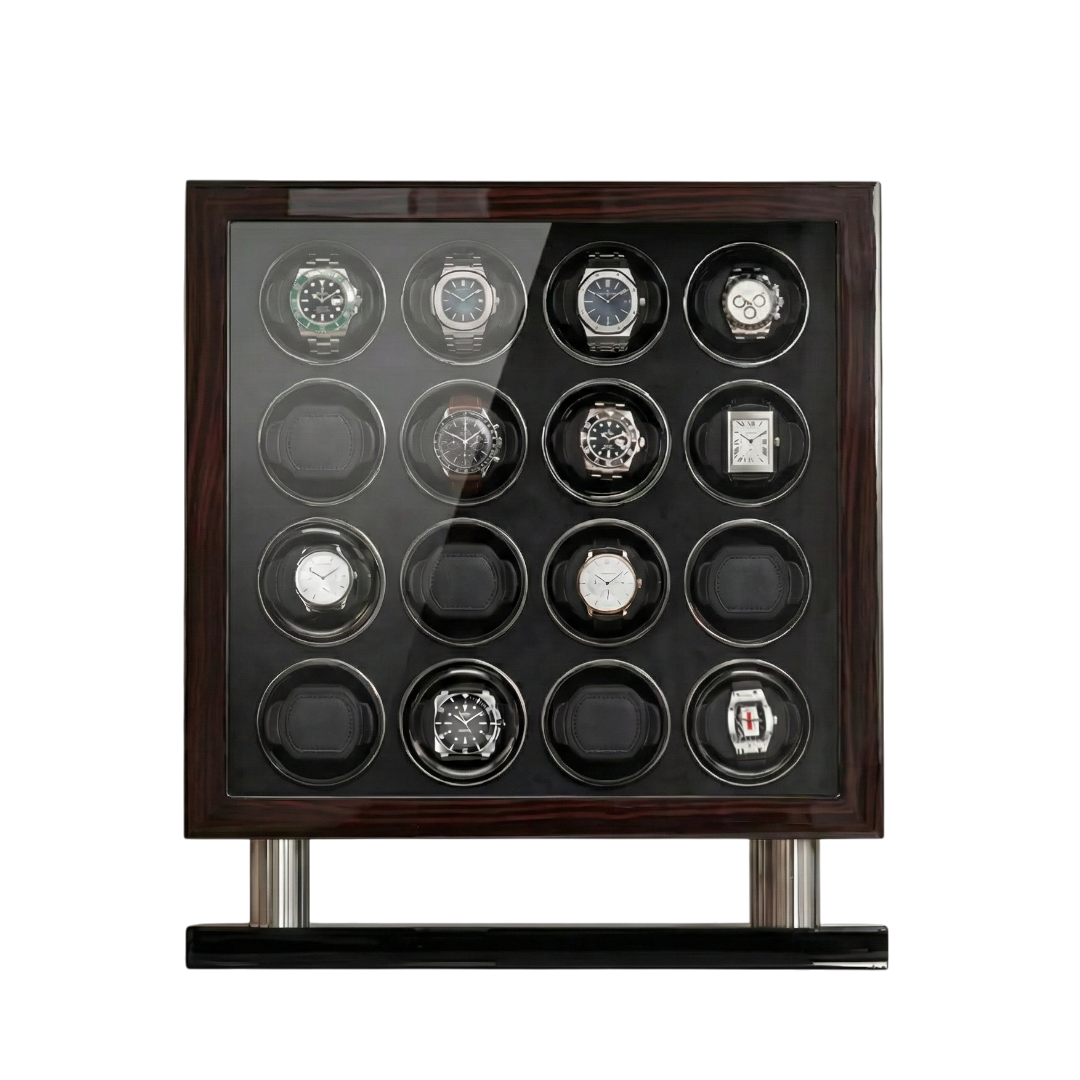
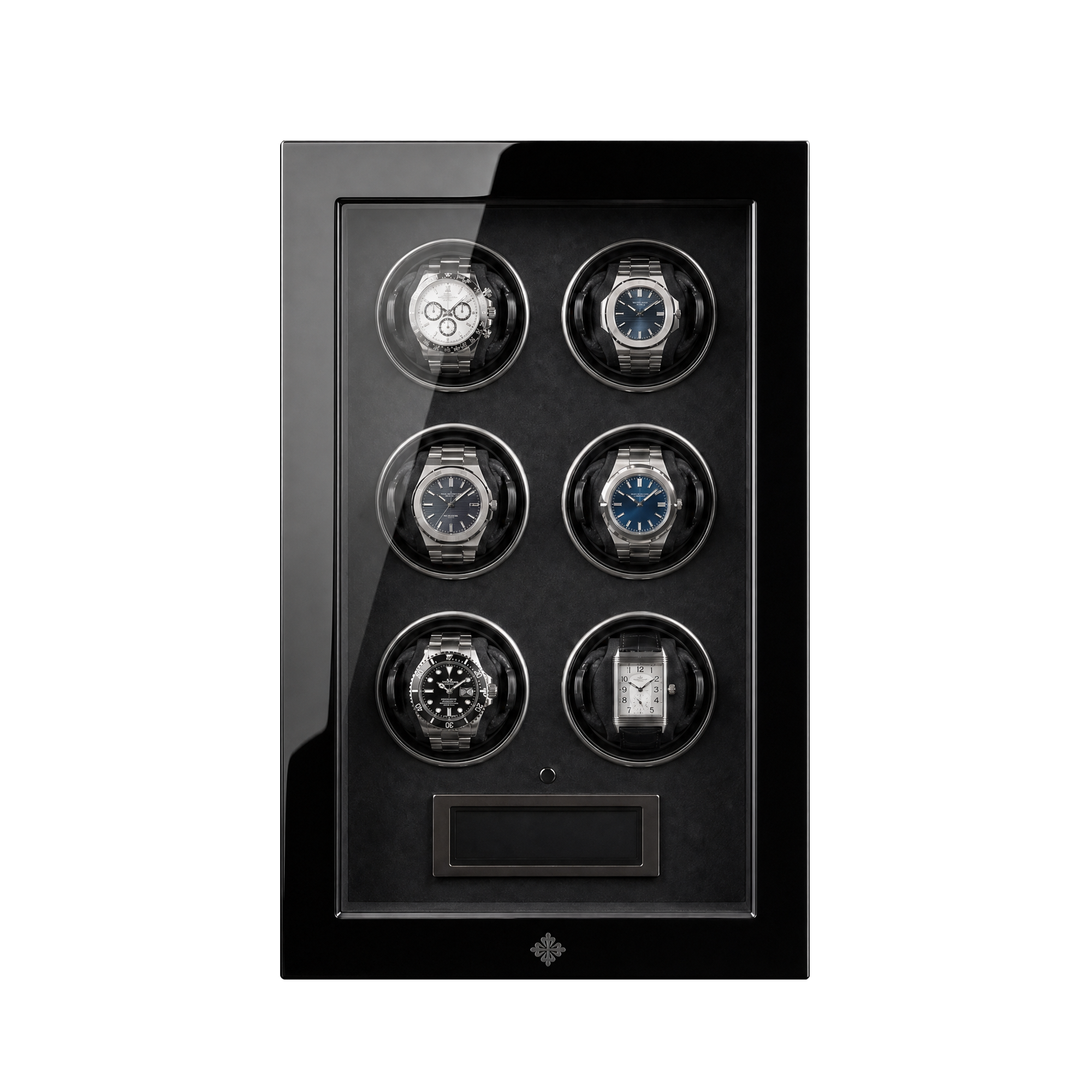
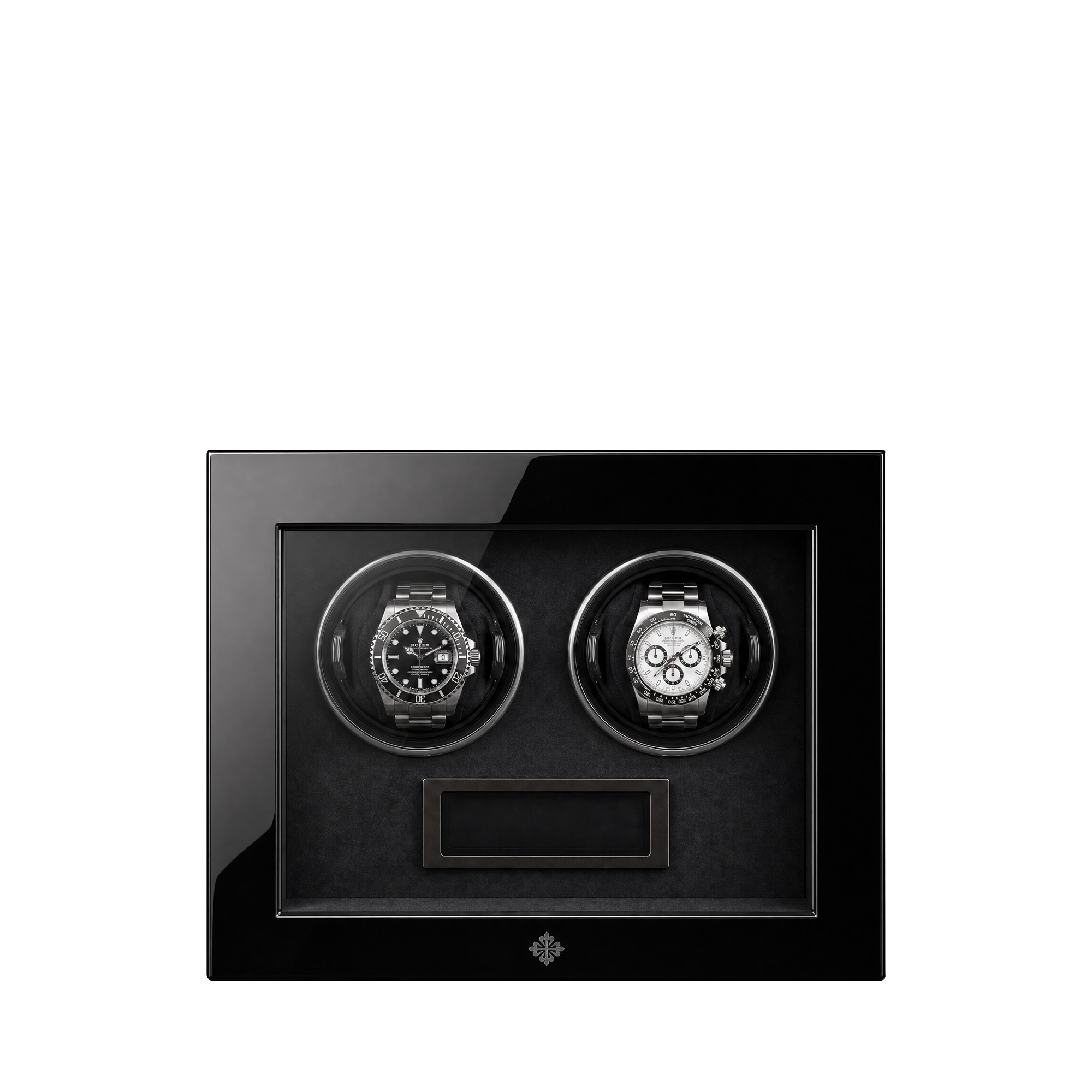
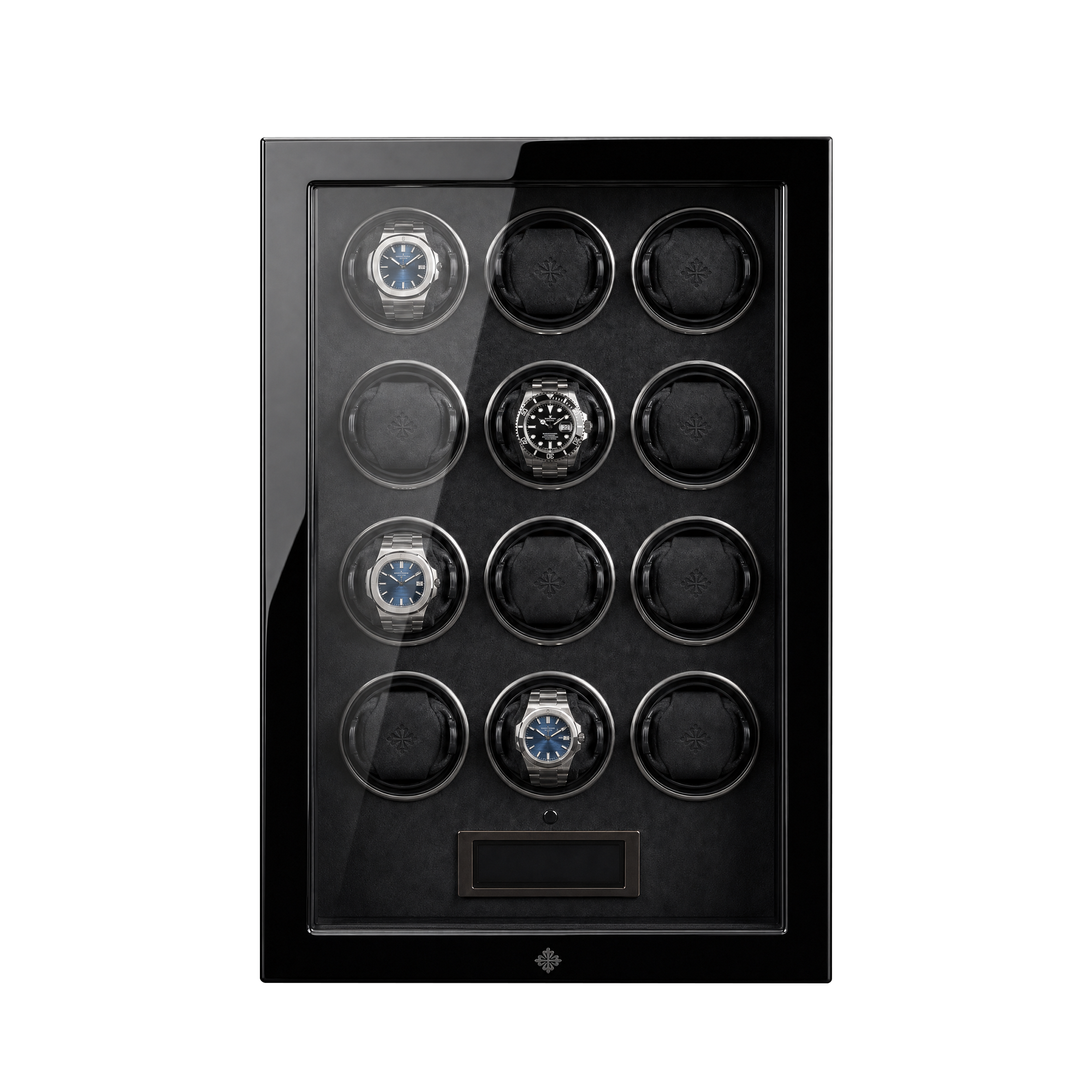
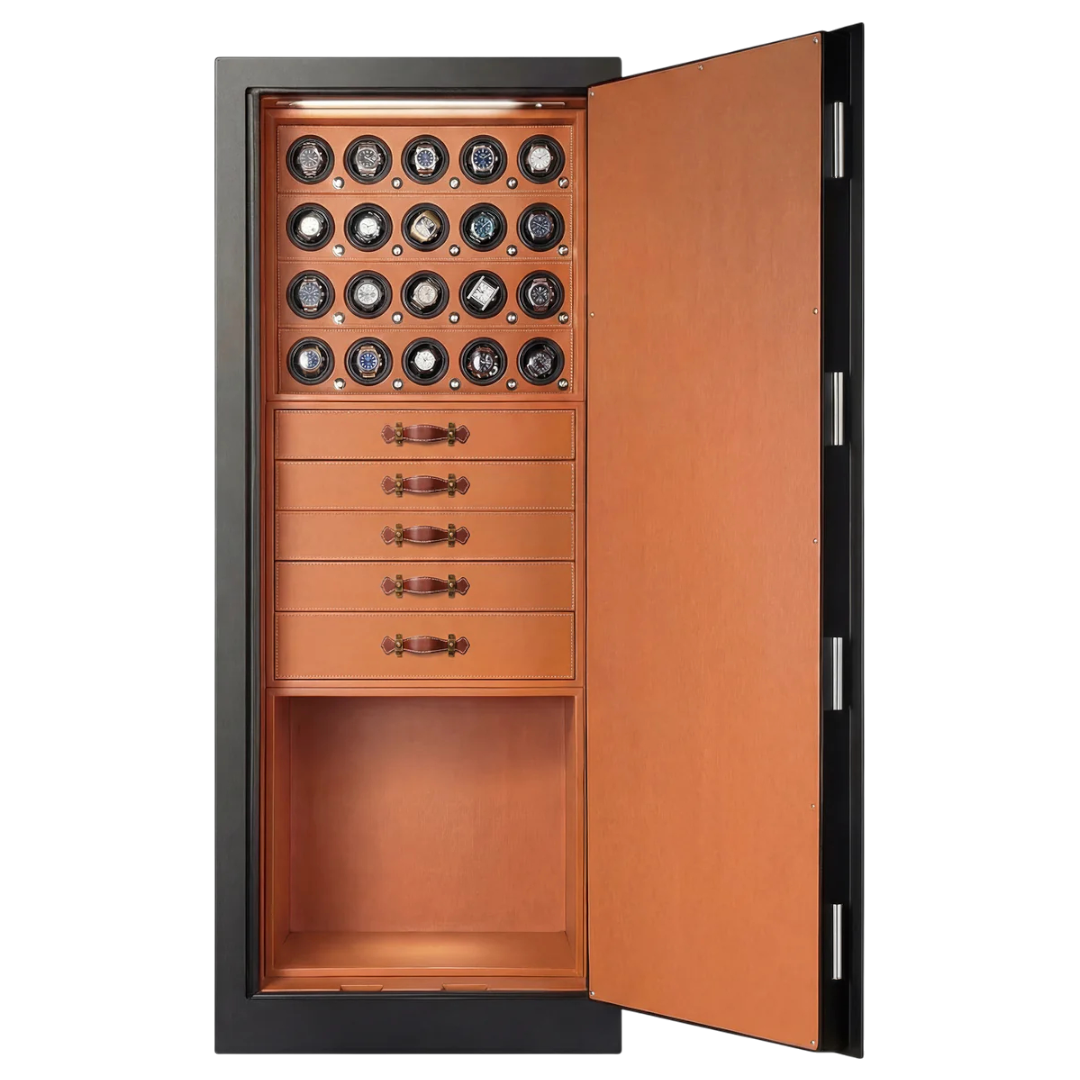
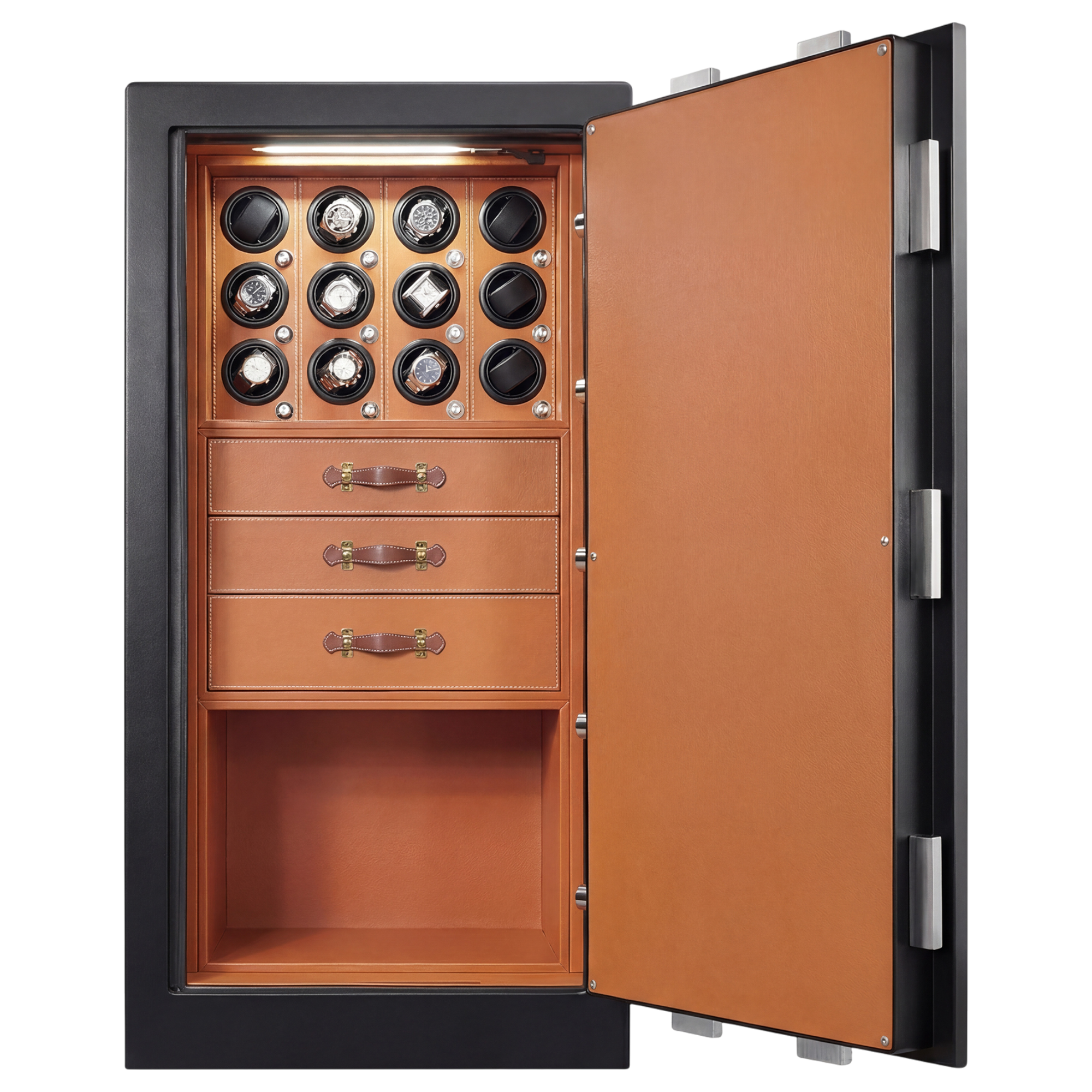
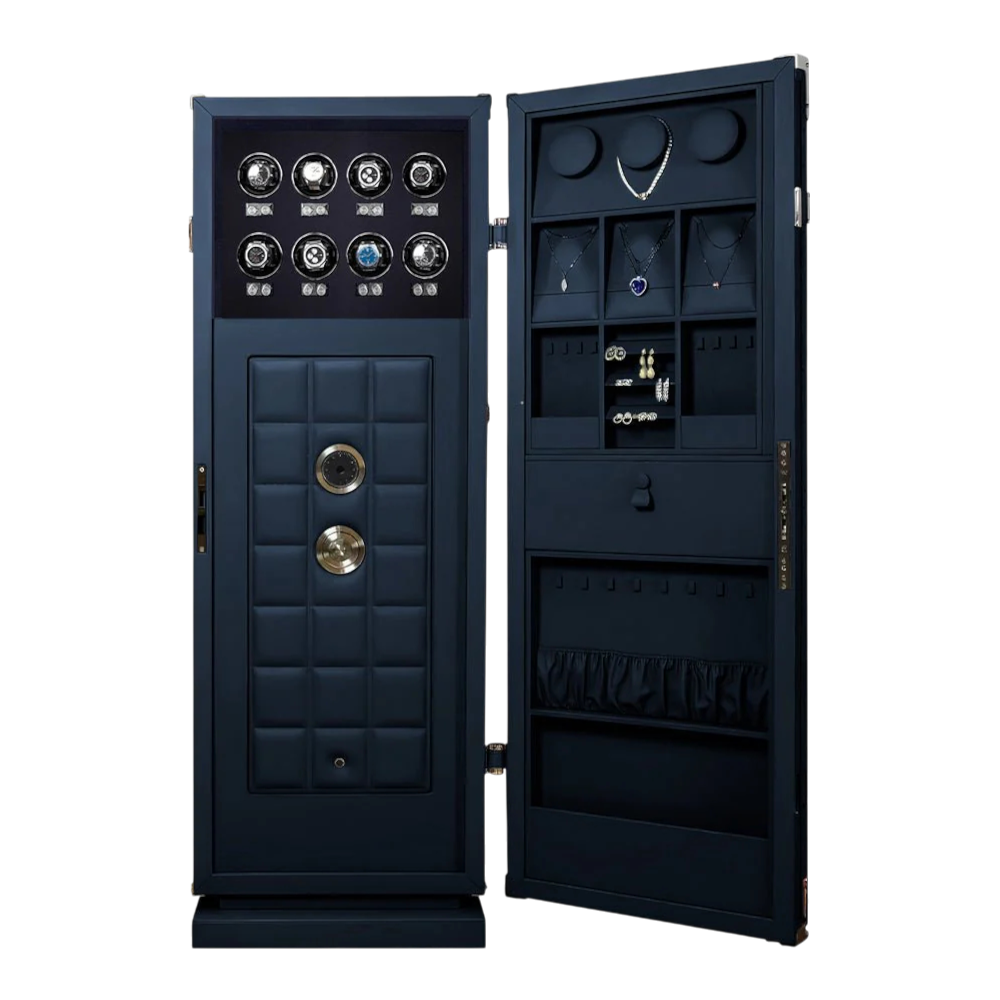
A UL-rated watch safe that meets carrier requirements typically lowers premiums and satisfies the storage clause in one move. The Centennial bulletproof watch safe box and the Veron 20 both meet TL-15 and UL 72 Class 350 standards.
What the major specialty carriers actually offer
The specialty carrier landscape looks different than most collectors assume. Here’s how the main options stack up.
Chubb Masterpiece: The standard high-net-worth option. All-risk, worldwide, agreed-value. Strong for collectors with broader valuables portfolios (art, jewelry, wine). Premium structure usually 0.5-1% of declared value annually. Requires documentation but has generally reasonable storage requirements.
Jewelers Mutual Perfect Circle: Specialty jewelry insurer, strong reputation for watch claims. Coverage includes mysterious disappearance and worldwide travel. Generally competitive premiums. Requires appraisals every 3-5 years to keep values current.
AIG Private Client: High-end wealth management firm. Strong for ultra-high-net-worth collections ($1M+). Broader coverage including bank vault and third-party storage.
PURE Insurance: Member-owned reciprocal insurer. Strong service reputation. Competitive on premium for qualifying members. Typically requires other household coverage through PURE.
Hodinkee Insurance: Underwritten by Chubb, marketed to watch collectors specifically. Agreed-value, worldwide, all-risk. Accessible online, which most traditional carriers aren’t. Good fit for collectors under $500K who want specialty coverage without a full wealth-management relationship.
Premium factors: what makes your policy cost what it does
 Photo by
 Premiums usually run 0.3-2% of the declared collection value annually. The spread is wide because carriers weigh multiple factors.
What drives premiums up:
- Urban location with higher theft rates
- Travel patterns (international wear increases exposure)
- Collection values above $500K
- No central alarm monitoring
- No UL-rated storage
- Single-piece concentration (one $200K watch is riskier than ten $20K watches)
What brings premiums down:
- UL-rated watch safes with monitored alarm
- Lower-theft residential areas
- Diversified collection (many mid-value pieces)
- Long-standing relationship with the carrier
- Scheduled appraisals kept current
- Travel safe or secondary storage documented
A watch safe with proper UL certifications typically saves 10-25% on annual premiums compared to undocumented home storage. On a $300K collection at 1% premium, that’s $300-$750 per year. A $6K safe pays back its insurance savings in 8-20 years. Plus it actually protects the collection.
What specialty policies actually cover

Most collectors assume their policy covers “everything that could happen to the watches.” Specialty policies come close, but there are specifics worth knowing.
Usually covered: – Theft (with or without police report, depending on policy) – Fire, smoke, water damage – Mysterious disappearance (most specialty policies only) – Loss during international travel – Damage during shipping (to an authorized dealer or watchmaker) – Partial loss (bracelet, crown, bezel damaged but watch intact) – Servicing damage if the watchmaker is covered under the policy
Usually not covered or limited: – Wear and tear – Normal servicing costs – Value depreciation from market shifts – Damage from unauthorized modifications – Loss when the watch is out of your possession (given to someone else, on consignment) – War, nuclear events, government seizure (standard exclusions across most policies)
The covered/not-covered distinction matters when collectors start consigning watches to dealers, sending pieces to factory servicing, or lending a watch to a family member. Always check the specific policy language for these scenarios before the situation happens.
How to set up coverage properly the first time

The order of operations that saves collectors the most time:
- Get independent appraisals for pieces above $5K (or carrier threshold)
- Photograph every piece with serials visible
- Digitize receipts and box/papers documentation
- Upgrade storage to meet likely carrier requirements (UL-rated safe)
- Get quotes from 2-3 specialty carriers
- Declare worldwide wear if you travel with watches
- Set an annual review to update values and add new pieces
This takes most collectors a weekend. Doing it before the first specialty policy is bound is dramatically faster than doing it during a claim.
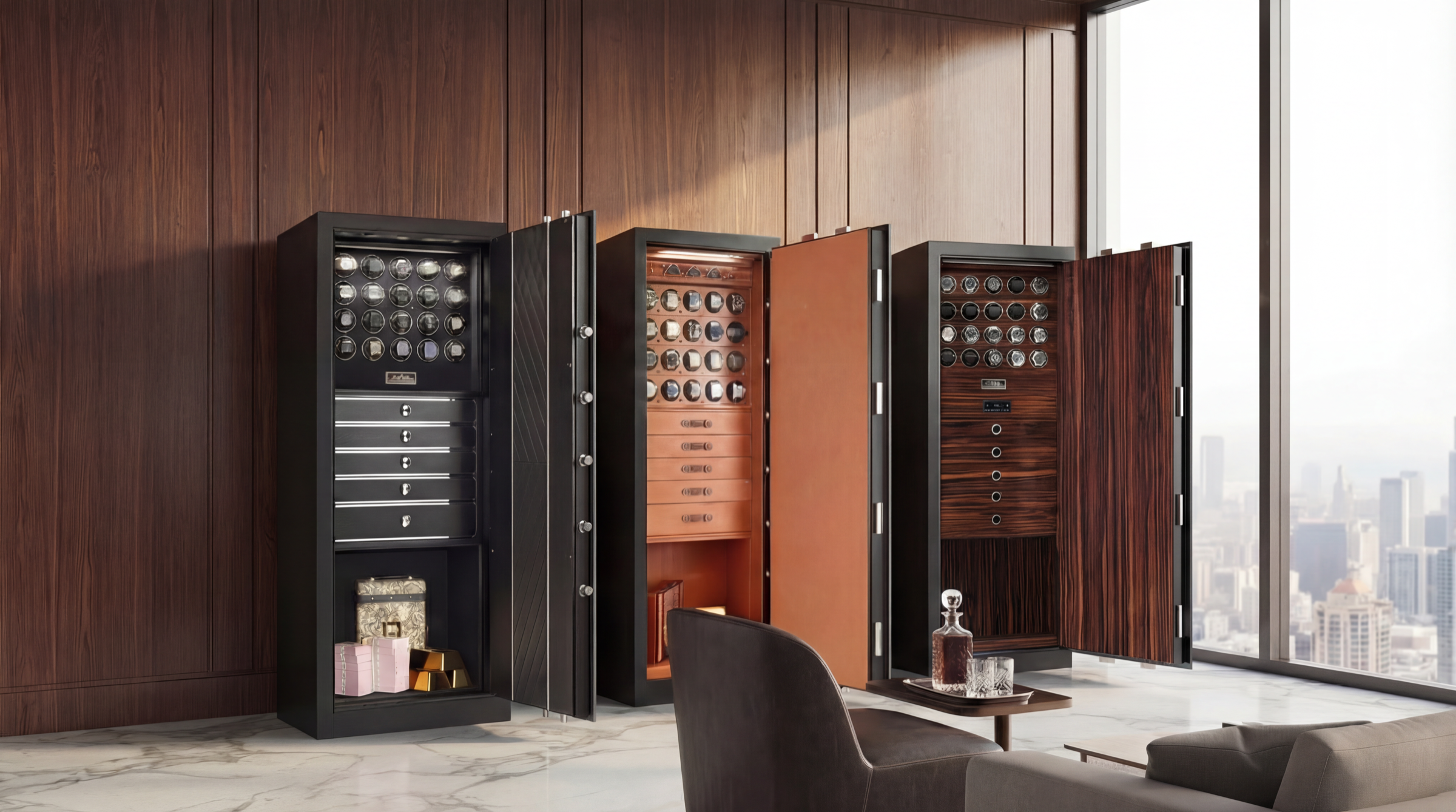
For collections crossing $150K where a UL-rated safe becomes a carrier requirement, the luxury watch safe collection covers the production options. For larger collections or bespoke integration, custom watch vault consultations build storage that exceeds carrier requirements.
Frequently asked questions
Do I need special insurance for my luxury watch collection?
Yes, for any collection valued above $10,000. Standard homeowner’s policies cap jewelry coverage at $1,500-$5,000 total, which is less than a single mid-tier luxury watch. A scheduled rider works for smaller collections, and specialty collector’s policies from Chubb, Jewelers Mutual, or Hodinkee Insurance handle larger or more valuable collections.
What does watch insurance typically cover?
Specialty watch insurance usually covers theft, fire, water damage, mysterious disappearance, loss during travel, and shipping damage to authorized dealers. Most policies exclude wear and tear, servicing costs, market value changes, and war or government actions.
How much does luxury watch insurance cost?
Premiums usually run 0.3-2% of declared collection value annually. A $100K collection typically costs $400-$1,500 per year. Premiums depend on location, storage, travel patterns, and whether the collection is stored in a UL-rated safe with alarm monitoring.
Do I need a safe to insure my watches?
For collections above $50K-$150K, most specialty carriers require UL-rated storage. The specific rating depends on collection value: TL-15 and UL 72 Class 350 for mid-range collections, TL-30 or higher for collections above $500K. A proper watch safe satisfies this requirement and usually lowers premiums.
Are watches covered if I’m wearing them outside the home?
Under specialty collector’s policies, yes. These policies usually include worldwide coverage for watches in your possession, including during international travel. Under standard homeowner’s coverage, the answer is often no or with significant limits. Always confirm worldwide wear coverage before relying on it.
What happens during a claim?
Claims typically require a police report (for theft), proof of ownership (receipts, appraisals, photos), and evidence the watch was insured under the policy. Specialty carriers usually pay agreed value or replacement cost depending on the policy structure. Claims processing takes 2-8 weeks in most cases.
Do I need to re-appraise my collection regularly?
Yes. Most carriers require updated appraisals every 3-5 years. Watch values shift with the secondary market, and an outdated appraisal can lead to under-insurance. Many collectors update appraisals every 2-3 years as a matter of practice, especially for pieces in volatile segments like vintage Rolex or Patek sports models.
The coverage decision in one paragraph
Any watch collection above $10K has outgrown standard homeowner’s coverage. Above $50K, move to a specialty policy. Above $150K, a UL-rated watch safe is usually required by carriers. Above $500K, custom storage and monitored security become mandatory. The cost of proper coverage runs 0.3-2% of declared value per year, and proper storage is usually the lever that brings premiums down the most.
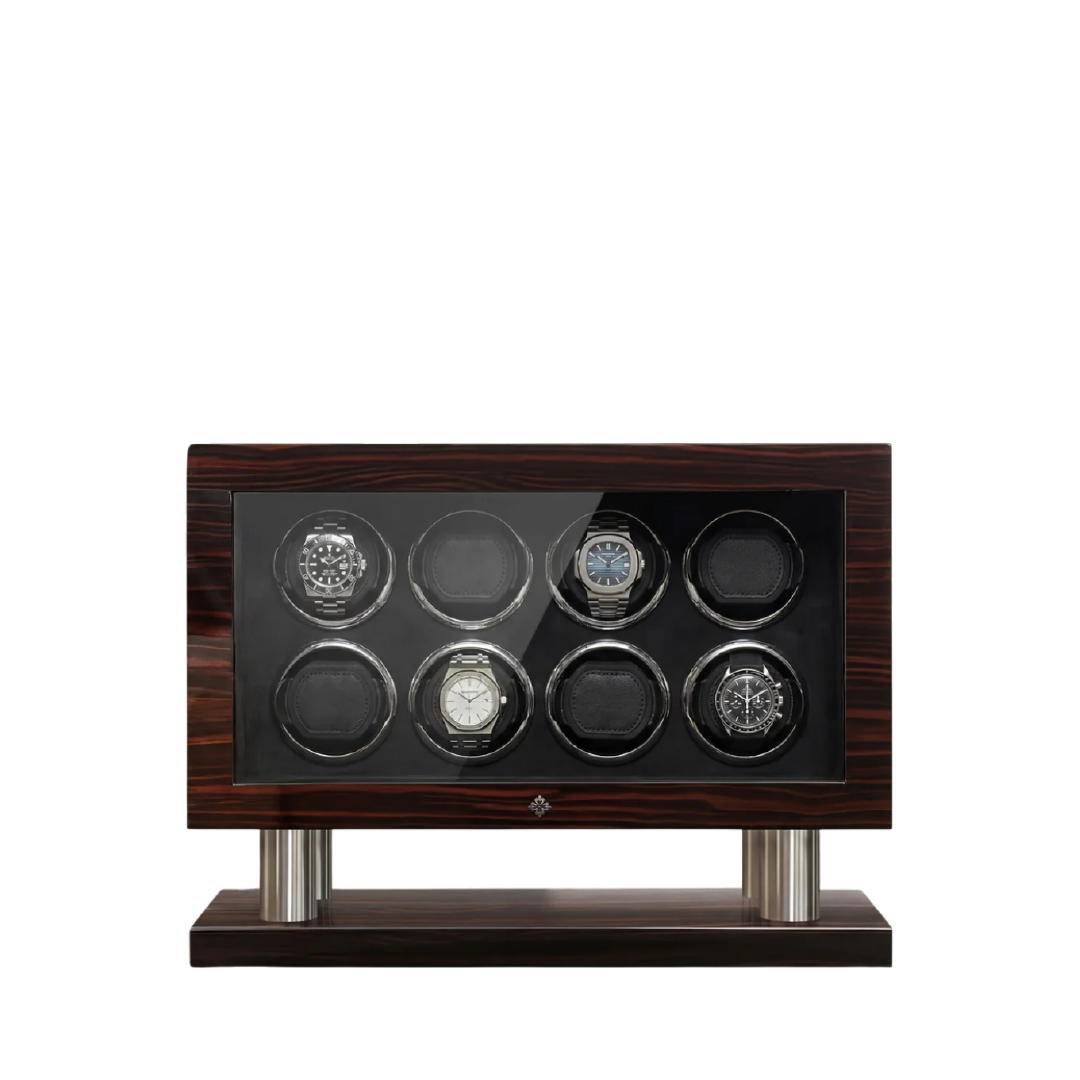
If the collection has crossed the threshold where insurance is a real consideration, storage is the other half of that conversation. Browse the watch winder safe collection for carrier-compliant production options, read the collector’s guide to luxury watch safes for the technical specs that matter, or contact us for a custom vault consultation if the collection size puts you in bespoke territory.
A collection worth insuring is a collection worth storing properly. Those two decisions aren’t independent. Your insurer already knows that.
Protect Your Watch Collection
Designed for collectors who demand the best. Explore our premium watch winders and luxury safes.
Protect Your Watch Collection
Designed for collectors who demand the best. Explore our premium watch winders and luxury safes.