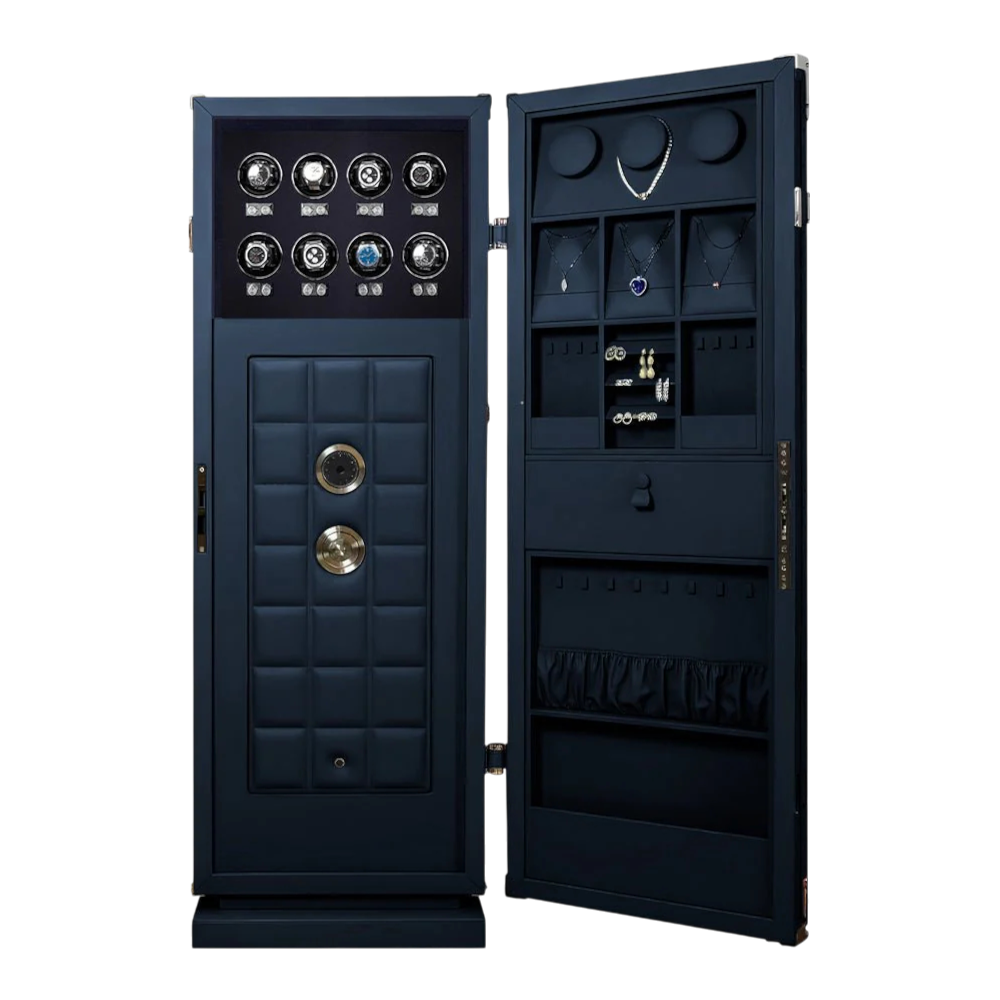

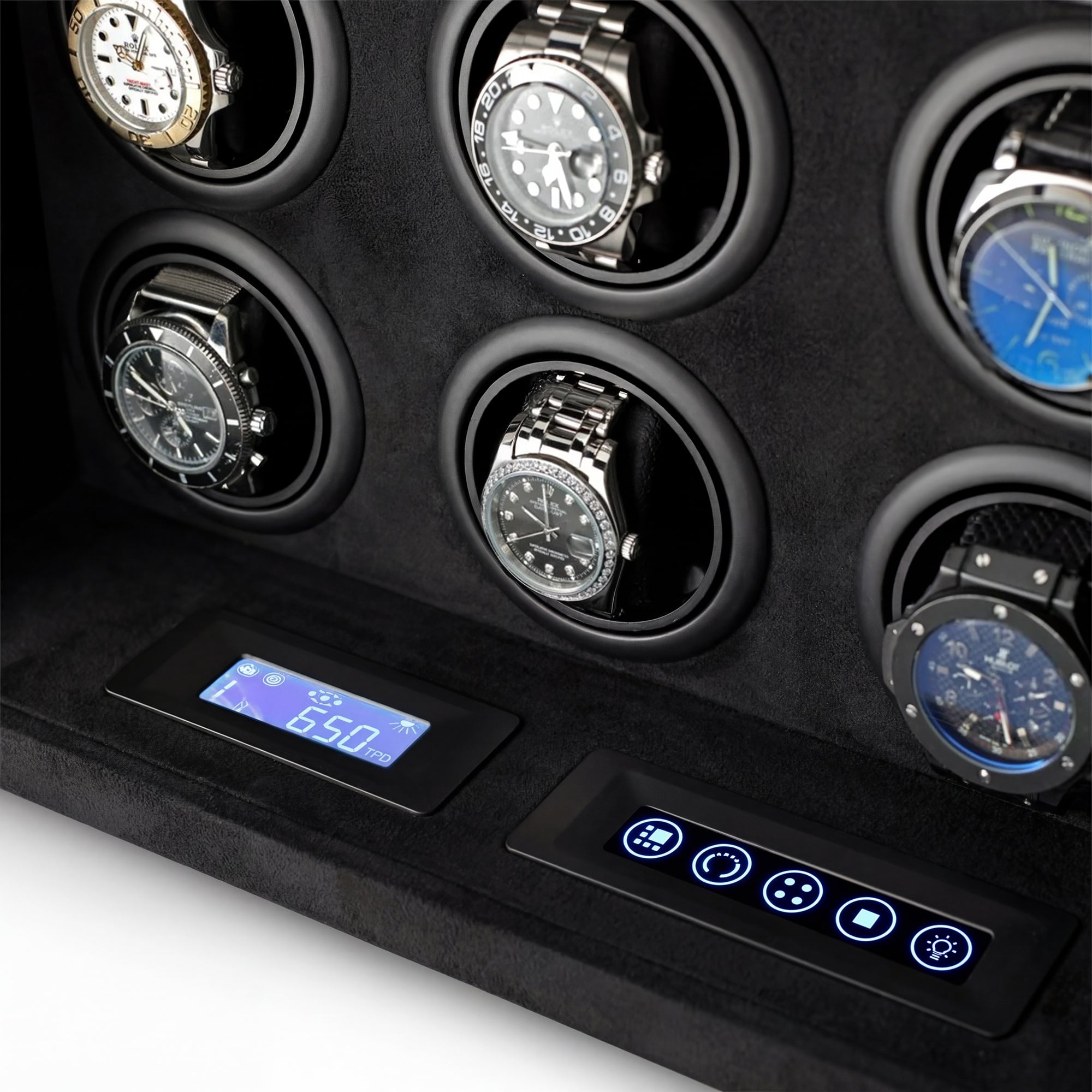
You just received your first watch winder. The unit is sitting on the counter. Your automatic needs a home. Before you plug in and walk away, there are a few setup steps that determine whether the winder actually works correctly for your specific watches. This guide walks through the process from unboxing to first-week verification.
Step 1: Unboxing and Inspection
Open the packaging carefully. Premium winders ship with the unit, a power adapter, a manual, programming instructions, and often a warranty card.
Check for.
- Any shipping damage on the exterior
- Rotor pillows moving smoothly by hand
- Hinges operating without resistance
- All accessories present
If anything is damaged or missing, contact the seller before proceeding.
Step 2: Pick a Location
Three criteria for a good winder placement.
Flat and stable. A dresser, desk, cabinet shelf, or dedicated piece of furniture. Not on a soft surface that transmits vibration. Not on an unstable stack.
Away from electromagnetic sources. At least 6 feet from large speakers, large electric motors, or medical equipment. Magnetic fields affect watch accuracy over years.
Room temperature with moderate humidity. 60-75°F (15-24°C) and 40-55 percent humidity are ideal. Avoid direct sunlight, heat sources, or bathrooms.
Allow 1-2 inches of ventilation space around the unit. Most winders need airflow to keep motor temperature stable.
Step 3: Plug In (With a Surge Protector)
Use a surge protector between the outlet and the winder. Voltage spikes can damage the control electronics over time. A $30 surge protector is cheap insurance for a multi-thousand-dollar unit.
Confirm the power LED or display lights up. Quality winders do a brief self-check at startup.
Step 4: Identify Your Watch’s Caliber
Before programming, you need to know what’s inside your watch. Check.
- The caseback (many calibers are engraved there)
- The original warranty papers
- The manufacturer’s website by model and reference number
- The TPD reference for common brands
Common examples. A Rolex Submariner uses caliber 3230 or 3235. An Omega Seamaster uses 8800, 8900, or 8400. A Patek Nautilus uses 324 S C or 26-330 S C. Each of these has specific TPD and direction requirements.
Step 5: Program TPD and Direction
Each rotor on a quality winder has independent TPD (turns per day) and direction programming. Set both per watch.
| Watch Type | Typical TPD | Typical Direction |
|---|---|---|
| Modern Rolex | 650-800 | Bi-directional |
| Modern Patek | 800 | Counterclockwise |
| Modern Omega | 650 | Bi-directional |
| Modern AP | 800 | Bi-directional |
| Panerai Luminor | 650 | Clockwise |
| ETA 2824-based (many brands) | 650 | Bi-directional |
| Unknown caliber, modern automatic | 650-750 | Bi-directional (safe default) |
For the full reference and for specific calibers not in this table, see TPD data by brand, TPD explained, and watch winder direction.
If your winder uses physical switches, dial in the number. If it uses a digital interface, navigate to the rotor-specific menu and enter the values.
Step 6: Wind the Watch Manually First
Before placing the watch on the winder, give it a manual wind to full reserve. 20-30 crown rotations for most automatics. You’ll feel resistance build as the mainspring reaches full wind.
This gives the winder an easier starting point. The watch isn’t trying to build reserve from dead; it’s maintaining reserve that’s already full.
Step 7: Set the Time and Date
Set the current time and date accurately using the crown. For watches with complications (day, moon phase, GMT hand), set those too. Then push the crown fully in and screw down if applicable.
Accurate initial setting matters because the watch will continue from there. If you set it to the wrong time, the winder will keep it at the wrong time.
Step 8: Place the Watch on the Rotor
Wrap the strap or bracelet around the pillow firmly enough that the watch stays in place but not so tight it stretches or bows the strap. The pillow should grip the strap so that when the rotor rotates, the watch rotates with it.
Confirm the watch isn’t tilting off the pillow or positioned loosely. Adjust until it sits snug.
Step 9: Start the Winder
Press the power or start button. The rotor should begin its programmed cycle. Most winders run for a few minutes, rest, then repeat. Observe the first cycle to confirm the rotor is rotating and the watch is moving with it.
Step 10: Check After One Week
Let the winder run for 7 days. Then check.
- Watch is still running (didn’t stop)
- Time is accurate or within spec (few seconds deviation)
- Power reserve is at or near full
- Date is correct
- No unusual sounds from the unit
If the watch stopped or drifted significantly, increase TPD or verify direction setting. See my watch gains or loses time and watch winder direction.
Common First-Time Mistakes
Skipping manual wind before placement. The watch takes longer to reach full reserve on the winder alone. Wind first.
Wrong direction for the caliber. Patek owners often default to bi-directional and wonder why the watch won’t stay wound. Set counterclockwise for most modern Patek.
Loose pillow fit. Watch slumps against the frame and doesn’t rotate with the rotor. Tighten the strap around the pillow.
Placement near speakers or laptops. Magnetic fields can accumulate and speed up the watch over months. Maintain distance.
Ignoring the manual. Every winder has specific programming steps. Read the first few pages even if you think you know what you’re doing.
Setting Up Multiple Watches
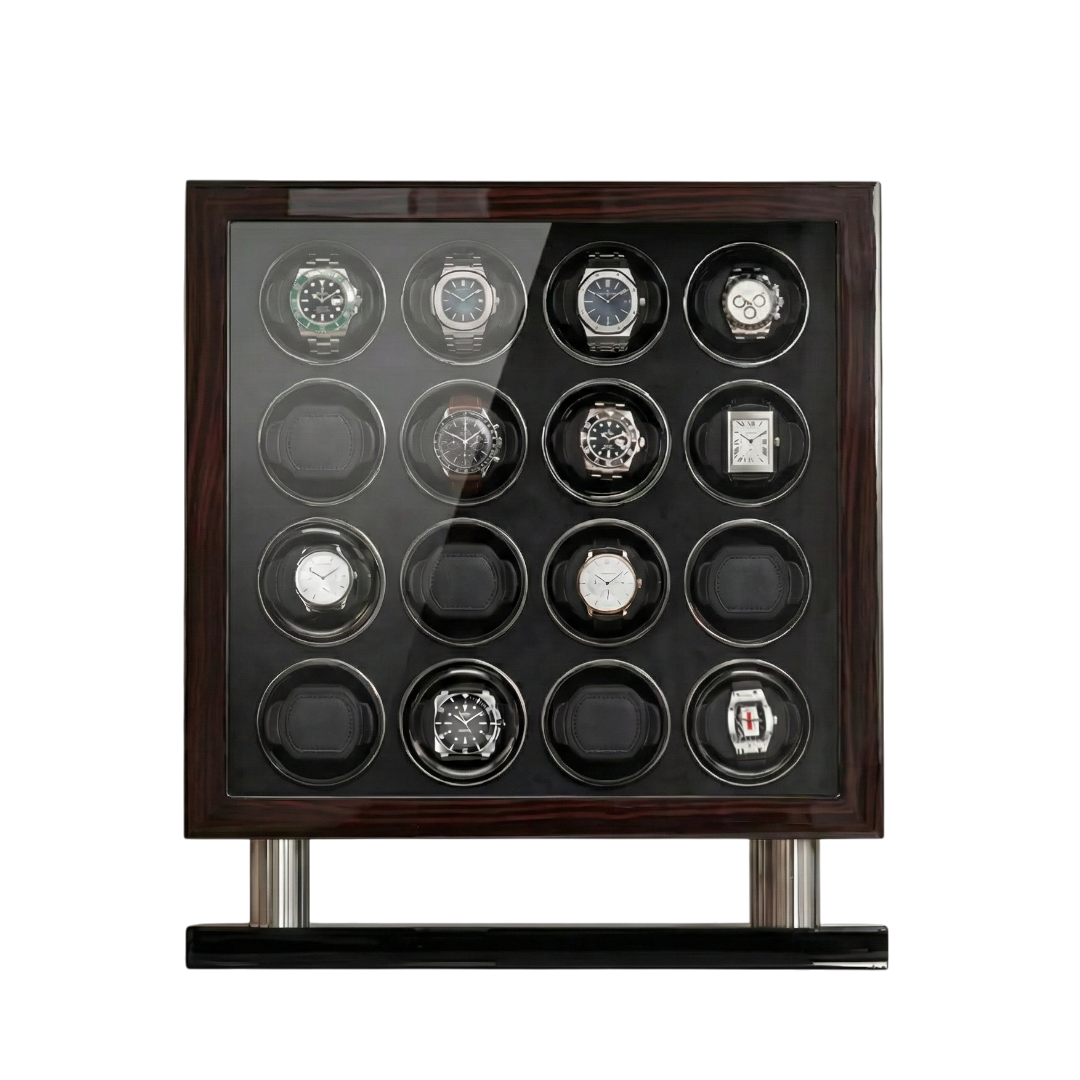
For 6 to 12-rotor winders holding multiple brands.
- Repeat the caliber identification for each watch
- Program each rotor independently with its watch’s specific TPD and direction
- Label your rotor assignments (pen-and-paper list) so you don’t mix up which watch goes where
- Verify each rotor’s setting before loading watches
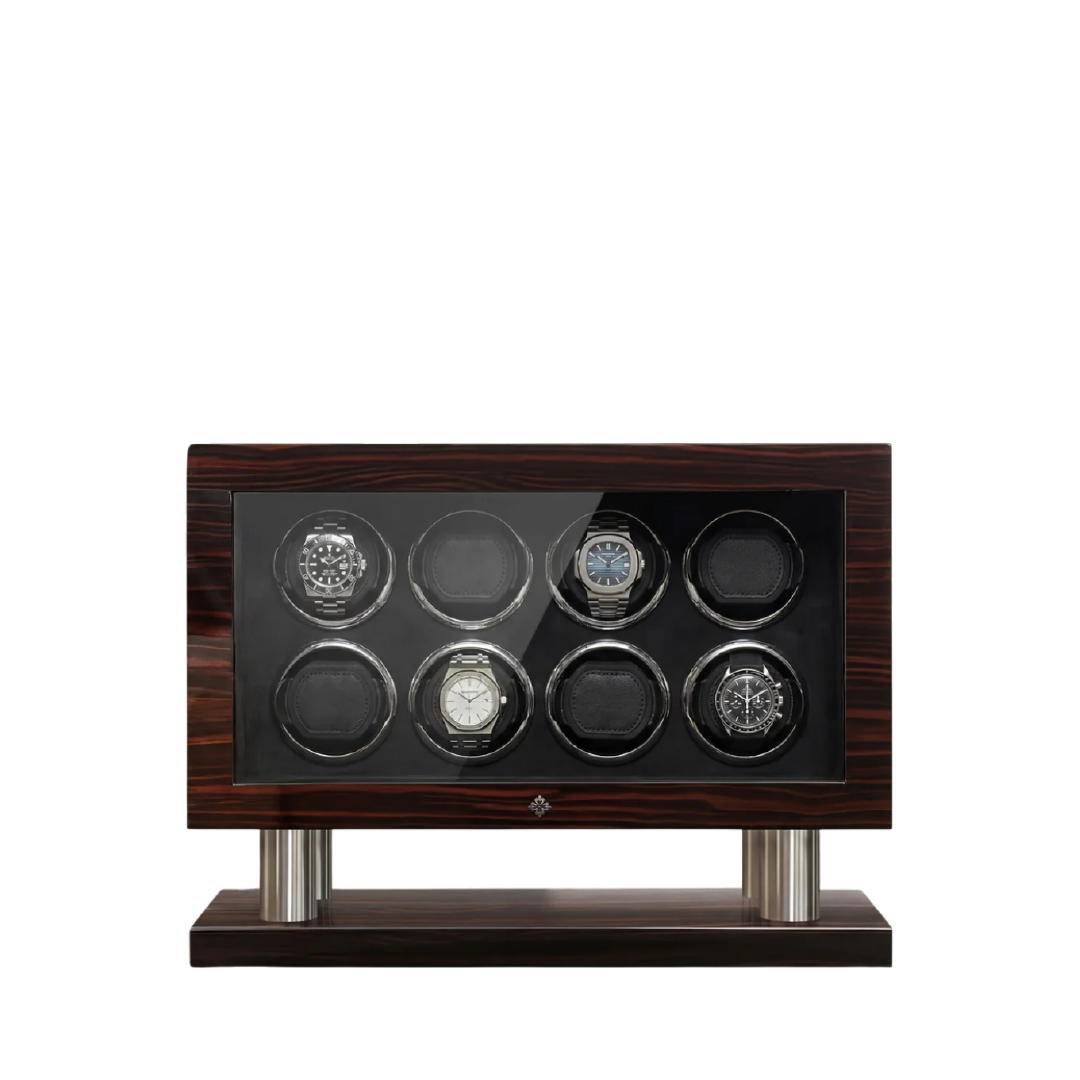
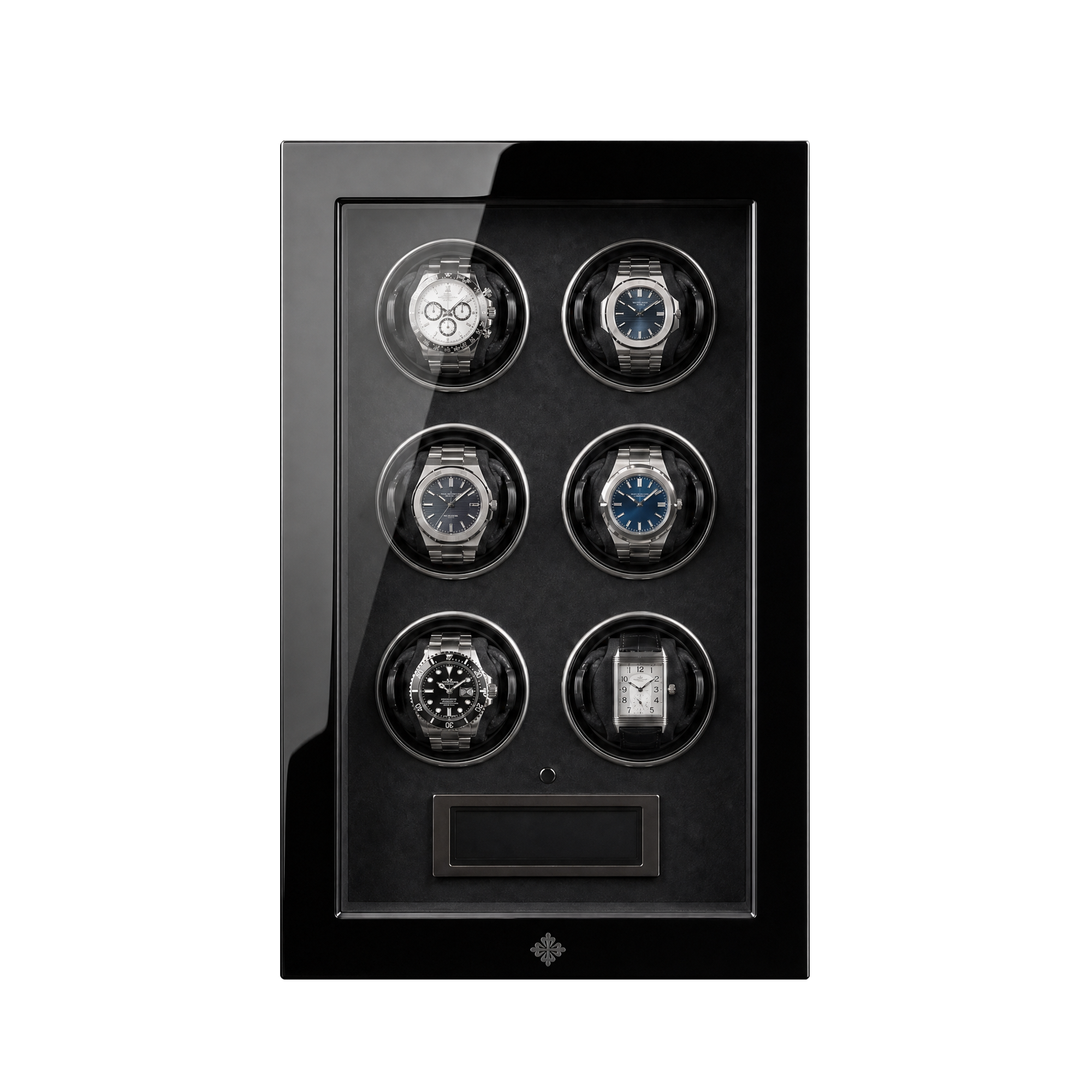
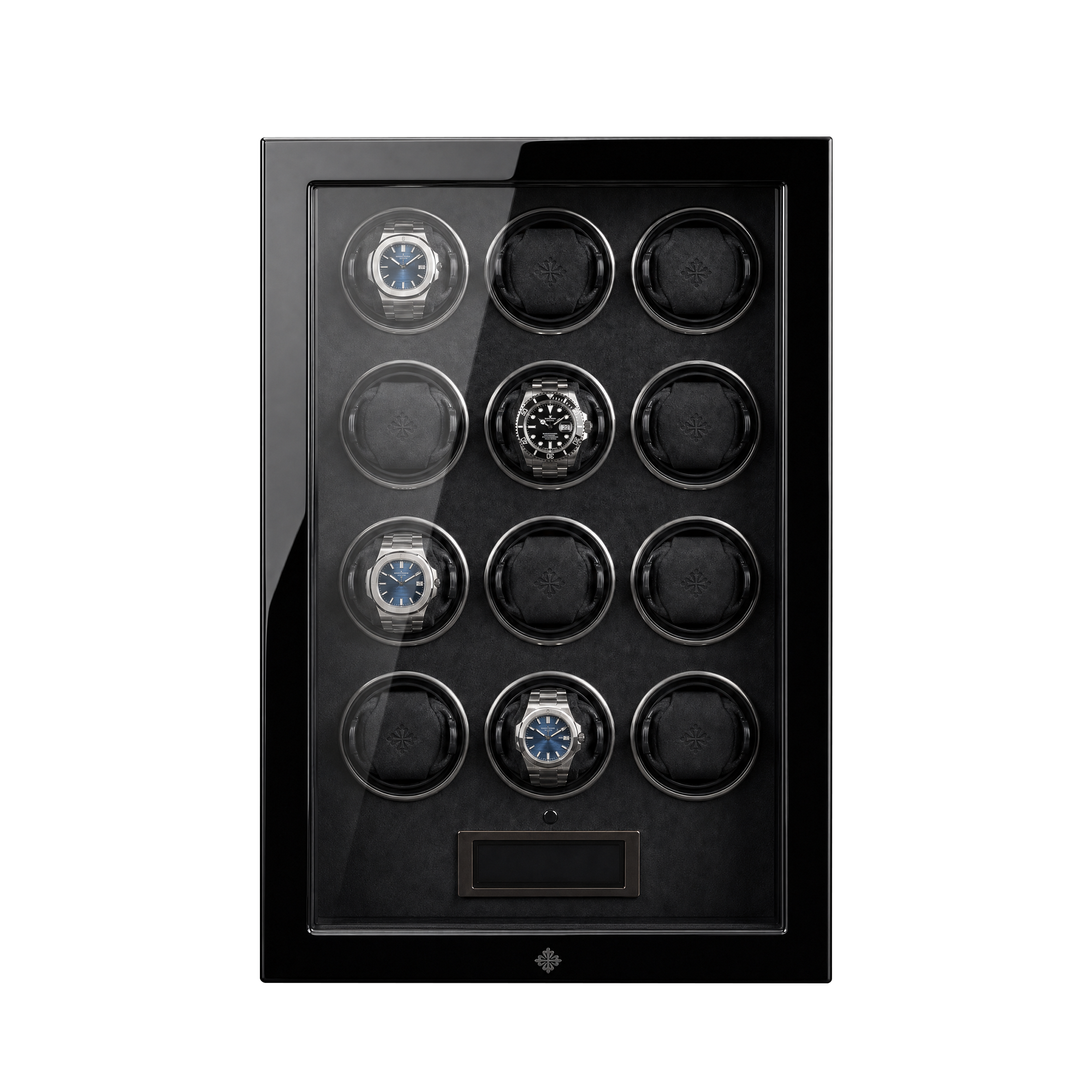
Quality winders like the Impresario 6 and Impresario 12 handle per-rotor programming via a central interface.
When to Leave Everything Running
Once set up correctly, leave the winder running continuously. Quality winders are designed for 24/7 operation. The motor runs on duty cycles (active a few minutes, rests most of the hour), so total motor time stays modest. Electricity cost is pennies per year.
Unplugging periodically wears the memory backup battery and means reprogramming. Leave it on.
Frequently Asked Questions
How long until my watch is fully wound on a winder?
From dead stop, usually 2 to 4 days of normal winder operation. Faster if you manually wind to full reserve first (recommended).
Is my new winder defective if the watch stopped in a week?
Probably a settings issue. Check TPD (likely too low) and direction (especially for Patek). If both are correct and it still stops, contact the manufacturer.
Can I set up the winder before the watch arrives?
Partly. Place and power the unit. Skip programming until you know the caliber.
Do I need the original manual for my specific watch?
Useful but not required. The TPD reference covers most common calibers. The manual adds caliber-specific detail.
What about setting up a winder for a gift recipient?
Leave the final programming to them unless you know their specific watches. You can pre-set to safe defaults (650 TPD bi-directional) that work for most.
How do I know if the rotor is actually spinning?
Watch the rotor through the glass-top or opening. During an active cycle (every 30-60 minutes), it should be rotating visibly.
What if my winder came with different programming than my watch needs?
Standard. Reprogram to match your caliber. Default factory settings are rarely optimal for specific watches.
Ready to Run
Quality first-time setup takes about 20 minutes. Do the steps in order, verify after a week, and you’re done for years. For the winder itself, browse the Winder Series. For reference material during setup, see the TPD data by brand.
Related reading: how to choose a watch winder, watch winder maintenance, TPD explained.
Protect Your Watch Collection
Designed for collectors who demand the best. Explore our premium watch winders and luxury safes.
Protect Your Watch Collection
Designed for collectors who demand the best. Explore our premium watch winders and luxury safes.