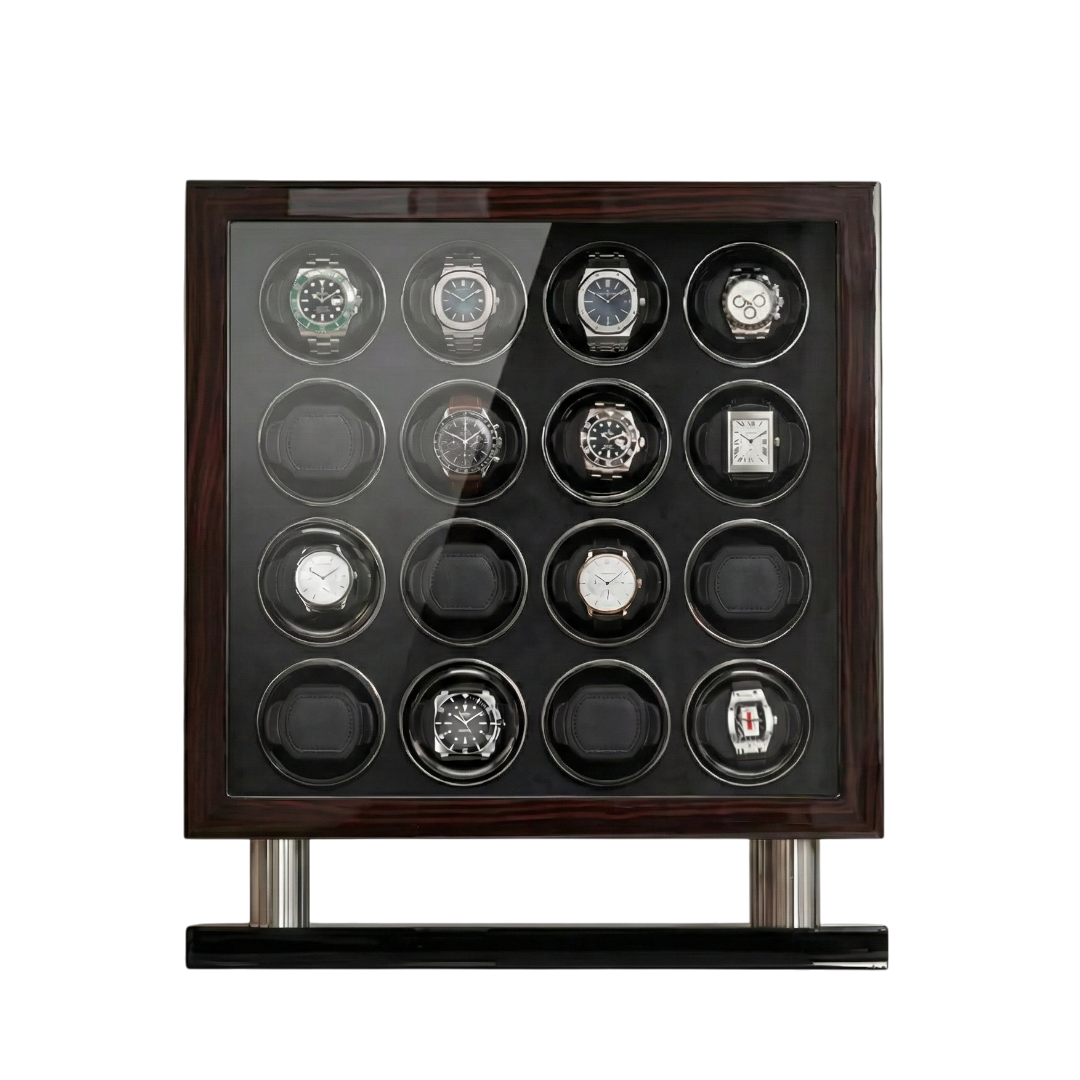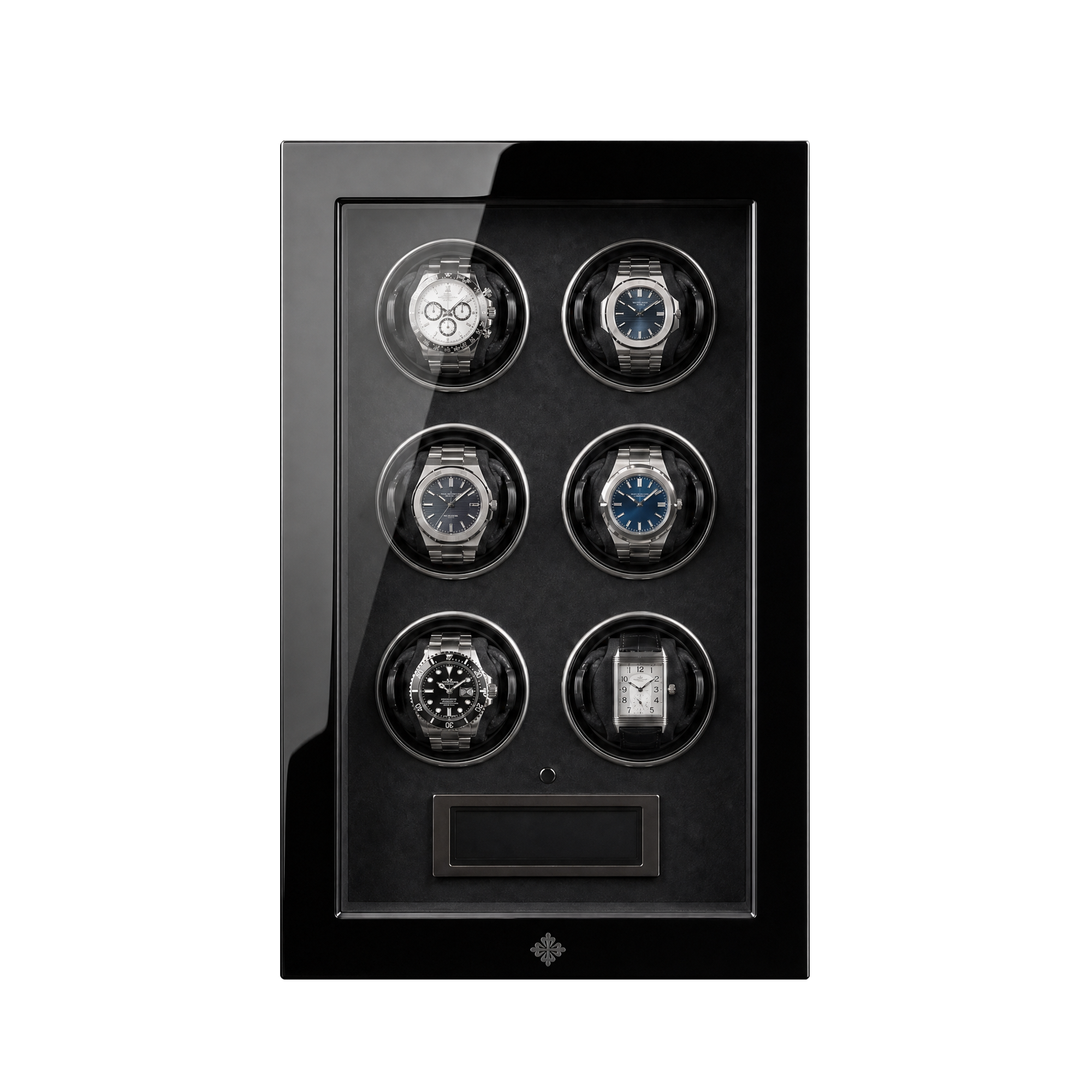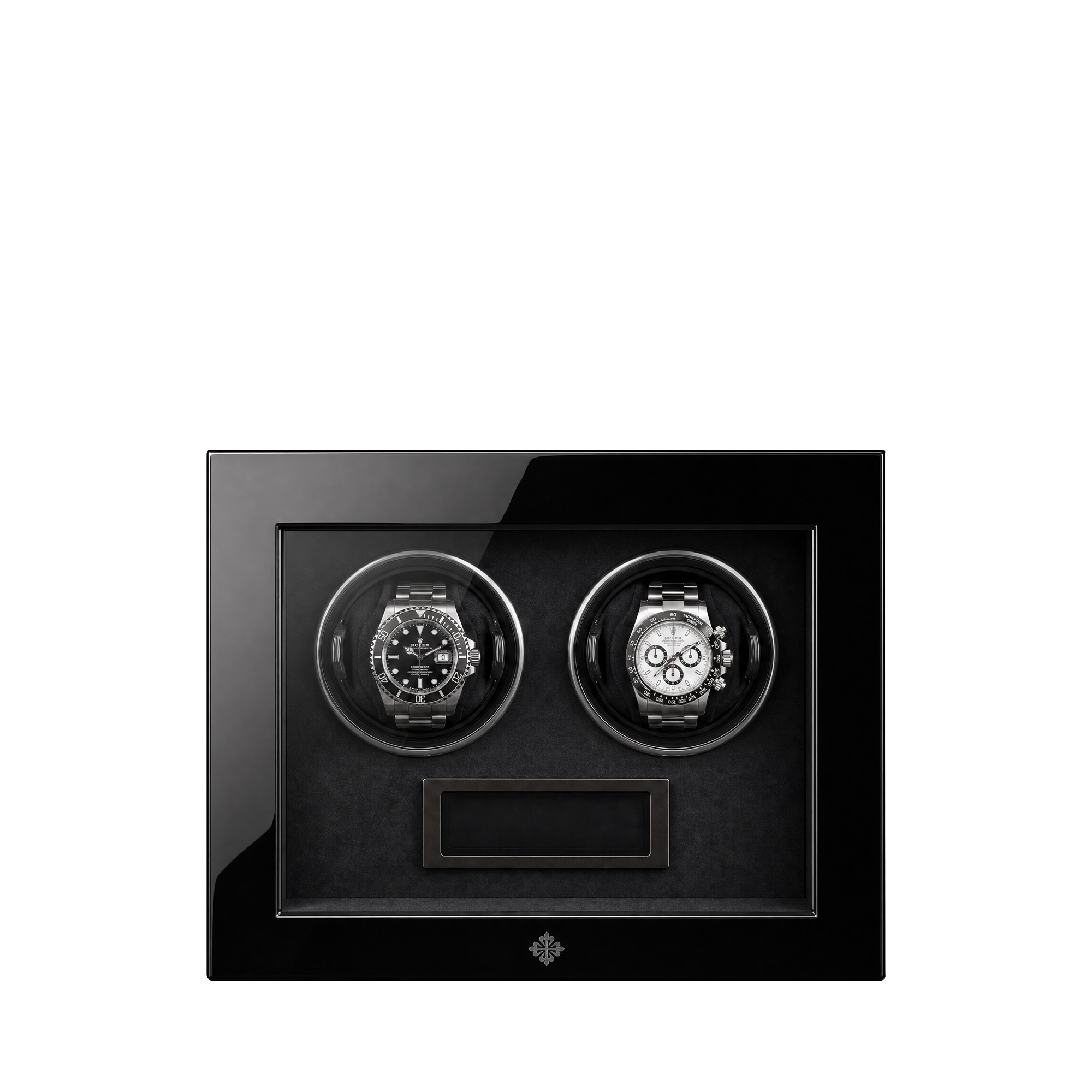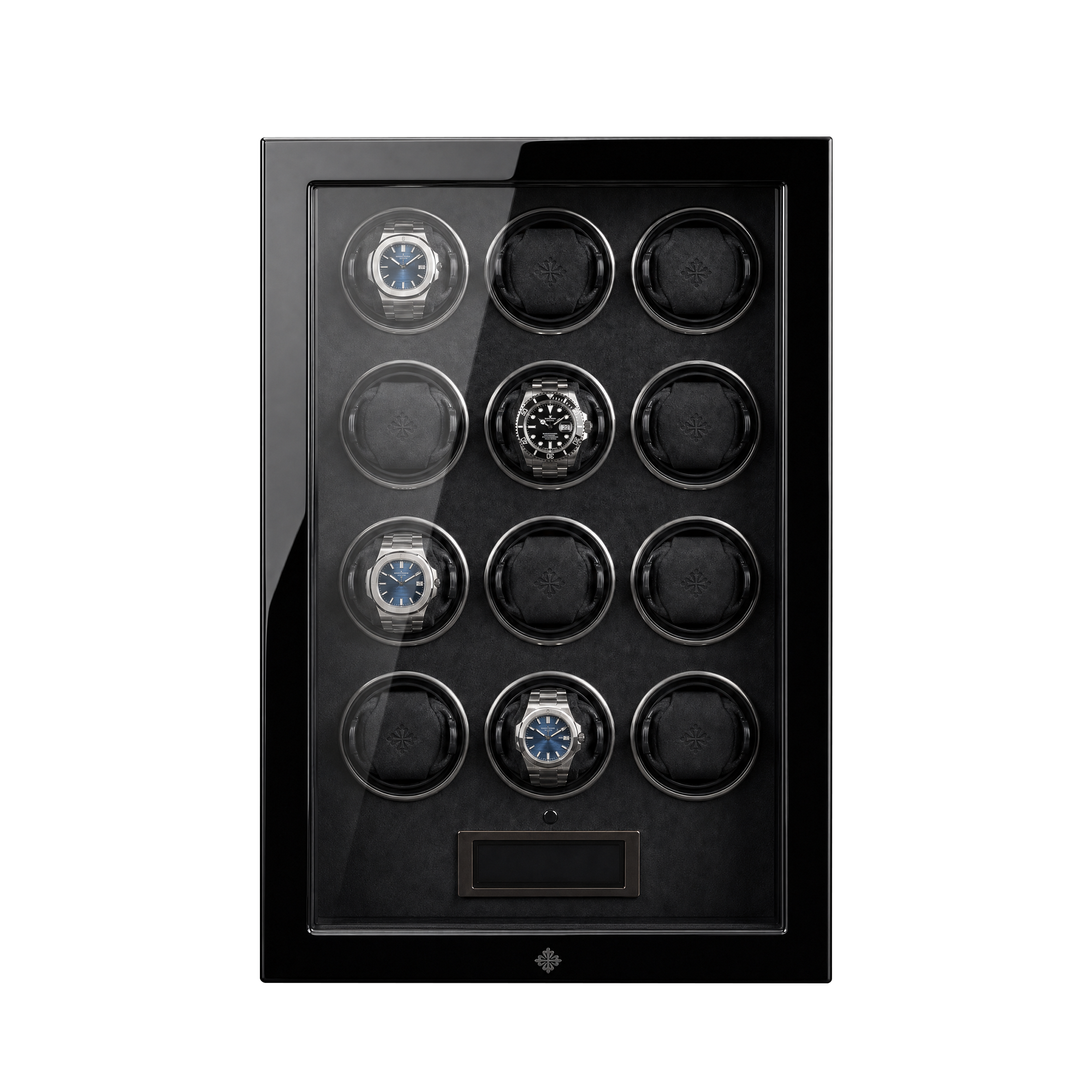

TPD stands for turns per day. It’s the number of times a watch winder rotates the watch on its pillow over a 24-hour period. The number sounds simple. The implications are the entire reason programmable winders exist. This guide explains what TPD actually measures, how winders deliver that rotation, why different watches need different settings, and how to pick correctly for your pieces.
What TPD Measures
TPD is the total rotations the winder cycles through in 24 hours. If a winder is set to 650 TPD, over the course of a day the rotor completes 650 full 360-degree rotations. The watch is mounted on the rotor, so it experiences those rotations, which drives the automatic winding mechanism just as wrist motion would.
Winders deliver these rotations in cycles, not continuously. A typical winder runs for a few minutes, pauses for several minutes, and repeats throughout the day. The cycle timing is designed to replicate intermittent wrist motion rather than continuous rotation, which would stress the mainspring unnecessarily.
Why Different Watches Need Different TPD
Three mechanical factors drive TPD requirements.
Rotor efficiency. Different movements have more or less efficient rotors. Modern high-efficiency rotors need fewer rotations to fully wind. Older or smaller rotors need more.
Mainspring torque curve. Some movements have flatter torque curves (consistent power output across the reserve). Others have steeper curves. Flatter curves can run with less constant winding. Steeper curves benefit from consistent topping up.
Power reserve length. A 70-hour movement can coast through several hours of winder rest. A 38-hour movement cannot. Longer-reserve movements can use lower TPD.
TPD Ranges for Common Calibers
| Caliber | Brand Example | TPD Range | Direction |
|---|---|---|---|
| 3135, 3235 | Rolex Submariner, GMT-Master II | 650 to 800 | Bi-directional |
| 324 S C | Patek Philippe Nautilus | 800 | Counterclockwise |
| 3120 | Audemars Piguet Royal Oak | 800 | Bi-directional |
| 8500, 8900 | Omega Seamaster, Planet Ocean | 650 | Bi-directional |
| B01 | Breitling Chronomat, Navitimer | 650 to 800 | Bi-directional |
| P.9010 | Panerai Luminor | 650 | Clockwise |
| ETA 2824-2 | Generic ETA, many mid-range brands | 650 | Bi-directional |
| 9S65 | Grand Seiko 9S Hi-Beat | 650 | Bi-directional |
| RM 011 / 038 | Richard Mille | 950 | Bi-directional |
For the full reference, see TPD data by brand.
What Happens at Wrong TPD
Three failure modes.
TPD too low. Watch doesn’t stay fully wound. Rate may drift (slower on low wind), power reserve runs down between wears. Effective impact is an unreliable watch on the winder.
TPD too high. Watch stays at maximum wind continuously. Slip clutch engages more often (doesn’t damage modern movements but adds wear over decades). Rate may run slightly faster at max wind.
Wrong direction. Winder rotates in a direction the movement can’t use. Effective TPD is zero (single-direction wrong) or halved (bi-directional watch on single-direction setting). Watch doesn’t wind.
Correct TPD and direction per caliber eliminates all three.
How to Find Your Watch’s TPD
Three sources, in order of reliability.
One, the manufacturer’s technical documentation. Rolex, Patek, Omega, and most major brands publish TPD requirements in their caliber technical sheets. Ask your authorized dealer or search the caliber number.
Two, the TPD reference, which compiles settings for major calibers.
Three, if the caliber is unknown or obscure, default to 650 TPD bi-directional. Most ETA-based movements are happy in that range. Adjust if the watch doesn’t stay fully wound.
Direction: The Other Half of TPD
TPD without direction is meaningless. A movement that only winds counterclockwise (most Patek) produces zero effective winding if the winder rotates clockwise-only at any TPD.
Three direction settings.
- Clockwise (CW) — winder rotates in one direction only
- Counterclockwise (CCW) — opposite
- Bi-directional — alternates CW and CCW in cycles
Most modern movements wind bi-directionally. Patek is the major exception (counterclockwise only on many calibers). Some Panerai are clockwise-only. Check the caliber.
For detailed treatment, see watch winder direction.
Per-Rotor Programming: Why It Matters
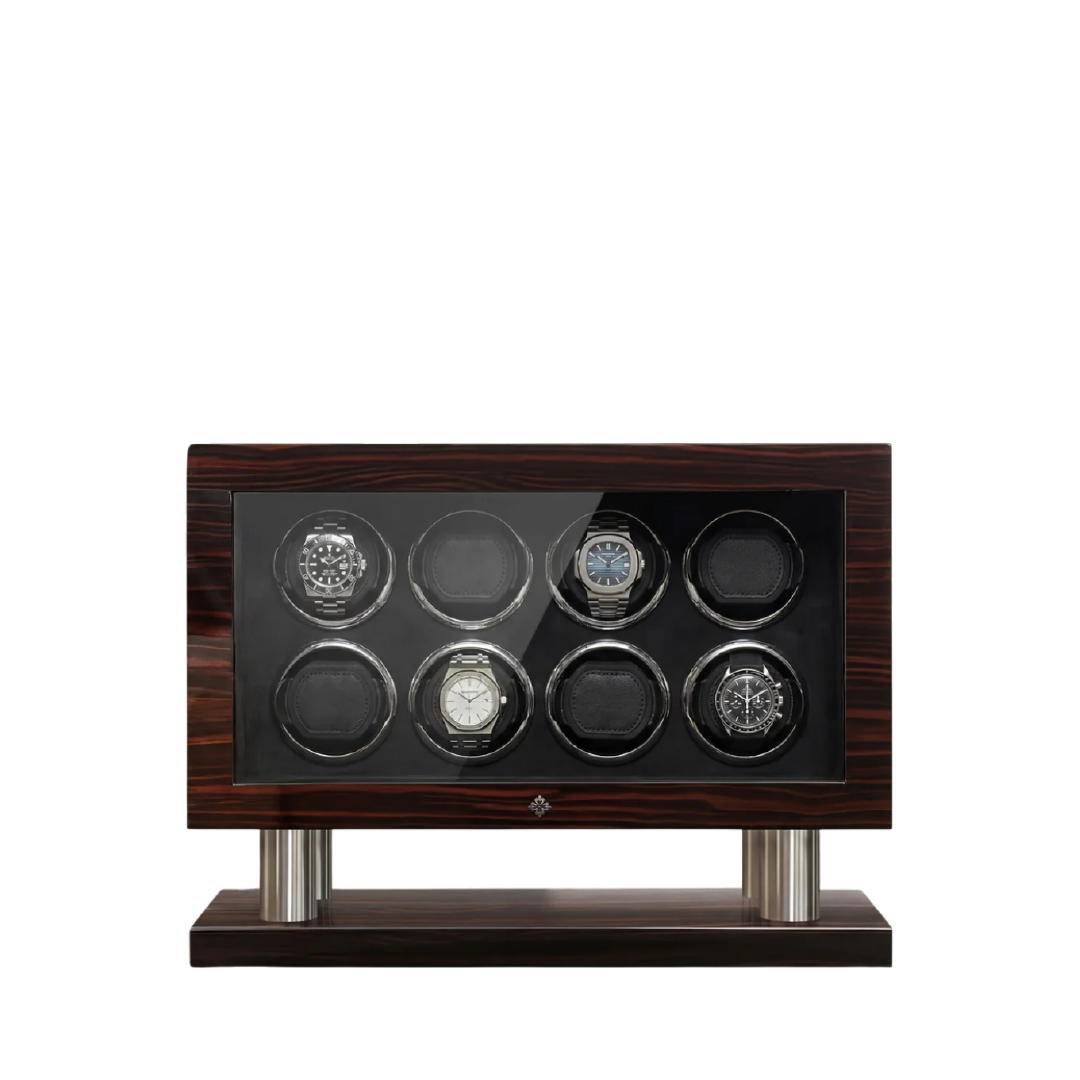
Mixed-brand collections have mixed TPD requirements. A Rolex GMT (bi-directional, 650-800) next to a Patek Nautilus (counterclockwise, 800) next to a Panerai (clockwise, 650) needs independent settings per rotor.
Fixed-setting winders force you to pick one setting for all rotors. The wrong setting for any given watch means that watch runs poorly. Per-rotor programming solves this.
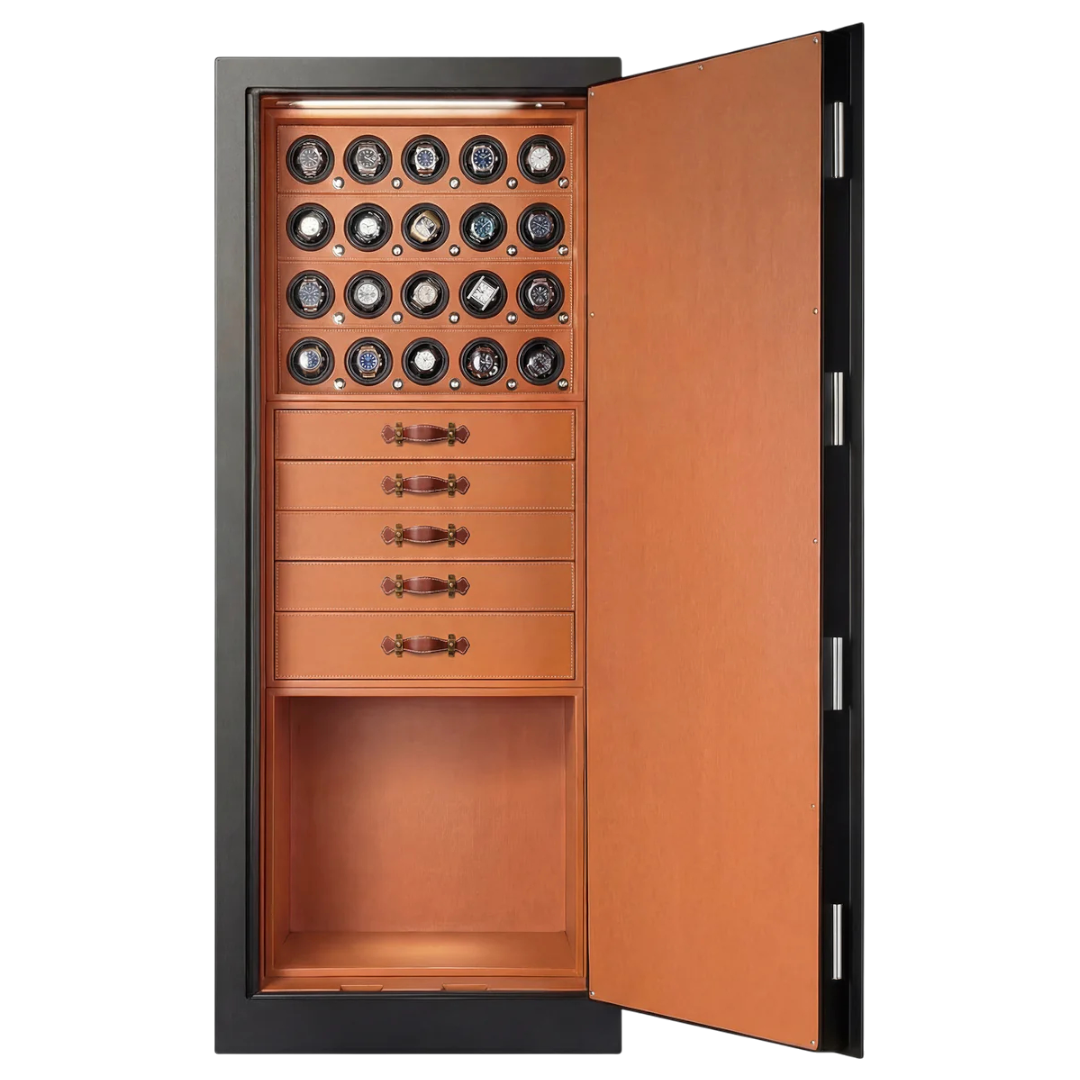
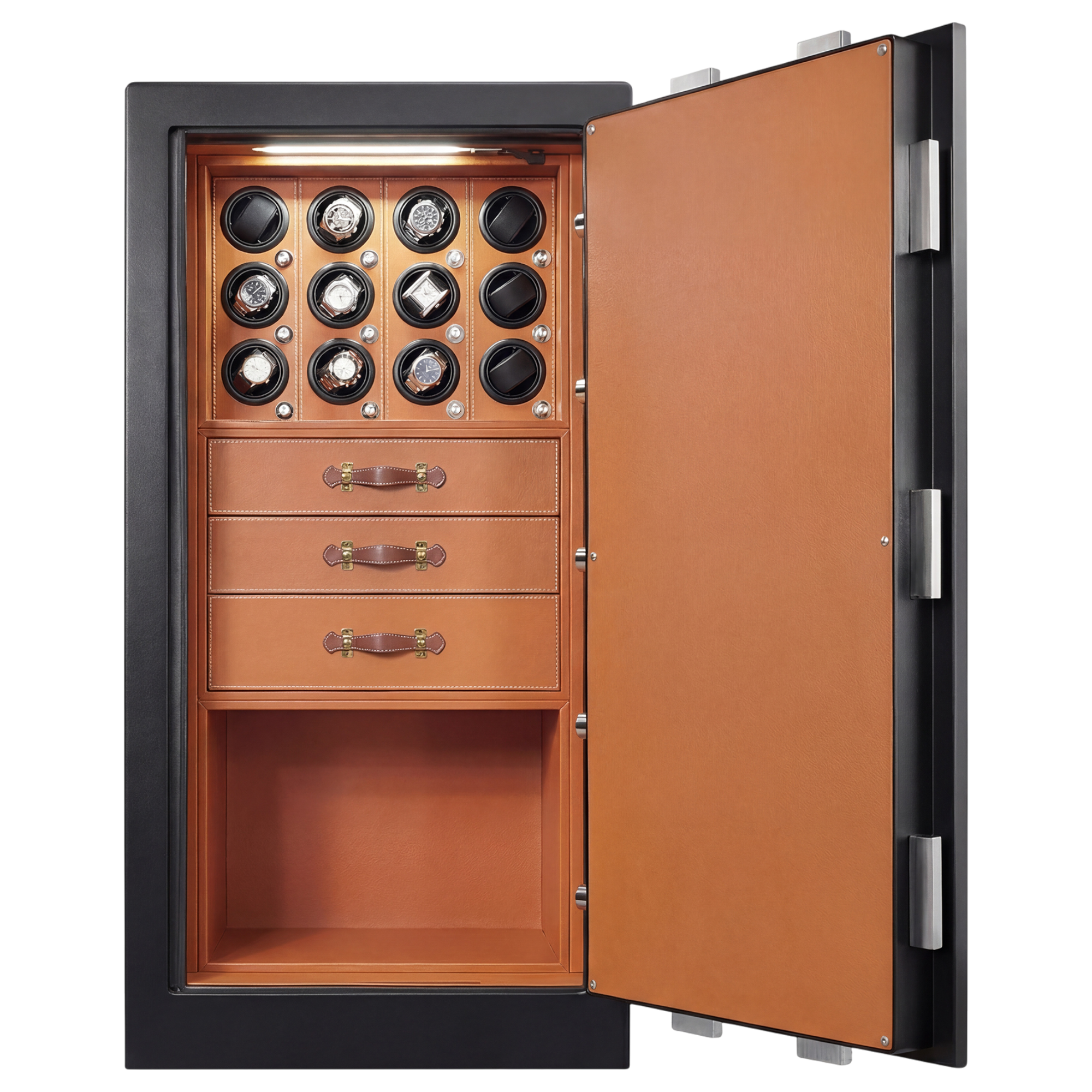
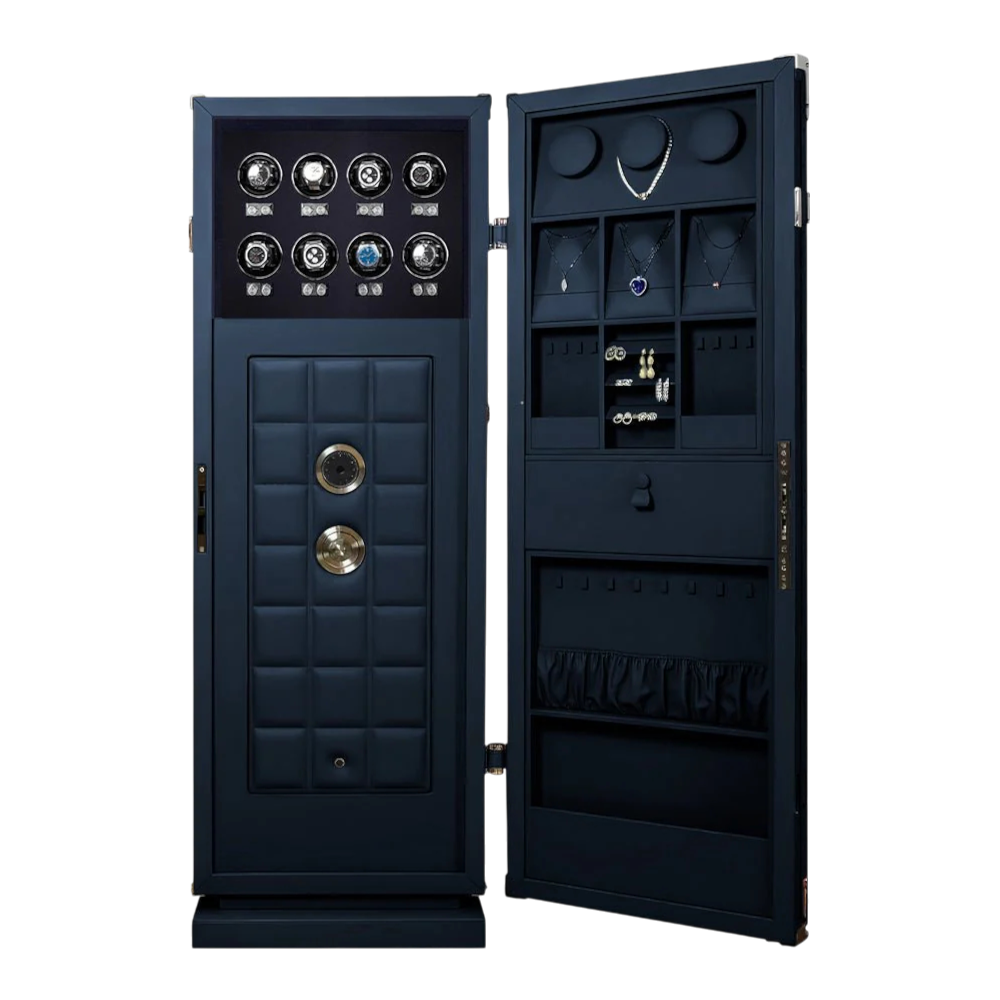
Quality winders (including Enigwatch’s Impresario, Virtuoso, and Yachtline lines) include per-rotor programmable TPD and direction across all capacities.
How Winder Cycles Work
TPD is the 24-hour total, not continuous rotation. Actual winder operation uses duty cycles.
Example. A winder set to 650 TPD may run for 5 minutes, rest for 55 minutes, repeat. Over 24 hours, that’s about 120 minutes of active rotation. At typical rotor speed (about 5 rotations per minute during active rotation), 120 minutes produces about 650 rotations.
Duty cycles are programmed by the winder, not the user. Quality winders use cycle patterns that balance winding efficiency, motor heat, and wear on the slip clutch.
Frequently Asked Questions
What’s the safest default TPD?
650 TPD bi-directional covers most ETA-based movements and is a safe starting point if caliber-specific data isn’t available.
Can TPD too high damage my watch?
Modern movements have slip clutches. Over-winding is mechanically prevented. Excessive TPD for decades can accelerate slip clutch wear slightly, but isn’t damaging in realistic use.
How do I know my TPD is correct?
Watch stays fully wound after a week on the winder. Rate runs at expected spec. Both checks mean TPD is working.
Does TPD change based on movement age or service?
The caliber’s recommended TPD stays constant. An older movement with worn lubricants may want the upper end of its range to compensate for lower efficiency.
Can I change TPD while the winder is running?
Yes on quality winders. The setting takes effect on the next cycle.
Why do some winders have fixed TPD?
Cost. Programming infrastructure adds cost. Cheap winders omit it and force one setting for all watches.
Is TPD the only winder setting that matters?
No. Direction matters equally. Cycle pattern (on-time vs off-time) matters less but affects long-term movement wear.
Set It Once, Let It Run
Correct TPD and direction per caliber lets a quality winder do its job for years without adjustment. Program it once when you load the watch. Verify after a week. Leave it running.
For quality winders with per-rotor programming, browse the Winder Series. For caliber-specific TPD, see the TPD reference and our brand guides like Rolex TPD and Omega TPD.
Related reading: watch winder direction, how to choose a watch winder, watch accuracy guide.
Protect Your Watch Collection
Designed for collectors who demand the best. Explore our premium watch winders and luxury safes.
Protect Your Watch Collection
Designed for collectors who demand the best. Explore our premium watch winders and luxury safes.