
Choosing a watch winder is a specification exercise, not a taste exercise. You match motor quality, TPD settings, direction, capacity, and interior materials to the watches you own and the room it will live in. Get those right and you own the winder for twenty years. Get them wrong and you’re replacing it in three. This guide covers every decision worth making, in the order they matter.
Start With the Watches You Actually Own
A winder exists to serve specific watches. Before you shop, write down what you have. Brand, caliber, and whether the watch is automatic (winder-appropriate) or quartz (not applicable). If you don’t know the caliber, look inside the caseback or check the TPD reference. Caliber determines the turns-per-day setting and the direction the winder needs to rotate.
Movements matter because not every automatic is the same. A Rolex 3235 takes 650 to 800 TPD bi-directional. A Patek 324 takes 800 TPD counterclockwise. A Panerai P.9010 takes 650 TPD clockwise. If your winder can’t program those specific settings per rotor, you’re buying a compromise.
Decision 1: Motor Type
The motor is the single most important component in a watch winder. Cheap motors are loud, run hot, vary in speed, and fail inside 18 months. Quality motors run quiet, hold precise speed, generate minimal heat, and last decades.
Enigwatch winders use Mabuchi motors across the standard line. Mabuchi is the benchmark for consumer watch winders, quiet under 10 decibels per motor at the enclosure, precise, and built to run continuously for 15 to 20 years. Maxon motors are reserved for our cabinets and custom builds, which is a different tier of product with specific quietness and precision requirements at scale.
What to avoid: no-name motors from unlabeled sources, typical of winders under $200. They fail early, run loud, and can induce enough magnetism to affect the watch over time.
Decision 2: TPD Settings
Turns per day (TPD) is how much the winder rotates the watch in 24 hours. Under-wind and the watch doesn’t stay fully wound. Over-wind and you accelerate wear on the slip clutch mechanism. Most automatic watches need 650 to 950 TPD.
| Caliber | Brand Example | Recommended TPD | Direction |
|---|---|---|---|
| 3135 / 3235 | Rolex Submariner, GMT-Master II | 650 to 800 | Bi-directional |
| 324 S | Patek Philippe Nautilus 5711 | 800 | Counterclockwise |
| 8500 / 8900 | Omega Seamaster, Planet Ocean | 650 | Bi-directional |
| B01 | Breitling Chronomat, Navitimer | 650 to 800 | Bi-directional |
| P.9010 | Panerai Luminor | 650 | Clockwise |
| 2824-2 | ETA general use, Tudor older | 650 | Bi-directional |
What to look for: programmable TPD per rotor. Fixed-TPD winders force every watch onto the same setting, which means you either over-wind the pieces with lower needs or under-wind the pieces with higher needs.
Decision 3: Direction
Automatics wind in one of three ways: clockwise, counterclockwise, or bi-directional. The direction matters because winding against the design direction does nothing and can add wear. Good winders offer all three modes per rotor. Cheap winders run one direction only.
Bi-directional is the safe default for most watches. Brand-specific directions matter for Patek (counterclockwise), some Panerai (clockwise), and a handful of vintage movements. Check the caliber before you set the direction.
Decision 4: Capacity
Count your automatics in active rotation. Not every automatic you own, just the ones you actually wear. A watch that sits six months untouched doesn’t need a winder slot.
Then add room for growth. Most collectors add one to two watches per year. Buying a winder that exactly fits your current rotation means replacing it inside two years. A simple rule: current rotation plus three years of expected growth.
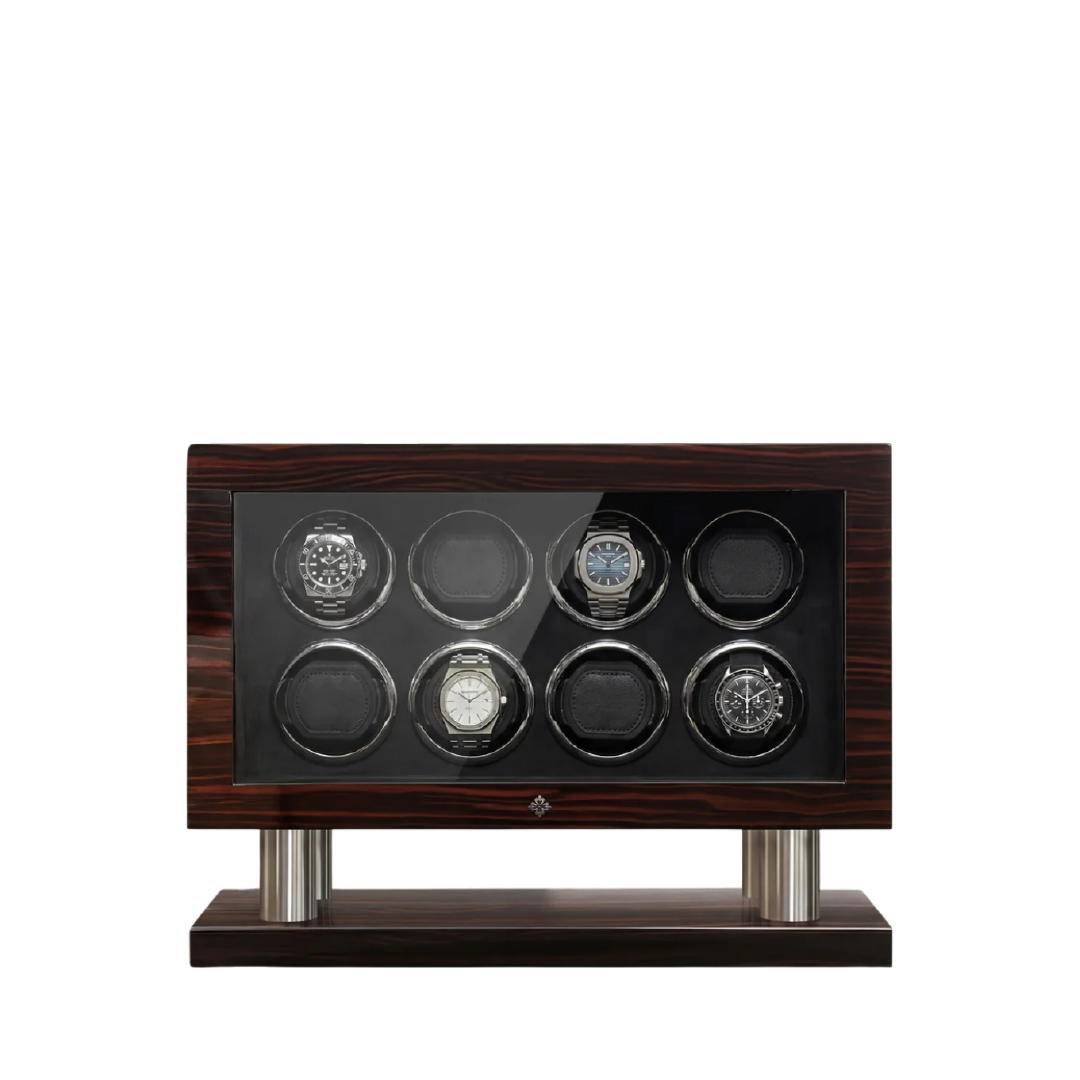
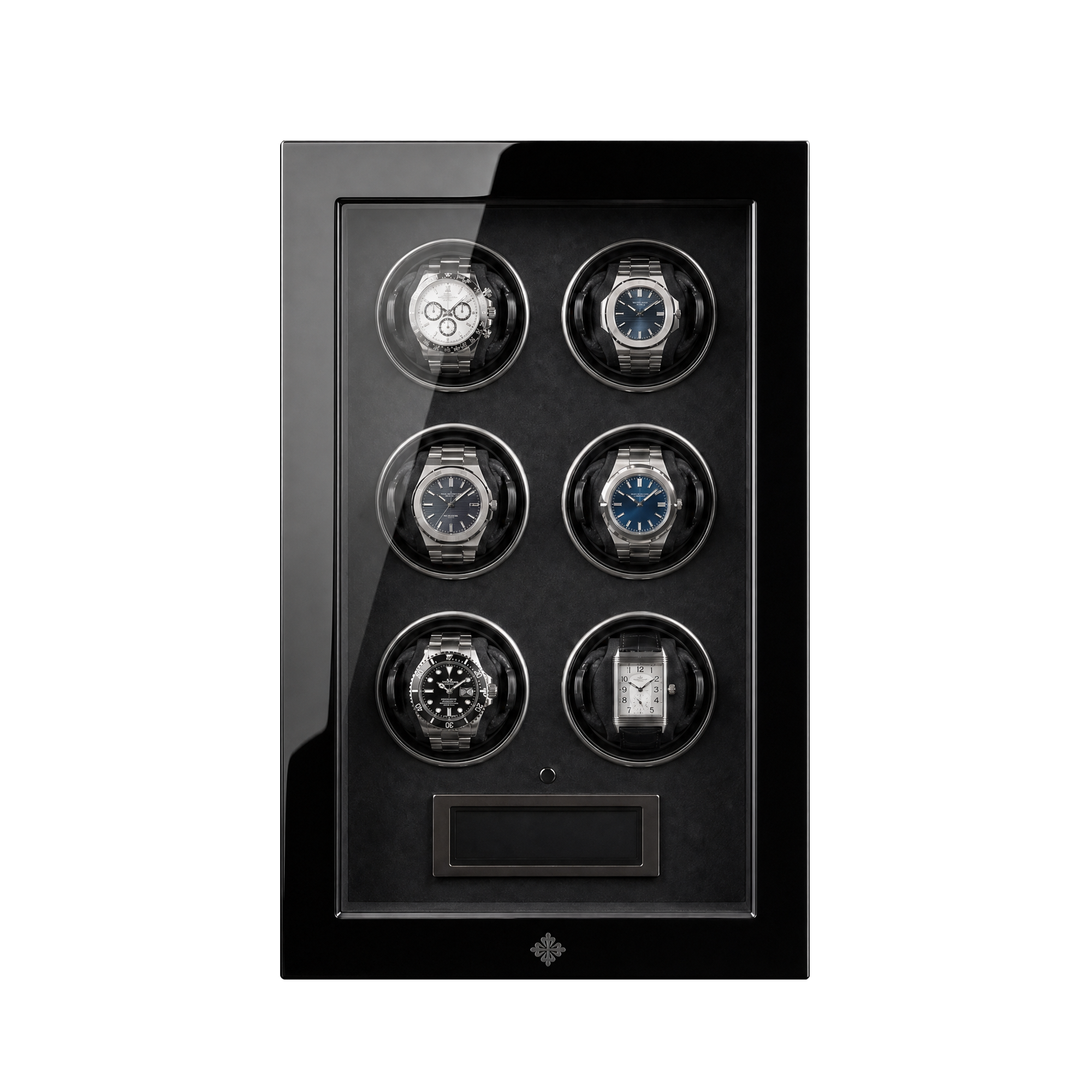
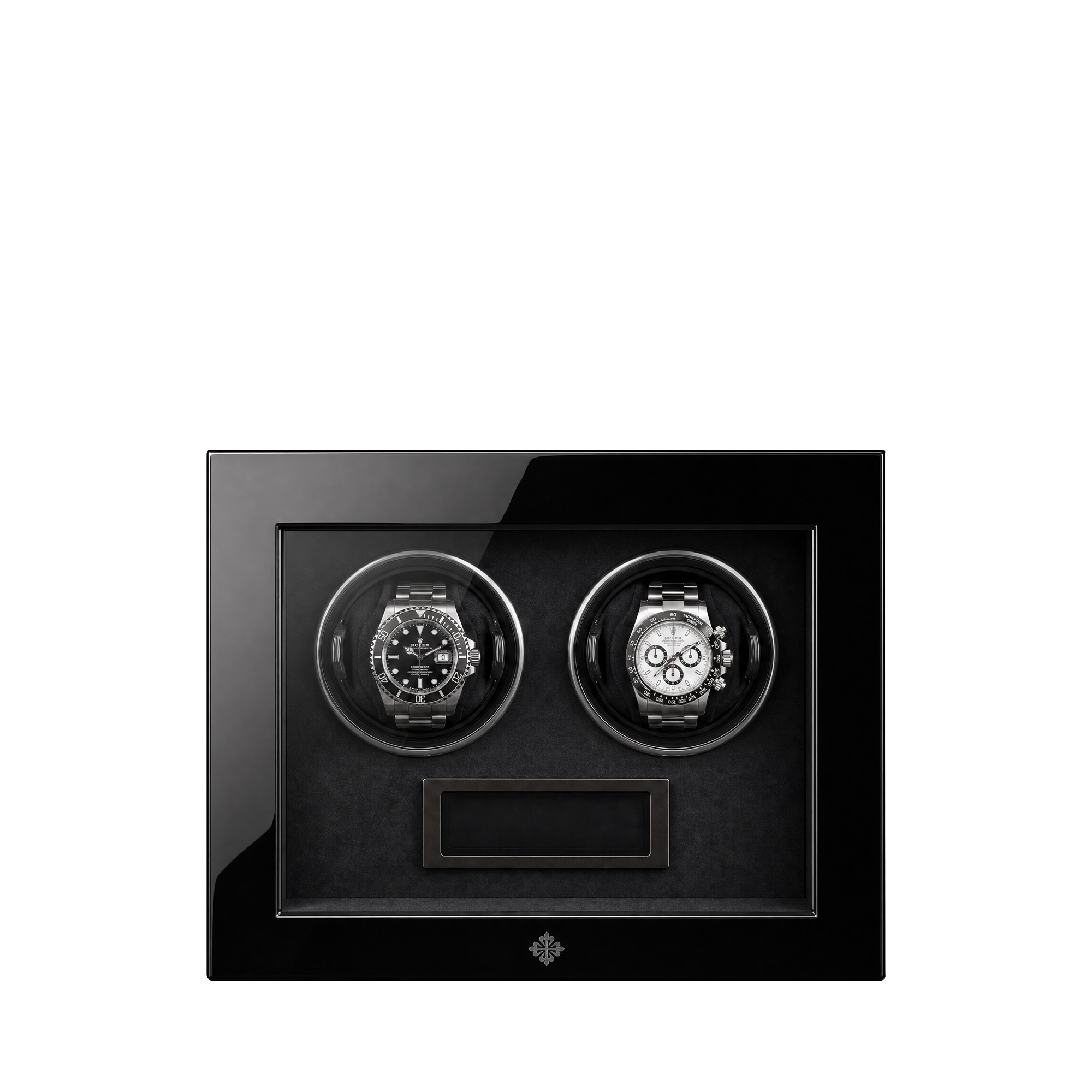
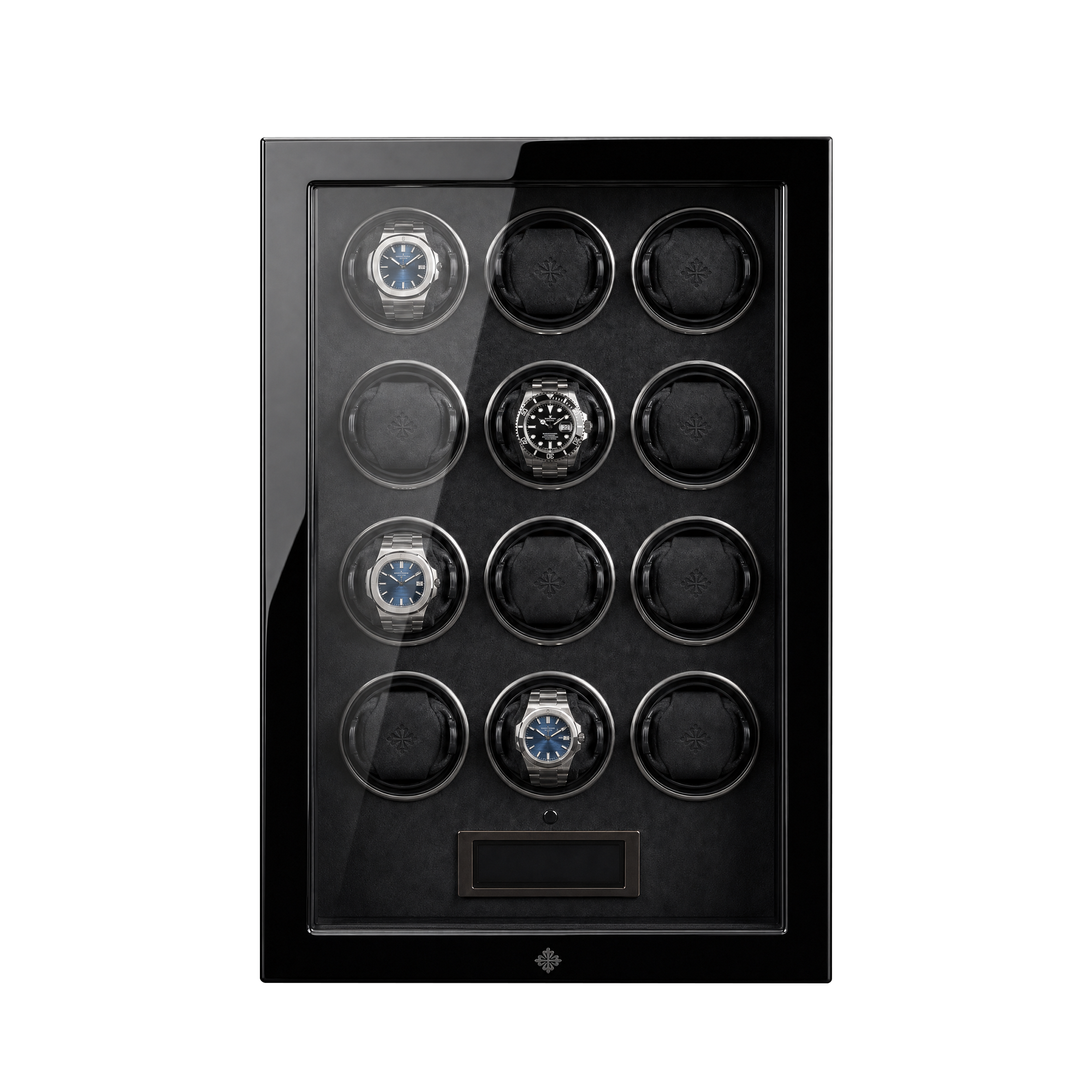
For two-watch rotations, the Impresario 2 or Virtuoso 2 fit. For six-watch rotations, the Impresario 6. For larger collections, the Impresario 12 or Yachtline 16. See the full Winder Series for all sizes.
Decision 5: Build Quality
Build quality shows in five places.
Frame construction. Solid wood or aluminum frames outlast MDF and plastic. Check the weight. A two-rotor winder under four pounds is hollow. A two-rotor winder over eight pounds has real construction.
Lacquer finish. Enigwatch uses a five-layer hand-polished lacquer on the Impresario, Virtuoso, and Yachtline lines. Cheap winders skip to single-coat factory spray. Lacquer holds up against scratches, heat, and humidity over a decade of daily use.
Hinges and seals. Brass hinges outlast stamped steel. Gasketed doors keep dust and humidity out.
Rotor mounting. Quality winders use reinforced rotor mounts that don’t loosen over years. Cheap winders use press-fit plastic that slowly wobbles.
Electronics. Microprocessor-controlled TPD programming beats rotary switches. Quality winders include backup battery for memory retention during power cuts.
Decision 6: Interior Materials
The interior touches your watches. It matters.
Leather pillows, preferably calf or top-grain, protect bracelets and straps. Alcantara is an acceptable synthetic alternative. Velvet is cheap and attracts dust. Microfiber is acceptable mid-range. Avoid any interior that feels like carpet.
Pillow size and adjustability matter for mixed collections. If you run a 36mm dress watch alongside a 45mm diver, the winder needs pillows that adjust to both. Fixed-size pillows force compromises.
Decision 7: Glass or Enclosed
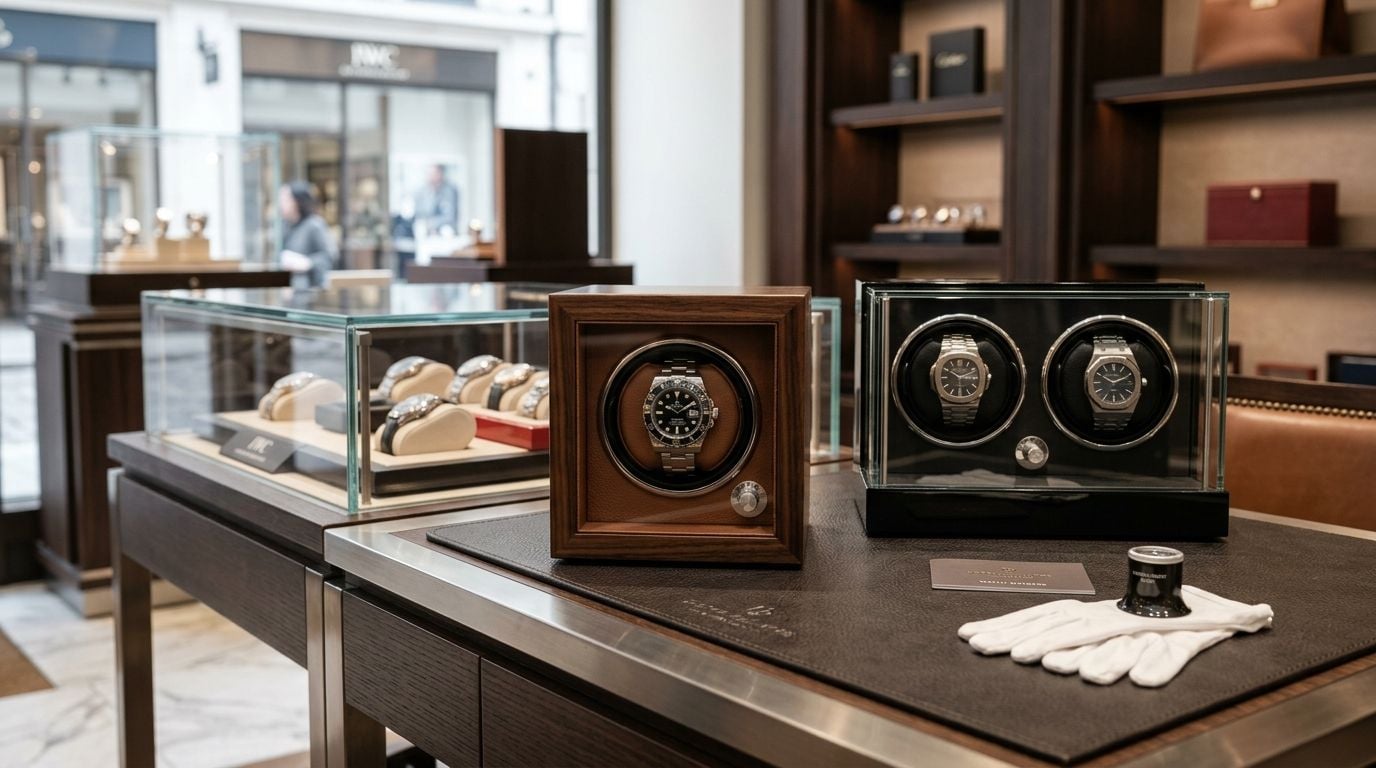
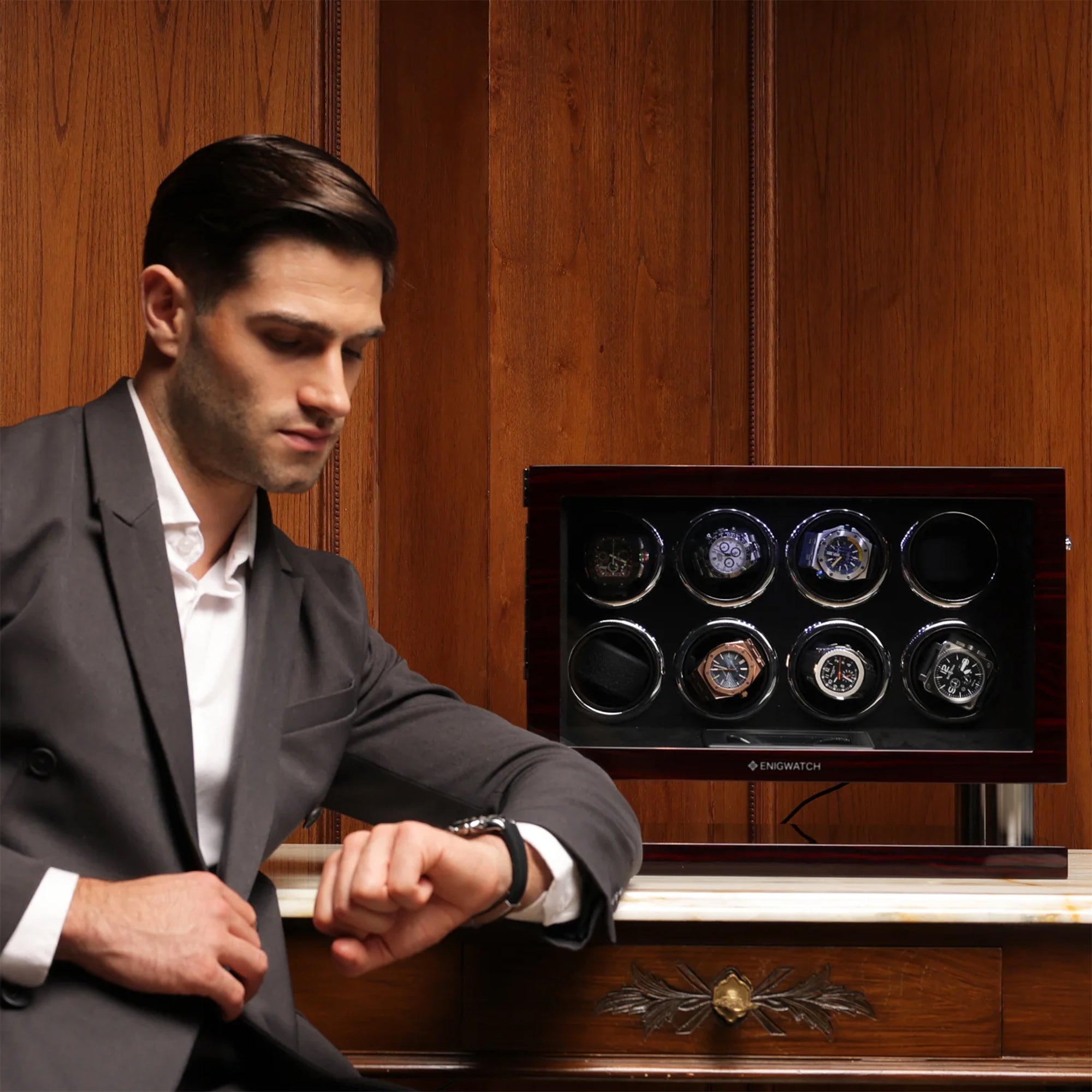
Glass-top winders show the watches while they wind. Enclosed winders hide them. Glass is good for display cabinets and offices. Enclosed is better for dust protection and security.
The Impresario line offers glass-top for display. The Virtuoso line is fully enclosed for protection. Yachtline sits between them.
Decision 8: Power Options
Most home winders run on mains power. Some include battery backup for travel or power cuts. Battery-only winders exist for travel cases but run shorter and need regular recharging.
If you’re buying for home, go mains. If you travel regularly with a watch that needs to stay wound, look at a dedicated travel model. The Impresario 2 is compact enough for both roles.
Decision 9: Cabinet or Standalone
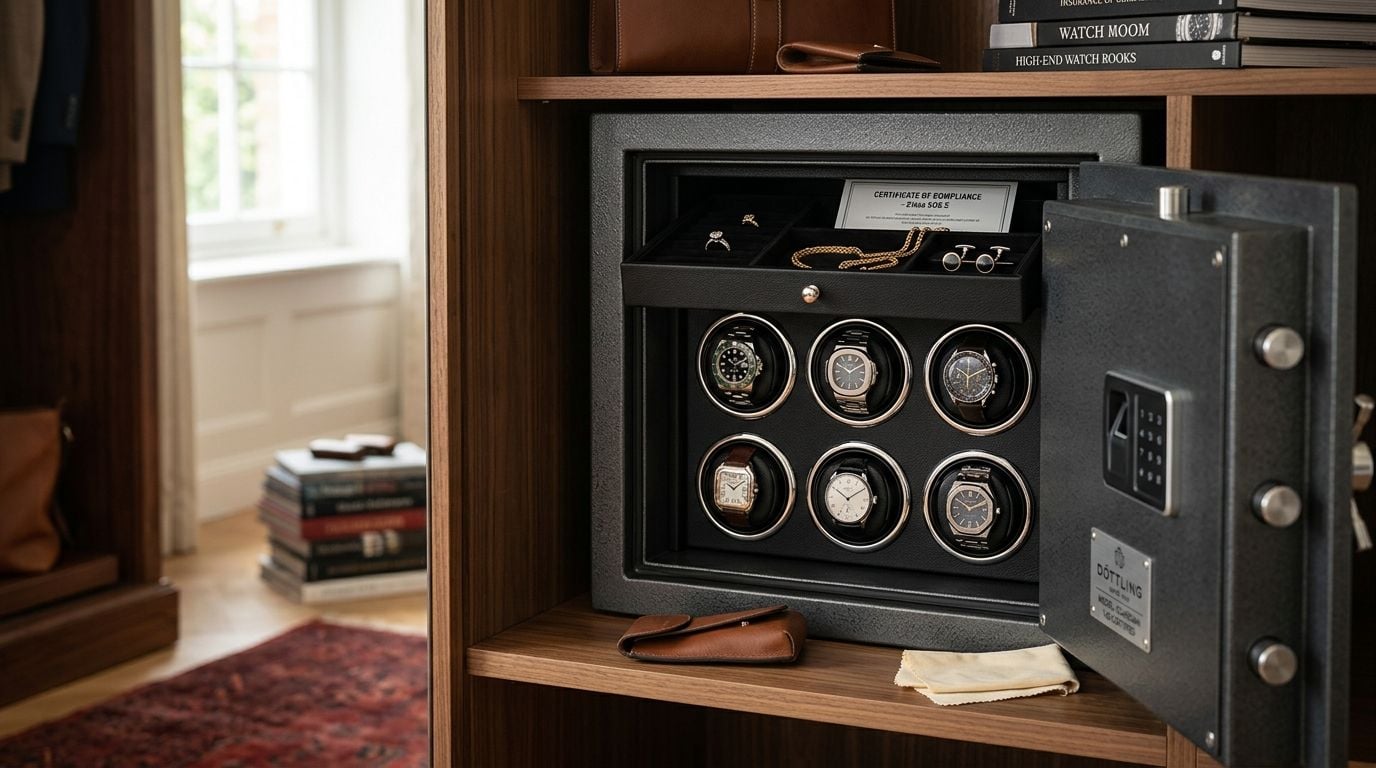
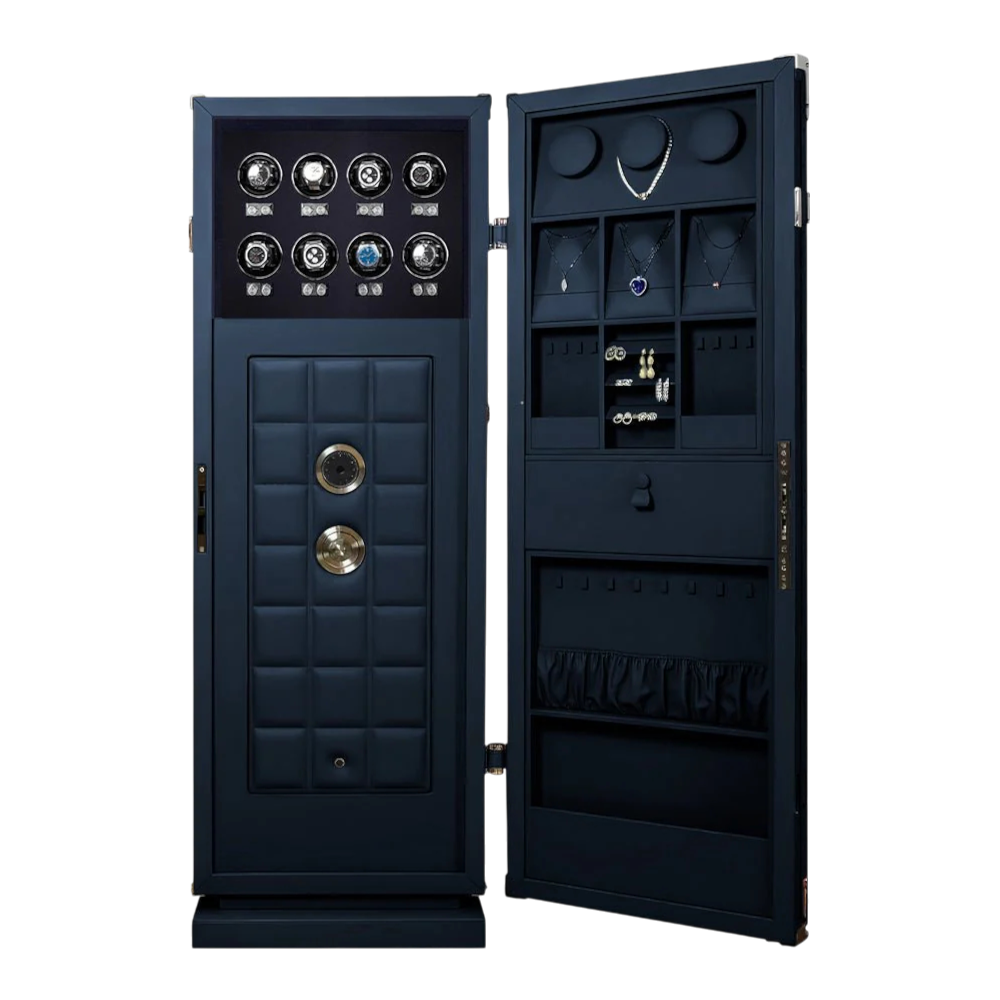
Standalone winders sit on a dresser or desk. Cabinets integrate winders into a piece of furniture with display layers, drawers, and sometimes a locked safe compartment.
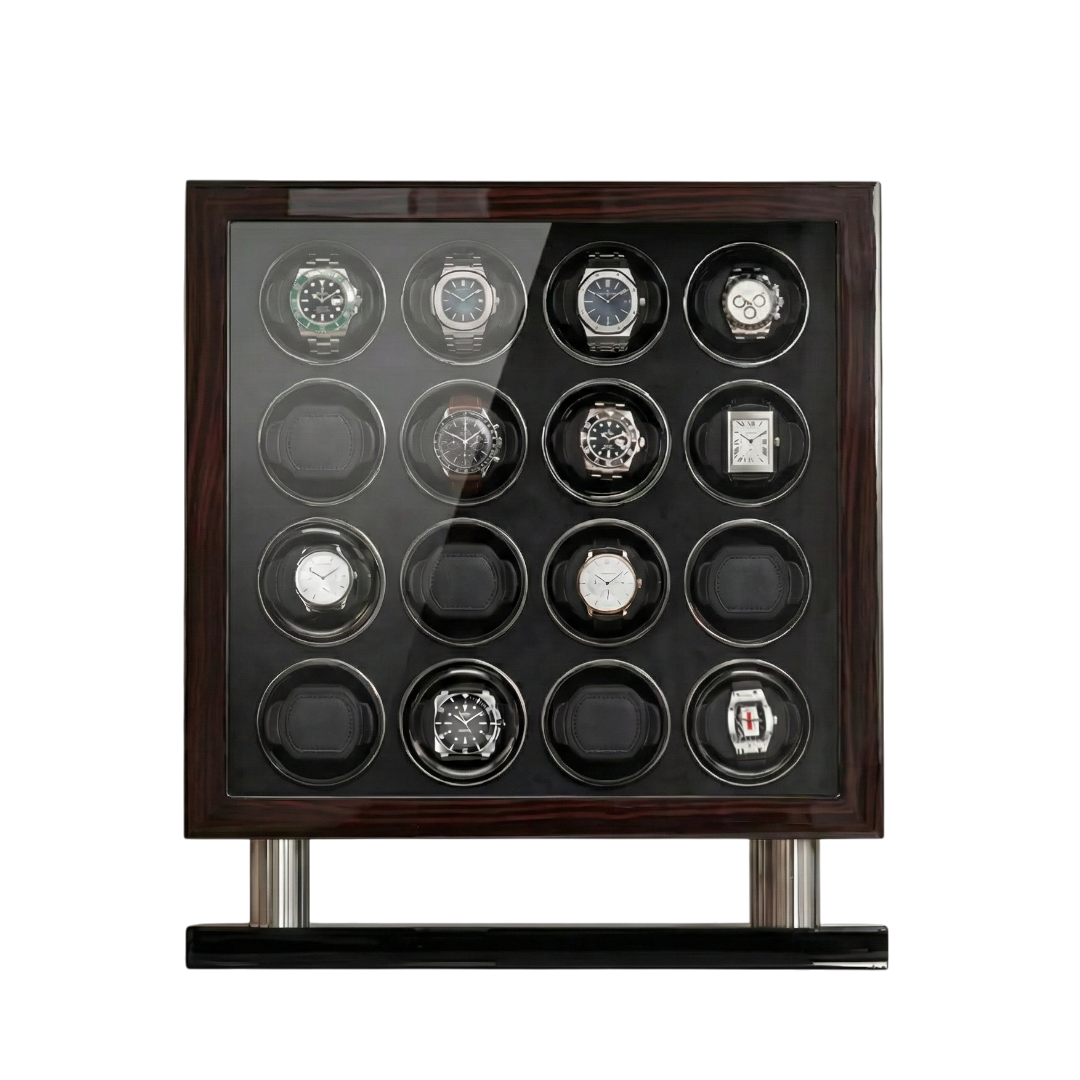
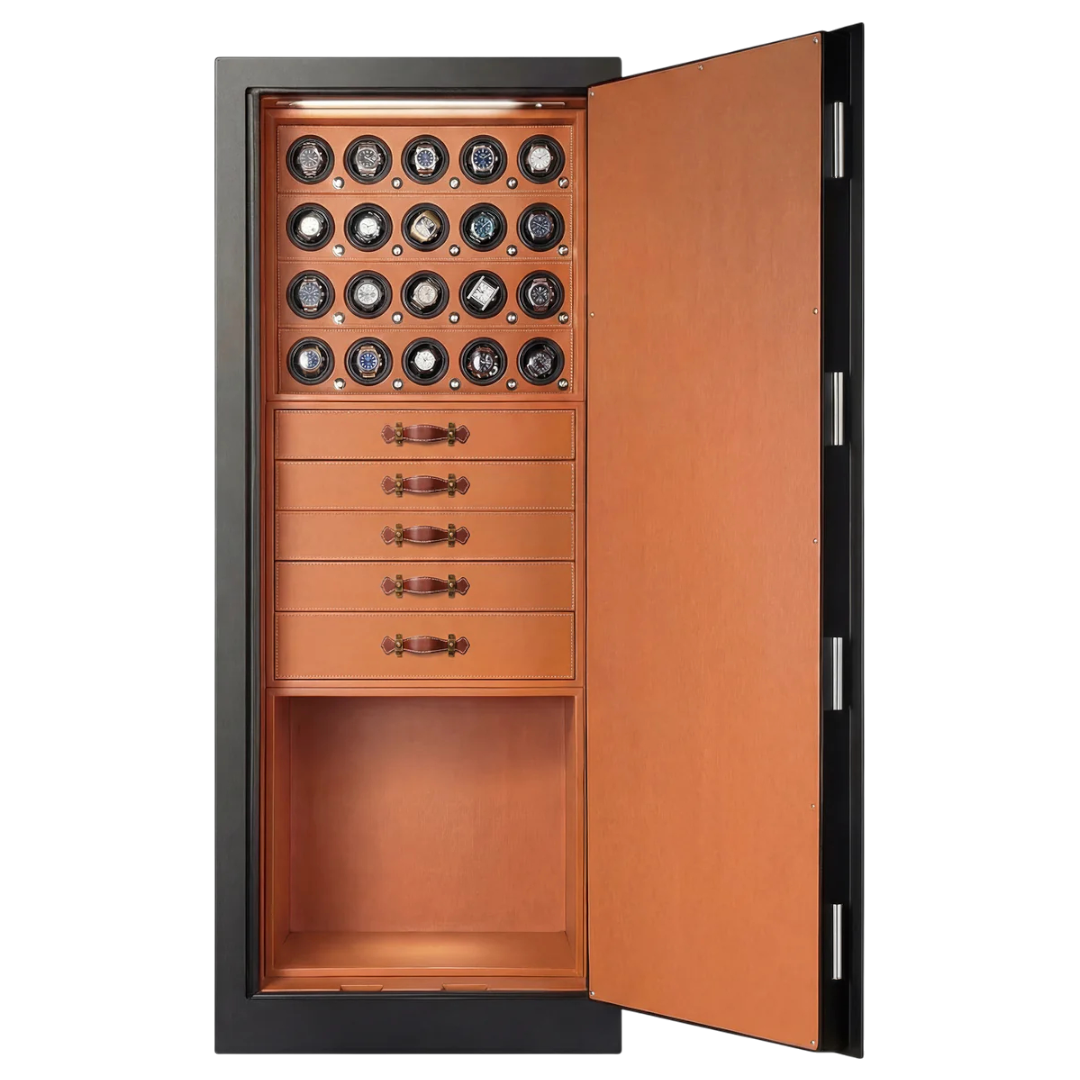
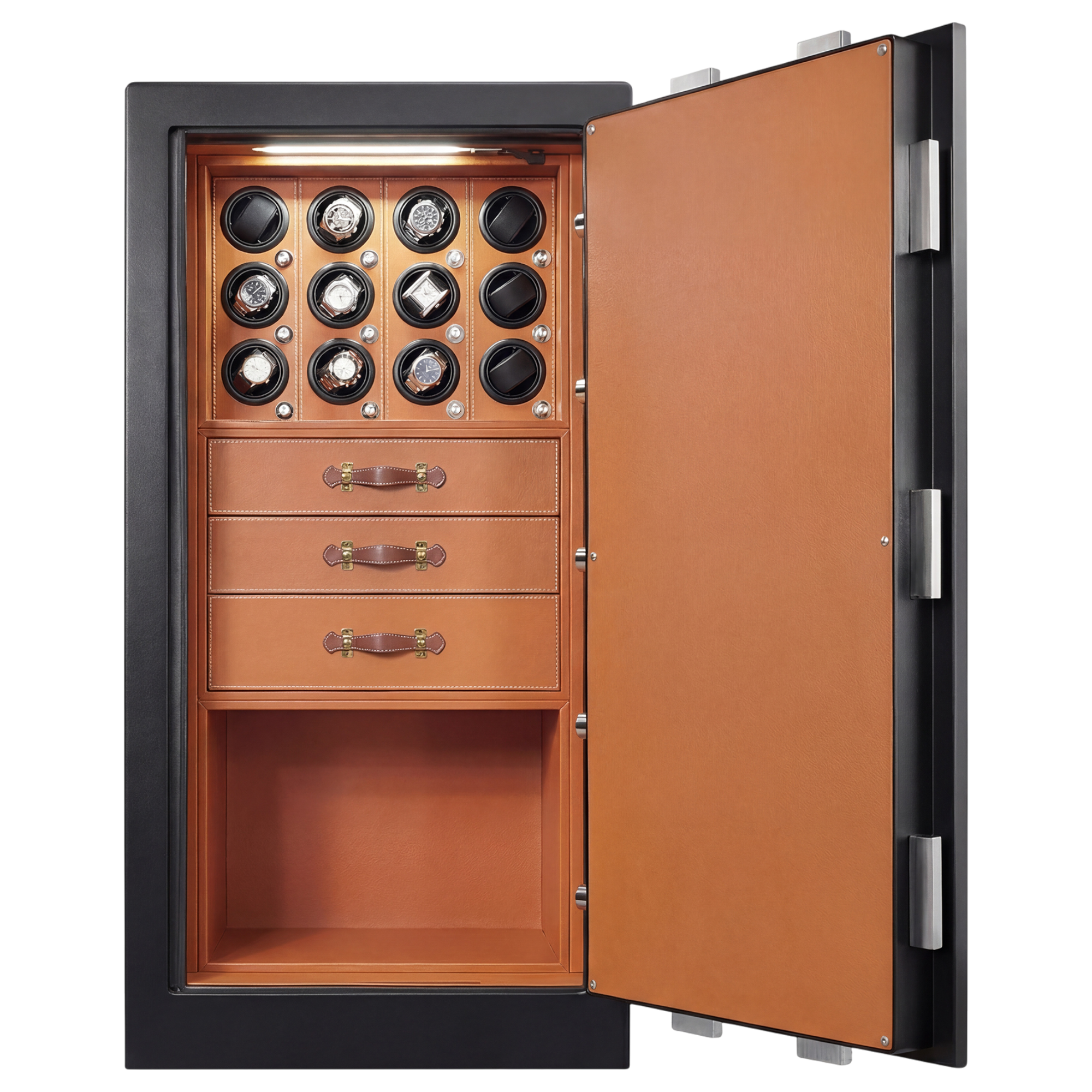
For collections above twelve pieces, cabinets often make more sense than stacking standalone units. The Enclave and Eterna cabinets handle twelve to sixteen watches in a single furniture-grade build. Browse the Watch Winder Cabinet collection for larger options.
Decision 10: Budget
A winder is a decade-plus purchase. Budget accordingly.
| Tier | Price Range | What You Get |
|---|---|---|
| Entry | Under $400 | Plastic body, no-name motors, fixed TPD. Skip. |
| Mid | $400 to $1,500 | Wood body, Mabuchi motors, programmable TPD |
| Premium | $1,500 to $5,000 | Full lacquer, leather interior, glass or enclosed options |
| Luxury | $5,000+ | Custom builds, cabinet integration, exotic materials |
Frequently Asked Questions
What’s the most important spec to look at first?
Motor quality. Everything else can be compensated for. A bad motor cannot. Mabuchi motors are the baseline for quality. Below that tier, walk away.
Do I need a winder for every watch I own?
No. Winders are for watches in active rotation. Watches that sit untouched for months are fine stopped. Wind them by hand when you pull them out.
How much does a good watch winder cost?
A quality two-rotor winder starts around $500 for the Impresario 2. Expect $200 to $400 per additional rotor as capacity scales up. Twelve-rotor units land around $3,500 to $6,000 depending on finish.
Can one winder serve multiple brands?
Only if it has per-rotor TPD and direction settings. A winder with one fixed setting for all rotors will under-serve some watches and over-serve others. Programmable per-rotor is the difference.
What if my watch isn’t in the TPD tables?
Default to 650 to 750 TPD bi-directional. Most ETA-based movements are happy in that range. For exotic calibers, contact the manufacturer for specifications.
How long should a quality watch winder last?
Fifteen to twenty years of continuous use. Motors are the first wear component. Quality Mabuchi motors run 20,000 to 30,000 hours before any drift in speed.
Do I need a travel winder?
Only if you’re away from home long enough that a watch would otherwise stop. For weekend trips, you don’t. For two-week business trips with a complicated piece, a compact travel winder makes sense.
Glass-top or enclosed, which is better?
Glass for display, enclosed for protection. If the winder sits in an office or dressing room as visible furniture, glass wins. If it lives on a dresser exposed to dust and light, enclosed wins.
Ready to Choose
Start at the Winder Series and filter by capacity. Pick one size above your current rotation. Confirm Mabuchi motors and per-rotor programmable TPD. Check the interior for leather rather than velvet or carpet. Those four checks eliminate 90 percent of the bad options.
For custom integrations or cabinet-style installs, the Impresario and cabinet lines cover most collection sizes without needing custom specification. For brand-specific settings, see our guides on Rolex TPD settings, Omega settings, and AP winders.
Protect Your Watch Collection
Designed for collectors who demand the best. Explore our premium watch winders and luxury safes.
Protect Your Watch Collection
Designed for collectors who demand the best. Explore our premium watch winders and luxury safes.