
The question every collector faces around watch number six
 Photo by
 The first few watches live in a drawer. Nobody thinks about it. Then the collection crosses some threshold, usually between the fifth and eighth piece, and the question shows up: where is this stuff actually supposed to live?
Most collectors have the same two options on the table. A safe deposit box at the bank. Or a proper watch safe at home. Both sound reasonable. Both have real trade-offs that don’t show up until you’re in the middle of using them.
This article is for collectors weighing that decision. We’ll cover what each option actually does, what they don’t do, and what serious collectors end up choosing at different collection sizes. I’ll be direct about the parts that don’t get talked about enough.
What a safe deposit box actually is
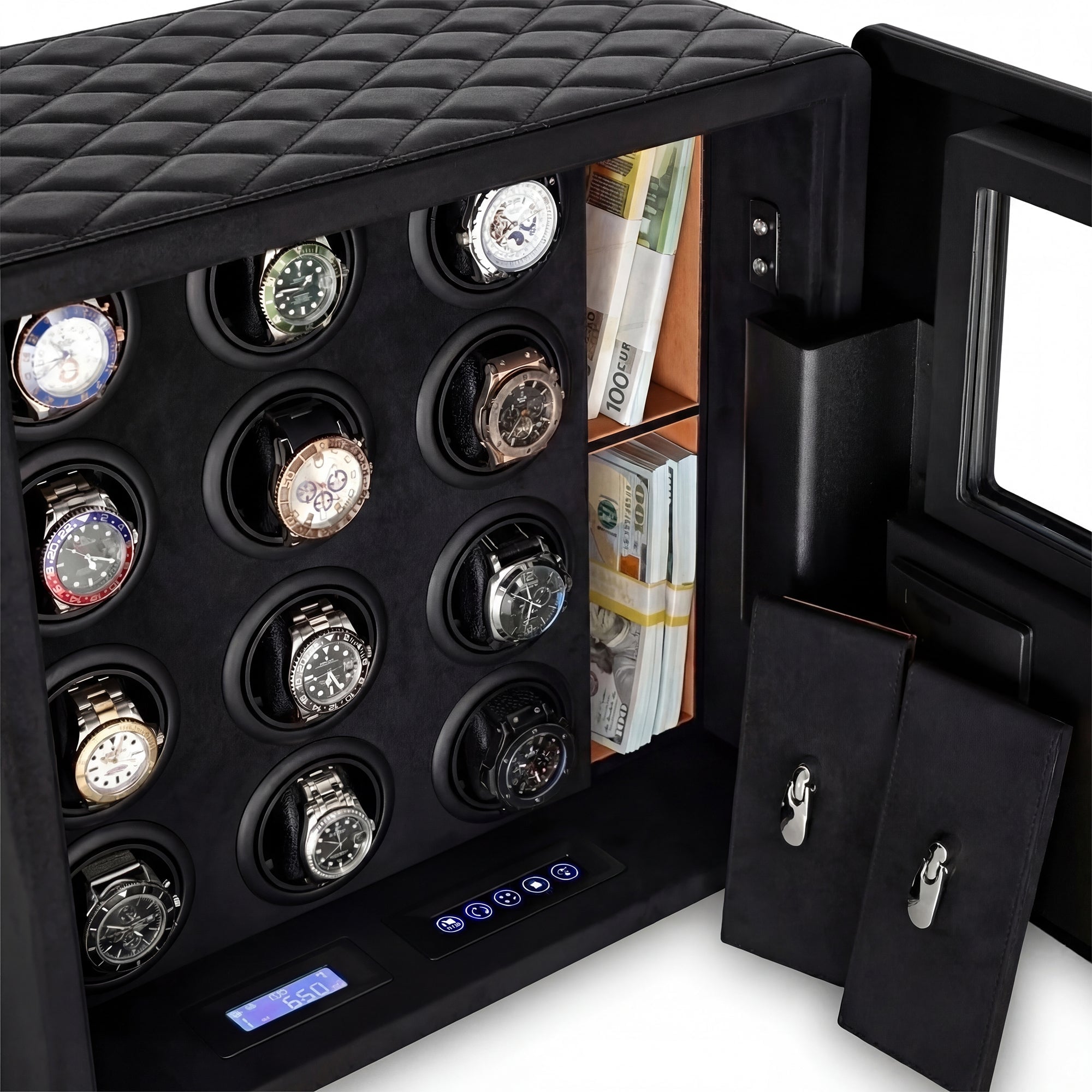 A safe deposit box is a locked container inside a bank’s vault. You rent the box. The bank owns the vault. Access requires your key plus a bank employee’s key, during bank hours, at that specific branch.
The basic specs:
| Feature | Reality |
|---|---|
| Size | Usually 3″x5″ to 10″x15″ (small to medium collection only) |
| Annual cost | $50-$500 depending on size and bank |
| Access | Bank hours only, appointment often required |
| Climate control | Varies by bank, rarely specified |
| Fire rating | Vault is rated, individual boxes are not |
| FDIC insurance | Contents are NOT insured by FDIC |
| Theft from vault | Bank liability is usually $0-$500 |

This is why most collectors who use safe deposit boxes only put their display pieces or investment-grade watches in them, and keep their daily rotation at home. Which then raises the question of where the daily rotation should go, and the answer is usually a home watch safe anyway.
2. You can’t wind a watch in a bank
This seems obvious until you own automatic movements. A Patek 5711 in a safe deposit box is a stopped watch. Every time you retrieve it, you’re resetting time, date, and any complications. On a perpetual calendar, that’s a 15-minute correction. On a minute repeater, it’s a service visit if you do it wrong.
A luxury watch winder safe at home keeps movements charged. The bank can’t.
3. Estate and divorce freezes
If the boxholder dies, the box gets sealed pending court authorization in most states. This can take weeks to months. The surviving spouse may not have access even if they’re on the signature card, depending on state law and whether the bank’s attorneys decide to be cautious.
Divorce proceedings can freeze joint accounts and deposit boxes mid-case. A watch collection locked behind a court order is a worst-case scenario for a spouse who needs liquidity.
4. Climate control is a coin flip
Some bank vaults maintain stable humidity. Many don’t. The vault is designed to protect cash, documents, and coins. Watches have leather straps that cure, gaskets that dry, and dials that can develop spotting in high humidity. A home watch safe with proper climate control, running 40-55% RH, protects the collection at a higher standard than most bank vaults offer.
What a home watch safe actually does

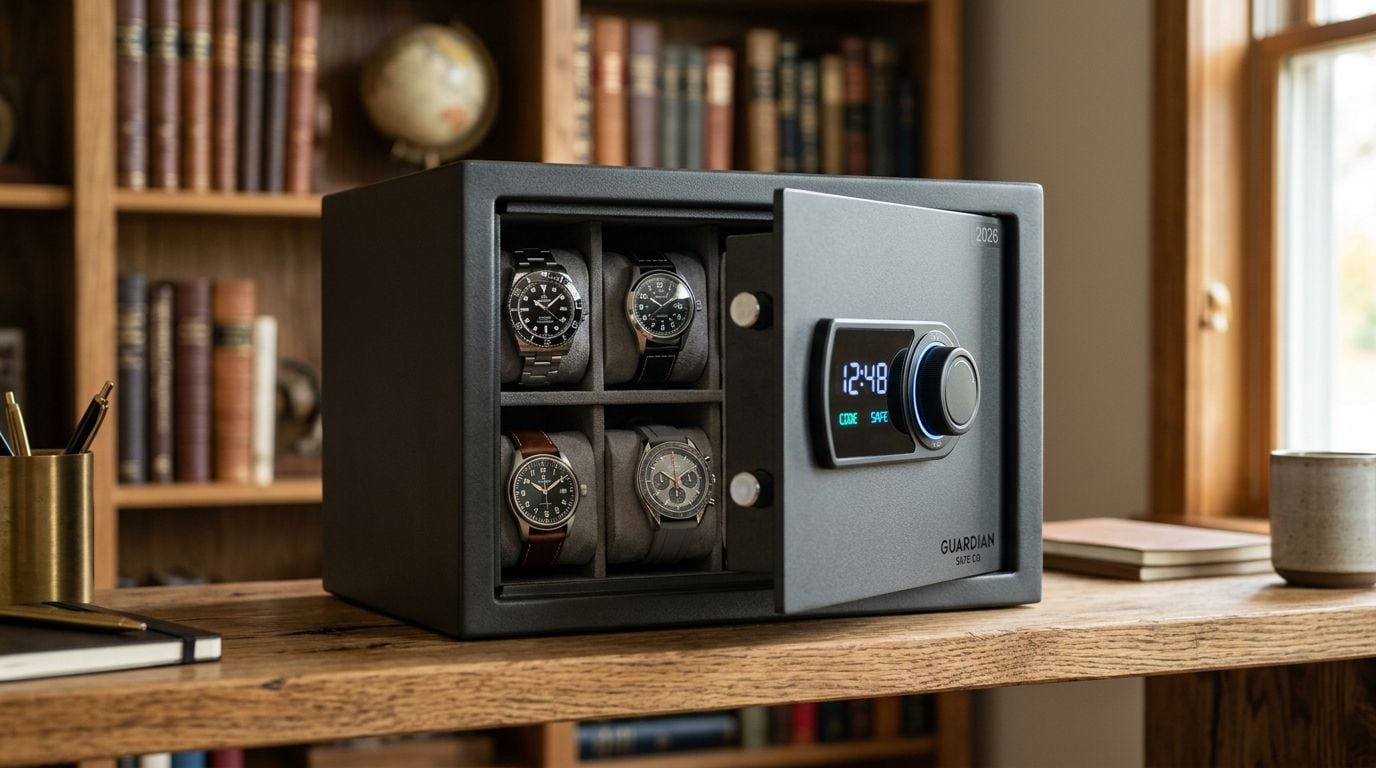
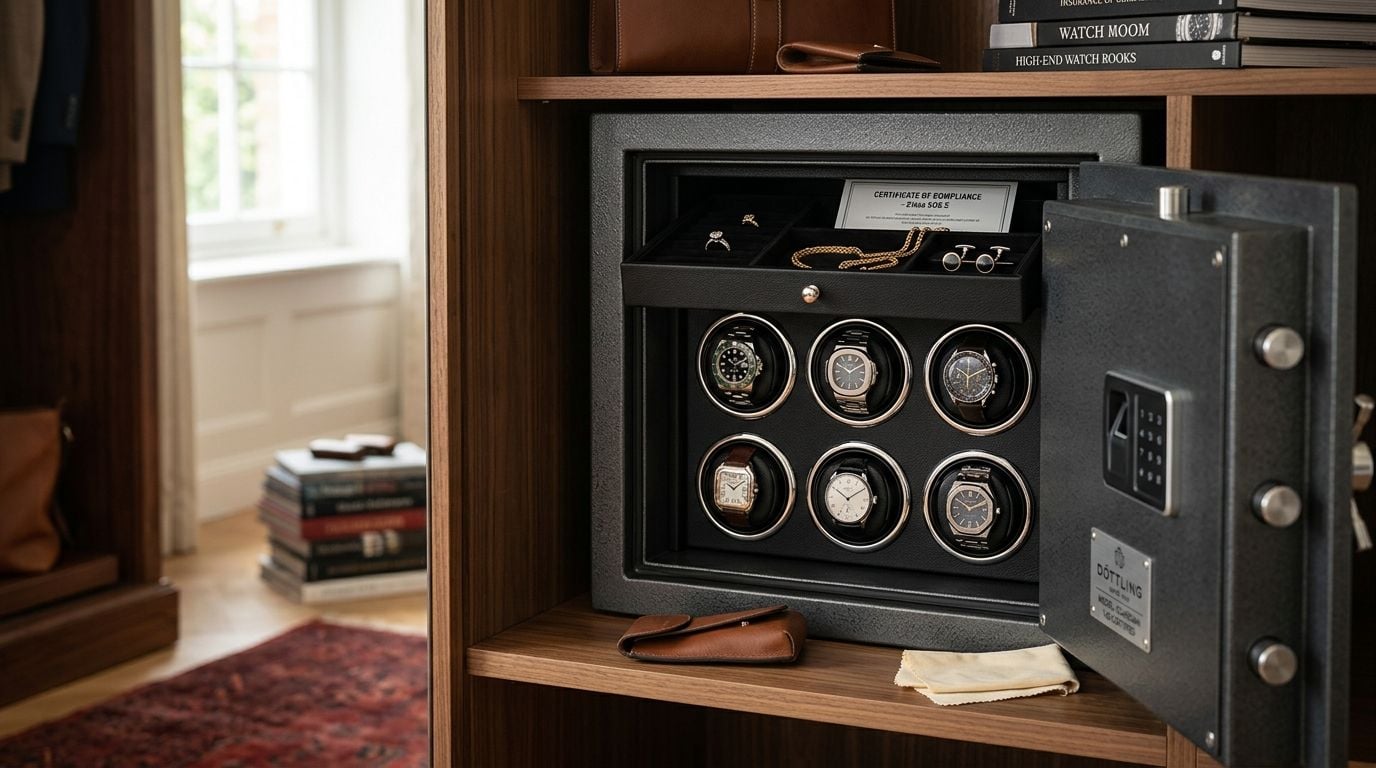
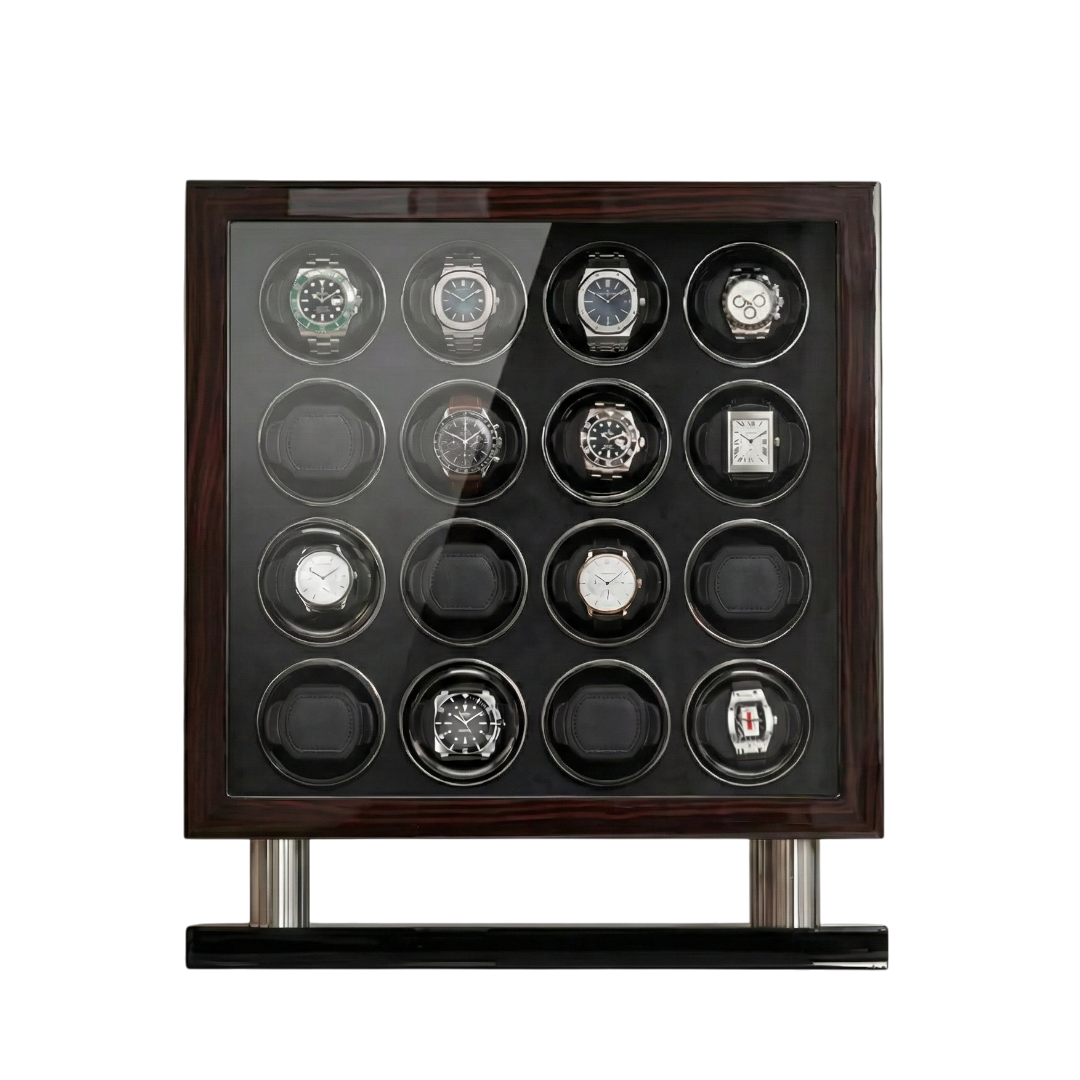
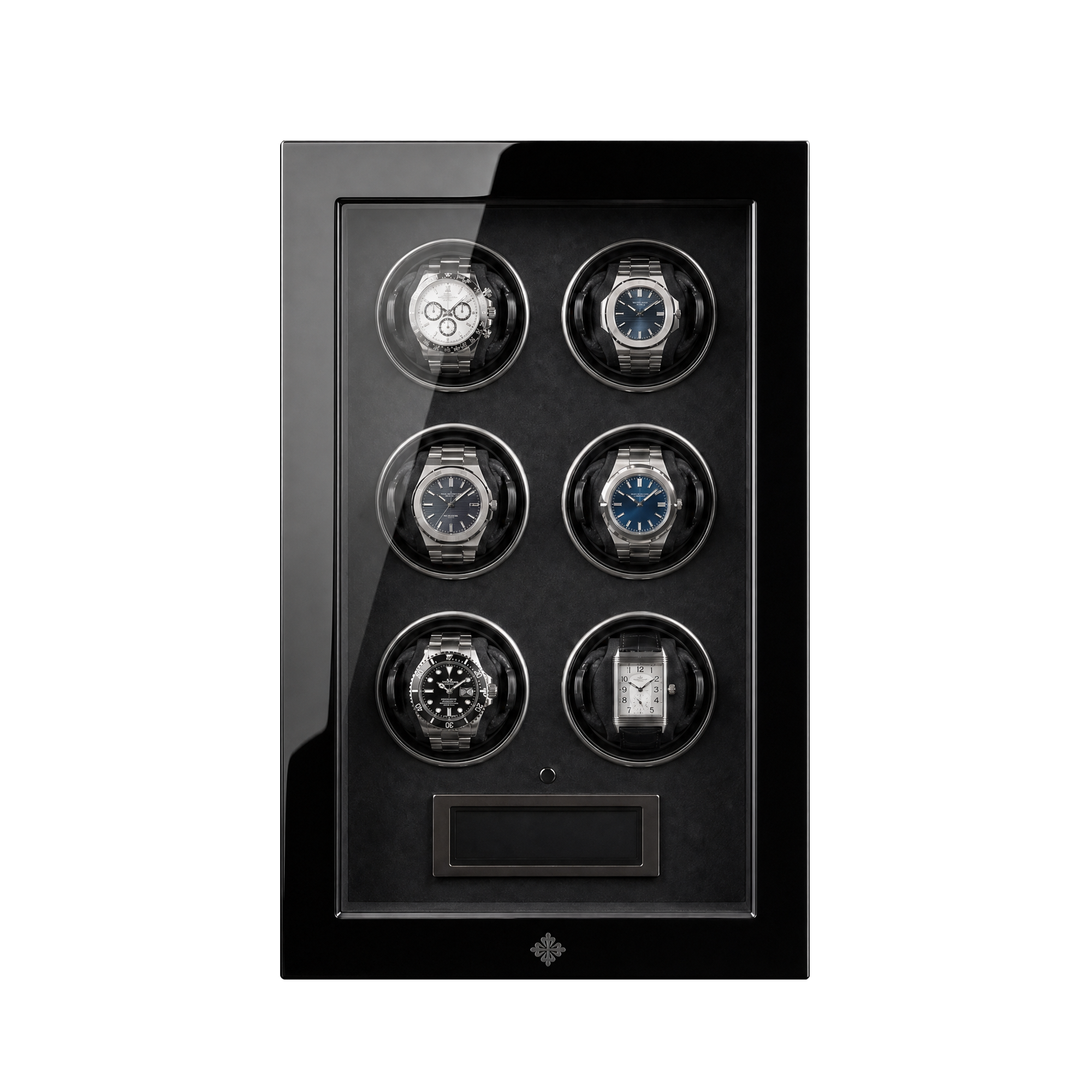
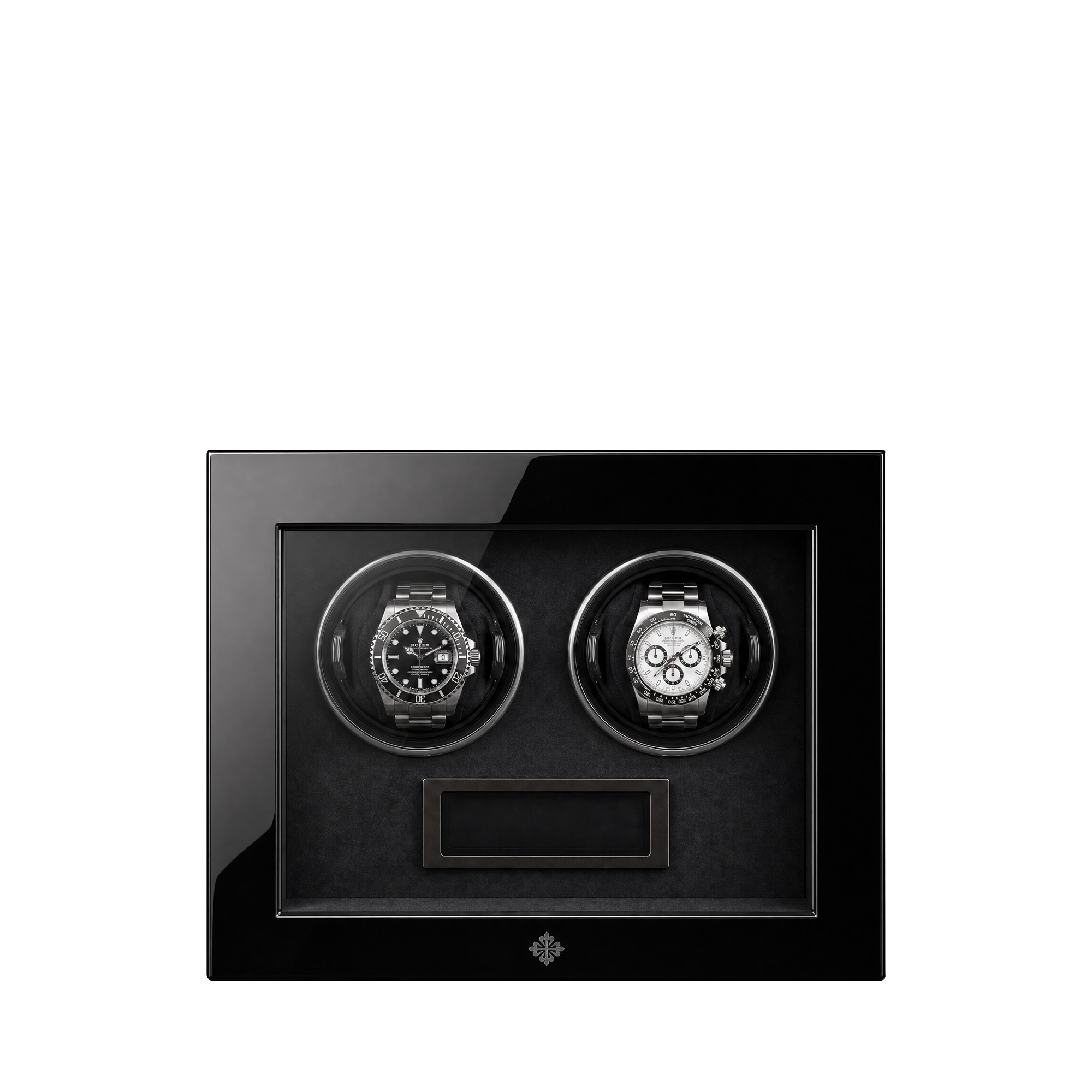
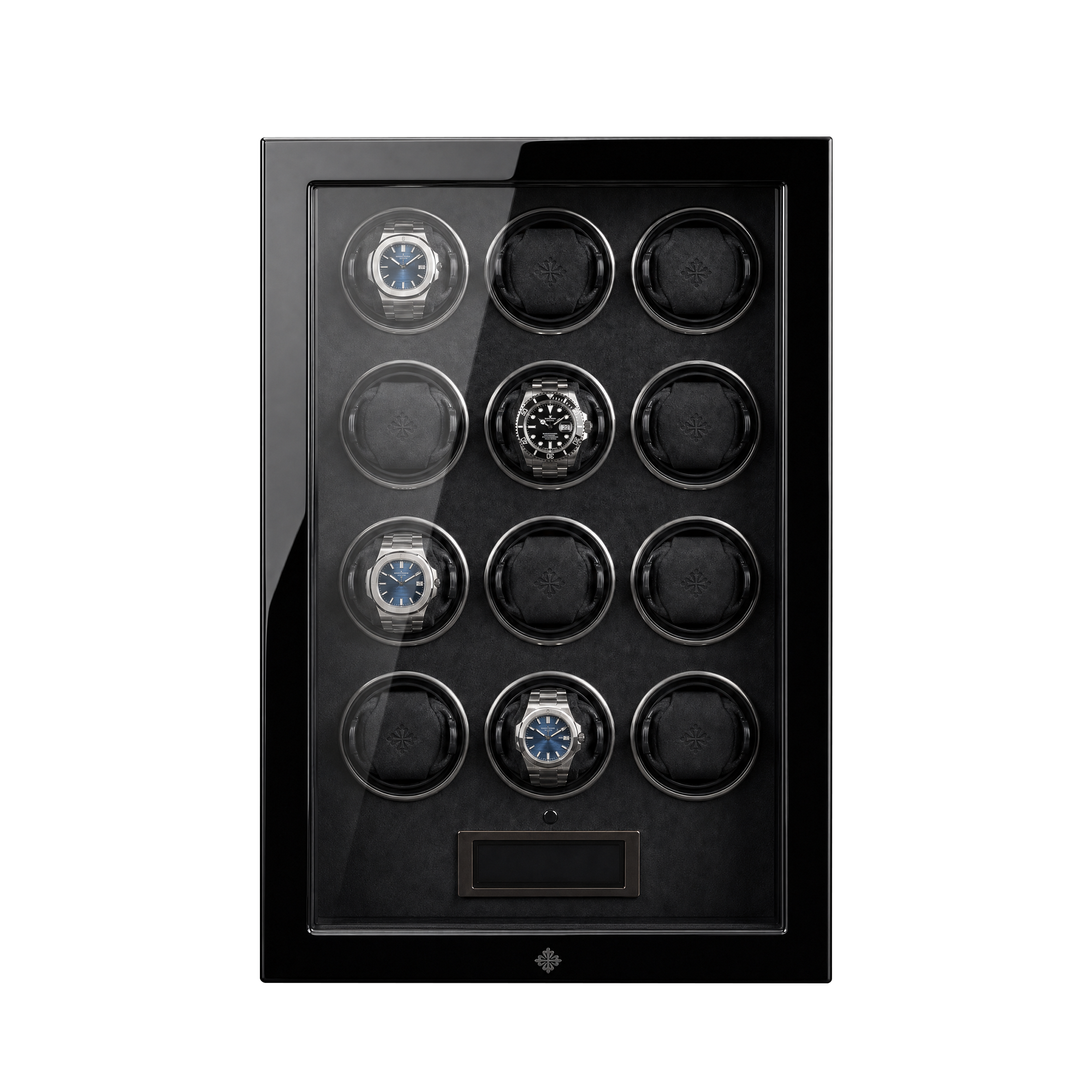
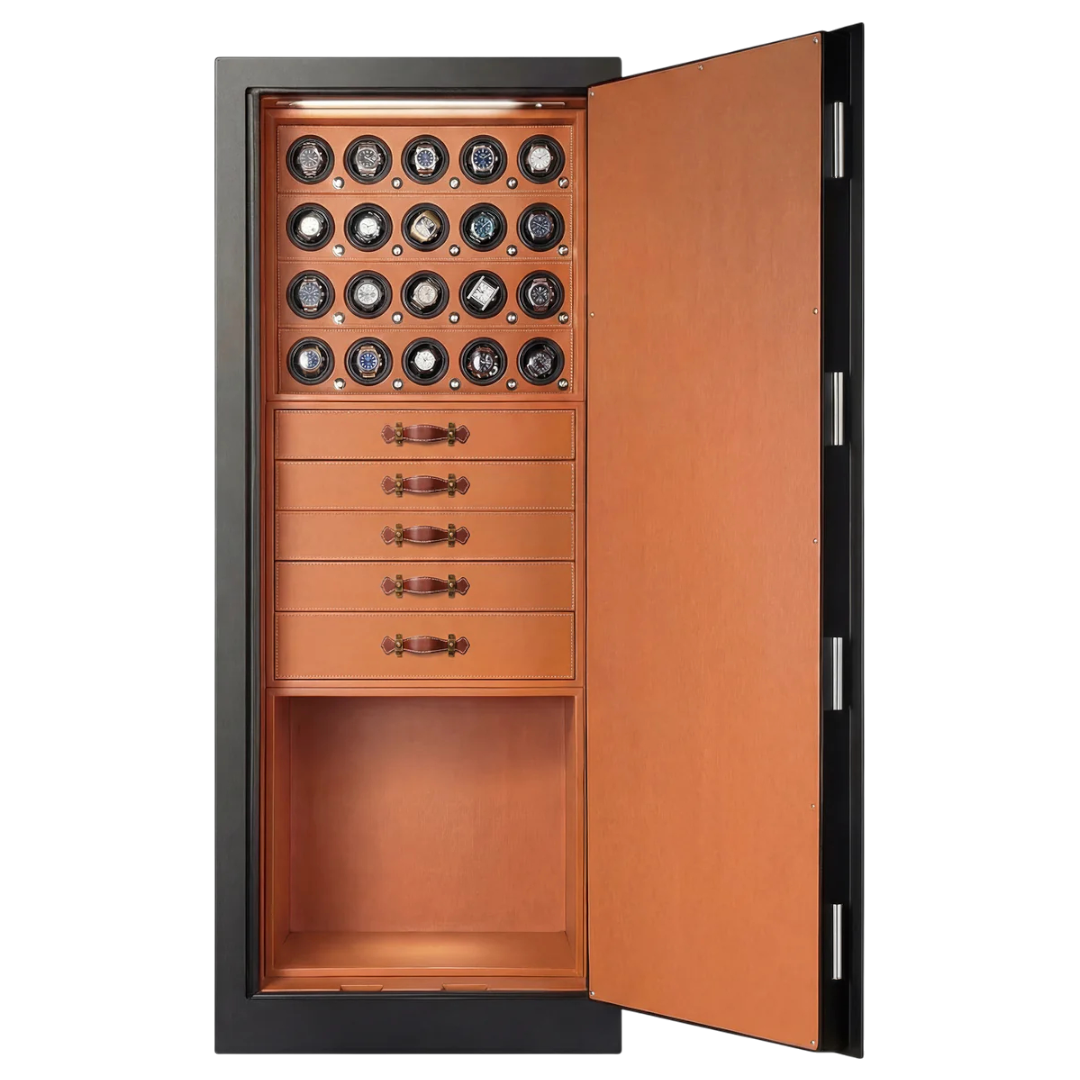
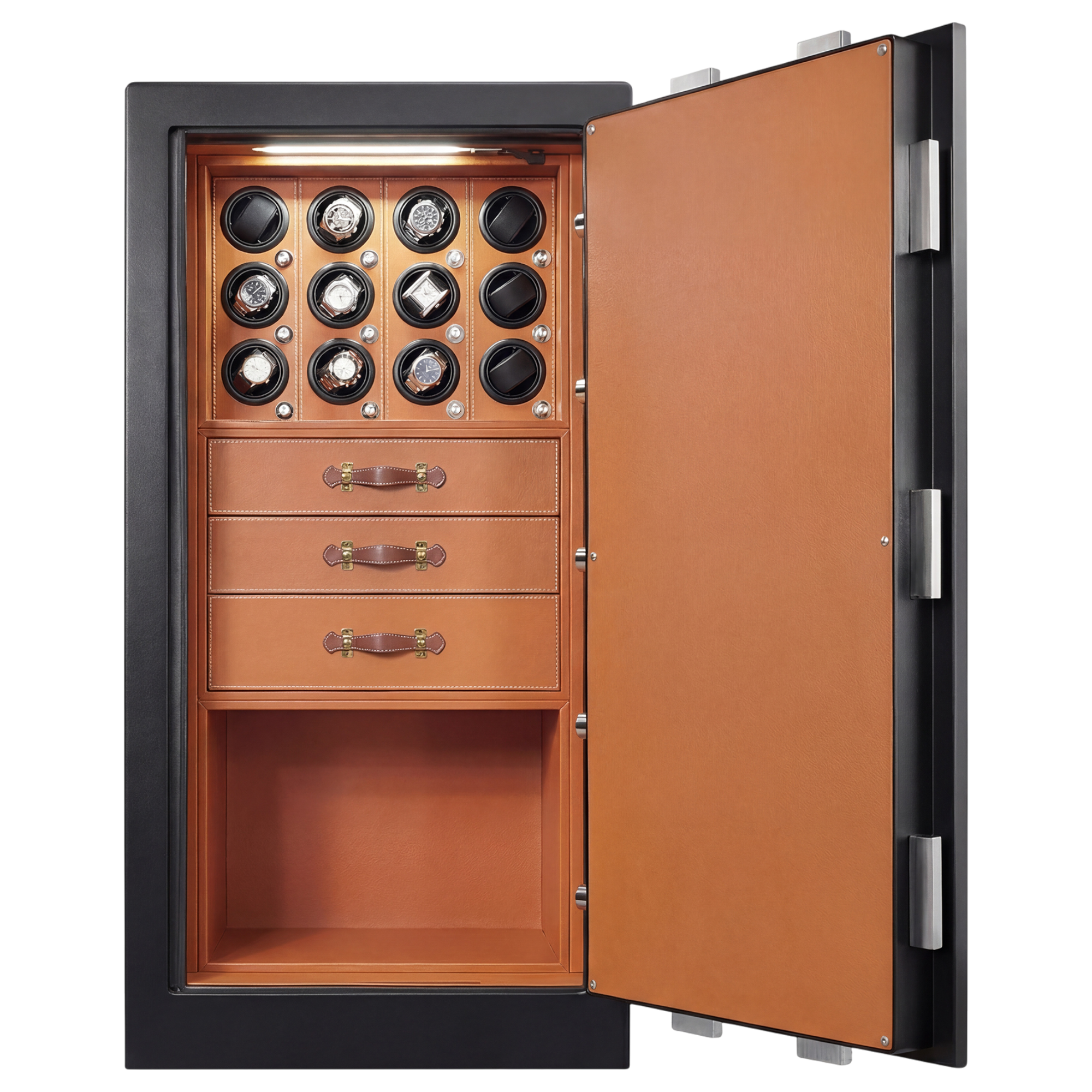
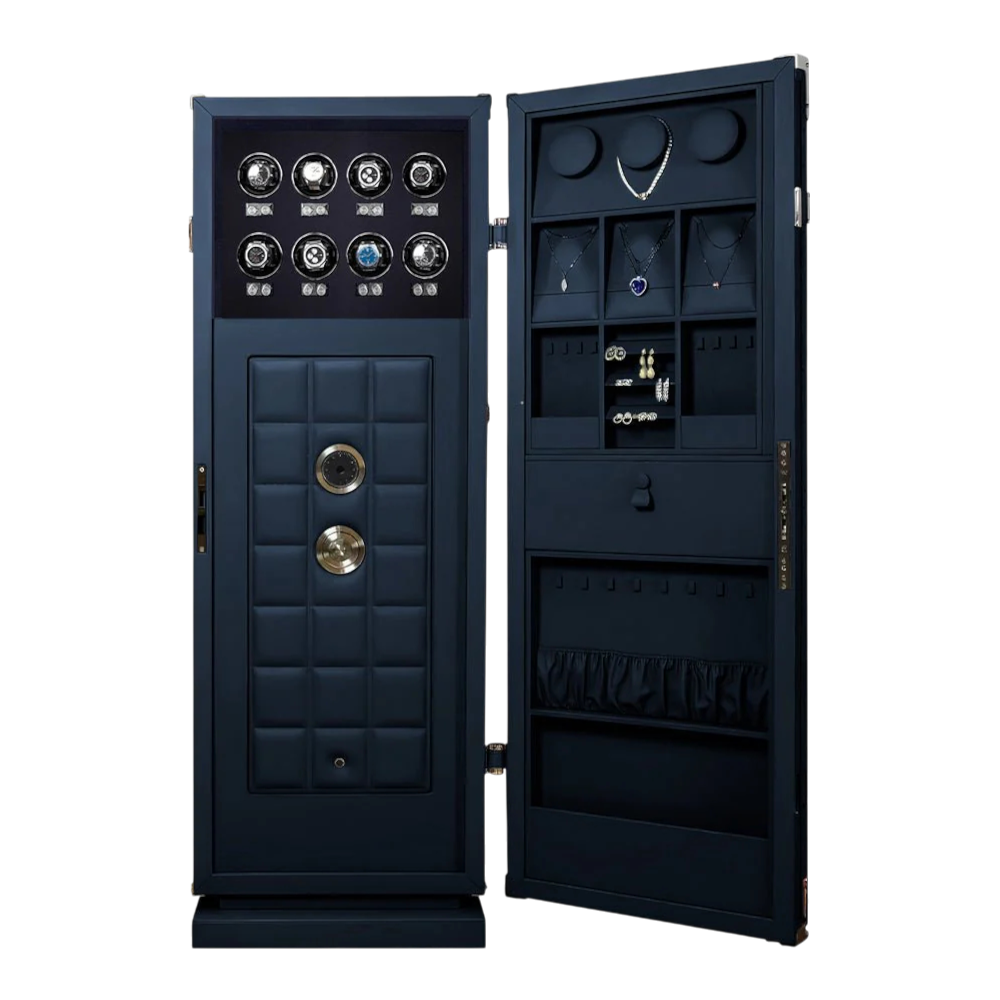
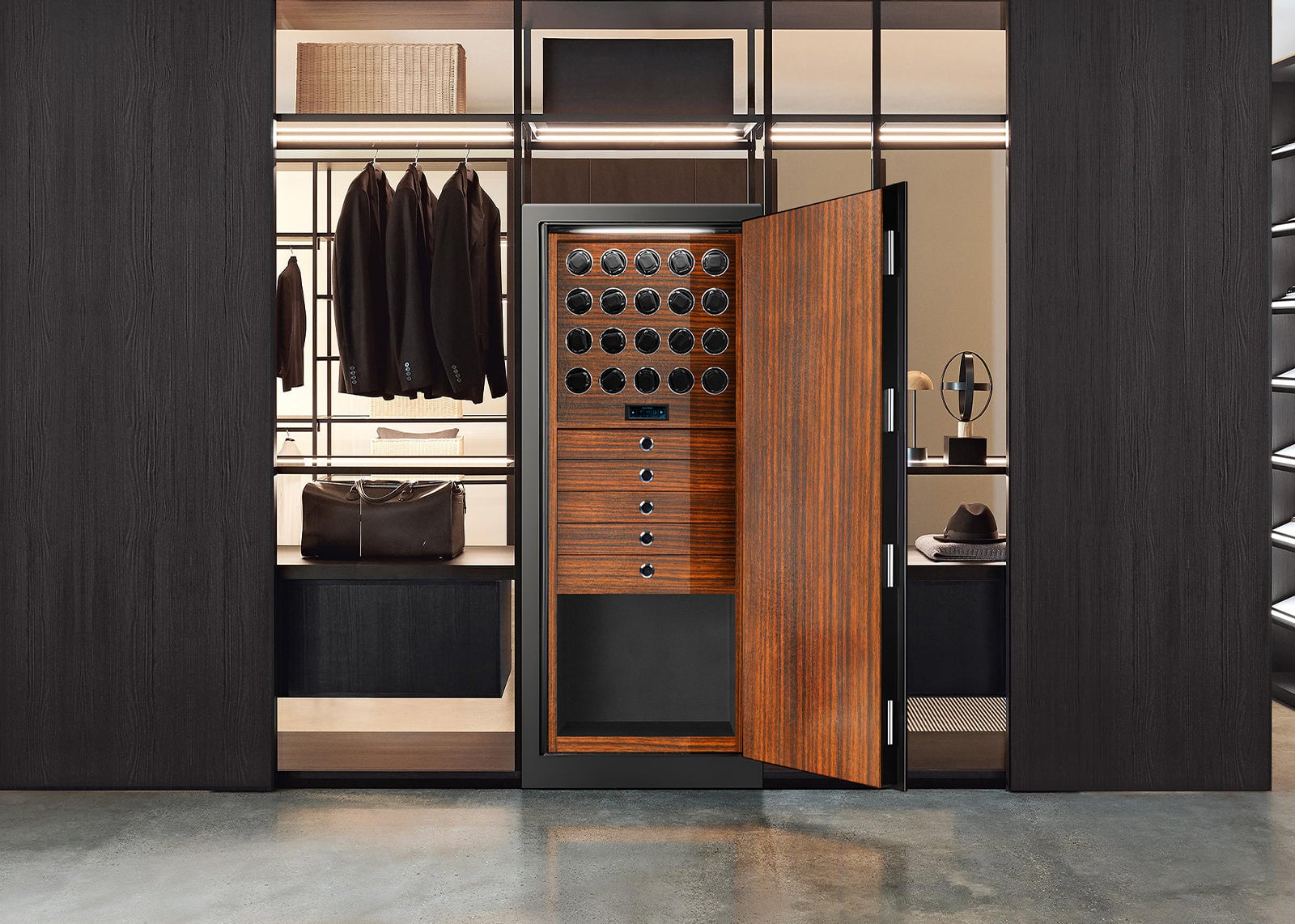
A proper home watch safe is a climate-controlled, fire-rated, burglary-rated unit designed specifically for watches. The good ones hold 6-24 pieces with integrated winders and biometric access.
The spec difference at the luxury tier:
Fire rating: UL 72 Class 350, meaning internal temperature stays under 177°C for 60+ minutes at 1,000°C external heat. A bank vault doesn’t expose your box to fire, but if you keep watches at home in an unrated safe, fire is the bigger risk than theft.
Burglary rating: TL-15 or TL-30 UL certifications resist power-tool attack for 15-30 minutes. Residential burglaries average under 10 minutes from entry to exit. A TL-15 safe is more than most home invasions can handle.
Biometric plus mechanical backup: Fingerprint scanners for daily access, mechanical key override for redundancy, dual-authentication when you travel.
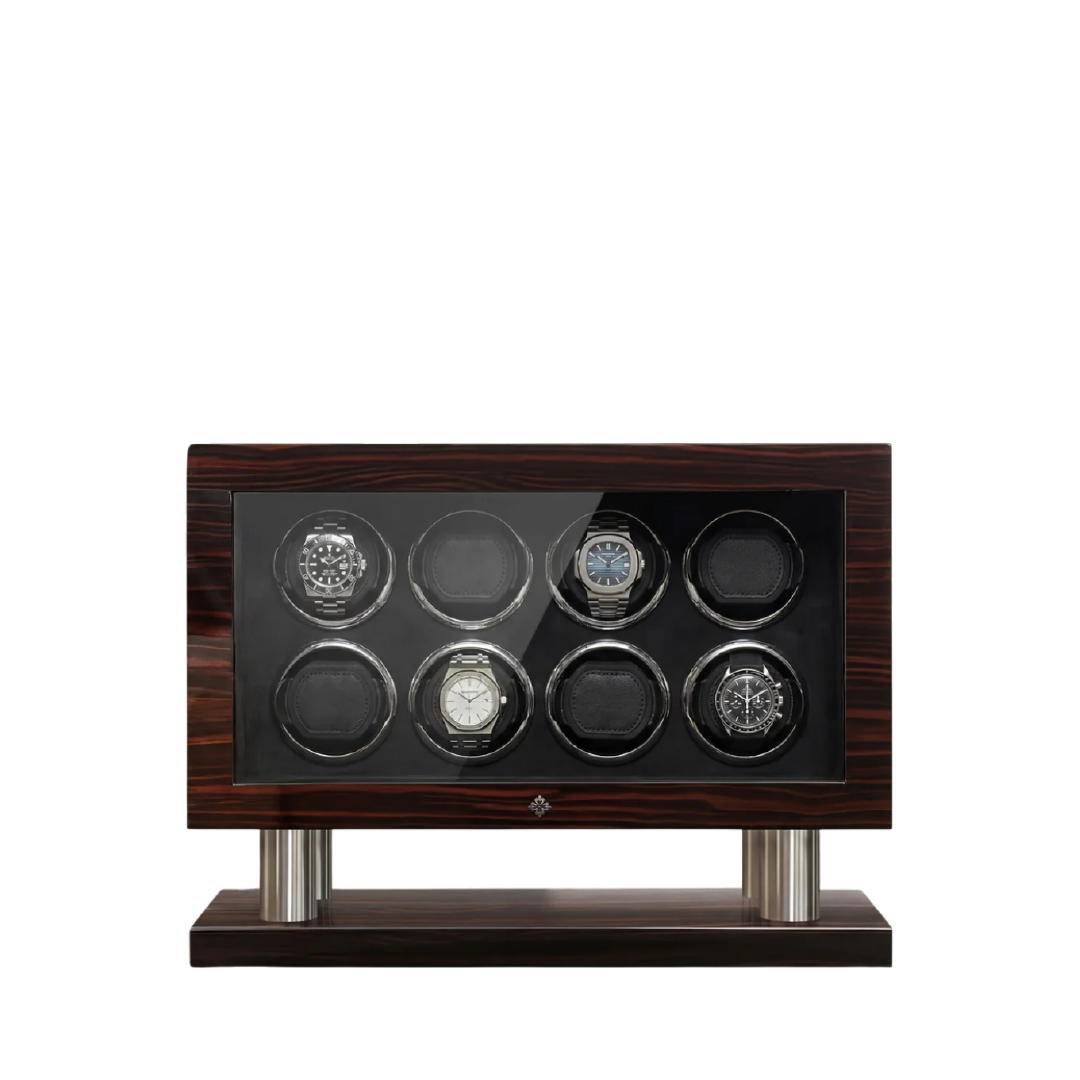
Integrated winders: Programmable TPD per watch. A collection of 12 watches stays charged and ready.
The Veron 20 watch safe box and the Titan Sanctum 20 are both built to that stacked architecture. Fire, burglary, biometric, winders, climate, all in one unit.
The cost comparison most collectors miss
Collectors usually compare annual SDB rent ($200-$500) to the one-time cost of a watch safe ($3,000-$15,000) and assume the safe deposit box wins.
Run the math across 10 years.
| Option | 10-Year Cost | Access | Winding | Climate | Insurance |
|---|---|---|---|---|---|
| Safe deposit box (medium) | $2,000-$5,000 | Bank hours only | None | Uncontrolled | Separate rider required |
| Home watch safe ($6K unit) | $6,000 one-time | 24/7 | Integrated | 40-55% RH | Covered under rider |
| Hybrid (both) | $8,000-$11,000 | Best of both | Home side only | Home side | Covered under rider |
The home watch safe costs more up front and less over time. But the cost question is usually beside the point. The real decision is about how you actually use the collection. If you wear the watches, a home safe wins. If you’re storing investment pieces you never touch, a safe deposit box might still have a role.
When a safe deposit box makes sense
There are three scenarios where a safe deposit box is genuinely the right call.
Scenario 1: Investment-grade holdover pieces. A vintage Patek you bought for long-term hold and don’t wear. A grail piece waiting for the next auction. Watches you’re treating as appreciating assets more than accessories.
Scenario 2: High-theft residential areas or frequent travel. If you travel six months a year and your home sits empty, an unattended home safe is a slower problem than a bank vault. A safe deposit box is defensible in that scenario.
Scenario 3: Extreme collection values. Above $500K in watches, some collectors use safe deposit boxes for the pieces that would otherwise push their home policy riders into the uninsurable range. It’s a cost-of-insurance play more than a security play.
Even in these cases, most serious collectors keep a subset at home in a proper watch safe for daily rotation.
When a home watch safe makes sense
The short answer: almost always, if you wear the watches.
The longer answer has three conditions worth naming.
Condition 1: You own automatic movements and wear them in rotation. Automatic movements need to stay charged. Bank deposit boxes can’t wind watches. A watch winder safe keeps the collection ready to wear.
Condition 2: The collection is at home anyway. Most collectors keep at least their daily rotation at home. If you’re storing watches at home regardless, the question isn’t SDB or home safe. It’s home safe or no safe, and no safe is the wrong answer above a $25K collection value.
Condition 3: You want to actually enjoy the collection. This sounds soft, but it’s the most common reason collectors abandon safe deposit boxes after the first year. Opening a vault drawer every morning to choose a watch is part of the collecting experience. Driving to the bank and waiting for an employee is not.
The hybrid approach serious collectors usually settle on
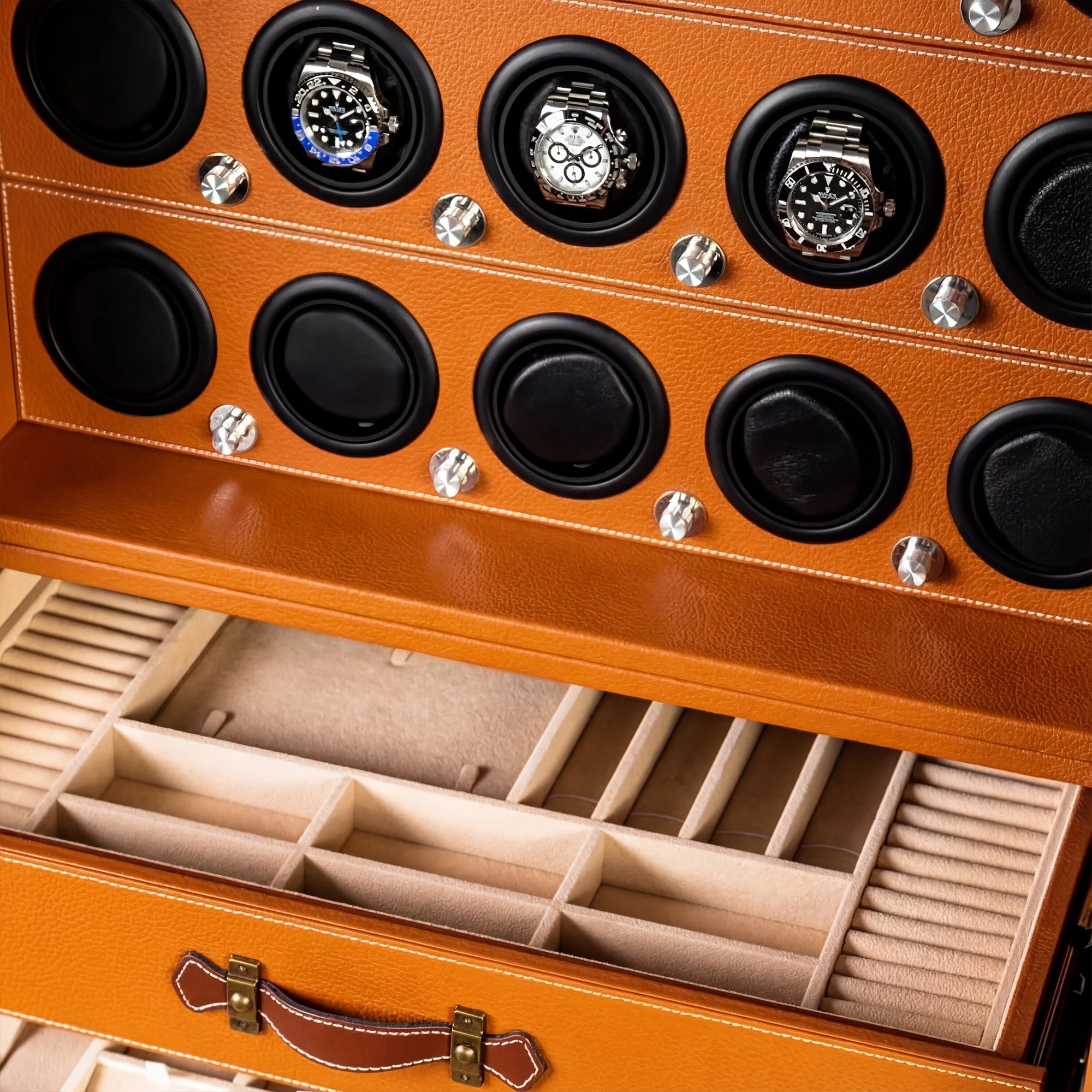
Once a collection crosses roughly $150K, most serious collectors end up running a hybrid system.
The structure looks like this:
- Daily rotation (6-12 pieces) lives at home in a luxury watch winder safe. These are the pieces you wear.
- Secondary collection (4-8 pieces) lives in a larger home safe or in a custom watch vault if space and collection size justify it.
- Investment-grade or grail pieces (1-4 pieces) live in a safe deposit box. These don’t get worn. They appreciate while you sleep.
This is the model that emerges organically for most collectors above the $200K mark. It’s not the cheapest option. It’s the one that balances access, protection, and insurance economics.
For collections above $500K, the hybrid usually shifts toward heavier home-vault weighting and lighter SDB usage, because custom vaults can meet and exceed insurance carrier requirements at the high end.
What insurers actually want to see
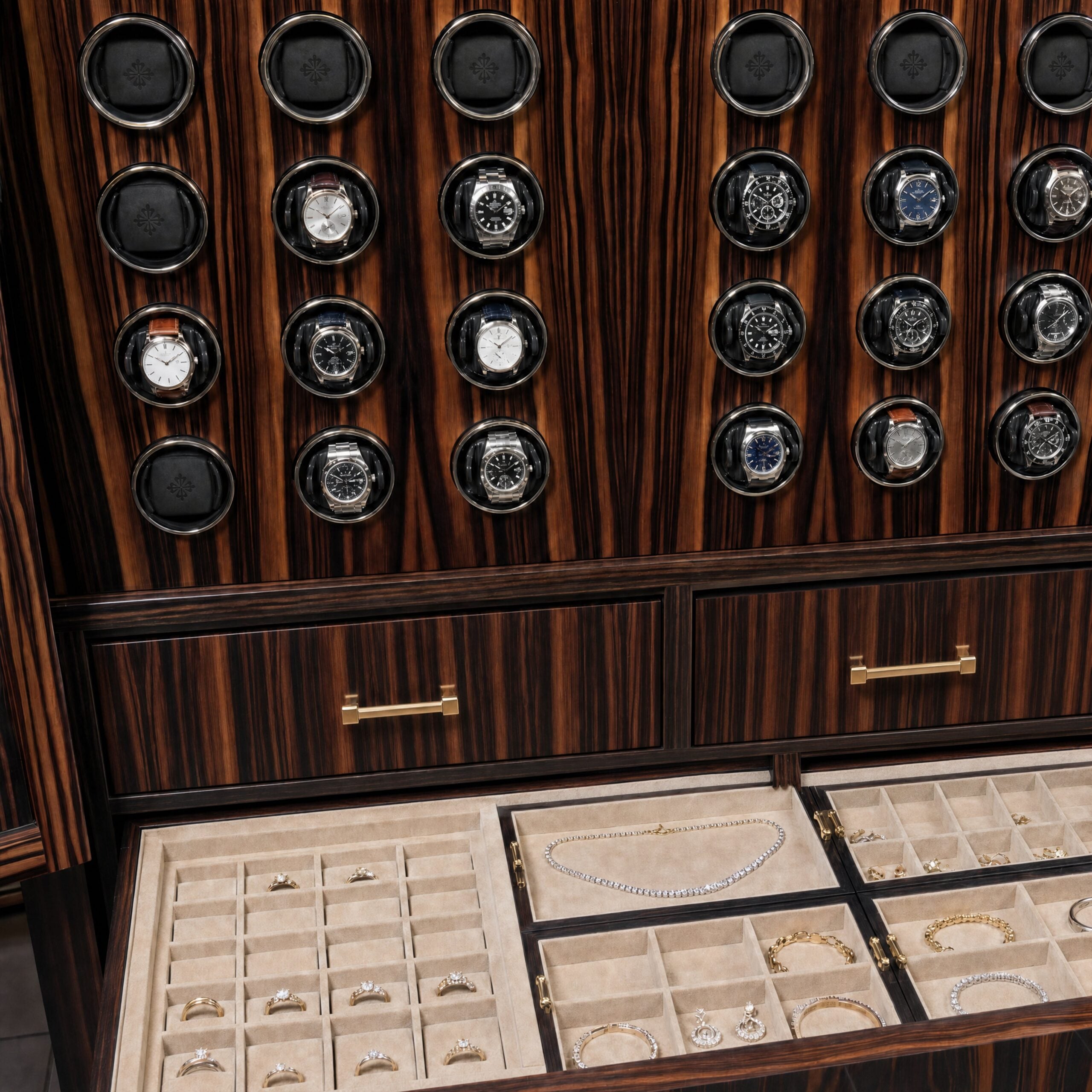
Most luxury watch collectors end up insuring through a scheduled rider on their homeowner’s policy or through a specialty carrier (Chubb, Jewelers Mutual, Hodinkee Insurance). These carriers care about two things when setting premiums:
- The documented value of each piece (appraisals, purchase receipts, serial numbers)
- How the collection is stored
Most premium carriers will require a UL-rated safe above certain collection values. The threshold varies by carrier and location, but anything above $100K in watches usually triggers a storage requirement. A safe deposit box can substitute, but some carriers won’t cover watches stored in SDBs at all (the argument is that SDBs aren’t insured by the bank, and the carrier is taking on too much untracked risk).
A proper home watch safe with UL certifications typically lowers premiums and satisfies coverage requirements in one move.
Frequently asked questions
Is a safe deposit box a good place to store a luxury watch collection?
A safe deposit box is reasonable for investment-grade pieces you don’t wear and for grail watches held for long-term appreciation. It’s not ideal for automatic movements (they can’t be wound), pieces you rotate regularly (access is limited to bank hours), or sole storage above $100K collection value (many insurers require UL-rated home safes).
Are bank safe deposit box contents insured?
No. FDIC insurance covers bank deposits, not safe deposit box contents. Most banks limit their liability to $0-$500 for box contents. Any valuables stored in a safe deposit box need to be covered under a homeowner’s policy rider or a specialty collector’s insurance policy.
Can my spouse access my safe deposit box if I die?
It depends on state law and how the box is titled. In many states, the box is sealed upon the death of the sole boxholder pending court authorization, which can take weeks to months. Joint accounts with right of survivorship usually avoid this, but not always. A home watch safe with shared access codes avoids the issue entirely.
How much does a good home watch safe cost?
A proper luxury watch safe with fire rating, burglary rating, biometric access, and integrated winders costs $3,000-$15,000 for production models. Custom watch vaults for larger collections start at $15,000 and can exceed $50,000 depending on capacity and architectural integration.
Can I keep automatic watches in a safe deposit box?
You can, but they’ll stop running. Automatic movements rely on motion to stay charged, and a stationary box provides none. Every retrieval requires winding, setting the time, and correcting any complications. For collectors with multiple automatic watches, a home watch winder safe is a better storage solution.
Is a home watch safe more secure than a bank vault?
In absolute terms, a bank vault is more secure against attack. In practical terms, a TL-15 or TL-30 rated home watch safe is more than sufficient for residential theft risks, and it offers advantages bank vaults don’t: 24/7 access, climate control, integrated winding, no court-freeze risk, and direct integration with your insurance rider.
What do most serious collectors actually do?
Most serious collectors above the $150K mark run a hybrid system. Daily rotation lives in a home watch safe with winders. Investment-grade pieces live in a safe deposit box. This balances access, protection, and insurance economics better than either option alone.
The short answer

For a collection you actively wear, a home watch safe wins. For a collection you’re holding as long-term appreciation, a safe deposit box has a role. For most serious collectors, both together beat either alone.
If you’re sizing a home watch safe for the first time, our collector’s guide to luxury watch safes covers the specs that matter. For a look at the current production options, browse the watch winder safe collection or contact us for a custom vault consultation if the collection has outgrown standard sizes.
The right storage is the one that matches how you use the collection. Not the one that costs less.
Protect Your Watch Collection
Designed for collectors who demand the best. Explore our premium watch winders and luxury safes.
Protect Your Watch Collection
Designed for collectors who demand the best. Explore our premium watch winders and luxury safes.