
A 100-watch collection is a serious inventory. Not a hobby, not a side interest, an asset class in its own right. Storage at this scale means custom vaults, dedicated rooms, commercial-grade security, and professional climate control. This guide covers how collectors build storage systems at the upper end of the category.
The 100-Watch Reality
At 100 watches, the collection typically contains.
- 15 to 25 pieces in active rotation
- 20 to 30 seasonal or occasional-wear pieces
- 20 to 30 grail or blue-chip pieces rarely worn
- 15 to 25 investment or heritage pieces largely in long-term storage
- Often a significant vintage or historical subset
Values at 100 pieces typically range from $2M to $20M+ depending on composition.
Why Custom Is the Only Answer
Three reasons catalog products stop working at this scale.
Capacity limits. Even the largest catalog vaults hold 20 to 30 watches. Running four or five of them creates complexity that custom avoids.
Integration. The rotation, display, and long-term storage need to work as one system, not three separate products in one room.
Security scaling. At this value, security is designed at the room level, not the product level. Walls, access control, alarm integration, and vault specifications are engineered together.
The Four-Zone Custom Build
Zone 1: Main Vault (40 to 60 watches)
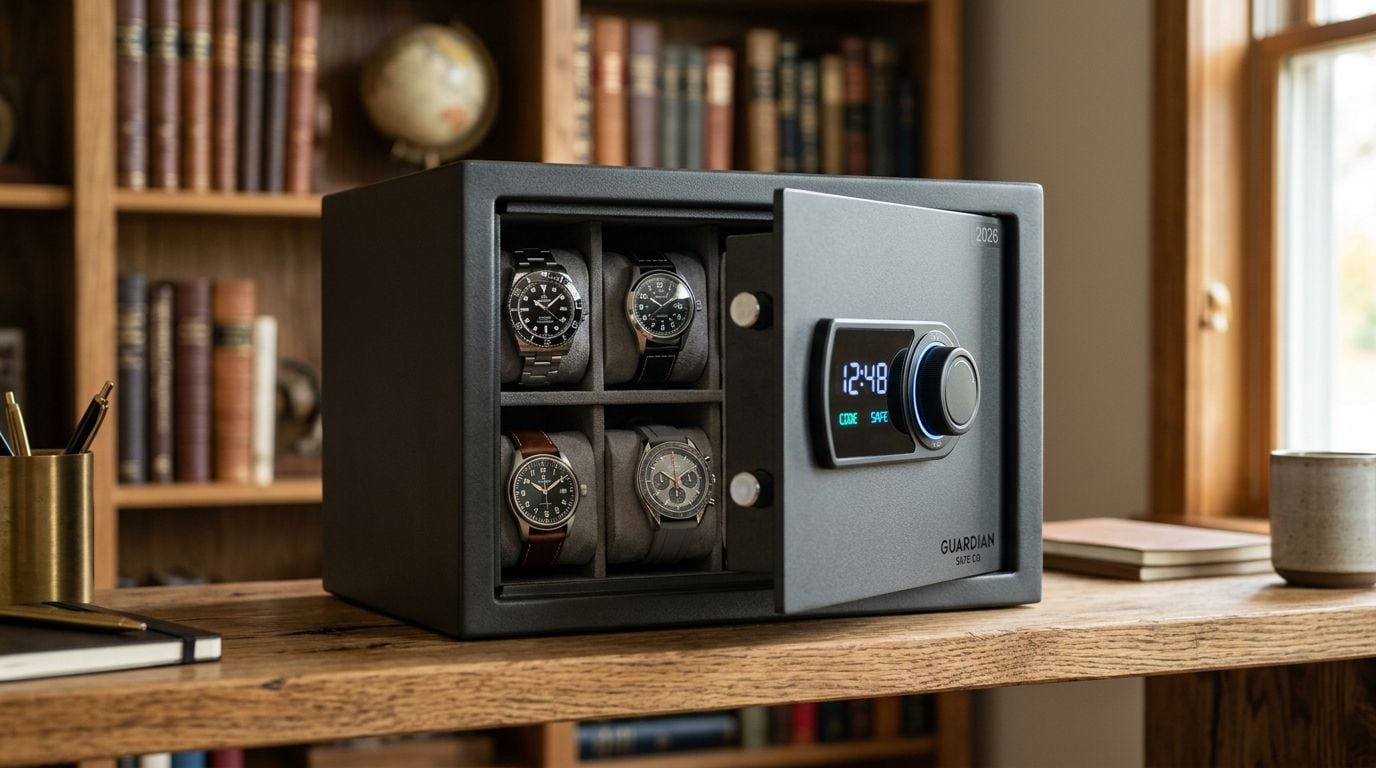
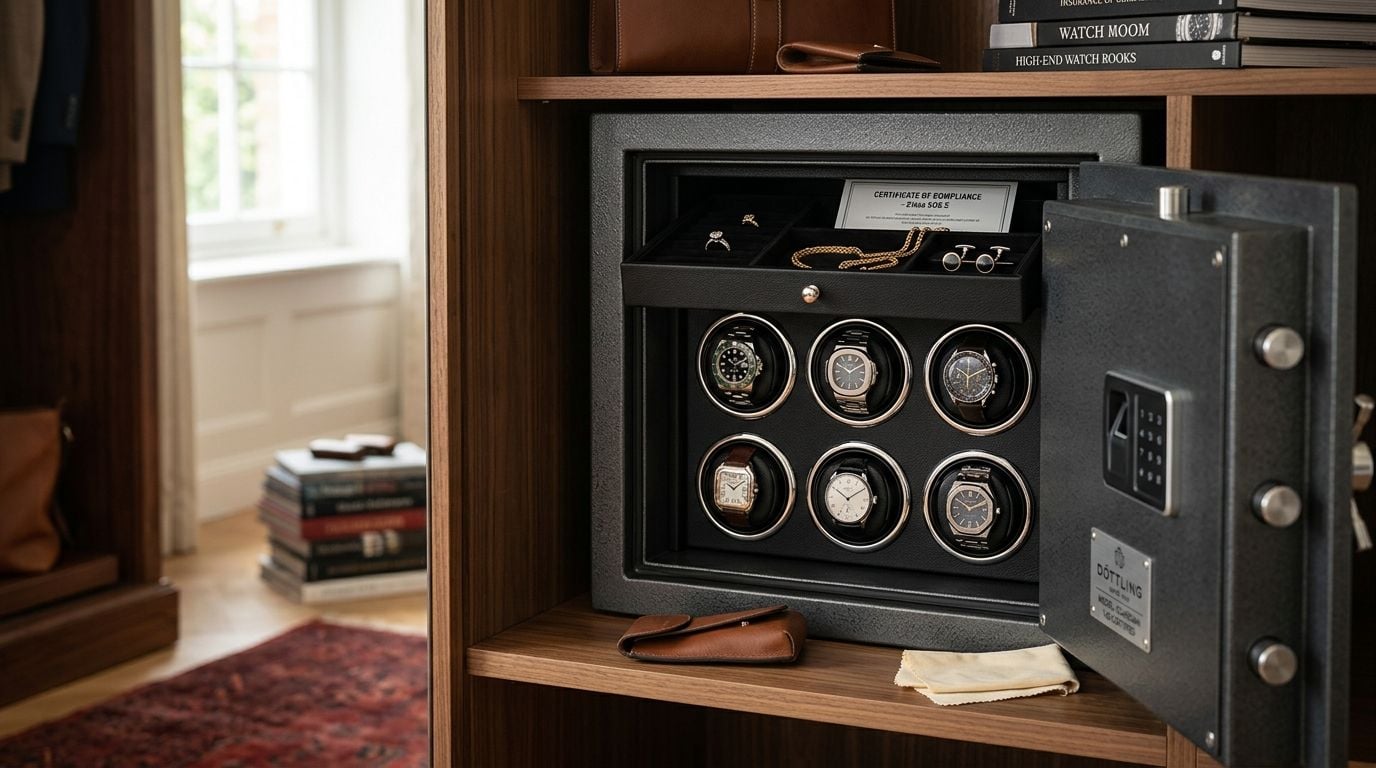
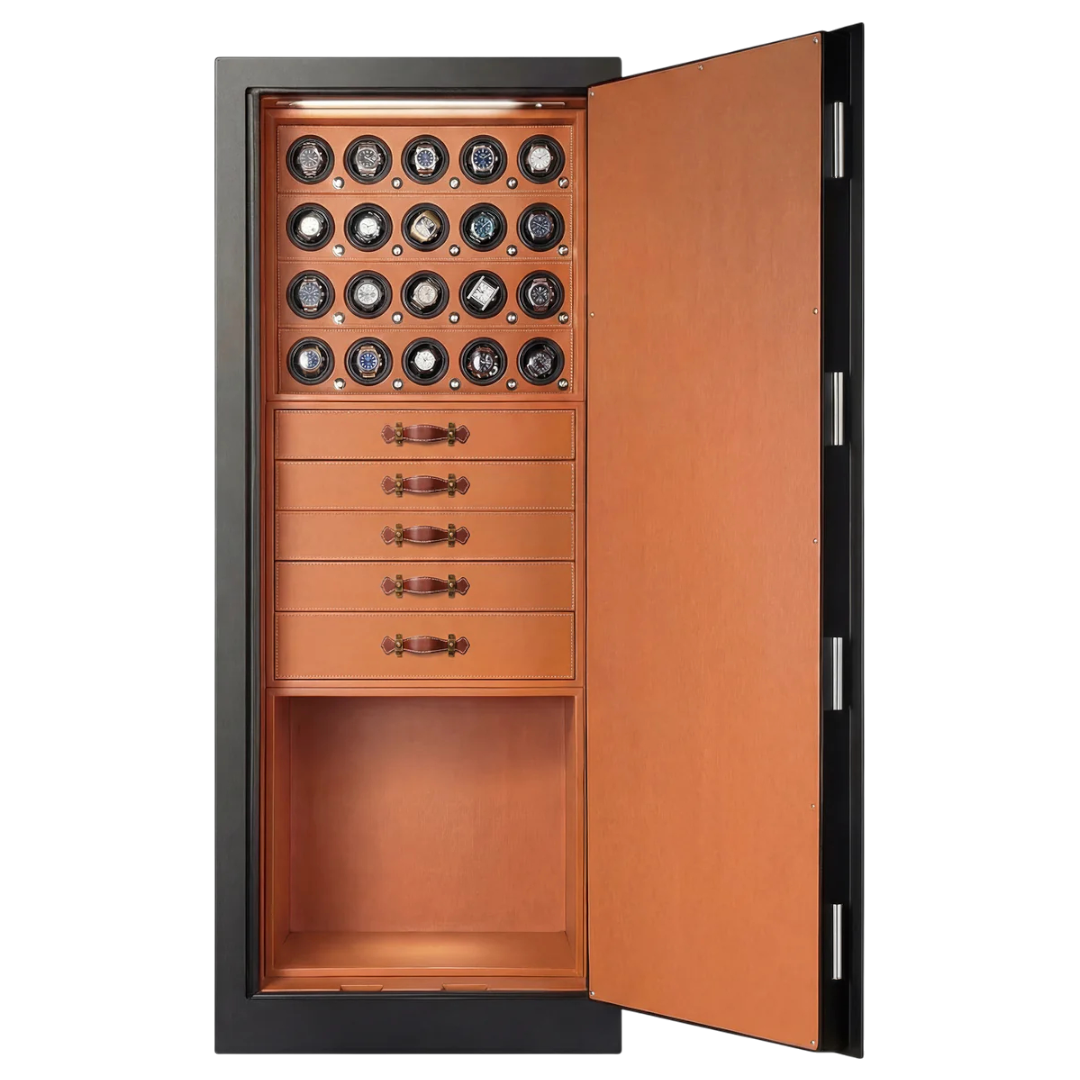
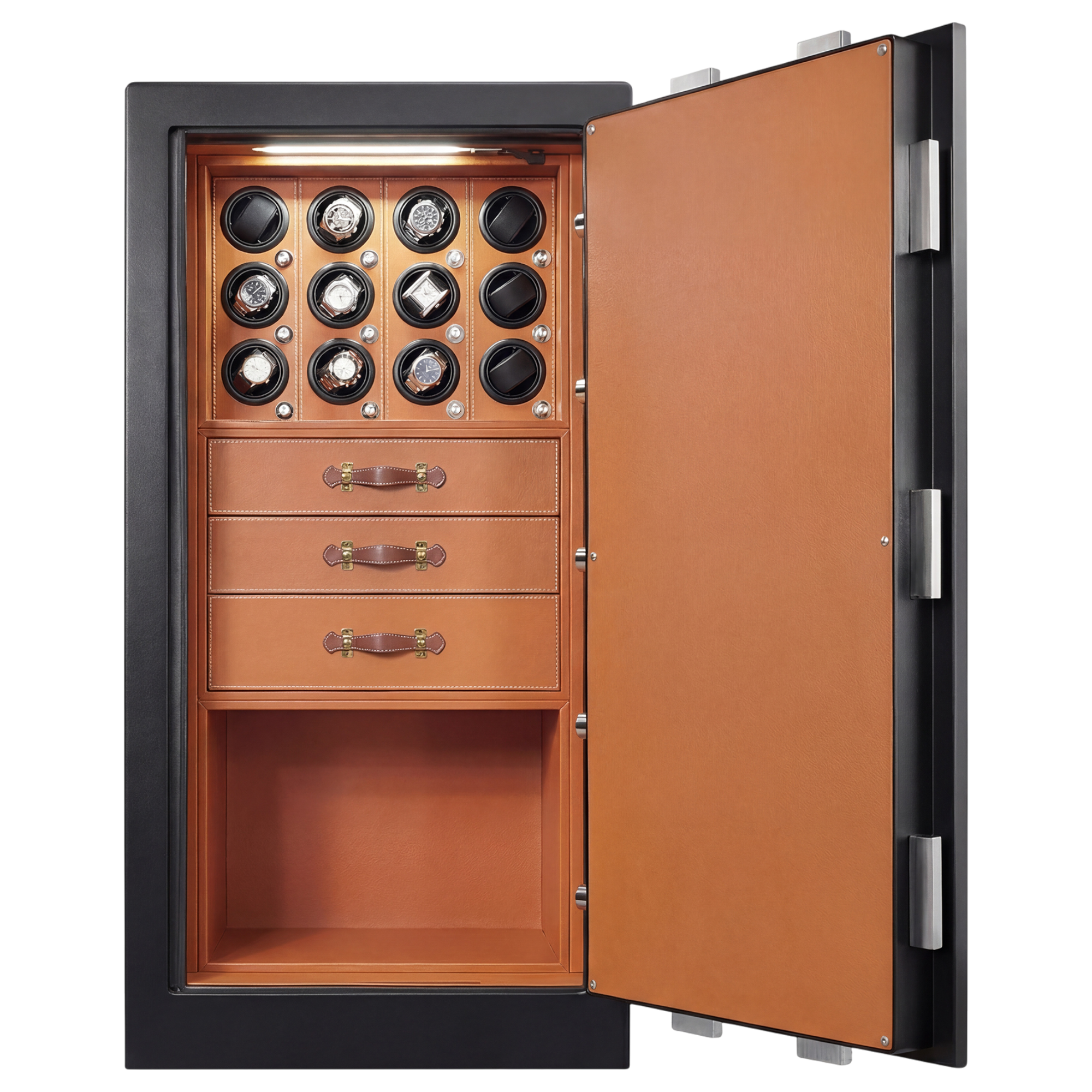
Commercial TL-30 or TL-60 certified vault room or safe. Biometric access. Climate-controlled interior. Structural floor anchoring. This is the primary storage for grails, investment pieces, and long-term holdings.
Through the Custom Safes program, this is typically a 4×6 foot vault body with fitted interior compartments for 40 to 60 pieces.
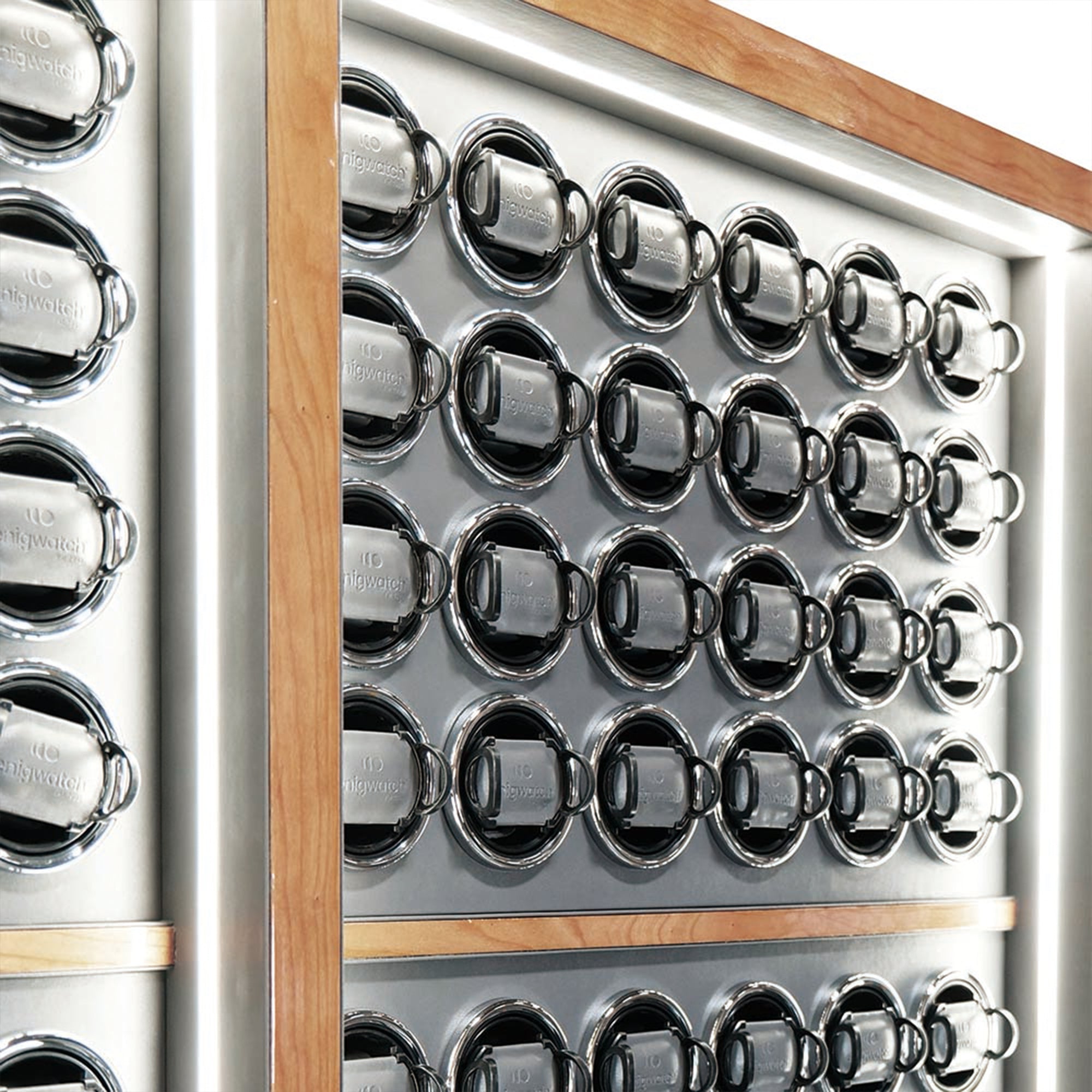
Zone 2: Active Rotation (15 to 25 watches)
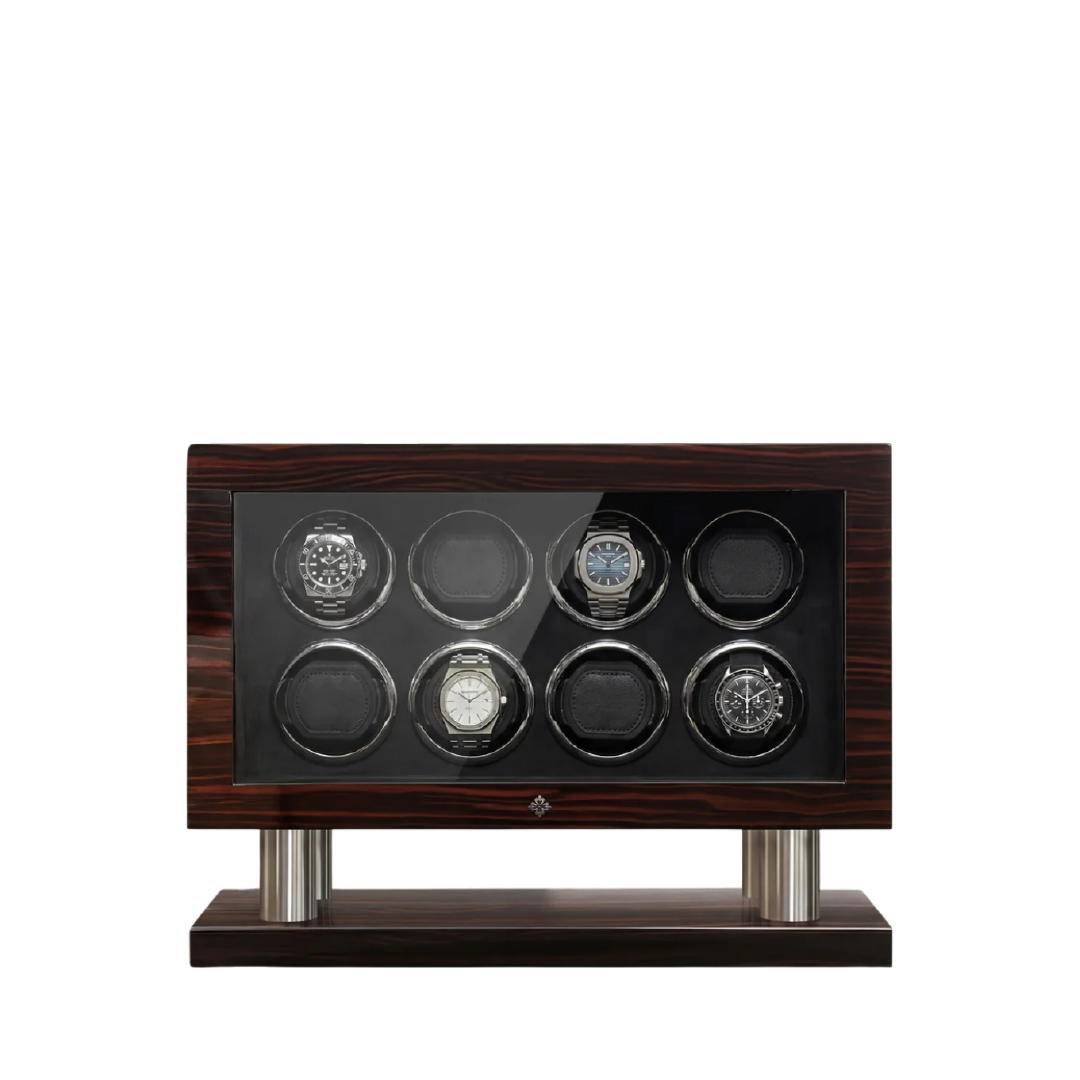
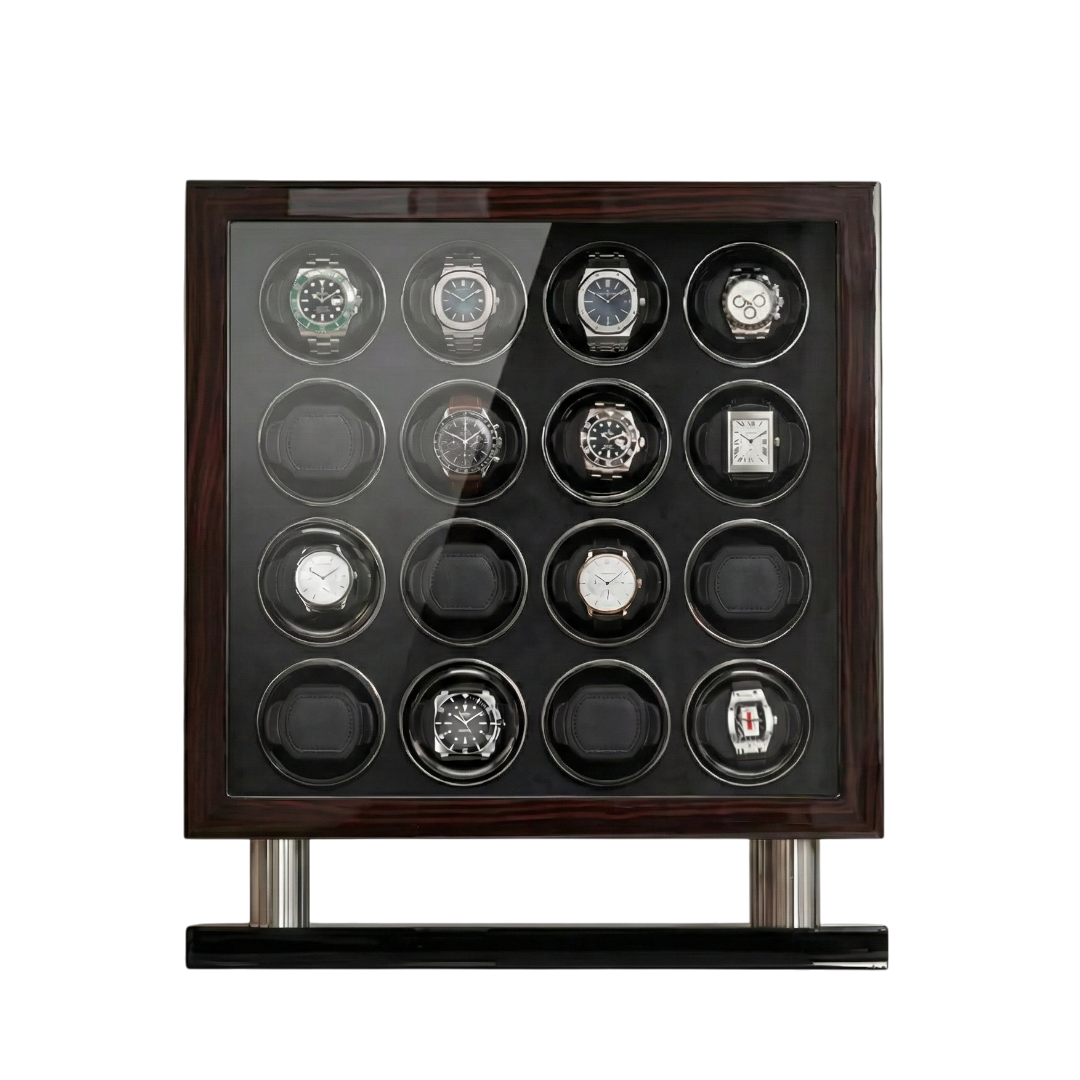
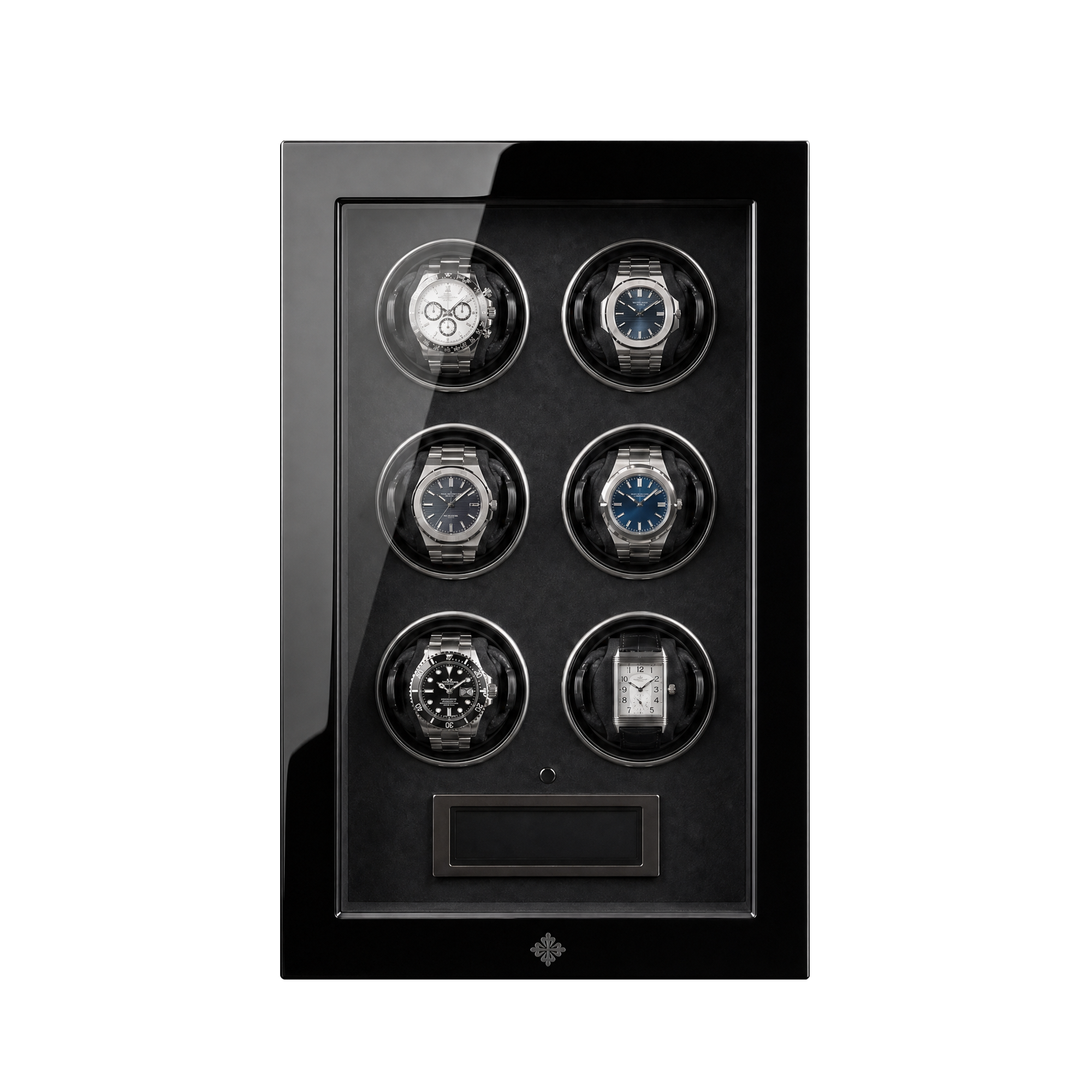
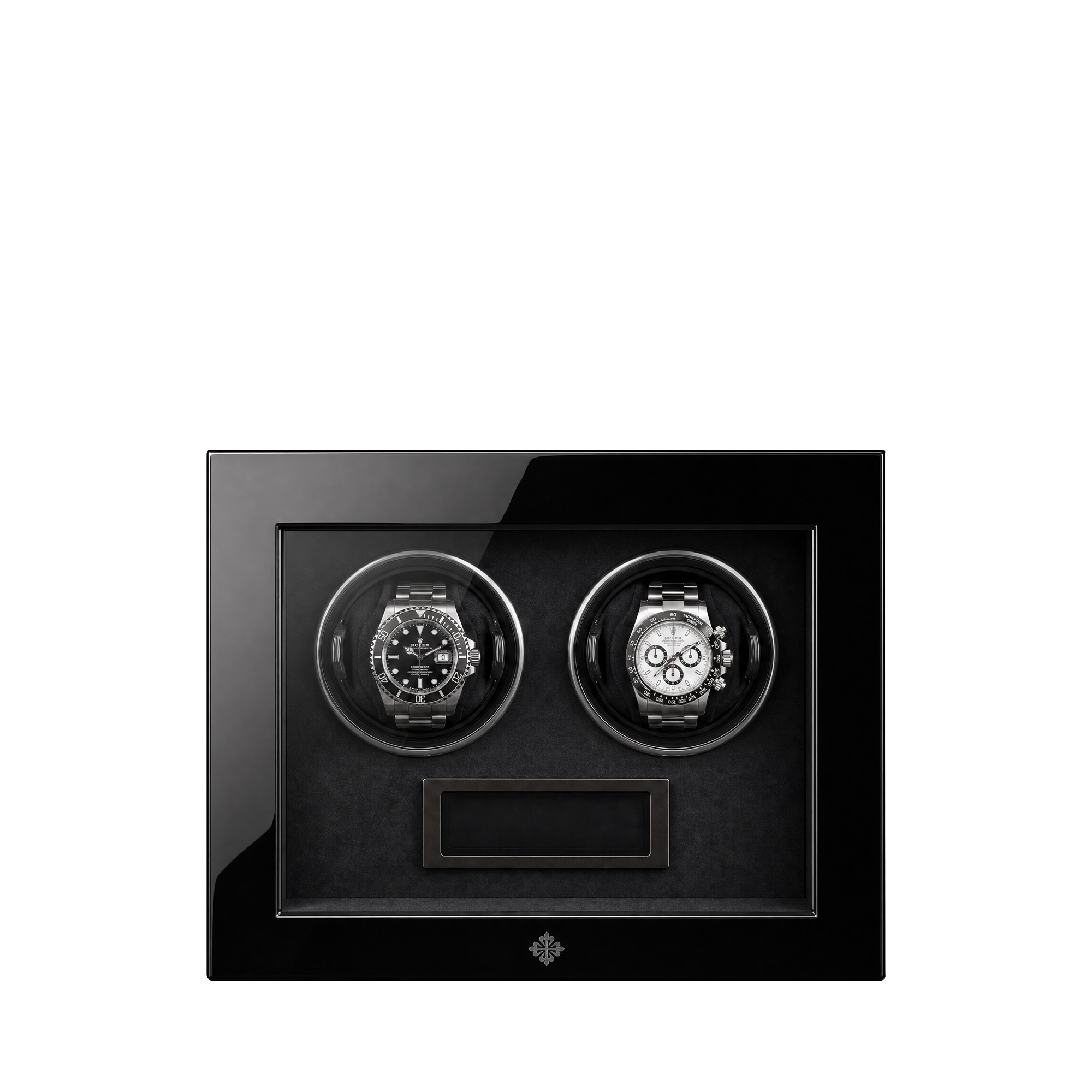
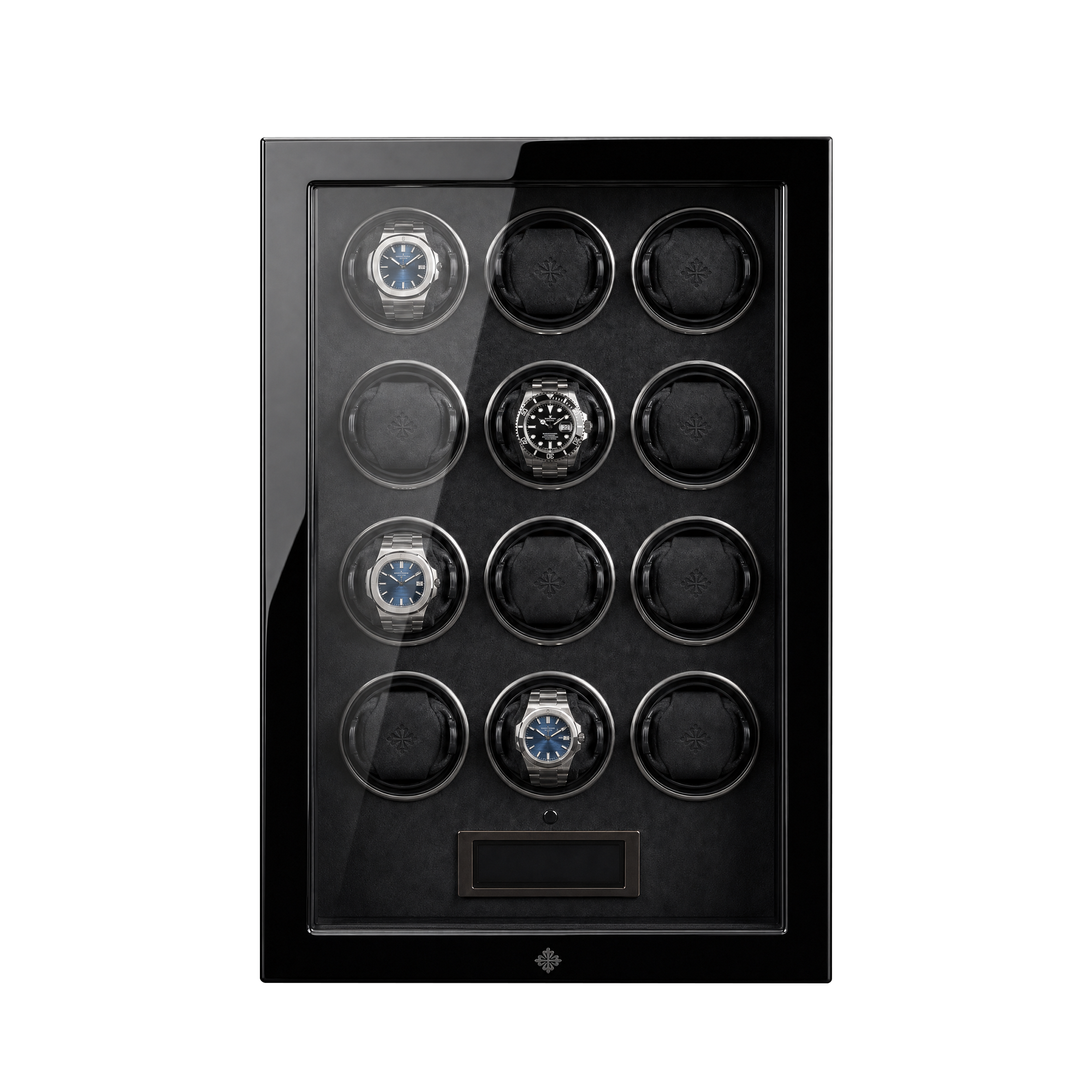
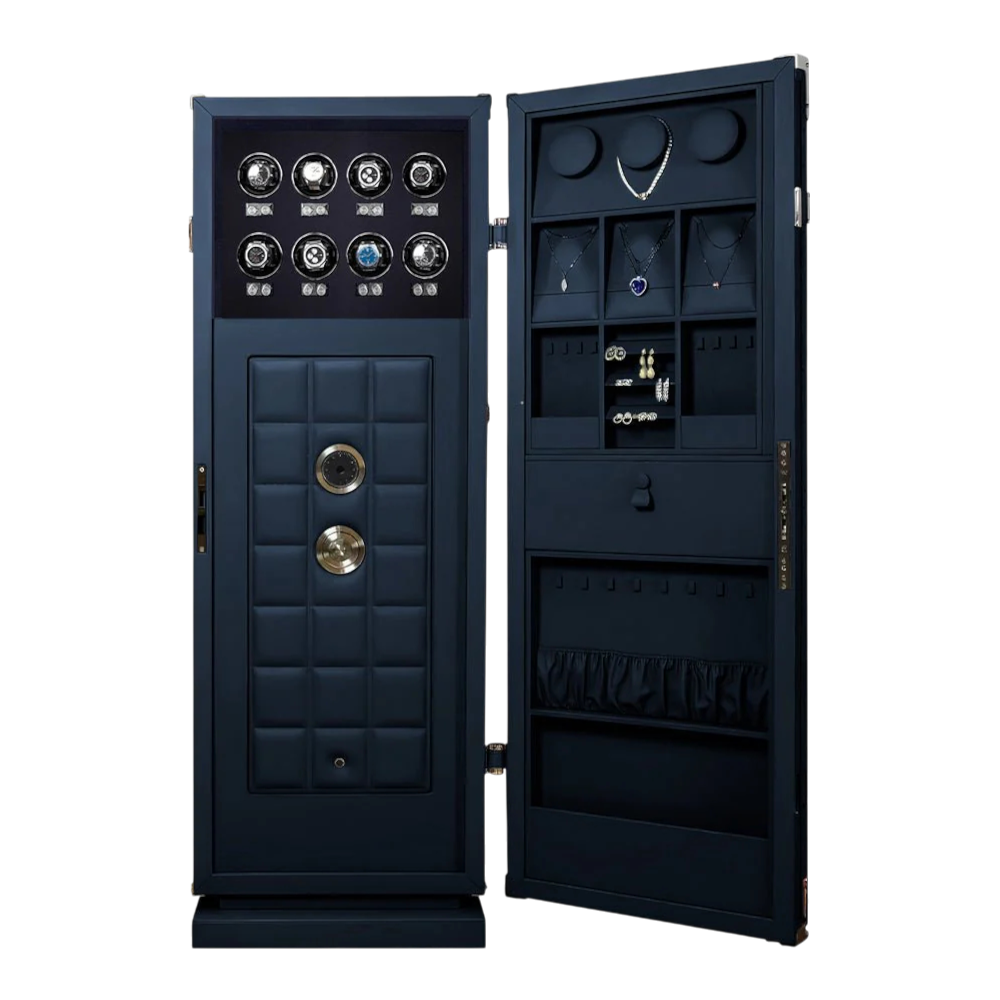
Dedicated winder bank handling the active rotation. Usually cabinet-integrated. The Eterna cabinets or custom bespoke builds hold 16 to 32 rotors.
Zone 3: Display and Occasional Access (10 to 15 watches)
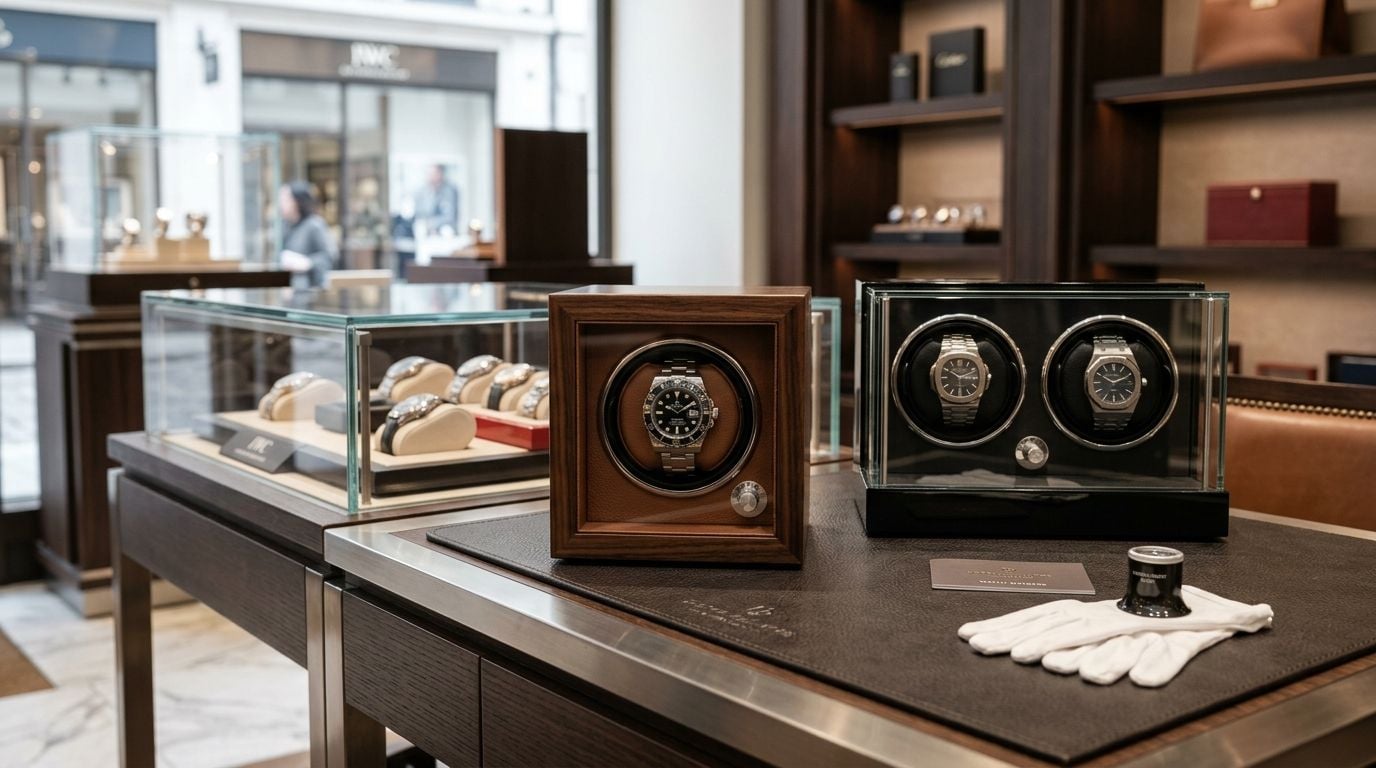
Locked display cabinet with glass-front viewing. The collection’s “face” — what the owner and visitors see. Pieces rotate through this zone based on what’s currently getting attention.
The Macassar Ebony 20 or bespoke equivalents handle this role with cabinet-grade finish and integrated security.
Zone 4: Workspace and Documentation
Every 100-watch collection needs a workspace. Photography setup, handling table, service preparation area, and paperwork storage. Typically 40 to 80 square feet of the total room.
Security at This Scale
| Layer | Specification |
|---|---|
| Primary vault | UL TL-30 or TL-60 minimum |
| Room structure | Reinforced walls, solid-core doors |
| Access control | Biometric room entry + vault entry |
| Alarm integration | Monitored 24/7 with silent signaling |
| Camera coverage | Multiple angles, off-site recording |
| Bolt-down | All safes anchored to structural concrete |
| Fire suppression | Gas-based suppression preferred over water |
Climate and Environment
Room-level climate control with redundancy. Target specs.
- Temperature: 65 to 72F (18 to 22C), +/- 2 degrees
- Humidity: 45 to 55 percent, +/- 3 percent
- Air filtration: HEPA-grade
- Positive air pressure to prevent dust infiltration
- UV shielding on all windows if present
- Data logging with out-of-range alerts
Budget and Timeline
| Scope | Budget | Timeline |
|---|---|---|
| Basic: Multi-safe setup in existing closet | $100K to $250K | 3 to 4 months |
| Mid: Dedicated room with custom vault | $250K to $600K | 6 to 9 months |
| Premium: Custom vault + architect-designed room | $600K to $1.5M | 9 to 18 months |
| Bespoke: Museum-grade build | $1.5M+ | 12 to 24 months |
Documentation as a System
100-watch collections require formal documentation management.
- Full appraisal with high-resolution photos, updated every 18 months
- Collection management database or app (Collectible, Smartstamp, custom)
- Chain of custody for each piece
- Service history per watch
- Acquisition paperwork and provenance
- Insurance schedule matching the current collection
Staffing and Services
Some 100-watch collectors work with.
- A watch curator or consultant for acquisitions and curation
- Specialty insurance brokers who understand the category
- Dedicated watchmakers or service partners
- Security consultants for room design and system integration
The cost of these services is typical relative to collection value and claims on the owner’s time.
Frequently Asked Questions
Can I manage a 100-watch collection without professional services?
Possible but time-consuming. Most collectors at this scale use at least a specialty insurance broker and a dedicated service watchmaker.
Is a custom vault always worth the cost?
Above 60 to 80 watches, yes. Below that, multiple catalog safes can work.
How long does a custom build take?
6 to 18 months depending on scope. Architectural integration and permitting add time.
Should I plan for growth beyond 100?
Yes. Most serious collectors continue acquiring. Build in 30 to 50 percent extra capacity.
Do I need a dedicated HVAC system for the room?
Highly recommended. Climate stability across seasons is easier with dedicated equipment than shared home HVAC.
Is a 100-watch collection insurable?
Yes, through specialty policies. Underwriting review is more detailed than smaller collections but coverage is available.
What about estate planning and heirs?
100-watch collections require formal estate planning. Documentation, appraisal, and liquidity provisions become family-office territory.
Start With the Vault Specification
Before anything else, specify the main vault. That determines room size, structural requirements, climate capacity, and security design. The Custom Safes program handles this specification from first conversation through installation.
Related reading: 50-watch collection storage, building a watch room, insuring a watch collection.
Protect Your Watch Collection
Designed for collectors who demand the best. Explore our premium watch winders and luxury safes.
Protect Your Watch Collection
Designed for collectors who demand the best. Explore our premium watch winders and luxury safes.