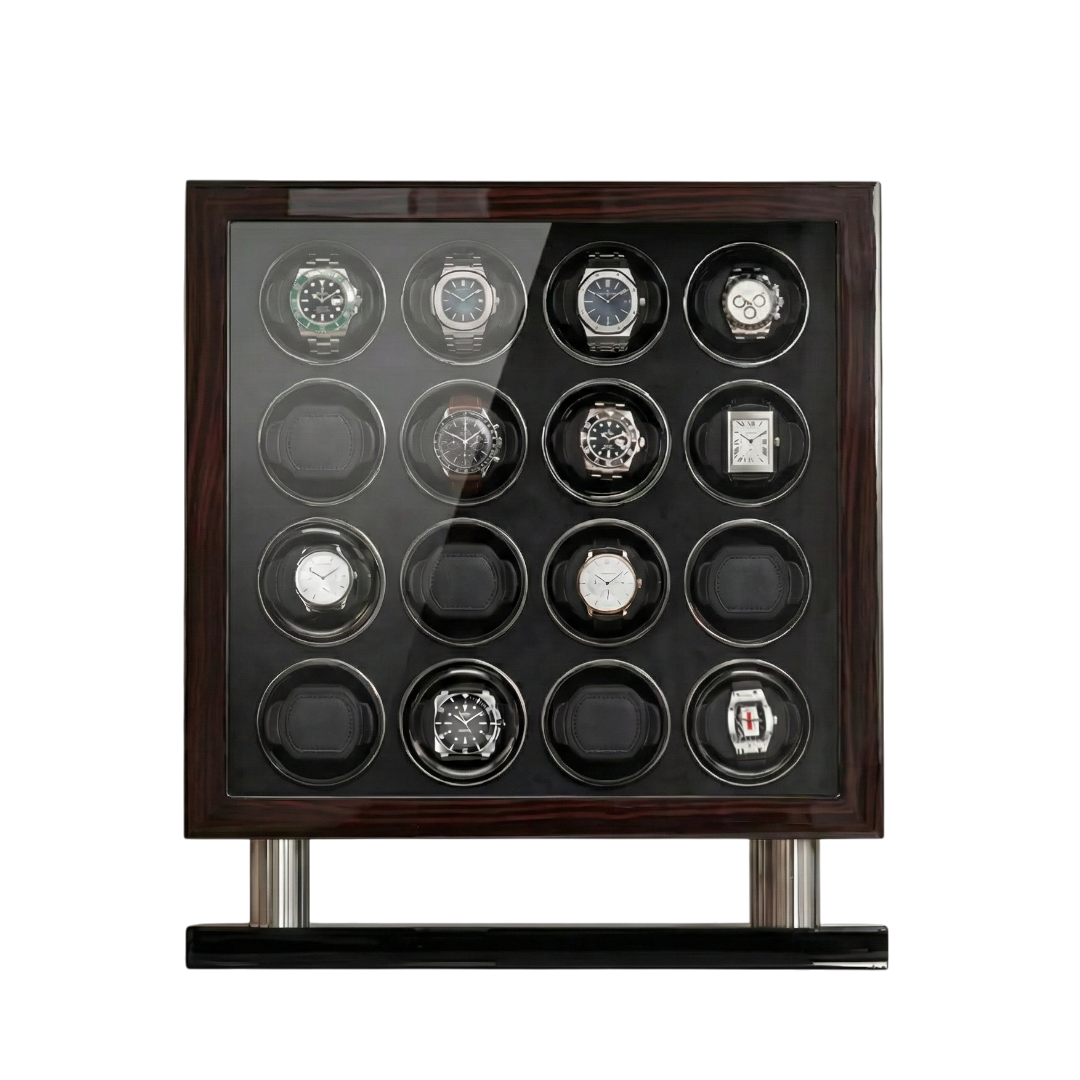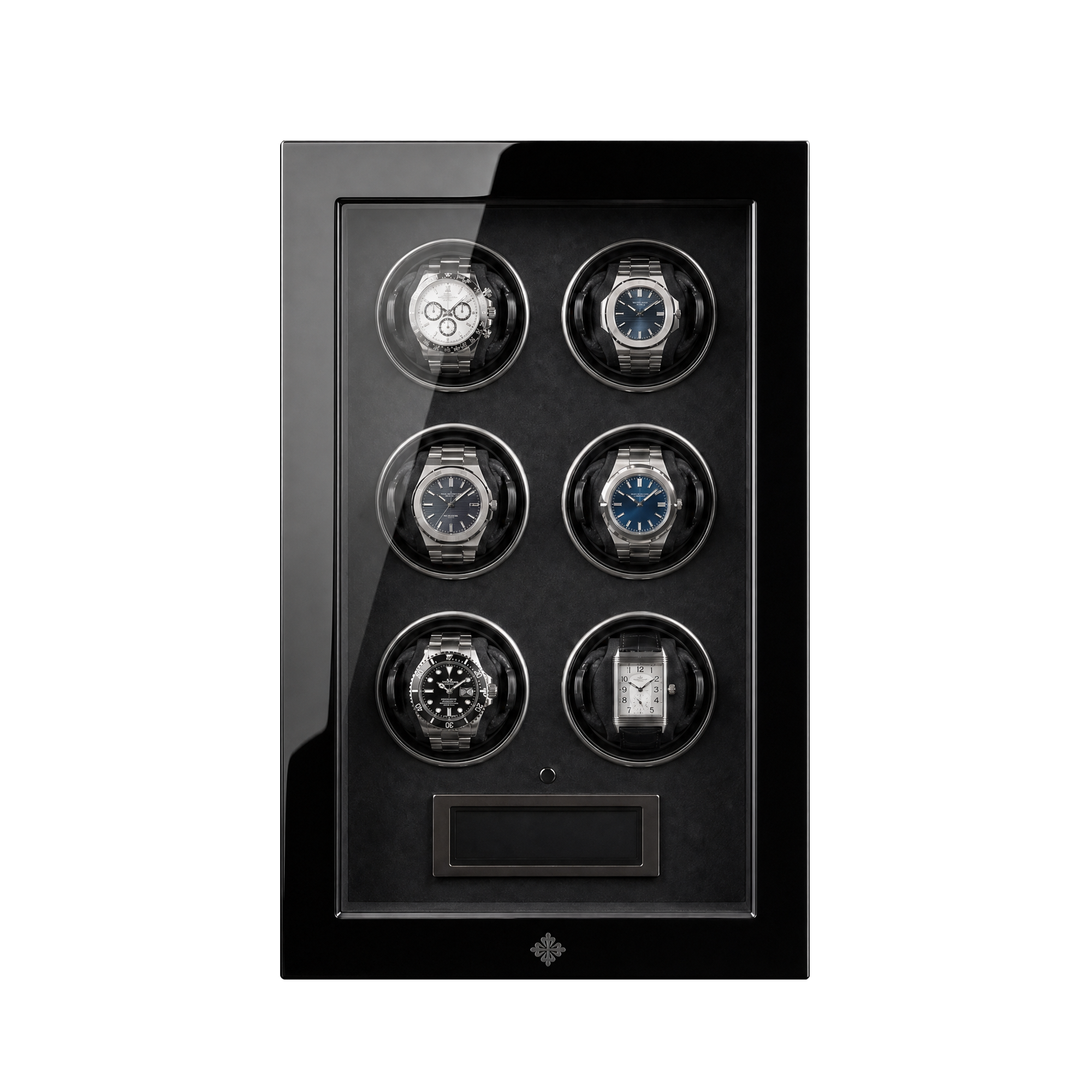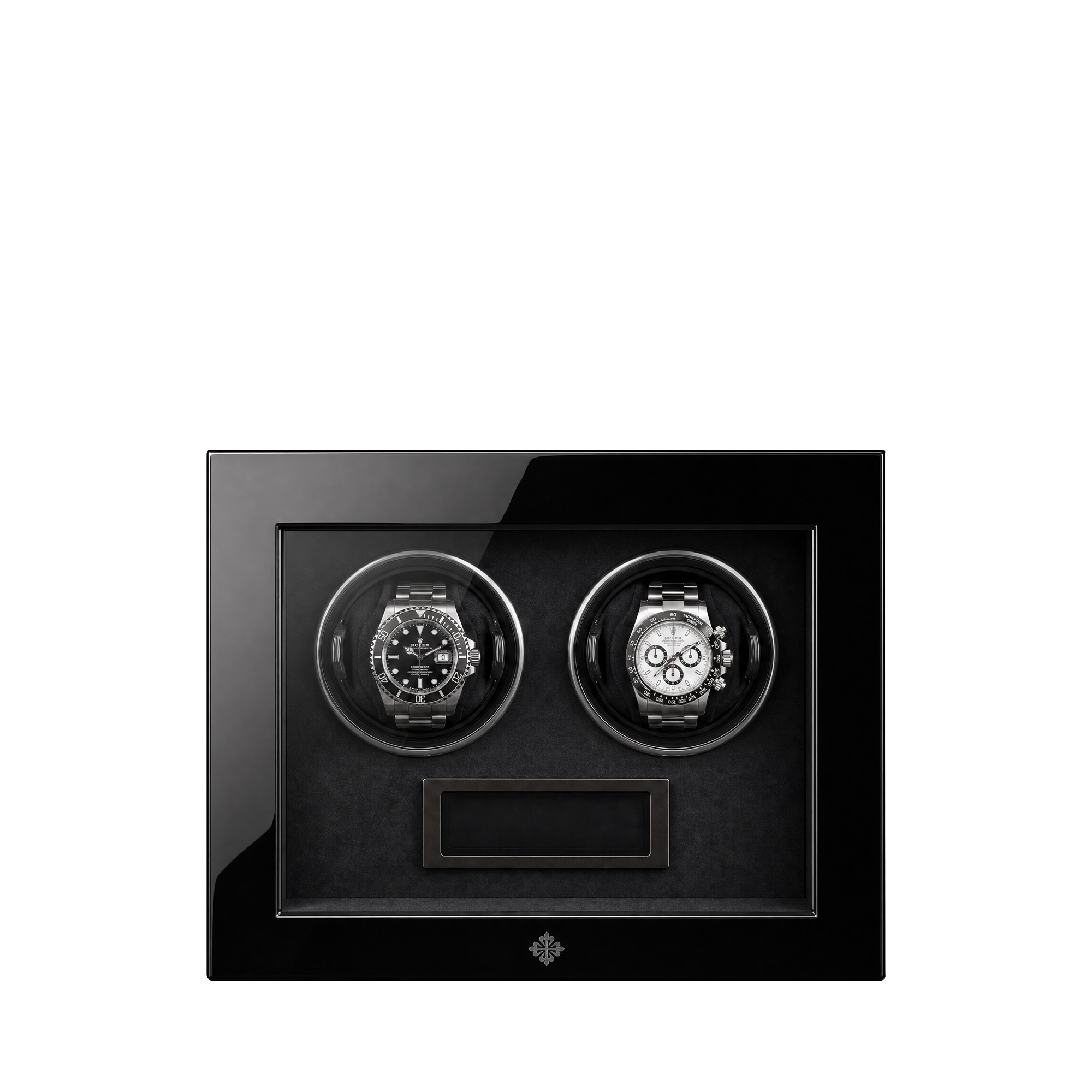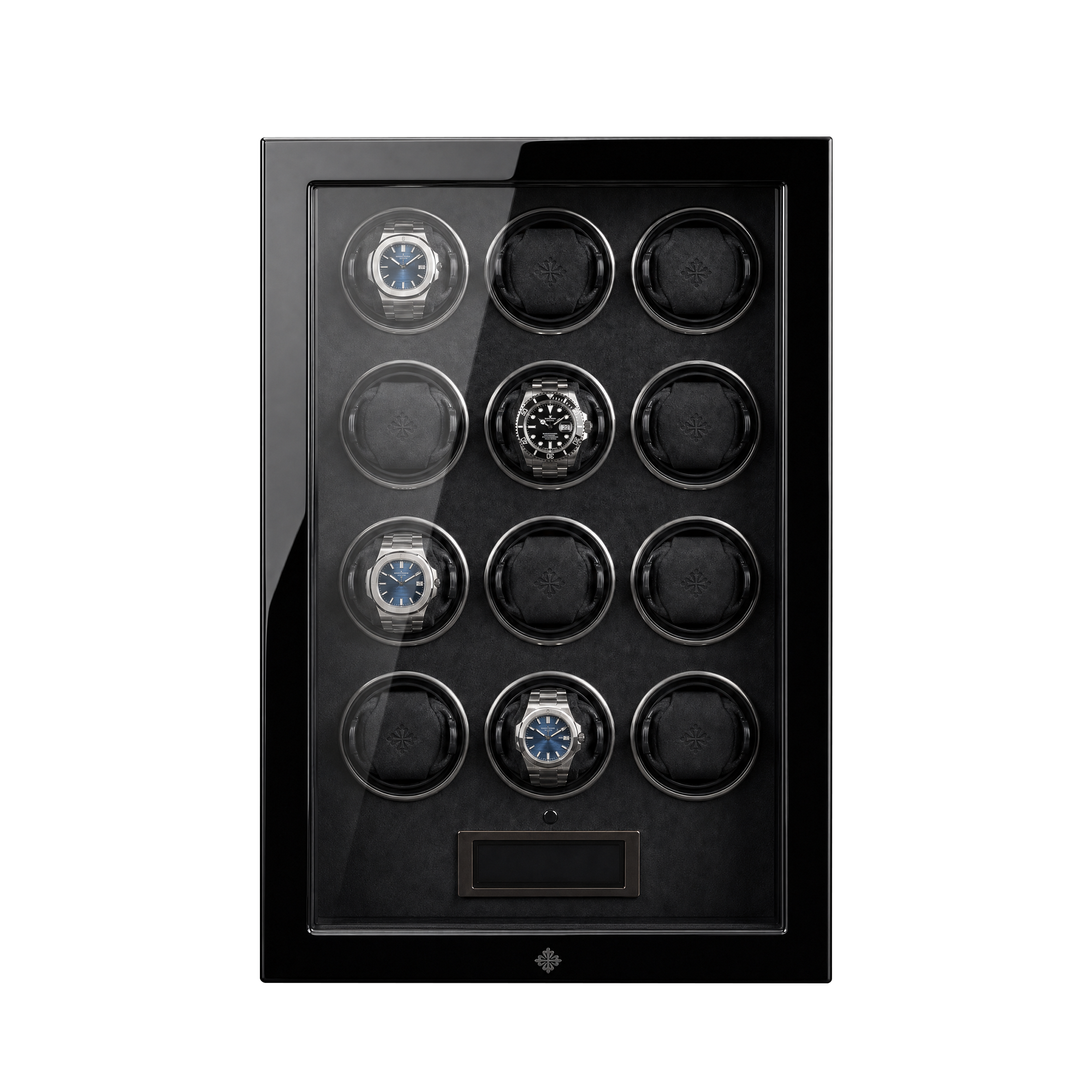

Sizing a watch safe wrong is the single most common mistake collectors make, and it’s an expensive one to fix once the unit is bolted to a stud. This guide walks through the math, the buffer you need for growth, and the exact slot counts that make sense for a 6, 12, or 20-watch collection in 2026.
TL;DR
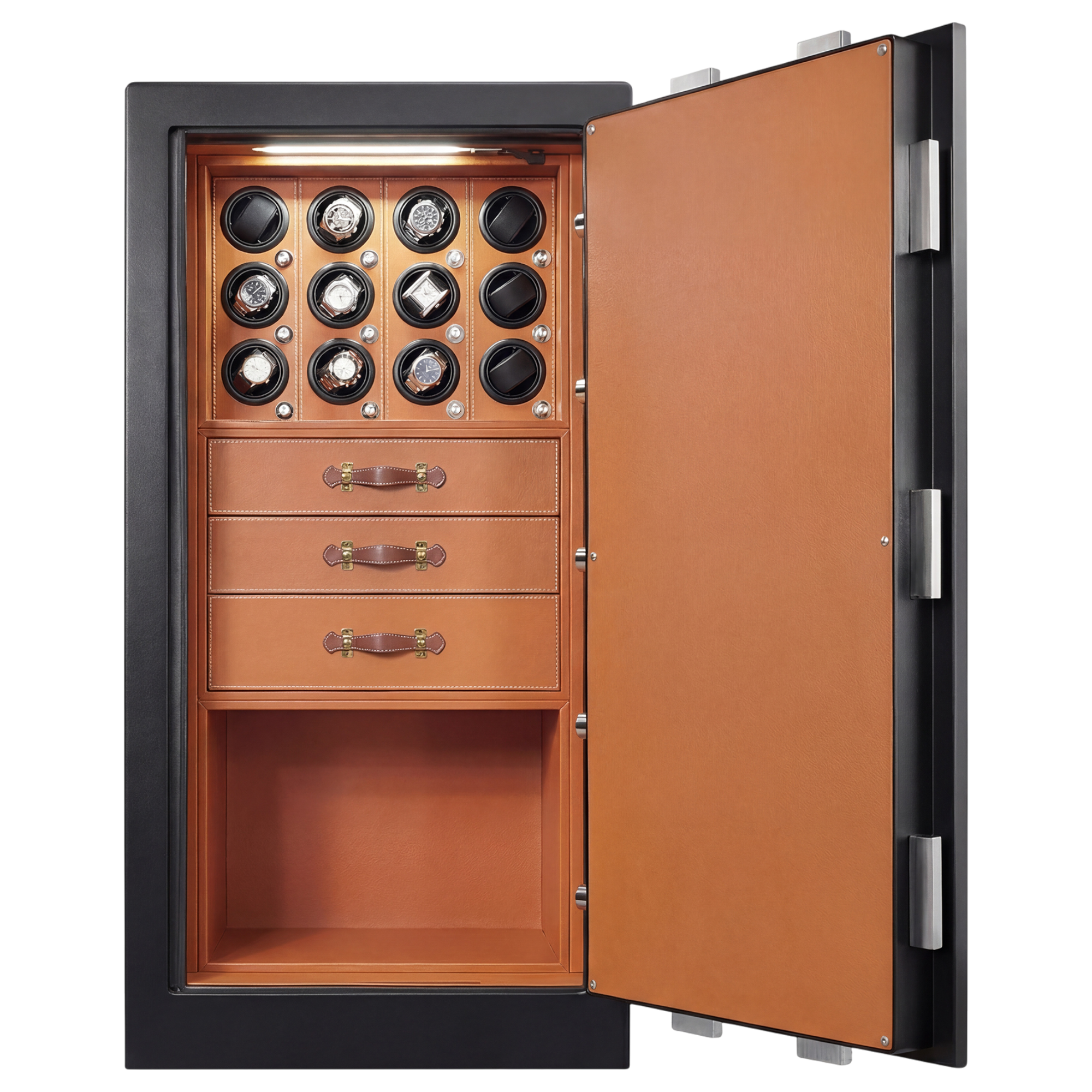
Count your current watches, add 30-50% for growth, then match that number to a safe’s slot count rather than its cubic footage. A 12-watch collection needs a 16-20 slot safe like the Apollo watch safe box to leave room, not a 12-slot unit that’s full on day one. Verdict: buy one size class above your current count, every time. Enigwatch builds safes from 6 to 20+ slots specifically because collectors outgrow their storage faster than they expect.
Why this matters
Most people size a watch safe the way they’d size a suitcase: to fit what they own right now. That’s backwards. A collection that grows by even two watches a year turns a snug 12-slot safe into a waiting list within 18 months, and by then the safe is already bolted into a closet or mounted to a wall.
The other failure mode is buying too big. A 20-slot safe in a one-bedroom apartment eats floor space nobody asked for, and half the slots sit empty for years while humidity control and winder motors run at full draw regardless of load. Size is a function of three things: current count, realistic growth rate, and where the safe physically lives.
What you’ll need
- An accurate count of your current watches, including ones in a drawer or safety deposit box
- A rough sense of acquisition pace over the last 2-3 years (one watch a year is different from four)
- Measured space where the safe will sit or be mounted – closet shelf, wall stud location, or floor footprint
- A tape measure and a note of ceiling height if the unit will be wall-mounted
- Knowledge of whether you want winding slots, static storage, or a mix of both
The steps
1. Count what you actually own
Pull every watch out of drawers, boxes, and safety deposit boxes and count them in one sitting. Collectors routinely undercount by 2-3 pieces because watches get scattered across a dresser, a travel case, and a bank box.
This number is your floor, not your target. If you land on 9 watches, you’re not shopping for a 9-slot safe – you’re shopping for the next size class up.
Common mistake: counting only watches currently in rotation and forgetting inherited pieces or watches waiting for service.
2. Calculate your growth buffer
Look at how many watches you’ve added in the past 24-36 months and divide that by the number of years to get an annual rate. If you’ve added 4 watches in 3 years, that’s roughly 1.3 per year.
Multiply your current count by 1.3 to 1.5 to get a 3-5 year target. A collector with 12 watches today and a modest acquisition pace should plan for 16-18 slots, not 12.
Why it matters: safes aren’t swapped out casually once installed – many are bolted to a wall stud or built into a closet, so resizing means a second purchase and a second installation.
3. Match slot count to collection size, not cubic inches
Skip the temptation to shop by exterior dimensions. Two safes can both measure 24 inches wide and hold completely different numbers of watches depending on interior tray design and whether slots are winding modules or static compartments.
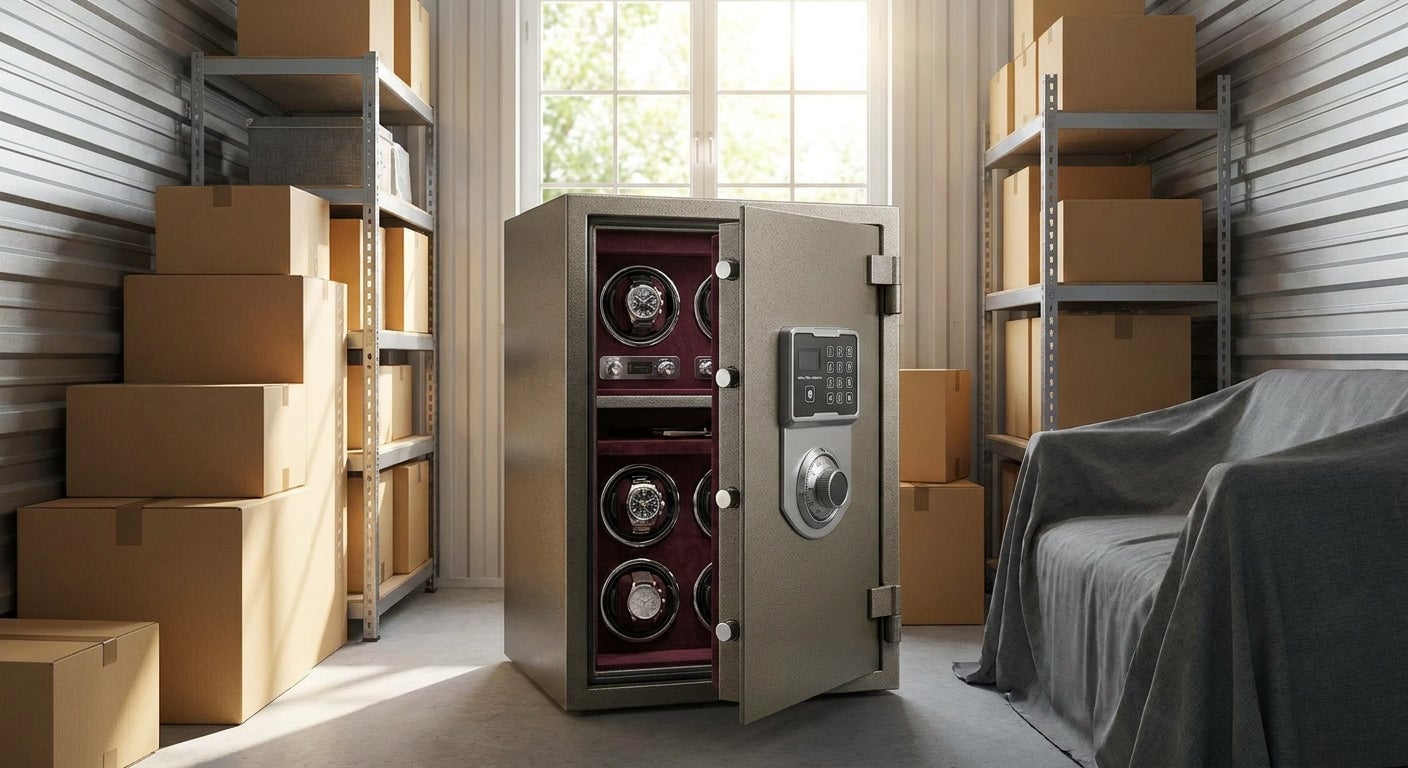
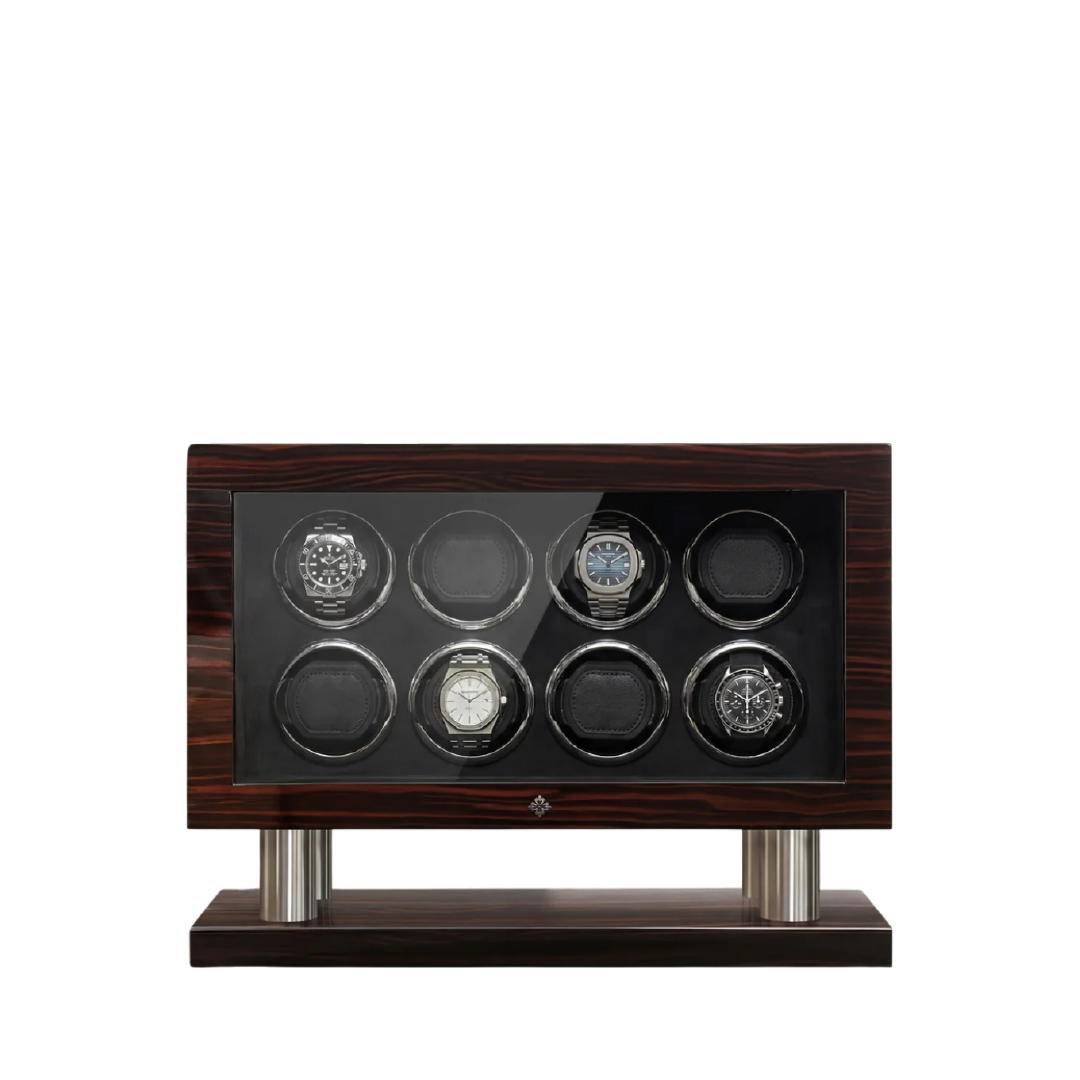
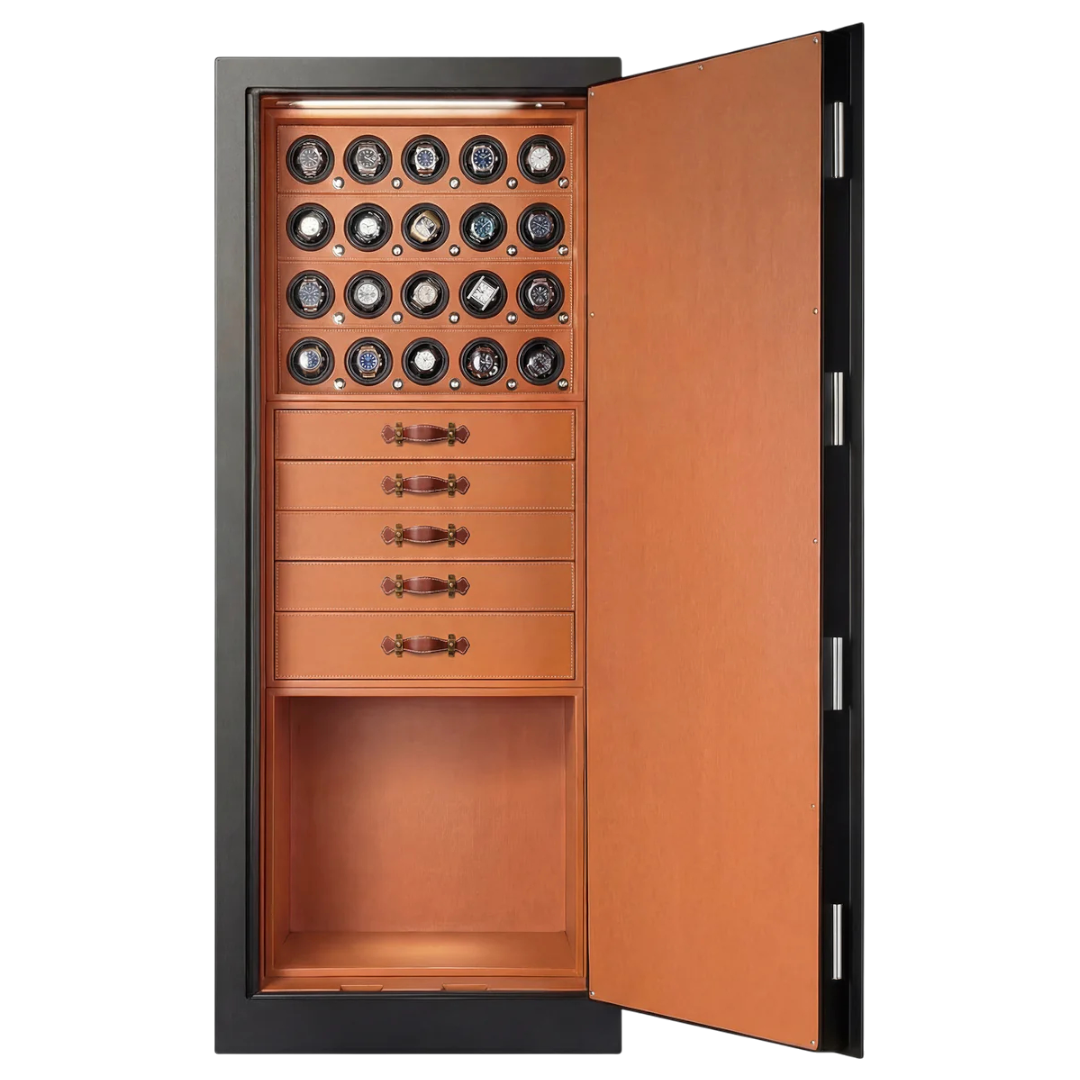
For a 6-8 watch collection, a compact safe in the 8-12 slot range gives working headroom. For 10-12 watches, look at 16-20 slot models like the Apollo. For 20+ pieces, the math shifts to dedicated large-format safes or a Centennial Bulletproof watch safe box, which is built for serious accumulation rather than a starter collection.
4. Decide winding slots vs. static storage
Not every watch needs a winder running. Automatics you wear weekly can sit in static slots; pieces you rotate less often benefit from a winder slot that keeps the movement lubricated and the date function accurate.
A practical split for a 12-piece collection is 4-6 winding slots and the rest static. Buying a safe that’s 100% winding capacity when you only actively rotate a third of your collection wastes motor life and money.
Common mistake: assuming every slot needs to wind. It doesn’t, and running motors on watches you never wear adds unnecessary wear to the movement.
5. Measure the install location before you order
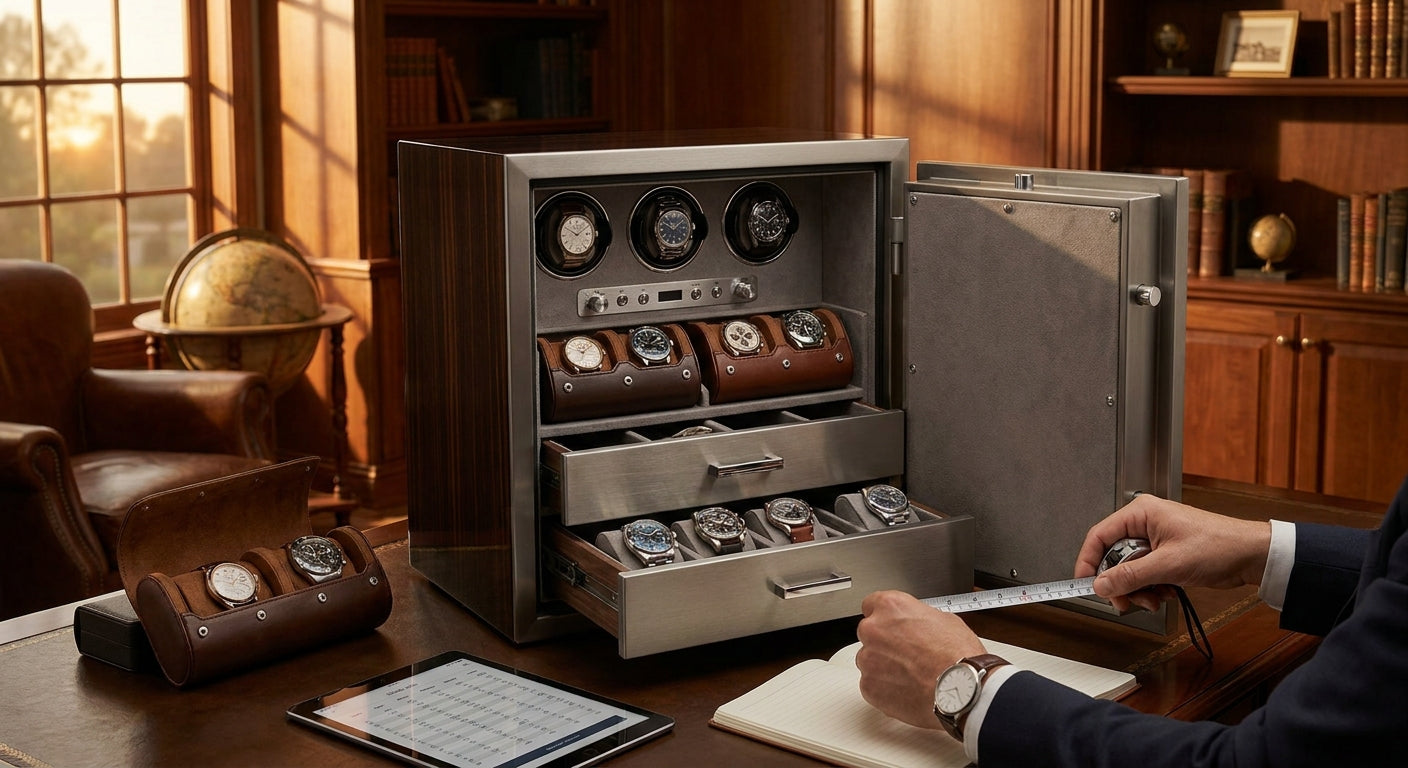
A wall-mounted watch safe needs verified stud spacing, typically 16 inches on center in US residential construction, and clearance for the door swing plus any biometric panel. A floor-standing cabinet needs a footprint check against the room, not just the closet shelf.
Order the tape measure out before the safe, not after. Returns on a 200+ lb steel safe are a logistics headache neither you nor Enigwatch wants to deal with in 2026.
Expected outcome: you know the exact model width, depth, and mounting method that will physically work before checkout, which eliminates the single biggest source of post-purchase regret.
6. Cross-check against your largest single watch
If your collection includes anything oversized – a diver with a 45mm case, a chronograph on a thick leather strap – measure it against the interior slot depth. Slots sized for average automatics can feel tight for oversized sport watches.
A Veron 20 watch safe box accommodates a broader range of case sizes than compact 6-8 slot units, which matters if even one or two pieces in your rotation run large.
7. Confirm humidity and security needs match the slot count
Bigger safes intended for 20+ watches generally carry more robust locking mechanisms and, in some models, humidity regulation – features that matter more as total collection value climbs. A collector storing 6 watches worth a combined $30,000 has different security math than one storing 20 pieces worth $400,000+.
Size the security tier to the value at risk, not just the slot count. This is the step people skip when they’re focused purely on “how many watches fit.”
Troubleshooting
Problem: the safe I bought is already full. You undercounted your growth rate in step 2. Options are a second complementary safe or trading up – either way, budget for the next size class rather than repeating the same mistake.
Problem: half my slots sit empty and it looks sparse. You oversized for a collection that isn’t growing as fast as projected. Not a functional problem, but if it bothers you aesthetically, a smaller companion piece for daily-wear pieces can balance the look.
Problem: my largest watch doesn’t fit comfortably in the slot. Check slot depth specs before ordering next time. Oversized case watches (44mm+) need models specifically rated for larger diameters.
Problem: the safe won’t fit through the door or up the stairs. Exterior dimensions on 20-slot and larger safes can exceed 30 inches in one direction. Measure doorways and stairwells, not just the destination room, before the unit ships.
Problem: I need winding and static storage but the model I picked is all-winder. This is a common oversight when shopping by slot count alone. Confirm the winder-to-static ratio on the spec sheet before you commit, not after installation.
Tools and resources
- Tape measure and stud finder for wall-mount planning
- A written inventory list of current watches with case sizes noted
- The Apollo watch safe box for 12-piece collections needing winding and static slots combined
- The Veron 20 watch safe box for larger, growing collections
- A read through watch safe vs. wall safe: which suits watch collectors if you’re still deciding between a dedicated watch safe and a general-purpose security safe
What to do next
Once you’ve settled on a slot count, the next decision is lock type – biometric, combination, or key – and whether the unit needs to be freestanding or wall-mounted. Both decisions depend on where the safe physically lives in your home, so nail down placement before you finalize a model.
FAQ
What size watch safe do I need for 12 watches?
A 12-watch collection is best served by a 16-20 slot safe to allow for growth, not a 12-slot unit that’s already at capacity. Building in that buffer avoids a second purchase within 12-24 months.
Is it better to buy a bigger safe than I need?
Yes, within reason – one size class above your current count is the standard recommendation for 2026 buyers. Going two or three sizes up wastes space and money without meaningful benefit.
How many watches fit in a 20-slot safe?
A 20-slot safe fits 20 watches at capacity, but practical use means keeping 2-4 slots open for growth or rotation, so treat it as an 16-18 watch safe in daily use.
Do all slots need to be winding slots?
No. Most collectors only actively rotate 30-50% of their collection at any time, so a mix of winding and static slots is more efficient than an all-winder configuration.
What’s the difference between a watch safe and a watch box?
A watch safe includes a locking mechanism and often a fire or impact rating, while a watch box is decorative storage without security features. Collections with meaningful resale value warrant a safe, not a box.
How do I know if my safe needs wall mounting?
Any safe over roughly 150 lbs or holding a collection worth more than $50,000 benefits from stud-mounting or bolt-down installation to prevent it from being carried out during a break-in.
Can I upgrade slot count later without buying a new safe?
No. Slot count is fixed at manufacture, which is exactly why sizing up front matters more than most first-time buyers expect.
What’s the most common sizing mistake collectors make?
Buying to fit the current collection exactly, with zero buffer for the next 2-3 years of acquisitions. That mistake alone accounts for most of the “I need a second safe already” situations collectors report within two years of their first purchase.
One last thing
The growth-rate math in step 2 is the part almost everyone skips, and it’s the one that actually predicts whether you’ll be shopping for a second safe by 2028. Run the numbers before you run the credit card.
Related guides
Protect Your Watch Collection
Designed for collectors who demand the best. Explore our premium watch winders and luxury safes.
Protect Your Watch Collection
Designed for collectors who demand the best. Explore our premium watch winders and luxury safes.