
A watch safe for Patek Philippe and Rolex together is not the same purchase as a safe for either brand alone — the combination demands a standard that satisfies both.
TL;DR: Storing a Patek Philippe and a Rolex in the same watch safe for Patek Philippe and Rolex requires a unit with individual winding modules, biometric or multi-factor access, interior finishes that won’t abrade hand-finished surfaces, and a steel body rated against forced entry. The Enigwatch Veron 12 Watch Safe Box is the most direct answer in 2026 — 12 slots, Japanese Mabuchi motors, Italian Alcantara lining, and a lifetime warranty.
Why This Matters
Patek Philippe and Rolex represent different engineering philosophies, but they share one storage requirement: neither tolerates a careless environment. A Patek Nautilus or Calatrava carries a hand-finished movement that reacts badly to vibration from low-quality motors. A Rolex Submariner or Daytona needs 650–800 turns per day (TPD) in clockwise or bidirectional rotation to stay wound. One safe has to do both jobs without compromise. In 2026, the category of purpose-built luxury watch safes has matured enough that you no longer have to choose between security and winding quality — but you do have to know which criteria separate the right unit from an expensive mistake.
Who This Is For
This guide is written for the collector who owns at least one Patek Philippe and at least one Rolex — two watches whose combined retail value routinely exceeds $50,000 — and who wants a single, permanent home for both. You are not looking for a travel case or a display box. You want a fixed-installation safe with active winding, a locking mechanism that discourages a determined intruder, and an interior that treats a Patek the way Geneva treats a Patek.
What to Look For in a Watch Safe for Patek Philippe and Rolex
Individual Winding Control Per Slot
Patek Philippe calibers — the 240, the 324, the 26-330 — are among the most precisely regulated movements in production. They require 650–800 TPD, bidirectional rotation. Rolex calibers (3235, 4130, 3186) are mechanically tougher and tolerate a wider TPD range, but still benefit from clockwise-primary or bidirectional programs set at 650–900 TPD. A safe that runs all rotors on a single shared program will either under-wind one brand or over-stress the other. Individual motor control per slot is not a luxury feature — it is the minimum specification for a mixed Patek and Rolex collection.
Motor Quality and Vibration Profile
Japanese Mabuchi motors run at under 20 dB and produce no perceptible vibration at rest. Generic DC motors — common in safes priced below $2,000 — transfer micro-vibrations to the movement bridges and can accelerate wear on Patek’s ultra-thin calibers over years of continuous use. Specify a safe with named-motor technology. If the spec sheet does not name the motor manufacturer, that is your answer.
Interior Finish That Protects Hand-Finishing
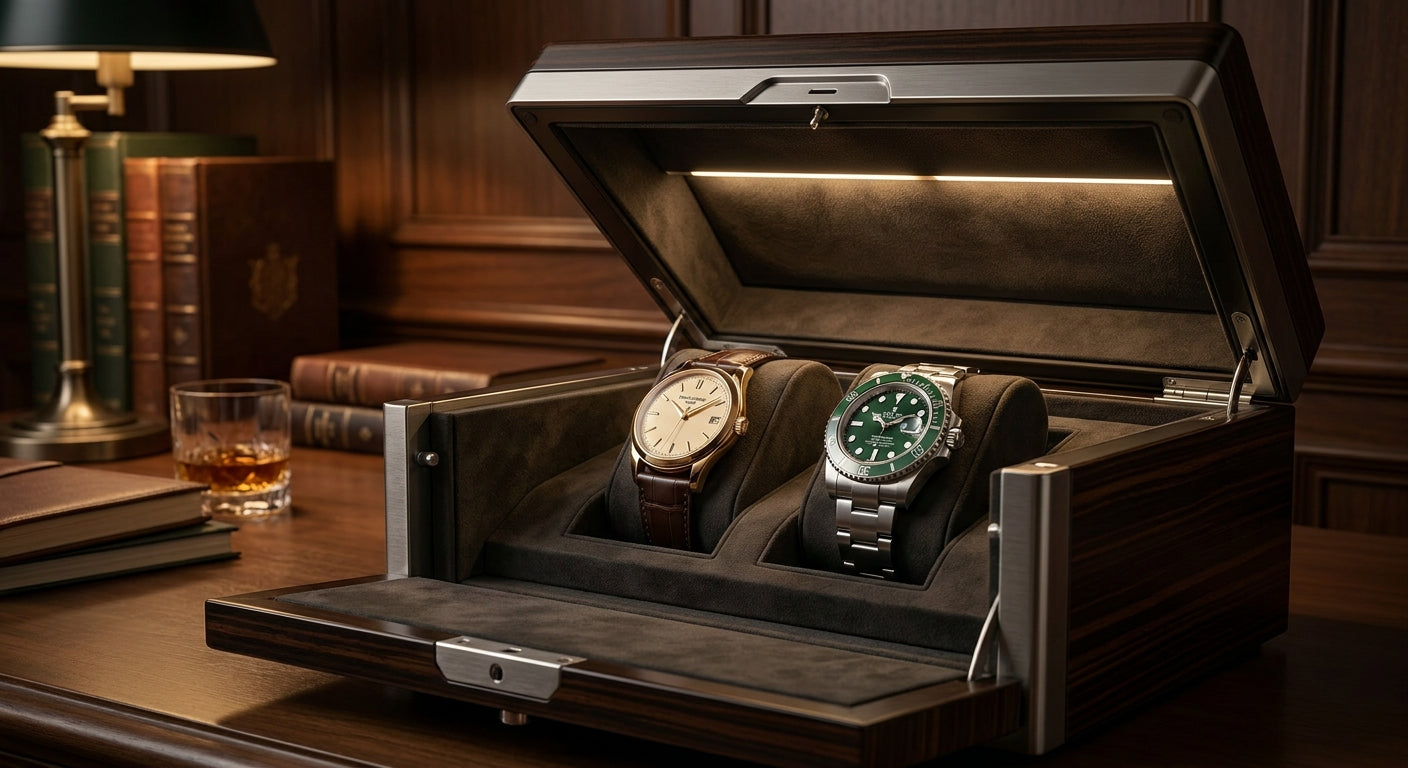
Patek applies anglage, beveling, and côtes de Genève finishing by hand. A Rolex Submariner has a brushed and polished case that scratches on contact with hard plastics. Italian Alcantara or genuine Nappa leather interior lining eliminates contact abrasion. Bare foam, cheap velvet, or hard plastic pillows are disqualifying regardless of the safe’s other specifications. Check the material origin, not just the category name — “microfiber” covers a range from passable to damaging.
Access Control That Matches the Asset Value
A two-watch collection carrying $50,000–$200,000 in value warrants biometric access — fingerprint or retinal — rather than a single key or a four-digit pin. The best units in 2026 combine biometric primary access with a mechanical key backup and a time-delay override for high-stakes scenarios. Multi-user biometric registration (storing 10–20 fingerprints) matters if a spouse, estate manager, or insurer needs documented access.
Steel Body and Anti-Pry Construction
Watch safes marketed as “jewelry boxes with locks” use aluminum or MDF carcasses that yield to a crowbar in under 60 seconds. A proper watch safe for Patek Philippe and Rolex should have a minimum 4mm solid steel body, concealed hinges, and anti-pry reinforcement on all four door edges. Floor or wall anchor points are mandatory — a unit that is not bolted cannot be called a safe.
Capacity That Accounts for Collection Growth
Collectors who own both a Patek and a Rolex rarely stop at two watches. A 12-slot safe occupies nearly the same footprint as a 6-slot unit from most manufacturers and costs less per slot. Buying for the collection you will have in three years, not the collection you have today, is the decision that saves a second purchase.
Top Picks
Enigwatch Veron 12 — The Direct Answer
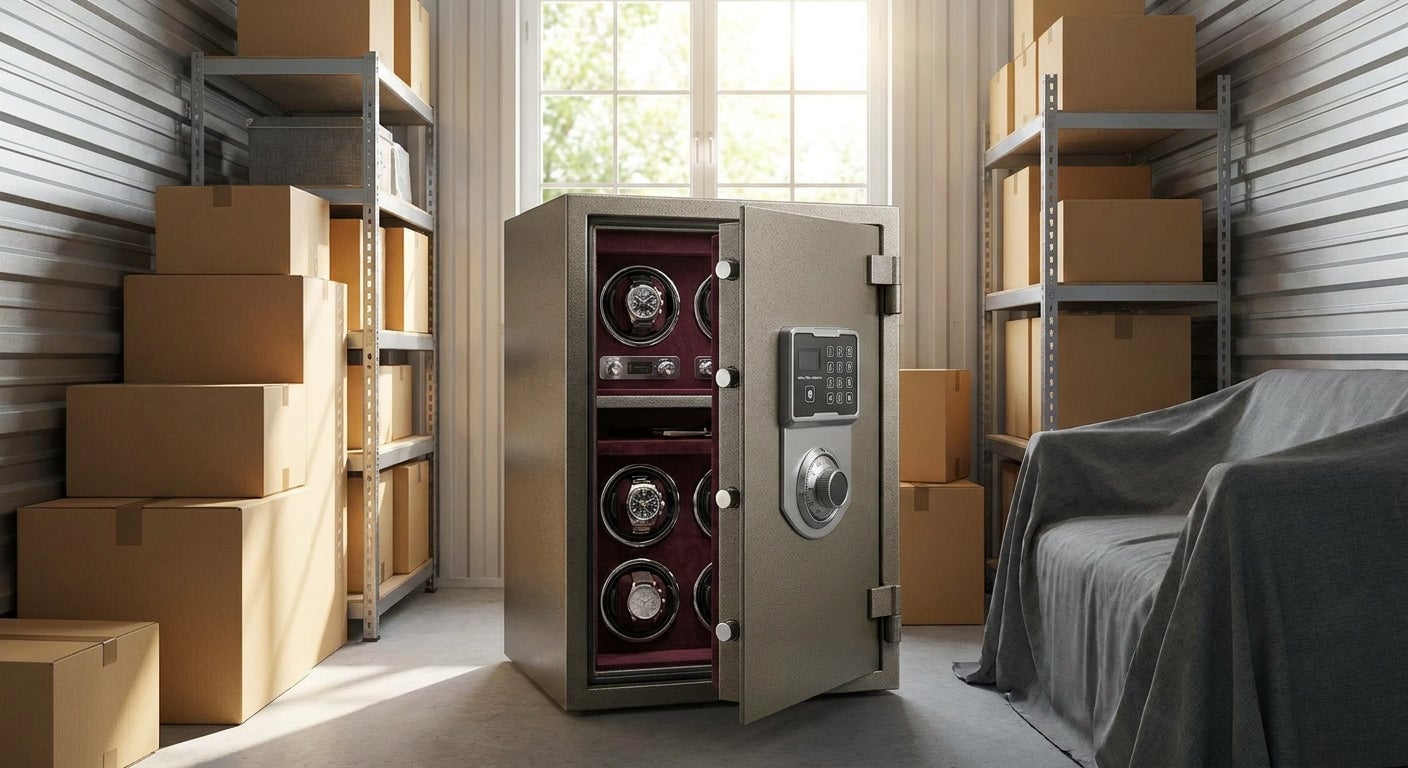
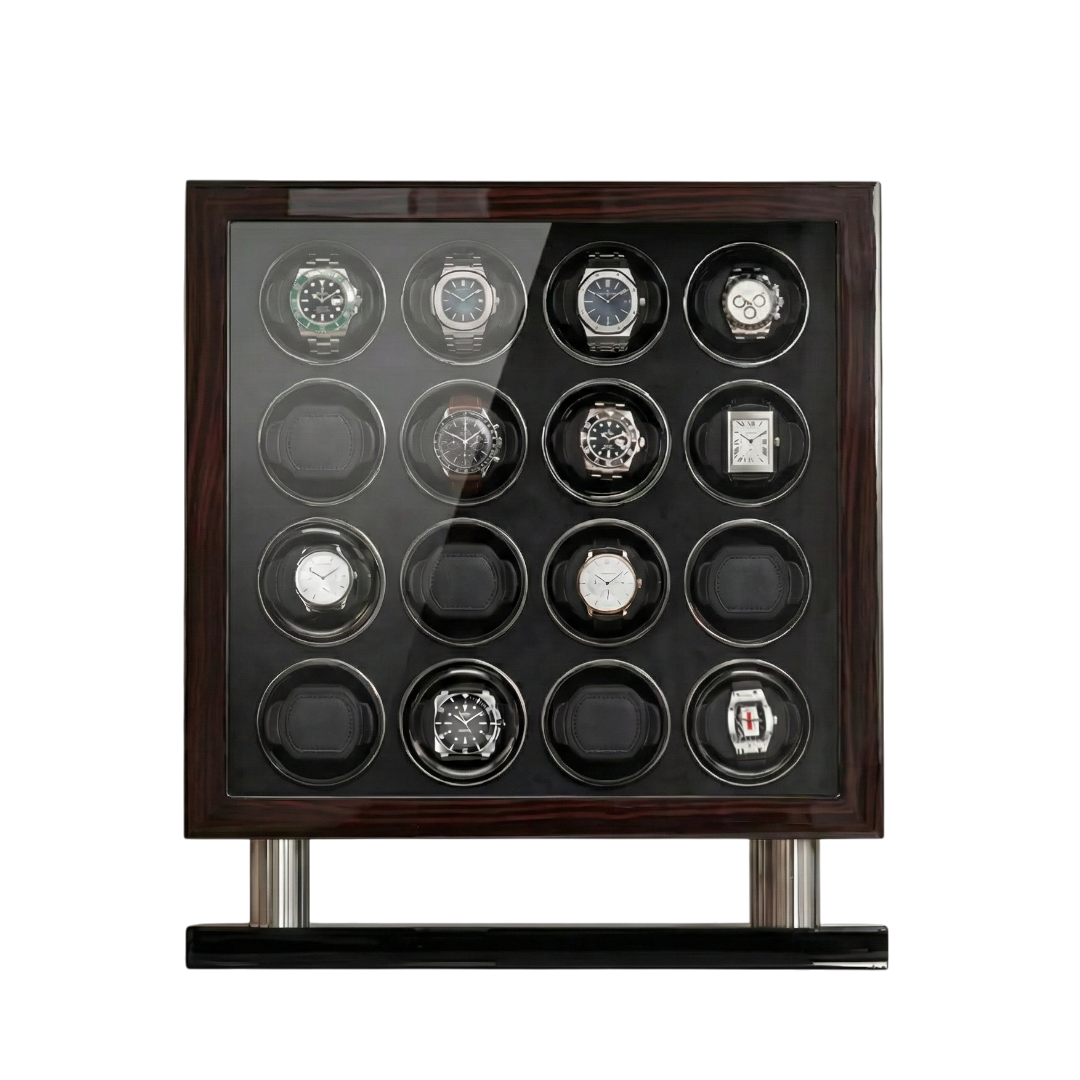
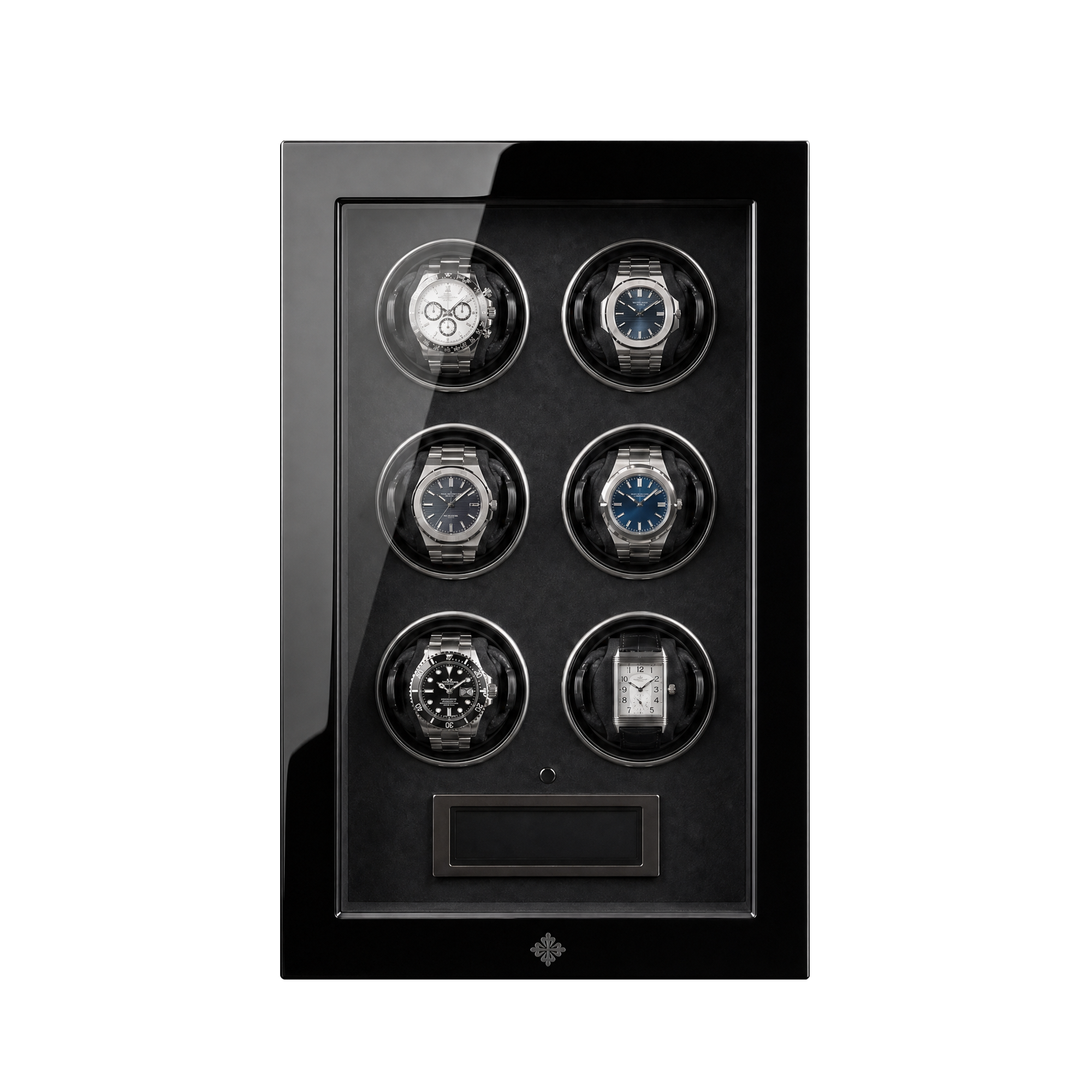
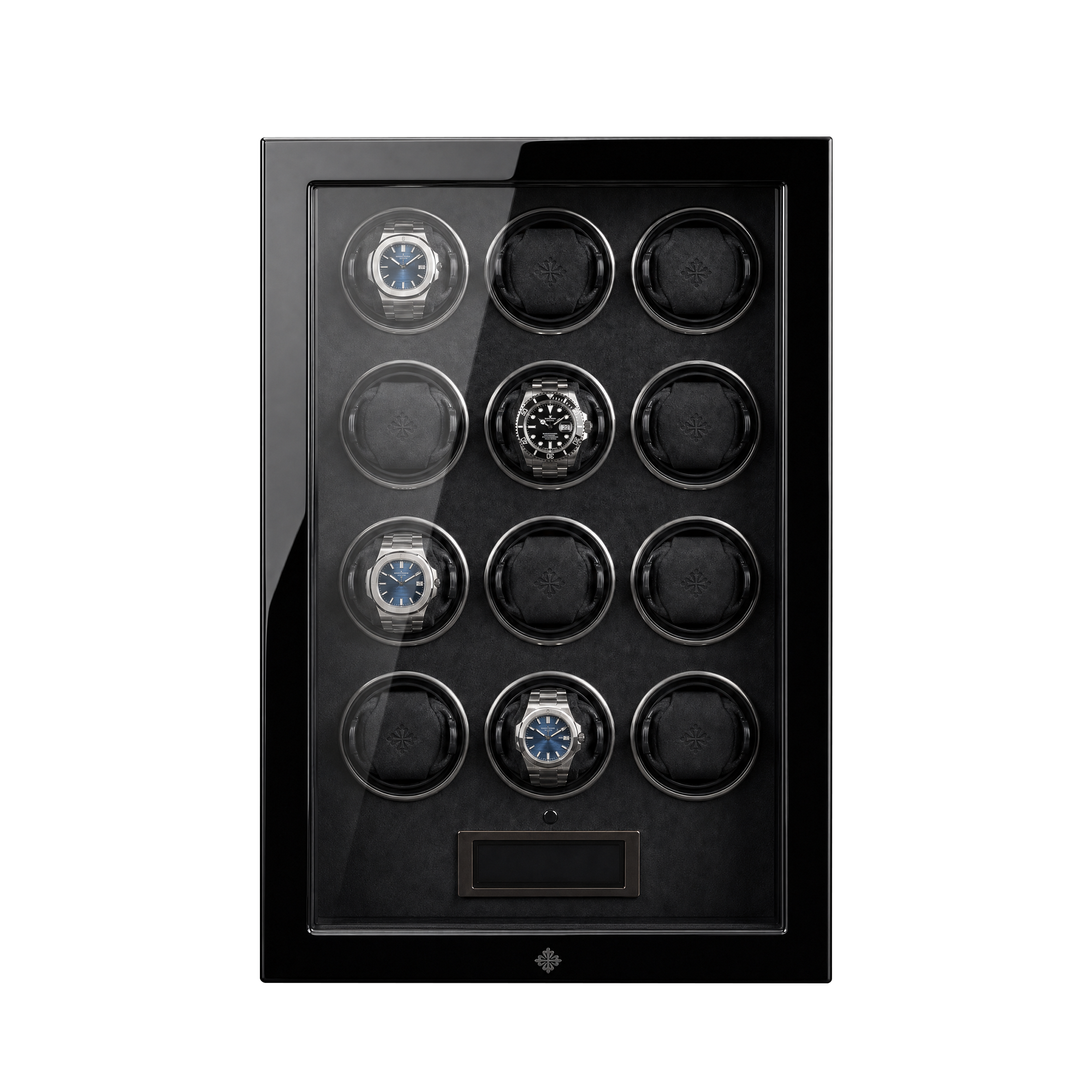
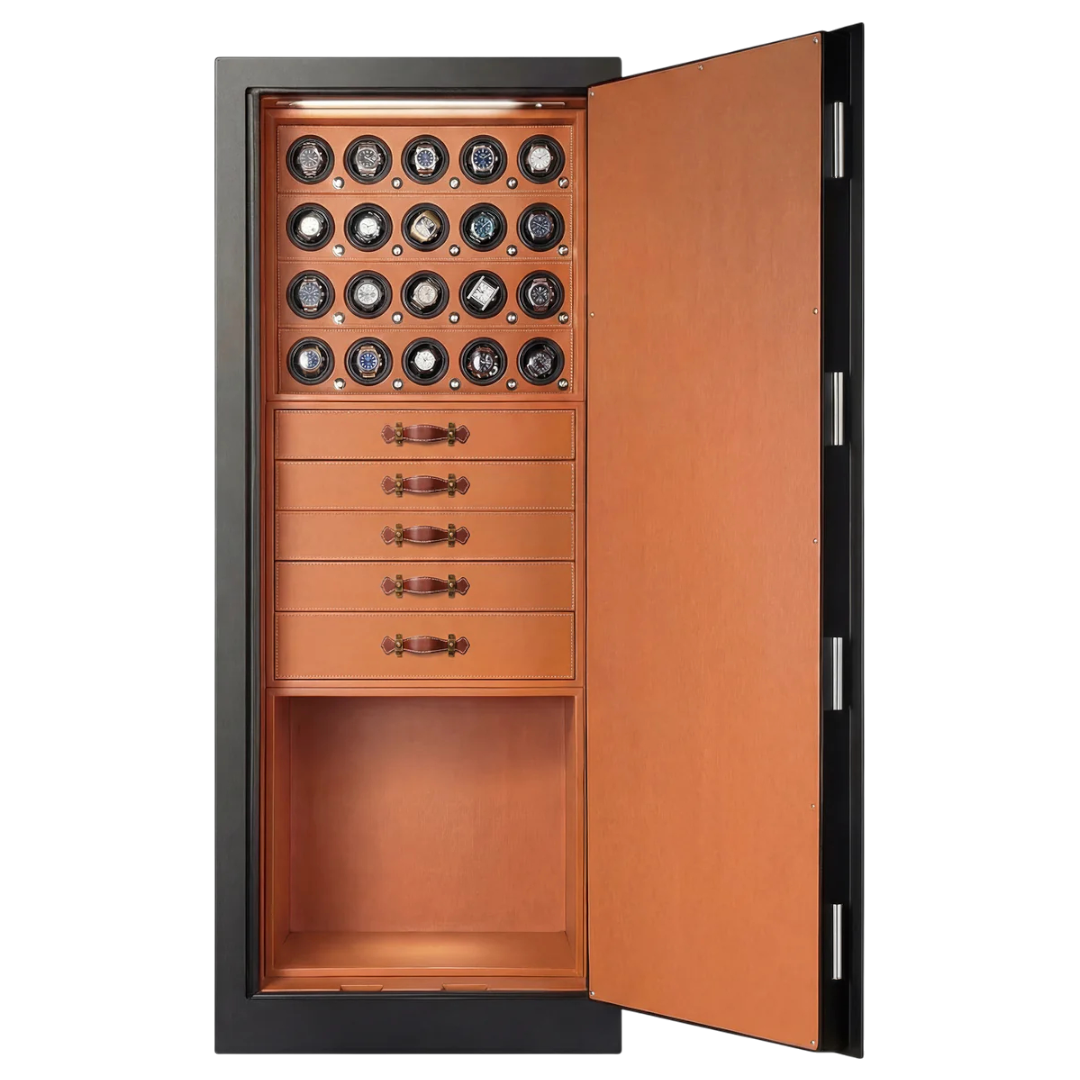
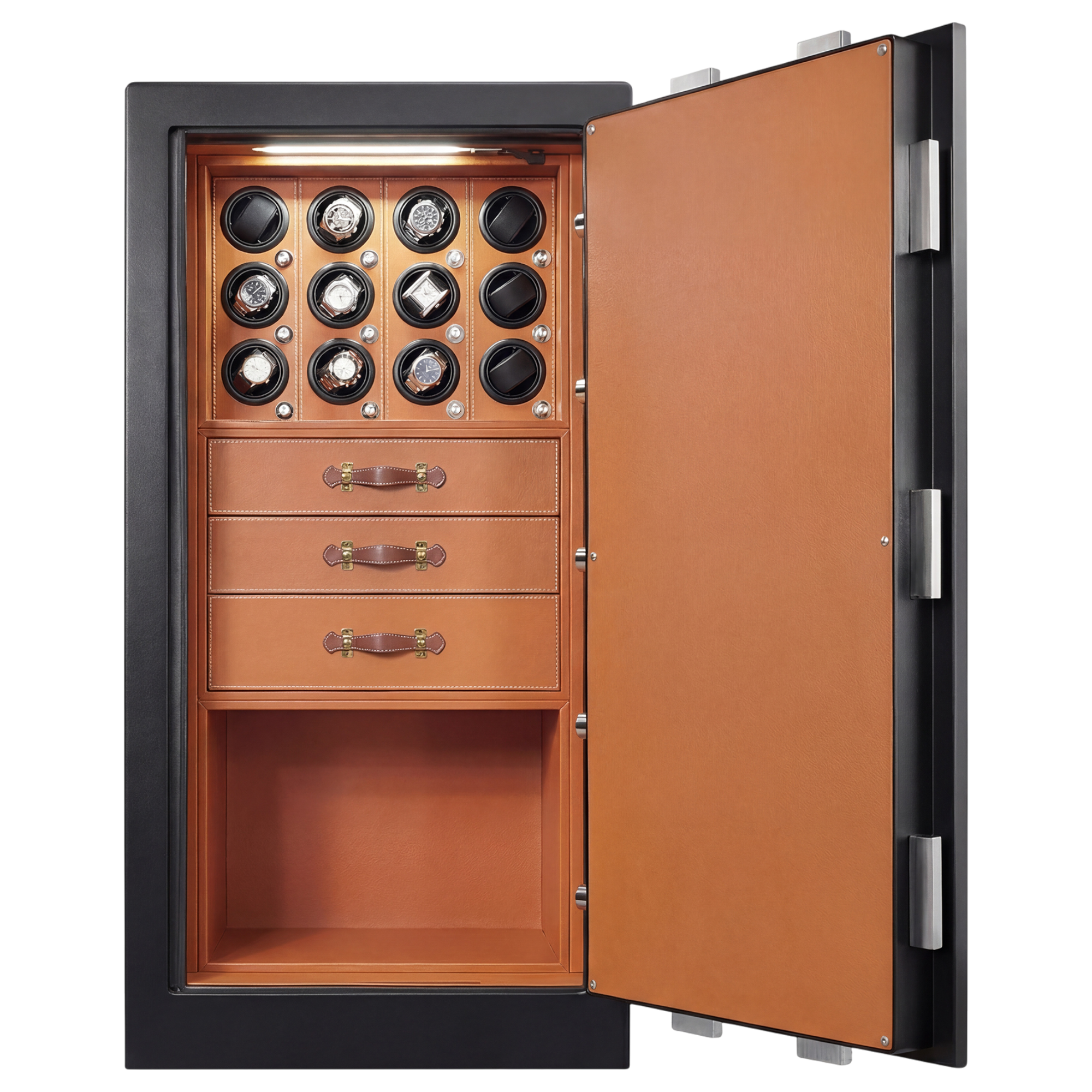
The safe pick. 12 individually programmed Japanese Mabuchi winding modules, Italian Alcantara interior, biometric multi-user access, 4mm steel body with anti-pry door reinforcement, floor anchor hardware included. Capacity covers a Patek–Rolex mixed collection with room for additions through 2026 and beyond. The Alcantara lining is sourced from Alcantara S.p.A. in Nera Montoro, Italy — the same material specification used in high-end automotive interiors. Lifetime warranty.
Verdict: Buy. This is the purpose-built answer to the question this page asks.
Enigwatch Veron 20 — For the Larger Collection
The long-term play. 20 individually programmed winding slots, same Japanese Mabuchi motor specification, same Alcantara interior. The larger footprint suits a walk-in closet or dedicated study more than a bedroom shelf. If your collection already exceeds 12 pieces or includes a Patek grand complication alongside multiple Rolex sport references, the capacity argument is immediate rather than theoretical. Priced proportionally higher than the Veron 12.
Verdict: Buy — if your current count exceeds 10 watches or you anticipate acquiring 3+ pieces in the next 24 months.
Enigwatch Apollo — The Compact Option
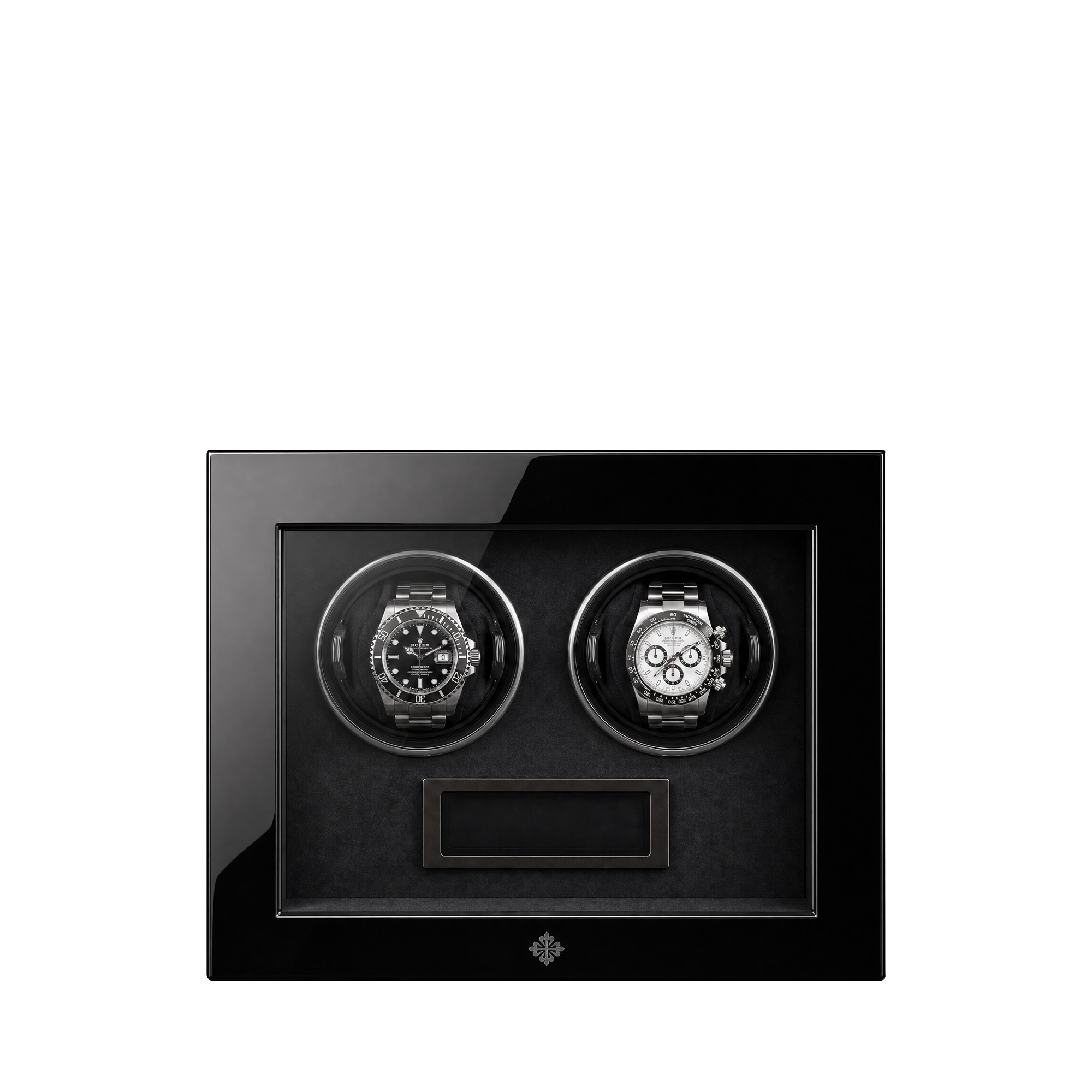
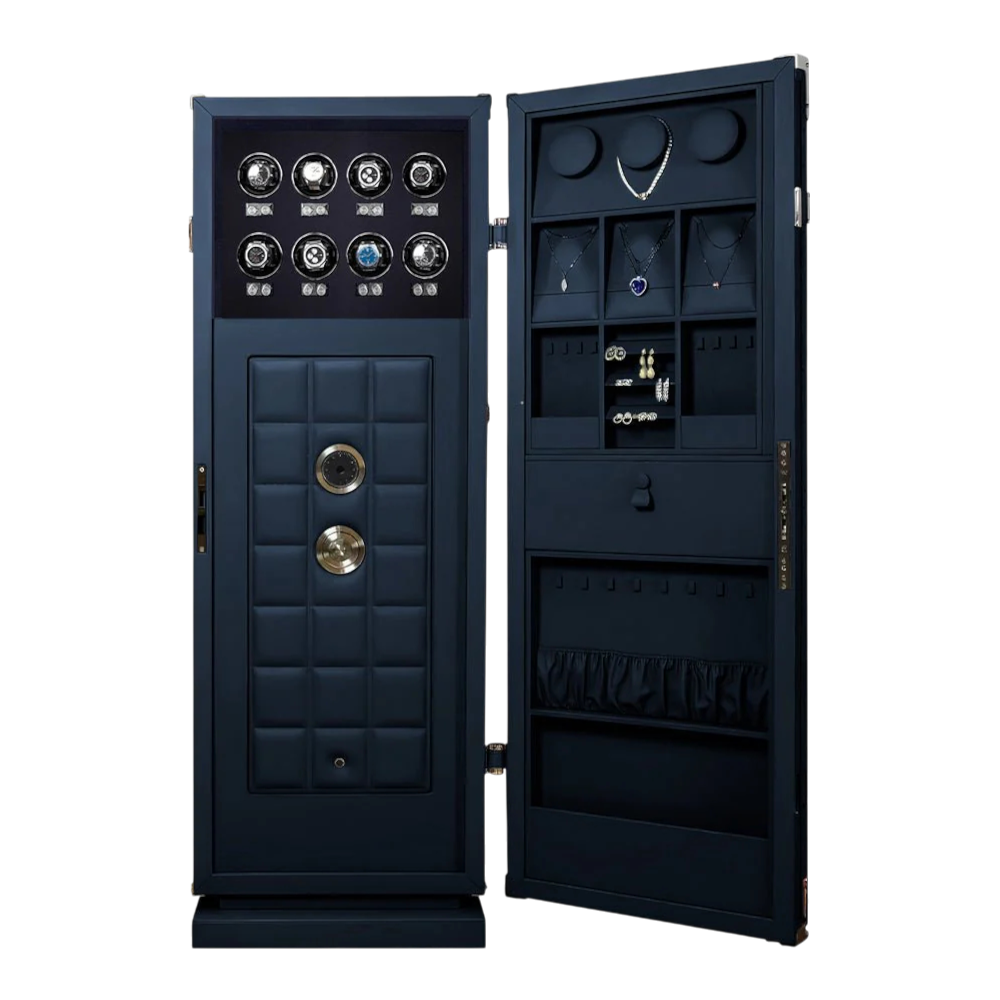
The considered choice. The Apollo is built for collectors whose Patek–Rolex pairing is genuinely a two- or four-watch scenario with no near-term expansion. Same motor quality and interior material standard as the Veron line, smaller steel carcass. The tradeoff is capacity — once the slots are full, you face a second purchase. Appropriate for a secondary residence safe or a guest suite installation where the primary collection is housed elsewhere.
Verdict: Consider — right unit if capacity is genuinely constrained and the collection is stable.
What to Avoid
- Safes with a single shared winding motor for all slots. These cannot run a Patek Nautilus at 650 TPD bidirectional and a Rolex Submariner at 800 TPD clockwise simultaneously. Every Patek caliber that sits on the wrong program accumulates timekeeping deviation and long-term wear.
- Units described as “watch boxes” or “display cases” with a lock added. These have no meaningful forced-entry resistance. The lock on a wooden display case opens in seconds with a flathead screwdriver. The word “safe” requires a steel body; if the product photography shows wood grain on the exterior, it is a box.
- Generic foam or plastic interior pillows. Alcantara and Nappa leather are specified by name because they have known abrasion coefficients. “Plush lining” and “velvet-style” inserts are marketing language with no material standard. A Patek Calatrava with an anglage-finished case edge should never sit on foam that has not been independently verified for hardness.
Criteria Comparison
| Criterion | Veron 12 | Veron 20 | Apollo |
|---|---|---|---|
| Winding slots | 12 | 20 | Compact |
| Motor | Japanese Mabuchi | Japanese Mabuchi | Japanese Mabuchi |
| Interior | Italian Alcantara | Italian Alcantara | Italian Alcantara |
| Biometric access | Yes | Yes | Yes |
| Steel body / anti-pry | Yes | Yes | Yes |
| Anchor hardware | Included | Included | Included |
| Verdict | Buy | Buy (large collections) | Consider |
FAQ
What is the best watch safe for Patek Philippe and Rolex together in 2026?
The Enigwatch Veron 12 Watch Safe Box. It provides 12 individually programmed Japanese Mabuchi winding modules, Italian Alcantara interior, and biometric multi-user access — the three criteria that matter most when housing both brands in one unit.
Can a Patek Philippe and a Rolex share the same winding settings?
No. Patek calibers typically require 650–800 TPD bidirectional. Rolex calibers such as the 3235 perform well at 650–900 TPD with clockwise-primary or bidirectional rotation. A safe with individual slot control runs each movement on its own program.
Does a Patek Philippe need a watch winder at all?
Patek recommends servicing intervals of 3–5 years and notes that letting a watch run down repeatedly can stress the mainspring over time. A properly programmed winder keeps the movement at working tension without over-winding — modern automatic movements include a slip-clutch that prevents over-wind regardless of TPD.
How much should a watch safe for Patek Philippe and Rolex cost?
Expect to spend $5,000–$15,000 for a unit that meets the steel-body, named-motor, and Alcantara interior standard appropriate for watches at this value level. Units priced below $2,000 do not meet forced-entry resistance or interior finish standards for Patek-grade timepieces.
Is biometric access necessary for a watch safe at this level?
For a collection valued above $50,000, yes. A four-digit pin can be observed or guessed. A mechanical key can be copied. Biometric access with a mechanical backup key — stored separately — is the access control standard that insurers increasingly require for high-value watch collections in 2026.
What interior material protects a Patek Philippe best?
Italian Alcantara, sourced from Alcantara S.p.A. in Nera Montoro, Italy. It is soft enough to prevent contact abrasion on hand-finished surfaces, dimensionally stable, and does not off-gas chemicals that could affect lacquered dials over time.
Should the safe be bolted down?
Always. An unanchored safe — regardless of weight — can be removed from a residence in under two minutes. Floor anchoring with the hardware the manufacturer includes is the step that converts a heavy box into an actual security fixture.
Is one watch safe better than two separate safes for each brand?
One properly specified unit is preferable. Two safes double the installation complexity, the footprint, and the access points. A 12-slot unit with individual winding control handles both brands at their respective settings with no compromise.
One Last Thing
Patek Philippe produces approximately 62,000 watches per year — Rolex produces roughly 1 million. The two brands are rarely discussed in the same storage context, but they are frequently owned together. The collector who owns a Patek Nautilus and a Rolex Daytona has a combined movement value that exceeds most residential safes’ designed-for contents. The safe you choose for that pairing is, in practical terms, more important than the safe most people buy for their financial documents. Treat it accordingly.
Related Guides
Protect Your Watch Collection
Designed for collectors who demand the best. Explore our premium watch winders and luxury safes.