
The AP Royal Oak Offshore runs on one of three Audemars Piguet calibers — most commonly the Cal. 3126/3840, Cal. 4401, or Cal. 3126 — and each has a specific turns-per-day requirement that, if ignored, will either leave the watch short on power reserve or wear the rotor mechanism faster than necessary. This guide covers the exact winder settings for the Royal Oak Offshore in 2026, plus which winder builds match the watch’s physical and mechanical demands.
TL;DR: The AP Royal Oak Offshore needs 650–800 TPD (turns per day) in bidirectional winding mode. Set clockwise-only only if your specific ref uses a unidirectional rotor — confirm in your AP documentation. The Impresario Series 12 is the top pick for Offshore owners in 2026: programmable TPD, per-slot direction control, and a cushion diameter that fits the Offshore’s 42–44 mm case without forcing the crown. For a single-slot dedicated winder, the Yachtline Series 8 is the runner-up.
Why This Matters
The Royal Oak Offshore is not a forgiving watch to under-wind. The Cal. 3126/3840 carries a 60-hour power reserve, which sounds generous until you realize most owners wear the Offshore two to three days a week. Miss the TPD window and you’re hand-setting a perpetual calendar or day-date complication every time you pick it up. Get the direction wrong and you’re fighting the rotor instead of feeding it. Neither is good for a watch that retails above $25,000 in 2026.
Who This Is For
This guide is for AP Royal Oak Offshore owners who own at least one other automatic watch and want a winder that can handle the Offshore’s specific caliber requirements without over-rotating. If you own multiple AP pieces — or mix AP with Rolex, Patek, or IWC — you need per-slot TPD programming, not a one-size box. Collectors storing the watch long-term (90+ days unworn) also need to read the direction and rest-cycle sections carefully.
What to Look for in a Watch Winder for the AP Royal Oak Offshore
Programmable TPD in the 650–800 Range
The Cal. 3126/3840 requires approximately 650–800 TPD. Many budget winders cap at 600 TPD or jump in fixed increments (300, 600, 1200) that skip this window entirely. Confirm the winder lets you dial in a specific TPD or choose a preset that sits inside that band. The Cal. 4401 — used in chronograph Offshore references — has a slightly higher requirement of 800–900 TPD, so if you own the chronograph variant, a ceiling of 900 TPD is non-negotiable.
Bidirectional Winding with Per-Slot Direction Control
Most AP Royal Oak Offshore calibers wind in both directions, so a bidirectional winder extracts full efficiency from every rotor rotation. The problem with multi-slot winders is that many apply one direction setting to all slots simultaneously. If you’re running an Offshore alongside a Rolex GMT-Master II (clockwise-preferred), you need independent direction control per slot — not a global override. This is a hard requirement for mixed-collection winding in 2026.
Cushion Size for a 42–44 mm Sports Case
The Royal Oak Offshore case diameter runs 42 mm on standard references up to 44 mm on larger variants. The lug-to-lug is substantial. Undersized cushions — common in entry-level winders — compress the crown against the inner drum wall during rotation. Crown pressure over 30-day cycles damages the winding stem and voids most AP service warranties. Look for cushions rated for 44 mm cases with at least 10 mm of radial clearance.
Rest Cycles Built Into the Program
No AP movement needs to spin continuously. A winder that rotates 24 hours straight accumulates unnecessary rotor wear and, in some calibers, triggers the mainspring’s slip-clutch mechanism repeatedly. The correct rotation-to-rest ratio for the Offshore is roughly 30–40 minutes of rotation followed by 4–6 hours of rest. This intermittent cycle delivers the required TPD over 24 hours without stressing the barrel. Confirm your winder offers programmable rest intervals, not just continuous or timed-off options.
Motor Noise Below 25 dB
This is a practical concern. The Royal Oak Offshore is typically stored in a bedroom, home office, or display cabinet. A winder motor running above 30 dB is audible at night — the Japanese Mabuchi-style motors common in mid-range units average 22–24 dB, while cheaper alternatives clock in at 35 dB or more. If the product listing does not cite a dB rating, ask before buying or look for user reviews that specifically test noise at 1 meter.
Build Quality That Matches the Watch’s Value
Storing a $25,000–$50,000 Offshore in a $90 winder with particle-board construction and a plastic rotor is a category error. The interior lining should be suede or Alcantara — materials that will not scratch a polished AP bezel. The door mechanism should be lockable. The power supply should be regulated (unregulated adapters cause voltage spikes that, while rare, can affect electronic modules in newer AP calibers with integrated circuits).
Top Picks
Impresario Series 12 — The Collector’s Choice
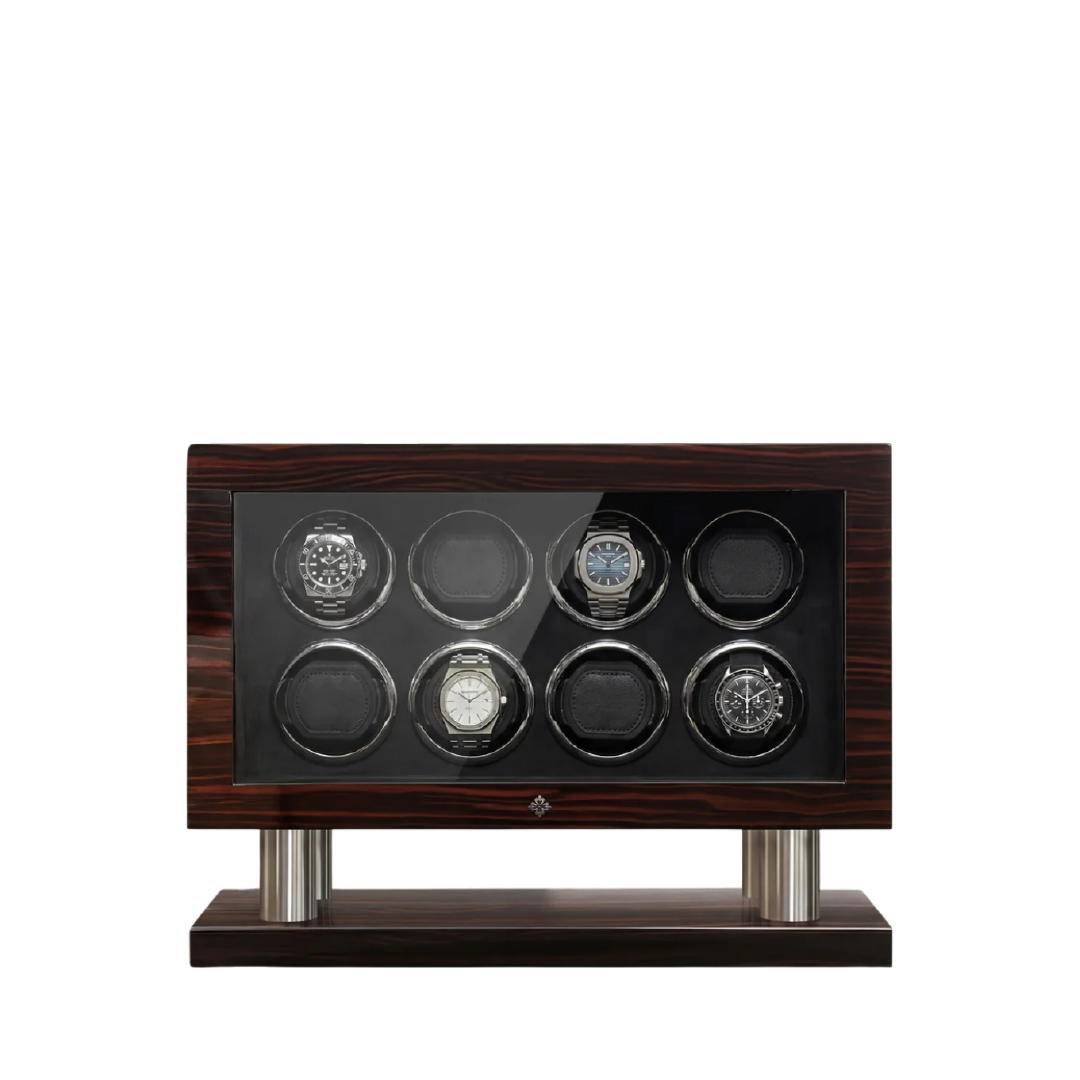
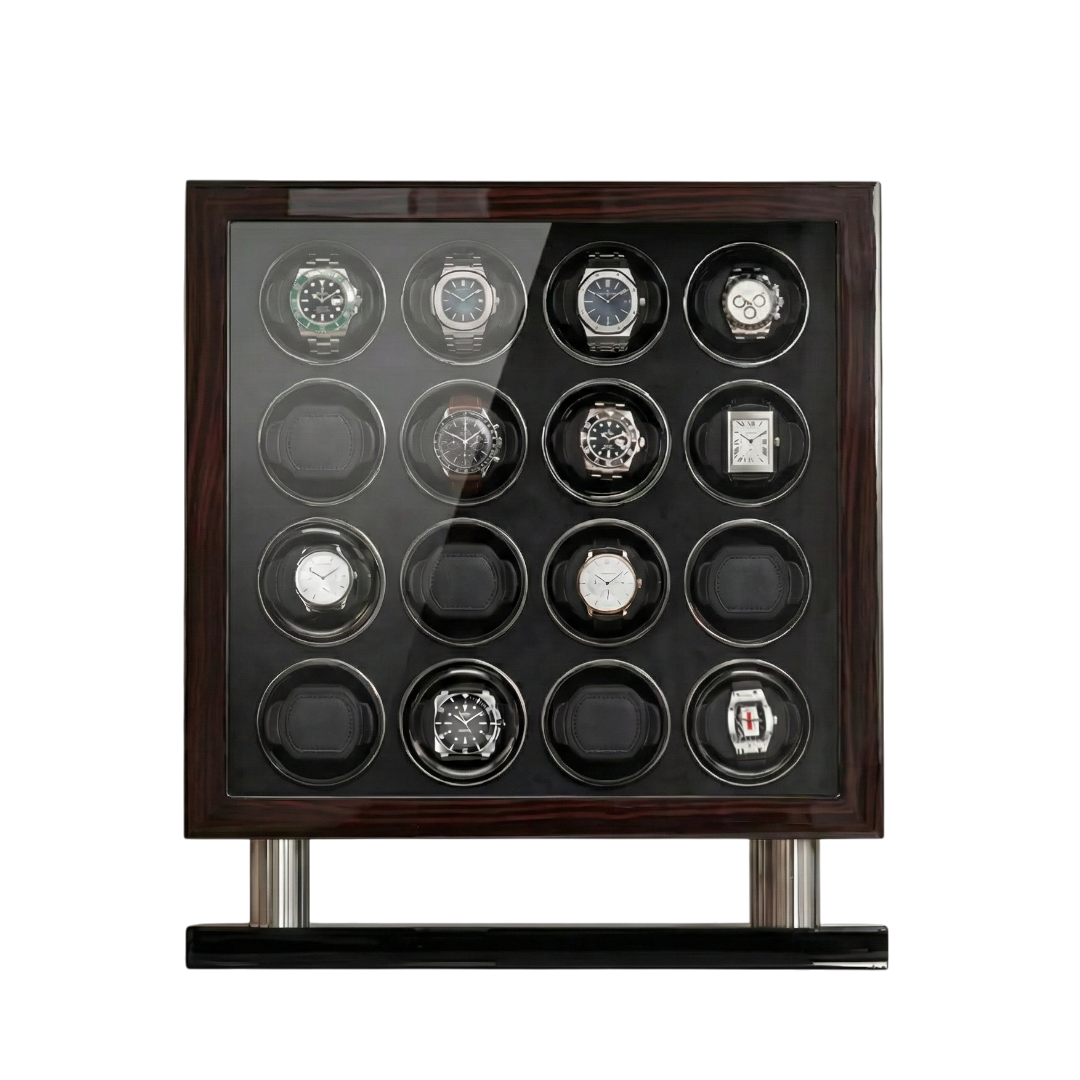
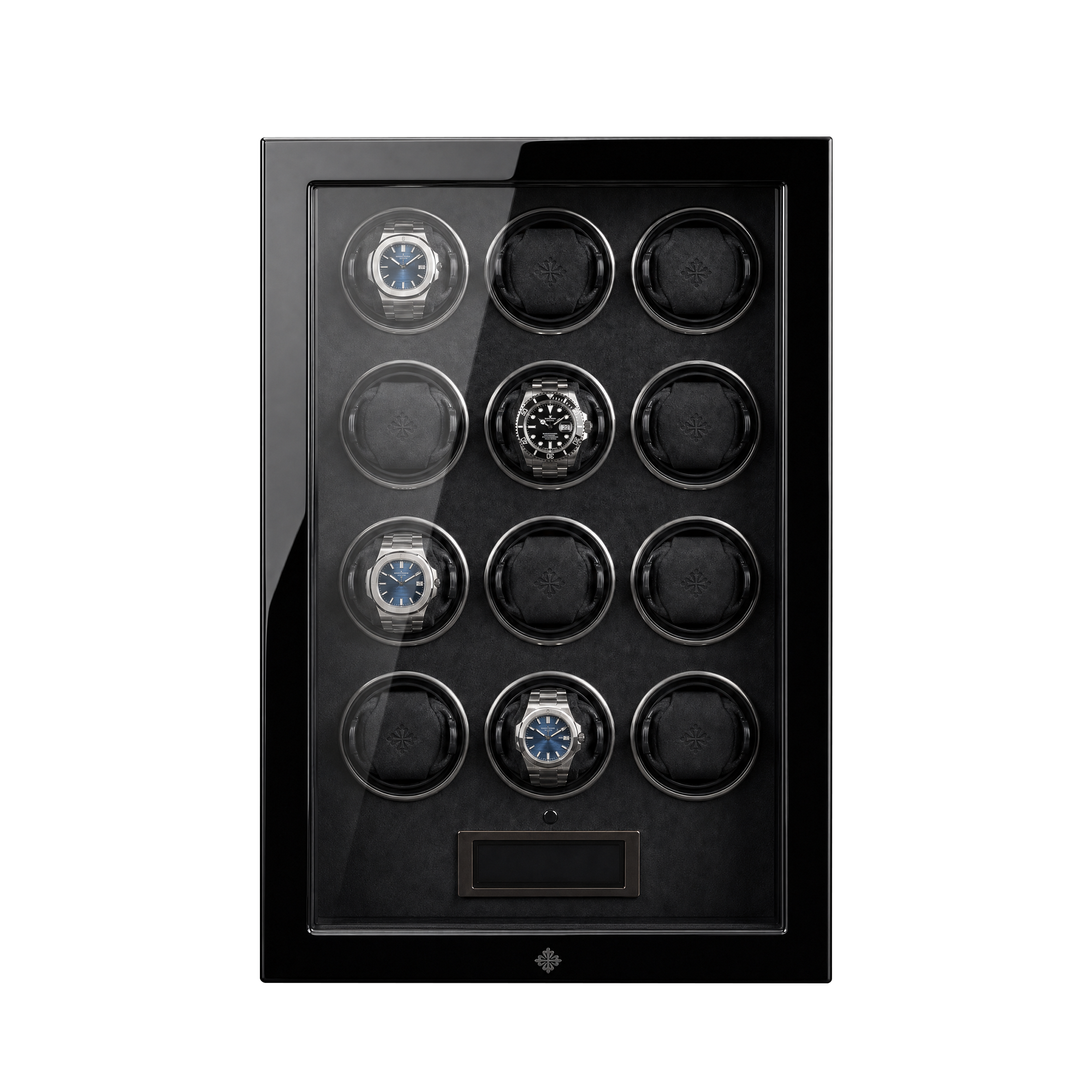
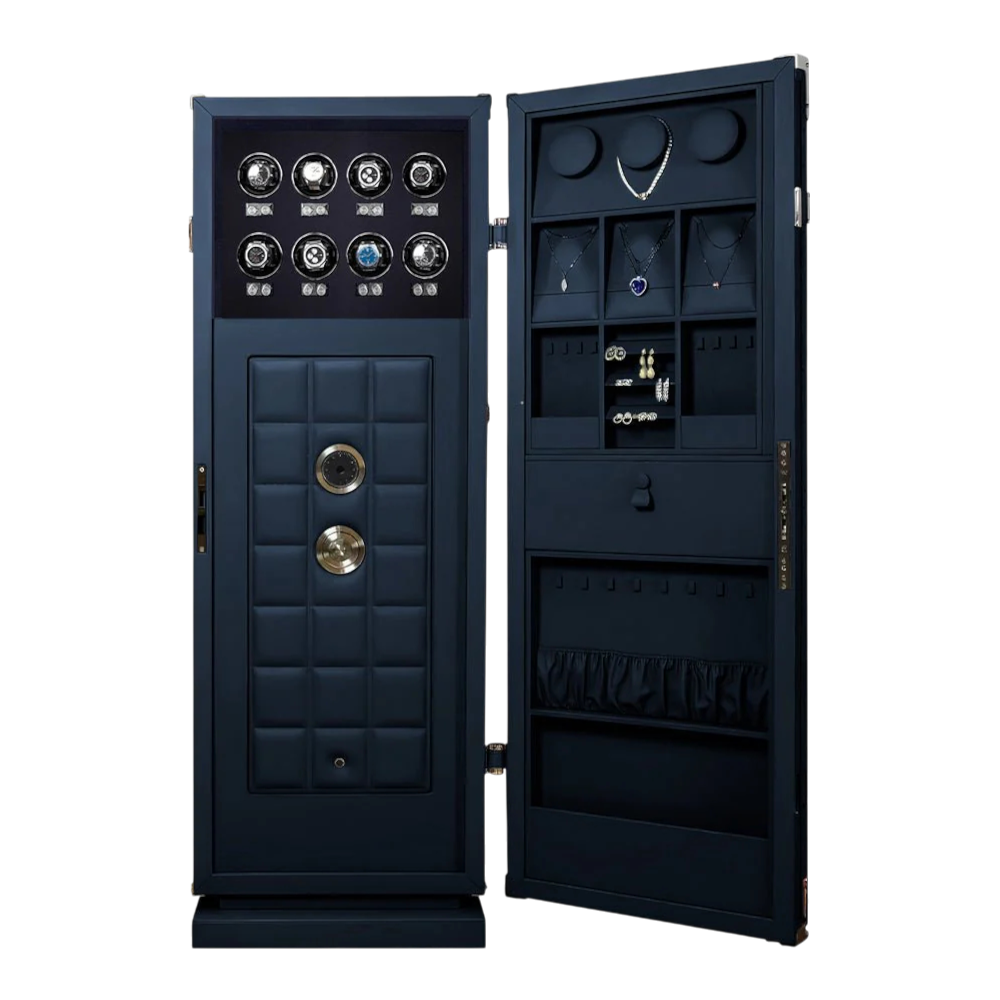
The safe pick for multi-watch AP owners. The Impresario Series 12 runs 12 independent winding modules, each programmable for TPD (up to 1,200 TPD per slot), direction (CW, CCW, or bidirectional), and rest-cycle intervals. The cushions accommodate up to 52 mm case diameters, clearing the Offshore’s crown without contact. Motor noise is rated under 22 dB. The interior is lined in carbon-fiber-patterned Alcantara — a material choice that matches the Offshore’s sports-luxury aesthetic rather than fighting it. In 2026, this is the reference-class option for anyone running three or more luxury automatics alongside an AP.
Verdict: Buy — especially if your collection includes other high-TPD calibers.
Yachtline Series 8 — The Focused Option
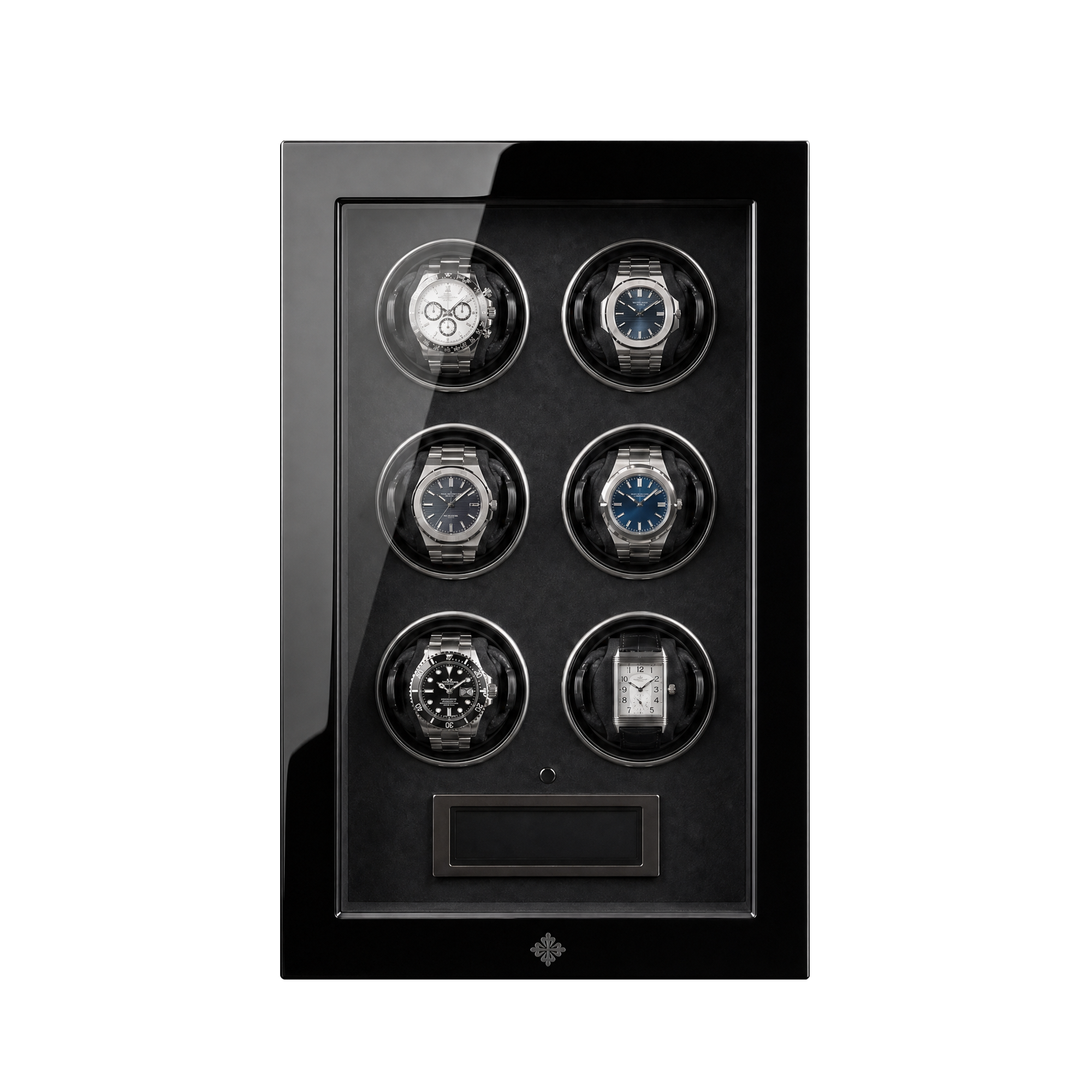
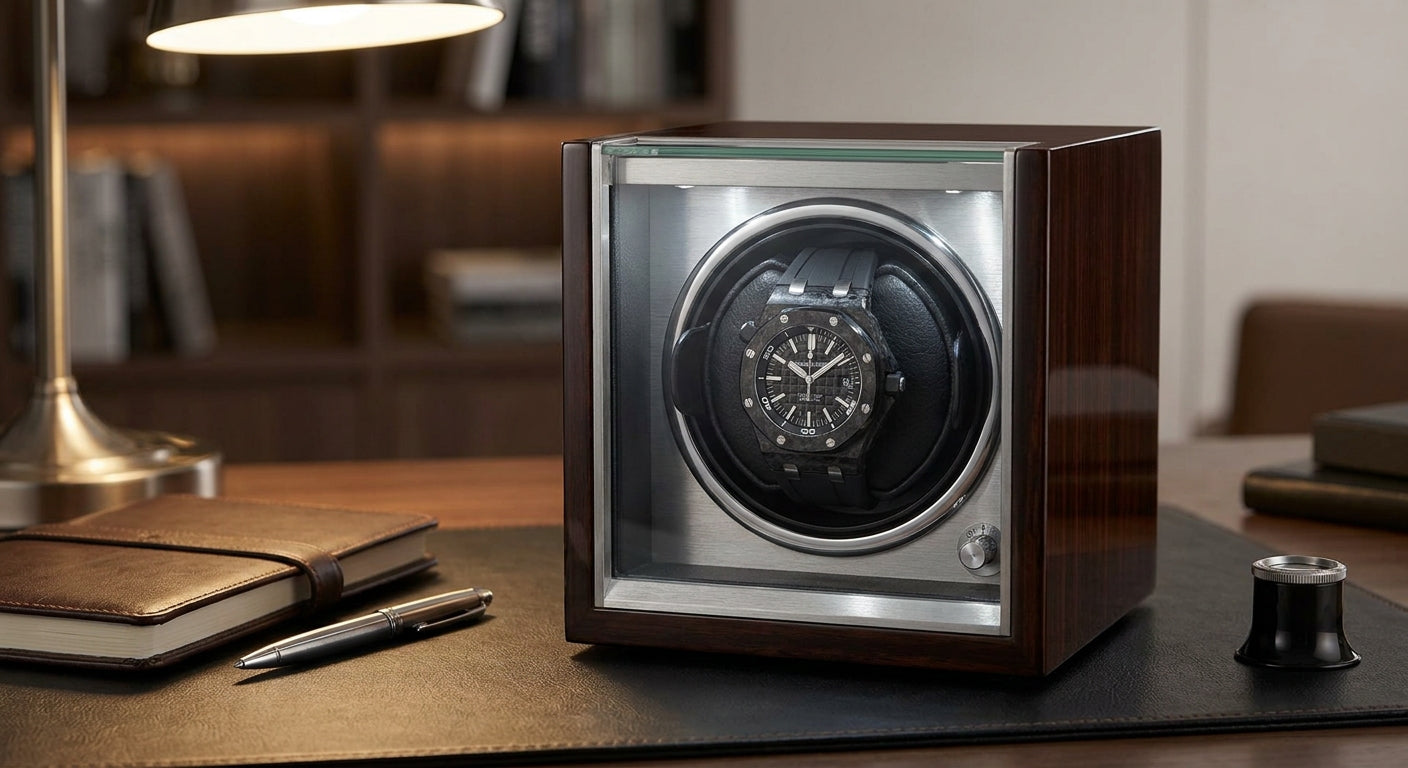
The Yachtline Series 8 handles 8 watches with the same per-slot independence as the Impresario but in a narrower footprint. If your collection sits at 4–8 pieces and the Offshore is the anchor, this is the right size. TPD range covers 650–900 TPD cleanly, making it compatible with both the Cal. 3126/3840 and the Cal. 4401 chronograph. The lockable tempered-glass door and regulated power supply earn it a spot on the shortlist.
Verdict: Buy — ideal for collections of 4–8 watches where the Offshore is not the only sports piece.
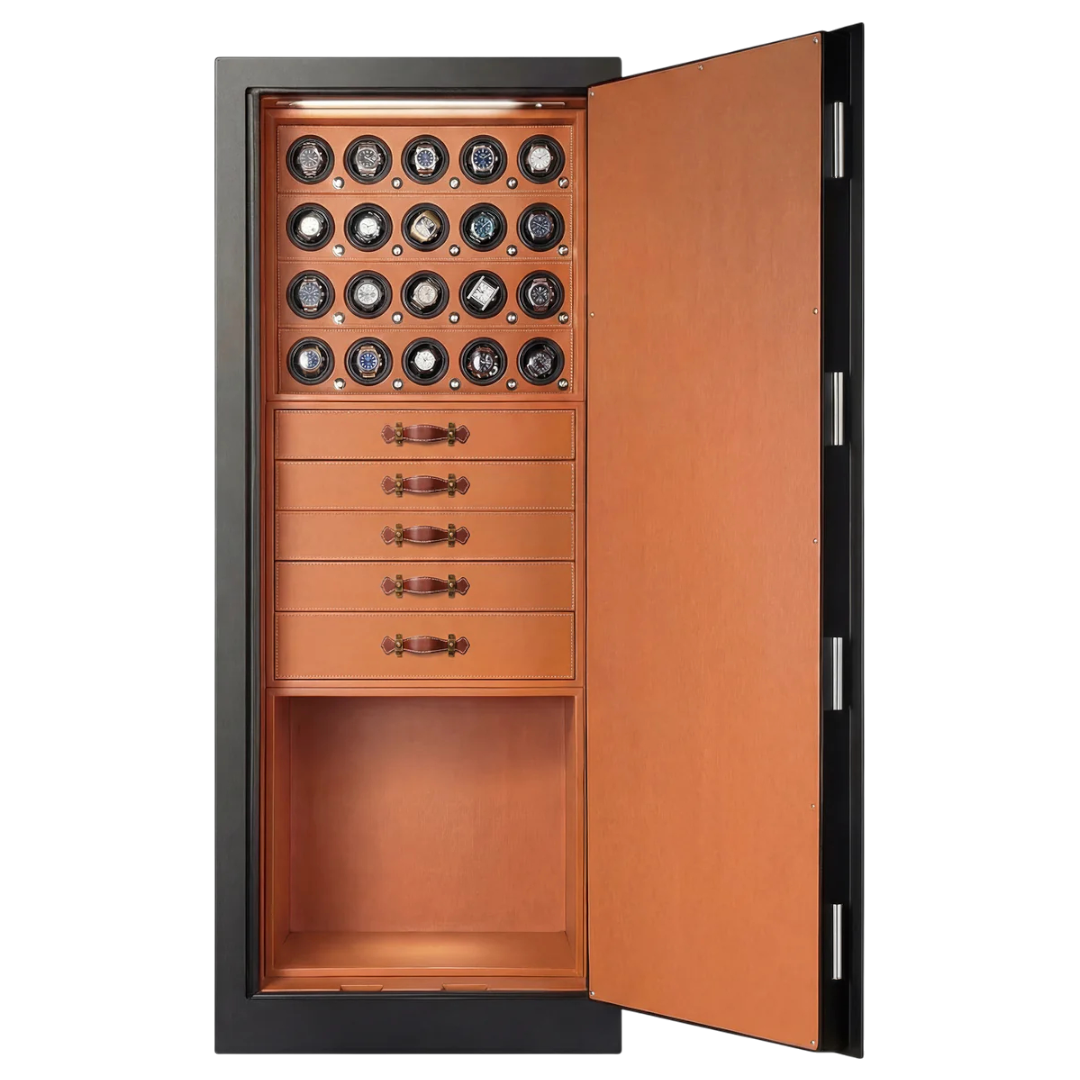
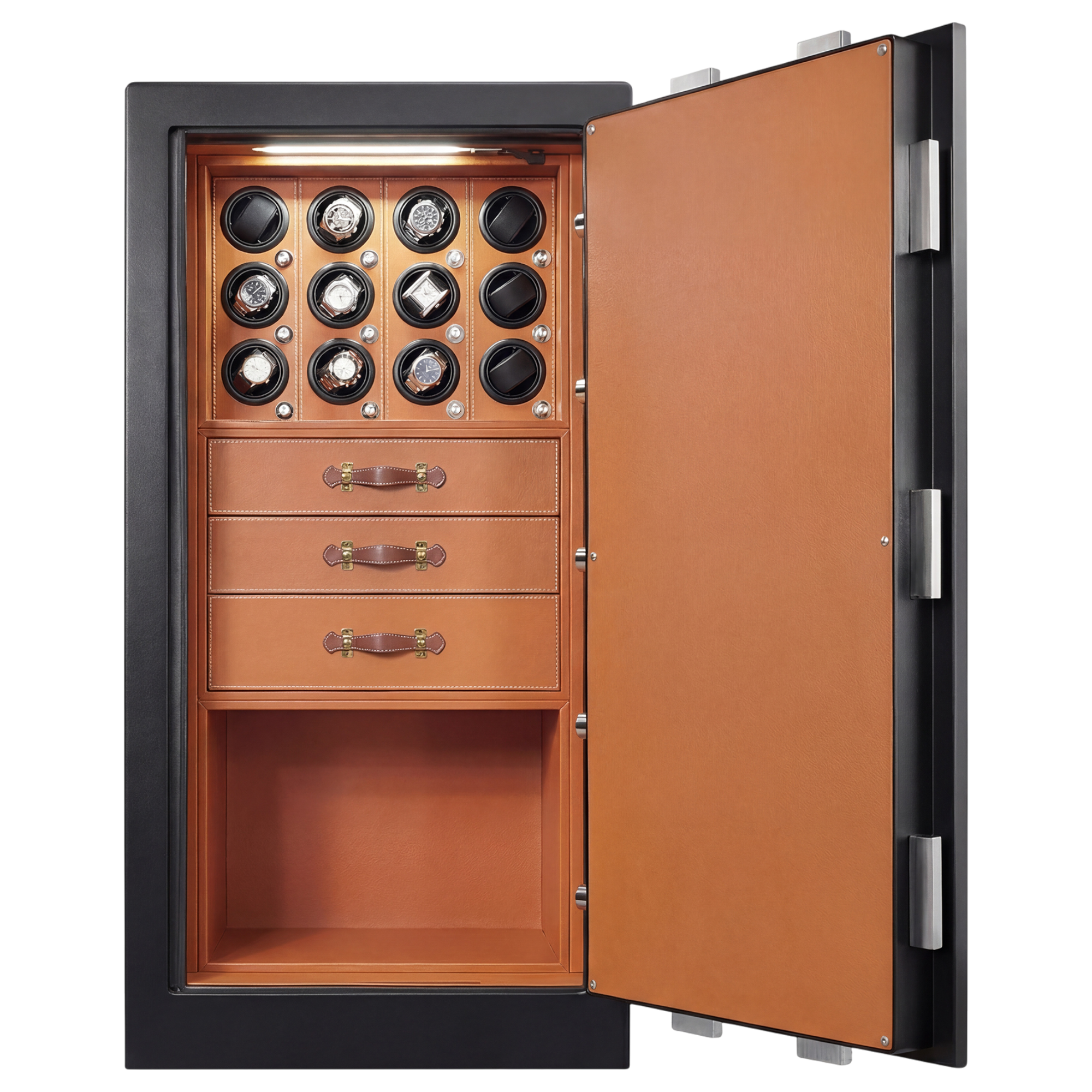
Veron 12 Watch Safe Box — The Storage-First Alternative
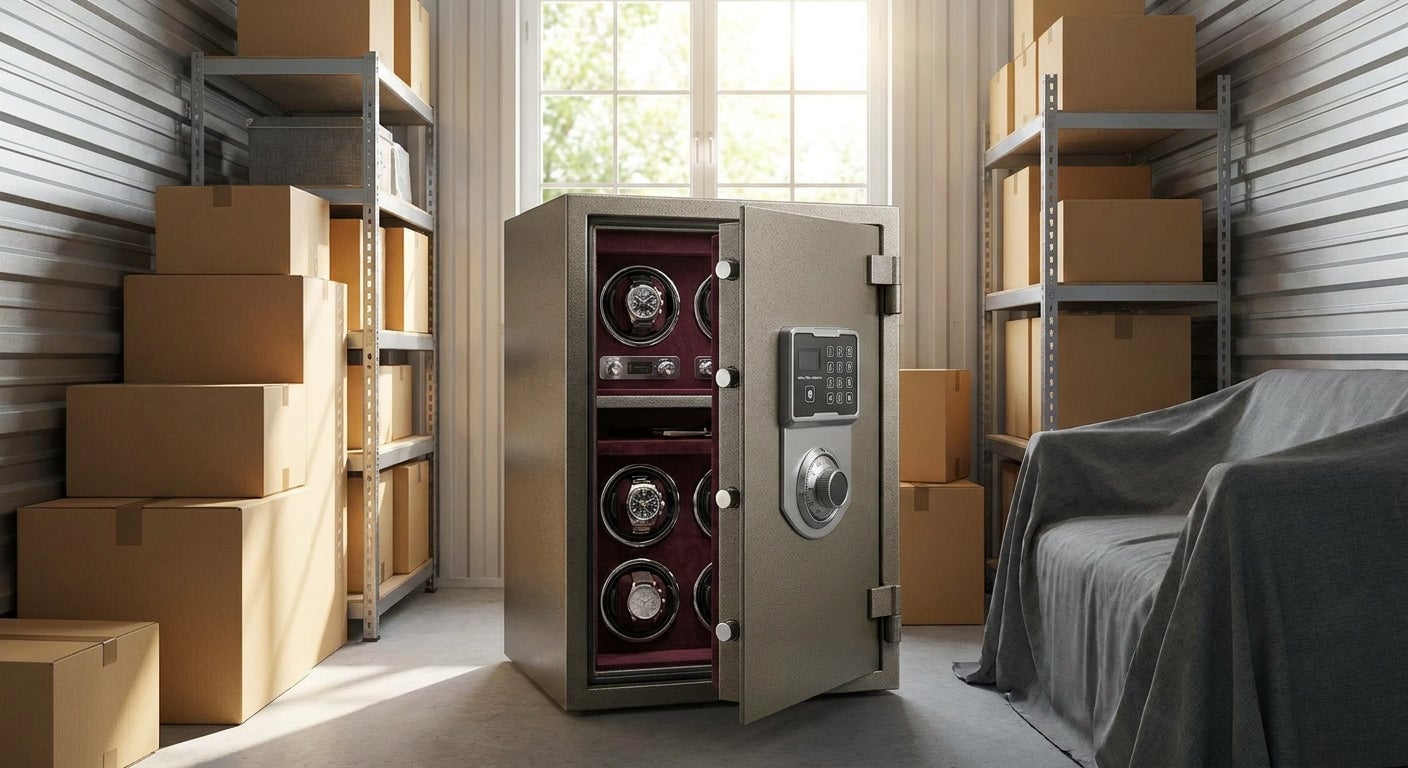
If your Offshore spends more time in a safe than on a winder, the Veron 12 Watch Safe Box solves the security half of the problem. It holds 12 watches in individual cushioned slots with a biometric or combination lock. It does not wind. Pair it with a single-slot winder for the Offshore and use the Veron 12 for the static pieces in your collection. In 2026, this combination is what serious collectors are running when only one or two watches rotate through active winding at a time.
Verdict: Consider — not a winder, but a legitimate pairing strategy for large collections.
What to Avoid
-
Fixed-direction winders marketed as “AP compatible.” The phrase appears frequently in product listings without specifying which AP caliber was tested. The Cal. 4401 chronograph and Cal. 3126/3840 both wind bidirectionally, but several older Offshore references with the Cal. 2226 are clockwise-only. If the listing does not cite the specific caliber, it is a guess.
-
Winders with maximum TPD below 800. They will work for casual wearing schedules but will leave a Cal. 4401 chronograph short on power reserve if the watch sits unworn for more than 36 hours. The power reserve gap compounds over a weekend.
-
Foam cushion inserts. Polyurethane foam compresses over 12–18 months and begins to grip the bezel and crown. Alcantara or genuine leather inserts are the standard for any watch above $5,000. The Royal Oak Offshore’s integrated bracelet and octagonal bezel make compression fit a real risk.
Verdict Comparison Table
| Impresario Series 12 | Yachtline Series 8 | Veron 12 Safe Box | |
|---|---|---|---|
| Slots | 12 | 8 | 12 (static) |
| Max TPD | 1,200 | 900 | N/A |
| Per-slot direction | Yes | Yes | N/A |
| Rest cycle control | Yes | Yes | N/A |
| Case size (max) | 52 mm | 50 mm | 50 mm |
| Noise rating | <22 dB | <25 dB | Silent |
| Locking door | Yes | Yes | Biometric/combo |
| Best for | 3+ AP/luxury mix | 4–8 watch collection | Static storage |
FAQ
What TPD does an AP Royal Oak Offshore need?
The Cal. 3126/3840 needs 650–800 TPD. The Cal. 4401 chronograph variant requires 800–900 TPD. Set your winder within these ranges — exceeding 1,000 TPD on either caliber adds rotor wear without benefit.
Should the winder turn clockwise or counterclockwise for the Royal Oak Offshore?
Bidirectional is the correct setting for all current Royal Oak Offshore calibers, including the Cal. 3126/3840 and Cal. 4401. Clockwise-only is appropriate only for specific older AP calibers; confirm your reference in AP’s technical documentation before changing from bidirectional.
Can you over-wind an AP Royal Oak Offshore in a winder?
No. All current AP automatic movements include a mainspring slip-clutch that prevents over-winding. However, running a winder continuously at maximum TPD does stress the rotor pivot and oscillating weight bearings over time. Program rest cycles to avoid unnecessary wear.
How long can the Royal Oak Offshore run without wearing it?
The Cal. 3126/3840 has a 60-hour power reserve. The Cal. 4401 runs to approximately 70 hours. Without a winder, the watch stops somewhere in that window. For watches with perpetual calendars or annual calendars, stopping means a full complication reset — a real cost in 2026 given AP service rates.
Does a watch winder fit the Royal Oak Offshore’s large case?
Most premium winders accommodate up to 50–52 mm case diameters, which clears the Offshore comfortably. The critical measurement is radial clearance from the crown to the inner drum wall, not just the case diameter. Confirm the winder specifies crown clearance, not only case size.
What is the best watch winder for an AP Royal Oak Offshore in 2026?
The Impresario Series 12 from Enigwatch is the top pick in 2026. It covers the full TPD range for both Offshore calibers, offers per-slot direction control, and fits the 42–44 mm Offshore case with room to spare.
Is a single-slot winder enough for the Royal Oak Offshore?
If the Offshore is your only automatic, yes — a single-slot winder set to 700 TPD bidirectional covers the Cal. 3126/3840 entirely. Once you add a second automatic, upgrade to a multi-slot unit with independent settings to avoid compromising one watch’s winding program for the other.
What direction does the AP Royal Oak Offshore rotor spin?
The rotor winds the mainspring in both directions of rotation on all modern Royal Oak Offshore calibers. A bidirectional winder setting is therefore more efficient than clockwise or counterclockwise alone — every rotation of the winding drum delivers energy to the barrel.
One Last Thing
AP recommends a service interval of 5–8 years for Royal Oak Offshore movements. Collectors who use a correctly programmed winder — 700 TPD, bidirectional, 35-minute rotation cycles with 5-hour rest intervals — consistently report cleaner lubricant condition at the 6-year service mark compared to watches stored statically. A winder does not replace service, but it keeps the lubricants distributed and prevents the gumming that comes from months of static storage. Set the rest cycle. It is the one setting most buyers skip in 2026 and the one that pays off at the watchmaker’s bench.
Related Guides
Protect Your Watch Collection
Designed for collectors who demand the best. Explore our premium watch winders and luxury safes.