
A watch collection locked in a closet safe isn’t a collection, it’s a holding. Displayed properly, the pieces become part of your home, visible daily, a quiet reminder of why you bought them. Displayed poorly, they look like merchandise. The difference is design, lighting, and context. This guide walks through how to display a collection at home without turning your space into a showroom.
A collection worth displaying is worth securing. Our watch winder safes do both, behind biometric, fire-rated steel.
What Display Is and Isn’t
Display means the watches are visible in your everyday environment. Not hidden in a safe. Not laid flat in a drawer. Visible enough that you see them, enjoy them, and understand why you own them.
Display is not a jewelry store case. Not a museum vitrine with velvet platforms and spotlight lighting. Not a gallery wall. A good home watch display integrates into the room, doesn’t dominate it.
The Three Display Formats
Cabinet-Integrated Display
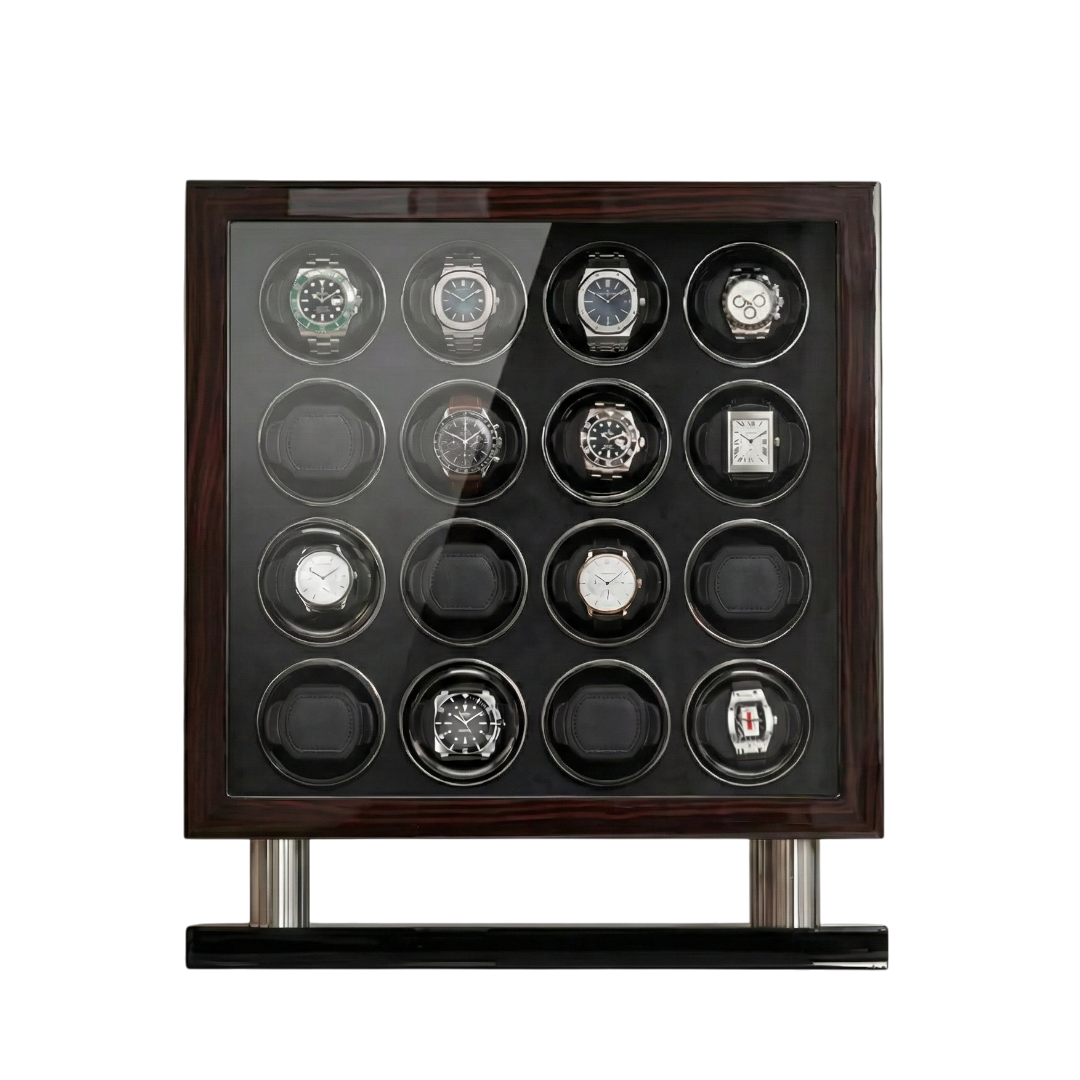
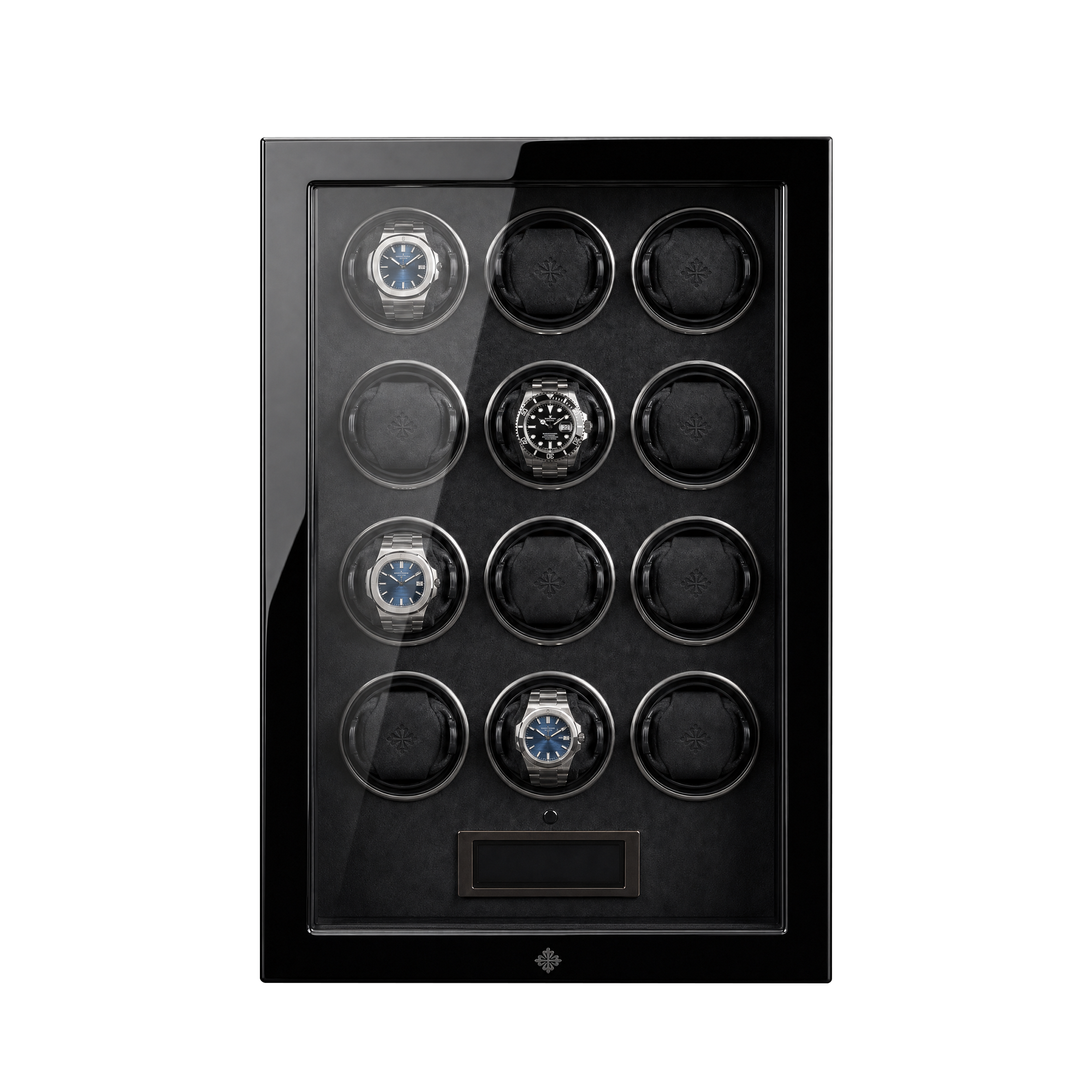
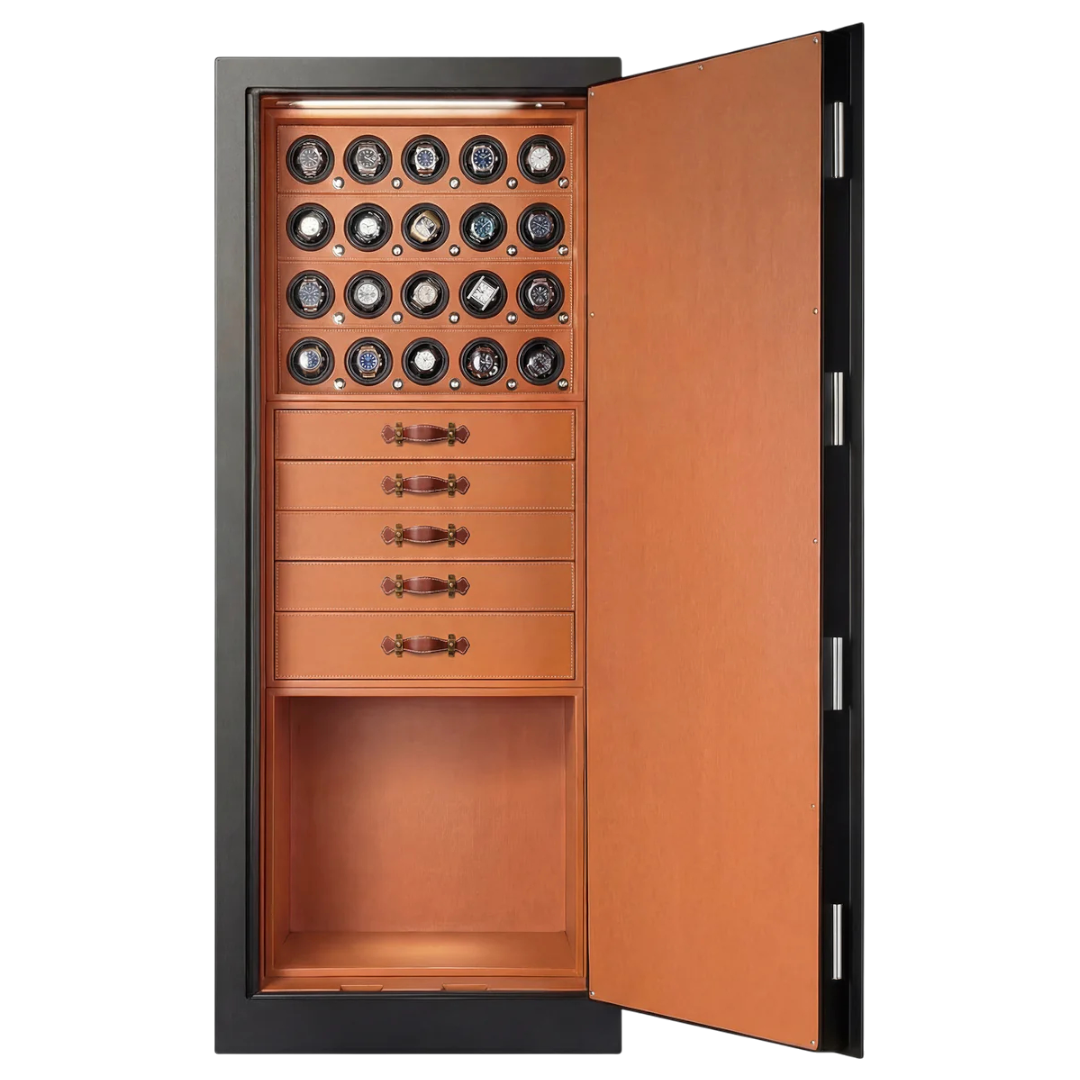
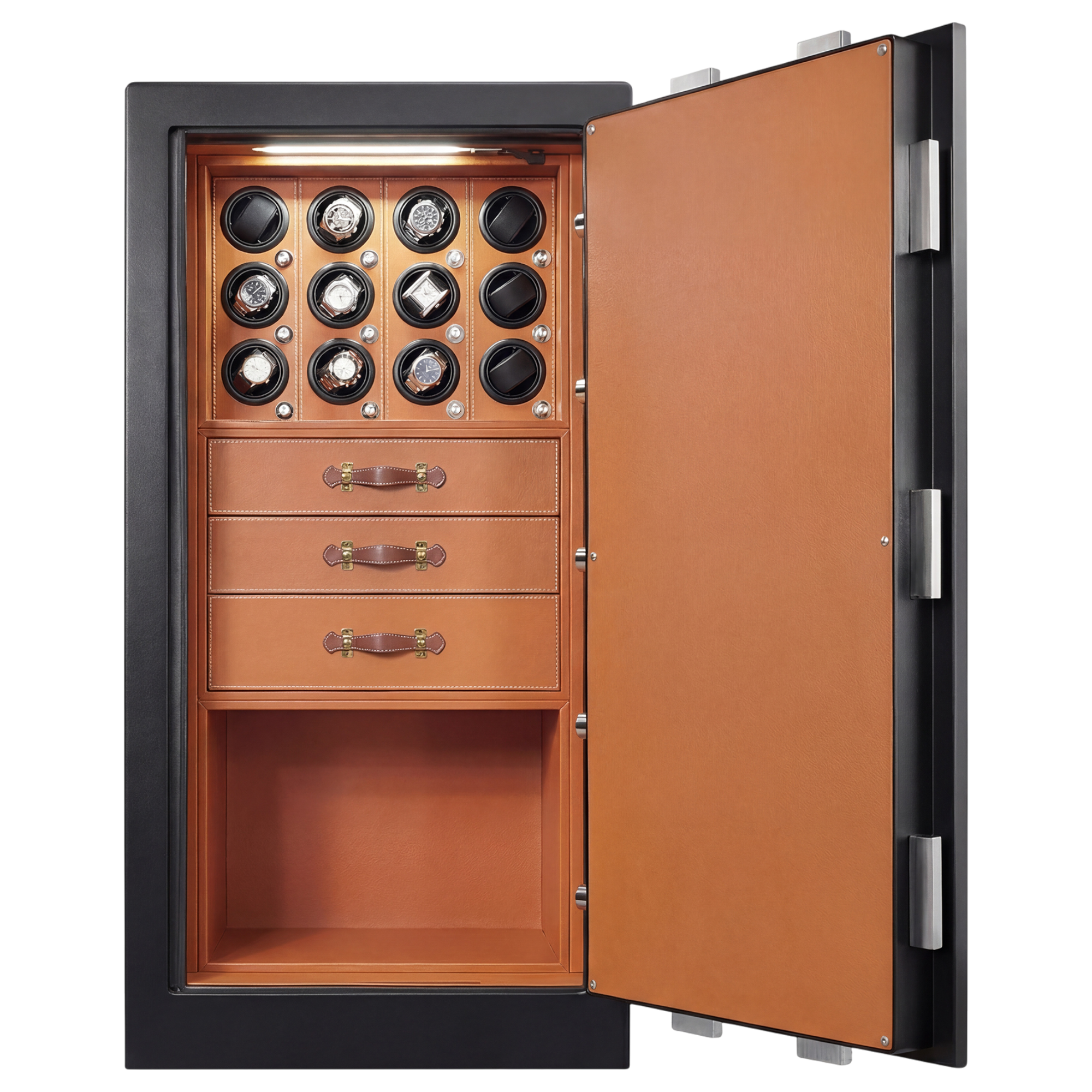
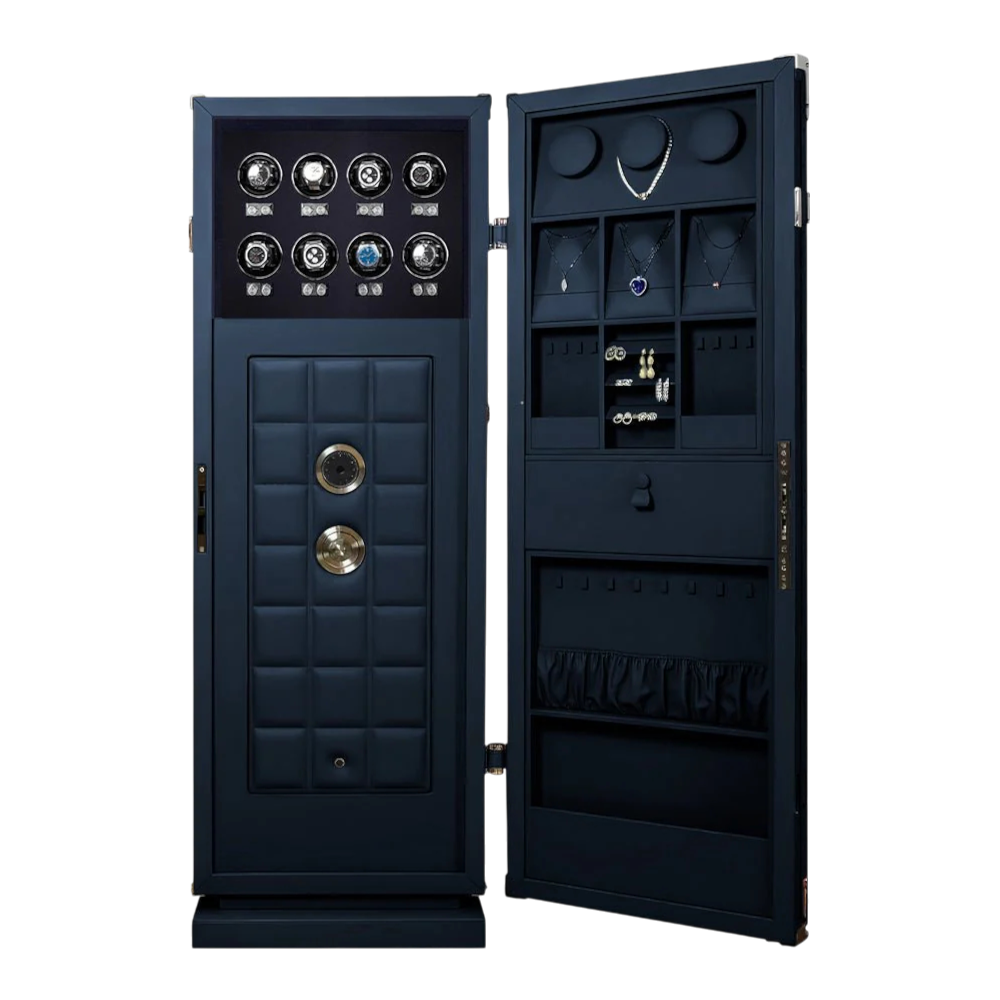
The most common approach for serious collections. A furniture-grade cabinet combines display shelves, winder banks, and storage drawers. The collection lives behind glass, visible but protected.
The Enclave Winder Cabinet and Eterna Winder Cabinet are both furniture-grade pieces. Glass-front display of the winding watches, drawer storage below for non-rotation pieces. Browse the full cabinet collection.
Winder-as-Display
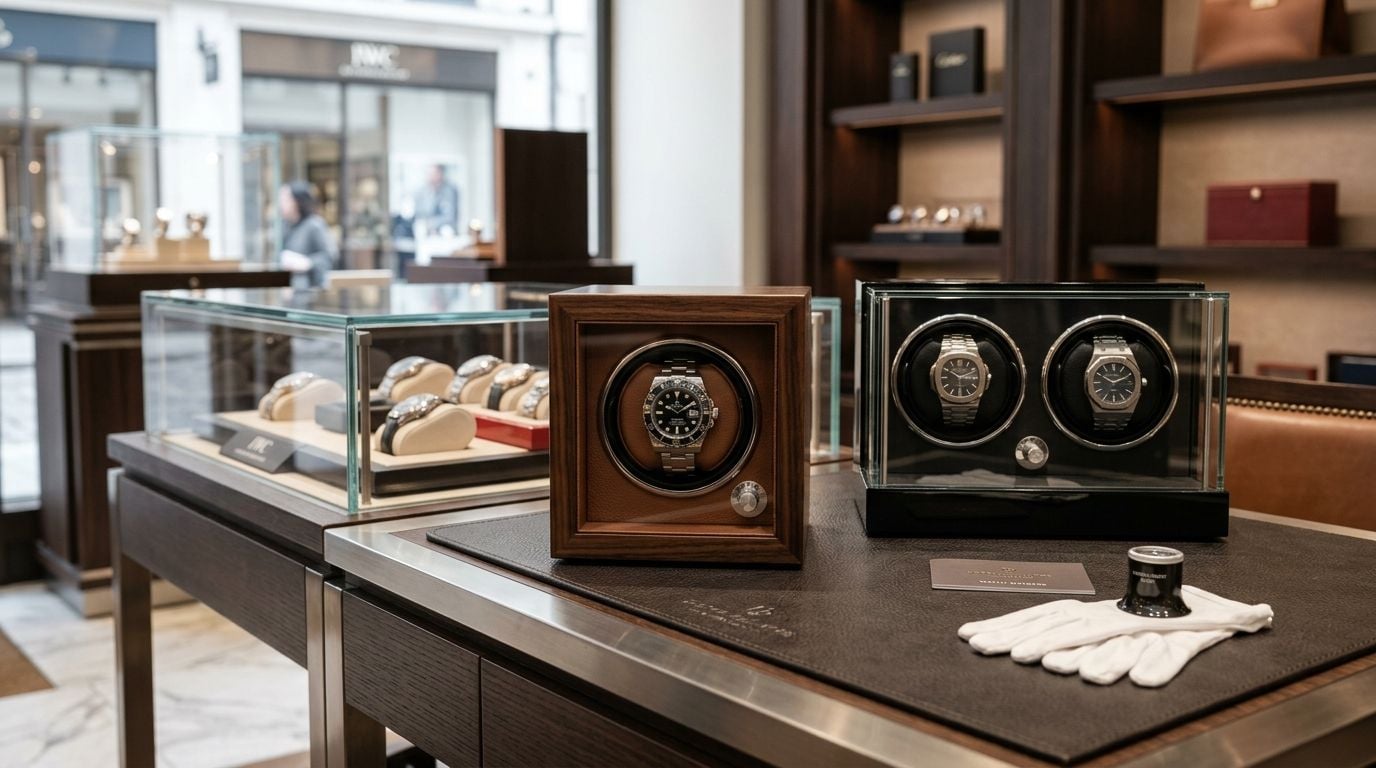
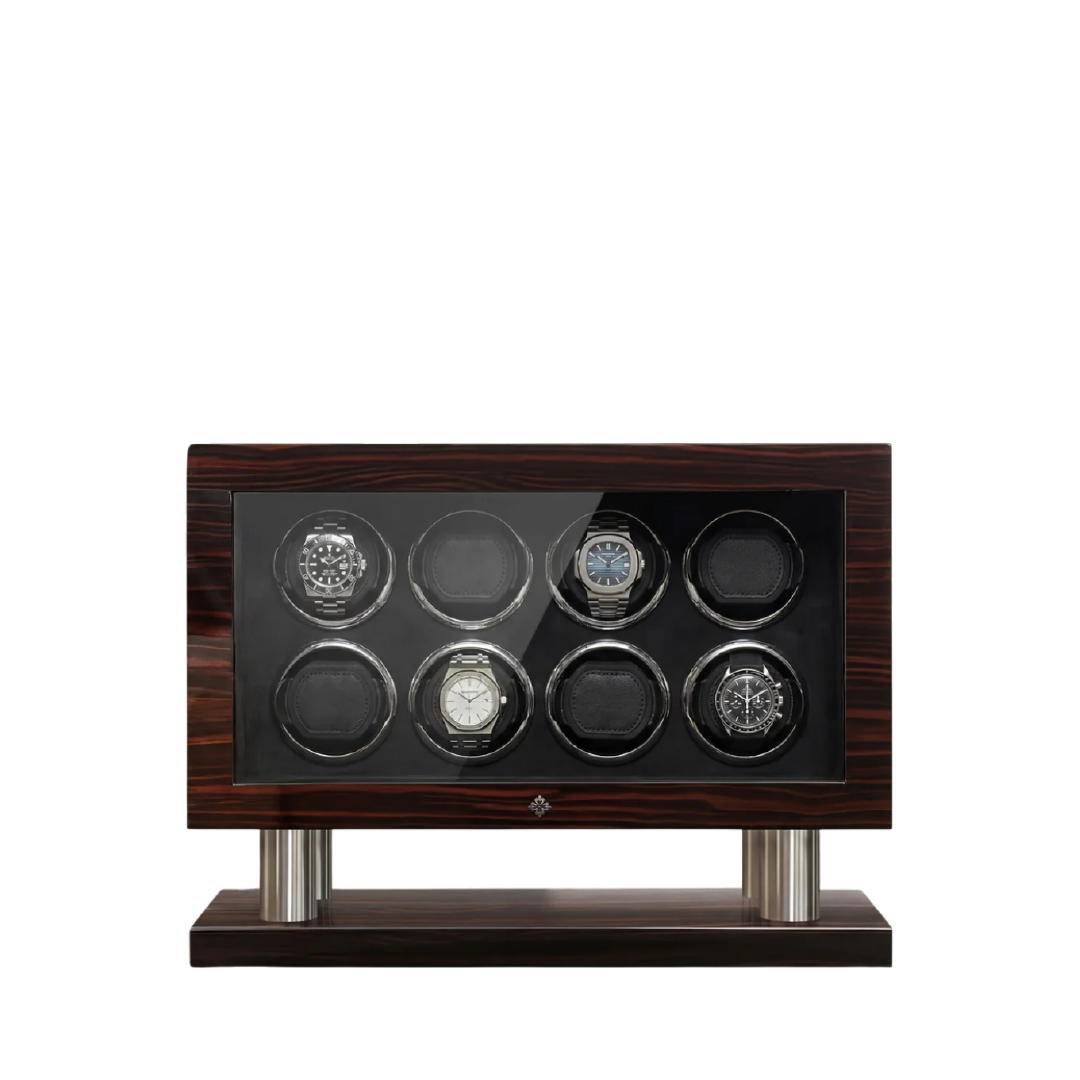
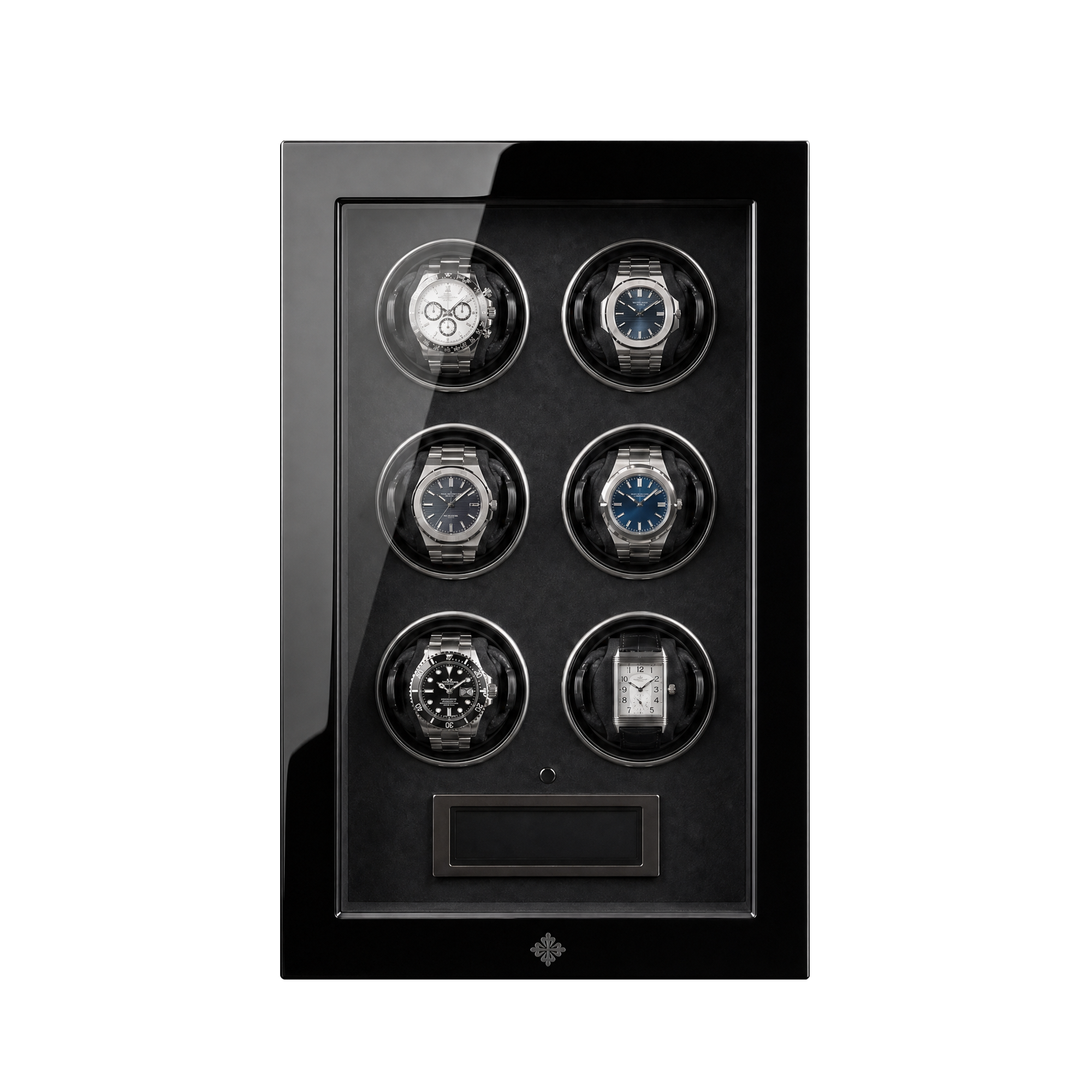
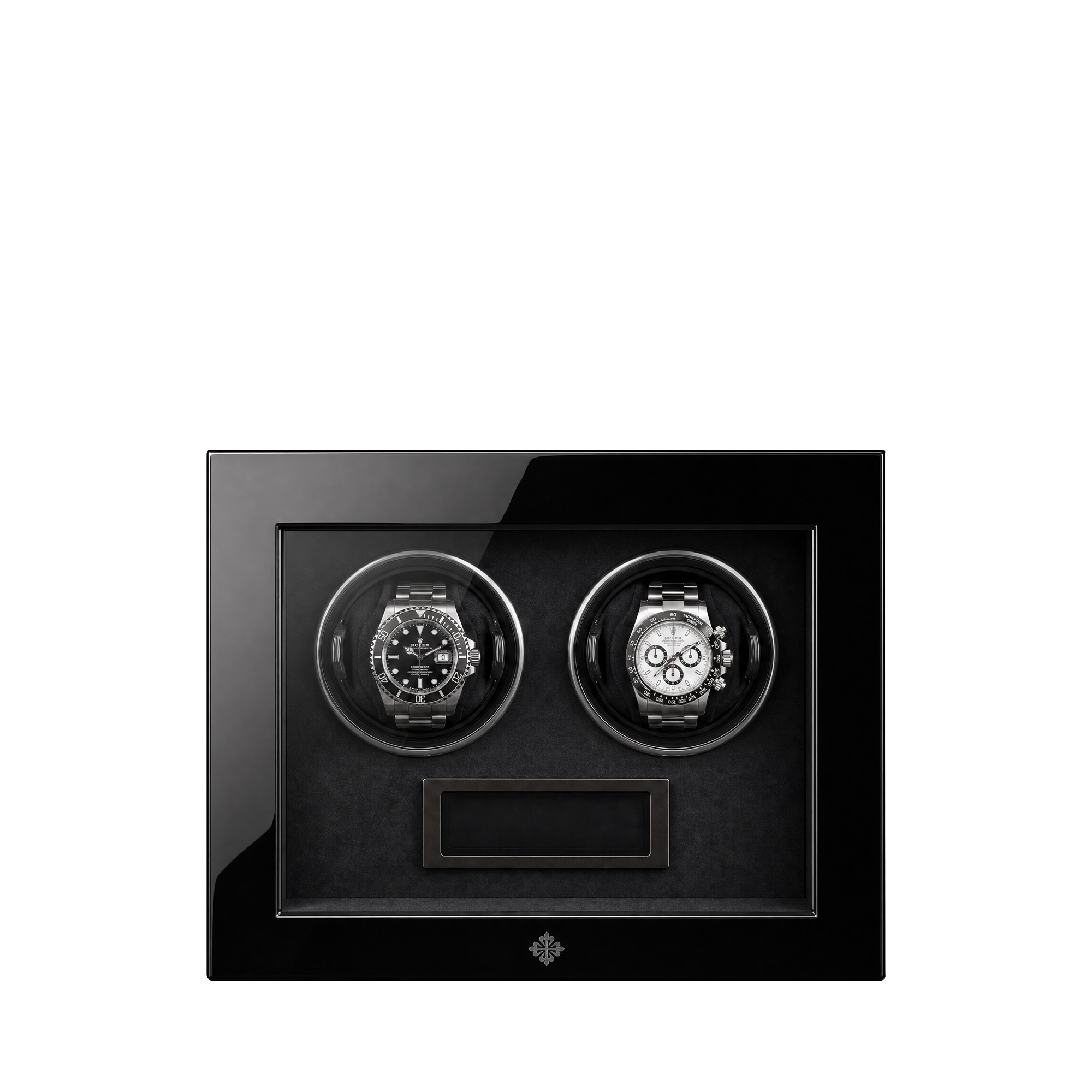
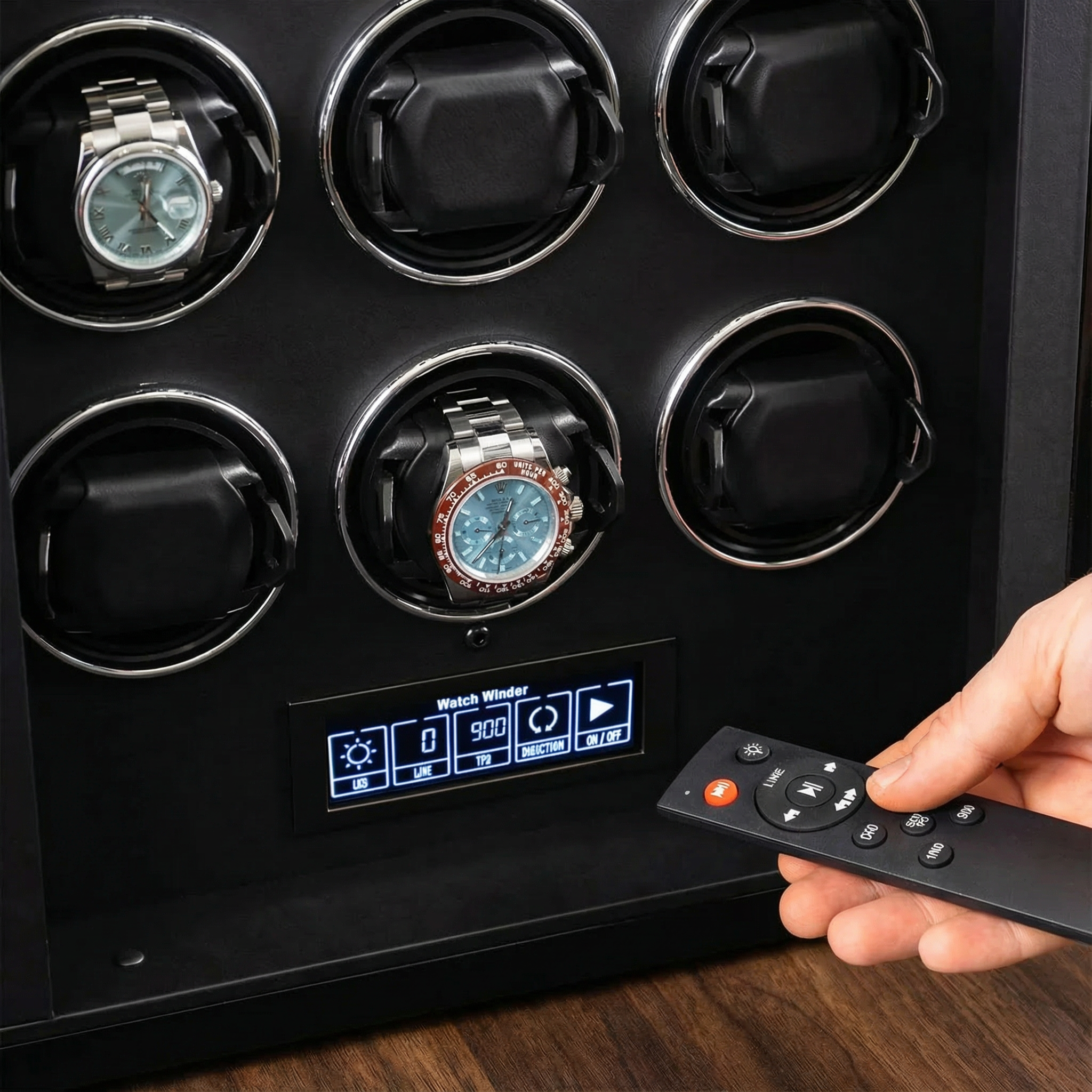
A glass-top winder on a dresser or desk is the simplest display approach. Watches sit visible behind glass while they rotate. No separate cabinet, no additional furniture.
The Impresario Series is built for this role. Glass-top, leather interior, quality finish visible from the outside.
Standalone Display Case
A dedicated case without winders. Watches sit displayed, wound manually before wear. Works for small collections of manual-wind watches or for pieces not in active rotation.
Lighting: The Detail Most Collectors Miss
Lighting makes or breaks a display. Too bright and you fade dials. Too dim and the watches disappear into the cabinet. Three principles.
Low-UV LED strips. Standard warm-white LED (2700K to 3000K) at low output. No UV or IR to damage dials.
Indirect placement. Light from above or from the side, not direct on the watch face. Avoid glare on crystals.
Timer or motion-activated. Display lights don’t need to run 24/7. A 6-hour daily cycle at peak viewing times extends dial life and saves electricity.
Display Placement in the Room
Living rooms. A credenza or sideboard display integrates well. Visible to guests, part of the furniture. Appropriate for 6 to 12 piece displays.
Dressing rooms. Full-cabinet display works here. The room itself is about the collection, so the cabinet can take visual presence.
Home offices. A small 2 to 4 watch display on the desk or bookshelf. Personal, visible to you daily, not for guests.
Library or study. Wall-mounted display cases or cabinet integration. Treats the collection like books or art.
Security Considerations for Display
Displayed watches are visible. That’s the point, but also the risk. Three strategies.
Display the rotation, safe the rest. The pieces you wear regularly go in the display. Higher-value non-rotation pieces live in a separate safe.
Locked display cabinets. Quality cabinets lock with glass that’s either tempered or laminated. Not safe-grade, but it deters casual theft.
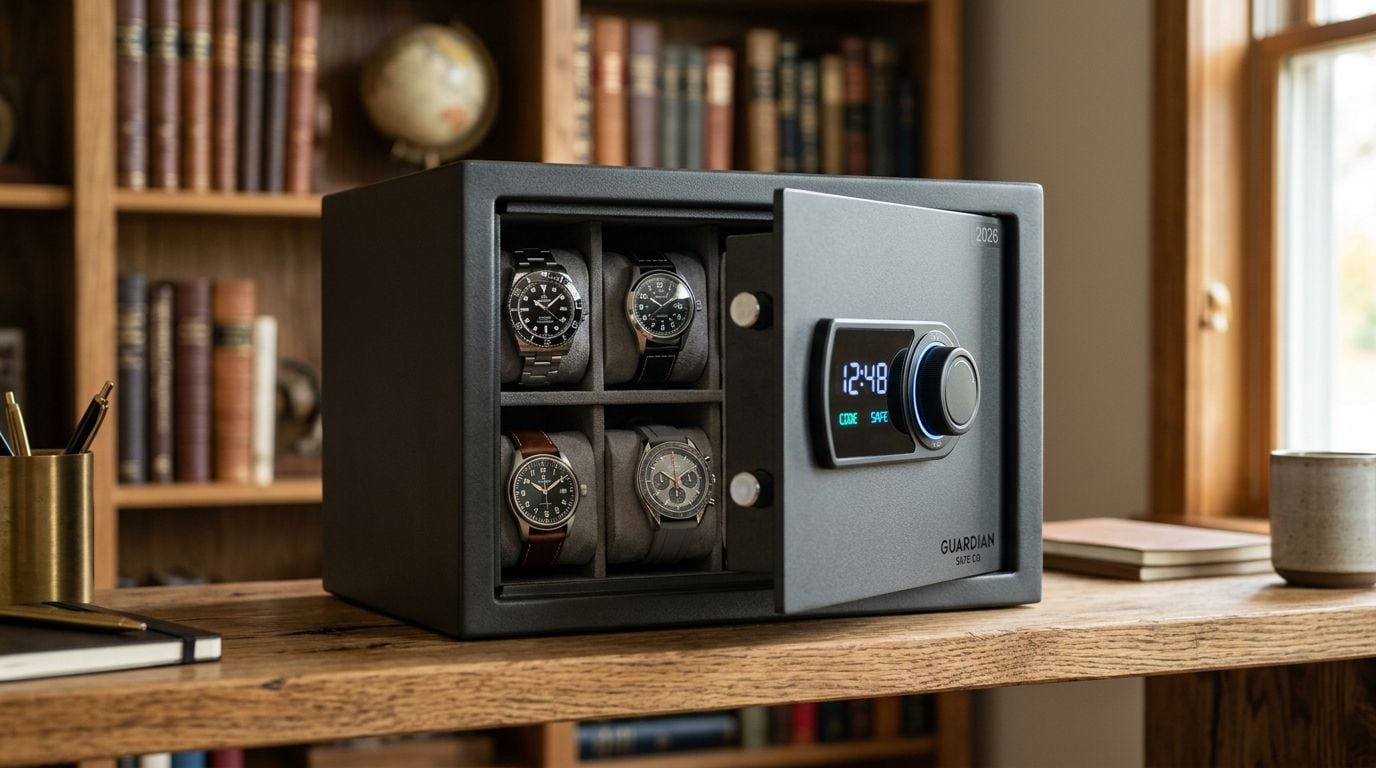
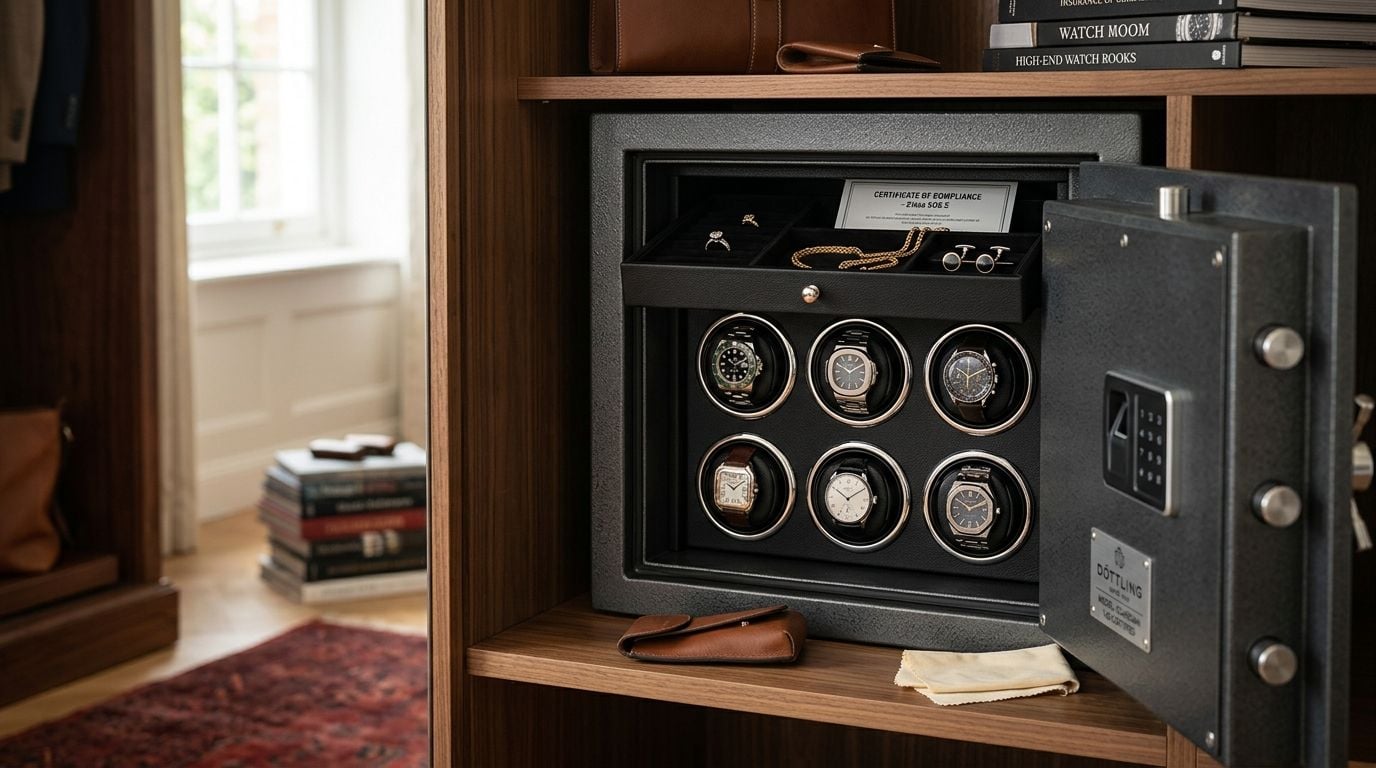
Integrated display + safe. Cabinets with locked secured compartments below the visible display. The rotation watches are visible, the rest secured, all in one piece of furniture.
Scaling by Collection Size
| Collection Size | Display Approach |
|---|---|
| 3 to 6 watches | Glass-top winder on dresser or desk |
| 6 to 12 watches | Mid-size cabinet or multiple winders on a credenza |
| 12 to 20 watches | Enclave or Eterna cabinet |
| 20 to 50 watches | Custom cabinet with winders and storage |
| 50+ watches | Dedicated watch room with full custom build |
Common Display Mistakes
Direct sunlight. UV fades dials over years. Never place display near unshaded windows.
Over-crowding. Too many watches visible at once turns into a store display. Show 60 to 80 percent of capacity, leave visual space.
Wrong color temperature lighting. Cool white (4000K+) flattens watch finishes. Warm white (2700K to 3000K) brings out metal and dial tones.
Dust exposure. Open display cases collect dust in dials and on bracelets. Sealed glass or door-front cabinets are better for daily cleanliness.
No rotation plan. Displayed but never worn isn’t the point. Build the display around your actual rotation.
Frequently Asked Questions
Is it safe to display valuable watches at home?
Depends on your home, security, and collection value. Display the rotation watches, safe the rest. For higher-value collections, locked display cabinets add a layer of deterrence.
Will display fade my watches over time?
Low-UV LED lighting at moderate output is safe for years. Direct sunlight is the real problem, not interior lighting.
How much space does a collection display need?
A 6-watch glass-top winder fits on a standard dresser. A 12-watch cabinet is a full piece of furniture. Scale display to collection size.
Can I combine display and storage in one cabinet?
Yes. The Enclave and Eterna cabinets integrate display, winders, and drawer storage in one unit.
Should I rotate display or leave it static?
Rotating what’s visible keeps the collection fresh and distributes UV exposure across pieces.
What about dust?
Enclosed glass cabinets minimize dust. Open displays need cleaning every 1 to 2 weeks.
Is wall-mounted display a good idea?
For small collections of 2 to 6 watches, yes. For larger, cabinet display is more practical.
Build for Your Room
Start with the room. Measure the space, plan the placement, then choose the cabinet or winder that fits. The cabinet collection covers most integrated display needs. For custom builds sized to specific rooms, Custom Safes handles bespoke work.
Related reading: building a watch room, how many winders do you need, and glass-top vs closed winders.
Protect Your Watch Collection
Designed for collectors who demand the best. Explore our premium watch winders and luxury safes.
Protect Your Watch Collection
Designed for collectors who demand the best. Explore our premium watch winders and luxury safes.