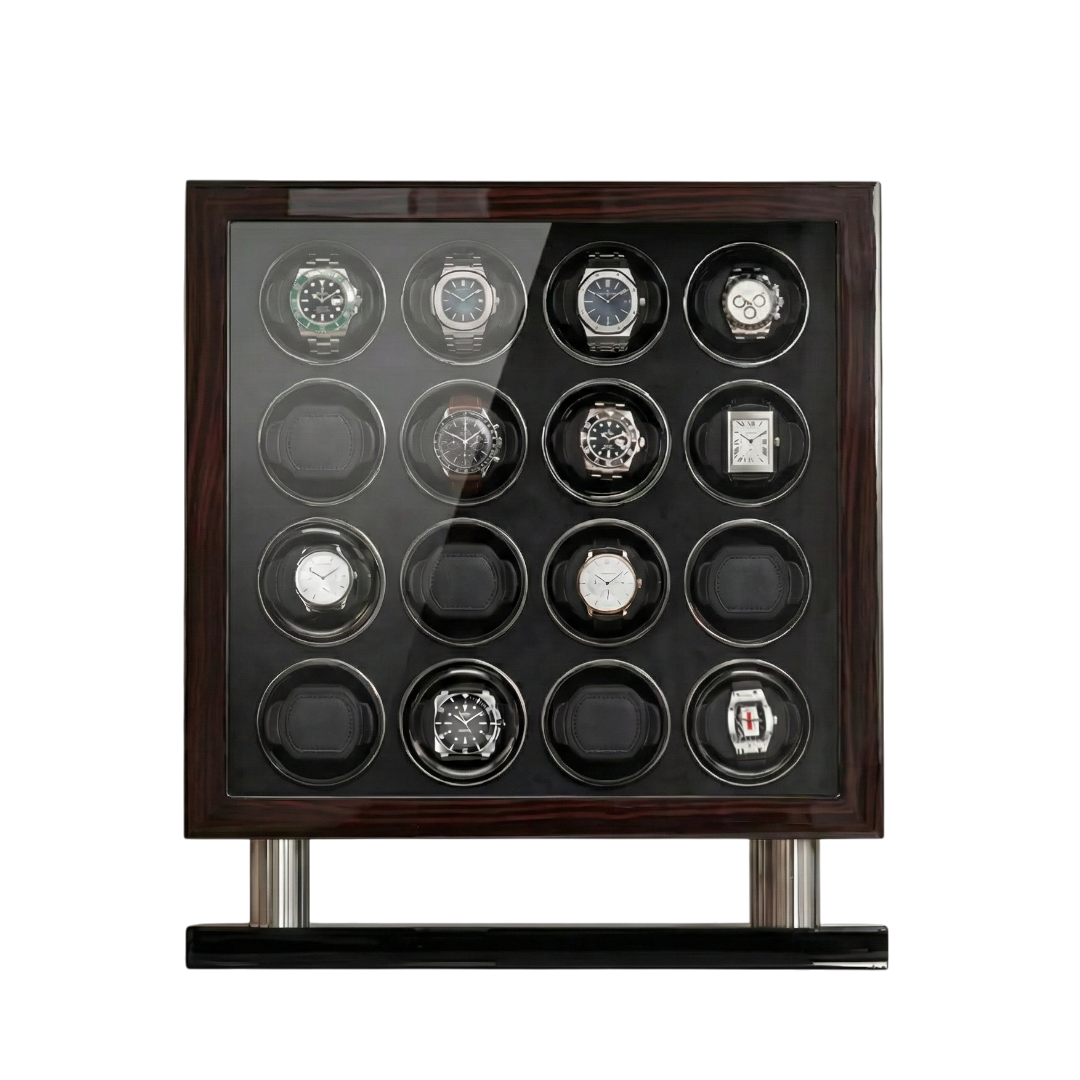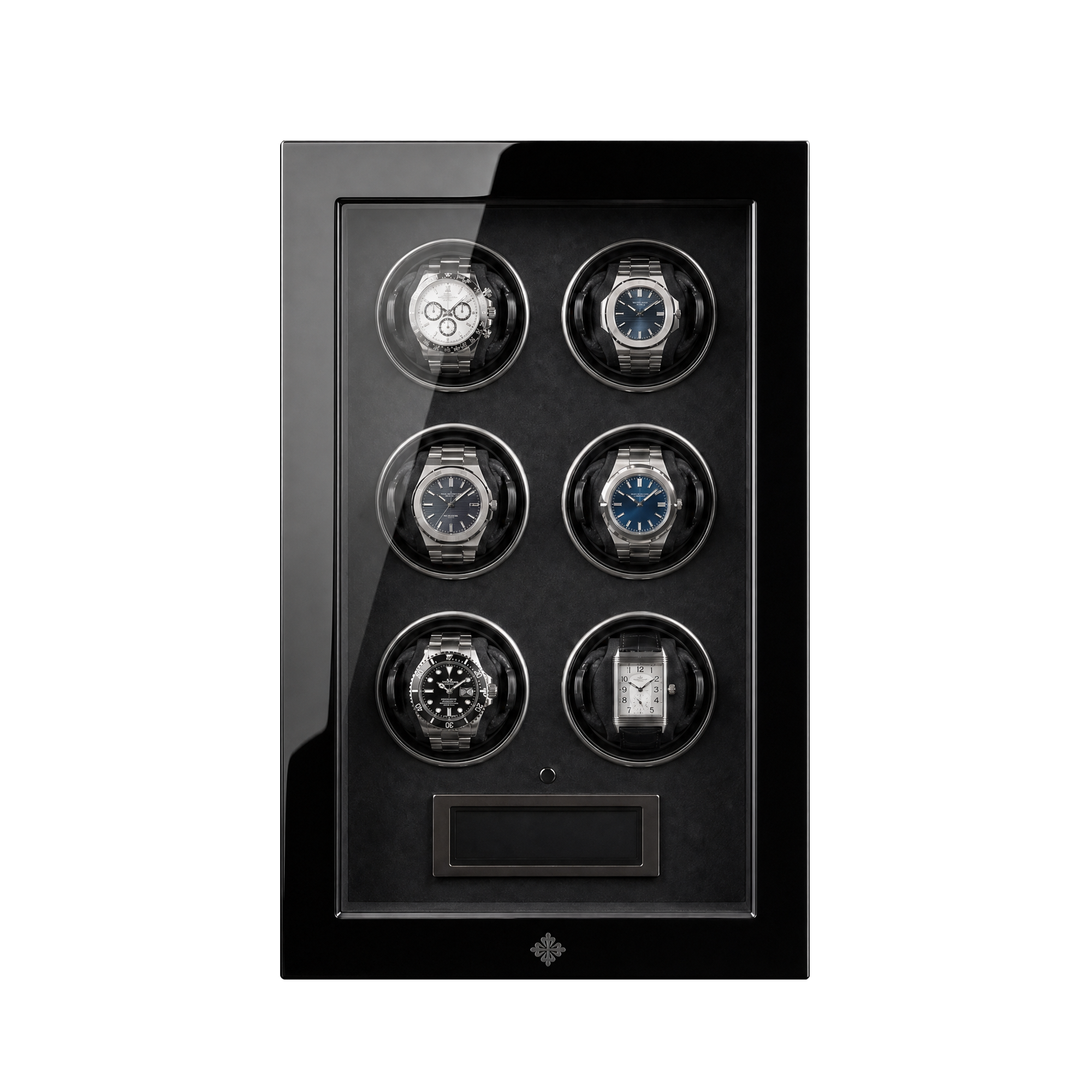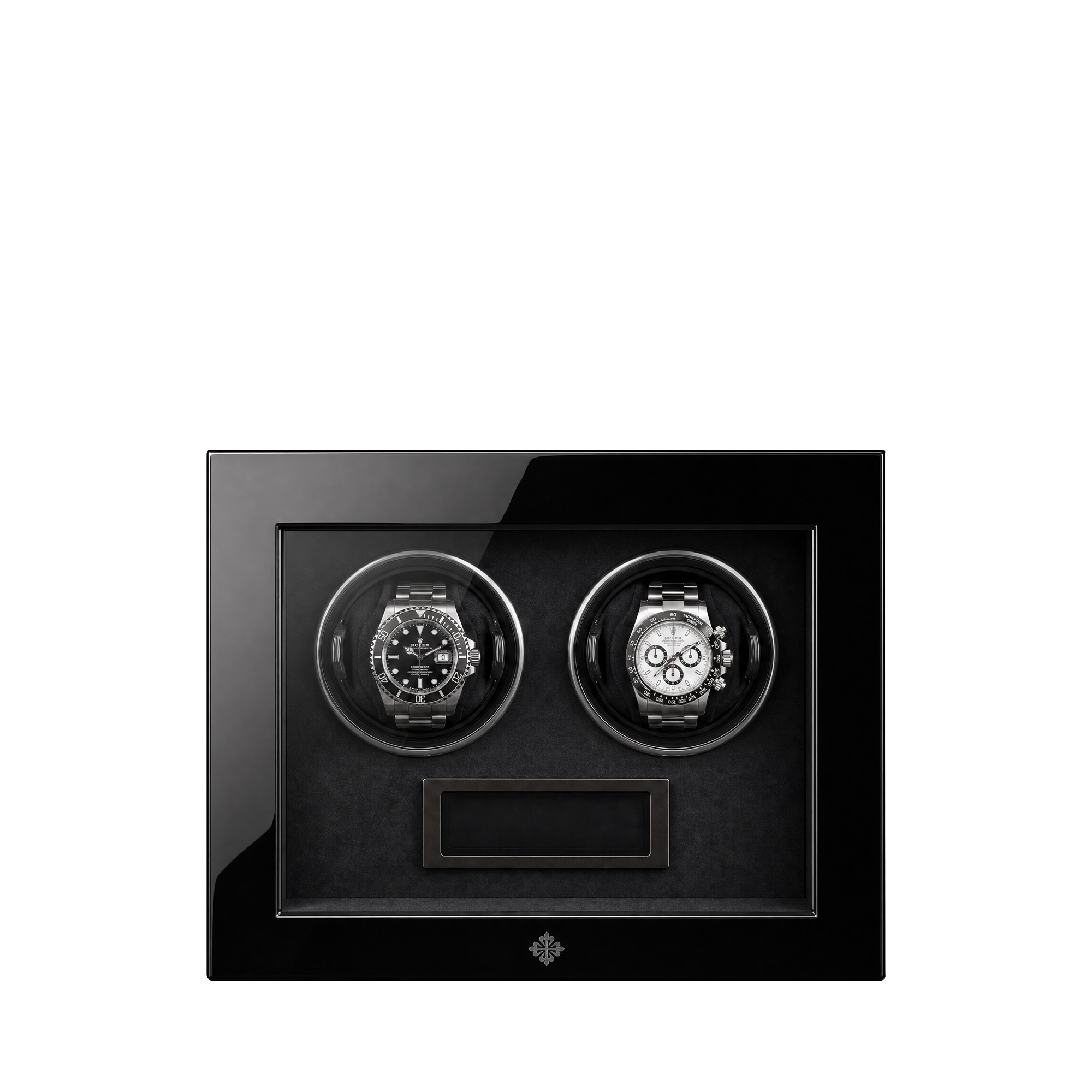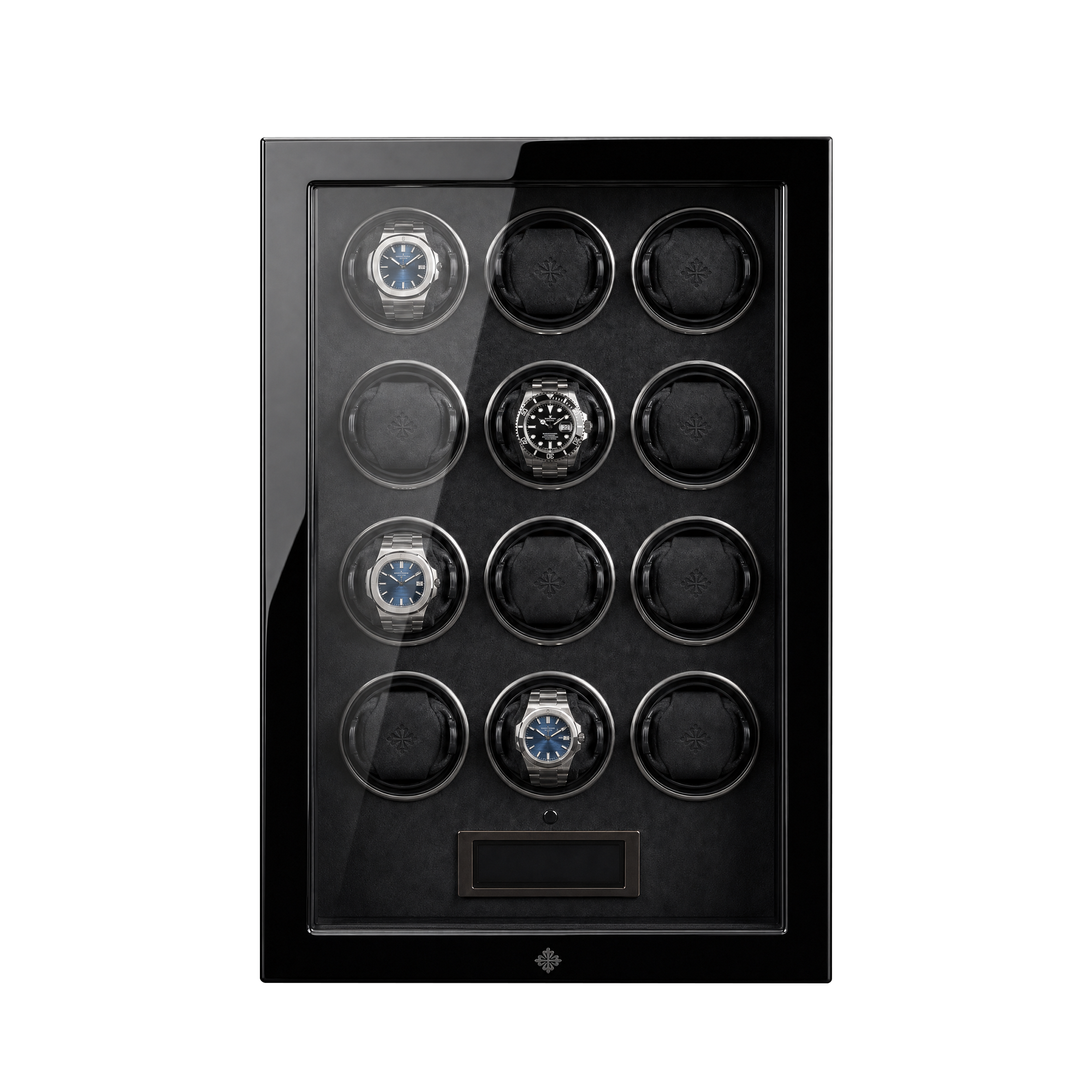

Two design philosophies split the watch winder category. Glass-top winders show the watches while they rotate. Closed winders hide them. Both work mechanically, both come in quality builds. The choice is about where the winder lives, who sees it, and what you want it to do.
Glass-Top: Display and Daily Engagement
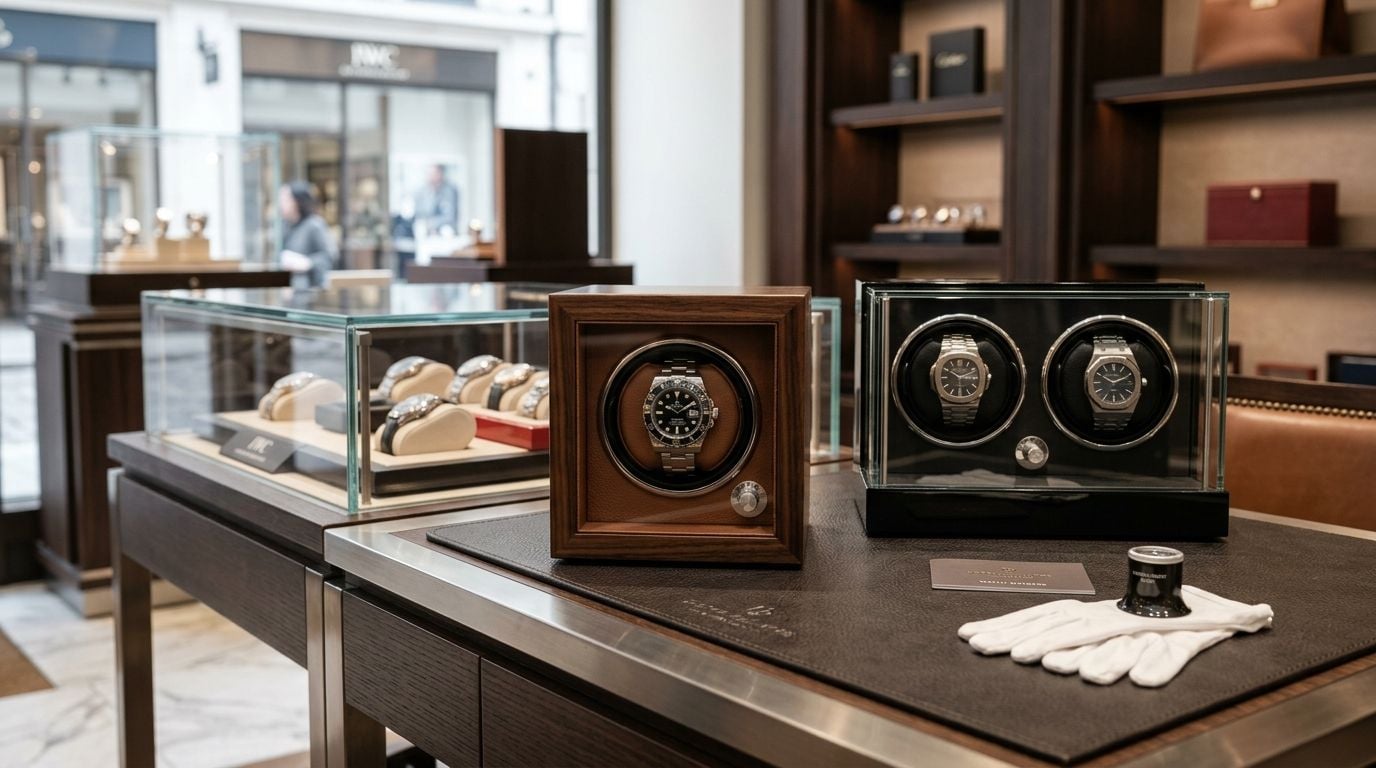
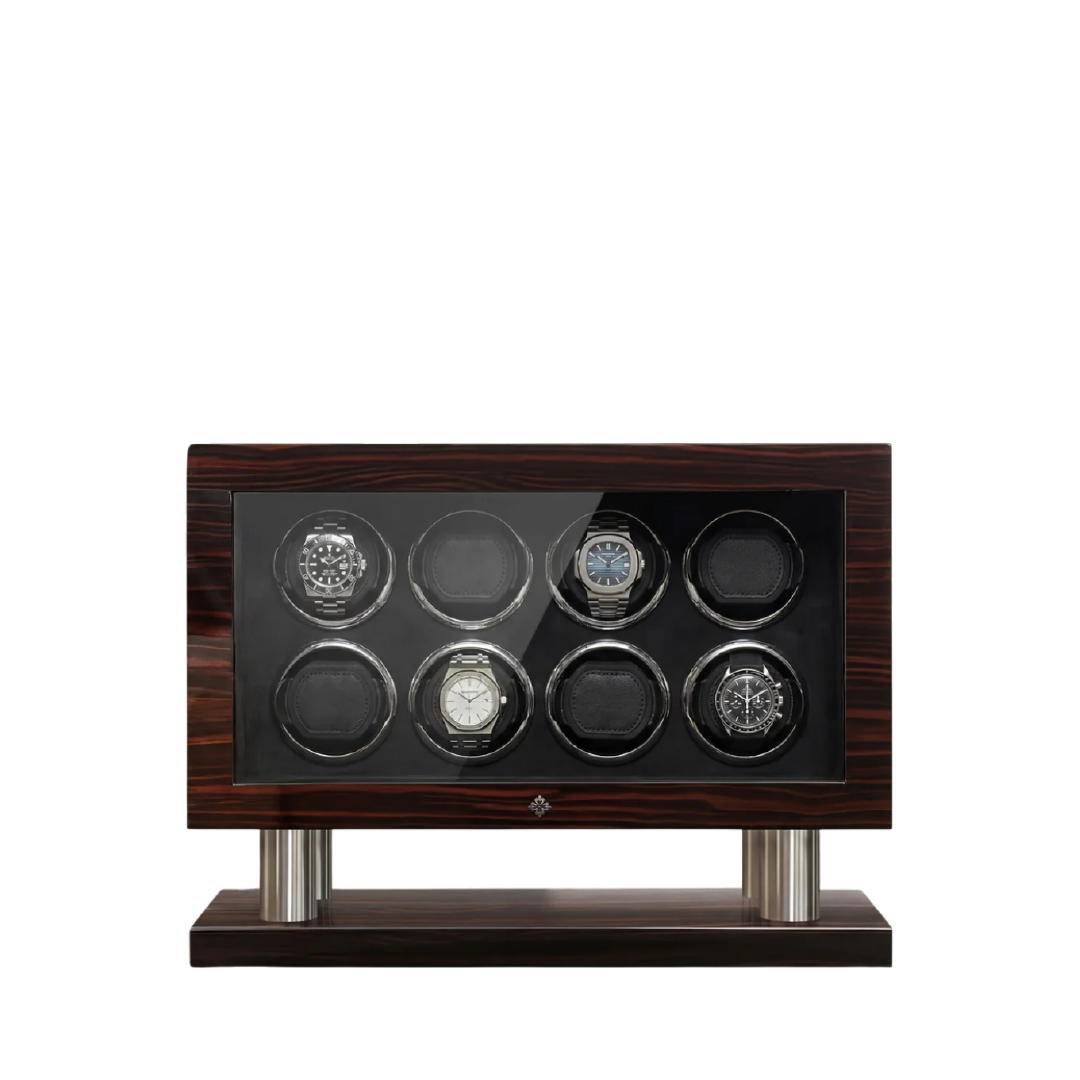
A glass-top winder puts the watches on display. You walk past it in the morning and see the collection rotating. Guests notice it. The watches themselves become part of the room’s visual design, not hidden away.
Glass-top wins for.
- Offices where the watches are part of the space’s character
- Dressing rooms where daily visual access is part of the experience
- Collectors who enjoy seeing their collection passively, not just on wear
- Display cabinets with internal lighting
The Impresario line is the flagship glass-top series. Quality glass, leather interior visible behind, motors and wiring hidden from view.
Closed: Protection and Discretion
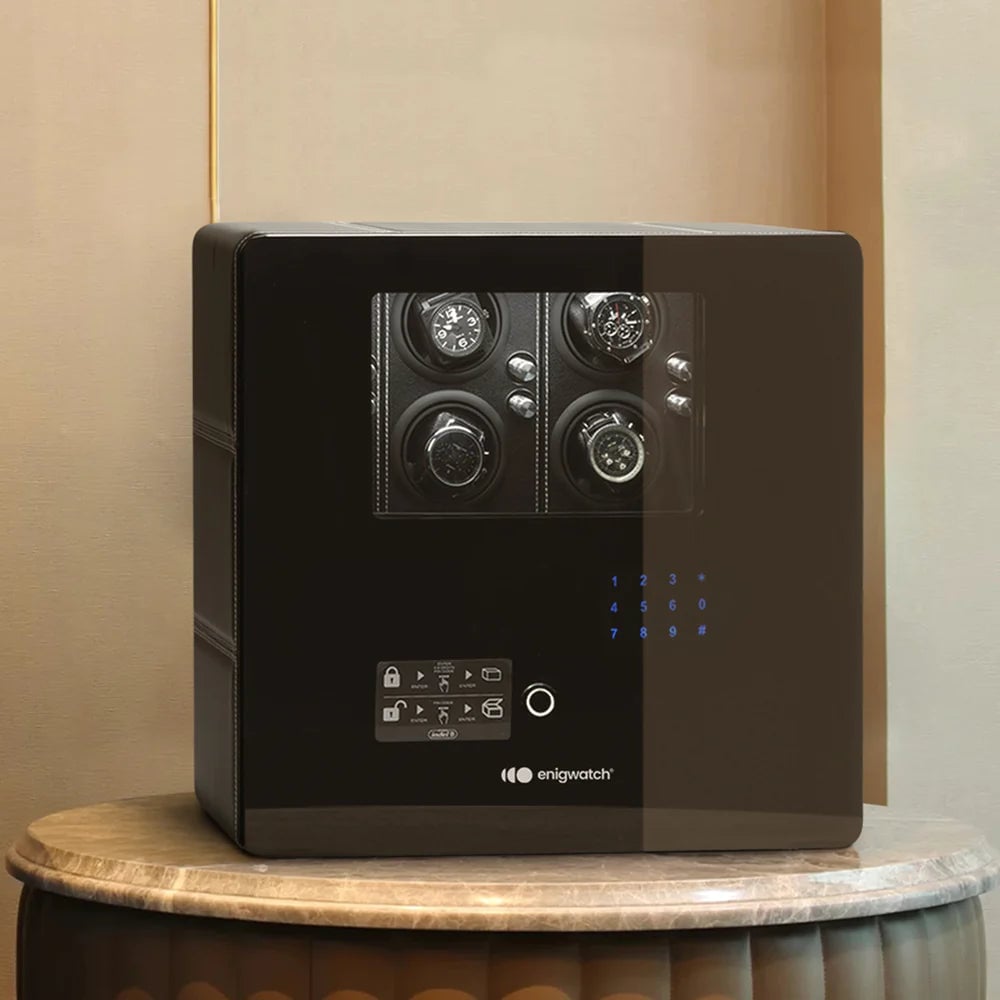
A closed winder hides the watches. Solid door or lid, no viewing panel. The collection is present but not on display.
Closed wins for.
- Bedrooms where light from the room shouldn’t reach the watches
- High-dust environments where sealed enclosures matter
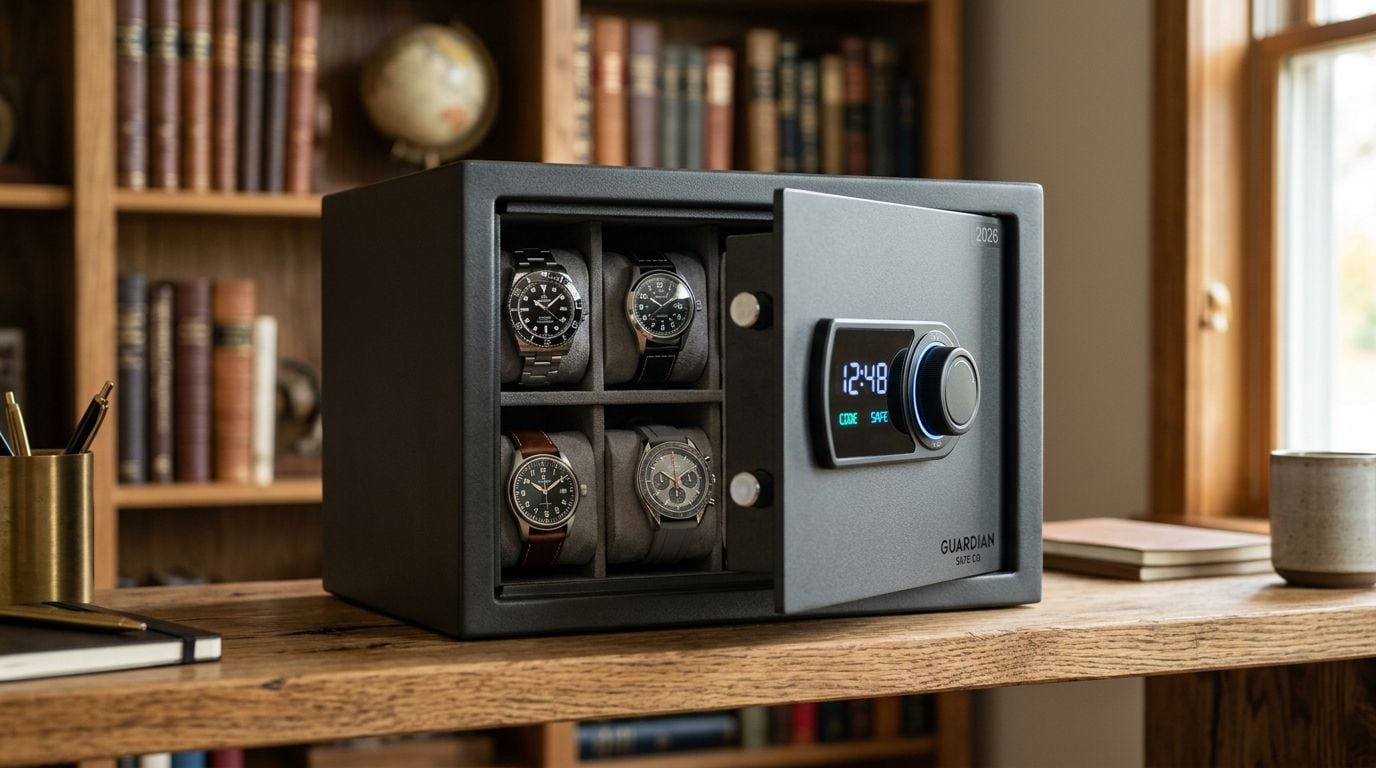
- Security-conscious installations where the collection shouldn’t be visible
- Offices shared with visitors who don’t need to see the collection
The Virtuoso line is the flagship closed series. Fully enclosed body, quieter than glass-top, and protects watches from ambient dust.
Side-by-Side
| Factor | Glass-Top | Closed |
|---|---|---|
| Display | Full visual access | Hidden |
| Dust protection | Moderate (glass sealed but visible) | High (fully sealed) |
| Noise | Slightly higher (2 to 4 dB) | Lower (absorbs motor sound) |
| Light exposure | Watches exposed to ambient light | Protected from UV and fade |
| Security profile | Shows what’s inside | Blank exterior |
| Aesthetic role | Display piece | Furniture piece |
| Best room | Office, dressing room | Bedroom, shared space |
UV and Dial Exposure
Watches sitting under direct sunlight for years will fade. Glass-top winders don’t block UV by default, so if the winder sits near a window, the dials are at risk. Tinted glass or UV-filtering glass reduces this, but it’s worth noting.
Closed winders eliminate the UV concern entirely. If your collection includes vintage pieces or tropical-dial watches where fading matters, closed is the safer choice.
Dust and Environment
No winder is fully sealed. Air circulates through ventilation gaps to keep motors cool. Glass-top units have more gaps at the seam between the glass and the frame. Closed units have tighter seams.
In a typical home, neither is a problem. In a high-dust environment (construction nearby, pets, open windows year-round), the closed unit is the lower-maintenance choice.
Noise Considerations
Glass doesn’t absorb sound the way a wood or leather-lined interior does. A glass-top winder with Mabuchi motors still runs quiet (under 15 dB at the enclosure), but a comparable closed unit is typically 2 to 4 dB quieter.
For bedrooms, closed is the better default. For offices and common rooms, the noise difference doesn’t matter. For related reading, see silent watch winders.
Security and Discretion
A glass-top winder announces what’s inside. If your collection is visible to guests, staff, or anyone with household access, consider whether that matters.
Closed winders give no visual information. For collectors with high-value pieces and security concerns, this matters more than the aesthetic trade-off.
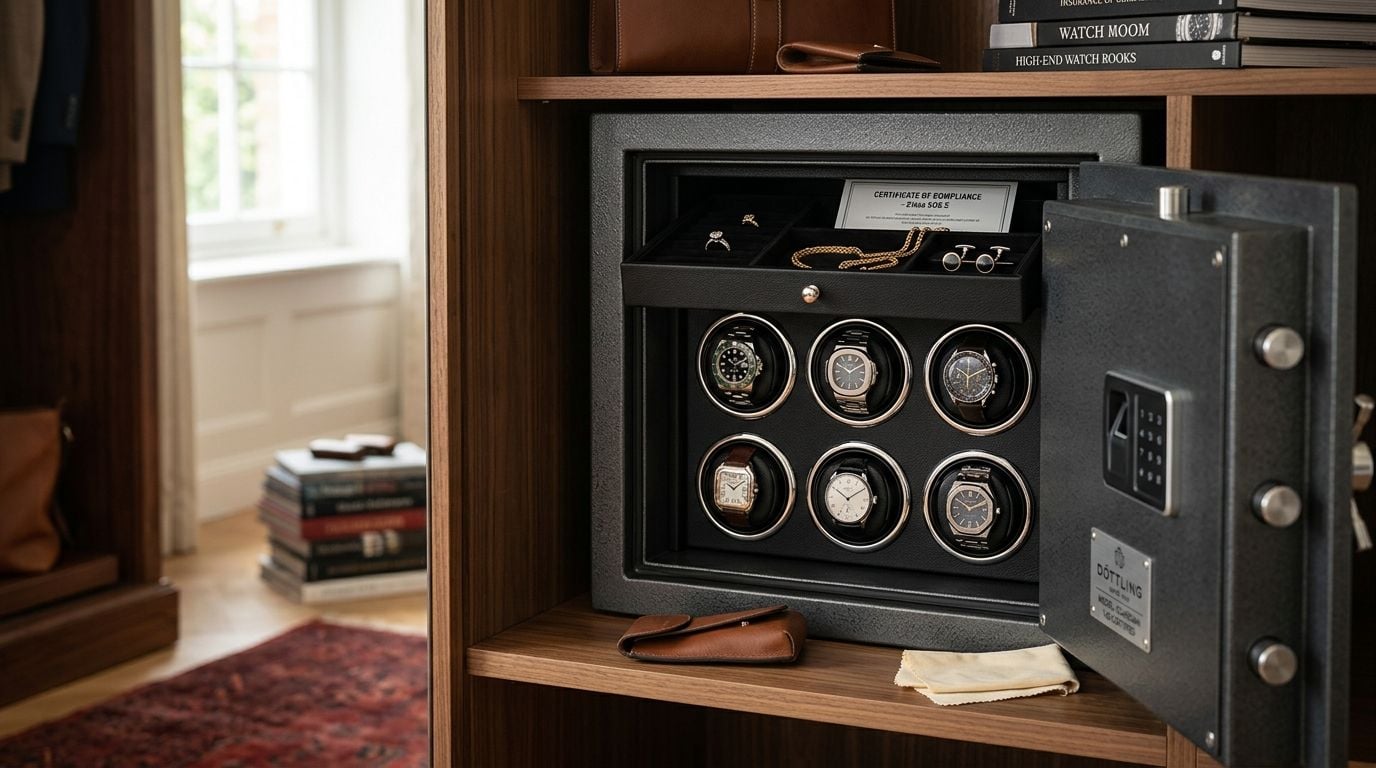
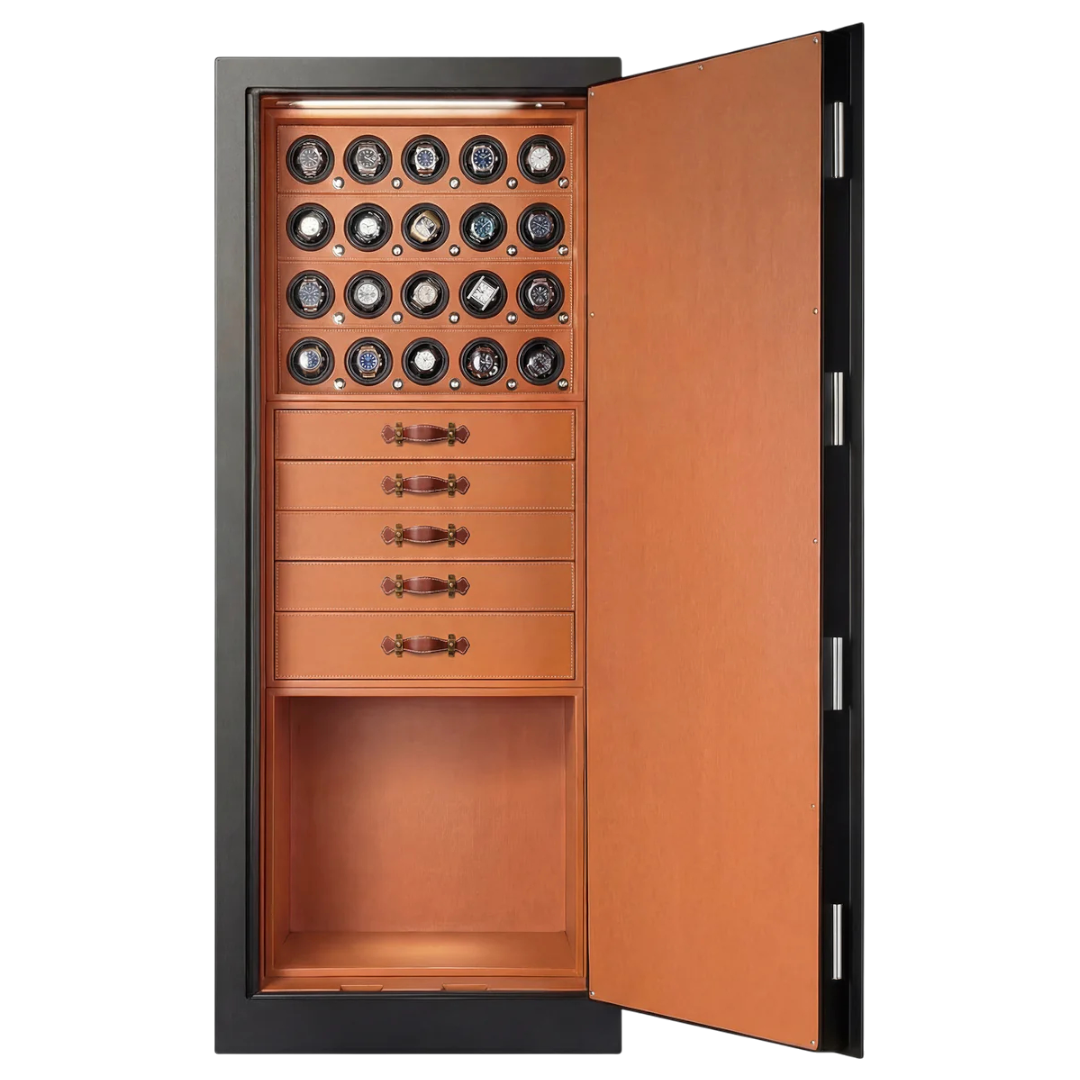
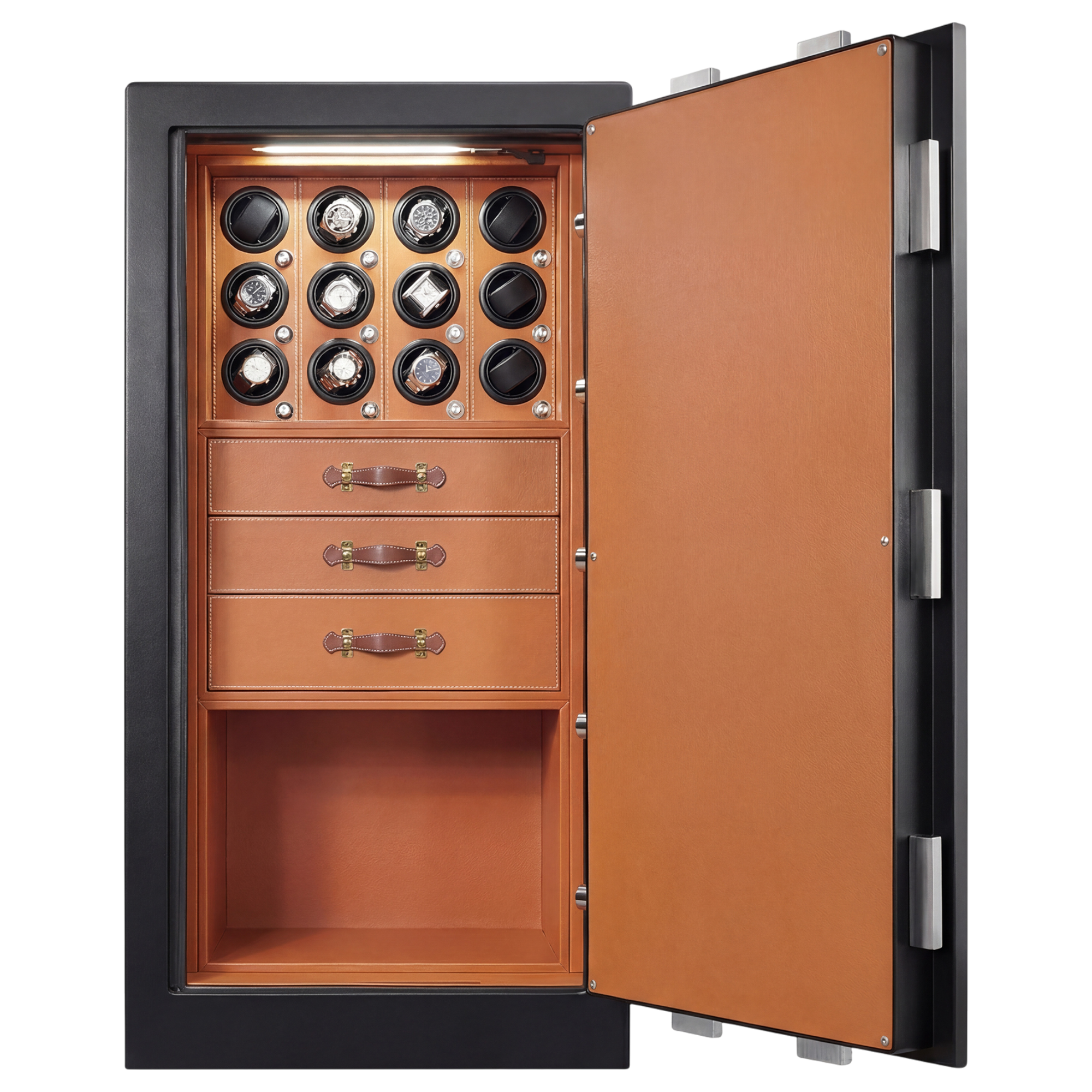
For integrated security (winder inside a safe), a closed construction is standard. See the Winder + Safe combined collection or the Veron 12 for examples.
Hybrid: Cabinets With Glass Doors
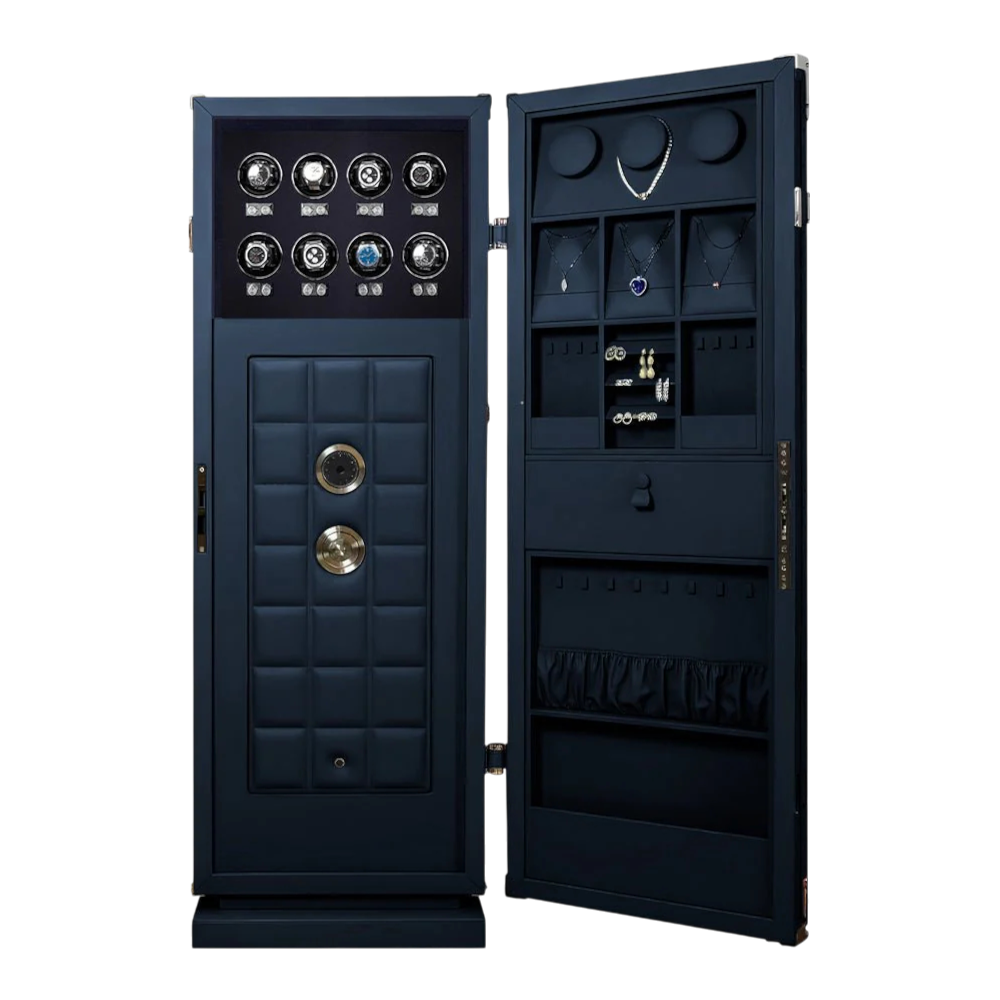
Some cabinet-style units split the difference. The watches sit behind glass doors that lock, with display lighting inside the cabinet. The Enclave and Eterna cabinets offer this configuration. Display when unlocked, secured when closed.
Frequently Asked Questions
Do glass-top winders harm watches through UV exposure?
Only if placed in direct sunlight for extended periods. In normal room conditions, UV exposure through glass is minimal.
Is a closed winder quieter than a glass-top?
Typically 2 to 4 dB quieter. Both are quiet in absolute terms with quality motors. The difference matters in bedrooms.
Can I convert a glass-top winder to closed?
No. The body is manufactured as one or the other. If you want closed, buy closed.
Do glass-top winders collect more dust?
Slightly more, due to seam gaps. In a typical home, both require similar cleaning intervals.
Which is more expensive, glass-top or closed?
Within the same product line, usually similar pricing. Quality glass adds cost but so does premium leather on closed units. The difference is typically under 10 percent.
Does glass break easily?
Tempered glass on quality winders is durable. A dropped winder may break the glass, but normal handling doesn’t risk it.
What’s the best choice for a bedroom?
Closed. Quieter, no UV concern from overnight reading light, and less visible if you have light sleep.
The Decision
Glass-top for display spaces: office, dressing room, display cabinet. Closed for protected spaces: bedroom, high-value or security-conscious installations, dust-prone environments.
The Impresario Series (glass-top) and Yachtline Series both handle display roles. The Virtuoso Series handles the closed role with premium leather interior.
For related reading, see how to choose a watch winder and the complete buying guide.
Protect Your Watch Collection
Designed for collectors who demand the best. Explore our premium watch winders and luxury safes.
Protect Your Watch Collection
Designed for collectors who demand the best. Explore our premium watch winders and luxury safes.