
Humidity is the silent threat in watch storage. Temperature matters, but rooms self-correct over hours. Humidity accumulates damage over years. Moisture corrodes movements, fogs crystals, grows mold on leather straps, and breaks down dial paint. This guide covers what humidity levels matter, how to measure them, and how to control them in a real collection.
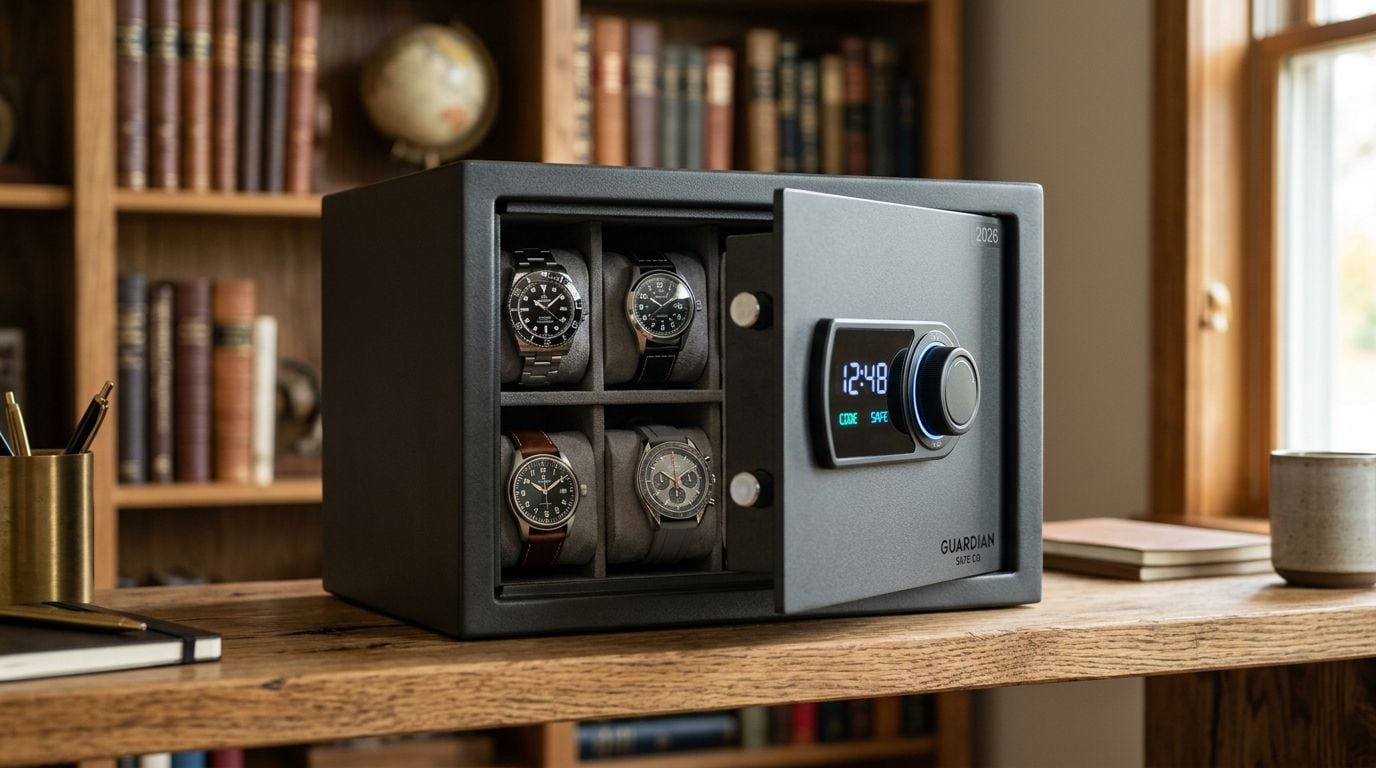
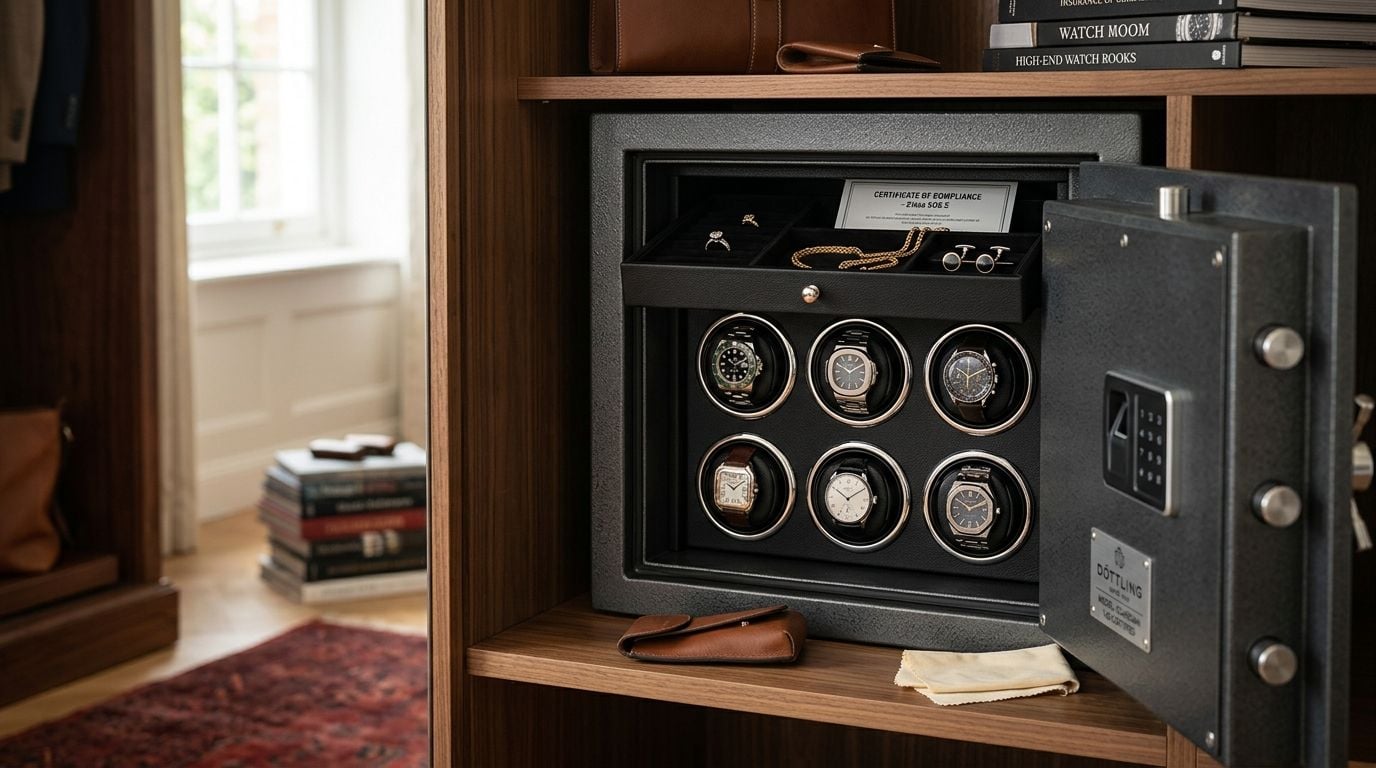
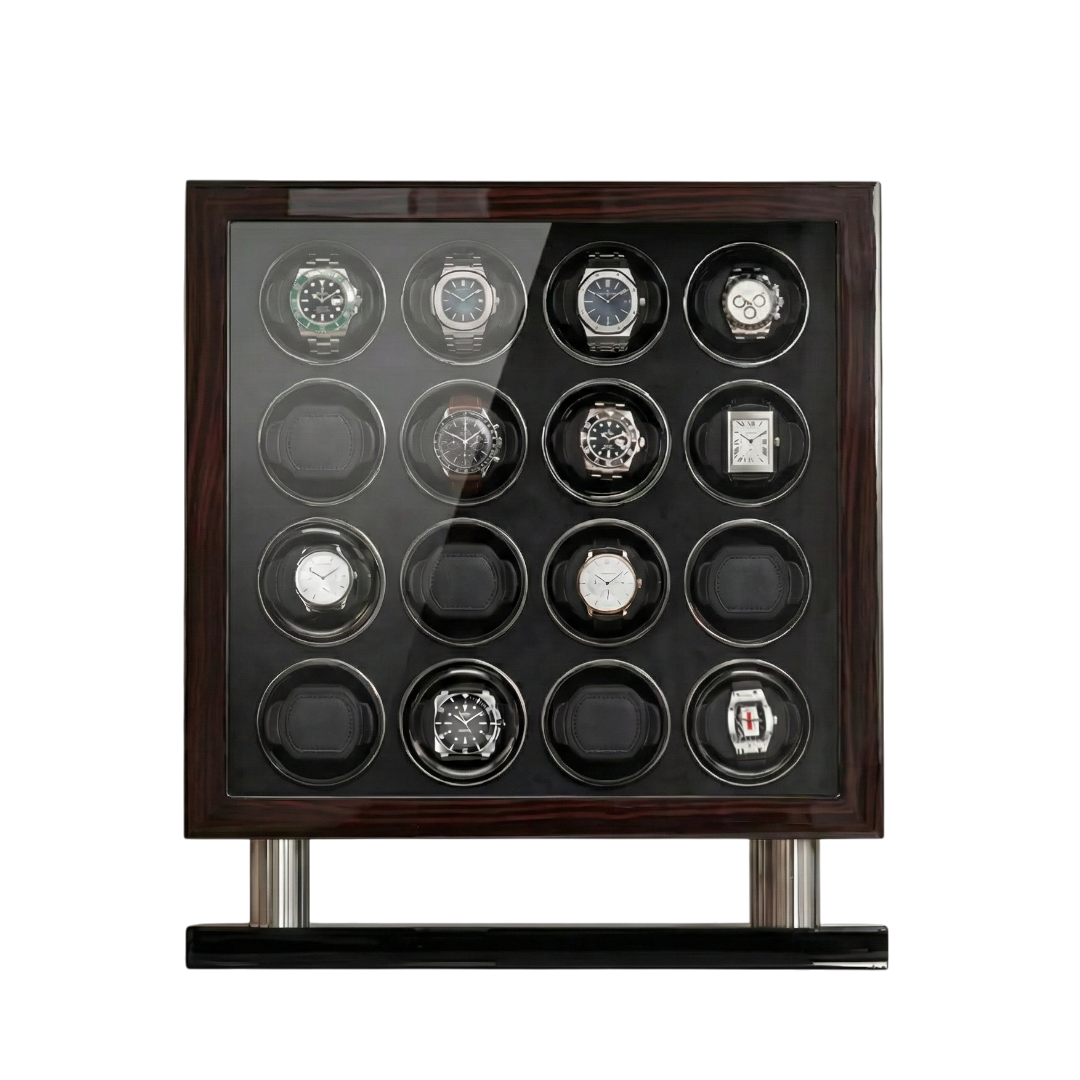
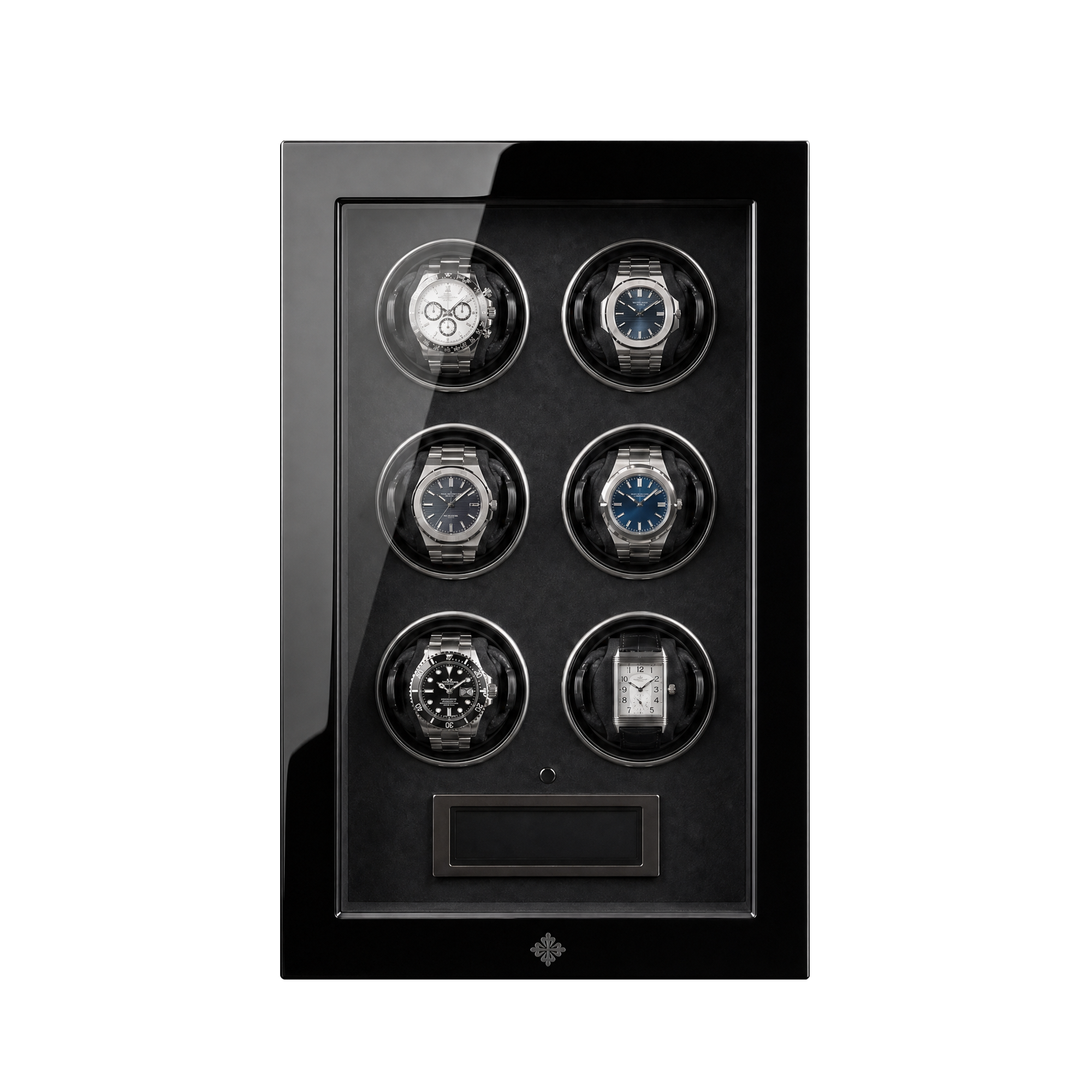
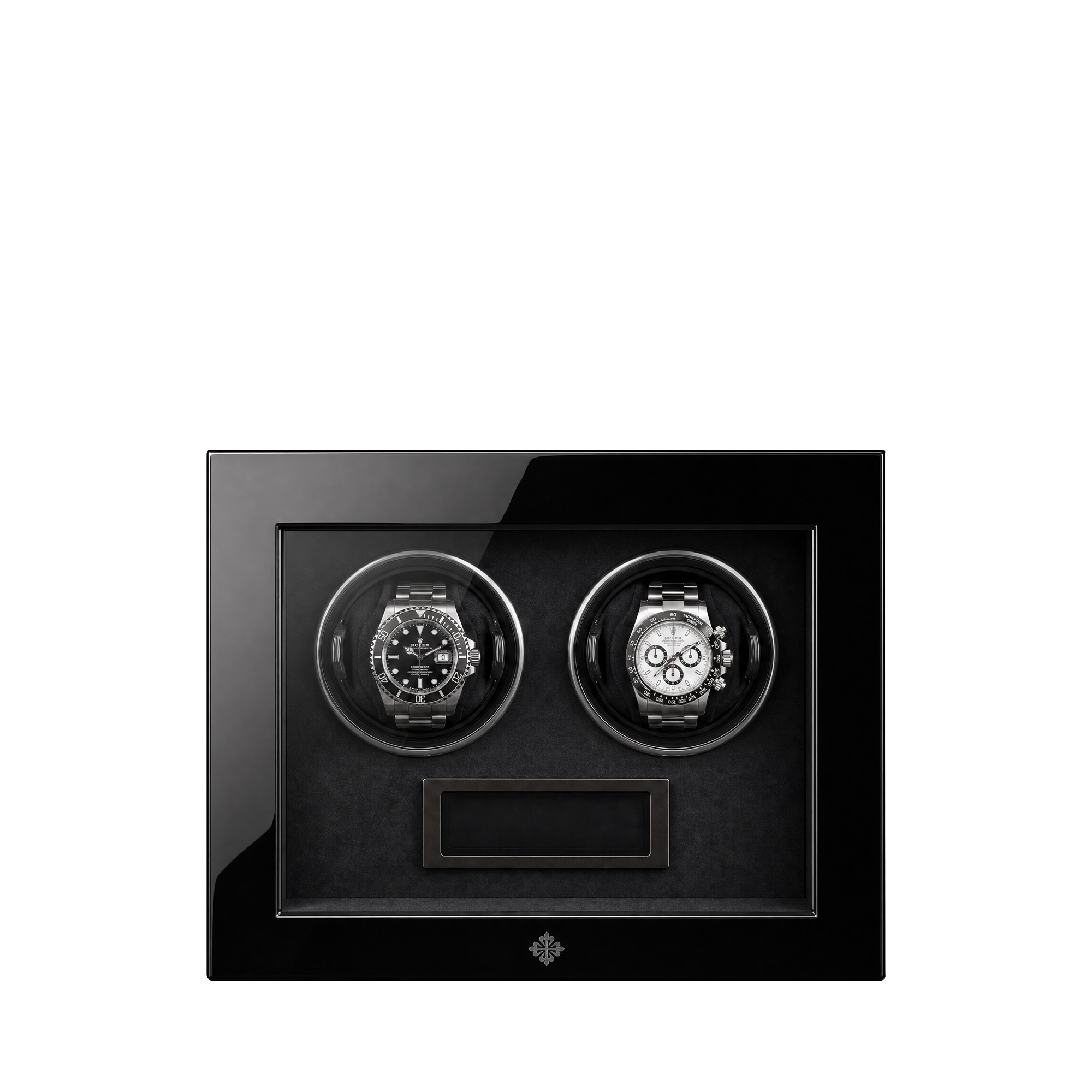
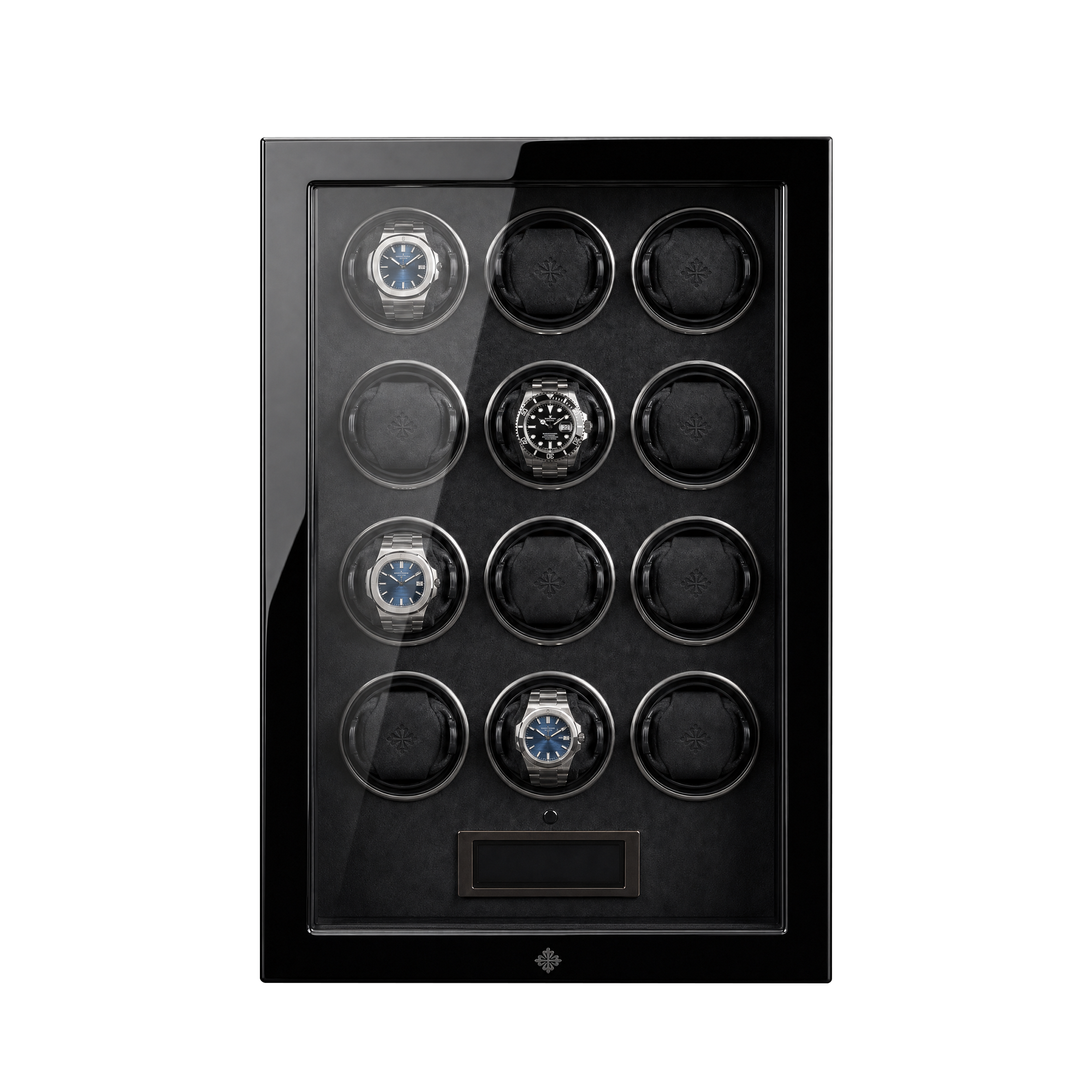
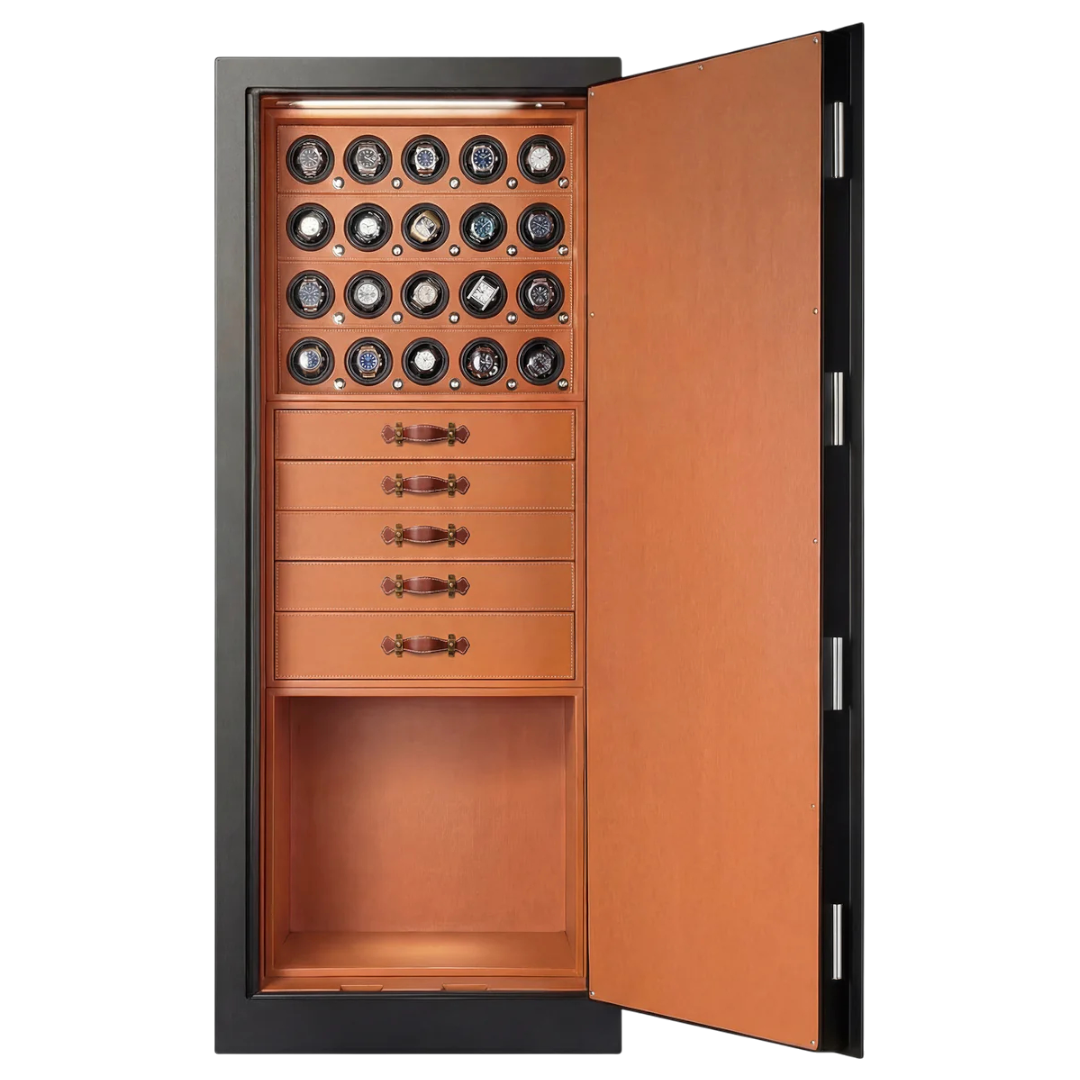
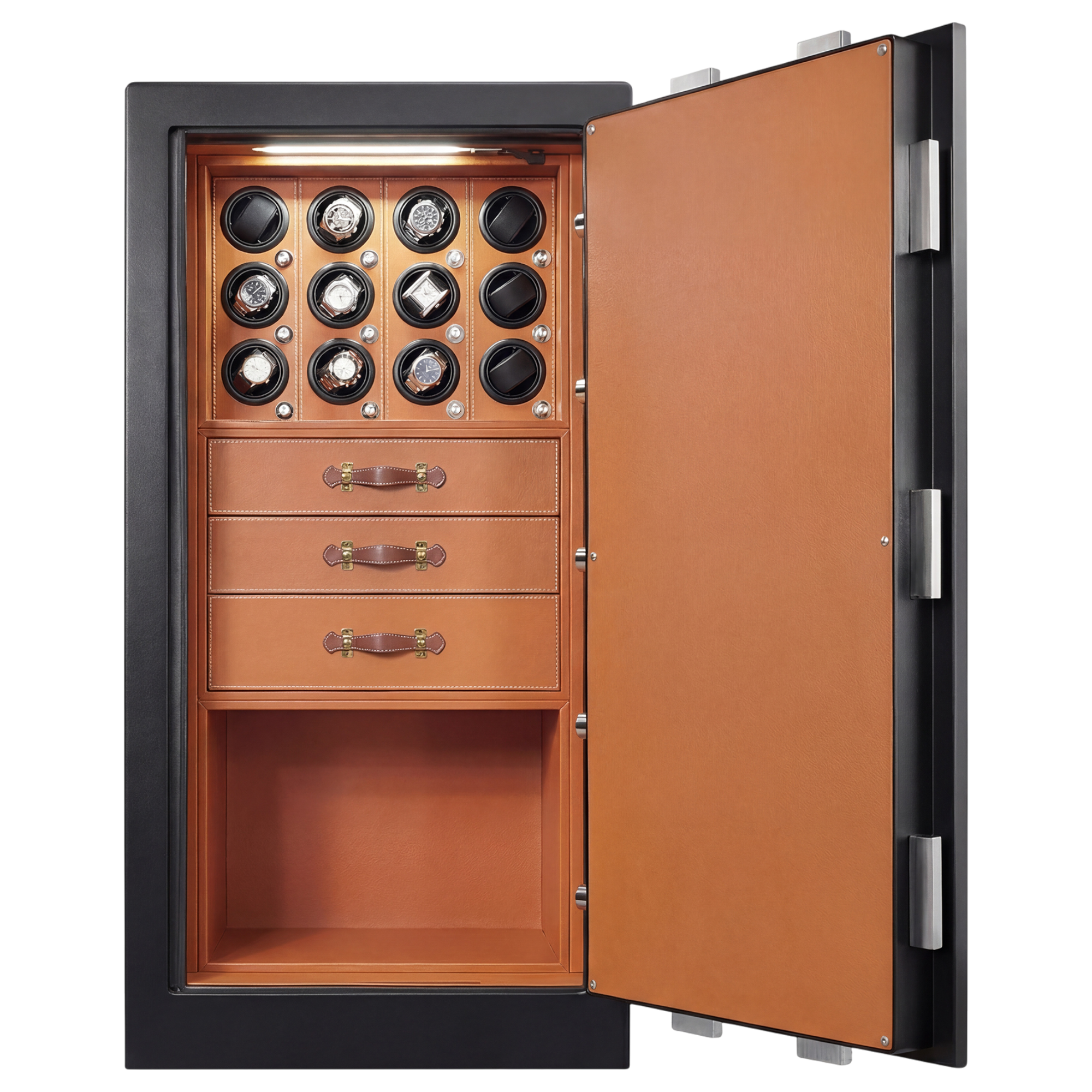
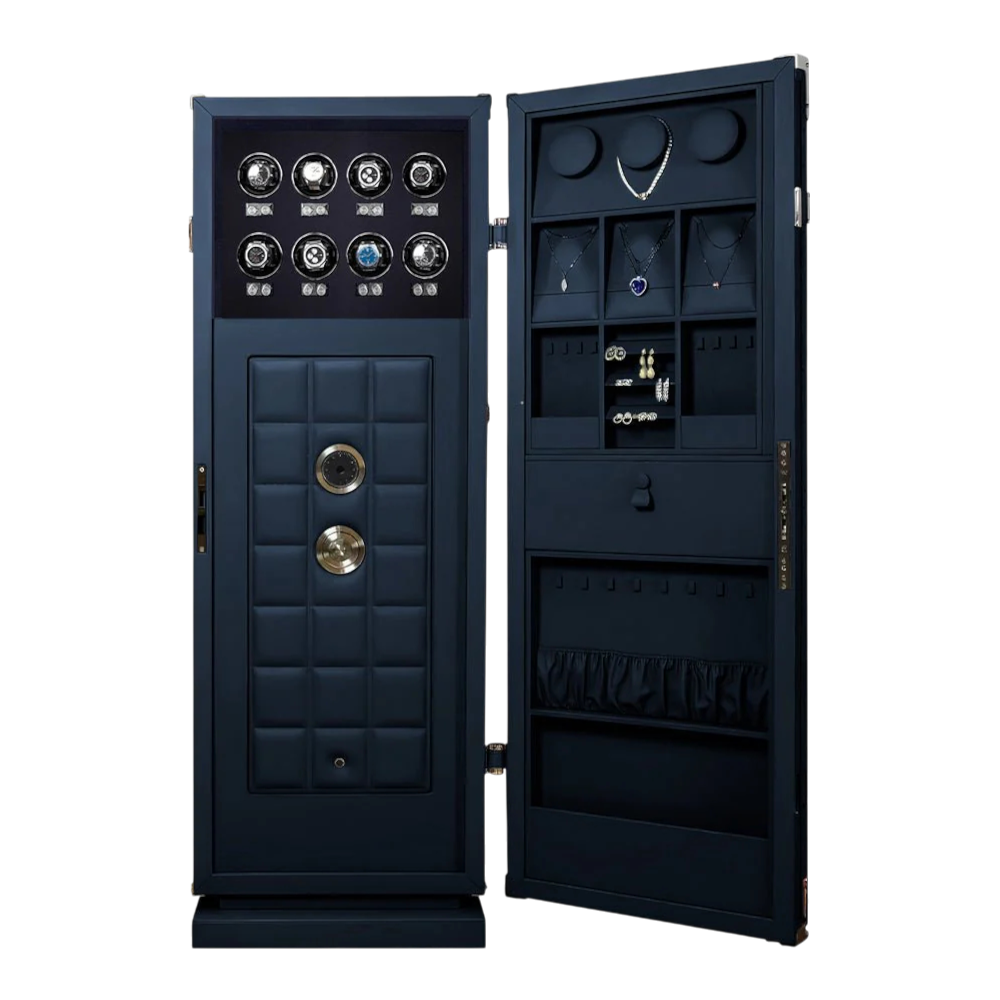
Controlling humidity is exactly what a proper enclosure does. Our watch winder safes hold a stable climate while keeping automatics wound.
What Humidity Actually Does to a Watch
Three failure modes.
Movement corrosion. Steel components inside a movement develop micro-rust over years in high-humidity environments. Rarely visible externally, but measurable at service.
Dial and hand damage. Moisture infiltrates the case over time, damaging lume, printing, and hand finishes. Vintage watches are particularly susceptible.
Strap and interior material damage. Leather grows mold above 65 percent humidity. Fabric straps wick moisture into the case. Interior linings of safes and winders develop musty smells and eventual mildew.
Ideal Humidity Range
| Humidity Range | Effect on Watches | Action |
|---|---|---|
| Under 30% | Dry air, stable for movement but cracks leather | Add moisture if sustained |
| 30 to 40% | Acceptable for most climates | Fine for rotation watches |
| 40 to 55% | Ideal for long-term storage | Target range |
| 55 to 65% | Borderline acceptable | Monitor closely, add dehumidification |
| Over 65% | Damage risk elevated | Active control required |
How to Measure Humidity in Storage
Three tools work for watch storage.
Digital hygrometer inside the safe or storage location. Small, battery-powered, reads humidity and temperature. Under $20 for a basic model. Premium hygrometers with data logging run $50 to $100.
Safe-integrated hygrometer display. Higher-end safes include humidity readout on the door. Quick at-a-glance check.
Smart home humidity sensors. Connect to a phone app, alert if readings leave acceptable range. Useful for multi-location storage.
Passive Humidity Control
Silica gel packets. Cheap, disposable. Absorb moisture from enclosed spaces. Replace or dry out every 2 to 4 months depending on climate and volume.
Rechargeable desiccants. Regenerate in an oven every few months. More expensive up-front, cheaper over years.
Humidity buffer boxes. Maintain a set humidity range by releasing or absorbing moisture as needed. Rarely used for watches but effective for sensitive documents.
Passive control works for small enclosures in normal climates. Fails in high-humidity environments or large safe interiors.
Active Humidity Control
Active systems use electric power to maintain humidity at a set level. Types include.
Integrated safe dehumidifiers. Premium safes include them as a feature. Plug-in, low power, maintains 45 to 55 percent inside the safe. Standard on the Centennial, Titan Sanctum 20, and custom builds through Custom Safes.
Room dehumidifiers. For a dedicated collection room, a standalone dehumidifier maintains the whole space. Works if the room is sealed reasonably.
Climate-controlled safes. The top tier. Precise humidity and temperature control, often with monitoring and alerts.
Climate-Specific Considerations
Humid coastal climates (Gulf Coast, Southeast Asia, parts of Europe). Active dehumidification is essential. Passive silica won’t keep up with ambient moisture.
Arid inland climates (Southwest US, Middle East). Humidity often drops below 25 percent. Leather straps dry and crack. Add humidity with small humidifiers or damp packs.
Temperate climates. Seasonal variation matters. Summer humidity may run 60+ percent, winter may drop below 30. Active control smooths the variation.
High-altitude climates. Drier air at altitude. Similar concerns to arid climates.
Winders and Humidity
Active watch winders generate slight heat from motor operation, which tends to keep the interior slightly drier than ambient room humidity. The concern isn’t the winder itself but the enclosure it sits in. A winder in a sealed safe inside a humid basement may still have high humidity in the local environment.
Practical Guidelines
For a home collection worth under $50K in a normal climate: passive silica in the safe, hygrometer to monitor, replace silica every 3 months.
For a collection worth $50K to $250K: active dehumidification in the storage safe, digital hygrometer with data logging, check monthly.
For a collection over $250K or long-term storage: climate-controlled vault with active humidity and temperature control, alert system for out-of-range readings. The Vaults collection covers the top-tier options.
Frequently Asked Questions
What humidity is best for watches?
40 to 55 percent. Below 30 dries leather. Above 65 risks corrosion and mold.
Is a hygrometer necessary?
For any long-term storage, yes. A $20 digital hygrometer prevents years of slow damage.
Do silica gel packets actually work?
For small enclosed spaces, yes. For a full-size safe, you need more silica than most people use. Replace or reactivate every 2 to 4 months.
Can I over-dry a watch?
Yes. Below 25 percent humidity accelerates leather strap cracking and can affect gasket seals over years.
What about watches I wear daily?
Not a humidity concern. Wrist movement and handling expose them to normal air. Humidity matters for stored watches.
Will a winder inside a safe help with humidity?
Motor heat slightly reduces interior humidity but not as a reliable control. Treat humidity control separately from winder function.
How do I know if moisture damage has occurred?
Foggy crystal, dial spotting, rust on exposed steel. By the time you see it, movement corrosion is usually already in progress.
The Short Answer
Buy a hygrometer. Target 40 to 55 percent humidity in storage. Use silica for small enclosures, active dehumidification for larger safes or humid climates. For premium long-term protection, the Titan Sanctum 20 and climate-controlled custom builds handle the full range.
Related reading: how to store watches long-term, magnetism and watches, and the complete storage checklist.
Protect Your Watch Collection
Designed for collectors who demand the best. Explore our premium watch winders and luxury safes.
Protect Your Watch Collection
Designed for collectors who demand the best. Explore our premium watch winders and luxury safes.