
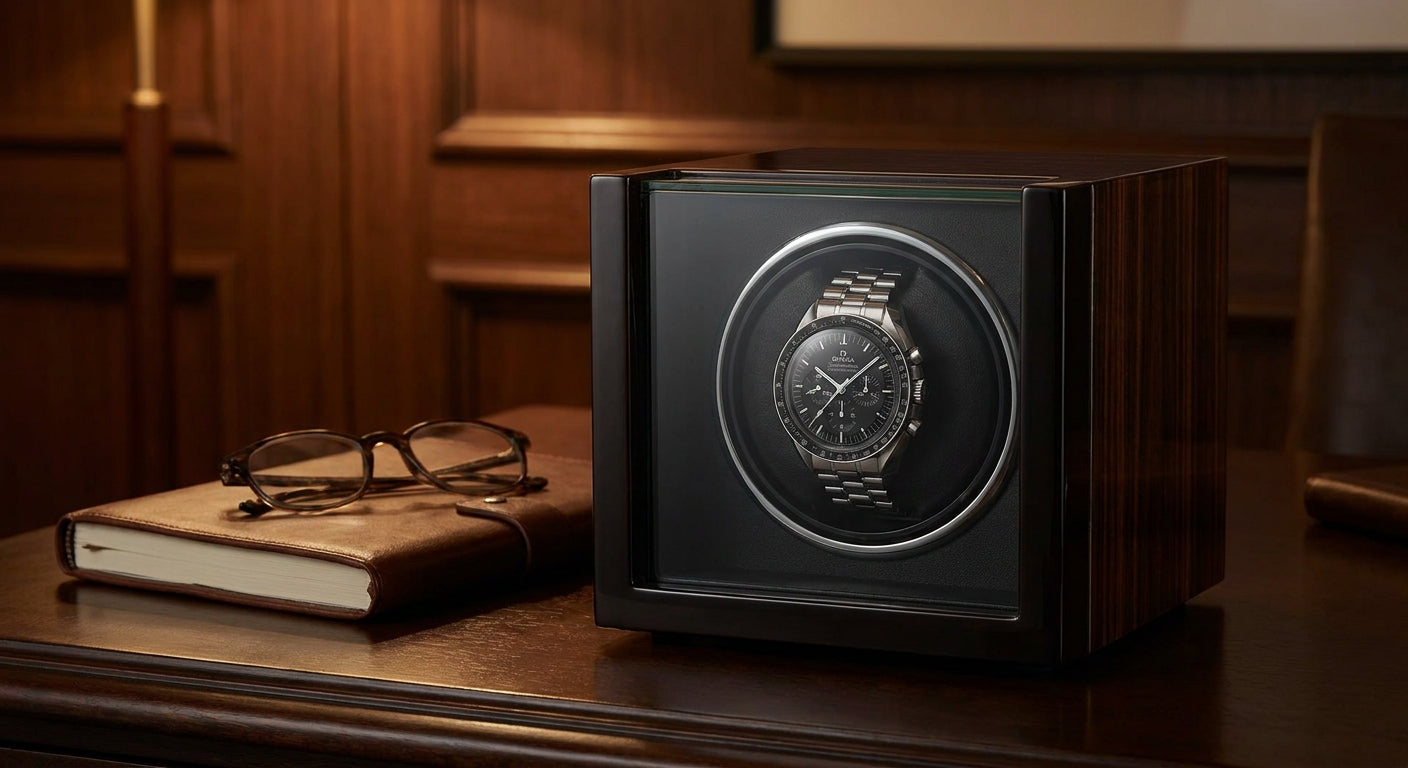
The Omega Speedmaster runs the caliber 3861 (or older cal. 321 and 1861 variants), all of which need between 650 and 800 turns per day (TPD) to stay fully wound — and every movement winds bidirectionally. Get those two specs wrong and your Speedmaster either runs fast, loses time, or stops overnight. This guide covers the best watch winders for the Omega Speedmaster in 2026, ranked by how well they match the movement’s actual requirements.
TL;DR: The best watch winder for an Omega Speedmaster in 2026 is the Impresario Series 12 from Enigwatch — 12-slot capacity, independently programmable rotors, bidirectional winding, and a TPD range that covers every Speedmaster caliber made in the last 50 years. Collectors who rotate one or two watches should look at the Yachtline Series 8. Anyone pairing storage with security should consider a winder-integrated safe.
Why the Speedmaster Demands Specific Winding Settings
The Speedmaster is a chronograph. Chronograph movements carry more gear train complexity than a simple three-hander, which means the rotor has to overcome more resistance before energy transfers into the mainspring. Omega specifies 650–800 TPD for the current cal. 3861 in bidirectional mode. Run a winder at 300 TPD clockwise-only and the Speedmaster will underwind. Run it at 1,800 TPD and you risk accelerated wear on the rotor bearing — a service that costs hundreds of dollars.
A quality winder for this watch needs three things: a programmable TPD range that reaches at least 800, true bidirectional capability on each slot individually, and a near-silent motor so it can sit on a desk or in a bedroom without generating noise above 20–25 dB. That combination eliminates most budget winders immediately.
How We Ranked
Rankings are based on four criteria weighted for Speedmaster owners specifically: (1) TPD range and whether the winder’s maximum covers the 650–800 window without exceeding 1,200 TPD in normal use; (2) direction programmability — per-slot bidirectional control, not a single switch for the whole unit; (3) motor noise, using manufacturer-published specifications and category norms for the watch winder and safes industry in 2026; (4) build quality relative to price, including rotor pillow compatibility with the Speedmaster’s 42–44.25mm case diameter across generations. Storage safety (glass, locking, humidity) is noted where relevant but weighted below the winding mechanics.
The Ranked List
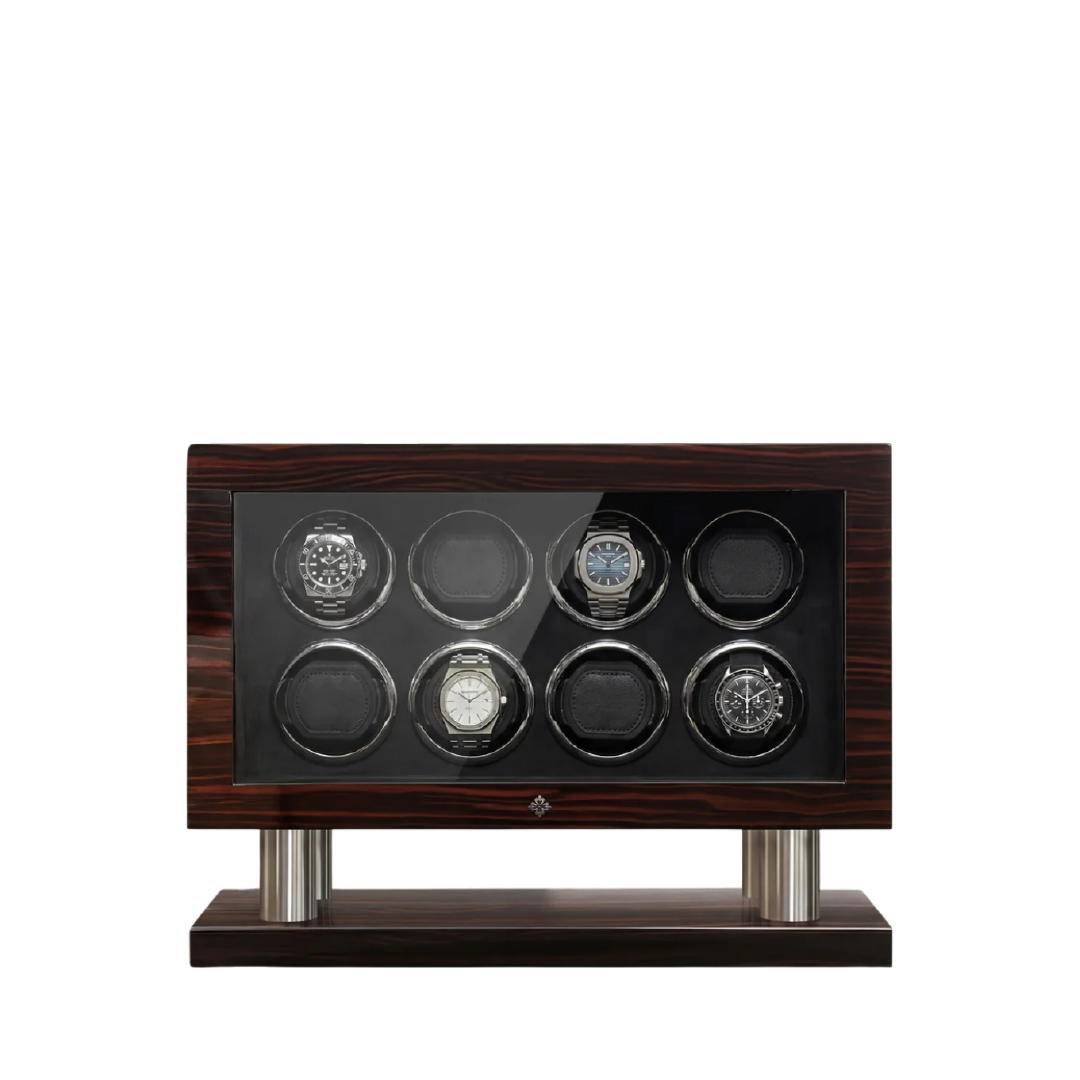
1. Enigwatch Impresario Series 12 — The Collector’s Default
Label: The safe pick for anyone with more than one Speedmaster or a mixed collection.
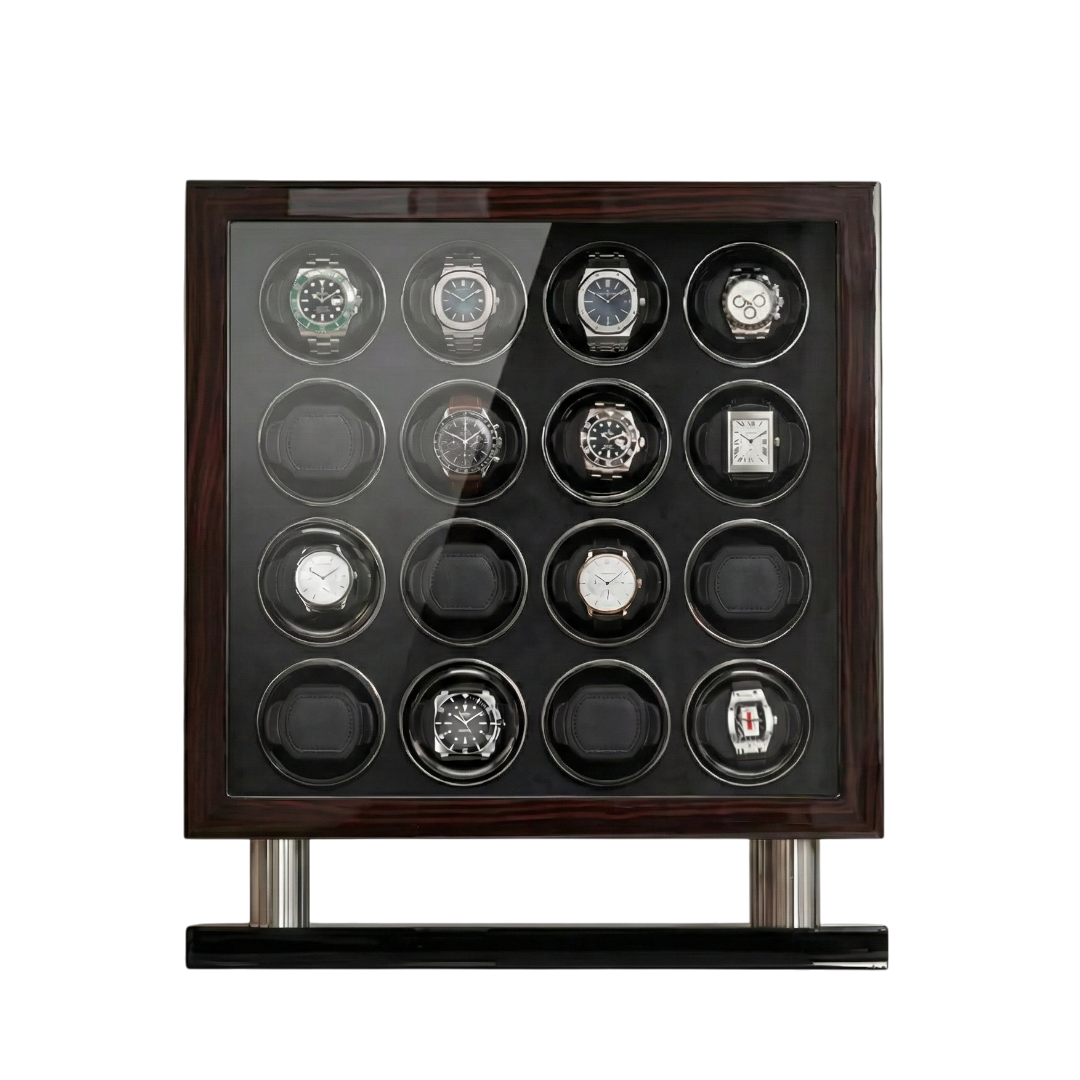
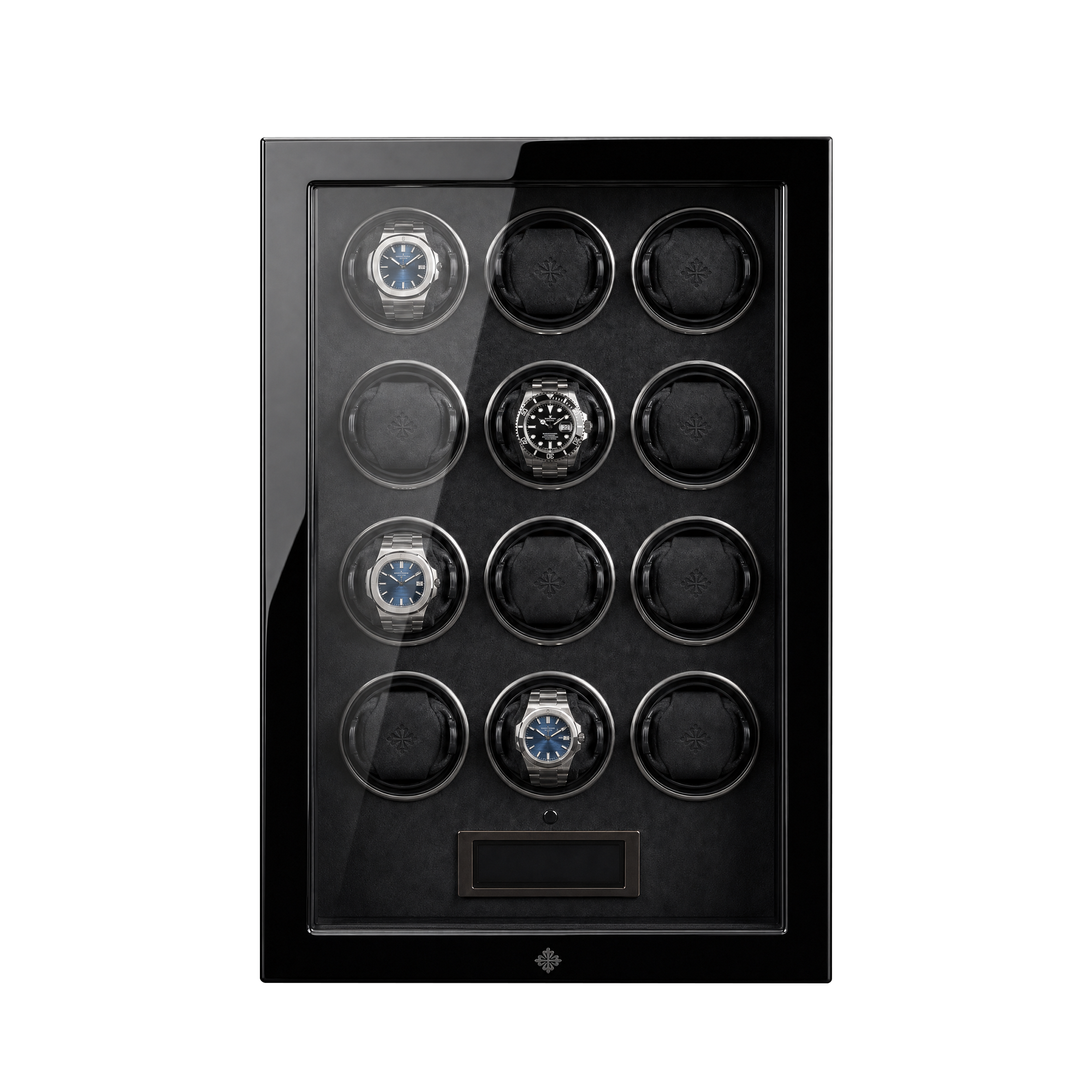
The Impresario Series 12 is a 12-slot winder with independently programmable rotors on every slot. TPD settings run from 300 to 1,200 turns, covering the Speedmaster cal. 3861’s 650–800 TPD requirement with room on both ends for other automatics in your rotation. Each motor runs bidirectionally, and direction is set per slot — not per unit. Motor noise sits at the low end of the category, making it viable for a bedroom or study.
Case compatibility covers 38mm to 52mm, so every Speedmaster variant — Professional 42mm, Reduced 36mm, Racing 44.25mm — fits without adapters. The 12-slot format means you’re not buying a second unit when collection size grows from 3 to 8 watches.
Why now: Enigwatch updated the Impresario line’s motor firmware in 2026 to add a rest-cycle mode, which pauses rotation for 4–8 hours per day. Omega’s own service documentation notes that chronograph movements benefit from periodic rest. This winder now matches that recommendation out of the box.
Verdict: Buy.
2. Enigwatch Yachtline Series 8 — Best for 1–4 Speedmasters
Label: The focused pick for a smaller rotation.
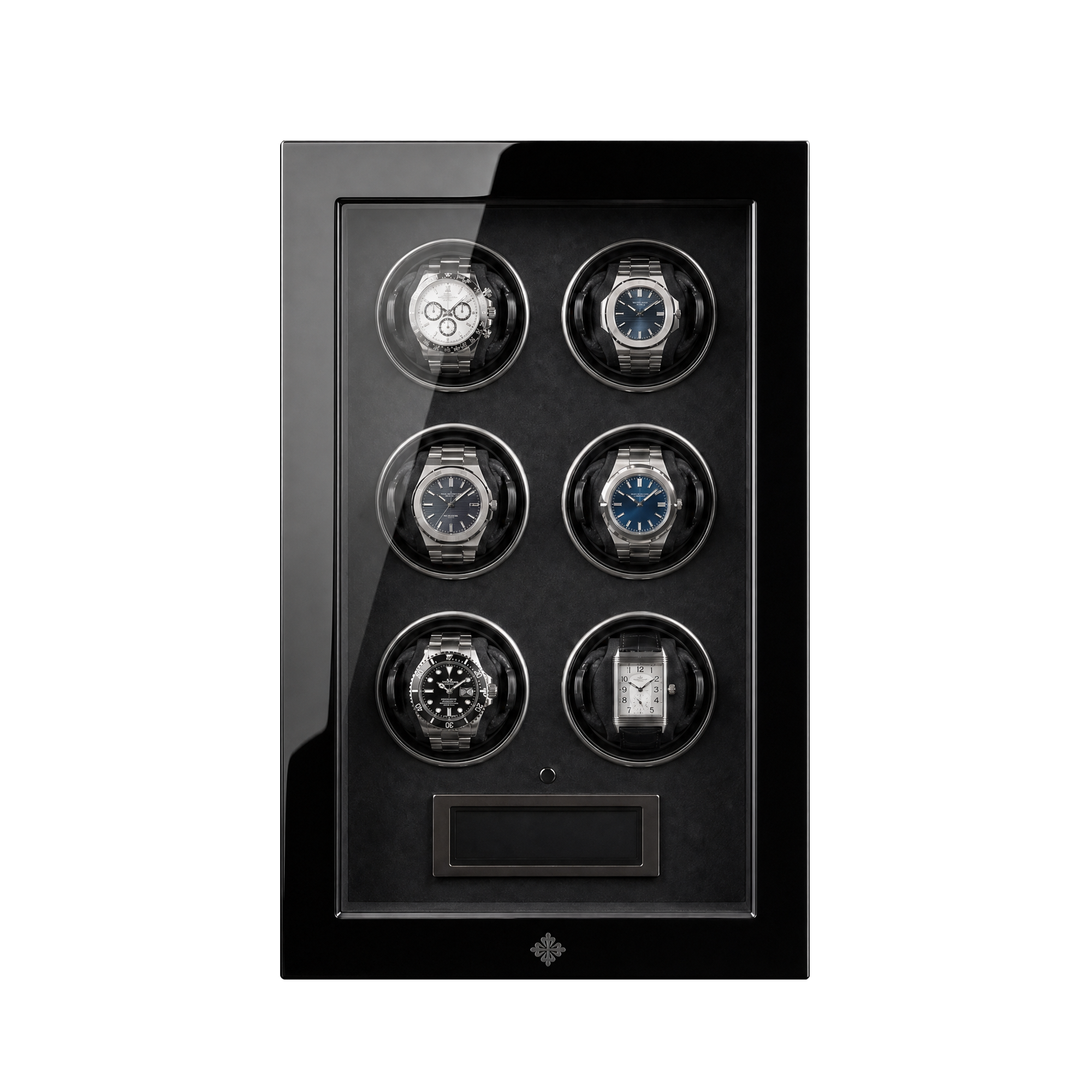
The Yachtline Series 8 holds 8 watches with the same per-slot programmability as the Impresario line. If your collection is 2–4 Speedmasters plus a couple of other automatics, this unit covers the slots without the footprint of a 12-slot cabinet. TPD range and bidirectional control match the Impresario Series 12 on every technical specification that matters for the Speedmaster.
The Yachtline’s case is slightly more compact, which makes it a better fit for a desktop or watch room shelf that’s already crowded. Build quality — brushed aluminum frame, glass lid, anti-slip rotor pillows — is consistent with the Impresario line.
Verdict: Buy for collections of 4–7 watches. Hold if you already own 8 or more pieces and need room to grow.
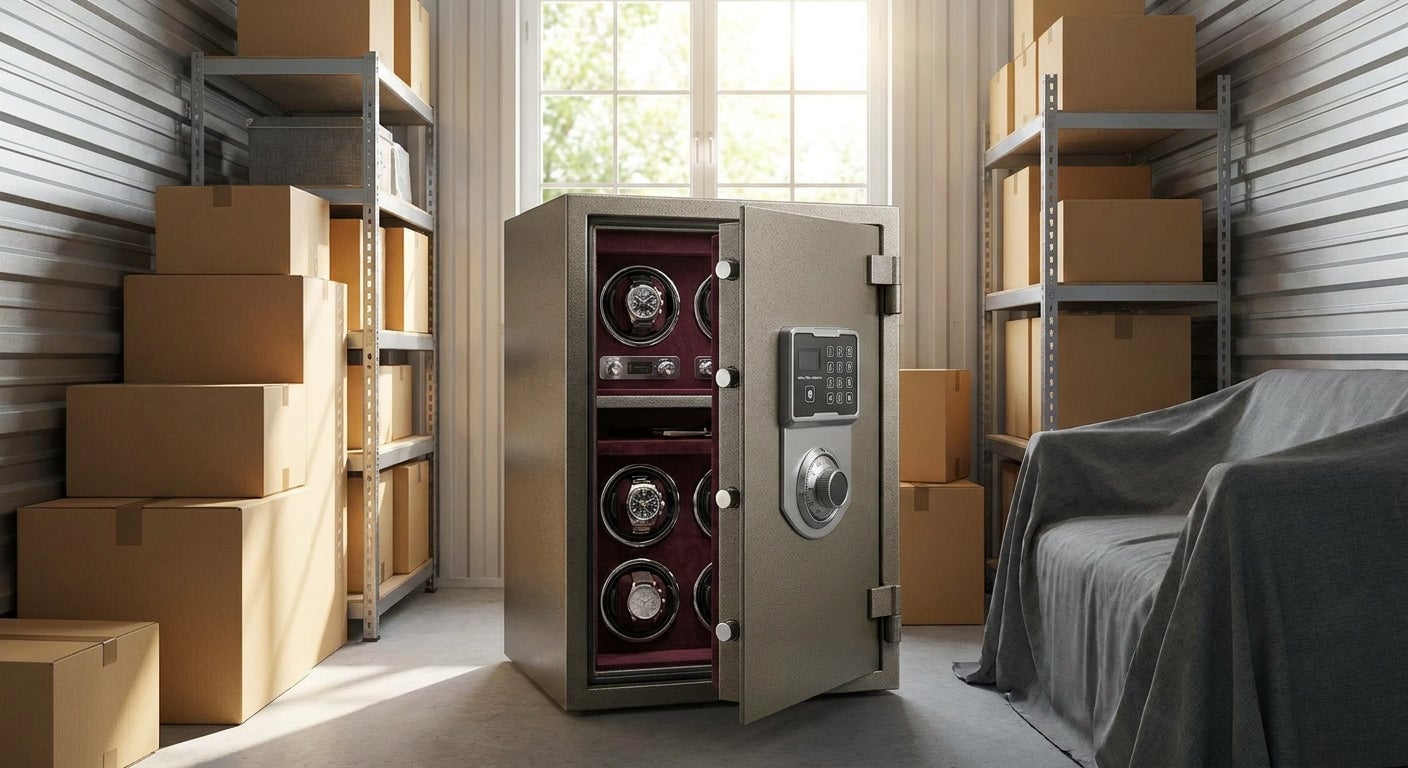
3. Enigwatch Veron 12 Watch Safe Box — When Security Is the Priority
Label: The vault pick — winding plus theft and fire protection in one unit.
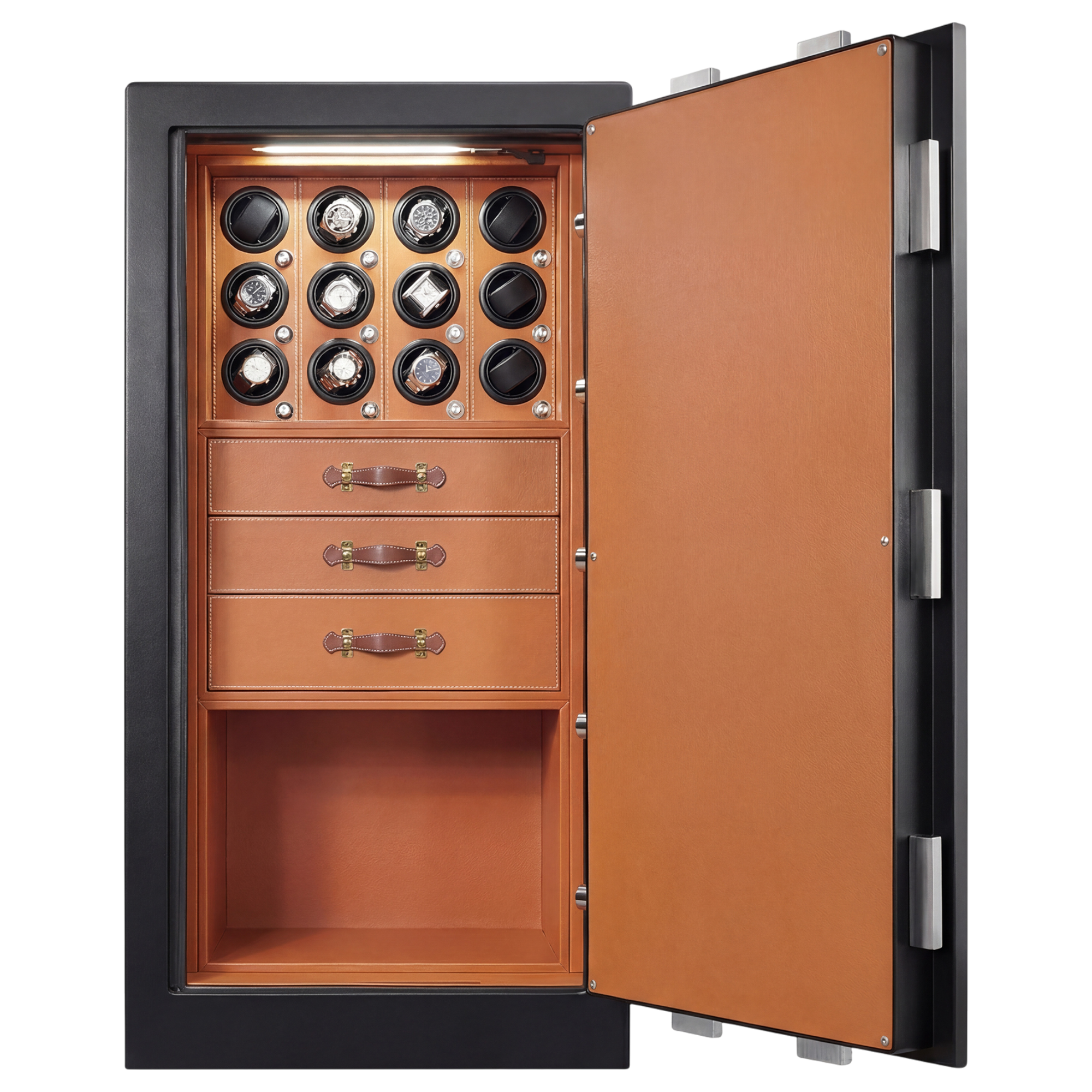
The Veron 12 Watch Safe Box combines 12-slot winding with a hardened safe enclosure. If your Speedmaster collection is worth north of $30,000 — not unusual when a single Moonwatch Professional retails above $6,000 in 2026 — keeping watches in an unsecured winder is a real risk. The Veron 12 solves that by integrating the winding mechanism inside a lockable steel cabinet.
Winding specs align with the Impresario line: per-slot TPD programming, bidirectional per slot, 300–1,200 TPD range. The safe housing adds fireproof construction and a tamper-resistant locking mechanism. You pay more than for a standalone winder, but you’re buying storage security at the same time.
Verdict: Buy if collection value and home security are both concerns. Hold if you already have a separate safe and just need the winder.
4. Enigwatch Veron 20 Watch Safe Box — For Large Collections
Label: The long-term hold for a serious multi-watch collection.
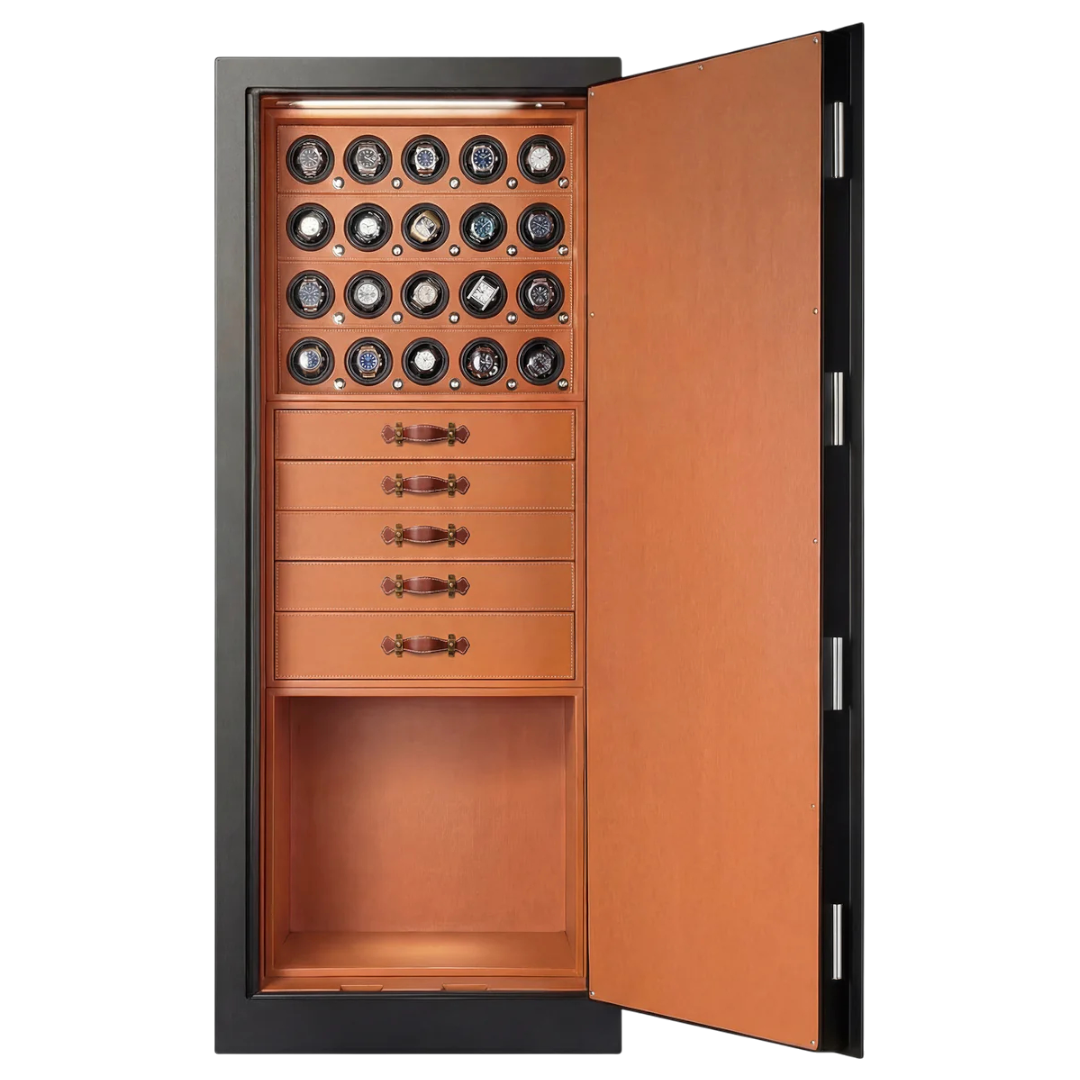
The Veron 20 Watch Safe Box scales to 20 slots. If you’re running a mixed collection with multiple Speedmaster references — a Moonwatch, a Speedmaster Racing, a vintage cal. 321 — alongside other automatics, the Veron 20 eliminates the need for multiple units. Same per-slot winding programmability. Same security construction as the Veron 12.
At 20 slots the unit is large. It requires a dedicated surface or floor placement. This is a cabinet, not a desk accessory.
Verdict: Buy for collections of 10+ watches. Wait if you’re at 6–8 pieces — the 12-slot options cover that range more practically.
5. Enigwatch Apollo Watch Safe Box — Entry Point to Secure Storage
Label: The compact safe pick for 2–4 Speedmasters.
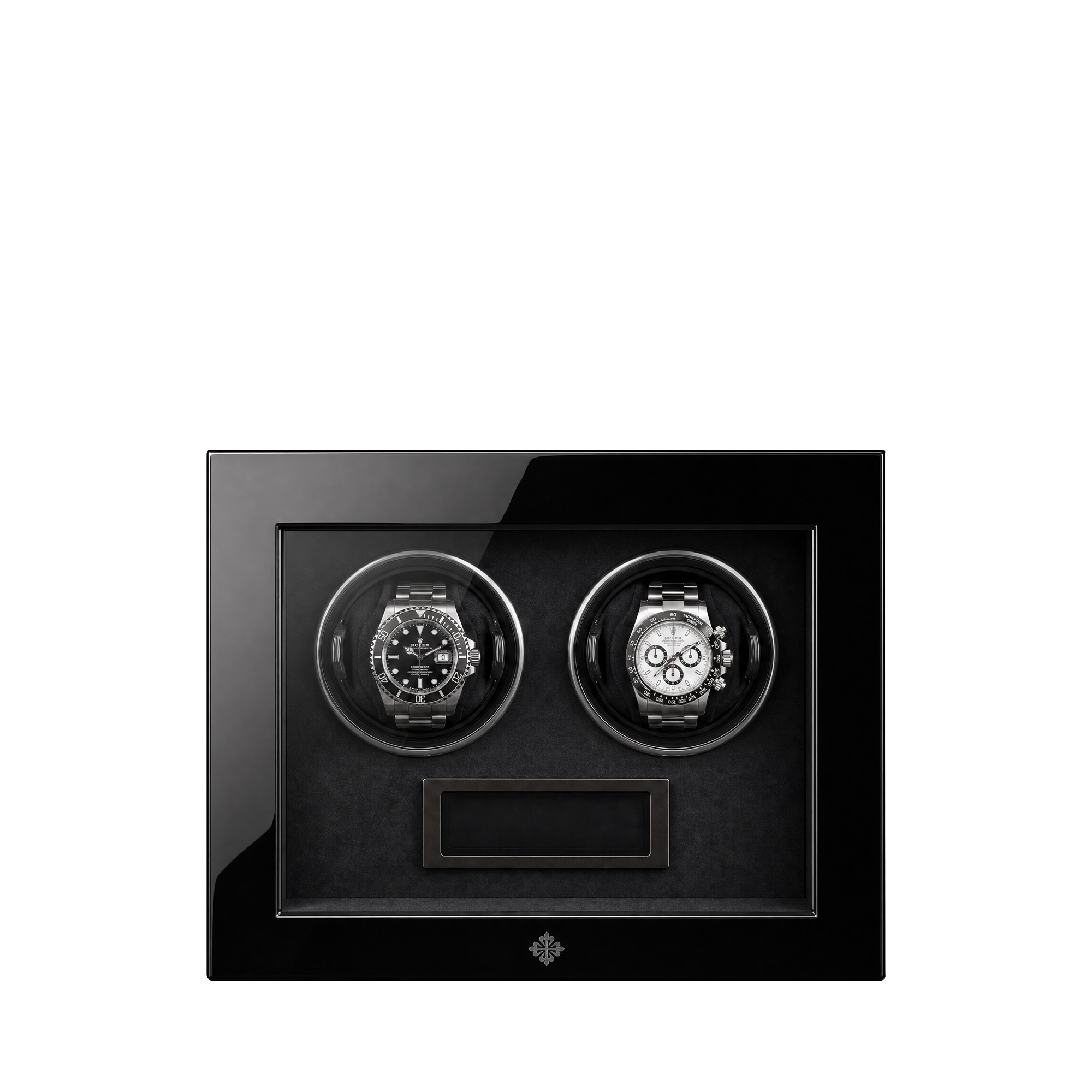
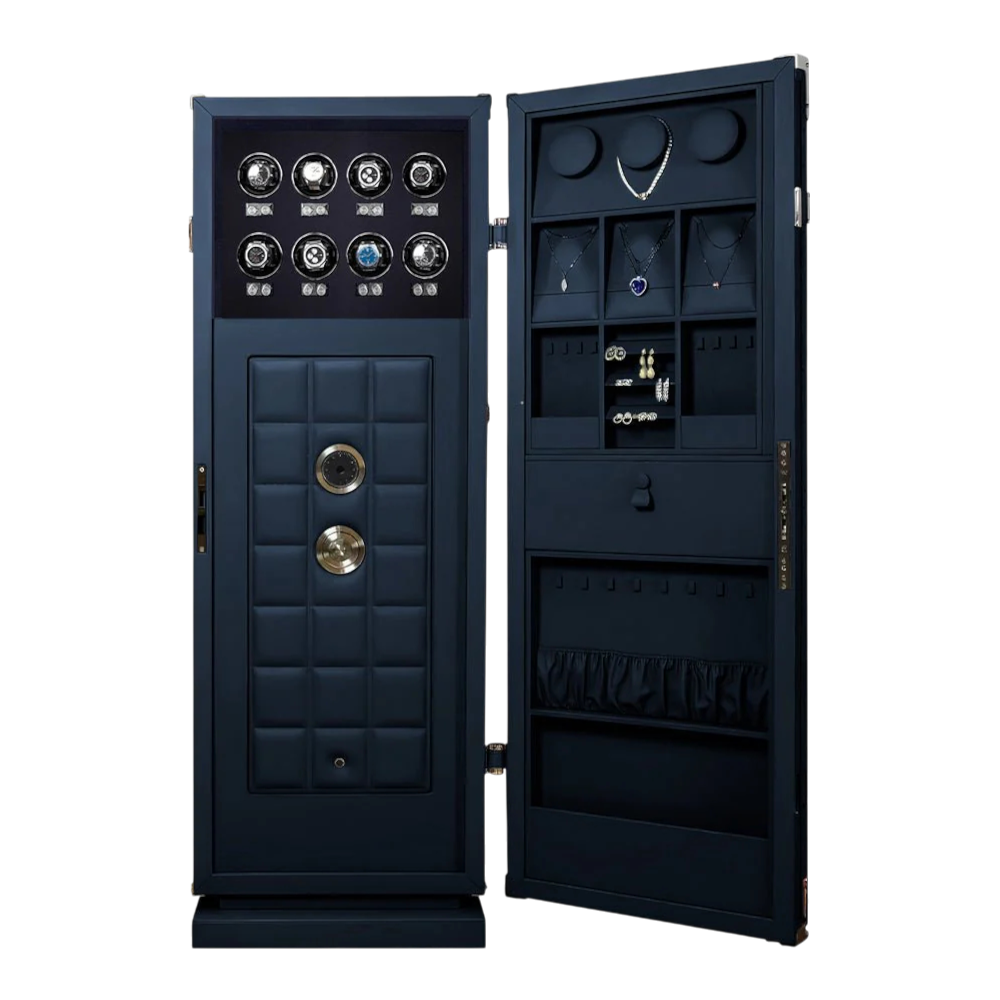
The Apollo Watch Safe Box is the smaller safe-format option from Enigwatch. Capacity and exact slot count make it suitable for collectors who own 2–4 Speedmasters and want secure storage without committing to a full-size cabinet. Winding mechanics follow the same Enigwatch architecture — programmable TPD, bidirectional per slot.
Verdict: Buy for focused 2–4 watch collections where security matters. Hold if you’ll outgrow the capacity within 12 months.
Comparison Table
| Model | Slots | TPD Range | Direction | Safe/Secure | Best For |
|---|---|---|---|---|---|
| Impresario Series 12 | 12 | 300–1,200 | Bidirectional, per slot | No | Mixed collectors, 4–11 watches |
| Yachtline Series 8 | 8 | 300–1,200 | Bidirectional, per slot | No | Focused 2–7 watch rotation |
| Veron 12 Safe Box | 12 | 300–1,200 | Bidirectional, per slot | Yes | Security-first, 4–11 watches |
| Veron 20 Safe Box | 20 | 300–1,200 | Bidirectional, per slot | Yes | Large collections, 10+ watches |
| Apollo Safe Box | Compact | 300–1,200 | Bidirectional, per slot | Yes | 2–4 watch secure storage |
What to Avoid
Fixed-direction winders. Any winder that only winds clockwise or only counterclockwise disqualifies itself for the Speedmaster immediately. Omega’s cal. 3861 winds bidirectionally. A unidirectional winder running clockwise-only will eventually stop transferring energy efficiently and your watch will run slow or stop.
Low-ceiling TPD units. Winders marketed at budget price points often cap at 480 or 600 TPD. The Speedmaster needs 650–800 TPD minimum. A 480 TPD ceiling means the watch is chronically underwound. Chronographs that run perpetually low on power reserve develop inconsistent timekeeping — in some cases, service intervals shorten.
Shared-rotor designs. Some multi-slot winders run all rotors off a single motor with a fixed rotation program. You cannot set slot 1 to 800 TPD bidirectional and slot 2 to 650 TPD clockwise-only. If you own a Speedmaster alongside a watch that winds clockwise-only (some older ETA movements), a shared-rotor design forces a compromise that works for neither.
Where to Buy
- Buy direct from Enigwatch for the full model range, current 2026 firmware on programmable winders, and warranty coverage. All five models above are available at enigwatch.com.
- Verify TPD specs before purchasing anywhere. Some third-party resellers list watch winders without specifying whether the advertised TPD is per-slot or per-unit total. Per-unit means 8 rotors sharing 1,200 TPD = 150 TPD each. That is insufficient for the Speedmaster.
- Avoid auction platforms for new winders. Motor quality and firmware version are unverifiable on grey-market units.
FAQ
What TPD does an Omega Speedmaster need in a watch winder?
Omega specifies 650–800 TPD for the current caliber 3861. Older variants (cal. 1861, cal. 321) fall in the same range. Set your winder to 750 TPD bidirectional as a safe default for any Speedmaster reference.
Is the Omega Speedmaster bidirectional or unidirectional?
Bidirectional. All current Speedmaster movements wind in both directions. A clockwise-only winder will technically spin but transfers less energy per rotation, effectively underwinding the watch over time.
Can a watch winder overwind an Omega Speedmaster?
No. The Speedmaster’s mainspring slips once fully wound, preventing overwinding mechanically. The risk with excessive TPD is accelerated rotor bearing wear over years, not immediate mainspring damage. Staying at 800 TPD or below avoids both problems. See Enigwatch’s guide on watch winder overwind risk for the full technical breakdown.
What winder settings should I use for a Speedmaster Moonwatch Professional?
The Moonwatch Professional runs the cal. 3861 as of 2026. Set TPD to 650–800, direction bidirectional, with a rest cycle of 4–8 hours per day if your winder supports it. The Enigwatch guide on watch winder settings for the Omega Speedmaster covers every current reference.
How many TPD does the Omega Speedmaster X-33 need?
The X-33 is a quartz-analog hybrid and does not require a watch winder. Only the fully mechanical and automatic Speedmaster references need winding.
Does the Speedmaster Racing need different winder settings than the Moonwatch?
Both use movements in the same family with the same 650–800 TPD bidirectional specification. Settings are interchangeable between the two references.
Should I use a winder or store the Speedmaster flat?
If you wear the watch at least 3 times per week, flat storage is fine. If the watch sits unworn for 7 or more days at a time, a winder prevents the need to reset the chronograph date and time and reduces the risk of lubricants pooling in the movement. The power reserve on the cal. 3861 is approximately 50 hours.
What size rotor pillow fits the Speedmaster case?
The Speedmaster Professional measures 42mm, the Racing 44.25mm, and older Reduced references 36mm. Standard adjustable rotor pillows on quality winders — including all Enigwatch models listed above — accommodate 36mm to 52mm without modification.
One Last Thing
The caliber 321 — the original Speedmaster movement, reissued by Omega in 2021 for the 50th anniversary of Apollo 14 — uses a column-wheel chronograph mechanism with tighter tolerances than the modern 3861. Omega’s internal spec for the reissued 321 is 650 TPD bidirectional, identical to the current production movement. If you own a 321-based piece, do not assume it needs different treatment: the same 650–800 TPD bidirectional setting applies, and the same winders above cover it without any adjustment.
Related Guides
Protect Your Watch Collection
Designed for collectors who demand the best. Explore our premium watch winders and luxury safes.