
A watch winder safe box does two things a standard winder or a plain safe cannot do alone: it keeps your automatics wound and your collection physically secured behind a locked enclosure. If you own more than a handful of timepieces worth protecting, understanding what separates a capable unit from an overpriced cabinet is worth the time before you spend four or five figures.
TL;DR: The best watch winder safe box in 2026 combines per-module TPD programming, a genuine security enclosure (steel body, biometric or electronic lock), silent Japanese motors, and interior materials that will not scratch lugs or degrade leather straps. Enigwatch builds units in this category from roughly $5,000 to over $21,000, covering collections of 2 to 24 pieces. For most serious collectors in 2026, the Apollo Watch Safe Box and the Centennial Bulletproof Watch Safe Box represent the clearest starting points, depending on whether your priority is versatility or maximum security.
Why This Matters in 2026
A watch winder safe box is not a luxury accessory — it is infrastructure for a collection that has real monetary and sentimental value. Leaving automatics in a standard safe means they stop running and you reset complications every time you reach for them. Leaving them in an open winder means they are accessible to anyone in the room. The hybrid category solves both problems, but only when the engineering behind the winding module and the security enclosure are both taken seriously. In 2026, this market has matured enough that you can buy something genuinely good — or something that looks good from the outside and fails on both fronts.
How We Ranked
The picks below were evaluated across five criteria: winding accuracy (TPD range and directional control), security rating (body material, lock mechanism, anchor points), motor quality and noise level, interior construction (materials, strap safety, cushion sizing), and overall value relative to collection size. Units with generic motors, fixed-TPD rotors, or decorative-only locks were excluded. Every product listed here is available through Enigwatch with worldwide shipping and a lifetime warranty as of 2026.
The Ranked List
1. Apollo Watch Safe Box — The Versatile Standard
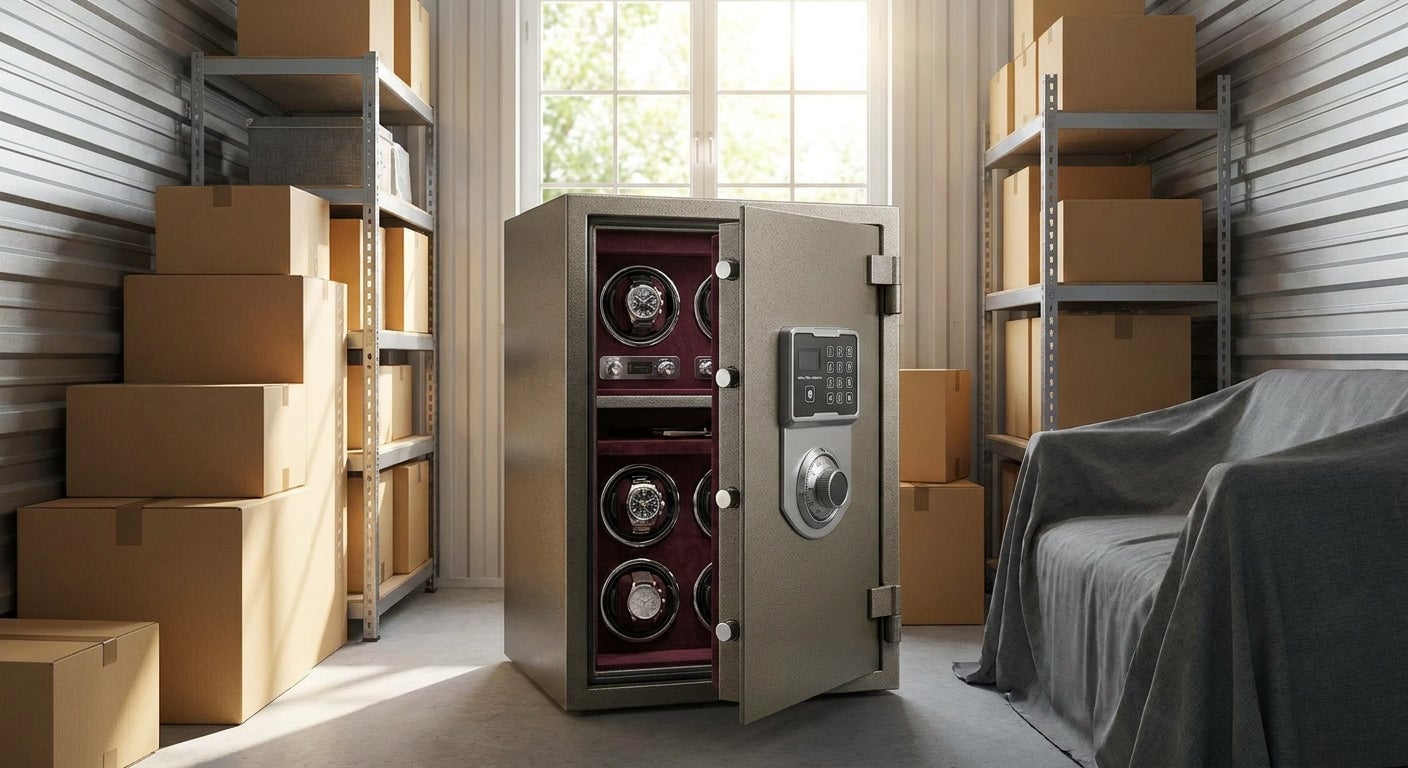
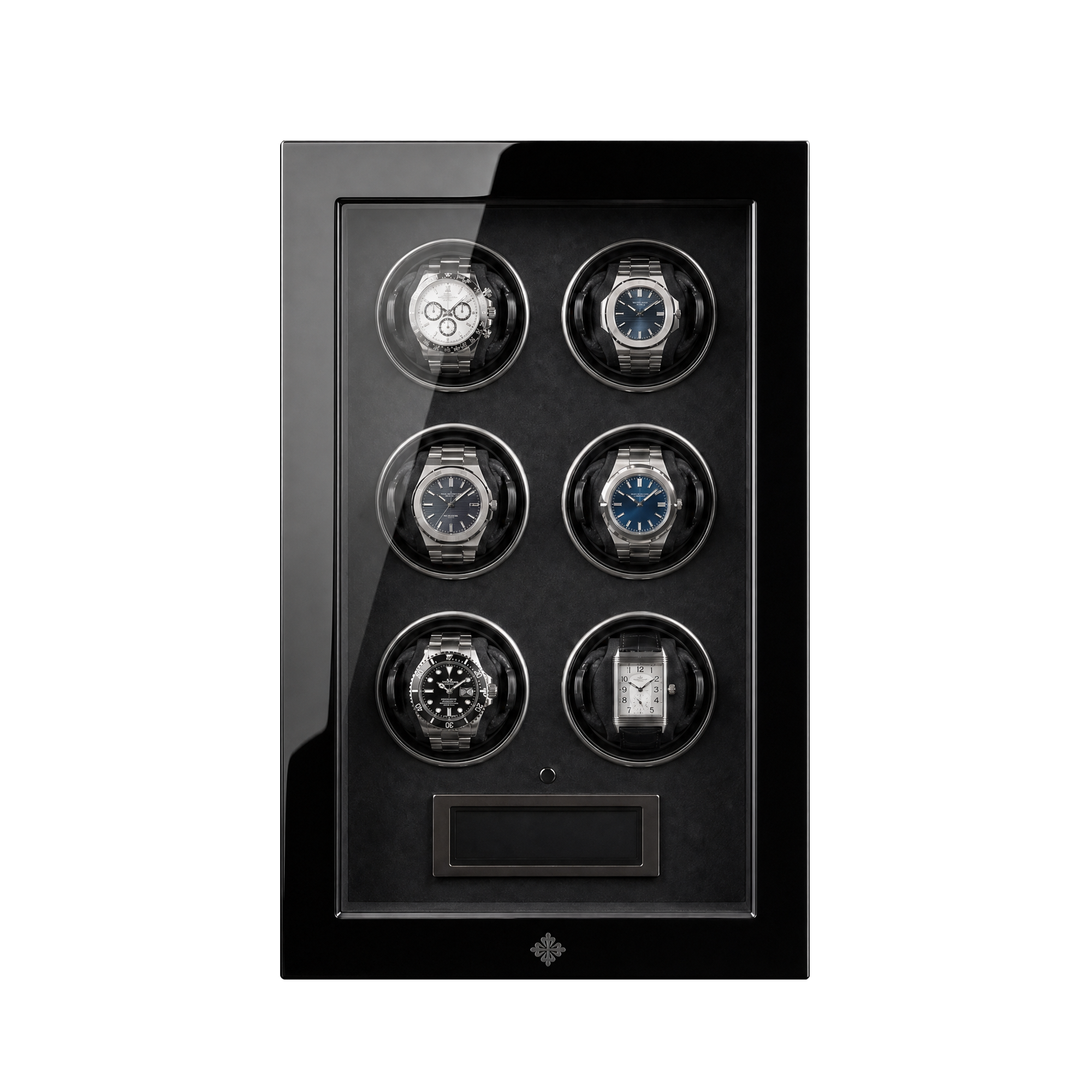
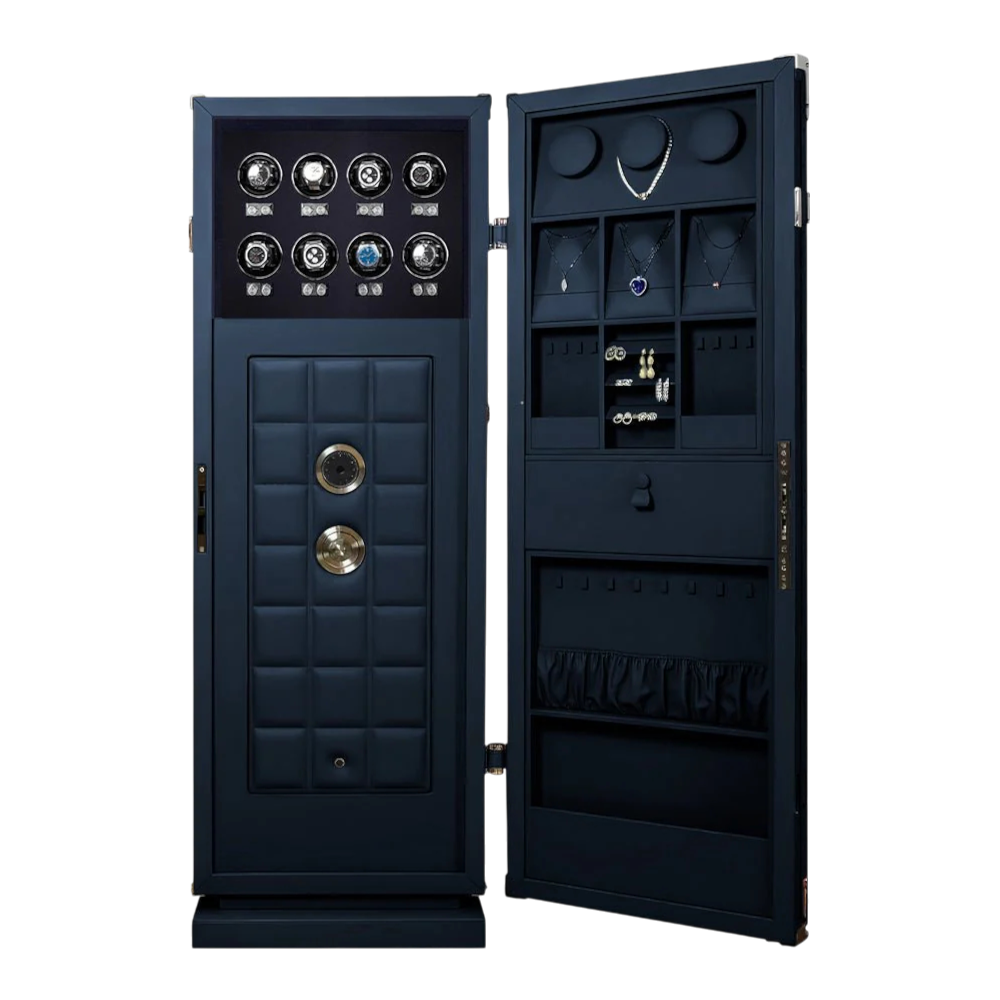
The safe pick for most collectors. The Apollo Watch Safe Box pairs an active winding module with a steel-body enclosure and an electronic lock. Interior lining uses Italian Alcantara, which is soft enough to protect polished case edges and will not snag bracelet links. TPD is programmable per module — relevant if you run a Rolex Submariner (650 TPD) alongside an AP Royal Oak (650 TPD) or a Patek Nautilus (650–800 TPD) — and the directional control covers clockwise, counterclockwise, and bidirectional. Noise sits below 10 dB in standard operation, appropriate for a bedroom or study. If you want one unit that handles a mixed collection without compromise, this is the one to buy first.
Verdict: Buy.
2. Centennial Bulletproof Watch Safe Box — Maximum Security First
The wildcard for the security-conscious collector. The Centennial Bulletproof Watch Safe Box takes the security side of the equation further than most competitors in this category. The body construction is rated beyond standard residential safe specifications, and the lock mechanism supports biometric access. For collectors who have pieces above $30,000 per watch, the incremental cost over a standard winder safe is negligible against the replacement value protected. Winding performance matches the Apollo — Japanese Mabuchi motors, per-slot TPD programming, Alcantara interior. Buy this if security is the primary concern and the winding function is equally non-negotiable.
Verdict: Buy.
3. Veron 12 Watch Safe Box — The 12-Slot Middle Ground
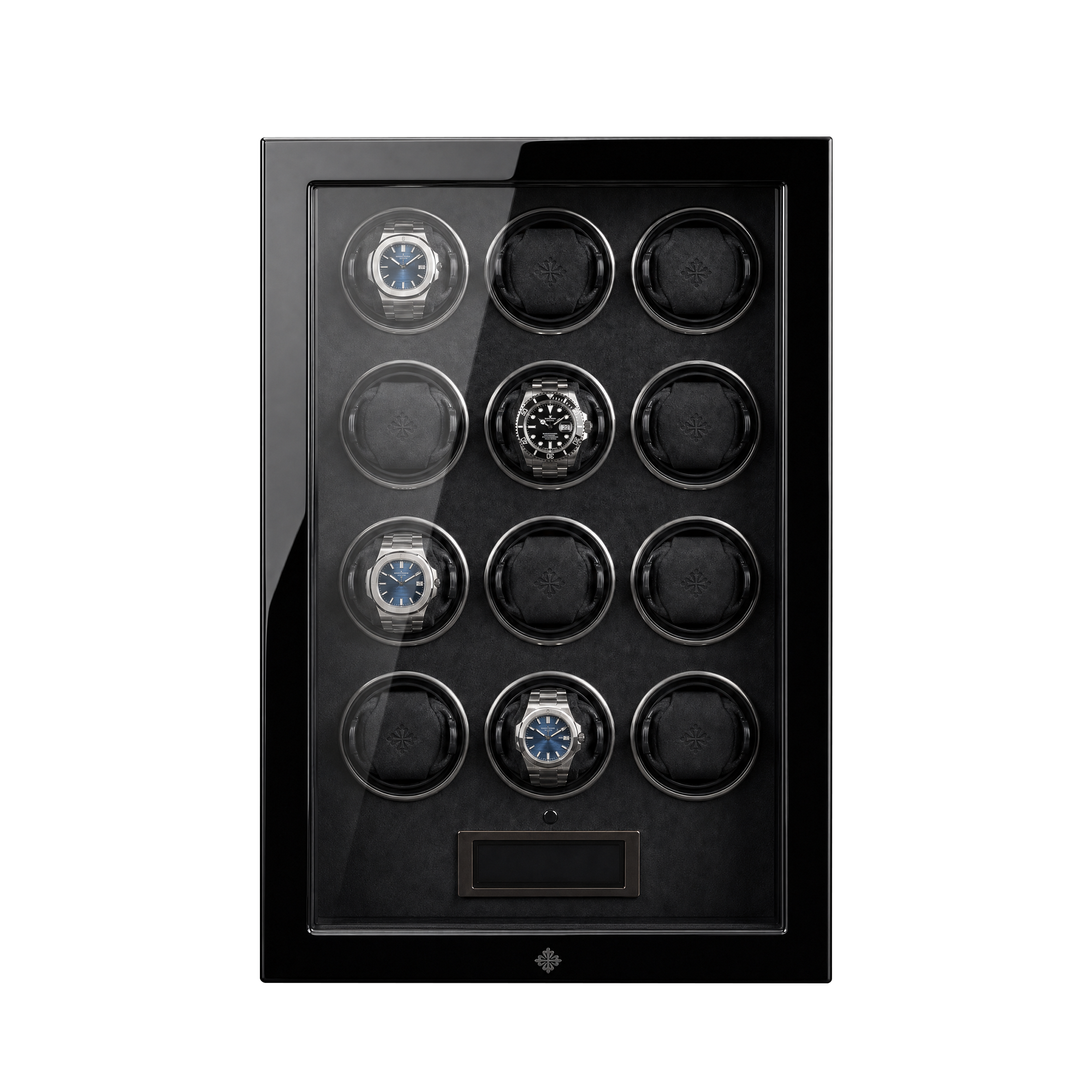
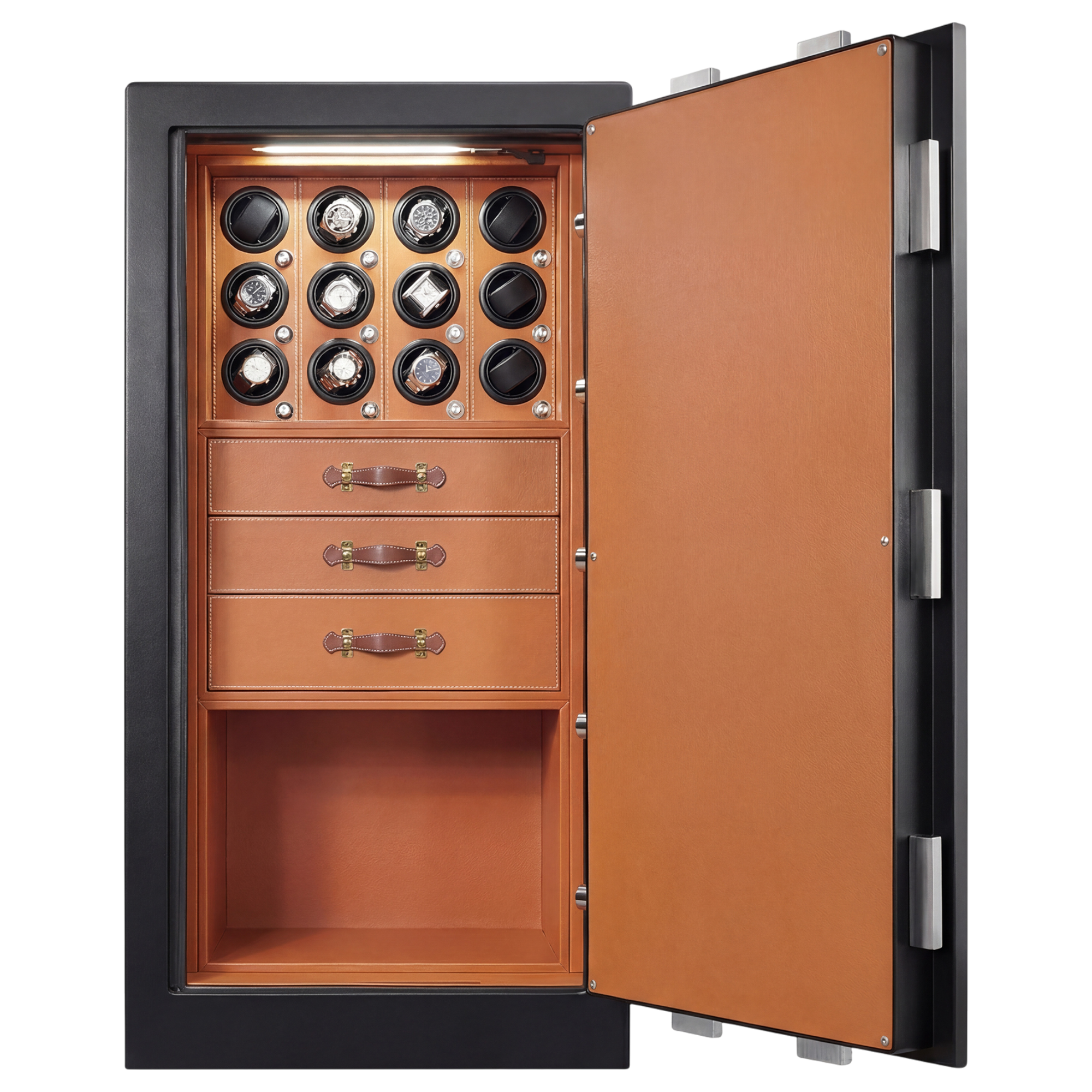
Practical capacity, disciplined footprint. The Veron 12 Watch Safe Box holds 12 watches — enough for a serious single-brand collection or a curated mixed rotation — inside a safe enclosure with an electronic lock. The 12-slot configuration is the most common entry point for collectors who have moved past the phase of buying one watch at a time. Interior cushions are sized to accommodate 47mm cases, which means no awkward compromises for Panerai Luminor or Hublot Big Bang owners. This is the rational buy for a collector who knows the collection will stay at 12 pieces for the foreseeable future.
Verdict: Buy.
4. Veron 20 Watch Safe Box — When the Collection Has Grown
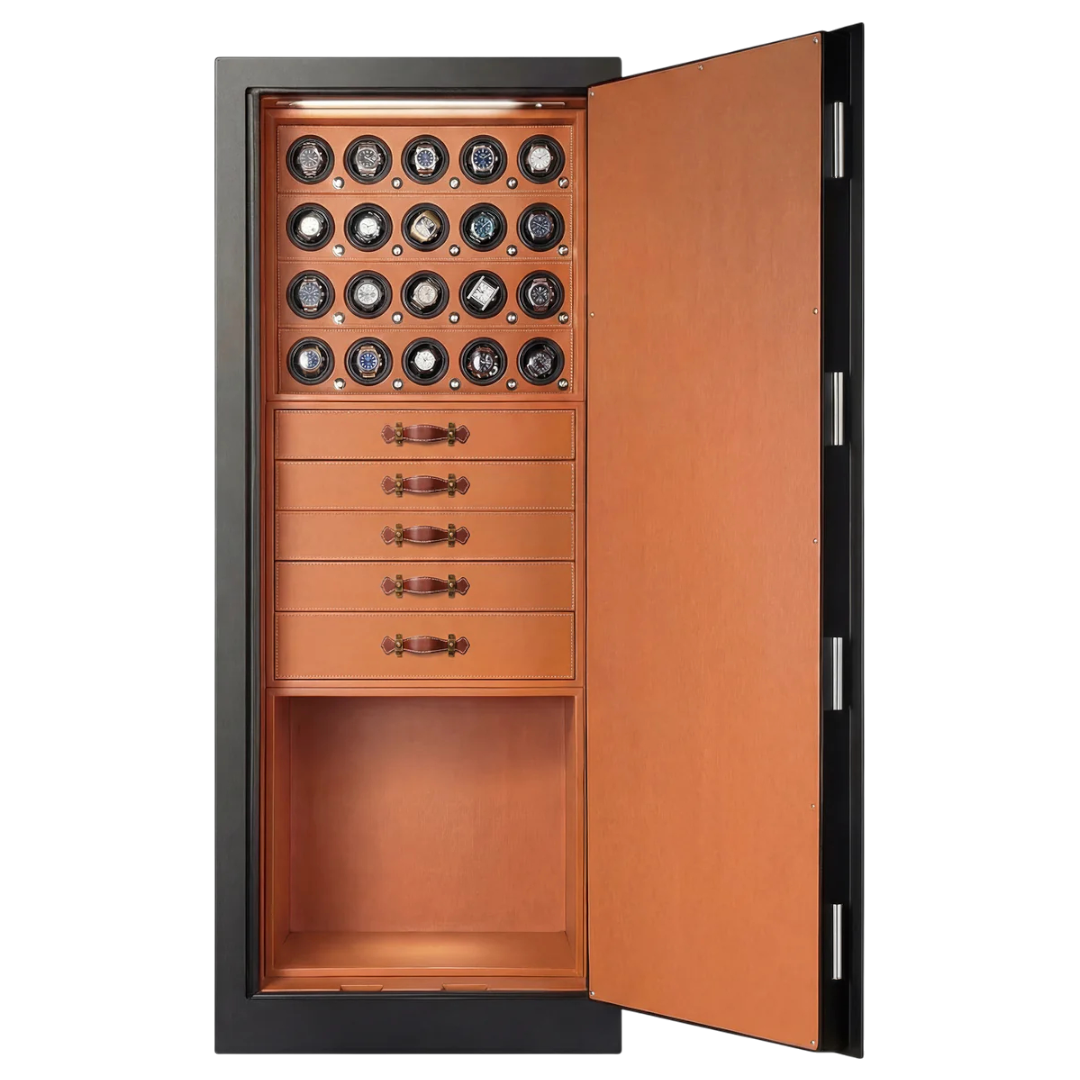
The expansion pick. The Veron 20 Watch Safe Box adds 8 slots over the 12-slot model while maintaining the same safe-grade enclosure. At 20 slots, you are covering a collection that most insurance policies classify as a formal scheduled collection — meaning the storage solution you use matters to your underwriter. The Veron 20 is the right answer for collectors who have crossed 15 pieces and do not want to manage two separate units. One lock, one power supply, one footprint.
Verdict: Buy.
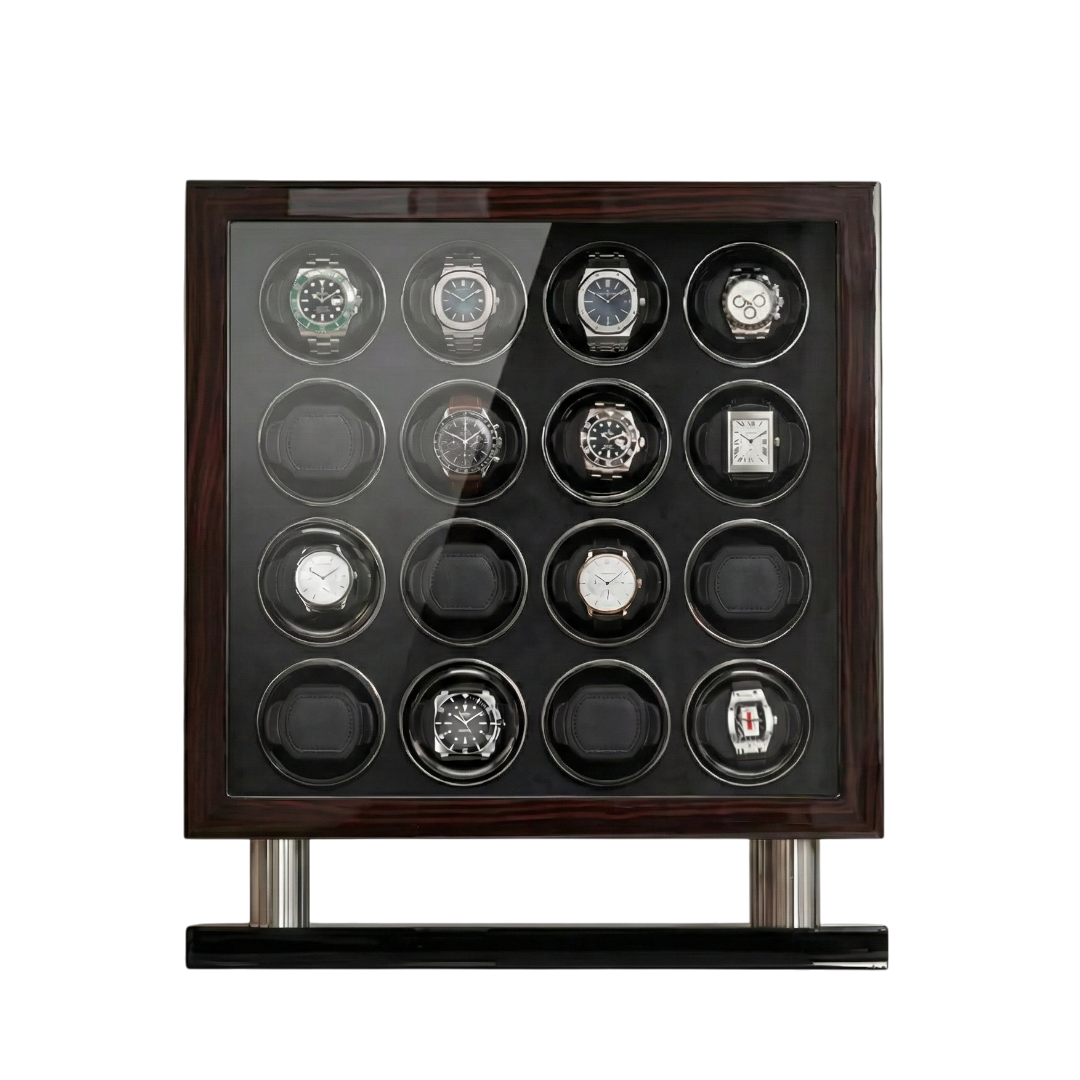
5. Titan Sanctum 20 Watch Safe Box — The Exhibition-Grade Option
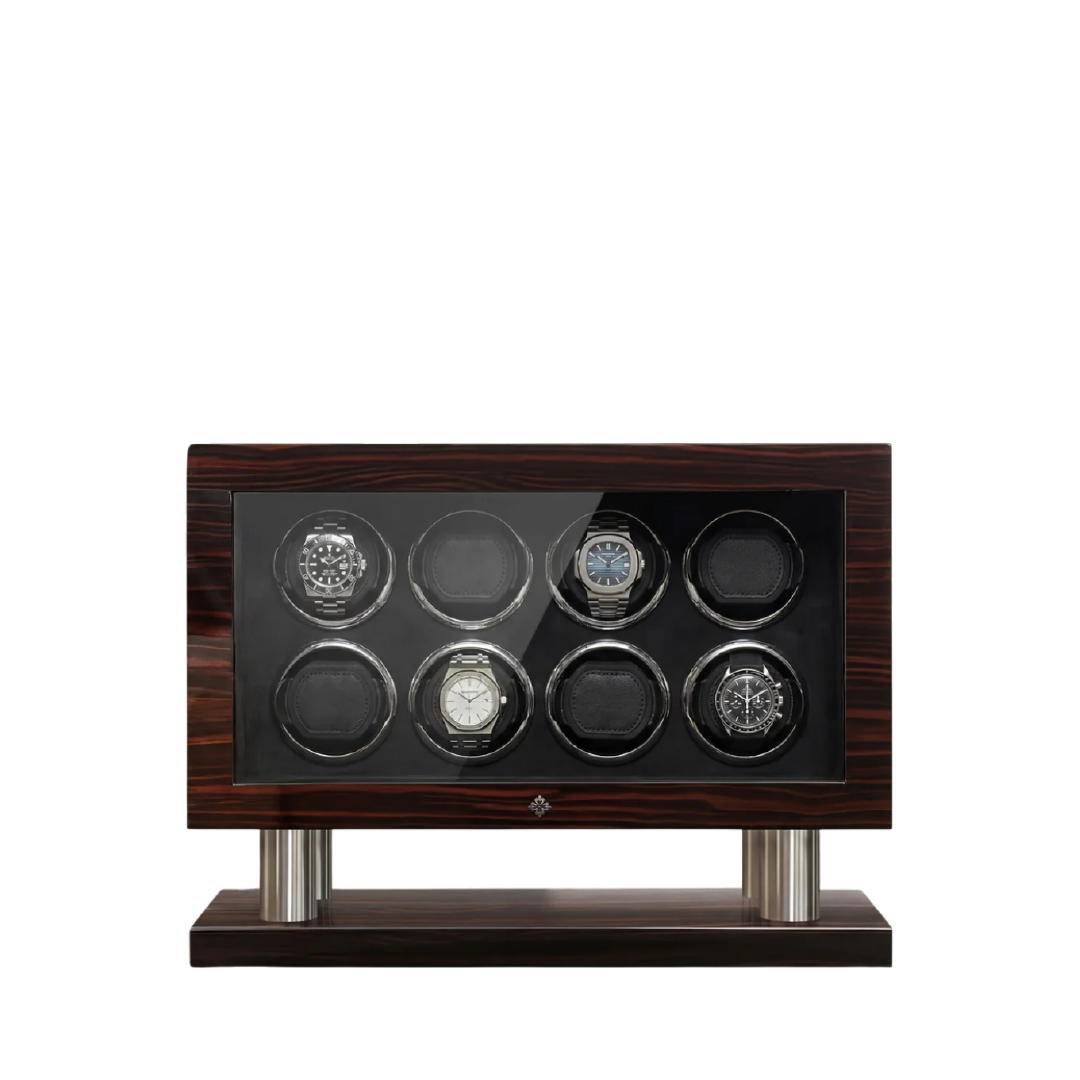
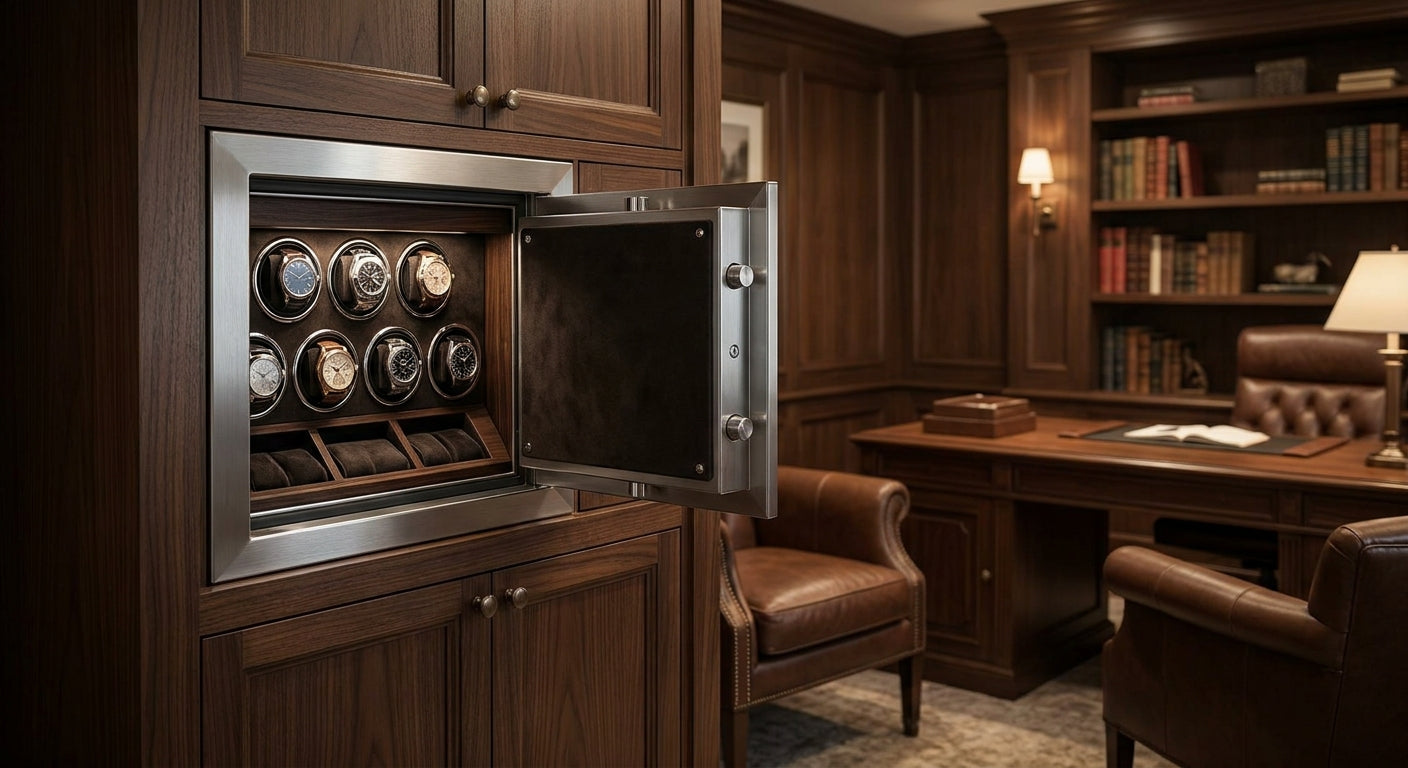
The showpiece with a vault behind it. The Titan Sanctum 20 Watch Safe Box is built for collectors who want the collection visible without it being vulnerable. The design incorporates display-grade lighting and an exotic wood veneer exterior — Enigwatch sources materials by provenance, not category — while the enclosure itself meets the same security standard as the rest of the safe line. If the unit lives in a study or a dedicated watch room where clients or guests will see it, this is the appropriate choice. Do not buy it purely for the winding function; the Apollo does that job at a lower price point. Buy it because the room demands it.
Verdict: Buy — if placement and presentation matter.
Comparison Table
| Model | Capacity | Lock Type | Motor | Interior | Best For |
|---|---|---|---|---|---|
| Apollo Watch Safe Box | Varies by config | Electronic / Biometric | Japanese Mabuchi | Alcantara | Most collectors, first purchase |
| Centennial Bulletproof | Varies by config | Biometric | Japanese Mabuchi | Alcantara | High-value single pieces |
| Veron 12 | 12 slots | Electronic | Japanese Mabuchi | Alcantara | Fixed 12-watch collections |
| Veron 20 | 20 slots | Electronic | Japanese Mabuchi | Alcantara | Growing collections 15–20 |
| Titan Sanctum 20 | 20 slots | Electronic / Biometric | Japanese Mabuchi | Alcantara + exotic veneer | Display-forward installations |
What to Avoid
Fixed-TPD rotors. Any winder safe where turns-per-day is factory-set and non-adjustable will fail a mixed collection. A Rolex Submariner and a Lange & Söhne 1815 do not share TPD requirements. Fixed rotors are an engineering shortcut that costs you flexibility.
Decorative locks. A key lock on a thin steel door is not a safe — it is a lockbox. If the body can be pried open without tools in under two minutes, the lock rating is irrelevant. Verify steel gauge and whether the unit can be anchored to a floor or wall stud before buying.
Foam-lined interiors. Open-cell foam off-gasses over time and can transfer residue to case finishing and strap leather. Alcantara and Italian Nappa leather are the correct materials for any enclosure where a $10,000+ watch will sit for extended periods. If the product listing does not name the interior material by type and origin, treat that as a signal.
Where to Buy
- Direct from Enigwatch at enigwatch.com — the only source with access to the full configuration matrix, white glove delivery, and the lifetime warranty. Custom finishes and bespoke slot counts are only available direct.
- Verify the configuration before ordering — slot count, lock type (electronic vs. biometric), and interior material are selectable on most Enigwatch models. The base price is not the final price once you spec the unit correctly for your collection.
- Ask about installation — Enigwatch offers professional installation. For any unit above 20 slots or above $10,000, the installation service is worth using. Anchor points matter for both insurance compliance and physical security.
FAQ
What is a watch winder safe box?
A watch winder safe box is a single enclosure that winds automatic watches via motorized rotors while storing them inside a security-rated safe. It eliminates the need for a separate winder and a separate safe, combining both functions in one unit.
How many TPD does my watch need?
Most automatic movements need between 500 and 800 turns per day. Rolex calibers are typically set at 650 TPD, Patek Philippe movements between 650 and 800 TPD, and Omega calibers around 650–800 TPD. Always check your movement’s specification — the TPD full brand reference guide covers most major calibers.
Is a biometric lock worth the cost on a watch winder safe?
For collections valued above $50,000 in aggregate, yes. Biometric access eliminates the risk of a copied key or a memorized combination. The cost difference between an electronic code lock and a biometric scanner at Enigwatch’s level is a fraction of a single insured piece.
Can a watch winder safe damage my automatic watches?
A properly programmed winder with correct TPD settings will not damage an automatic watch. The risk is over-winding, which is only possible with a fixed-high-TPD rotor on a watch that does not need it. Per-module TPD programming eliminates that risk. See the full breakdown on whether a watch winder damages automatic watches.
What size watch winder safe box do I need?
Buy for where your collection will be in 24 months, not where it is today. A 12-slot unit is the right floor for anyone who already owns 8 or more pieces. At 15 or more pieces, start at 20 slots.
How loud is a watch winder safe box?
Quality units using Japanese Mabuchi motors operate below 10 dB — inaudible in a normal room environment. If a product listing does not specify noise level or motor origin, assume it is louder than marketed.
Can I install a watch winder safe box in a closet?
Yes, provided there is a power source within reach and the floor or wall can support the anchor requirements. Enigwatch offers professional installation for exactly this configuration.
What is the difference between a watch winder safe and a watch winder cabinet?
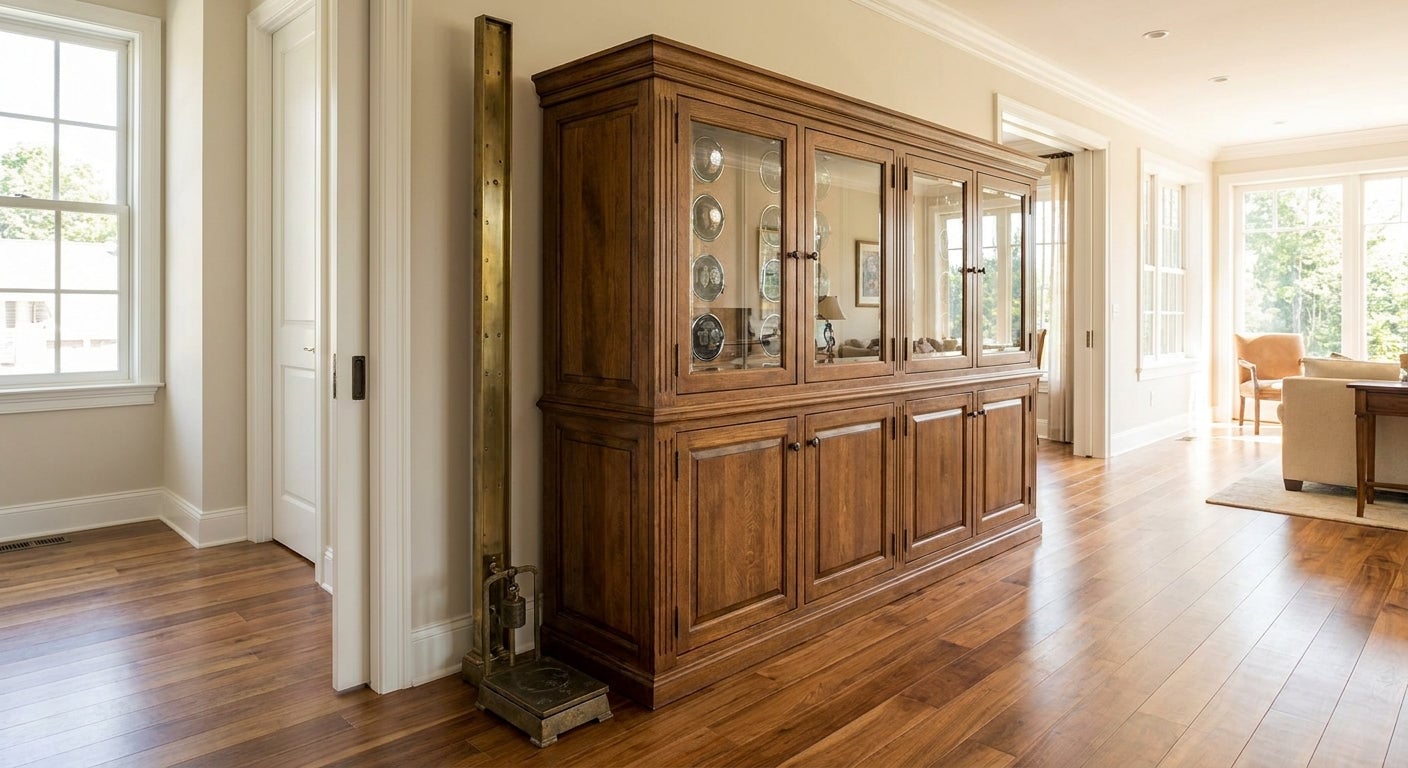
A watch winder cabinet is a furniture piece — it organizes and winds watches but is not a security enclosure. A watch winder safe box adds a steel body and a rated lock mechanism. For insurance and theft protection, a cabinet is insufficient.
One Last Thing
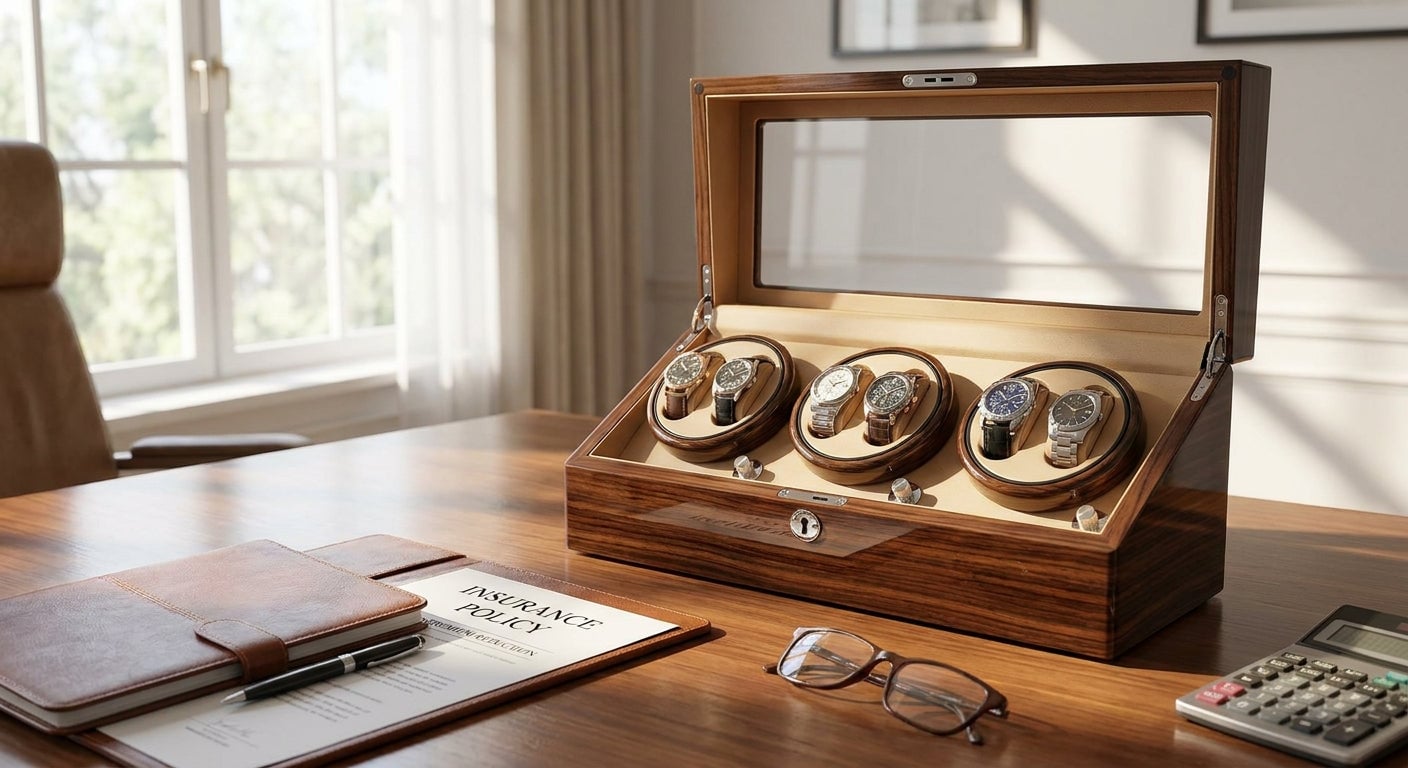
In 2026, several major watch insurance underwriters have begun requiring collectors to specify the type of storage in their scheduled item policies. A watch winder safe box from a named manufacturer with a documented lock rating and an anchor-capable body satisfies that requirement. An unlocked cabinet does not. The storage decision is no longer only about the watches — it is about the coverage that protects them.
Related Guides
Protect Your Watch Collection
Designed for collectors who demand the best. Explore our premium watch winders and luxury safes.