
GMT watches are built for travelers. Two timezones, one dial, instant reference to home or destination. The catch: when a GMT stops, you lose both timezones. Re-setting requires knowing the correct offset and walking the hands carefully to avoid messing up the 24-hour indicator. A winder keeps both timezones running continuously, which is exactly what GMT watches were designed for. This guide covers what GMT owners should know about winders.
Why GMT Owners Need Winders Specifically
Three reasons.
First, GMT owners are typically travelers. If you travel for work, your home GMT often sits 4 to 14 days between wears during trips. That’s past the power reserve of most GMTs, which means the watch stops before you return.
Second, GMT resetting is annoying. The 24-hour hand tracks home time separately from the main hour hand. After the watch stops, you re-set both, and if you move them in the wrong order, you can jump the date at the wrong time and stress the date-change mechanism.
Third, the whole point of a GMT is instant readability. A stopped GMT with both zones wrong defeats the purpose. A winder keeps the watch ready to glance at and know the time in two places.
TPD and Direction for Major GMT Calibers
| Caliber | Brand/Model | TPD | Direction |
|---|---|---|---|
| 3285 | Rolex GMT-Master II | 650-800 | Bi-directional |
| 9001 | Rolex Sky-Dweller | 650 | Bi-directional |
| 8605 | Omega Seamaster GMT | 650 | Bi-directional |
| B01 GMT | Breitling Navitimer GMT | 800 | Bi-directional |
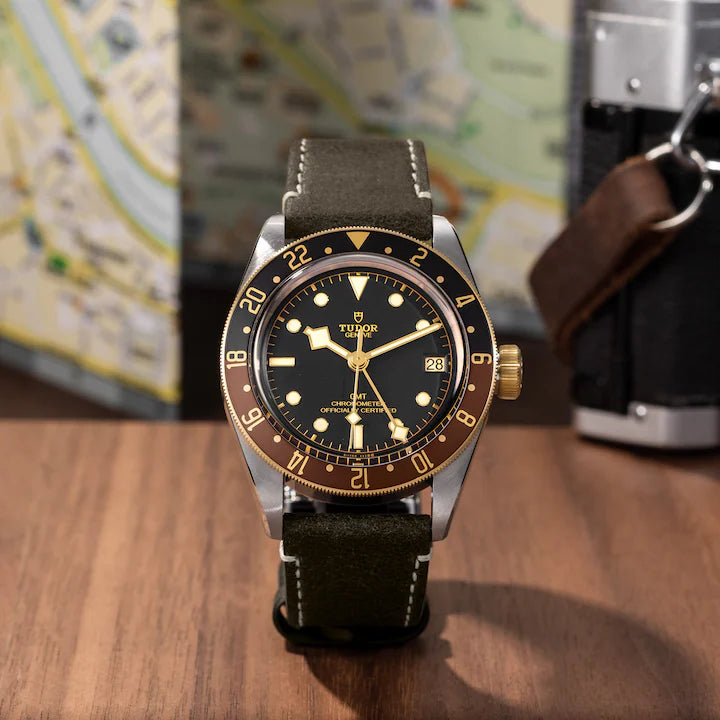
| Cal. 36110 | Tudor Black Bay GMT | 650 | Bi-directional |
| 324 S C FUS | Patek Philippe Aquanaut Dual-Time | 800 | Counterclockwise |
| Cal. 1120 with module | Grand Seiko GMT | 650 | Bi-directional |
For a broader reference, see the TPD data by brand and our dedicated guides on Rolex TPD and Omega TPD.
Travel-Friendly vs Home-Based Setup
GMT owners typically split their setup into two categories.
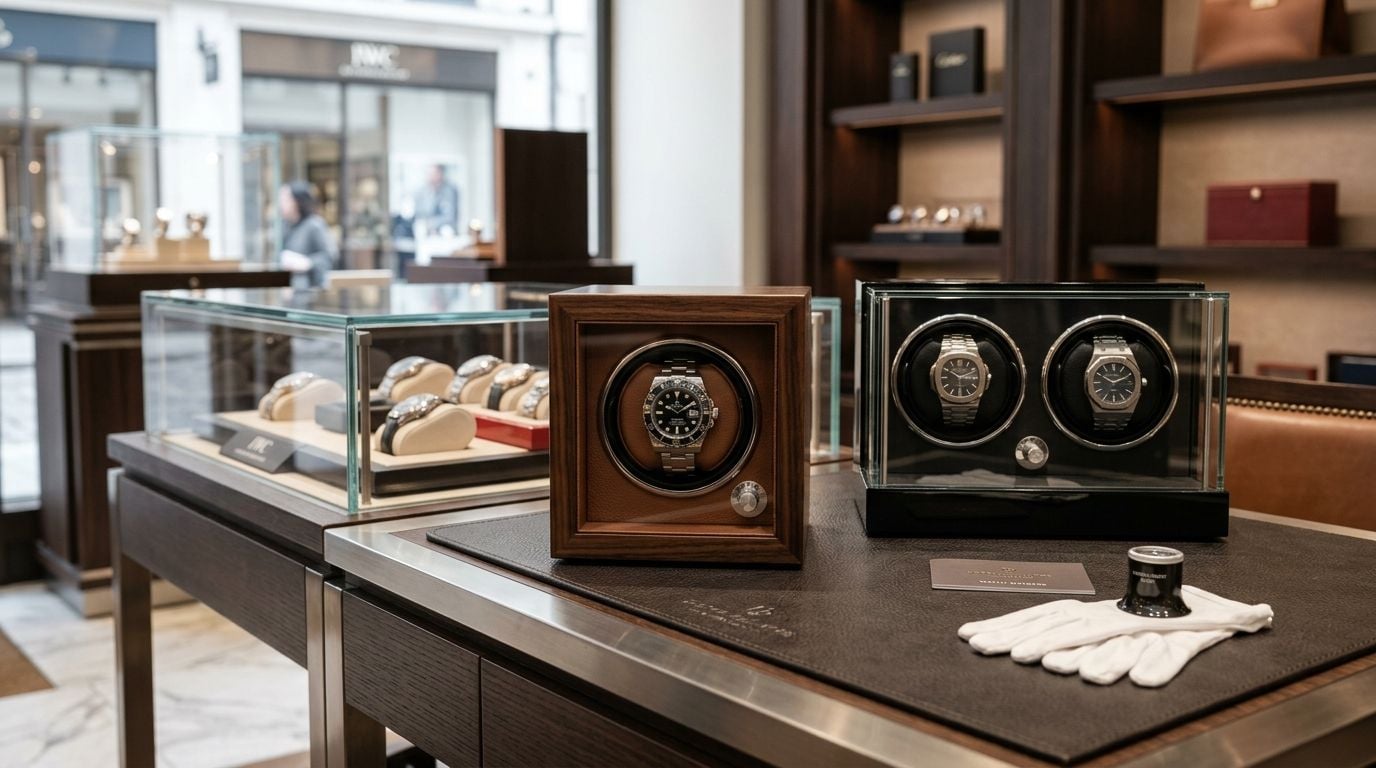
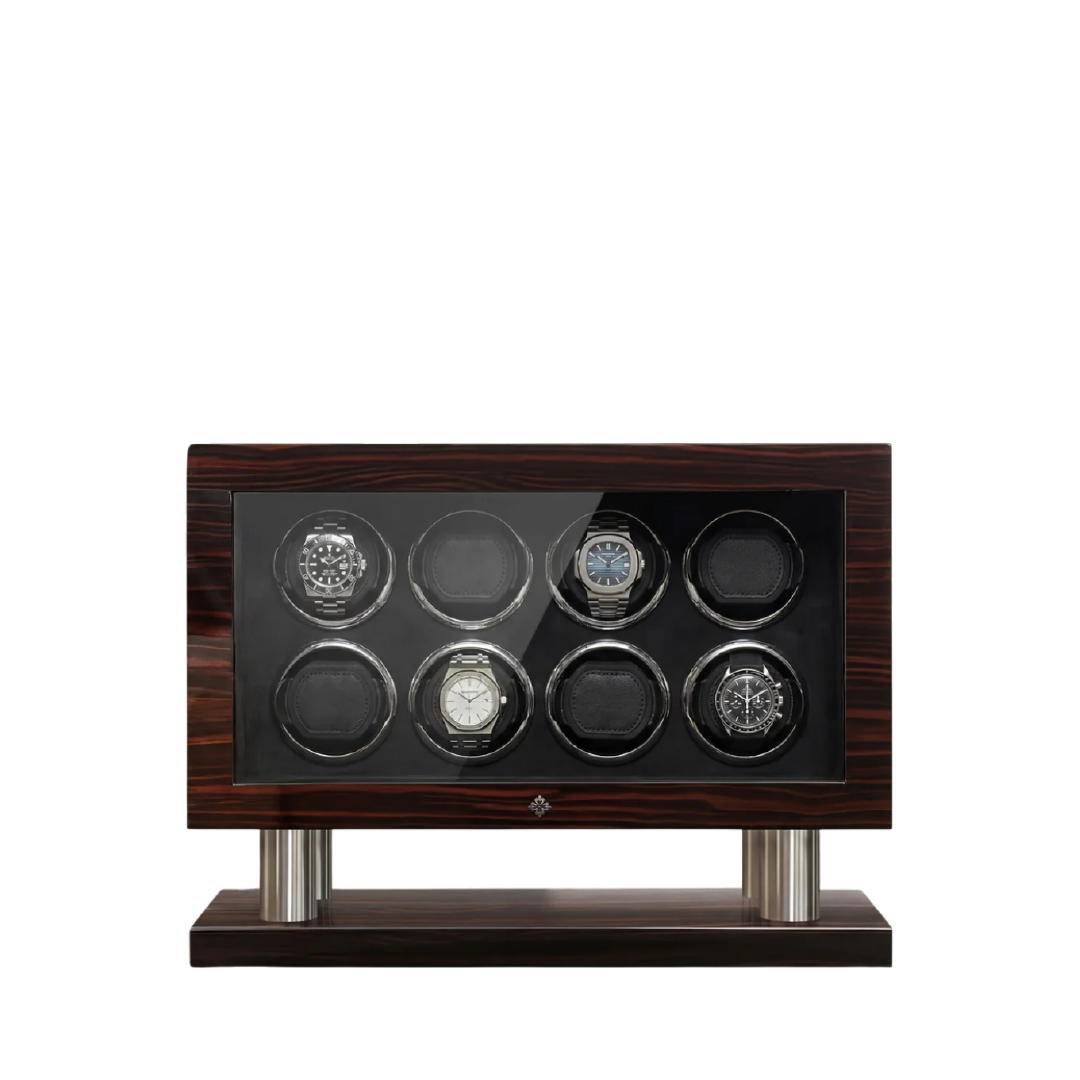
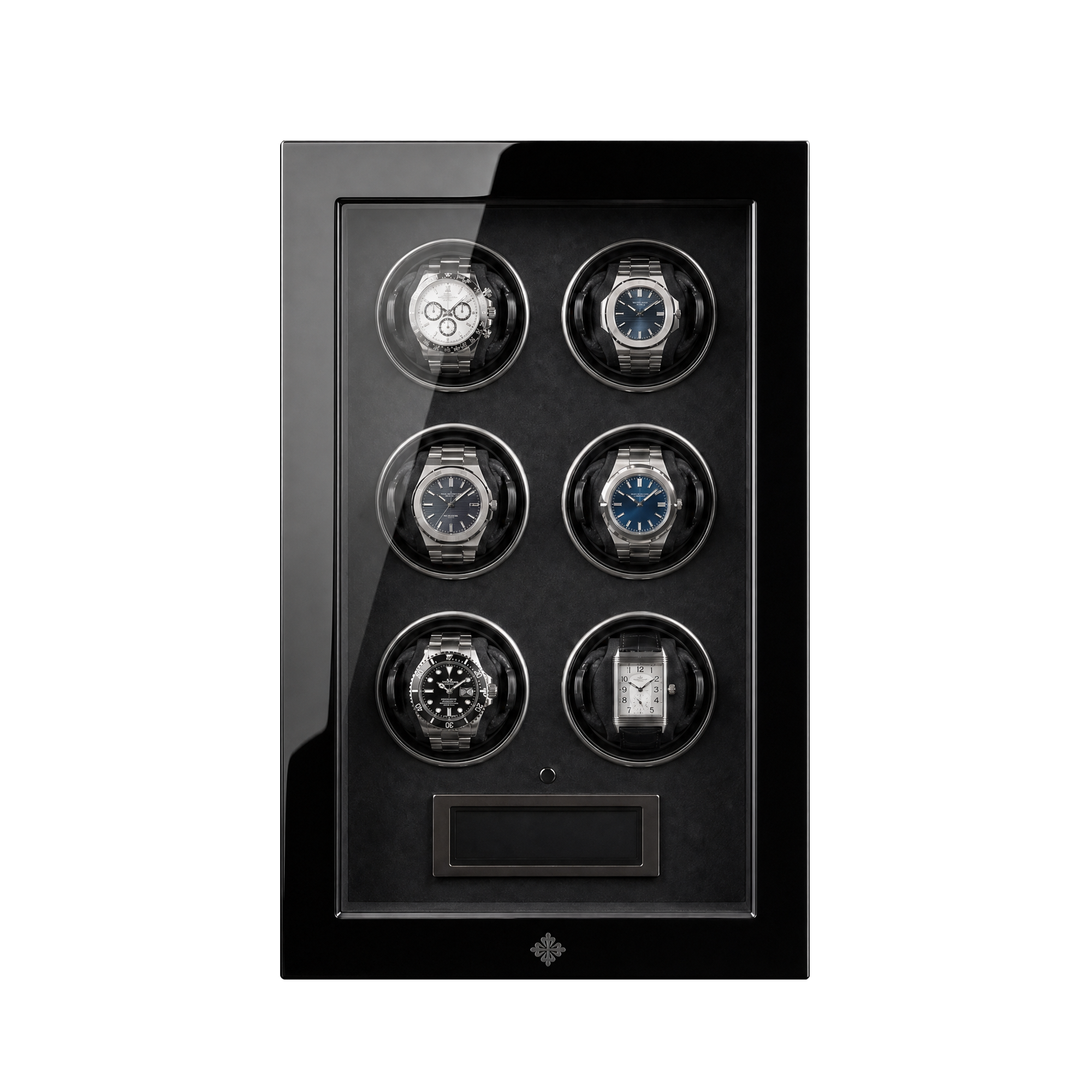
Home winder. A 6-rotor or larger unit keeps all rotation watches wound while you’re away. When you return from a two-week trip, everything is ready. The Impresario 6 or Virtuoso 6 covers this role.
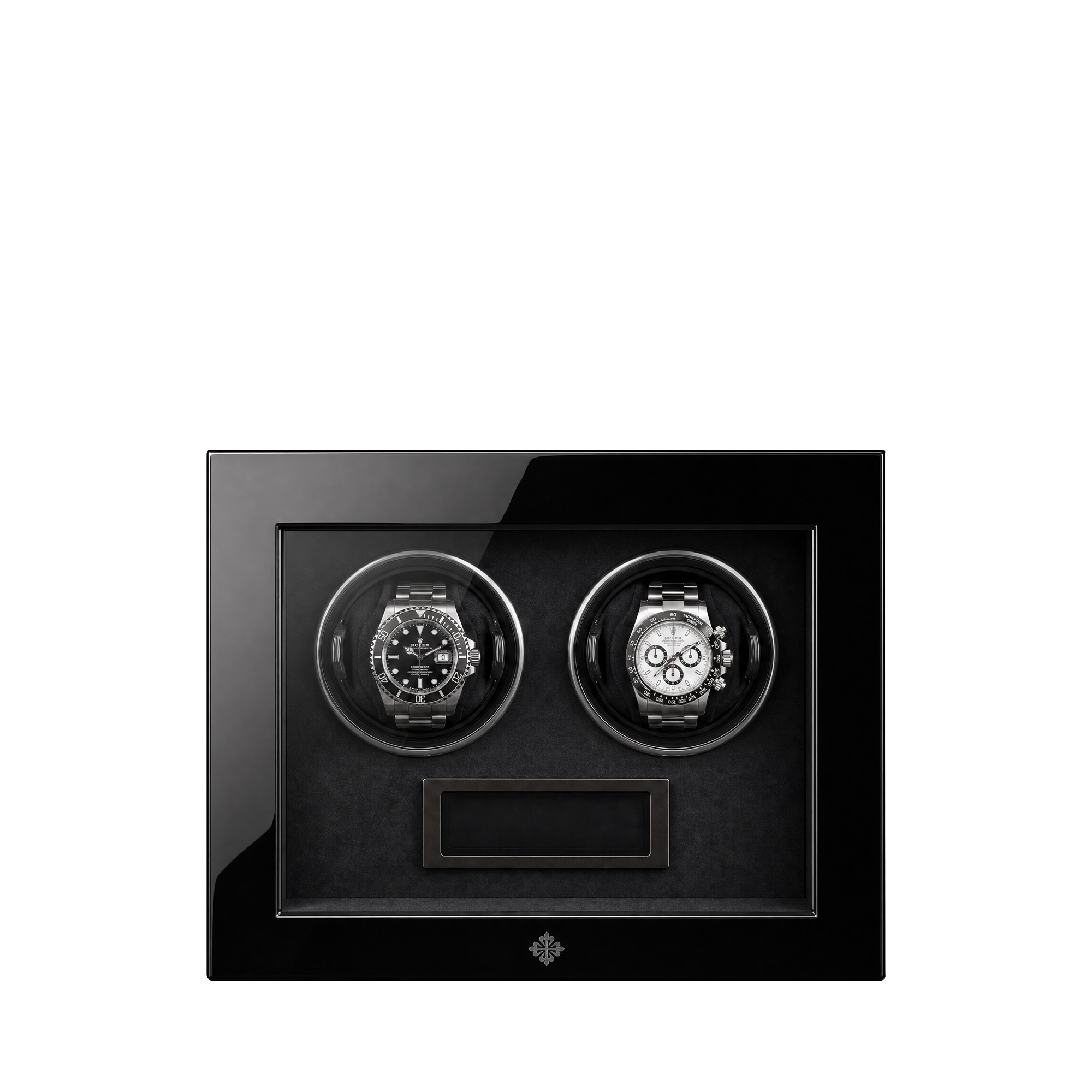
Travel winder. A compact 1 or 2-rotor unit goes in the suitcase for the traveling GMT. The Impresario 2 is sized for this use case. For broader context on travel winders, see best travel watch winders and watch winder for frequent travelers.
Setting Up a GMT on a Winder
The setup sequence that preserves both timezones.
One, set the home time (24-hour hand) using the crown in position 2.
Two, set the local time (hour hand, independent of GMT hand) using the crown in position 1 or via a pusher depending on the movement.
Three, push the crown fully back in (or screw down on dive-style crowns).
Four, wind the movement to full reserve before placing on the winder. Gives the winder an easier starting baseline.
Five, set the winder TPD and direction per the caliber. For most modern GMTs, 650-800 TPD bi-directional.
Six, let it run. Check a few days later that both timezones are still correct.
What If Both Timezones Drift
Rate drift affects both hands equally on most GMTs, since both run from the same movement. If both timezones lose 15 seconds per day, you have a rate issue, not a GMT-specific problem. See my watch gains or loses time.
If only the GMT hand drifts differently, the issue is usually in the GMT module (on caller GMTs with independent 24-hour hands) or a mechanical issue in the hand coupling. That’s a service visit, not a winder setting.
GMT-Specific Benefits of a Quality Winder
Beyond keeping the watch wound, a quality GMT winder setup.
- Preserves correct home and local times between wears
- Eliminates the re-setting friction after trips
- Lets you glance at the watch and trust both timezones
- Keeps the date correct through weekends of non-wear
- Protects the 24-hour hand from wear during repeated manual re-setting
Home Setup Recommendations
| Your Situation | Recommended Winder |
|---|---|
| Single GMT, everyday wearer | None needed, wear keeps it wound |
| GMT plus 1-2 other automatics | Impresario 2 or Virtuoso 2 |
| GMT in a 3-6 watch rotation | Impresario 6 |
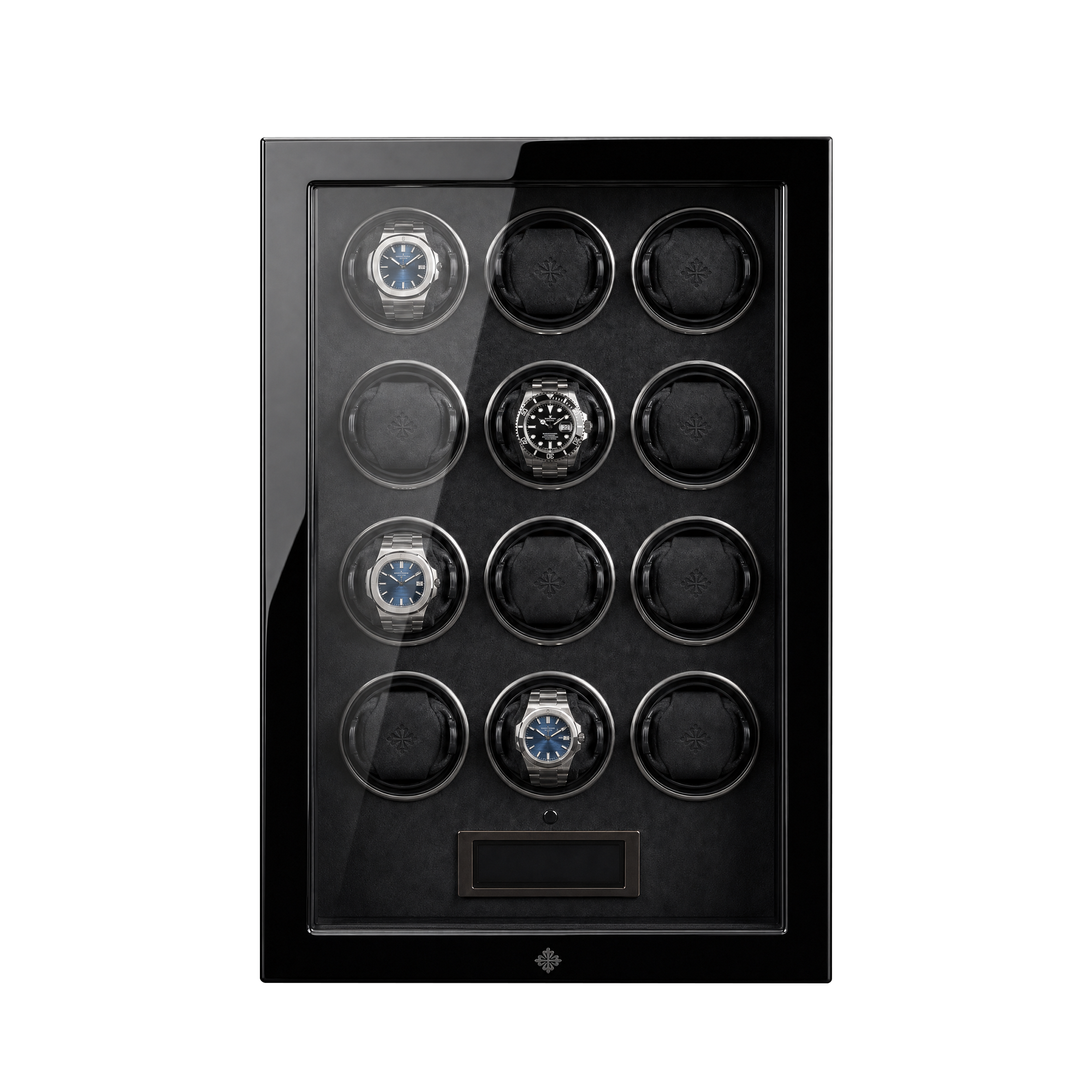
| GMT in larger collection with travel | Impresario 12 + travel winder |
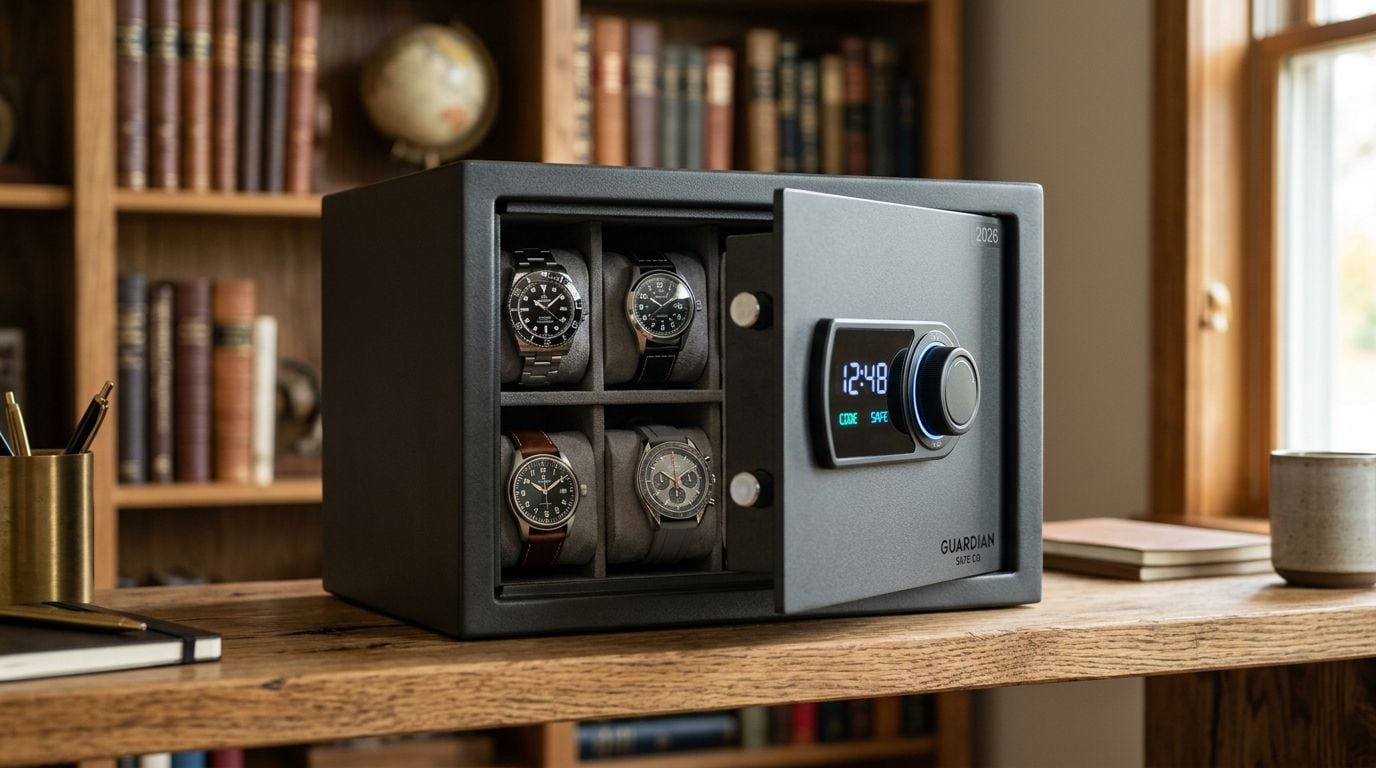
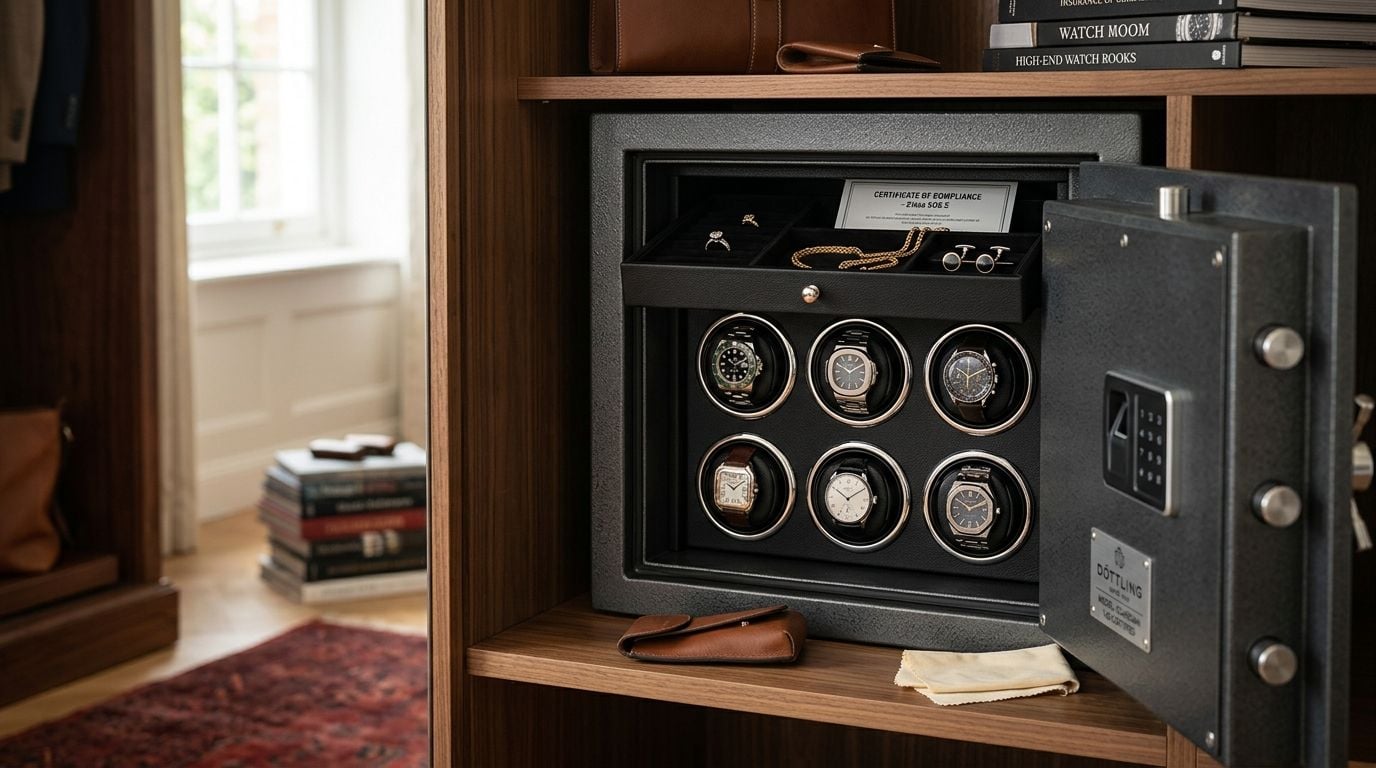
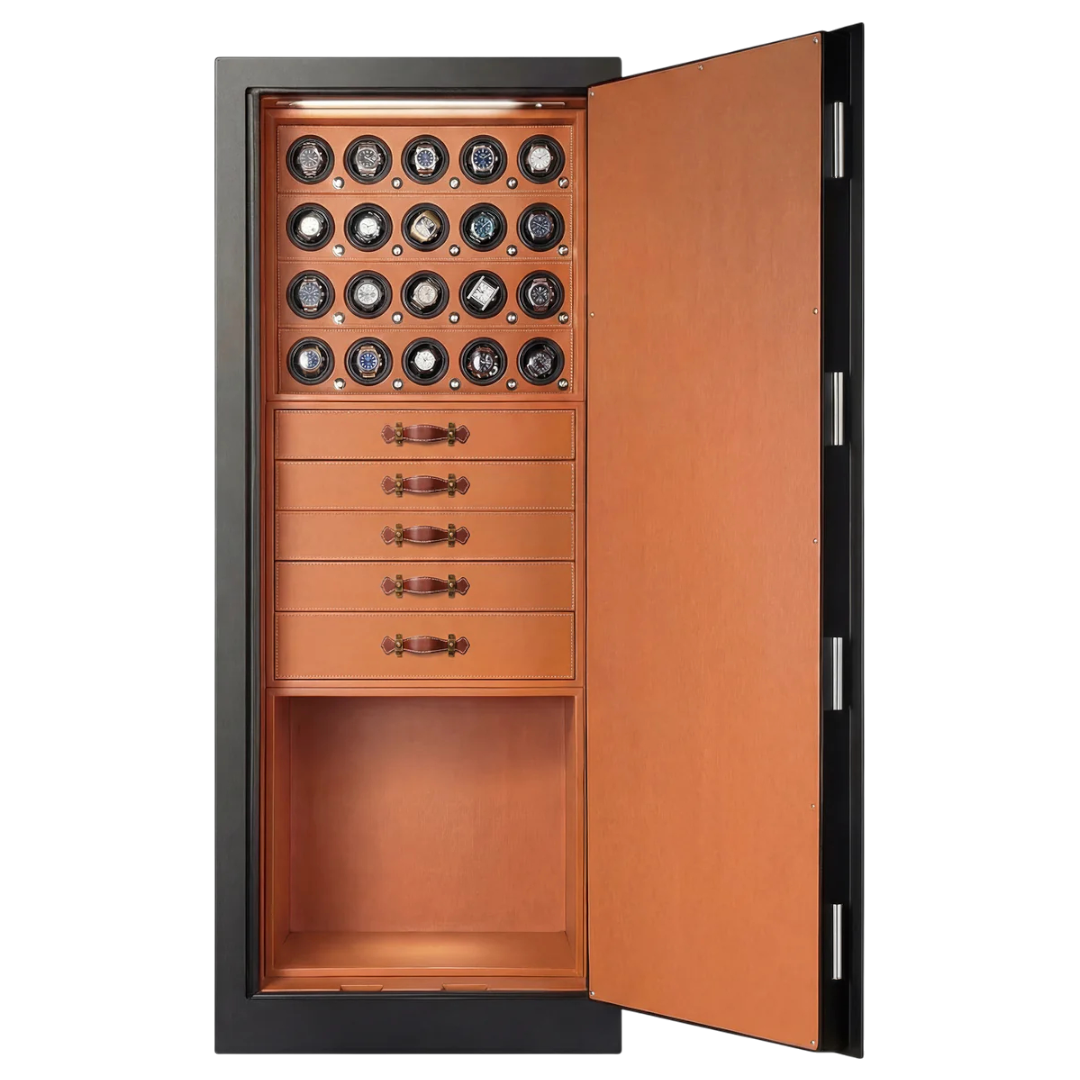
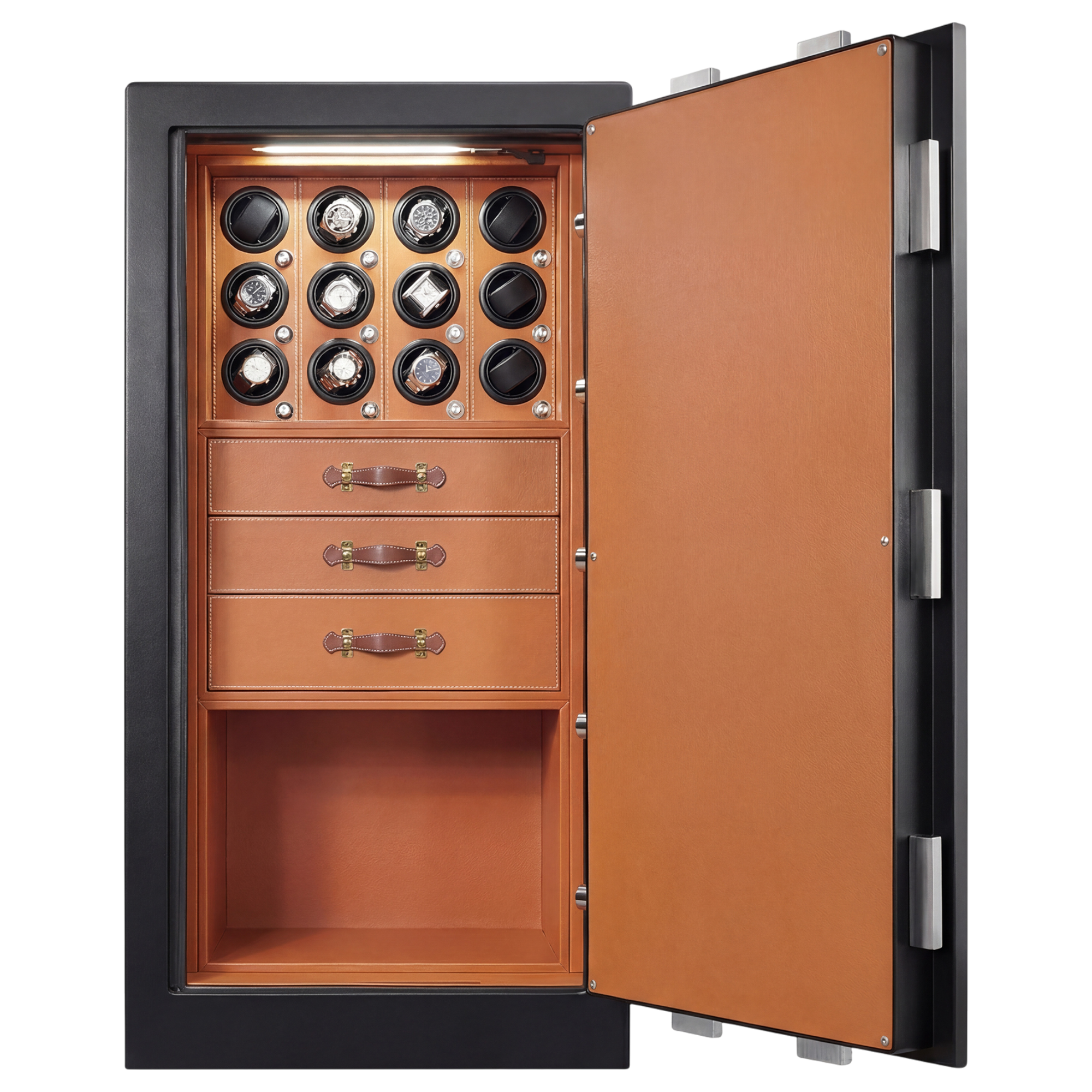
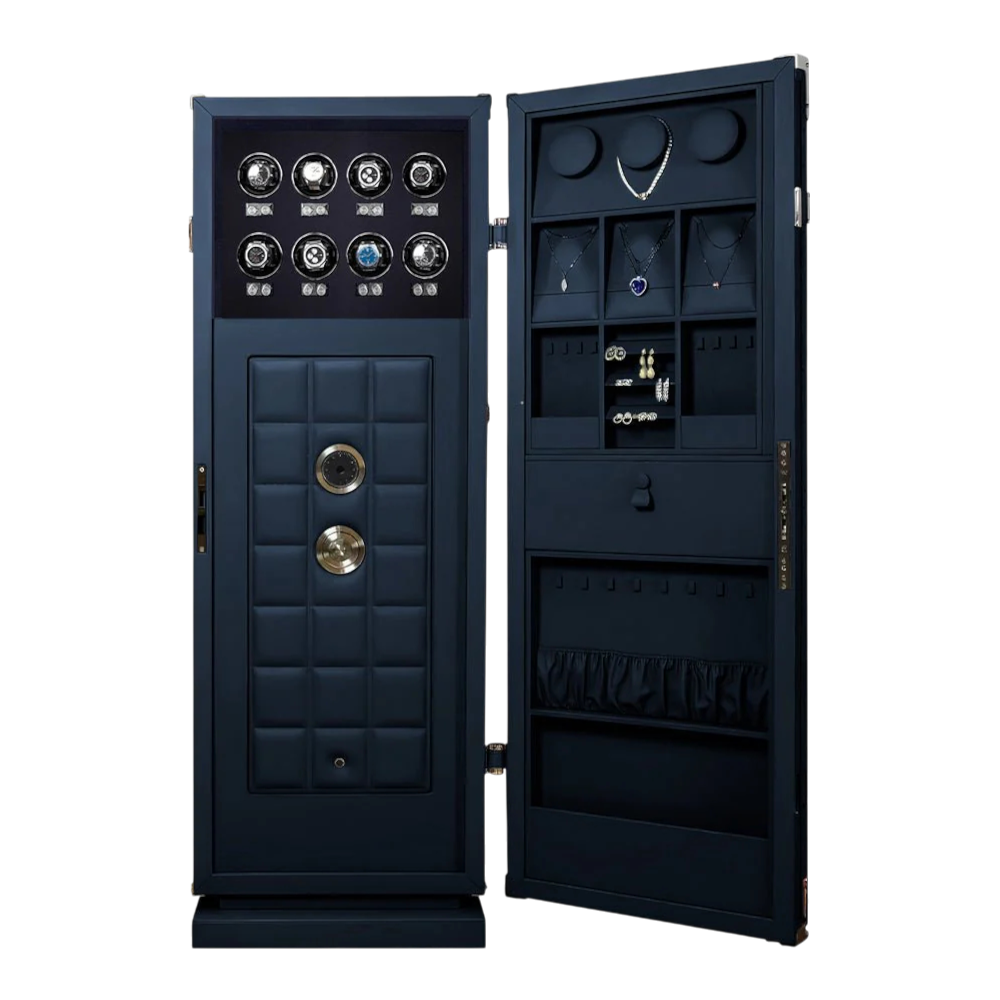
| High-value GMT needing security | Veron 12 combined unit |
Frequently Asked Questions
Does a winder preserve both timezones on a GMT?
Yes. The winder keeps the watch running, which keeps both timezones accurate relative to their set offsets.
Is GMT winding different from regular winding?
Mechanically no. GMTs use the same rotor-based winding as other automatics. TPD and direction match the base caliber’s specs.
What’s a caller GMT vs flyer GMT?
Caller (office) GMTs use the crown to adjust the GMT hand independently while keeping the main hour hand running. Flyer (true) GMTs let you adjust the main hour hand independently while the GMT hand holds as home reference. Both wind the same way.
Can I put a Rolex GMT on the same winder as a Patek dual-time?
Only if the winder has per-rotor TPD and direction control. Rolex is bi-directional; Patek dual-time is counterclockwise. Fixed-setting winders fail this test.
Does a winder help with the GMT date when crossing timezones?
Not directly. The date advances at midnight local time based on the main hour hand. A winder keeps the mechanism running so the date doesn’t stop.
Should I take my GMT off the winder when traveling?
Only if you’re bringing it with you. Leave the home rotation in the winder. Bring a travel winder for the GMT on long trips.
Are chronograph GMTs handled differently?
Chronograph GMTs have higher power draw. Check the caliber for specific TPD. Usually 750-850 is appropriate to keep reserve high.
Keep Both Zones Running
For most GMT owners, a quality Mabuchi-powered winder at the right capacity handles the job. The Impresario 6 is the most common home setup. For travelers wanting portable support, add the Impresario 2 for the suitcase.
Related reading: watch winder for frequent travelers, watch winder direction, how to choose a watch winder.
Protect Your Watch Collection
Designed for collectors who demand the best. Explore our premium watch winders and luxury safes.
Protect Your Watch Collection
Designed for collectors who demand the best. Explore our premium watch winders and luxury safes.